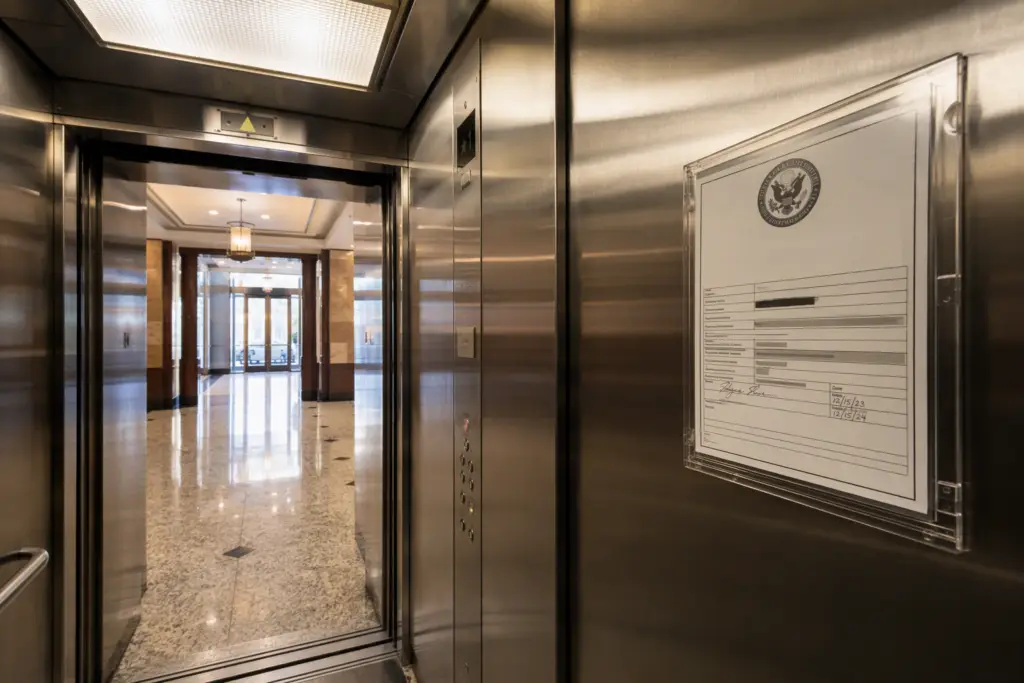
Elevator Emergency Phone Number: Complete FAQ Guide for Building Owners & Managers
After 15 years in the elevator industry — inspecting, repairing, and modernizing equipment across Baltimore, Washington DC, Philadelphia, and Richmond — I’ve responded to hundreds of entrapment calls. The single most common factor in poor outcomes is a malfunctioning or improperly monitored emergency phone. This guide covers everything building owners, facility managers, and compliance officers need to know about elevator emergency phone requirements, testing protocols, and current 2026 code standards.
What is an elevator emergency phone number?
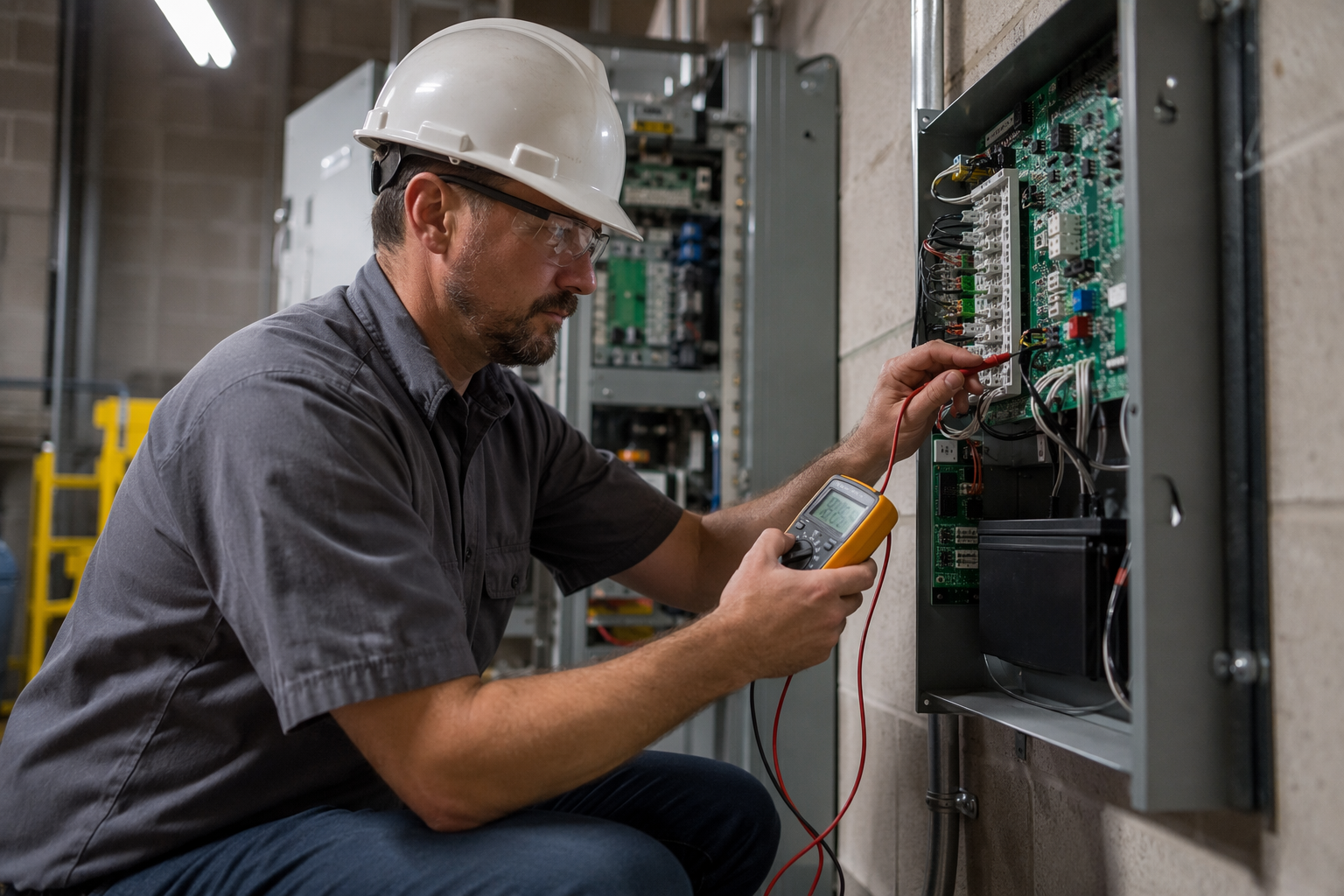
An elevator emergency phone number is the dedicated telephone line connected to the two-way communication device installed inside every elevator cab, allowing trapped or distressed passengers to speak directly with a live person who can summon help.
Unlike a standard intercom, the elevator emergency phone must connect to a location that is monitored continuously — 24 hours a day, 365 days a year. Under ASME A17.1/CSA B44, the Safety Code for Elevators and Escalators, this communication device is not optional equipment. It is a life-safety requirement that carries significant legal liability when non-compliant.
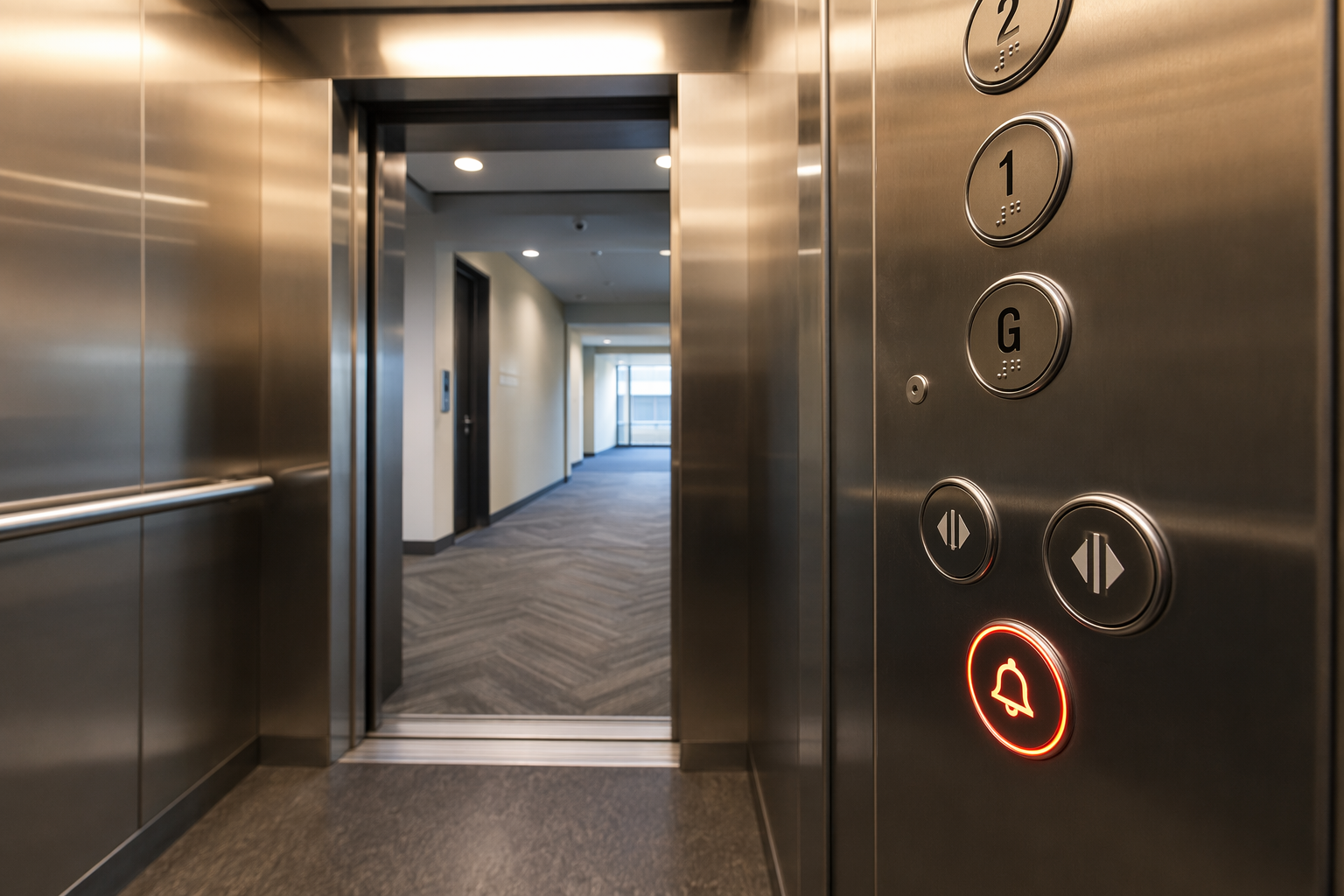
The phone number itself is typically programmed into the device and dials automatically when a passenger presses the emergency call button — the familiar bell or phone icon found on every elevator control panel. Passengers do not need to dial any number themselves; the connection initiates automatically.
What does ASME A17.1 require for elevator emergency phones in 2026?

ASME A17.1 Section 2.27.1.1 requires every passenger elevator to contain a two-way means of communication that, when activated, connects to a location staffed by a person capable of summoning assistance — and that call must be answered within 60 seconds.
The 2019 edition of ASME A17.1, which most jurisdictions in Maryland, Virginia, DC, and Pennsylvania had adopted or were actively adopting as of 2026, specifies the following key requirements:
- Two-way voice communication must be hands-free
- The call must connect to a living person — voicemail and automated systems are not compliant
- The monitoring location must be able to summon emergency personnel
- A visual or audible signal must confirm the call connected
- The device must remain functional during a power failure (battery backup required)
- Clear instructions for use must be posted inside the cab
Many building owners are surprised to learn that simply having a phone installed is not enough. If the phone dials a number that routes to voicemail after business hours, that elevator is out of code compliance — even if the hardware itself is in perfect condition.
Are elevator emergency phones required by the ADA?
Yes — the Americans with Disabilities Act requires elevator emergency communication systems to be accessible to individuals with hearing and speech disabilities, including TTY/text-based communication capability or visual indicators confirming connection.
Specifically, ADA Standards for Accessible Design Section 407.4.9 requires that the two-way communication system comply with ASME A17.1 and also provide a means for people who are deaf or hard of hearing to summon assistance. In practical terms, this means:
- The emergency call confirmation signal must include a visual component (a light or display), not just an audible tone
- Instructions must be in Braille and raised characters in addition to printed text
- The system must not rely solely on voice communication to confirm connection
In jurisdictions served by Quality Elevator Company — including Washington DC, which enforces some of the most stringent accessibility codes in the country — ADA compliance audits increasingly include elevator communication systems as a line-item inspection point.
What happens if an elevator emergency phone doesn’t work?
A non-functional elevator emergency phone is a code violation that can result in elevator shutdown orders, fines ranging from $500 to $10,000 per day depending on the jurisdiction, and serious civil liability if a passenger becomes trapped and cannot summon help.
From a practical standpoint, a failed emergency phone means:
- Trapped passengers cannot communicate — leading to panic, medical emergencies, and extended entrapment
- Regulatory violation — state elevator inspectors in Maryland (DLLR), Virginia (DPOR), Pennsylvania (DLI), and DC can issue cease-use orders
- Insurance exposure — property and liability insurers may deny claims tied to incidents involving known equipment failures
- Negligence liability — if you documented the failure and did not repair it, courts have consistently found building owners liable
I’ve seen buildings receive stop-operation orders during routine inspections in Baltimore and Richmond specifically because the emergency phone dialed a general office number with no after-hours coverage. The fix takes less than a day; the liability exposure lasts years.
What phone number do elevator emergency phones call?
Elevator emergency phones are programmed to call a designated monitoring center phone number — either a 24/7 third-party answering service, a building security desk with round-the-clock staffing, or a professional elevator monitoring service that dispatches mechanics directly.
There are three common configurations in use across Baltimore, DC, Philadelphia, and Richmond:
| Monitoring Type | 24/7 Coverage | ASME A17.1 Compliant | Dispatch Capability | Typical Monthly Cost | Best For |
|---|---|---|---|---|---|
| Third-Party Answering Service | Yes | Yes (if staffed by live agents) | Calls 911 or building contact | $20–$60/elevator | Small commercial buildings |
| Building Security Desk | Only if 24/7 staffed | Conditional | Can contact emergency services | No additional cost | Large facilities with full-time security |
| Elevator Contractor Monitoring | Yes | Yes | Direct mechanic dispatch | $40–$120/elevator | Multi-unit residential, healthcare, Class A office |
| Automated System (Voicemail/IVR) | N/A | No — Non-Compliant | None | $0 | Not acceptable under any code |
The programmed phone number can typically be updated by a certified elevator technician in under an hour. If your building’s monitoring arrangement changes — for example, a security company contract ends — the phone number in the elevator must be updated immediately or you fall out of compliance.
How do I find out what number my elevator emergency phone is programmed to call?
You can find the programmed emergency phone number by pressing the emergency call button in the elevator cab and listening to what number is dialed, checking your elevator maintenance contract for the monitoring line, or having a certified technician pull the programmed number from the communication device’s configuration.
Many building managers inherit elevator systems without documentation. If you manage a property in Baltimore, DC, Philadelphia, or Richmond and you’re not certain what number your elevator emergency phone dials — or whether it dials anything at all — schedule an assessment immediately. Quality Elevator Company performs communication system audits as part of routine maintenance inspections and can document the programmed destination number for your compliance records.
What is the difference between an elevator emergency phone and a regular intercom?
An elevator emergency phone is a dedicated, code-mandated two-way communication device with battery backup, automatic dialing, and a legally defined response time requirement, while a regular building intercom is a general-purpose system with no regulatory requirements for monitoring continuity or response time.
Key technical differences include:
- Auto-dial function: Emergency phones dial a preset number without passenger input; intercoms typically require selection of a channel or room
- Battery backup: Emergency phones must operate during power outages under ASME A17.1; standard intercoms typically do not have this requirement
- Hands-free operation: Emergency phones must be operable without picking up a handset, per ADA and ASME requirements
- Monitoring obligation: The receiving end of an emergency phone must be staffed by a live person; intercoms have no such obligation
- Regulatory inspection: Emergency phone functionality is a line-item on every state elevator inspection in MD, VA, DC, and PA
What should I do immediately if a passenger is trapped in an elevator?
If a passenger is trapped in an elevator, follow these steps immediately to ensure their safety and minimize liability.
- Communicate with the trapped passenger — Use the elevator emergency phone (if you’re at the monitoring end) or speak through the cab door to reassure them. Tell them help is on the way and advise them not to attempt to exit on their own.
- Call 911 if there is any medical emergency — If the passenger reports a medical condition, chest pain, difficulty breathing, or the entrapment has lasted more than 15 minutes, call emergency services immediately.
- Contact your elevator service company — Call your maintenance contractor’s emergency line. Certified mechanics must perform the actual rescue — never attempt to manually open elevator doors or operate hoist equipment without training.
- Do not force the doors open — Forcing elevator doors can create a fall hazard if the cab is not level with the floor, and it can damage safety interlocks requiring expensive repairs.
- Document the time and circumstances — Note when the entrapment was reported, who was contacted, response times, and the resolution. This documentation is critical for your incident report and any regulatory follow-up.
- File an incident report — Most jurisdictions require building owners to report entrapments to the state elevator authority within a specified timeframe (typically 24–72 hours).
- Schedule a post-entrapment inspection — Before returning the elevator to service, have a certified technician inspect the equipment to identify the root cause and confirm safe operation.
How often should elevator emergency phones be tested?
Elevator emergency phones must be tested at minimum monthly under most state elevator regulations, with the test documented in the elevator logbook — ASME A17.1 Section 8.6 also requires functional testing as part of the annual Category 1 inspection.
In the four markets Quality Elevator Company serves, the testing requirements break down as follows:
- Maryland (DLLR): Monthly functional test required; documented in the elevator logbook kept in the machine room or accessible to inspectors
- Washington DC (DCRA): Monthly testing required; emergency communication function verified during annual Category 1 inspection
- Pennsylvania (DLI): Monthly testing required per PA Code Chapter 405; annual inspection includes communication system verification
- Virginia (DPOR): Semi-annual inspection cycle includes emergency phone verification; monthly internal testing strongly recommended
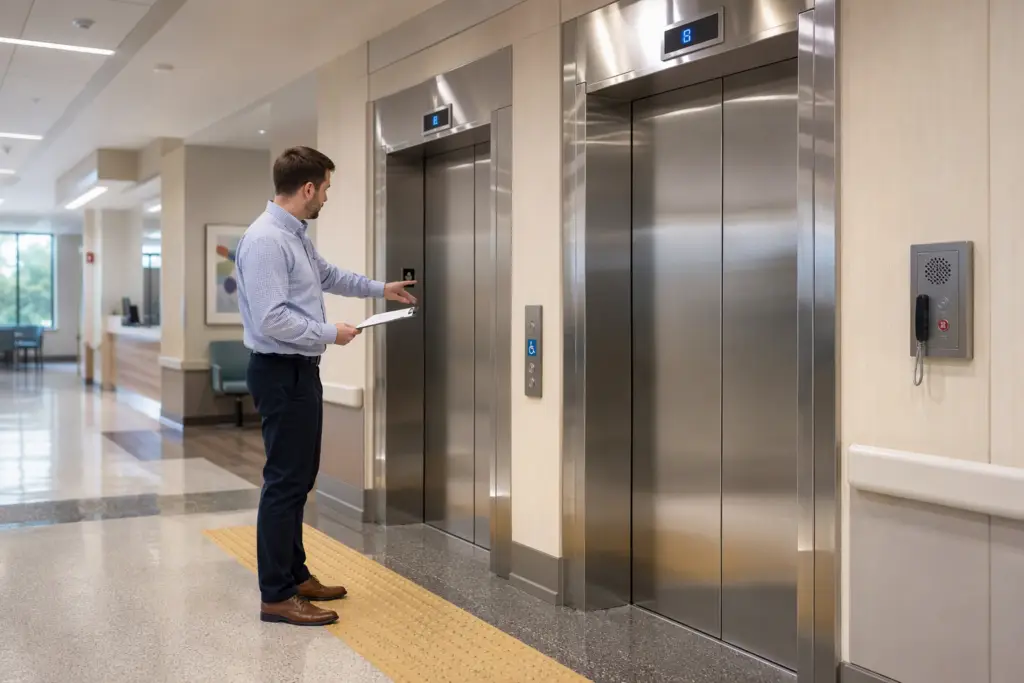
A compliant test involves pressing the emergency call button, confirming a live person answers within 60 seconds, verifying the monitoring party can identify the building and elevator location, and documenting the time, date, and tester’s name in the log. A test that connects to voicemail should be treated as a failed test and trigger immediate corrective action.
What are the state-specific elevator emergency phone regulations in Maryland, DC, Pennsylvania, and Virginia?
Each state enforces elevator emergency phone requirements through its own regulatory body, but all four jurisdictions served by Quality Elevator Company base their standards on ASME A17.1, with additional local amendments.
- Maryland: The Maryland Department of Labor (DLLR) enforces elevator safety under the Maryland Elevator Safety Law. The state has adopted ASME A17.1-2019 with Maryland-specific amendments. Emergency communication devices are inspected during annual Category 1 and periodic Category 5 tests.
- Washington DC: The DC Department of Consumer and Regulatory Affairs (DCRA) oversees elevator safety. DC has adopted ASME A17.1 and enforces strict ADA compliance given the concentration of federal facilities and public buildings.
- Pennsylvania: The Pennsylvania Department of Labor & Industry (DLI) administers elevator safety under the Pennsylvania Elevator and Kindred Equipment Law. Annual inspections include emergency phone verification.
- Virginia: The Virginia Department of Professional and Occupational Regulation (DPOR) regulates elevators under the Virginia Statewide Fire Prevention Code, adopting ASME A17.1 with periodic state amendments.
Can an elevator pass inspection with a non-functional emergency phone?
No — a non-functional elevator emergency phone is an automatic inspection failure in all four jurisdictions served by Quality Elevator Company, and the elevator will be placed out of service until the communication system is repaired and verified as functional.
State inspectors in Maryland, DC, Pennsylvania, and Virginia are required to test the emergency phone as part of every annual Category 1 inspection. If the call goes unanswered, connects to voicemail, or the device fails to initiate a call at all, the inspector will issue a written deficiency notice and may post an out-of-service tag on the elevator door.
Reinspection fees vary by jurisdiction but typically range from $150 to $500. More significantly, the building owner is liable for any incidents that occur while operating an elevator with a known, documented deficiency.
What does it cost to repair or replace an elevator emergency phone?
Elevator emergency phone repairs typically cost between $150 and $600 for component-level repairs, while a full communication device replacement ranges from $500 to $2,500 per elevator depending on the system type and whether cellular or VoIP infrastructure is used.
Cost factors include:
- Type of phone line: Traditional POTS (Plain Old Telephone Service) lines are being discontinued by carriers nationwide; buildings relying on landlines for elevator phones need cellular or VoIP conversion, which costs $400–$1,500 per unit installed
- Number of elevators: Multi-car installations may qualify for bundled pricing from service contractors
- Cab accessibility: Older elevator cabs with non-standard wiring require additional labor
- Monitoring service setup: If a new monitoring contract is established simultaneously, setup fees of $50–$200 may apply
One critical note for 2026: AT&T, Verizon, and most major carriers have been actively sunsetting copper POTS lines in urban markets including Baltimore, Philadelphia, and DC. If your elevator emergency phone relies on a traditional landline, you may lose service without warning. Cellular elevator phones using 4G LTE or 5G connectivity are now the industry standard for new and retrofitted installations.
What is a cellular elevator emergency phone and do I need one?
A cellular elevator emergency phone uses a built-in SIM card and cellular network — rather than a traditional landline — to connect emergency calls, and as of 2026, cellular units are the recommended solution for virtually all new installations and landline retrofits due to POTS network sunset across the mid-Atlantic region.
Advantages of cellular elevator phones include:
- No dependency on building telephone infrastructure or landline carriers
- Continued functionality if building phone service is disrupted
- Remote diagnostics capabilities — many cellular units can report signal strength, battery status, and test results to a management portal
- Easier compliance documentation through automated test logging
- Lower ongoing cost than maintaining a dedicated POTS line in many markets
Quality Elevator Company installs and services cellular elevator communication systems across Baltimore, Washington DC, Philadelphia, and Richmond, including units from manufacturers such as Pixel Technologies, Kings III, and Telequip Labs that carry UL listings and comply with ASME A17.1 Section 2.27.1.1.
What information does the person answering the elevator emergency phone need to know?
The person answering an elevator emergency phone call must be immediately able to identify the building name and address, the specific elevator ID or floor location, and have a documented protocol to contact emergency services or dispatch a rescue mechanic within a defined timeframe.
This is why generic answering services that simply take a message are non-compliant. The monitoring party must have:
- The building’s full address pre-loaded in their system
- The elevator number or designation (especially critical in multi-car buildings)
- Emergency contact numbers for building personnel
- A direct line to the elevator service contractor’s emergency dispatch
- A protocol for calling 911 if the situation warrants it
When Quality Elevator Company sets up or audits an emergency phone system, we verify that the monitoring center has a complete data sheet for each elevator — including make, model, machine room location, and the building’s physical access procedures — so that our mechanics can respond efficiently even at 2:00 AM.
How long can someone legally be trapped in an elevator before a rescue must occur?
There is no single federal law specifying a maximum entrapment time, but ASME A17.1 requires the emergency communication to be answered within 60 seconds, and most jurisdictions expect a qualified rescue to begin within 30 to 60 minutes of entrapment notification.
Practically speaking, entrapment duration benchmarks in 2026 industry practice are:
- 0–5 minutes: Monitoring center contacts building personnel and elevator service contractor
- 5–30 minutes: Mechanic on route; building personnel maintaining verbal contact with passenger
- 30 minutes: Industry benchmark for mechanic arrival in urban markets (Baltimore, DC, Philadelphia)
- 60 minutes: If no rescue has begun and passenger is in distress, fire department intervention is typically initiated
- 90+ minutes: Considered an extended entrapment; triggers regulatory reporting requirements in most jurisdictions
Extreme temperatures, medical vulnerability, or passengers in distress can make even a 15-minute entrapment a medical emergency. The communication system is the lifeline that allows responders to assess the situation and triage appropriately.
What records should building owners keep related to elevator emergency phone compliance?
Building owners should maintain a written log of every emergency phone test — including date, time, tester name, the number dialed, whether a live person answered, response time, and any deficiencies noted — retained for a minimum of three years or as required by local elevator authority regulations.
A complete compliance file for elevator emergency communication should include:
- Monthly test logs for each elevator cab
- Annual inspection certificates showing emergency phone as passed
- Service records for any repairs to the communication device
- The current programmed phone number and monitoring service contract
- Cellular carrier documentation (if cellular unit) including SIM status and carrier name
- Battery replacement records (backup power must be tested per ASME A17.1 Section 2.27.1.1.4)
- Any deficiency notices received from state inspectors and the corrective action taken
State inspectors in Maryland, DC, Pennsylvania, and Virginia can and do request these records during inspections. Missing documentation is treated similarly to a missing test — it creates a presumption of non-compliance.
Does a freight elevator or service elevator also need an emergency phone?
Yes — ASME A17.1 requires two-way emergency communication in freight elevators as well as passenger elevators, although the specific placement and operational requirements may differ based on whether the elevator is designated for freight-only use with no passenger access.
For freight elevators designated as “freight only” with no passenger access permitted:
- A two-way communication device is still required per ASME A17.1
- The device may be located in the machine room or hoistway rather than the cab in some configurations
- ADA requirements for visual signals may be relaxed if the elevator is not accessible to the public
For “passenger-freight” elevators — freight elevators permitted to carry passengers — all standard passenger elevator emergency phone requirements apply in full, including hands-free operation, 60-second answer requirement, and ADA accessibility compliance.
What should I look for when choosing an elevator emergency phone monitoring service?
When selecting a monitoring service, verify that they provide guaranteed 24/7 live-agent answering, have documented protocols for your specific building and elevators, can confirm ASME A17.1 compliance, and provide monthly test confirmation reports you can use for your compliance records.
Red flags to avoid:
- Services that cannot confirm live answering after hours — ask them directly what happens at 3:00 AM on a Sunday
- No written protocol for contacting emergency services
- No building-specific data sheet — if they don’t know your address immediately, they can’t dispatch effectively
- No documentation provided after monthly test calls
- Flat-rate contracts without SLA (Service Level Agreement) guarantees on answer time
Quality Elevator Company can recommend vetted monitoring services in the Baltimore, DC, Philadelphia, and Richmond markets, and we coordinate directly with your monitoring provider during installations and maintenance visits to ensure the complete system — from button press to mechanic dispatch — functions as a unified life-safety protocol.
What upgrades should I consider if my elevator’s emergency phone system is outdated?
If your elevator emergency phone is more than 10 years old, still relies on a POTS landline, lacks visual confirmation signals, or cannot provide remote diagnostics, you should prioritize a modernization that brings the system into compliance with current ASME A17.1-2019 standards and eliminates landline dependency before your carrier discontinues service.
A phased upgrade approach for 2026:
- Audit current system: Confirm what number is programmed, verify battery backup condition, test monthly and document results
- Assess landline dependency: Contact your carrier to determine if POTS service is scheduled for discontinuation in your area
- Evaluate cellular conversion: 4G/5G cellular units are code-compliant, carrier-independent, and typically less expensive to operate than legacy landlines
- Upgrade visual indicators: Ensure ADA-compliant visual connection confirmation is present — this is frequently missing in pre-2010 installations
- Establish monitoring contract: If you don’t have a documented, 24/7 monitored line, establish one immediately
- Implement automated monthly testing: Many modern cellular units can perform and document self-tests automatically, reducing administrative burden
Get Your Elevator Emergency Phone System Inspected Today
If you manage a building in Baltimore MD, Washington DC, Philadelphia PA, or Richmond VA and you’re not 100% certain your elevator emergency phone meets current ASME A17.1 and ADA requirements — the risk is not worth taking. A non-compliant communication system exposes your building to regulatory shutdown, civil liability, and most importantly, puts your passengers at risk.
Contact Quality Elevator Company for a free elevator assessment. Our IUEC-certified technicians will inspect your emergency communication system, test and document the programmed monitoring number, verify battery backup function, and provide a written compliance report you can submit to your insurer, property manager, or state elevator authority.
Call Quality Elevator Company today: 301-779-9116
Serving Baltimore MD • Washington DC • Philadelphia PA • Richmond VA
Need elevator service you can rely on? Quality Elevator Company is ready to help.