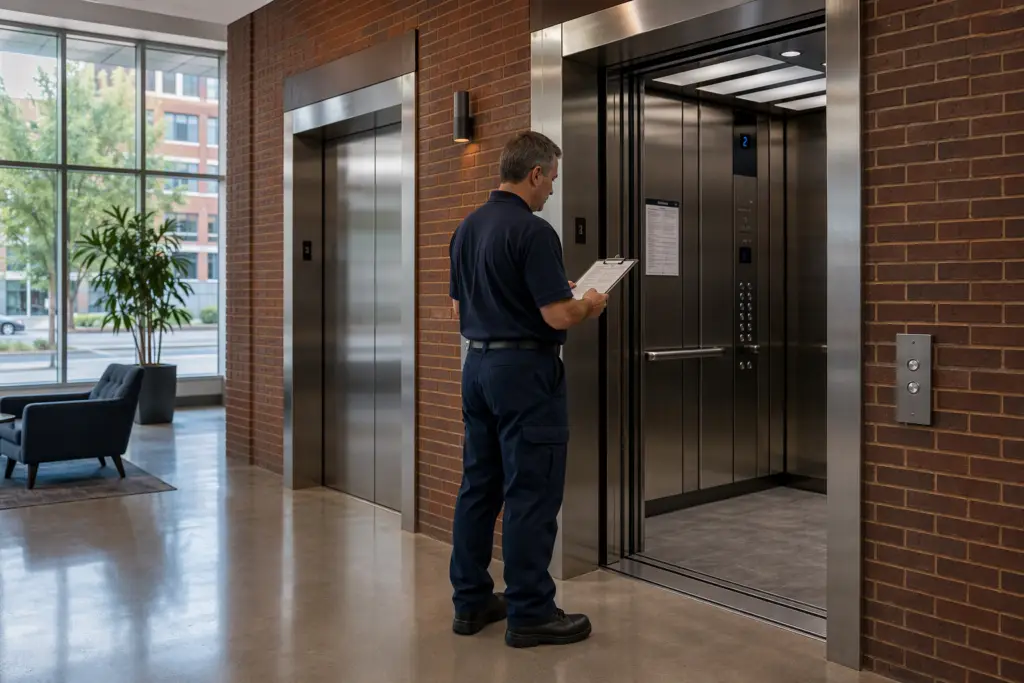
Diagnostic fees for elevator malfunctions typically range from a flat service-call charge to an hourly assessment rate, depending on the service provider, elevator type, and complexity of the issue. Many reputable elevator companies structure their diagnostic pricing separately from repair costs, so building owners understand exactly what they are paying for before authorizing any work.
What Does an Elevator Diagnostic Fee Actually Cover?

An elevator diagnostic fee covers the labor, specialized tools, and documentation required to identify the root cause of a malfunction — not the repair itself.
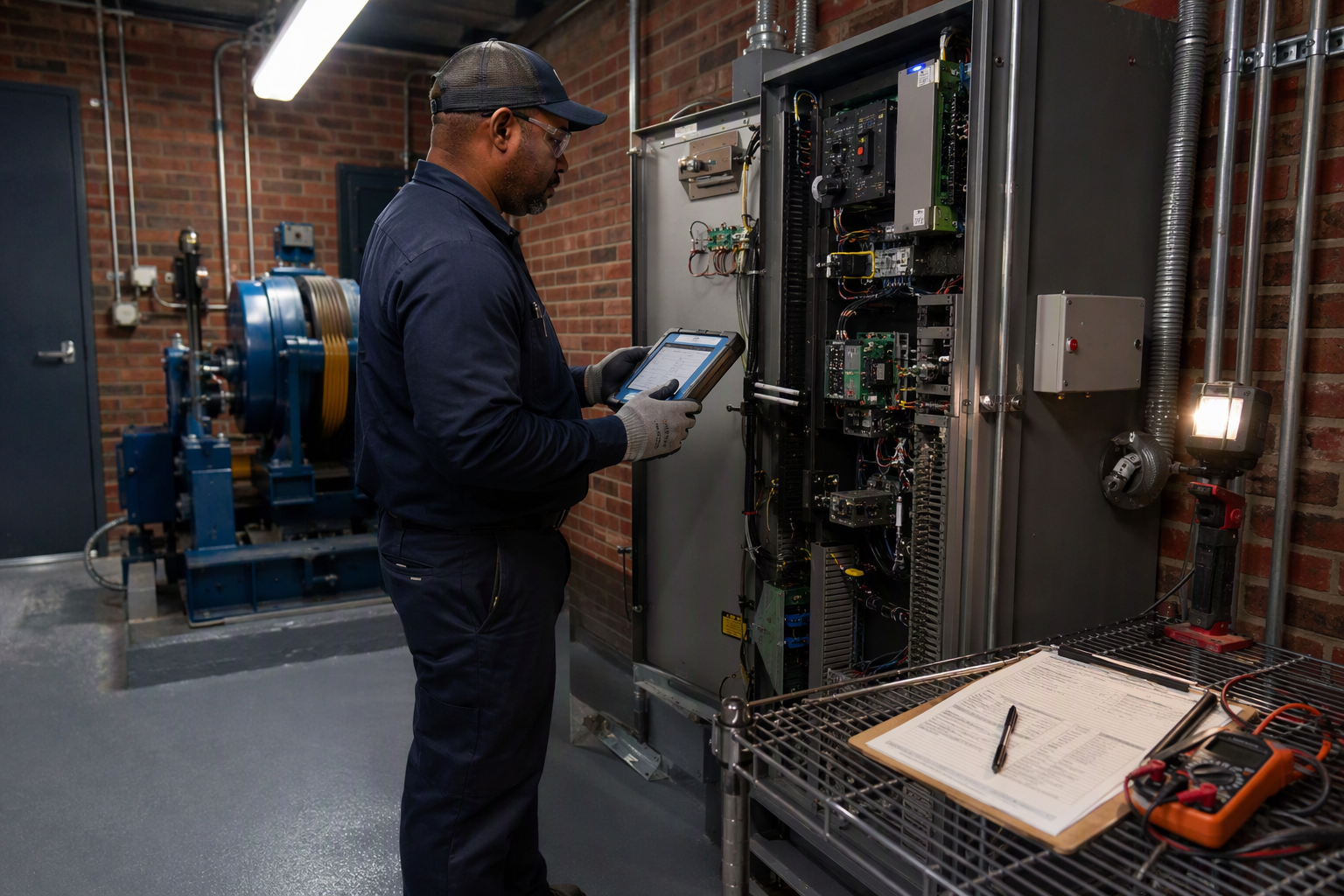
A professional diagnostic visit typically includes physical inspection of the car, hoistway, machine room, and control cabinet; retrieval and interpretation of fault codes from the controller; testing of safety circuits, door operators, and drive systems; and a written report of findings with recommended corrective actions. Because modern traction and hydraulic elevators rely on proprietary microprocessor controllers, accurately reading fault histories requires both manufacturer-specific diagnostic software and a trained technician who understands elevator logic — factors that justify a structured fee rather than a cursory visual inspection.
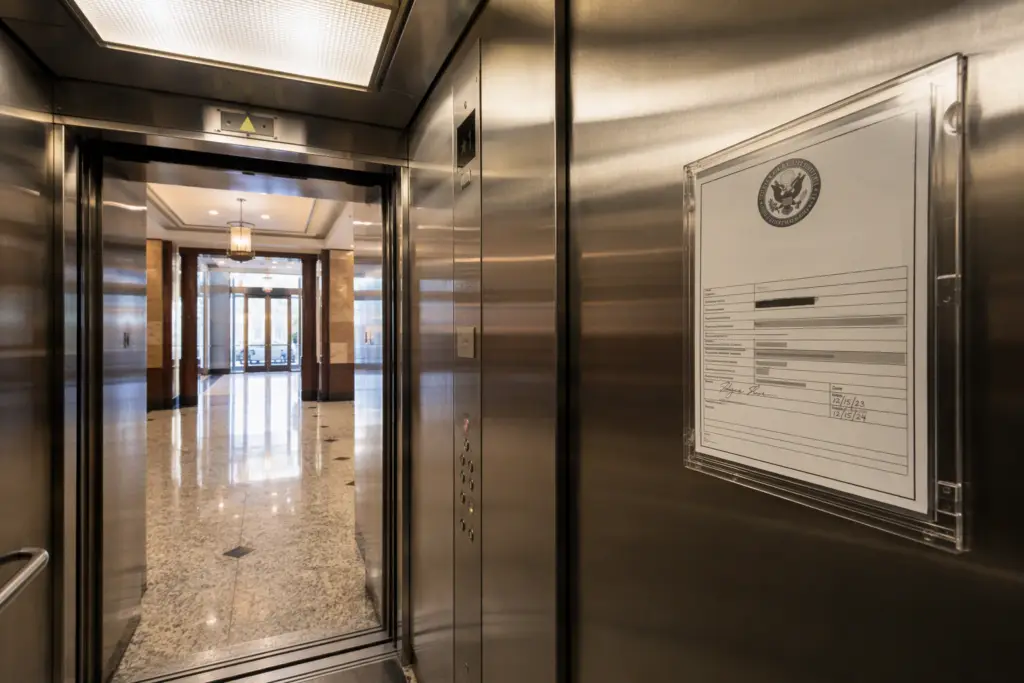
The diagnostic report is also a compliance document. Under ASME A17.1 Safety Code for Elevators and Escalators, maintenance and inspection records must be retained and made accessible to the authority having jurisdiction (AHJ), so a properly documented diagnostic supports the building owner’s regulatory obligations.
Why Do Diagnostic Fees Vary So Much Between Elevator Companies?
Diagnostic fees differ because the scope of assessment, technician certification level, travel zone, and reporting requirements vary significantly from one provider to another.
Some companies charge a flat trip fee that covers only travel and a basic visual check, then bill additional hours if fault-code analysis or mechanical disassembly is required. Others offer a comprehensive flat-rate diagnostic that includes a written report and preliminary repair estimate in a single charge. Building owners comparing quotes should confirm whether the fee includes controller diagnostics, written documentation, and a repair scope — or only a technician’s travel time.
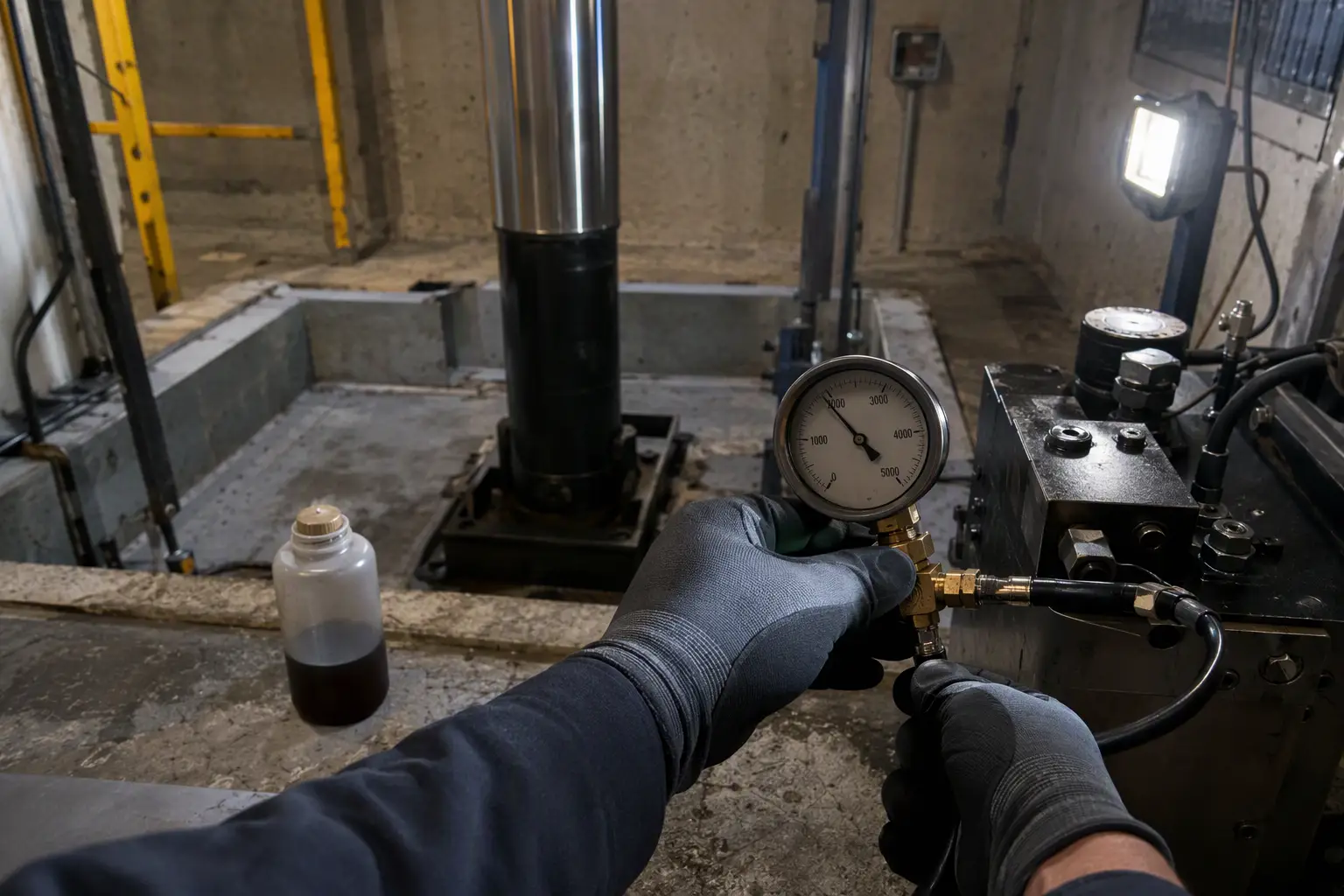
Elevator type also influences cost. A hydraulic elevator diagnostic may require oil sampling and cylinder pressure testing in addition to electrical checks. A traction elevator may require governor testing and rope measurements. Machine-room-less (MRL) units require access to in-hoistway components that take additional time to safely reach.
How Does Elevator Type Affect Diagnostic Complexity and Cost?
The type of elevator directly determines which systems must be assessed, how long the process takes, and therefore what a thorough diagnostic costs.
| Elevator Type | Primary Systems Assessed | Typical Diagnostic Scope | Relative Complexity |
|---|---|---|---|
| Hydraulic (in-ground) | Power unit, cylinder, jack, oil, valve | Pressure test, oil sample, seal check, controller fault codes | Moderate |
| Hydraulic (above-ground) | Above-ground jack assembly, ram seals, power unit | Pressure test, leak inspection, drive diagnostics | Moderate |
| Geared Traction | Motor, gearbox, controller, ropes, governor, safeties | Rope measurements, lubrication check, controller fault codes, brake test | Moderate-High |
| Gearless Traction | Permanent-magnet motor, drive, ropes, controller | Drive diagnostics, encoder check, rope and sheave inspection | High |
| Machine-Room-Less (MRL) | In-hoistway drive, controller, ropes | In-hoistway access, drive fault codes, controller board inspection | High |
| Wheelchair Lift / LULA | Drive motor, safety devices, platform, controls | Safety circuit test, drive check, ADA compliance review | Low-Moderate |
Is the Diagnostic Fee Separate from the Repair Estimate?
Yes — a legitimate elevator service company always separates the diagnostic fee from the repair estimate so building owners can make an informed decision before authorizing any work.
Bundling diagnostic and repair costs without disclosure is a red flag. A professional provider will issue a written diagnostic report first, then a separate repair proposal based on the findings. This two-step approach protects building owners from paying for unnecessary repairs and ensures that the technician’s findings are documented independently of any commercial interest in a specific repair outcome. Some service agreements credit the diagnostic fee against the repair cost if the owner proceeds with the same company — building owners should ask about this when requesting a quote.
What Happens During a Professional Elevator Diagnostic Visit?
A professional diagnostic follows a structured protocol to ensure every system is evaluated safely and methodically before any conclusions are drawn.
- Pre-visit documentation review: The technician reviews the elevator’s maintenance logbook, previous inspection reports, and any certificate of operation to understand the unit’s service history and current regulatory status.
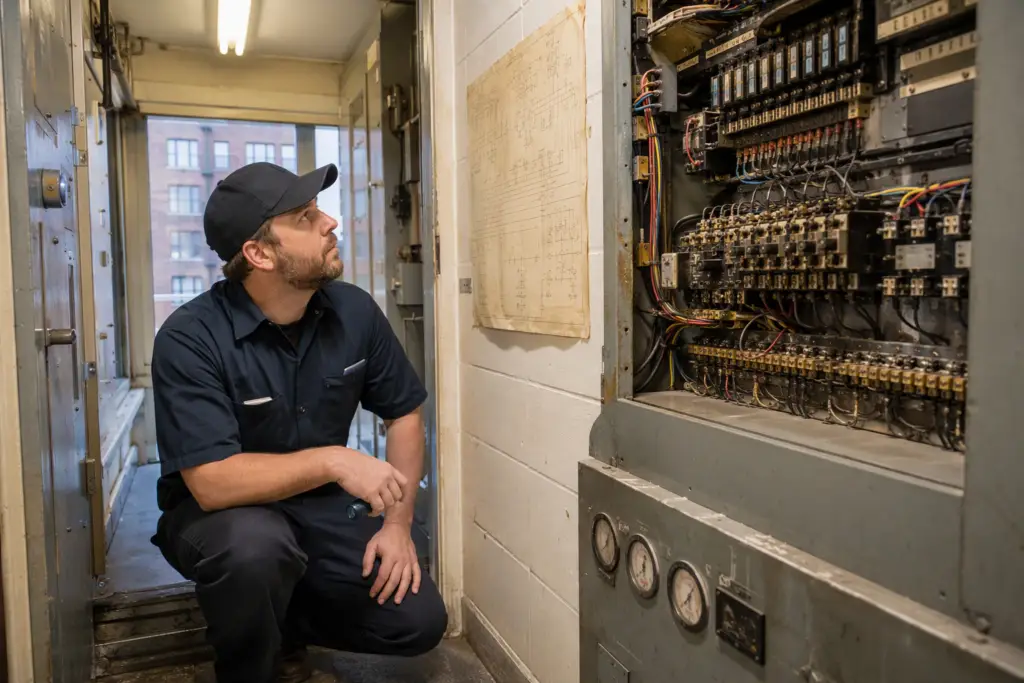
- Machine room and controller inspection: The technician examines the controller cabinet for fault codes, burned components, loose wiring, and environmental issues such as heat or moisture that could cause intermittent faults.
- Car and hoistway inspection: The technician rides the car through all floors, observing leveling accuracy, door timing, ride quality, and any unusual noises or vibrations.
- Safety system verification: Safety circuits — including door interlocks, governor, safeties, buffers, and emergency lighting — are checked for proper operation in accordance with ASME A17.1 Safety Code for Elevators and Escalators.
- Drive and motor diagnostics: The drive system is tested under load and no-load conditions. Fault code memory is downloaded from the controller where the system permits.
- Findings documentation: A written report is prepared identifying each deficiency, its likely cause, the applicable code requirement, and the recommended corrective action.
- Owner briefing: The technician reviews findings with the building owner or facilities manager, explains the priority of each item, and answers questions before leaving the site.
Are There Code Requirements That Mandate Diagnostic Inspections After a Malfunction?
Yes — both federal safety standards and state-level regulations in Maryland, Virginia, Pennsylvania, and the District of Columbia include provisions that require formal assessment before a malfunctioning elevator returns to service.
Under ASME A17.1 Safety Code for Elevators and Escalators, elevators that experience certain safety-related failures must be taken out of service and assessed by a qualified mechanic before they are returned to operation. This is not optional — it is a safety requirement that also protects building owners from liability.
In Maryland, the Maryland Department of Labor, Division of Labor and Industry, Elevator and Escalator Safety requires that maintenance, repair, and inspection records be kept at a readily accessible central location in the building. A documented diagnostic is the foundation of that records requirement. Tests performed for required inspections must be performed by a licensed elevator mechanic, and the state conducts a final acceptance inspection before an elevator is returned to service following modification or alteration.
In the District of Columbia, the DC Department of Buildings (DOB) requires that alterations and repairs follow the Existing Building Code and that a DOB permit is obtained before taking an elevator out of service. This means a diagnostic finding that leads to a repair or alteration triggers a permit requirement.
In Pennsylvania, the Pennsylvania Department of Labor and Industry requires that after a major repair, replacement, or alteration, an elevator may not return to service until the Department inspects and passes it. Owners must also submit an accident report when an elevator incident causes a fatality or requires professional medical care.
In Virginia, under the Virginia Uniform Statewide Building Code (13VAC5-63), periodic tests must be witnessed by the local code official, and the local building department enforces elevator compliance. A malfunction that requires repair may trigger a local inspection before the elevator returns to service.
How Does ADA Compliance Factor into an Elevator Diagnostic?
An elevator diagnostic should always include a review of Americans with Disabilities Act (ADA) accessibility requirements, because a malfunctioning elevator in a public accommodation is simultaneously a safety issue and a civil rights compliance issue.
Under the ADA, elevators in multi-story buildings that are subject to the Act must be maintained in operable working condition. A documented malfunction history — particularly one involving door failures, leveling problems, or extended out-of-service periods — can expose building owners to ADA complaints and legal liability. The diagnostic report should therefore note any ADA-relevant deficiencies such as inaccurate floor leveling that creates a tripping hazard, door timing that does not accommodate people with mobility impairments, or emergency communication systems that do not serve people with hearing impairments.
What Are the Most Common Causes of Elevator Malfunctions That Trigger a Diagnostic?
The most common causes of elevator malfunctions that require a professional diagnostic include door system failures, controller faults, drive system issues, and hydraulic system problems.
Door systems are statistically the most frequent source of elevator problems, as door operators, rollers, gibs, and safety edges experience continuous wear. Controller faults — including corrupted software, failing boards, and power supply issues — are increasingly common as aging controllers reach end of life. Drive system issues in traction elevators, such as worn brake linings, failing contactors, or deteriorating ropes, require immediate professional assessment because they directly affect safety. In hydraulic elevators, oil leaks, failing packing seals, and power unit problems can cause slow leveling, sinking floors, or complete shutdown. A thorough diagnostic distinguishes between a superficial symptom and its underlying root cause, preventing repeat failures after repair.
How Long Does an Elevator Diagnostic Typically Take?
A thorough elevator diagnostic typically takes between two and four hours for a standard commercial elevator, though complex systems or elevators with multiple faults may require additional time.
Simple diagnostics on a single-car hydraulic elevator in a low-rise building may be completed more quickly, while a gearless traction elevator in a high-rise with multiple reported symptoms — or one that requires controller board testing and rope measurements — will take longer. Building owners should be cautious of providers who offer extremely rapid diagnostics, as a cursory inspection that misses a secondary fault can lead to repeat breakdowns shortly after repair. Quality Elevator Company structures its diagnostic process to be methodical rather than rushed, ensuring findings are complete before a repair scope is issued.
What Documentation Should a Building Owner Receive After a Diagnostic?
Building owners should receive a written diagnostic report that identifies each deficiency, cites the applicable code requirement, classifies the urgency of each item, and recommends corrective action.
A professional report should include the elevator’s unit identification number, the date and scope of the diagnostic, the name and license or certification number of the technician, a fault-code log from the controller if accessible, photographs of deficiencies where practical, and a clear separation between safety-critical items that require immediate correction and maintenance items that can be scheduled. This documentation is also essential for the building’s regulatory compliance record. Under Maryland’s requirements, maintenance and repair records must be kept at a readily accessible location in the building. In the District of Columbia, third-party inspection reports must be submitted to the DC Department of Buildings (DOB) through the Citizen Access Portal to support the certificate of inspection process.
How Does a Diagnostic Fee Compare to the Cost of Deferred Assessment?
Paying a diagnostic fee promptly after a malfunction is almost always less costly than deferring assessment, because undiagnosed faults tend to escalate into more extensive and expensive failures.
A door operator that malfunctions and is not properly diagnosed may eventually damage the hoistway door equipment, requiring replacement of multiple components rather than a single part. A hydraulic leak that is not traced to its source will continue to worsen, potentially contaminating the pit and requiring environmental remediation in addition to mechanical repair. Controller faults that are not identified can cause nuisance shutdowns that disrupt building operations and trigger tenant complaints. Beyond mechanical costs, an elevator that experiences a passenger entrapment — often a consequence of an undiagnosed fault — creates safety and liability exposure that far exceeds any diagnostic fee. Quality Elevator Company recommends treating diagnostic fees as a risk management investment rather than an overhead cost.
What Should Building Owners Ask Before Authorizing a Diagnostic?
Building owners should ask a specific set of questions before authorizing a diagnostic to ensure they receive a thorough, documented assessment from a qualified provider.
- Is the technician performing the diagnostic a licensed elevator mechanic in the applicable state or jurisdiction?
- Does the diagnostic fee include controller fault-code retrieval and written documentation, or only a visual inspection?
- Will the written report identify each deficiency, its urgency classification, and the applicable code reference?
- Is the diagnostic fee credited against repair costs if the owner proceeds with the same company?
- Will the provider obtain any required permits before taking the elevator out of service or beginning repair work?
- How will the provider communicate findings — written report only, or also a verbal briefing with the facilities manager?
- Does the scope include a review of ADA accessibility compliance in addition to mechanical and electrical systems?
How Does the Diagnostic Process Differ for Emergency vs. Scheduled Assessments?
Emergency diagnostics — triggered by passenger entrapments, sudden shutdowns, or safety system activations — follow the same technical protocol as scheduled assessments but are conducted under greater time pressure and may involve coordination with local authorities.
When a passenger is trapped, the immediate priority is safe extraction, which in most jurisdictions must be performed by a licensed elevator mechanic — not building staff or fire department personnel acting alone. Once the car is safely emptied and the elevator is out of service, the diagnostic can begin. Emergency diagnostics often uncover faults that had been developing over time, making the post-entrapment assessment an opportunity to identify systemic maintenance deficiencies. Under OSHA general industry standards, workers who perform elevator emergency procedures must be properly trained, and building owners are responsible for ensuring that emergency response protocols are in place.
Scheduled diagnostics, by contrast, allow the technician to review historical maintenance records in advance, coordinate with building management to minimize occupant disruption, and plan for any specialized tools or equipment needed for the specific elevator model.
What Licensing Requirements Apply to Technicians Performing Elevator Diagnostics in Quality Elevator Company’s Service Markets?
Licensing requirements for elevator mechanics and contractors differ across the four jurisdictions served by Quality Elevator Company, and building owners should verify that any provider employs appropriately credentialed technicians.
In Maryland, a person must be licensed by the Maryland Elevator Safety Review Board as an elevator mechanic before working on elevator units, and a business must be licensed as an elevator contractor. Tests performed for required inspections must be performed by a licensed elevator mechanic.
In the District of Columbia, the DC Board of Industrial Trades — within the Department of Licensing and Consumer Protection (DLCP) — licenses elevator contractors, elevator mechanics, and elevator inspectors. DOB elevator permits require a copy of the elevator contracting license. Applicants for a DC elevator inspector license must meet the ASME QEI-1 standard or equivalent.
In Virginia, no one may work as an elevator mechanic without state certification from the Virginia Board for Contractors (DPOR), unless working under the direct and immediate supervision of a certified mechanic. Certification requires at least three years of industry experience and passing an approved examination. Installing, repairing, or removing elevators requires a contractor license with the Elevator/Escalator Contracting (EEC) specialty.
In Pennsylvania, the Pennsylvania Department of Labor and Industry regulates elevator construction and repair through the Uniform Construction Code. Building owners should confirm that any diagnostic provider is working within the applicable regulatory framework.
How Do Inspection Cycles Relate to Diagnostic Needs in Each Jurisdiction?
Mandatory inspection cycles set the minimum frequency at which elevator conditions are formally assessed, but malfunctions can and do occur between required inspections — making on-demand diagnostics an essential complement to scheduled inspections.
In the District of Columbia, the DC Department of Buildings (DOB) requires a periodic inspection and a Category 1 inspection every 12 months and a Category 5 inspection every 60 months, each by an ASME QEI-certified inspector. A DC elevator certificate of inspection is valid for two years.
In Maryland, each elevator unit must have a periodic annual inspection, and owners must ensure that elevators suspended by wire ropes and similar means receive a comprehensive five-year inspection.
In Pennsylvania, electric elevators, hydraulic elevators, and escalators must have periodic inspections at intervals of no more than six months. A certificate of operation is valid for 24 months for equipment on a six-month inspection cycle and 48 months for equipment on a 12-month cycle. Starting December 20, 2026, Category 1 tests must be performed every year as a stand-alone requirement under the updated regulation.
In Virginia, under the Virginia Uniform Statewide Building Code, all elevators and escalators require an annual periodic inspection, and a locality may require a six-month periodic inspection. Periodic tests follow ASME A17.1 Appendix N intervals and must be witnessed by the code official.
Because malfunctions often occur between required inspection dates, building owners should not wait for the next scheduled inspection to address a reported fault. Quality Elevator Company advises building owners to schedule a diagnostic assessment whenever an elevator exhibits abnormal behavior, regardless of when the last required inspection occurred.
Can a Diagnostic Fee Be Avoided If the Building Has an Elevator Maintenance Contract?
Whether a diagnostic visit is included in a maintenance contract or billed separately depends entirely on the contract’s scope — building owners must read the contract terms carefully to understand what is and is not covered.
Full-service maintenance agreements typically include routine inspections, lubrication, adjustments, and some level of callback response for malfunctions, but may exclude diagnostic work that involves opening control cabinets, downloading fault logs, or assessing components not covered by the maintenance scope. Partial-service or oil-and-grease contracts almost always exclude diagnostic labor. Building owners who are uncertain about their contract’s coverage should request a written scope clarification from their service provider before a malfunction occurs, rather than discovering exclusions during an emergency.
A well-structured maintenance contract from a qualified provider should define clearly what constitutes a covered callback, what triggers an additional diagnostic fee, and how findings will be documented. Quality Elevator Company recommends that building owners review their maintenance agreements annually to ensure the contract scope aligns with the age and condition of their elevator equipment.
What Red Flags Indicate a Low-Quality Elevator Diagnostic?
Several warning signs indicate that a diagnostic assessment may be superficial or unreliable, leaving the building owner with incomplete information and ongoing risk.
A diagnostic completed in under 30 minutes for a commercial elevator almost certainly omits controller fault analysis, safety circuit testing, or load testing. A report that lists only observed symptoms without identifying root causes provides no actionable basis for repair decisions. A provider who recommends major component replacement immediately after a brief visual inspection — without documented fault codes or measured data to support that recommendation — may be upselling rather than diagnosing. Any diagnostic performed by an unlicensed technician is both legally non-compliant in Maryland, DC, and Virginia and technically unreliable. Finally, a diagnostic that produces no written documentation cannot serve as evidence of due diligence for regulatory or liability purposes.
How Should Building Owners Prepare for an Elevator Diagnostic Visit?
Preparing for a diagnostic visit helps the technician work efficiently, reduces the time the elevator is out of service, and ensures the findings are as complete as possible.
- Gather the elevator’s maintenance logbook, previous inspection reports, and current certificate of operation.
- Document the specific symptoms reported by users — floor, time of day, direction of travel, frequency, and any observed sounds or movements.
- Ensure access to the machine room, pit, and any penthouse spaces is unobstructed and properly lit.
- Notify building occupants of the planned out-of-service period and arrange for ADA-compliant alternative access if required.
- Have a facilities representative available during the diagnostic to provide access, answer history questions, and receive the technician’s briefing at the end of the visit.
- Confirm that the elevator’s service disconnect and pit lighting are functional before the technician arrives.
How Does Quality Elevator Company Approach Elevator Diagnostics in Baltimore, Washington DC, Philadelphia, and Richmond?
Quality Elevator Company provides elevator diagnostic services across its four service markets — Baltimore MD, Washington DC, Philadelphia PA, and Richmond VA — with each diagnostic structured to meet the specific regulatory requirements of the applicable jurisdiction.
In each market, the diagnostic process is aligned with the code edition and regulatory authority having jurisdiction: the DC Department of Buildings (DOB) in Washington DC; the Maryland Department of Labor, Division of Labor and Industry in Baltimore; the Pennsylvania Department of Labor and Industry in Philadelphia; and the local building department under the Virginia Uniform Statewide Building Code in Richmond. This jurisdiction-specific approach ensures that diagnostic findings and repair recommendations are actionable within the correct regulatory framework, and that any permits or notifications required before repair work begins are identified at the diagnostic stage. Quality Elevator Company’s diagnostic reports are structured to support the building owner’s compliance documentation requirements in each jurisdiction.
What Should Building Owners Do Immediately After Discovering an Elevator Malfunction?
Building owners should follow a clear sequence of steps immediately after discovering an elevator malfunction to protect occupants, limit liability, and set the stage for an efficient diagnostic.
- Take the elevator out of service: Post clear out-of-service signage at every floor and lock off the elevator from further use until the cause of the malfunction is identified.
- Ensure no passengers are trapped: Confirm through visual check and intercom that the car is empty. If a passenger is trapped, contact a licensed elevator mechanic immediately — do not attempt non-professional rescue.
- Document the circumstances: Record the date, time, floor location, direction of travel, and any user reports of the malfunction for inclusion in the diagnostic briefing.
- Review regulatory notification requirements: In Pennsylvania, the owner must submit an accident report to the Department of Labor and Industry when an elevator accident causes a fatality or requires professional medical care. Check applicable requirements in DC, Maryland, and Virginia with the relevant authority having jurisdiction.
- Contact a licensed elevator service company: Schedule a diagnostic assessment with a provider whose technicians hold the appropriate state or district license for the jurisdiction where the elevator is located.
- Do not authorize repairs without a diagnostic report: Repairs made without a documented diagnosis may address symptoms rather than root causes and may require permits that the building owner is unaware of.
- Provide alternative accessible access: Under the ADA, building owners must ensure that programs and services remain accessible to people with disabilities, which may require temporary accommodation plans during the out-of-service period.
Contact Quality Elevator Company for a free elevator assessment at 301-779-9116.
Need elevator service you can rely on? Quality Elevator Company is ready to help.