Elevator Modernization: Data, Compliance & Industry Guidance for DC, Maryland, Pennsylvania & Virginia
The average commercial elevator in the United States is decades old. When an elevator’s control systems, hydraulic power units, door operators, or cab finishes reach the end of their useful life, modernization — rather than full replacement — is typically the most practical and cost-effective path forward. For building owners in the District of Columbia, Maryland, Pennsylvania, and Virginia, modernization also triggers specific permit, inspection, and code-compliance obligations that vary by jurisdiction.
Quality Elevator Company supports building owners through every phase of the modernization process, from initial assessment through permit closeout and regulatory certification.
What Is Elevator Modernization?
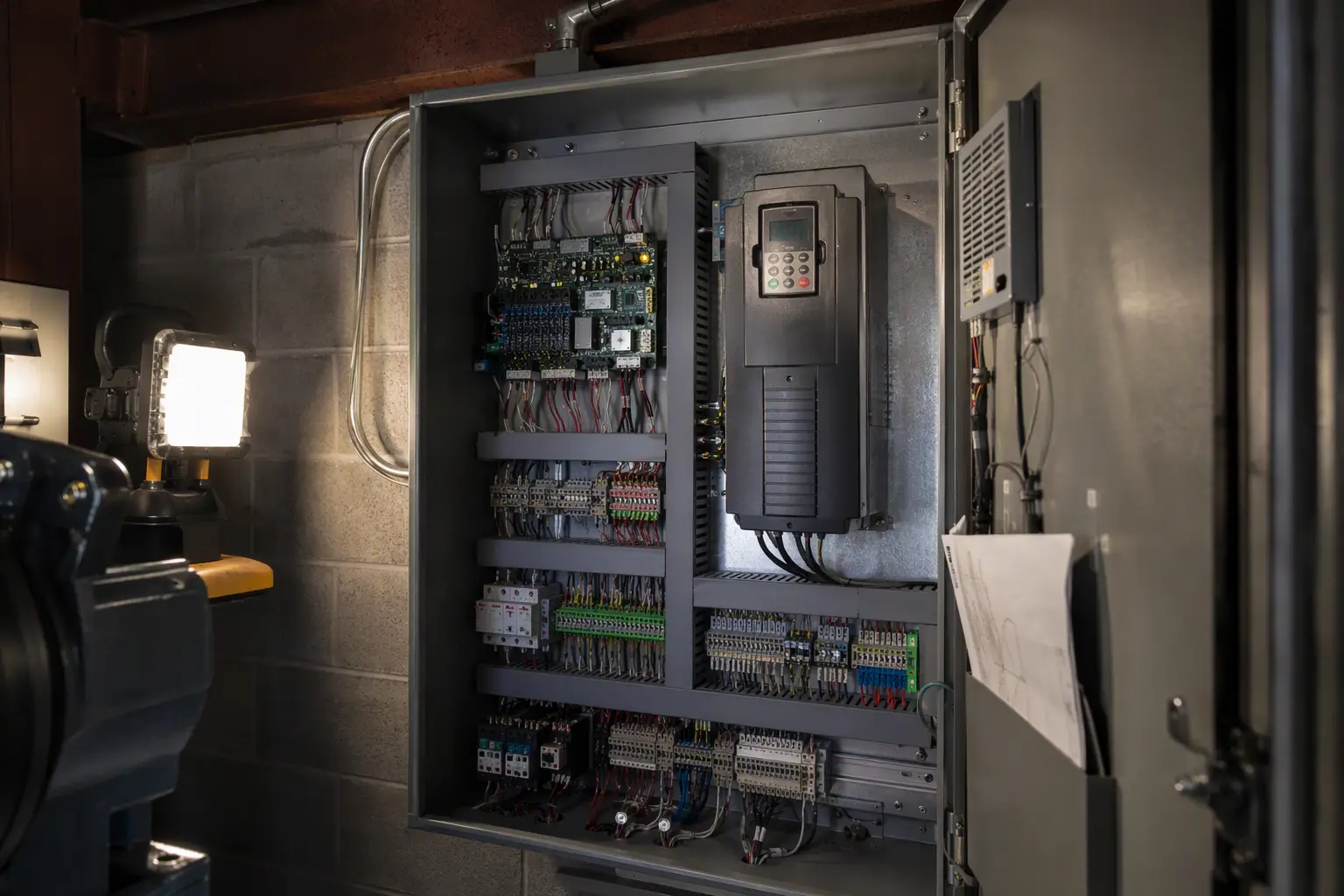
Elevator modernization is the selective replacement or upgrading of an elevator’s components without removing the entire hoistway structure. A modernization project may address one system — such as the controller — or may encompass the drive system, door operator, safety devices, cab interior, and communications equipment simultaneously. The scope is determined by the age of the equipment, the condition of individual components, and the compliance requirements of the applicable code edition.
Modernization differs from routine maintenance and from full replacement. Routine maintenance preserves existing components; full replacement involves removing the elevator entirely and installing a new unit. Modernization occupies the middle ground, preserving the hoistway and structural elements while renewing the mechanical, electrical, and safety systems that most directly affect performance and compliance.
Why Do Building Owners Modernize Elevators?
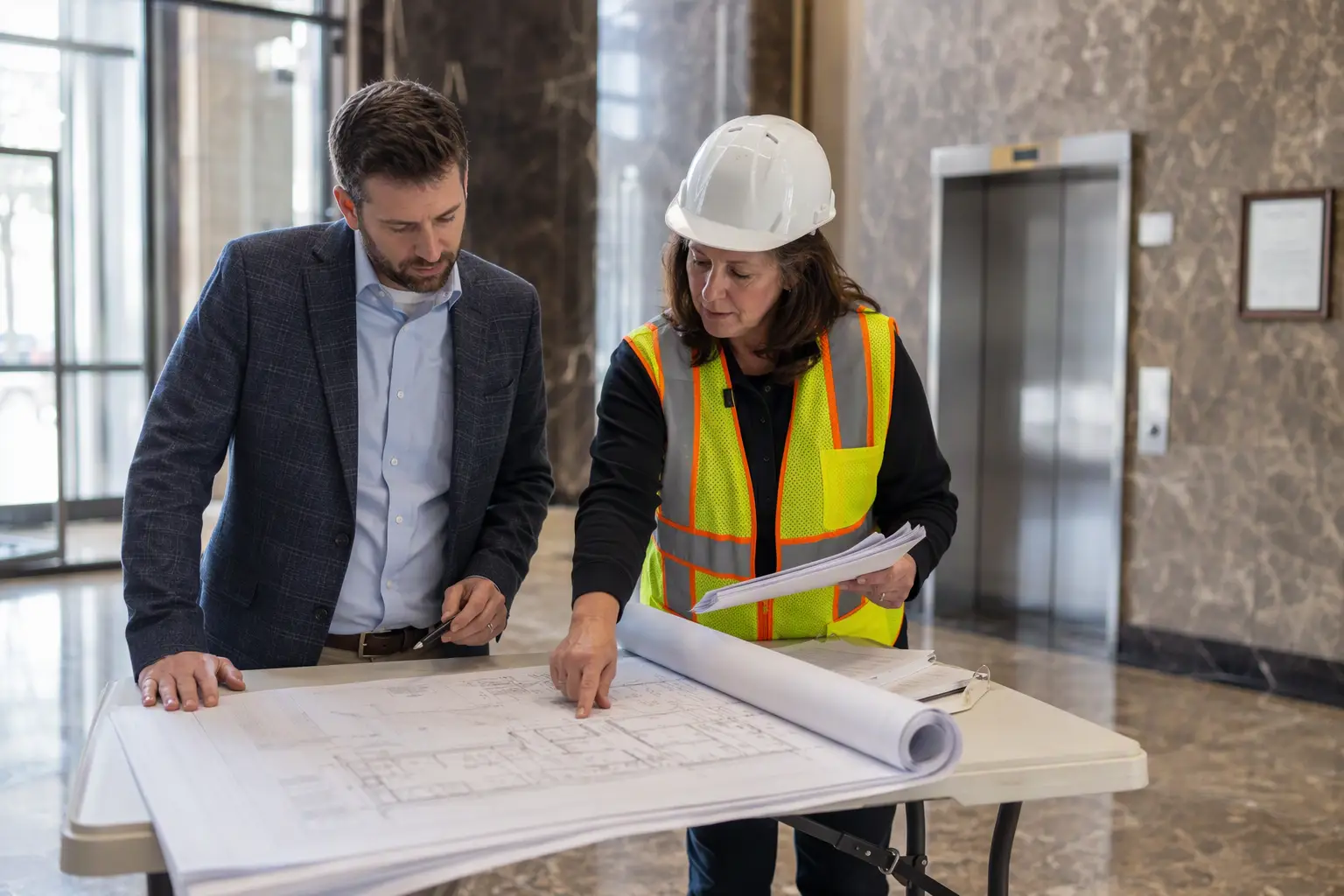
The decision to modernize is driven by a combination of functional, regulatory, and economic factors:
- Component obsolescence: Control systems, relay logic panels, and hydraulic power units manufactured before the widespread adoption of microprocessor controls are no longer supported by original manufacturers, making replacement parts difficult or impossible to source.
- Code compliance: Alterations to an existing elevator trigger review under the applicable edition of the ASME A17.3 Safety Code for Existing Elevators and Escalators, and jurisdictions across the region each enforce a specific adopted edition of ASME A17.1/CSA B44 for new work.
- Accessibility requirements: The Americans with Disabilities Act (ADA) requires accessible routes in public accommodations and commercial facilities. Cab dimensions, door timing, control panel heights, and two-way emergency communication systems are all areas where older elevators may fall short of current accessibility standards.
- Energy efficiency: Older hydraulic systems and DC motor drives consume substantially more energy than modern variable-frequency drive (VFD) traction systems or updated hydraulic power units with soft-start technology.
- Reliability and tenant satisfaction: Aging equipment experiences higher rates of entrapment, door malfunction, and unscheduled downtime — issues that directly affect occupant safety and tenant retention in commercial buildings.
- Insurance and liability: Recurring incidents on aging equipment can affect a building owner’s liability exposure and insurance premiums.
What Does an Elevator Modernization Project Typically Include?
The scope of a modernization project is unique to each elevator, but common components addressed include:
- Control system: Replacing relay-logic or early solid-state controllers with modern microprocessor-based dispatching and control systems improves ride quality, reduces callbacks, and enables remote diagnostics.
- Drive system: For traction elevators, upgrading to a variable-frequency drive (VFD) reduces energy consumption and wear. For hydraulic elevators, replacing older single-speed pumping units with variable-speed units or low-pressure systems reduces heat generation and fluid consumption.
- Door operator and door equipment: High-cycle door operators with variable-speed door control are the most frequent source of elevator service calls. Modernizing door equipment — including hanger assemblies, sills, and gibs — significantly reduces entrapment risk and callback frequency.
- Safety devices: Governor-safeties, buffers, and car safety devices may require testing, adjustment, or replacement to meet the requirements of the applicable ASME A17.1 edition in force for the jurisdiction.
- Cab interior and fixtures: Flooring, wall panels, lighting (including LED conversion), handrails, and control panel upgrades to meet ADA button-height and Braille requirements.
- Emergency communications: Two-way voice communication systems and, where required by the applicable code edition, updated emergency lighting and alarm systems.
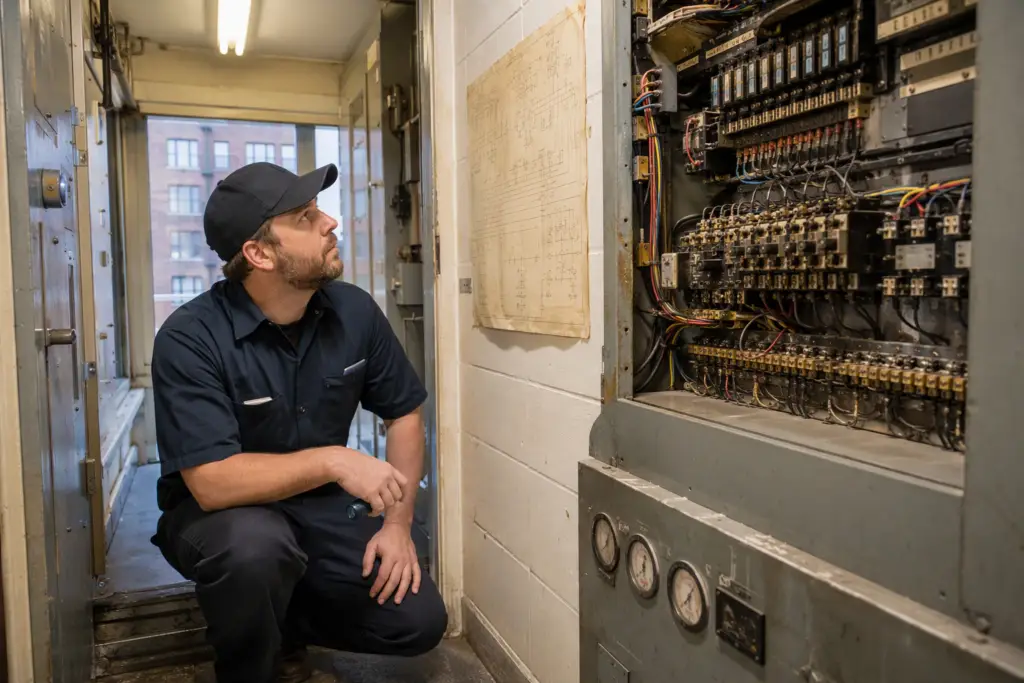
- Machine room equipment: Selector, relay panels, and outdated wiring harnesses are typically replaced alongside the controller.
What Are the Code Requirements for Elevator Modernization in DC, Maryland, Pennsylvania, and Virginia?
Each jurisdiction in the Quality Elevator Company service area enforces its own adopted edition of the ASME A17.1/CSA B44 Safety Code for Elevators and Escalators. The edition that governs a modernization project depends on where the elevator is located and, in some jurisdictions, when the permit application is filed.
District of Columbia
The DC Department of Buildings (DOB) oversees elevator permits and certificates. The District has adopted ASME A17.1-2013/CSA B44-13 as referenced by the 2017 DC Building Code, effective May 29, 2020. Alterations and modernizations of existing DC elevators follow the Existing Building Code, and a DOB permit is required before work begins. During a permitted modernization, a DC elevator’s certificate of inspection may be temporarily suspended. The DC Board of Industrial Trades licenses elevator contractors and mechanics working in the District, and DOB elevator permits require a copy of the elevator contracting license and the master electrician license. DOB plans to adopt new construction codes based on the 2024 model codes by the end of 2027, which will likely update the referenced ASME edition.
Maryland
The Maryland Department of Labor, Division of Labor and Industry, Elevator and Escalator Safety governs elevator work statewide. Maryland adopted ASME A17.1-2022/CSA B44:22 with Maryland changes, effective June 17, 2026. The edition that applies to a specific elevator depends on when its installation contract was signed. The Maryland Elevator Safety Review Board licenses elevator mechanics and contractors; contractors must carry at least $1,000,000 in general liability insurance. After a modernization, the State conducts a final acceptance inspection before the elevator returns to service. Owners must register the unit with the Commissioner, and the annual re-registration and periodic inspection cycle continues following completion.
Pennsylvania
The Pennsylvania Department of Labor and Industry (L&I), Bureau of Occupational and Industrial Safety, Elevator Section, has statewide jurisdiction including Philadelphia. Until December 20, 2026, Pennsylvania elevator construction, repair, replacement, and alteration must comply with ASME A17.1-2000 including the A17.1a-2002 addenda. For permit applications made on or after December 20, 2026, ASME A17.1-2016 with Pennsylvania modifications applies. A permit application to L&I is required before modernization work begins, and the Department conducts an acceptance inspection before the elevator returns to service. Starting December 20, 2026, Category 1 tests must be performed annually as a stand-alone requirement.
Virginia
In Virginia, local building departments enforce the Virginia Uniform Statewide Building Code (13VAC5-63), which incorporates ASME A17.1/CSA B44-2019 effective January 18, 2024. Each city or county conducts inspections; in the City of Richmond, the Bureau of Permits and Inspections handles final acceptance inspections of modernized elevators. The Virginia Board for Contractors (DPOR) licenses elevator contractors with the Elevator/Escalator Contracting (EEC) specialty and certifies elevator mechanics — no one may perform elevator work in Virginia without state certification unless under direct and immediate supervision of a certified mechanic. Periodic tests following a modernization must be witnessed by the local code official.
What Is the Typical Process for an Elevator Modernization Project?
- Condition assessment: A qualified elevator professional inspects the existing equipment to document component age, condition, parts availability, outstanding violations, and compliance gaps relative to the applicable ASME A17.1 edition and ADA requirements.
- Scope development: Based on the assessment, a modernization scope is defined — ranging from a targeted component upgrade to a comprehensive system modernization. The scope determines the permit category and the applicable code edition in each jurisdiction.
- Permit application: Before any modernization work begins, a permit application is submitted to the appropriate authority having jurisdiction (AHJ) — the DC DOB, Maryland Department of Labor, Pennsylvania L&I, or the local Virginia building department. Required documentation typically includes drawings, specifications, equipment data sheets, and contractor licensing credentials.
- Work execution: Licensed and certified elevator mechanics perform the modernization under the terms of the permit. In Maryland, tests required for inspection must be performed by a licensed elevator mechanic. In Virginia, all work must be performed by or under the direct supervision of a state-certified elevator mechanic.
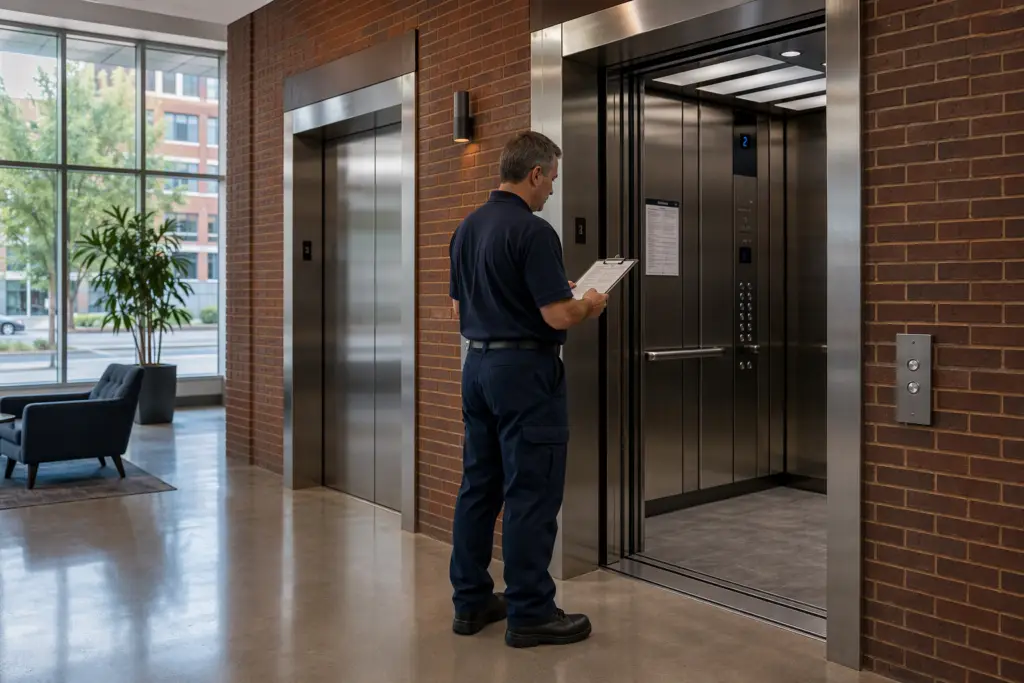
- Acceptance inspection and testing: Each jurisdiction requires an acceptance inspection by the AHJ or an approved third-party agency before the modernized elevator returns to service. Category tests are performed as required by the applicable ASME A17.1 edition and witnessed by the appropriate official.
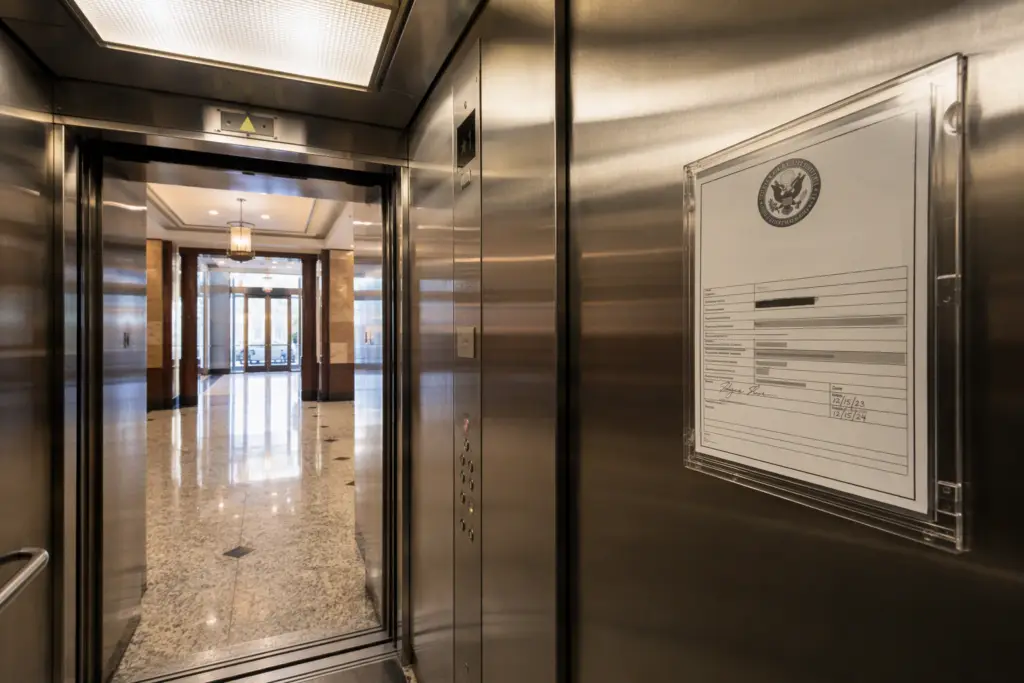
- Certificate issuance and posting: Following a successful acceptance inspection, the AHJ issues a new certificate of operation or certificate of inspection. The certificate must be posted in the elevator car or made available as required by each jurisdiction’s rules.
- Record retention: Maintenance, repair, test, and inspection records must be retained at the building. In Maryland, records must be kept at a readily accessible central location in the building.
How Long Does Elevator Modernization Take?
Project duration depends on the scope of work, the availability of equipment and replacement parts, permit processing times at the relevant AHJ, and building access constraints. A targeted controller replacement on a single elevator may be completed in a matter of days once equipment is on hand. A comprehensive modernization covering the drive system, door equipment, cab interior, and safety devices on multiple elevators in a multi-story building is a multi-week or multi-month project.
In occupied commercial buildings, modernization is often phased so that at least one elevator remains in service at all times. In the District of Columbia, at least one passenger elevator must be kept in operation whenever the building is occupied, with an exception for single-elevator buildings — a constraint that directly shapes scheduling in any DC multi-elevator modernization.
What Drives the Cost of Elevator Modernization?
No universally applicable price range exists for elevator modernization because costs are determined by a specific combination of factors unique to each project. The primary cost drivers include:
- Scope of work: A controller-only upgrade costs far less than a full-system modernization encompassing the drive, doors, safety devices, cab, and machine room equipment.
- Equipment type: Hydraulic elevators, geared traction elevators, and gearless traction elevators each have distinct component architectures that affect parts and labor costs differently.
- Number of stops and floors served: Costs scale with the number of floors, the number of door openings, and the overall travel distance of the elevator.
- Accessibility upgrades: Bringing cab controls, door timing, and communication systems into ADA compliance adds scope that is determined by a gap analysis against current ADA Standards for Accessible Design.
- Permitting and inspection fees: Each jurisdiction charges permit and inspection fees that vary based on the type and value of work performed.
- Building logistics: High-rise buildings, buildings with restricted freight access, and projects requiring night or weekend work to avoid occupant disruption carry additional labor and coordination costs.
- Number of units: Modernizing multiple elevators in a single building typically allows for economies of scale in equipment procurement and crew mobilization.
Quality Elevator Company conducts site-specific assessments to develop accurate, scope-based modernization proposals for building owners in DC, Maryland, Pennsylvania, and Virginia.
What Are the ADA Compliance Considerations in an Elevator Modernization?
The Americans with Disabilities Act establishes accessibility requirements for elevators in public accommodations and commercial facilities. A modernization project presents an opportunity — and in some circumstances an obligation — to address ADA compliance gaps. Key areas of focus include:
- Call button and control panel mounting heights and button dimensions
- Visual and audible floor indicators and position indicators
- Door reopening devices and minimum door dwell times
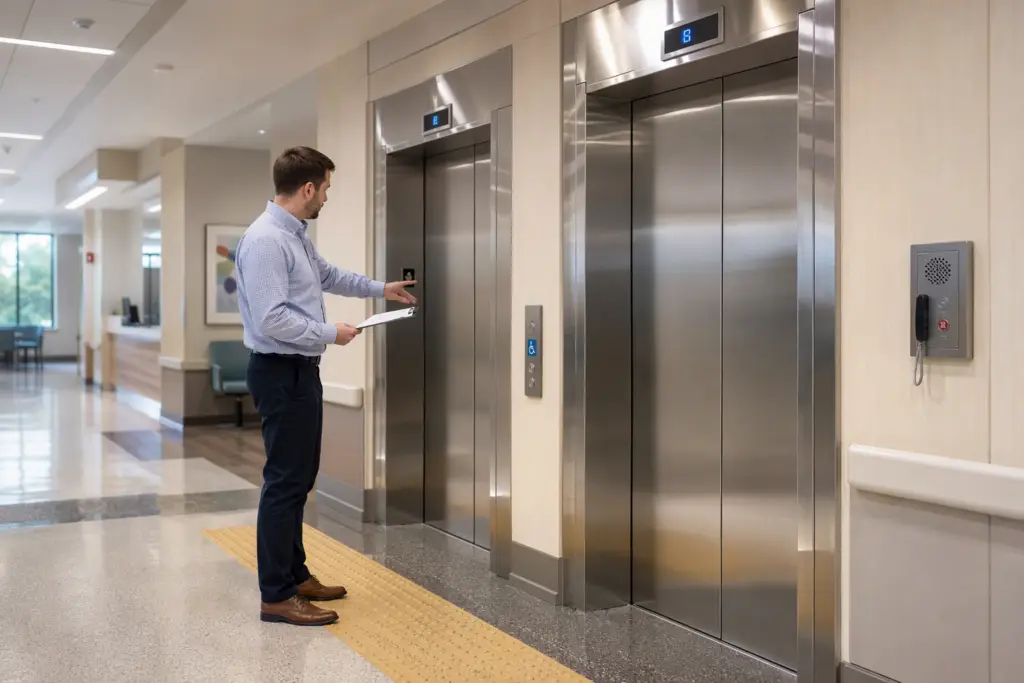
- Two-way emergency communication systems that do not rely solely on voice (important for individuals who are deaf or hard of hearing)
- Cab interior clearances and floor area
- Braille and raised character signage on control panels and jamb plates
ADA compliance analysis should be part of every modernization scope development. Addressing accessibility requirements during a planned modernization is significantly more cost-effective than returning to the elevator for a separate accessibility remediation project.
What Are the Industry Trends Shaping Elevator Modernization in 2025 and 2026?
Several directional trends are influencing modernization decisions and project scope in the current environment:
- Accelerating code adoption: Maryland’s adoption of ASME A17.1-2022 effective June 2026 and Pennsylvania’s transition to ASME A17.1-2016 for new permit applications from December 2026 are bringing regional jurisdictions into closer alignment with contemporary safety standards, raising the compliance bar for existing equipment.
- Remote monitoring and diagnostics: Modern elevator controllers increasingly support connectivity that enables real-time monitoring of system performance, predictive maintenance alerts, and remote diagnostics — reducing unscheduled downtime and allowing maintenance resources to be deployed more efficiently.
- Energy performance pressure: Building owners facing energy benchmarking requirements and sustainability commitments are incorporating drive-system modernization into broader building efficiency programs. Variable-frequency drives and regenerative drive technology are prominent in these discussions.
- Parts availability pressure on legacy systems: Supply chain constraints affecting the broader industrial controls market are accelerating the obsolescence of relay-logic and early solid-state control systems, making the business case for modernization more compelling for owners who have deferred the decision.
- Destination dispatch adoption: High-traffic commercial buildings are increasingly incorporating destination dispatch systems — which group passengers by floor destination before they board — as part of comprehensive modernizations, reducing wait times and energy consumption in multi-elevator installations.
- DC code update cycle: With the District of Columbia planning to adopt codes based on the 2024 model codes by the end of 2027, building owners in DC should assess how upcoming code changes may affect equipment currently under modernization planning.
How Does Elevator Modernization Affect Inspection and Certificate Requirements?
Modernization work directly interacts with the inspection and certificate cycle in each jurisdiction:
In the District of Columbia, a certificate of inspection may be temporarily suspended while the elevator is under permit for alteration or modernization. Following completion, the owner must submit third-party inspection reports to the DC Department of Buildings through the Citizen Access Portal to obtain a new certificate. DC certificates of inspection are valid for two years, and periodic Category 1 (annual) and Category 5 (60-month) tests continue during that period.
In Maryland, the Maryland Department of Labor conducts a final acceptance inspection after an elevator is modified or altered and before it is placed back in service. Annual periodic inspection and re-registration requirements resume after certification. The applicable code edition is determined by when the installation contract was signed.
In Pennsylvania, the Pennsylvania Department of Labor and Industry conducts an acceptance inspection after a major repair, replacement, or alteration, and the elevator may not return to service until it passes. The certificate of operation cycle — 24 months for equipment on a 6-month inspection cycle, 48 months for equipment on a 12-month cycle — restarts after certification.
In Virginia, the local building department conducts a final acceptance inspection of modernized elevators. In the City of Richmond, this function is performed by the Bureau of Permits and Inspections. The current certificate must be displayed in the elevator or made available as specified in the Virginia Uniform Statewide Building Code.
How Should Building Owners Compare Elevator Modernization Vendors?
Selecting a modernization contractor involves more than comparing initial price proposals. Building owners should evaluate:
- Licensing and certification: Contractors must hold the appropriate license in each jurisdiction — an elevator contracting license through the DC Board of Industrial Trades, a Maryland Elevator Safety Review Board contractor license, and a Virginia Board for Contractors EEC specialty license. Mechanics must hold the appropriate individual license or certification.
- Permit management experience: Each jurisdiction has distinct permit application requirements, submittal documentation standards, and inspection coordination processes. A contractor with demonstrated experience navigating DC DOB, Maryland L&I, Pennsylvania L&I, and Virginia local building departments reduces project delays.
- Equipment manufacturer relationships: Modernization contractors who maintain direct relationships with major elevator component manufacturers can typically provide better parts lead times and warranty terms than those who source through secondary distributors.
- References in the building class: A contractor’s experience with comparable building types — multi-tenant commercial, healthcare, multifamily residential, government — is relevant to both technical execution and scheduling coordination.
- Post-modernization maintenance capability: A contractor who also offers ongoing maintenance service can provide continuity of knowledge about the modernized system, which is valuable for diagnostics and warranty claim management.
- Transparency in scope documentation: Detailed, written specifications that identify each component to be replaced, the applicable code standard, and the planned test protocol protect the building owner and provide a basis for meaningful competitive comparison.
What Should Building Owners Do Before Requesting a Modernization Proposal?
- Gather existing records: Collect the current certificate of inspection or certificate of operation, the most recent inspection reports, and any outstanding violation notices from the AHJ.
- Document service history: Compile records of recurring callbacks, component failures, and parts that have been difficult to source. This history informs both the scope recommendation and the urgency assessment.
- Identify accessibility gaps: Walk through the elevator with reference to ADA Standards for Accessible Design to identify visible control panel, signage, or door-timing deficiencies that should be addressed in the modernization scope.
- Confirm contractor credentials: Verify that any contractor invited to propose holds the applicable license in the jurisdiction where the elevator is located before investing time in the proposal process.
- Understand building occupancy constraints: Determine which elevators can be taken out of service simultaneously and for how long, taking into account the DC requirement that at least one elevator remain in operation in occupied multi-elevator buildings.
- Request itemized proposals: Ask each contractor to provide a line-item scope that identifies specific components, code standards, and test requirements — not just a lump-sum figure — so that proposals can be compared on a consistent basis.
How Does OSHA Apply to Elevator Modernization Work?
Elevator modernization work takes place in hoistways, machine rooms, and elevator pits — all environments with specific Occupational Safety and Health Administration (OSHA) requirements. Fall protection, lockout/tagout procedures for energy control, confined space entry protocols for pits and machine rooms, and electrical safety standards all apply to the work environment during modernization. Building owners should confirm that their modernization contractor has documented safety programs that address these hazard categories and that mechanics working on the project are trained accordingly.
Frequently Asked Questions About Elevator Modernization
What is the difference between elevator modernization and elevator replacement?
Modernization selectively replaces aging or obsolete components — such as the controller, drive system, door operator, or cab interior — while retaining the existing hoistway structure, rails, and sling. Full replacement removes the entire elevator system and installs a new unit from the pit to the penthouse. Modernization is generally less disruptive and less costly than full replacement when the structural components of the elevator are in serviceable condition. The appropriate path depends on the age and condition of the hoistway components, not just the mechanical and electrical systems.
Is a permit required for elevator modernization in DC, Maryland, Pennsylvania, and Virginia?
Yes, in every jurisdiction in the Quality Elevator Company service area. The DC Department of Buildings, Maryland Department of Labor, Pennsylvania Department of Labor and Industry, and Virginia local building departments all require a permit before modernization work begins. Work performed without a permit can result in the elevator being placed out of service until the violation is resolved, and may result in enforcement action against the building owner and the contractor.
How often do elevators need to be modernized?
There is no single universal interval. Modernization need is driven by equipment condition, parts availability, recurring service failures, code compliance gaps, and the results of a professional condition assessment. Elevators in high-cycle commercial service typically reach the end of their practical service life faster than those in low-traffic residential buildings. A structured maintenance and inspection program, combined with periodic condition assessments, allows building owners to plan and budget for modernization proactively rather than reactively.
Does elevator modernization trigger ADA compliance upgrades?
Modernization work presents an opportunity to address ADA compliance gaps, and in many cases the alterations involved in a modernization scope will require that accessibility features be brought into compliance with the ADA Standards for Accessible Design as a condition of the project. The specific obligations depend on the nature and extent of the alterations and should be evaluated by a qualified professional as part of scope development.
What happens to an elevator’s certificate of inspection during modernization?
In the District of Columbia, a certificate of inspection may be temporarily suspended while the elevator is under permit for alteration or modernization. In Maryland and Pennsylvania, the acceptance inspection after modernization resets the certificate cycle. In Virginia, the local building department issues a new certificate following the acceptance inspection of the modernized elevator. Building owners should coordinate with the AHJ and their contractor to understand the specific certificate status during the project.
What code edition applies to an elevator modernization in Pennsylvania in 2026?
Until December 20, 2026, Pennsylvania elevator alterations must comply with ASME A17.1-2000 including the A17.1a-2002 addenda. For permit applications filed on or after December 20, 2026, ASME A17.1-2016 with Pennsylvania modifications applies. The applicable edition is determined by the date of the permit application, not the date the project begins. Building owners planning modernizations that will span the December 2026 effective date should discuss the timing of their permit application with the Pennsylvania Department of Labor and Industry and their contractor.
Who is licensed to perform elevator modernization work in Virginia?
In Virginia, elevator modernization must be performed by a contractor holding a license with the Elevator/Escalator Contracting (EEC) specialty from the Virginia Board for Contractors (DPOR). All mechanics performing the work must hold state certification as elevator mechanics, which requires at least three years of experience in the elevator industry and passage of a Board-approved examination. No person may work as an elevator mechanic in Virginia without certification unless under the direct and immediate supervision of a certified mechanic.
What is a Category 5 test and is it required after modernization?
The ASME A17.1 Safety Code for Elevators and Escalators prescribes a series of periodic tests at intervals defined in Appendix N of the code. Category 5 tests are the most comprehensive periodic tests, conducted at 60-month intervals in jurisdictions that have adopted editions requiring them — including the District of Columbia. Whether a Category 5 test is required immediately following a modernization depends on the scope of the work, the jurisdiction’s adopted code edition, and the instructions of the AHJ. This determination should be made in coordination with the AHJ and the qualified inspector overseeing the project.
Can a building owner in Maryland choose which ASME A17.1 edition applies to their modernization?
No. In Maryland, the code edition that applies to an elevator is determined by when the installation contract was signed. The requirements in effect when an elevator was first certified remain in effect for that elevator, and modernization work is evaluated accordingly. The Maryland Department of Labor, Division of Labor and Industry, Elevator and Escalator Safety administers this requirement, and the applicable edition should be confirmed with that agency before the modernization scope is finalized.
How does Quality Elevator Company approach elevator modernization projects?
Quality Elevator Company provides data-driven condition assessments, permit-compliant scope development, and licensed modernization services for building owners in the District of Columbia, Maryland, Pennsylvania, and Virginia. The company’s approach begins with a documented assessment of existing equipment conditions, identifies compliance gaps relative to the applicable ASME A17.1 edition and ADA standards, and develops a modernization scope that addresses both regulatory obligations and building-owner priorities. Quality Elevator Company manages the permit application process, coordinates acceptance inspections with the relevant AHJ, and provides post-modernization maintenance support.
Contact Quality Elevator Company for a free elevator assessment at 301-779-9116.
Need elevator service you can rely on? Quality Elevator Company is ready to help.