Yes. A licensed, code-compliant elevator service company can maintain, repair, and modernize virtually any elevator brand — including obscure, discontinued, or proprietary makes — without being an authorized dealer or OEM partner. Elevator safety codes govern how equipment must perform, not which company is allowed to service it. Understanding what that means for building owners in Baltimore, Washington DC, Philadelphia, and Richmond is the focus of every question below.
What Does “Brand-Agnostic” Elevator Service Actually Mean?
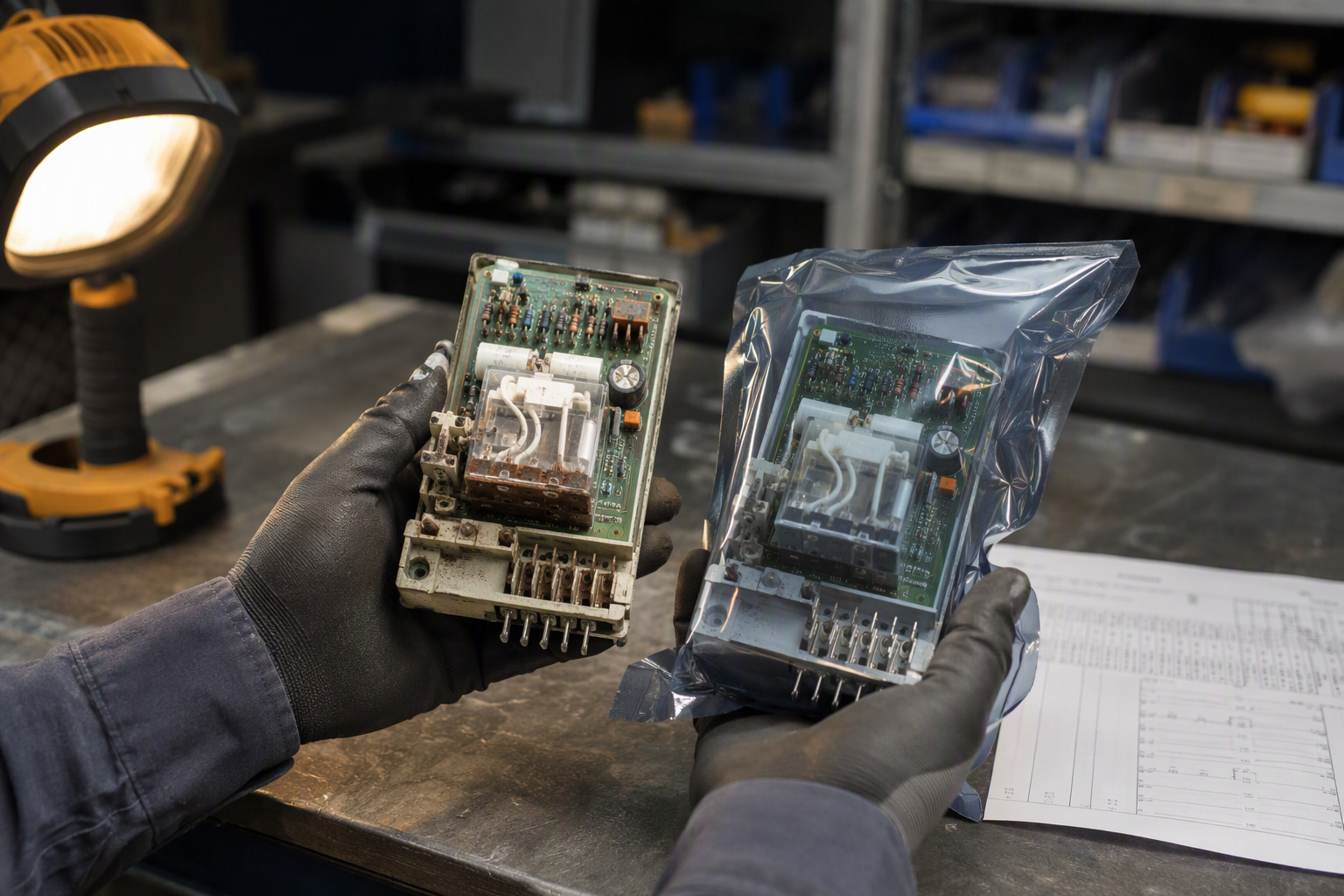
Brand-agnostic elevator service means a technician services any manufacturer’s equipment using the applicable safety code standards rather than a proprietary OEM service manual as the sole authority.
The ASME A17.1 Safety Code for Elevators and Escalators establishes performance-based requirements for all conveyances regardless of brand. A qualified technician who understands those requirements can diagnose faults, replace components, perform required tests, and return any compliant elevator to service — whether it was manufactured by a household name or a company that ceased operations decades ago.
Independent elevator companies maintain relationships with third-party parts distributors who stock components for hundreds of makes and models. When OEM parts are discontinued, equivalent parts that meet ASME A17.1 specifications are sourced and documented appropriately for inspection records.
Which Elevator Brands Are Considered “Difficult to Service”?
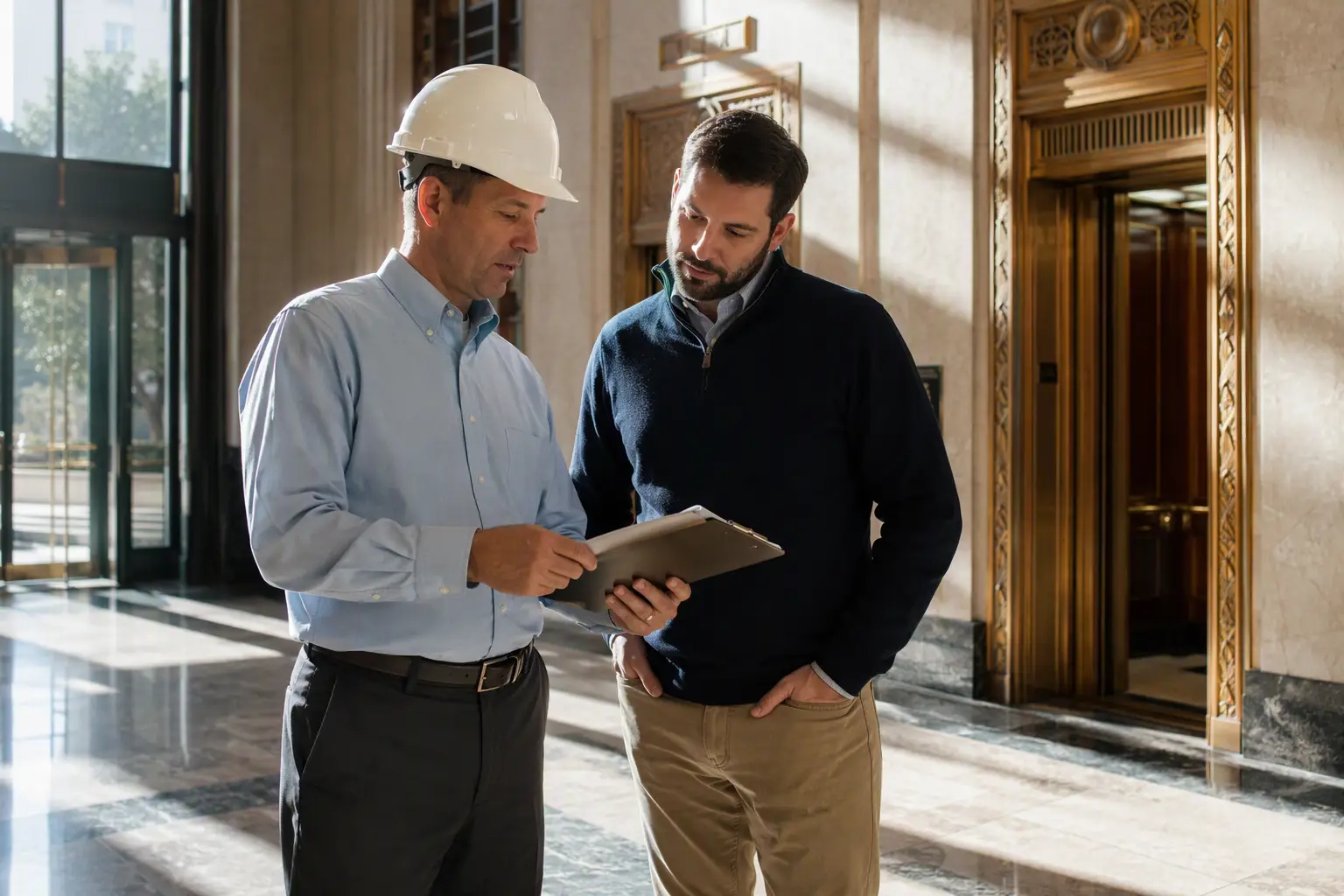
Brands are considered difficult to service when the original manufacturer uses proprietary controllers, encrypted software, or discontinued part lines that limit access to independent technicians.
Examples of categories that create service challenges include:
- Discontinued manufacturers — Companies that were absorbed through mergers or ceased operations, leaving owners with no OEM support path.
- Proprietary digital control systems — Some manufacturers lock controller diagnostics behind encrypted interfaces accessible only to their own technicians.
- Obsolete hydraulic units — Older single-bottom cylinder hydraulic elevators and their valve assemblies are no longer produced by many OEMs.
- Specialty or custom-built units — Low-rise platform lifts, freight elevators, and hospital service elevators built to custom specifications.
- Foreign-manufactured equipment — Units imported for specific building projects that have no domestic OEM service network.
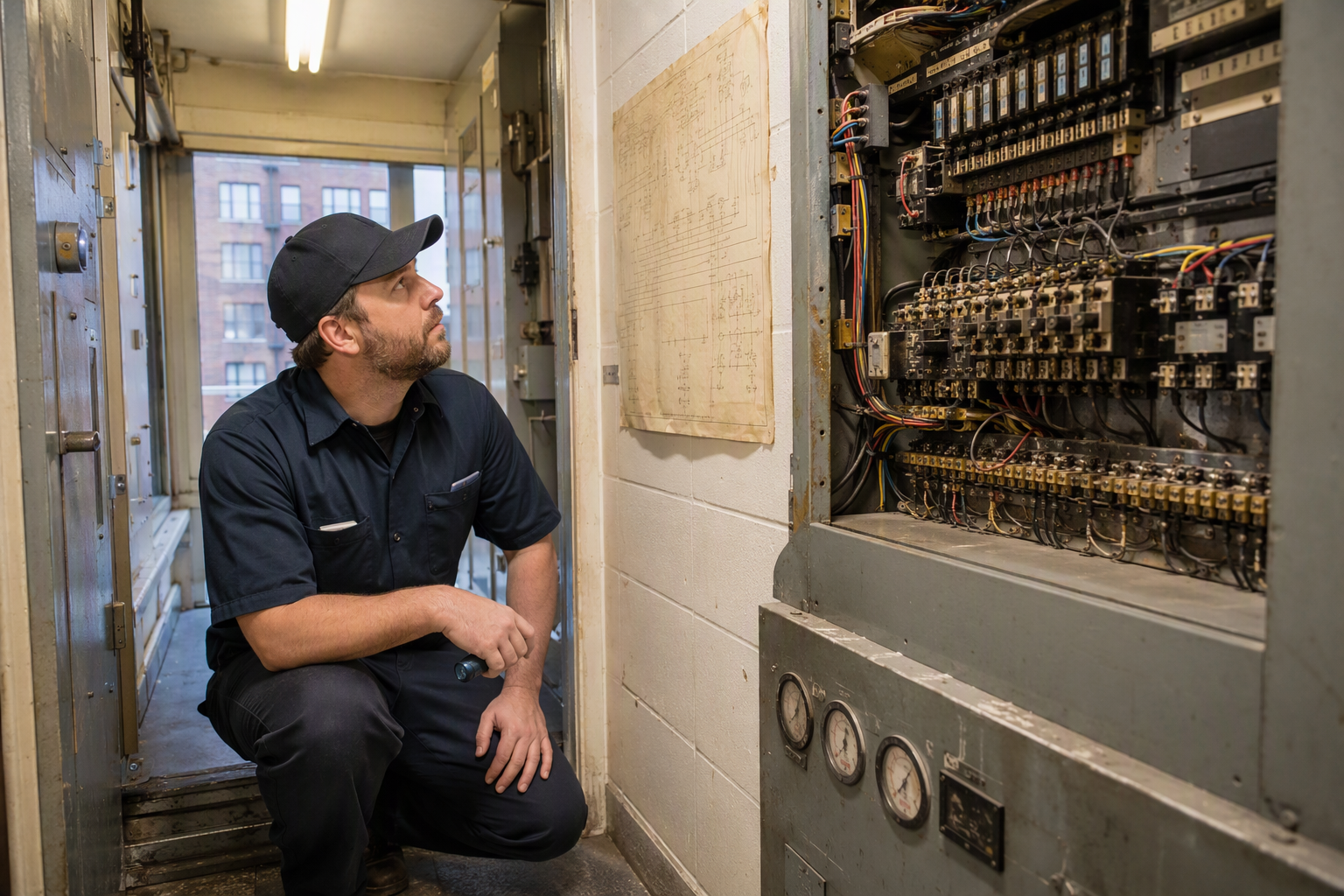
An experienced independent service company approaches each of these categories by tracing electrical schematics, sourcing compatible components, and applying ASME A17.1 performance standards to verify safe operation regardless of OEM availability.
Is It Legal for a Non-OEM Company to Service Any Elevator Brand?
Yes — elevator safety law in Maryland, Virginia, the District of Columbia, and Pennsylvania regulates the license and qualifications of the service company, not its brand affiliation.
Each jurisdiction in Quality Elevator Company’s service area sets its own licensing and certification framework:
- Maryland: Under Maryland Department of Labor, Division of Labor and Industry, Elevator and Escalator Safety, a business must hold an elevator contractor license from the Maryland Elevator Safety Review Board and carry at least $1,000,000 in general liability insurance and at least $500,000 in property damage insurance before servicing any elevator — regardless of brand.
- District of Columbia: The DC Department of Buildings (DOB) requires an elevator contracting license from the DC Board of Industrial Trades. Permits require a copy of the master electrician license and the elevator contracting license — no OEM affiliation is required.
- Pennsylvania: The Pennsylvania Department of Labor and Industry, Bureau of Occupational and Industrial Safety, Elevator Section governs elevator work statewide, including Philadelphia. Permits, inspections, and code compliance govern the work — not brand authorization.
- Virginia: Under 13VAC5-63, Virginia Uniform Statewide Building Code, contractors must hold an Elevator/Escalator Contracting (EEC) specialty license through the Virginia Board for Contractors (DPOR), and mechanics must hold state certification. Brand authorization is not a legal prerequisite.
What Codes Govern Elevator Service Regardless of Brand?
The ASME A17.1 Safety Code for Elevators and Escalators is the foundational federal standard that all jurisdictions in Quality Elevator Company’s service area have adopted — though at different editions.
| Jurisdiction | Adopted ASME A17.1 Edition | Effective Date | Regulator |
|---|---|---|---|
| District of Columbia | ASME A17.1-2013/CSA B44-13 | May 29, 2020 | DC Department of Buildings (DOB) |
| Maryland | ASME A17.1-2022/CSA B44:22 (with Maryland changes) | June 17, 2026 | Maryland Dept. of Labor, Division of Labor and Industry |
| Pennsylvania | ASME A17.1-2000 / A17.1a-2002 addenda (ASME A17.1-2016 for new permit applications from Dec. 20, 2026) | Dec. 20, 2026 (for new permits) | PA Dept. of Labor and Industry, Bureau of Occupational and Industrial Safety |
| Virginia | ASME A17.1/CSA B44-2019 (via 2021 USBC) | January 18, 2024 | Local building department; Virginia Board for Contractors (DPOR) for licensing |
Because code compliance is performance-based rather than brand-based, any component installed or repaired during service must meet the applicable edition’s requirements — not merely match an OEM part number. This is precisely the framework that allows a qualified independent service company to work on any brand legally and safely.
How Does a Service Company Obtain Parts for Rare or Discontinued Elevator Brands?
Independent elevator service companies source parts for rare brands through a combination of third-party distributors, remanufactured component suppliers, equivalent-specification replacements, and full modernization when parts are genuinely unavailable.
The sourcing process typically follows this sequence:
- Identify the component specification — Review original schematics, nameplates, and electrical diagrams to determine the functional specification of the failed part.
- Search independent parts distributors — A network of independent elevator parts suppliers stocks components for hundreds of legacy brands, including many whose OEM operations have closed.
- Evaluate remanufactured or rebuilt units — Certain components such as relay logic boards, valve bodies, and motor units can be professionally remanufactured to original specifications.
- Source equivalent-specification replacements — Where a direct replacement is unavailable, an equivalent component meeting ASME A17.1 specifications is selected, documented, and submitted for inspection approval.
- Assess modernization viability — When parts availability is permanently exhausted or continued repair is no longer code-compliant or cost-effective, a modernization proposal is developed to bring the unit into compliance with the current adopted edition.
Documentation at each step is critical because the authority having jurisdiction (AHJ) in each state may require evidence that replacement components meet code requirements, particularly after a major repair or alteration.
What Inspection and Testing Requirements Apply When Servicing a Non-OEM Elevator?
The same periodic inspection and testing requirements that apply to any elevator apply equally when an independent service company performs the work — there is no separate standard for non-OEM service.
Inspection intervals vary by jurisdiction:
- DC: Category 1 inspection every 12 months and Category 5 inspection every 60 months, each by an ASME QEI-certified inspector, under DOB oversight per 12-A DCMR Chapter 30.
- Maryland: Annual periodic inspection by a third-party qualified elevator inspector, plus a comprehensive five-year inspection for wire-rope-suspended and rack-and-pinion elevators, per Maryland Department of Labor under COMAR 09.12.81.
- Pennsylvania: Periodic inspections at intervals of no more than 6 months for electric elevators, hydraulic elevators, and escalators, per Pennsylvania L&I under 34 Pa. Code Chapter 405.
- Virginia: Annual periodic inspection required under the Virginia Uniform Statewide Building Code (13VAC5-63), with localities authorized to require six-month inspections. Periodic tests follow ASME A17.1 Appendix N intervals and must be witnessed by the local code official.
After any major repair, replacement, or alteration — regardless of brand — the relevant AHJ conducts an acceptance inspection before the elevator returns to service. Maintenance, repair, test, and inspection records must be kept at a readily accessible central location in the building in Maryland, and equivalent documentation practices are required across all jurisdictions.
What Are the ADA Accessibility Requirements That Apply to Any Serviced Elevator?
The Americans with Disabilities Act (ADA) requires that elevators in covered facilities be accessible to people with disabilities, and those requirements apply regardless of the elevator’s brand or who performs the service.
When any elevator alteration or modernization is undertaken, ADA accessibility requirements are triggered for the altered elements. Key considerations include accessible car controls at compliant heights, audible and visual floor indicators, compliant door timing, and accessible hoistway signage. A service company performing work on a rare or legacy brand must account for ADA compliance as part of any modernization scope — not just mechanical functionality.
Quality Elevator Company evaluates ADA compliance as a standard component of any assessment, ensuring that service work on unfamiliar brands does not inadvertently create or perpetuate accessibility barriers.
What Is the Difference Between Maintenance, Repair, Alteration, and Modernization for Uncommon Brands?
These four categories carry different regulatory implications, and understanding the distinction is critical when working on any elevator brand — especially rare ones where the line between repair and alteration is frequently crossed.
- Maintenance — Routine lubrication, adjustment, cleaning, and minor part replacement that keeps the elevator operating within its existing approved condition. Generally does not require a new permit.
- Repair — Restoring a failed component to its original condition or replacing it with an equivalent. Major repairs trigger acceptance inspections in all four jurisdictions.
- Alteration — Any change to the equipment, including its control system, that affects its operation or safety. Alterations require permits and acceptance inspections. In DC, alterations of existing elevators follow the Existing Building Code.
- Modernization — A comprehensive upgrade — typically controller replacement, drive system upgrade, or cab renovation — that brings an aging elevator into compliance with the currently adopted ASME A17.1 edition. This is frequently the recommended path for rare brands where parts are exhausted.
When a rare brand’s control system is replaced entirely, the new controller must comply with the ASME A17.1 edition in force for the jurisdiction at the time of the permit application — for example, ASME A17.1-2016 for Pennsylvania permit applications made on or after December 20, 2026.
How Should a Building Owner Evaluate a Service Company’s Ability to Work on a Specific Brand?
Building owners should evaluate a service company’s brand capability through a structured due diligence process rather than relying solely on OEM affiliation claims.
- Verify licensing — Confirm the contractor holds the required license in the applicable jurisdiction (elevator contractor license in Maryland and DC; Pennsylvania L&I compliance; Virginia EEC contractor license through DPOR).
- Request a documented assessment — A qualified company should provide a written assessment of the elevator’s current condition, parts availability, and code compliance status — not a generic proposal.
- Ask about parts sourcing — Request a specific explanation of how the company will source replacement parts for the brand in question, including backup sourcing options if primary suppliers are depleted.
- Review inspection history — Obtain copies of the elevator’s current certificate of inspection and recent inspection reports to understand its existing compliance baseline.
- Confirm knowledge of the applicable ASME edition — The technician should be able to identify which edition of ASME A17.1 governs the equipment based on when it was installed and what jurisdiction it is in.
- Check references for similar equipment — Ask whether the company has serviced the same brand or a mechanically comparable legacy system.
What Should Happen Immediately If an Uncommon Brand Elevator Fails or Becomes Unsafe?
When a rare or uncommon brand elevator fails or exhibits a safety concern, a specific sequence of actions is required to protect occupants and maintain regulatory compliance.
- Remove the elevator from service immediately — Do not allow occupants to use the elevator until the cause of the failure is identified and corrected.
- Post required out-of-service notice — In DC, a DOB permit is required to take an elevator out of service under ASME A17.1 Section 8.11.1.4 or to place it in temporarily dormant status.
- Contact a licensed elevator service company — Engage a contractor with the appropriate jurisdiction license to diagnose the failure.
- Document the incident — In Pennsylvania, owners must submit an accident report to the Department when an elevator accident causes a fatality or requires professional medical care. Similar reporting obligations may apply in other jurisdictions.
- Obtain a return-to-service inspection — After major repair, the AHJ must inspect and pass the elevator before it returns to service in all four jurisdictions.
- Update maintenance records — Ensure all repair documentation is filed at the readily accessible central location required in Maryland and consistent with documentation practices across other jurisdictions.
How Do Proprietary Controller Systems Affect Serviceability?
Proprietary digital controllers are one of the most significant technical barriers independent service companies face with certain elevator brands — but they are not an insurmountable obstacle.
When a manufacturer uses encrypted or closed-architecture controllers, the practical options include obtaining legitimate diagnostic access through licensed software tools available in the independent service market, replacing the proprietary controller with a modern open-architecture equivalent that meets ASME A17.1 requirements, or pursuing a full modernization that replaces the drive and control system entirely. Controller replacement is classified as an alteration and requires a permit and acceptance inspection from the relevant AHJ. However, a modernized controller brings the elevator’s central operating system into compliance with the current adopted ASME A17.1 edition, often extending the service life of the unit significantly.
What Is the Modernization Process for a Legacy or Rare Elevator Brand?
Modernization of a legacy or rare brand elevator follows a structured regulatory and engineering process that applies consistently across all four jurisdictions in Quality Elevator Company’s service area.
- Conduct a full condition assessment — Evaluate the structural components, hoistway equipment, control system, drive system, cab interior, and safety devices against the applicable ASME A17.1 edition.
- Determine the scope of work — Identify which components require replacement versus which can be retained and recertified. Partial modernization is often viable for well-maintained mechanical components paired with a controller replacement.
- Apply for a permit — Submit the permit application to the relevant AHJ. In DC, this requires a copy of the master electrician license and the elevator contracting license. In Maryland, the eight-year elevator unit registration is updated. In Pennsylvania, the application triggers the applicable ASME A17.1 edition based on submission date.
- Perform the modernization work — Licensed mechanics perform the work in accordance with the permit and applicable code edition.
- Schedule acceptance inspection — The AHJ conducts an acceptance inspection before the modernized elevator returns to service.
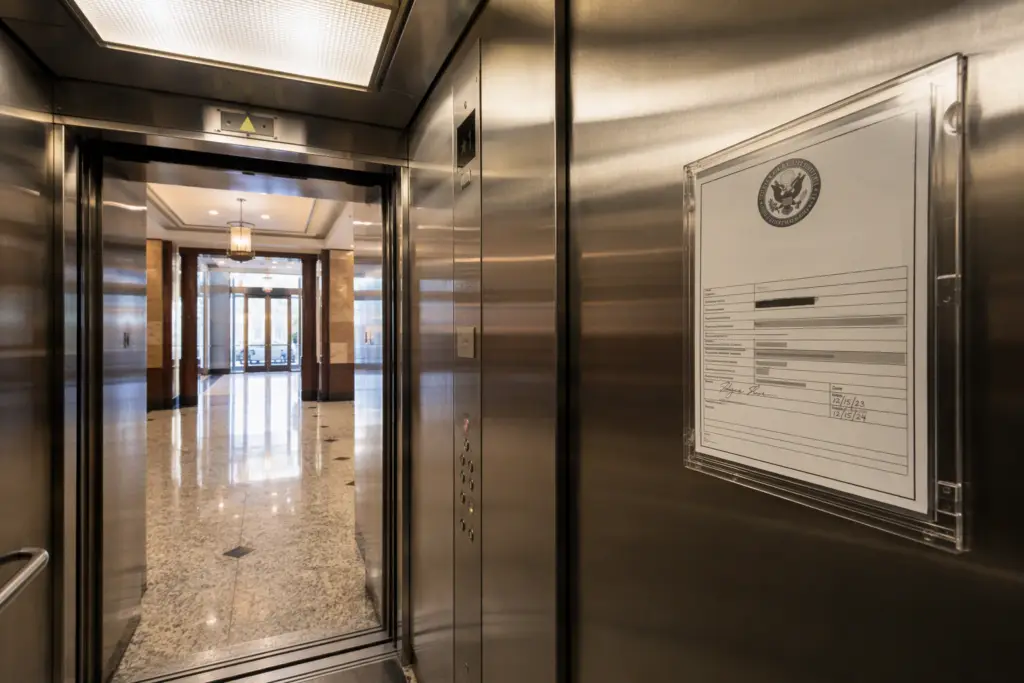
- Obtain updated certificate of inspection — Post the new certificate as required: conspicuously in the elevator car in Maryland and DC; in the car or attached to the machine room controller in Pennsylvania; in the car, in the building operator’s office, or in an approved conspicuous location in Virginia.
- Establish ongoing maintenance schedule — Transition to a recurring maintenance and inspection program aligned with the applicable jurisdiction’s inspection intervals.
How Do Inspection Certificates Work When an Independent Company Services a Less Common Brand?
Inspection certificates are issued by the regulatory authority — not by the elevator brand’s manufacturer — so independent service companies can fully support the certification process for any brand.
In DC, owners submit third-party inspection reports for the past two years to the DC Department of Buildings through the Citizen Access Portal to obtain a certificate of inspection, which is valid for two years. In Maryland, under the Maryland Department of Labor, the Commissioner issues the certificate after the annual inspection; owners must re-register elevator units annually. In Pennsylvania, the Pennsylvania Department of Labor and Industry issues a certificate of operation valid for 24 months (6-month inspection cycle) or 48 months (12-month cycle). In Virginia, the local building department issues the certificate following its annual inspection program; in Richmond, the City’s Bureau of Permits and Inspections manages elevator annuals and certifications.
None of these certificate processes require OEM involvement. They require a licensed contractor and qualified inspector — which is precisely what Quality Elevator Company provides across all four markets.
Are There Brands That Genuinely Cannot Be Serviced Without OEM Support?
Genuinely unserviceable situations are rare but do exist — they occur when a manufacturer’s control system requires firmware access that is technically impossible to replicate independently and no equivalent replacement is code-compliant with the current ASME A17.1 edition in the relevant jurisdiction.
In practice, the more common outcome in these situations is modernization rather than permanent unserviceability. Replacing a closed controller system with a current open-architecture equivalent is a well-established practice that resolves the serviceability barrier while upgrading the elevator’s safety and reliability profile. A qualified service company will clearly distinguish between a situation that requires modernization and one where ongoing maintenance is viable — and will document that recommendation in writing.
What Should Building Owners in Baltimore, Washington DC, Philadelphia, and Richmond Know About Switching Service Providers for Unusual Brands?
Switching service providers for an elevator with an uncommon brand involves a documentation transfer, regulatory notification in some jurisdictions, and a condition assessment by the incoming company.
Practically, the incoming service company should request all maintenance, repair, test, and inspection records — which Maryland law requires to be kept at a readily accessible central location in the building. The new company needs to review the current certificate of inspection, the most recent periodic inspection report, and any open permits or outstanding code violations before assuming the service relationship. Building owners in DC should be aware that DC’s certificate of inspection is valid for two years, and the third-party inspection reporting to DOB must continue uninterrupted during the transition. In Virginia, the local building department’s inspection program continues on its annual cycle regardless of which licensed contractor holds the maintenance agreement.
Quality Elevator Company performs a comprehensive condition assessment at the start of any new service relationship, regardless of the elevator’s brand, to establish a documented baseline and identify any compliance gaps before the next scheduled inspection.
How Does OSHA Apply to Elevator Service Work on Any Brand?
The Occupational Safety and Health Administration (OSHA) governs the working conditions of elevator mechanics performing service on any elevator brand — in addition to the elevator safety codes that protect building occupants.
OSHA standards relevant to elevator service work address lockout/tagout procedures for energy control, fall protection in hoistways and on top of cars, confined space entry protocols for pit work, and electrical safety during controller work. These obligations apply equally whether the technician is servicing a major OEM brand or a rare discontinued make. Service companies operating in DC, Maryland, Pennsylvania, and Virginia are subject to federal OSHA standards, and compliance documentation is part of responsible field practice for any brand of equipment.
What Is the Cost Impact of Servicing a Rare Elevator Brand Versus a Common One?
Servicing a rare or discontinued elevator brand can involve higher costs than maintaining a common brand, primarily driven by parts availability and the additional diagnostic time required to work from original schematics rather than standardized OEM service documentation.
The factors that influence cost differentials include the availability of replacement parts from independent distributors, the complexity of the control system and whether a proprietary interface adds diagnostic time, the age of the unit relative to the ASME A17.1 edition currently adopted in the jurisdiction, and whether a modernization is ultimately more cost-effective than continued component-level repair. Building owners should request a transparent written assessment that separates the costs of ongoing maintenance from the projected cost of modernization — and that documents which path is more economical over a defined service horizon. A company that recommends modernization for every rare brand without supporting documentation should be viewed skeptically.
What Records Must Be Maintained When Servicing a Non-Standard Elevator Brand?
Thorough recordkeeping is especially important for rare elevator brands because inspection authorities may require additional documentation to verify that non-OEM parts and repairs meet code requirements.
Required and recommended records include the current certificate of inspection and all prior certificates, periodic and special inspection reports, maintenance logs with dates and descriptions of all work performed, part specifications and sourcing documentation for non-OEM replacement components, permits and acceptance inspection reports for any repairs classified as alterations, and ASME A17.1 compliance documentation for any equivalent-specification component substitutions. In Maryland, maintenance, repair, test, and inspection records must be kept at a readily accessible central location in the building. Virginia requires that third-party inspection reports include the name and certification number of the elevator mechanic who performed the witnessed tests. Consistent documentation across all records protects the building owner in the event of an inspection discrepancy or a future service provider transition.
When Is Full Modernization the Right Answer for an Uncommon Elevator Brand?
Full modernization is the appropriate recommendation when continued component-level repair of a rare elevator brand is no longer technically viable, cost-effective, or capable of bringing the unit into compliance with the currently adopted ASME A17.1 edition in the relevant jurisdiction.
Specific indicators that modernization should be evaluated include: parts for the control system or drive are permanently unavailable from all known sources; the cost of individual repairs over the past several years approaches or exceeds modernization cost; the elevator fails periodic inspections due to code deficiencies that cannot be resolved without replacing major systems; or the equipment poses documented safety risks that cannot be mitigated through repair. A full modernization resets the equipment’s compliance baseline to the current adopted ASME A17.1 edition, provides a new certificate of inspection, and typically extends service life significantly. Quality Elevator Company develops modernization proposals with documented cost-benefit analysis so building owners can make an informed decision rather than reacting to a crisis.
How Does Quality Elevator Company Approach First-Time Service on an Unfamiliar Brand?
Quality Elevator Company begins every new service engagement — regardless of the elevator brand — with a structured condition assessment that produces a documented baseline before any maintenance or repair work begins.
The assessment process covers the mechanical and electrical condition of all major systems, the current certificate of inspection and its expiration, compliance with the applicable ASME A17.1 edition for the jurisdiction, ADA accessibility status for covered facilities, and parts availability for any components showing signs of wear or imminent failure. This baseline report gives building owners in Baltimore, Washington DC, Philadelphia, and Richmond a clear picture of what they are working with — including an honest assessment of whether ongoing service is viable or whether a modernization conversation is warranted. For rare or uncommon brands, this upfront clarity is particularly valuable because it eliminates the uncertainty that often drives building owners toward costly emergency decisions.
Contact Quality Elevator Company for a free elevator assessment at 301-779-9116.
Need elevator service you can rely on? Quality Elevator Company is ready to help.