Best Elevator Maintenance Company Philadelphia: Complete FAQ Guide
With over 15 years maintaining and servicing elevators across Pennsylvania, Maryland, Virginia, and Washington DC, I’ve seen firsthand what separates a truly reliable elevator maintenance company from one that leaves building owners scrambling during an inspection or — worse — a breakdown. This guide answers every question Philadelphia property managers, building owners, and facilities directors need answered before signing a service contract.
What Makes an Elevator Maintenance Company the “Best” in Philadelphia?
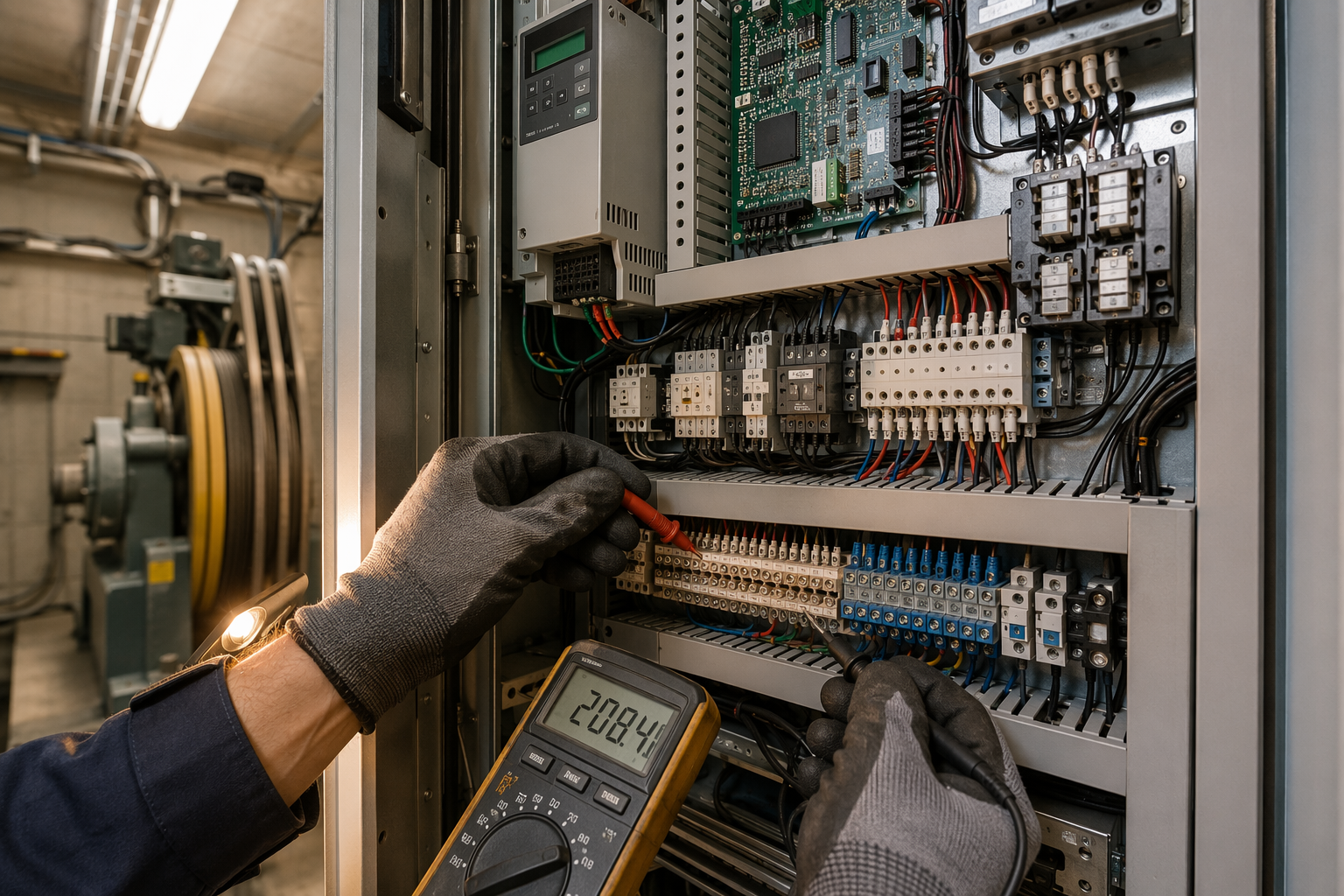
The best elevator maintenance company in Philadelphia combines IUEC-certified technicians, full ASME A17.1 compliance, rapid emergency response times, transparent pricing, and deep familiarity with Pennsylvania’s specific elevator code enforcement requirements.
In my experience, the single biggest differentiator isn’t price — it’s whether a company’s technicians are International Union of Elevator Constructors (IUEC) certified and whether they understand the nuances of the Pennsylvania Elevator Safety Law (Title 34, Chapter 9). Companies that cut corners on certification often leave building owners exposed during state inspections, which in Philadelphia are administered through the Pennsylvania Department of Labor & Industry.
Quality Elevator Company checks every one of these boxes. Our Philadelphia-area team holds current IUEC certifications, carries comprehensive liability insurance, and maintains an in-house parts inventory that dramatically reduces equipment downtime. We also track every unit’s inspection history digitally, so compliance documentation is always ready when a state inspector arrives.
How Often Do Elevators in Philadelphia Need to Be Maintained?
Pennsylvania regulations require a minimum of one annual inspection by a state-certified inspector, but industry best practice — and ASME A17.1 guidelines — recommend monthly or quarterly preventive maintenance visits depending on equipment type and call volume.
Under ASME A17.1/CSA B44-2022, the Safety Code for Elevators and Escalators, maintenance intervals are tied directly to the equipment’s usage, age, and risk classification. A high-rise in Center City Philadelphia running 20+ floors with hundreds of daily trips needs monthly technician visits. A low-rise mid-rise in Fishtown with moderate traffic may be safely serviced quarterly.
From a practical standpoint, I always recommend monthly walk-throughs for any commercial elevator in a Philadelphia building with 10 or more floors or 50+ daily users. Monthly maintenance catches worn brake linings, fraying ropes, and controller issues before they trigger a shutdown — which, in a busy Philadelphia office tower, can cost a building owner thousands of dollars per day in tenant disruption.
What Does a Standard Elevator Maintenance Contract in Philadelphia Include?
A comprehensive elevator maintenance contract in Philadelphia should include scheduled preventive maintenance visits, 24/7 emergency call response, lubrication of all moving components, safety device testing, annual inspection coordination, and parts coverage — all clearly itemized in writing.
Not all contracts are created equal. I’ve reviewed hundreds of agreements over my career, and the most dangerous ones are what the industry calls “oil and grease” contracts — they cover only basic lubrication and visual checks, leaving major repairs as expensive add-ons. A full-coverage contract, by contrast, bundles parts and labor for most repairs into a flat monthly fee.
At minimum, your Philadelphia elevator maintenance contract should specify:
- Number of scheduled maintenance visits per year
- Emergency response time guarantee (ideally 4 hours or less)
- Coverage for specific parts categories (motors, controllers, doors, ropes)
- Annual state inspection coordination and documentation
- Modernization assessment schedule
- Clear escalation procedures for trapped-passenger incidents
How Much Does Elevator Maintenance Cost in Philadelphia in 2026?
In 2026, Philadelphia elevator maintenance contracts typically range from $1,800 to $6,500 per elevator per year depending on equipment type, building height, contract coverage level, and whether parts are included.
| Contract Type | Typical Annual Cost (Per Elevator) | What’s Covered | Best For |
|---|---|---|---|
| Oil & Grease (Basic) | $1,800 – $2,800 | Lubrication, visual inspection only | Low-use residential |
| Preventive Maintenance | $2,800 – $4,200 | PM visits, minor adjustments, labor | Light commercial |
| Full Coverage | $4,200 – $6,500 | Parts + labor + emergency response | High-traffic commercial |
| Modernization + Maintenance Bundle | $5,500 – $9,000+ | Full coverage + upgrade roadmap | Aging equipment, Class A buildings |
These figures reflect 2026 Philadelphia market rates accounting for current labor costs under union wage scales and parts pricing. Emergency repair calls billed outside a contract typically run $185–$325 per hour for labor alone, which makes full-coverage contracts cost-effective for any building with more than two elevators.
What Pennsylvania Elevator Regulations Must Philadelphia Buildings Comply With?
Philadelphia buildings must comply with Pennsylvania’s Elevator Safety Law under Title 34, Chapter 9 of the Pennsylvania Code, which incorporates ASME A17.1 by reference and requires annual inspections, valid operating certificates, and licensed elevator mechanics for all maintenance work.
The Pennsylvania Department of Labor & Industry oversees elevator safety statewide. Key compliance requirements include:
- Annual inspection by a state-licensed elevator inspector
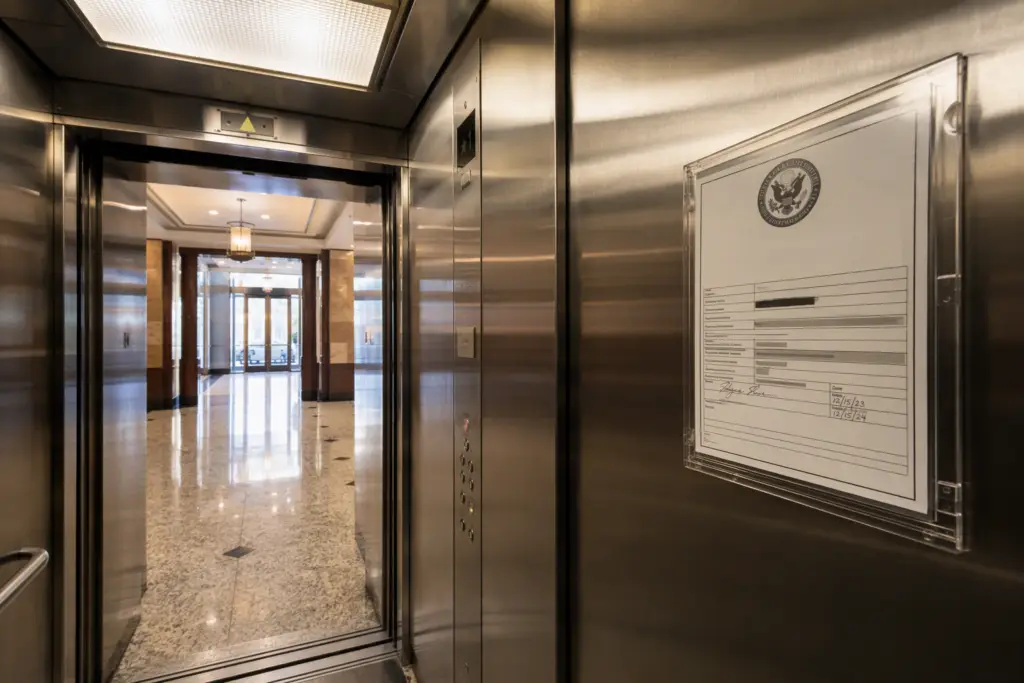
- Valid Certificate of Operation posted in or adjacent to each elevator cab
- All maintenance and repair work performed by Pennsylvania-licensed elevator mechanics
- Immediate reporting of accidents or incidents to the Department of Labor & Industry
- Compliance with ASME A17.1-2022 for equipment installed or modernized after 2022
- ADA compliance for public-access elevators under 42 U.S.C. § 12101
Non-compliance in Philadelphia can result in a stop-operation order, fines starting at $1,000 per violation, and significant civil liability exposure if a passenger is injured on a non-compliant elevator. This is not an area where building owners should gamble on an uncertified vendor.
How Quickly Should an Elevator Company Respond to an Emergency in Philadelphia?
Industry best practice and most professional service contracts specify a maximum 4-hour emergency response time, though a top-tier Philadelphia elevator company should realistically arrive within 2 hours for in-city locations during business hours.
Passenger entrapments are the most time-sensitive emergency scenario. ASME A17.1 Rule 8.6.11 requires that building owners have a procedure to contact emergency personnel within 30 minutes of a detected entrapment. A reliable maintenance company should provide a 24/7 dispatch line with technicians on call around the clock — not an answering service that routes calls to a general contractor.
Quality Elevator Company maintains on-call technician teams serving the Philadelphia metro area with guaranteed 4-hour response for all contract customers, with typical response times under 2 hours for Center City and immediate suburban locations.
What Should I Do Immediately If an Elevator Breaks Down in My Philadelphia Building?
If an elevator breaks down in your Philadelphia building, follow this priority sequence to protect passenger safety, meet legal obligations, and minimize downtime.
- Confirm no passengers are trapped. Listen and call out at each landing. If someone is trapped, call 911 immediately — do not attempt to open doors manually without a trained technician.
- Contact your elevator maintenance company’s 24/7 emergency line. Provide the building address, elevator ID or location, and a description of the malfunction (e.g., doors not closing, cab stuck between floors).
- Place an “Out of Service” sign on the elevator at all floors. Block access to prevent additional passengers from attempting to use the unit.
- If a passenger is trapped, stay in voice contact until help arrives. Advise them to remain calm and not to attempt to force open doors or exit the cab.
- Document the incident in writing. Note the time of failure, symptoms, number of people affected, and the technician’s arrival time — this is critical for both insurance and regulatory compliance.
- Report any injury or accident to the Pennsylvania Department of Labor & Industry within the required timeframe per Title 34, Chapter 9.
- Request a written incident report from your maintenance provider detailing the cause of failure and corrective action taken — retain this for your compliance records.
How Do I Evaluate and Compare Elevator Maintenance Companies in Philadelphia?
To evaluate elevator maintenance companies in Philadelphia, compare IUEC certification status, Pennsylvania license verification, contract coverage depth, emergency response guarantees, local technician availability, and verifiable references from similar building types.
Here are the five non-negotiable questions to ask any elevator company before signing a contract in Philadelphia:
- Are all your mechanics licensed by the Pennsylvania Department of Labor & Industry?
- What is your guaranteed emergency response time in writing?
- Is your contract full-coverage or oil-and-grease?
- Do you maintain a local Philadelphia-area parts inventory?
- Can you provide references from Philadelphia commercial buildings similar to mine?
Be cautious of companies that cannot answer all five questions clearly and immediately. Vague contract language around “parts at cost” or “response time subject to availability” are red flags that should prompt you to look elsewhere.
What Is the Difference Between Elevator Maintenance and Elevator Modernization?
Elevator maintenance is ongoing servicing to keep existing equipment running safely, while elevator modernization is a capital upgrade project that replaces aging components — such as controllers, motors, cabs, or entire drive systems — to extend equipment life and bring systems into compliance with current ASME A17.1 and ADA standards.
Most elevator equipment has a functional lifespan of 20–25 years before modernization becomes more economical than continued repair. In Philadelphia, many commercial buildings constructed in the 1970s through 1990s are now operating elevators well past that threshold. Signs your equipment may need modernization rather than just maintenance include:
- Repair bills exceeding 40–50% of modernization cost annually
- Frequent nuisance trips or entrapments
- Obsolete controllers with no available replacement parts
- Non-compliant cab interiors under current ADA requirements
- Energy consumption significantly above modern VFD-equipped equivalents
Does ADA Compliance Apply to Elevators in Philadelphia Buildings?
Yes — under the Americans with Disabilities Act, most commercial and public buildings in Philadelphia with multiple stories are required to have accessible elevator service that meets ADA Standards for Accessible Design, including specific requirements for call button height, door timing, cab dimensions, and audible/visual signals.
ADA elevator requirements under 28 CFR Part 36 (for places of public accommodation) and Part 35 (for state and local government facilities) cover:
- Minimum cab interior dimensions (51″ x 80″ for most configurations)
- Call button centerline height: 42″ maximum above finished floor
- Door re-opening devices that remain effective for a minimum of 20 seconds
- Visible and audible signals at each hoistway entrance
- Braille and raised character floor designations
- Adequate lighting (minimum 5 foot-candles at platform and landing sill)
ADA violations expose Philadelphia building owners to federal complaints, Department of Justice enforcement action, and private civil litigation. A comprehensive maintenance provider should include ADA compliance audits as part of regular service visits.
What Types of Elevators Do Philadelphia Maintenance Companies Service?
Reputable Philadelphia elevator maintenance companies service all major equipment types including hydraulic elevators, traction elevators (geared and gearless), machine-room-less (MRL) systems, freight elevators, escalators, dumbwaiters, and platform lifts.
Philadelphia’s building stock spans a wide range — from 19th-century historic buildings in Old City to modern high-rises on the Schuylkill waterfront. This variety means technicians need expertise across multiple drive technologies. Hydraulic systems dominate low-rise buildings (typically 2–6 floors), while gearless traction systems serve mid- and high-rise applications. MRL technology, which eliminates the traditional machine room, has become increasingly common in new Philadelphia construction since the early 2000s.
Always verify that a prospective maintenance company has documented experience with your specific equipment brand and drive type, particularly for proprietary systems from manufacturers like Otis, Schindler, KONE, or ThyssenKrupp, which may require brand-specific diagnostic software.
How Long Does an Elevator Inspection Take in Philadelphia?
A standard annual elevator inspection in Philadelphia typically takes 1–3 hours per unit depending on elevator type, equipment age, access conditions, and the inspector’s familiarity with the equipment.
State inspectors from the Pennsylvania Department of Labor & Industry will test safety devices, verify proper operation of all door interlocks, check governor and buffer systems, review maintenance logs, and confirm that the Certificate of Operation is current and properly posted. Buildings that maintain thorough digital maintenance records — as Quality Elevator Company provides to all contract customers — typically experience faster, smoother inspections with fewer deficiency citations.
Pro tip: Schedule your annual inspection at least 60 days before your current Certificate of Operation expires. Processing time at the Pennsylvania Department of Labor & Industry can run 30–45 days, and operating an elevator with an expired certificate is a code violation regardless of how well-maintained the equipment is.
What Qualifications Should a Philadelphia Elevator Technician Have?
In Pennsylvania, elevator mechanics must hold a valid state license issued by the Pennsylvania Department of Labor & Industry, typically earned through a 4-year IUEC apprenticeship program combined with passing a state licensing examination.
Beyond the state license, top-tier technicians often hold additional credentials including:
- IUEC (International Union of Elevator Constructors) journeyman status
- Certified Elevator Technician (CET) credential from the National Association of Elevator Contractors (NAEC)
- Manufacturer-specific certifications for proprietary systems
- OSHA 10 or OSHA 30 safety training
- Ongoing continuing education in ASME A17.1 code updates
When evaluating a maintenance company, ask specifically for license numbers for the technicians who will service your building — not just the company’s general contractor license. You can verify Pennsylvania elevator mechanic licenses directly through the Pennsylvania Department of Labor & Industry’s online license verification portal.
How Do Elevator Maintenance Companies Handle Parts and Inventory in Philadelphia?
The best elevator maintenance companies maintain a regional parts inventory stocked with high-demand components — including door operators, selector tapes, relay boards, and hydraulic seals — so that common repairs can be completed on the first visit without waiting days for parts to ship.
Parts availability is one of the most overlooked factors in vendor selection. I’ve seen buildings wait 2–3 weeks for a single controller board because their maintenance provider had no local inventory and relied entirely on drop shipping. In a Philadelphia Class A office building, that’s an unacceptable situation for tenants paying premium rents.
When evaluating providers, ask explicitly: “Do you maintain a local Philadelphia-area parts warehouse, and what is your average first-time fix rate?” A company confident in its inventory will answer this question directly. A first-time fix rate above 85% on emergency calls is a meaningful benchmark of operational readiness.
Can I Switch Elevator Maintenance Companies in Philadelphia Mid-Contract?
Yes, you can switch elevator maintenance companies in Philadelphia, but you must carefully review your existing contract for termination clauses, notice periods (typically 30–90 days), and any proprietary equipment access provisions before initiating a transition.
The most common obstacle to switching providers is proprietary equipment lock-in. Some manufacturers and the large national elevator companies install non-standard controllers or door operator systems that require proprietary diagnostic tools to service — then make access to those tools difficult for independent or competing technicians. This is a known practice in the industry and something to investigate before signing any new equipment installation contract.
Steps to a smooth mid-contract transition:
- Review your current contract’s termination and notice provisions thoroughly.
- Request all maintenance records, inspection certificates, and equipment documentation from your current provider.
- Have your new maintenance company conduct a condition assessment of all equipment before taking over the contract.
- Verify that all current Certificates of Operation are valid and properly posted before the transition date.
- Confirm in writing that your new provider has access to all required diagnostic tools for your specific equipment.
What Are the Most Common Elevator Problems in Philadelphia Buildings?
The most common elevator problems in Philadelphia buildings include door malfunctions, nuisance leveling issues, hydraulic fluid leaks, outdated relay-logic controllers, and deterioration of wire ropes or sheaves — most of which are preventable with consistent monthly maintenance.
Door-related problems account for approximately 70–80% of all elevator service calls industry-wide, and Philadelphia is no different. Door operator clutch wear, misaligned door tracks, and worn roller assemblies are the leading cause of both entrapments and out-of-service events. Monthly maintenance should include door timing tests, clutch gap measurements, and close visual inspection of all roller and hanger components.
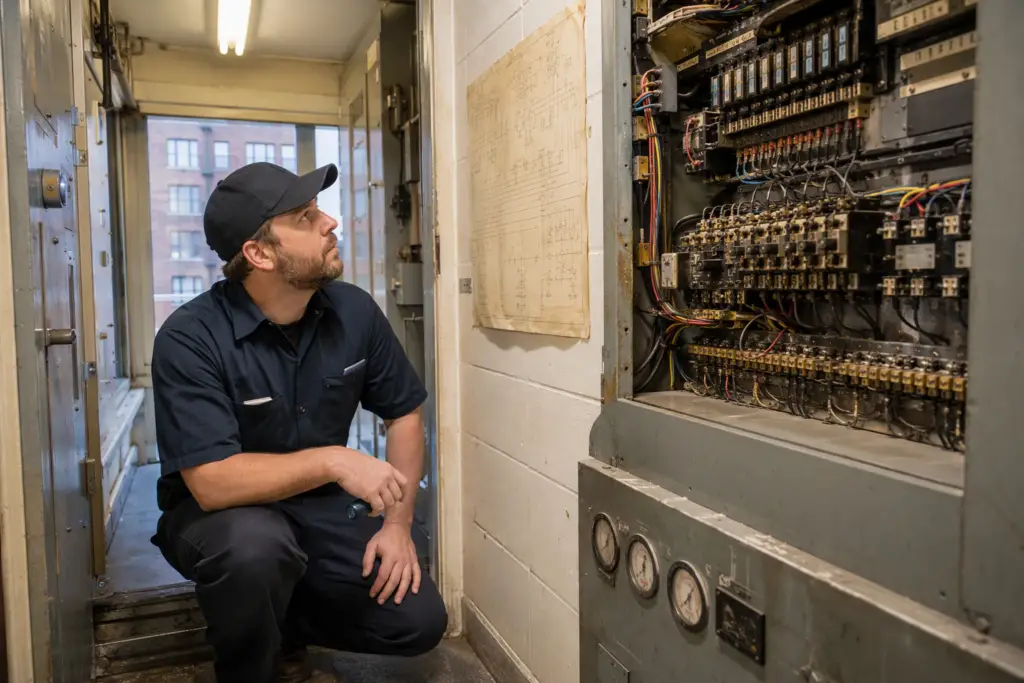
In older Philadelphia buildings — particularly those built before 1985 — relay-logic controllers present a growing problem as replacement relay components become increasingly scarce. A qualified maintenance provider will proactively identify when a controller is approaching end-of-parts-availability life and present a modernization recommendation before the system fails entirely.
How Does Elevator Maintenance Affect My Philadelphia Building’s Insurance Premiums?
Documented, consistent elevator maintenance performed by a licensed contractor directly supports lower insurance premiums and stronger liability protection, as most commercial property insurers in Philadelphia require proof of annual inspections and a current Certificate of Operation as conditions of coverage.
I’ve consulted with numerous Philadelphia property managers who discovered — after a claim — that their insurance carrier denied or reduced coverage because they could not produce complete maintenance records for the elevator involved in an incident. Gaps in maintenance documentation are treated by insurers as evidence of negligence, which dramatically increases liability exposure in slip-and-fall or entrapment litigation.
Quality Elevator Company provides all contract customers with a secure digital maintenance log portal, giving building owners real-time access to complete service history, inspection records, and compliance documentation — exactly what your insurance carrier and legal counsel will request if an incident occurs.
What Is the Difference Between a National Elevator Company and a Local Philadelphia Elevator Company?
National elevator companies offer brand recognition and broad parts networks, but local and regional Philadelphia elevator companies typically provide faster response times, more personalized service, greater pricing flexibility, and technicians who are consistently assigned to your building rather than rotating through a large territory.
This is a genuine trade-off that building owners should evaluate based on their specific priorities. National companies (Otis, KONE, Schindler, ThyssenKrupp) have significant advantages in parts availability for their own proprietary equipment and offer standardized service platforms across multiple properties. However, their technician territories in Philadelphia can be large, response times can lag, and contract pricing is often less negotiable.
Regional companies like Quality Elevator Company — serving Philadelphia, Baltimore, Washington DC, and Richmond — offer the operational depth of a multi-market company with the responsiveness and client focus of a local provider. Our Philadelphia technicians are assigned to specific buildings and develop detailed knowledge of each unit’s history, quirks, and maintenance needs.
How Do I Know If My Philadelphia Elevator Needs Modernization vs. Continued Maintenance?
The decision threshold most elevator engineers use is the 50% Rule: when annual repair and maintenance costs exceed 50% of the estimated modernization cost for two or more consecutive years, modernization is the more economical long-term choice.
Additional modernization indicators include:
- Equipment age exceeding 20–25 years, particularly for hydraulic systems
- Three or more entrapments or safety device failures in a 12-month period
- Inability to source replacement parts for controllers or drive systems
- Energy consumption significantly above modern variable-frequency drive (VFD) benchmarks
- Pending ADA deficiencies that require structural cab modifications
- Persistent leveling errors of more than ½ inch — a tripping hazard and ADA violation
A qualified maintenance provider should offer a written modernization assessment with projected ROI timelines rather than simply continuing to patch aging equipment. This kind of proactive advisory approach is a hallmark of a true partner rather than a transactional vendor.
Why Should I Choose Quality Elevator Company for Philadelphia Elevator Maintenance?
Quality Elevator Company combines IUEC-certified technicians, deep familiarity with Pennsylvania elevator law, local parts inventory, 24/7 emergency dispatch, and transparent full-coverage contracts — making it a strong choice for Philadelphia commercial and residential building owners who need dependable, compliant elevator service.
Here is what distinguishes our Philadelphia service offering:
- Certified technicians: All mechanics hold current Pennsylvania Department of Labor & Industry licenses and IUEC certifications
- Local presence: Philadelphia-area technicians with dedicated building assignments — not rotating national dispatch pools
- 24/7 emergency response: Guaranteed 4-hour response with typical arrival under 2 hours for in-city locations
- Digital compliance documentation: Real-time maintenance records accessible to building owners and property managers at any time
- Multi-market reach: Serving Philadelphia, Baltimore, Washington DC, and Richmond — ideal for portfolio property managers
- Transparent contracts: Full-coverage agreements with no hidden “parts at cost” clauses
- Modernization planning: Proactive equipment assessments with written ROI projections
We service all major elevator brands and drive types across Philadelphia’s diverse building stock — from historic Center City office towers to modern residential high-rises in University City and the Navy Yard development corridor.
Need elevator service you can rely on? Quality Elevator Company is ready to help.