Elevator Breakdown Immediate Response: Complete FAQ Guide for Building Owners and Managers
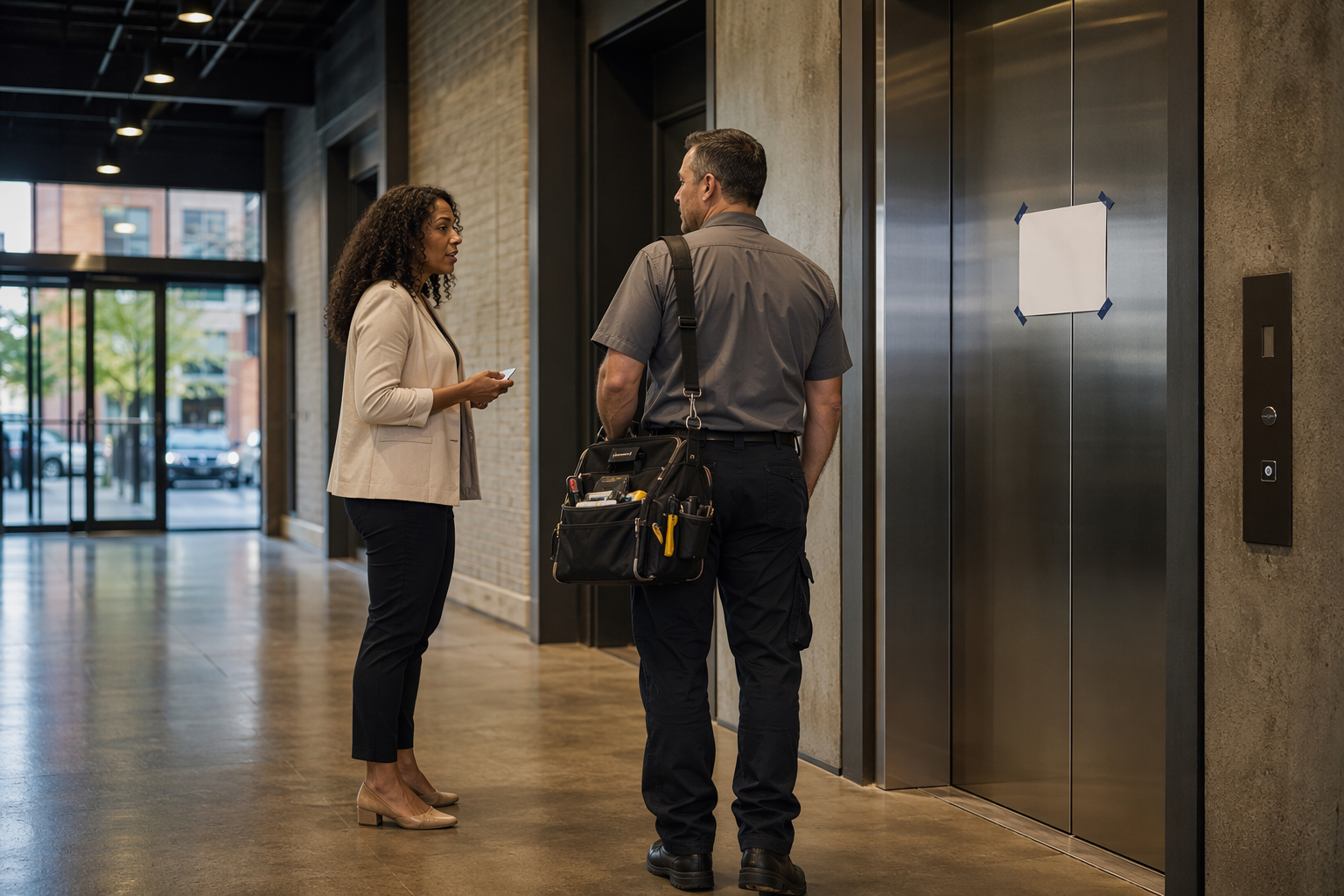
After more than 15 years working elevator service calls across Baltimore, Washington DC, Philadelphia, and Richmond, I’ve responded to hundreds of emergency breakdowns. The difference between a two-hour resolution and a two-day shutdown almost always comes down to one thing: how fast the building team responds and how prepared they are before the breakdown ever happens. This guide answers every question I hear from property managers, facility directors, and building owners — covering everything from entrapment procedures to compliance timelines, costs, and what to demand from your elevator service contractor.
What does “immediate response” mean for an elevator breakdown?
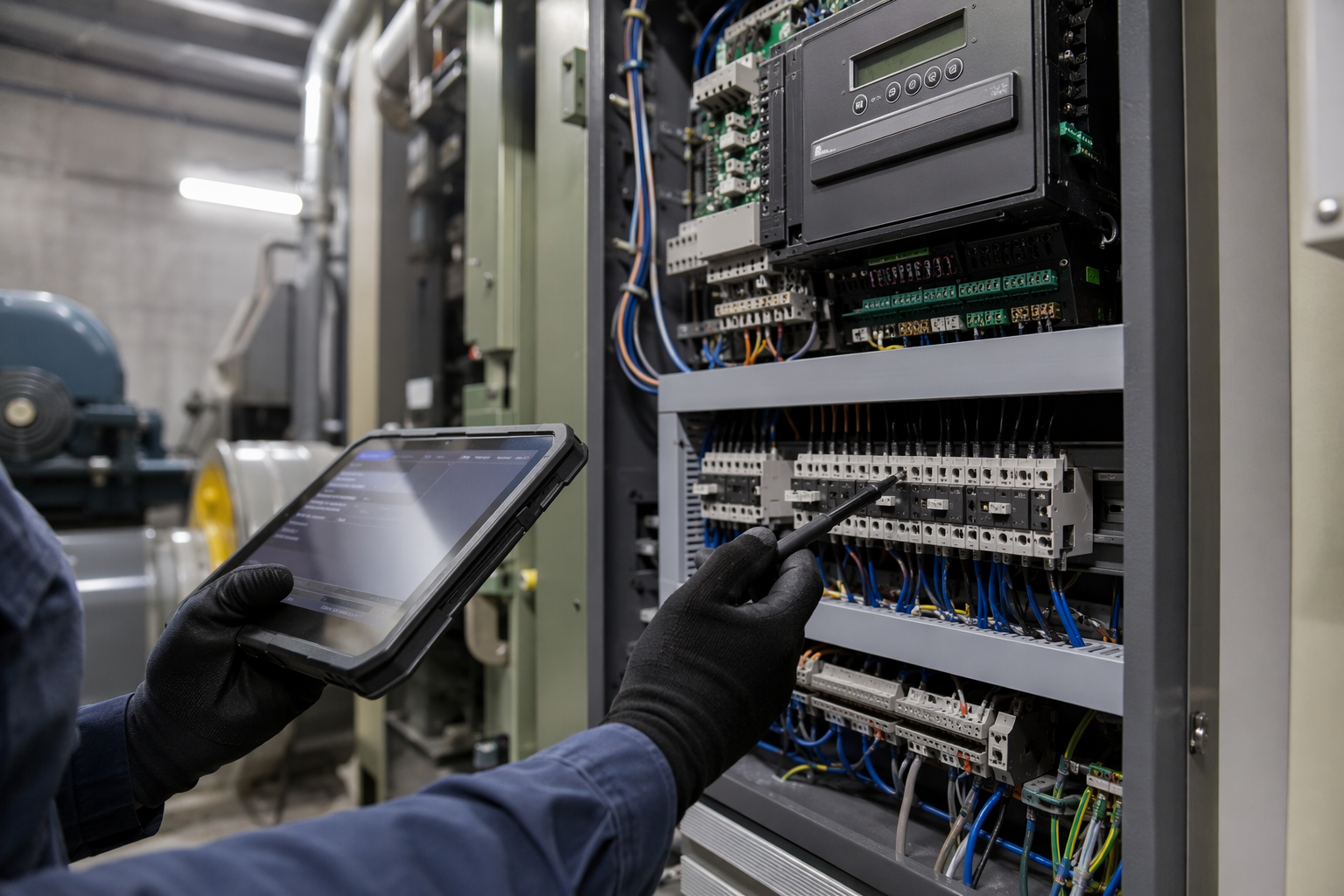
Immediate response for an elevator breakdown means a certified technician is dispatched within minutes of the service call and arrives on-site within 1–4 hours, with passenger entrapment situations treated as life-safety emergencies requiring response in 30–60 minutes or less.
Under ASME A17.1-2022, the Safety Code for Elevators and Escalators, entrapment situations are classified as emergency conditions. This means your elevator service provider is contractually and ethically obligated to prioritize trapped-passenger calls above all scheduled maintenance. When you call Quality Elevator Company for an emergency, our dispatch team categorizes the call immediately, and our closest certified technician is rerouted to your building.
Response time benchmarks vary by building type and contract tier, but industry standard for a full-service elevator maintenance agreement should include guaranteed emergency response windows — typically 1 hour for entrapments and 4 hours for operational failures during business hours.
What should a building manager do immediately when an elevator breaks down?

The moment an elevator stops working, the building manager must post the unit out of service, contact trapped passengers through the emergency intercom, call 911 if anyone is entrapped, and immediately notify their elevator service contractor.
Here is the correct sequence of actions every building manager should follow:
- Establish communication with any passengers using the in-car emergency telephone, which is required by ASME A17.1 Section 2.27.1.1.
- Do not attempt self-rescue. Instructing passengers to pry open doors or climb out is extremely dangerous and has resulted in fatalities. Wait for the certified technician.
- Call 911 if passengers report a medical emergency, panic, or if the car is between floors with a significant gap.
- Call your elevator service contractor immediately after ensuring passenger safety. Have your elevator ID number, building address, and floor location ready.
- Post the elevator out of service and barricade both the lobby entrance and any other floor landings to prevent additional passengers from attempting to use the unit.
- Document the incident including time, any error codes displayed on the controller, and what passengers reported before the breakdown.
Never allow anyone — including your maintenance staff — to open machine room doors, bypass safety circuits, or manually move the elevator cab without a licensed technician present. This violates ASME A17.1 safety protocols and creates serious liability exposure under state elevator codes in Maryland, DC, Virginia, and Pennsylvania.
How fast should a certified elevator technician arrive during an emergency?
Industry best practice and most full-service maintenance contracts require certified technician arrival within 1 hour for passenger entrapments and within 2–4 hours for non-entrapment mechanical failures during business hours.
Response time benchmarks vary significantly depending on your contract type. The table below summarizes what building owners should expect based on service agreement tier:
| Service Contract Tier | Entrapment Response | Emergency (No Entrapment) | Standard Breakdown | After-Hours Coverage |
|---|---|---|---|---|
| Full-Service / Comprehensive | 30–60 minutes | 1–2 hours | 2–4 hours | 24/7 included |
| Preventive Maintenance | 1–2 hours | 2–4 hours | 4–8 hours | On-call (may have surcharge) |
| Oil & Grease Only | 2–4 hours (if available) | 4–8 hours | Next business day | Not typically included |
| Time & Material (No Contract) | Best effort / 2–6 hours | Best effort | 1–3 business days | Emergency rates apply |
For high-traffic buildings — hospitals, transit hubs, multi-tenant commercial towers — anything less than a full-service agreement with guaranteed 1-hour entrapment response creates unacceptable risk. Quality Elevator Company offers guaranteed response windows written directly into service contracts for all buildings across our Baltimore, DC, Philadelphia, and Richmond service territories.
Is a building owner legally required to take an elevator out of service after a breakdown?
Yes — in Maryland, Washington DC, Virginia, and Pennsylvania, state and local elevator codes require building owners to immediately remove from service any elevator that has experienced a malfunction, safety device activation, or failure until a licensed elevator inspector or contractor certifies it safe to return to operation.
Specifically, each jurisdiction enforces the following requirements in 2026:
- Maryland: Governed by the Maryland Department of Labor, Licensing and Regulation (DLLR). Elevators must be tagged out of service and cannot return to operation without technician signoff and notification to the state authority having jurisdiction (AHJ).
- Washington DC: DC DCRA (Department of Consumer and Regulatory Affairs) enforces ASME A17.1 and requires immediate reporting of entrapments and significant mechanical failures.
- Virginia: The Virginia Department of Labor and Industry (DOLI) enforces the Virginia Elevator Safety Law. Buildings that continue operating a malfunctioning elevator risk fines up to $12,000 per violation.
- Pennsylvania: The Pennsylvania Department of Labor and Industry requires licensed inspection and technician signoff before a failed elevator can resume service. Philadelphia also has independent municipal elevator enforcement.
Failure to comply is not just a code violation — it creates significant tort liability if a subsequent injury occurs while the unit is in a known-failed state.
What are the most common causes of sudden elevator breakdowns?
The most common causes of sudden elevator breakdowns are door system failures (accounting for approximately 70% of all service calls), drive system faults, safety device trips, power interruptions, and worn or failed rope/belt components.
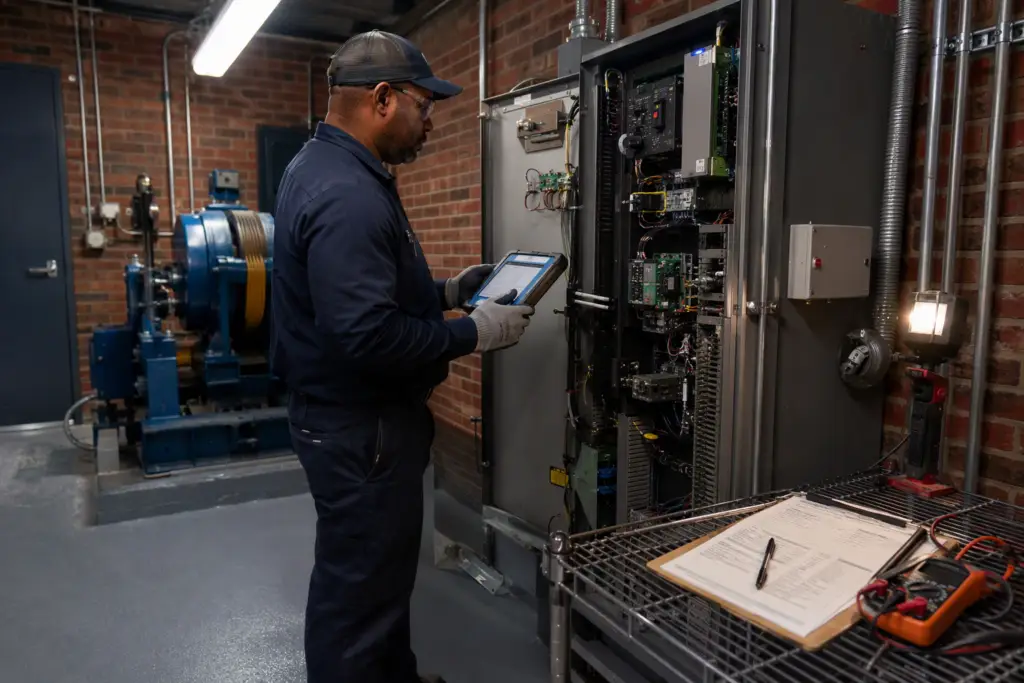
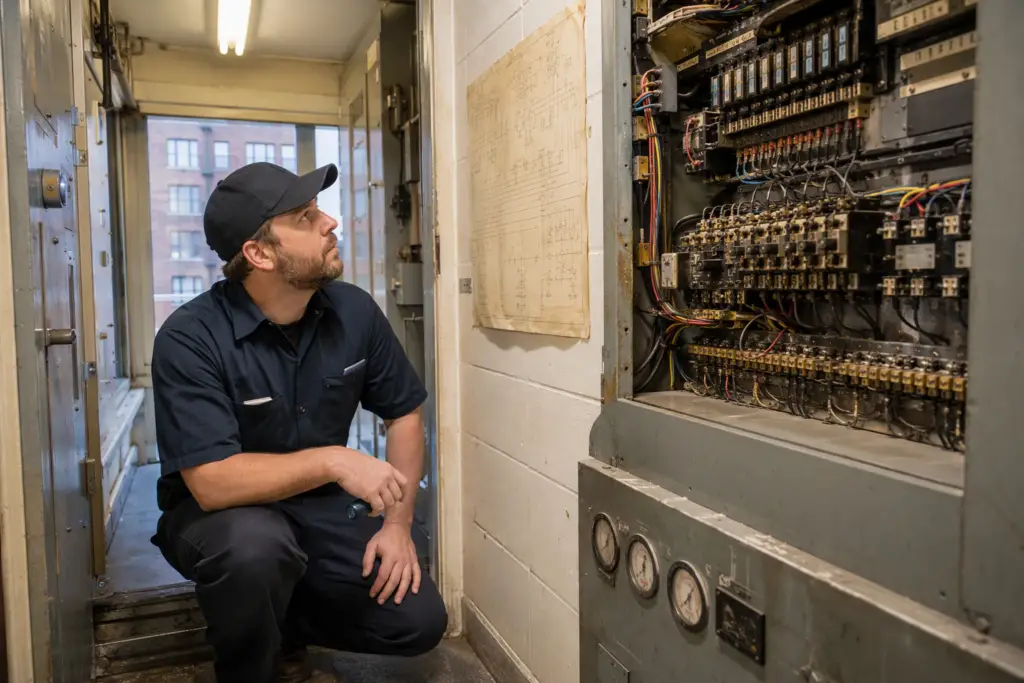
In my 15 years of field experience, door malfunctions are by far the most frequent emergency call. Modern elevators use photocell arrays and door operator motors that are sensitive to wear, misalignment, and debris. Other frequent failure points include:
- Door operator motors and couplers — worn drive wheels cause doors to slow or fail to close, triggering fault codes
- Safety circuit trips — governor, safeties, or buffer switches that activate due to overspeed, leveling errors, or electrical faults
- Control board failures — especially in elevators manufactured before 2005 where replacement parts are increasingly scarce
- Drive/VFD (Variable Frequency Drive) faults — particularly in traction elevators during high-heat summer months in DC and Philadelphia
- Hydraulic system failures — underground hydraulic cylinders corroding or power unit leaks causing low oil pressure shutdowns
- Power surges and HVAC-related electrical disturbances — common during summer storm seasons across the Mid-Atlantic region
What happens if passengers are trapped inside a broken elevator?
When passengers are trapped inside a stopped elevator, the building manager must immediately use the emergency intercom to communicate with them, call 911 if there is any medical concern, and contact a certified elevator technician — passengers should never attempt to exit the car on their own.
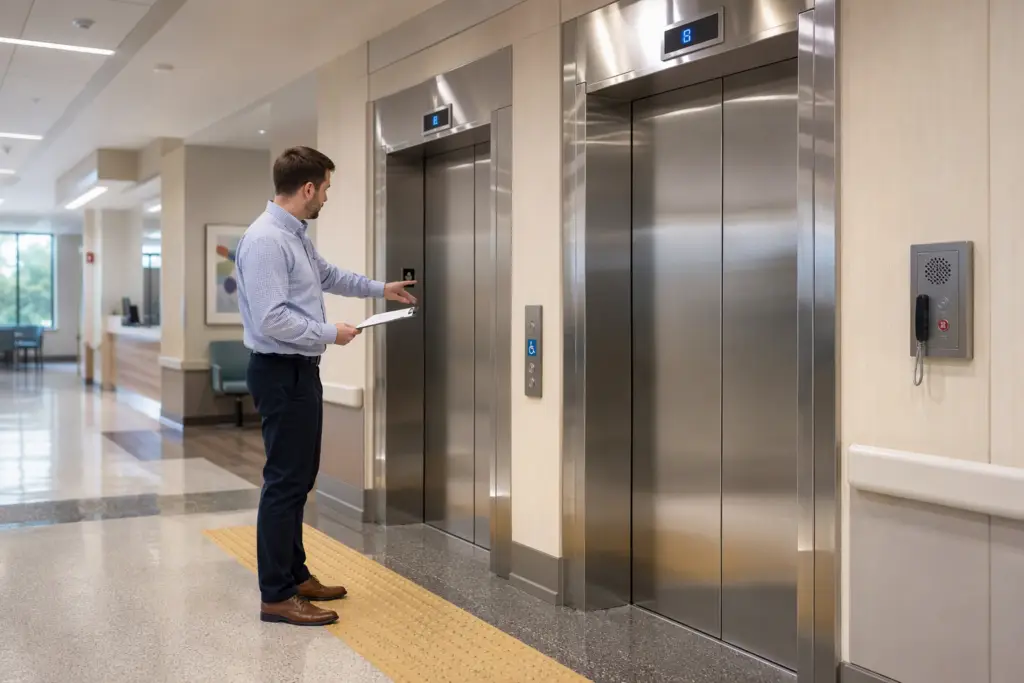
Under ASME A17.1-2022 Rule 2.27.1, all elevators must be equipped with a two-way means of communication that connects to a location staffed 24/7. Building owners who do not maintain this system are in violation of both ASME code and ADA accessibility requirements.
Fire departments have elevator rescue protocols, but in most jurisdictions they defer to the arriving elevator technician for mechanical rescue unless there is an immediate medical emergency. The average entrapment duration in buildings with full-service elevator contracts is under 45 minutes. Without a service contract, that average rises to 3–6 hours.
What is the cost of emergency elevator repair service in 2026?
Emergency elevator repair costs in the Baltimore-DC-Philadelphia-Richmond corridor range from $350–$900 for after-hours service call fees alone, with parts and labor for common repairs adding $500–$8,000+ depending on the component failed and availability of parts.
Cost breakdown by common repair type in 2026:
- Door operator replacement: $1,200–$4,500 depending on brand and configuration
- Control board repair or replacement: $2,000–$15,000+ (legacy boards for pre-2000 controllers can be extremely costly or unavailable)
- VFD replacement (traction elevators): $3,500–$12,000
- Hydraulic power unit repair: $1,500–$7,000
- Safety device reset and inspection: $450–$1,200
- After-hours emergency call fee (no contract): $350–$900 in addition to all parts and labor
Building owners with comprehensive service contracts eliminate after-hours call fees and typically receive parts discounts of 15–30%. Over a 5-year period, buildings with full-service agreements typically spend 40–60% less on emergency repair costs than buildings operating on time-and-material arrangements.
How do I know if my elevator breakdown requires a state inspection before returning to service?
Any breakdown that involved a safety device activation, a passenger entrapment, significant mechanical component replacement, or a control system failure typically requires notification to your state’s Authority Having Jurisdiction (AHJ) and may require a third-party inspection before the elevator can legally return to service.
In Maryland, DC, Virginia, and Pennsylvania, your elevator contractor is required to file incident reports for entrapments and safety-critical failures. The AHJ then determines whether a follow-up inspection is required. Building owners should never assume the elevator can simply be restarted after a serious breakdown without confirming the reporting requirements with their certified contractor.
Quality Elevator Company handles all AHJ notification and documentation as part of our emergency response service, ensuring our clients in Baltimore, DC, Philadelphia, and Richmond are never caught out of compliance after an incident.
What is the difference between a full-service elevator contract and a preventive maintenance contract?
A full-service contract covers all labor, parts, and emergency calls under one monthly fee, while a preventive maintenance contract covers only scheduled lubrication and adjustment visits — leaving building owners responsible for all parts costs and emergency response fees.
For buildings with high daily traffic volume (over 500 trips/day), a full-service contract is almost always the more cost-effective long-term choice. For low-traffic residential buildings with newer equipment, a preventive maintenance contract with an optional emergency response rider can be a reasonable middle ground. Your elevator contractor should perform a traffic and equipment analysis before recommending a contract structure.
How often should elevators be inspected to prevent unexpected breakdowns?
ASME A17.1 requires annual Category 1 safety tests and periodic Category 5 full-load safety tests every 5 years, but most certified technicians — including our team at Quality Elevator Company — recommend monthly preventive maintenance visits for any elevator averaging more than 200 trips per day.
State-specific inspection intervals in our service area for 2026:
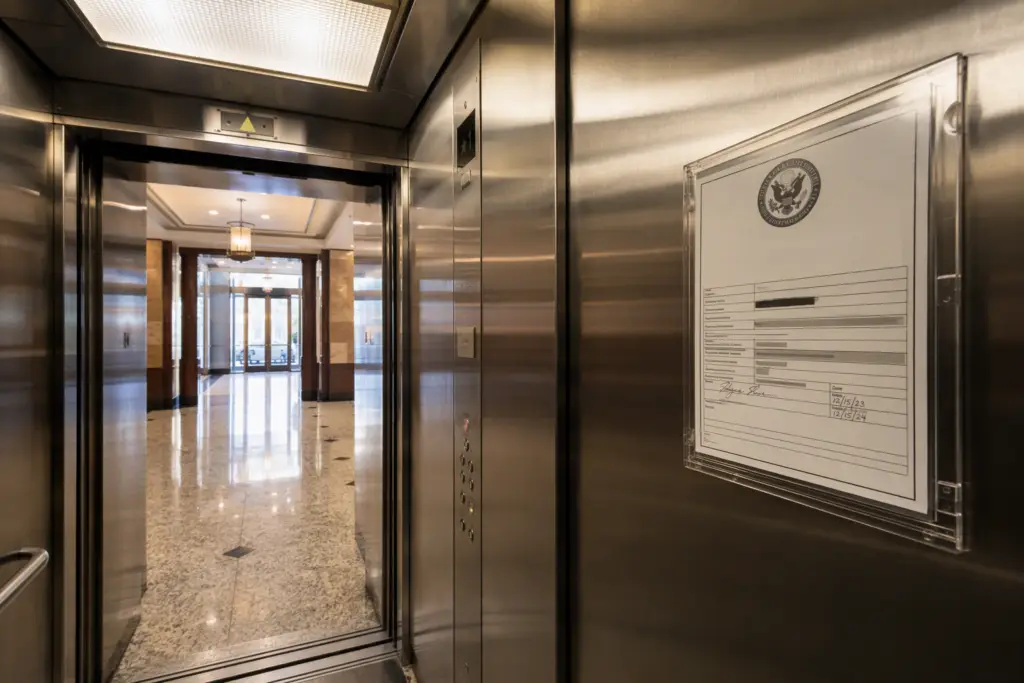
- Maryland: Annual inspection required by DLLR; certificate must be posted in the elevator cab
- Washington DC: Annual inspection required by DCRA; violations result in immediate shutdown orders
- Virginia: Annual inspection required under Virginia Elevator Safety Law (§40.1-51.16)
- Pennsylvania: Annual inspection required; Philadelphia enforces separate municipal inspection requirements
Inspections alone do not prevent breakdowns. Proactive maintenance — adjusting door operators, replacing worn rope hitch springs, cleaning controller contactors — is what prevents the 3:00 AM emergency call. Elevators that receive monthly maintenance service experience approximately 60–70% fewer emergency callbacks than those on quarterly service schedules, based on industry data from the National Elevator Industry Inc. (NEII).
What information should I have ready when calling for emergency elevator service?
When calling for emergency elevator service, you should have your building address, elevator unit number or license number, floor the car is stopped on, number of people trapped (if any), any error codes displayed, and the name and phone number of the on-site contact ready before the call connects.
Having this information immediately available cuts 10–15 minutes off dispatch time — which matters enormously when passengers are entrapped. Quality Elevator Company recommends posting an emergency information card in each machine room and at the building manager’s desk with all elevator ID numbers, your service contract number, and our direct emergency line at 301-779-9116.
Can my building’s maintenance staff reset a broken elevator?
Building maintenance staff should never attempt to reset a malfunctioning elevator unless they are specifically trained and authorized to perform a simple door reset, and even then only for units where the reset procedure is documented in the owner’s manual and no passengers are involved.
Untrained resets of safety circuit trips — particularly governor switches, emergency stop buttons activated by fault, or phase-reversal protections — can mask a genuine safety defect that puts the next passenger at risk. Under ASME A17.1-2022 and all four jurisdictions we serve, only a licensed elevator mechanic may reset certain safety devices. Violations can result in certificate of operation revocation and significant liability if injury follows.
What should a building do if their elevator service company has slow response times?
If your current elevator service company consistently fails to meet contracted response windows, you should document each incident, formally notify them in writing, and begin the process of evaluating alternative certified providers — slow emergency response is not just a service quality issue, it is a life-safety failure.
When evaluating a new provider, require the following in writing before signing any agreement:
- Guaranteed maximum entrapment response time (in writing, not just verbal assurance)
- Local technician coverage — verify the company has field technicians based in your city, not just a regional dispatch hub
- IUEC (International Union of Elevator Constructors) certification for all field technicians
- State licensing verification for Maryland, DC, Virginia, or Pennsylvania depending on your location
- References from comparable buildings in your market
How does ADA compliance relate to elevator breakdown response?
Under the Americans with Disabilities Act, elevators in multi-story buildings are primary accessibility infrastructure — prolonged outages without equivalent alternative access may constitute an ADA violation, and building owners have an affirmative obligation to restore elevator service as rapidly as possible.
ADA Title III (for public accommodations) and Title II (for government buildings) both require that persons with disabilities have equal access to all floors. When an elevator is out of service, building owners must have an ADA-compliant contingency plan — including staff assistance protocols and, where feasible, temporary relocation of services to accessible floors. Extended outages without documented good-faith restoration efforts have resulted in DOJ complaints and private litigation.
What elevator components are most likely to fail without warning?
The components most likely to fail without warning are electromechanical contactors on older controllers, door operator drive wheels, hydraulic packing seals, and brake linings — all of which show minimal visible deterioration before sudden failure but can be identified early through vibration analysis and thermal imaging during preventive maintenance visits.
This is exactly why reactive-only maintenance is a false economy. A worn contactor costs $45 to replace during a scheduled visit. When it fails and takes out a control board, you are looking at $6,000–$15,000 and a multi-day shutdown. Predictive maintenance tools — including thermal cameras and elevator monitoring systems — are now cost-effective even for mid-size buildings. Quality Elevator Company installs remote monitoring systems that alert our dispatch team to developing faults before they cause a complete shutdown.
How long does emergency elevator repair typically take?
Most emergency elevator repairs are resolved within 2–6 hours of technician arrival for common failures like door system issues, safety resets, and drive faults — but control system failures and hydraulic cylinder replacements can require 1–5 business days depending on parts availability.
Parts availability is increasingly a critical variable in 2026. Supply chain disruptions have extended lead times for certain elevator components — particularly solid-state boards for legacy Otis, Dover, and Westinghouse controllers — to 3–8 weeks in some cases. This is why building owners with aging equipment (15+ years old) should proactively discuss critical spare parts stocking with their elevator contractor. Quality Elevator Company maintains a regional parts inventory in our Baltimore facility that dramatically reduces parts-related downtime for our contract clients.
What documentation should be filed after an elevator breakdown?
After any elevator breakdown, building owners should retain the technician’s written service report, a record of when the unit was taken out of service and returned, any AHJ notifications filed, and an updated maintenance log entry — this documentation is essential for insurance, compliance audits, and liability defense.
Specifically, your post-incident file should include:
- Technician’s signed service report with root cause analysis
- Parts replaced with serial numbers where applicable
- Time of dispatch, time of arrival, and time unit returned to service
- Names of any trapped passengers and a record of their condition
- AHJ incident report number if applicable
- Photos of failed components (request these from your technician)
- Updated preventive maintenance schedule if root cause was deferred maintenance
How do I evaluate whether my building needs a modernization versus ongoing repairs?
When emergency repair costs in a 12-month period exceed 40–50% of the cost of a modernization, or when your elevator is 20+ years old and experiencing recurring breakdowns, a full modernization analysis is warranted — continuing to repair aging equipment often costs more long-term than investing in a controlled modernization project.
The 2026 modernization market in the Baltimore-DC-Philadelphia-Richmond corridor shows modernization costs ranging from $75,000–$300,000 depending on elevator type, building height, and scope. However, modernized elevators typically reduce emergency callback rates by 80–90%, reduce energy consumption by 25–40%, and reset your compliance clock with current ASME A17.1-2022 and ADA standards. Our team at Quality Elevator Company performs no-cost modernization feasibility assessments for existing maintenance clients.
What should I look for in an emergency elevator service contract?
A strong emergency elevator service contract must include a guaranteed written response time for entrapments, 24/7/365 dispatch coverage, IUEC-certified technician assignment, parts coverage terms, and a clear definition of what constitutes an “emergency” versus a standard service call.
Red flags to watch for in elevator service contracts include:
- Response time commitments phrased as “best effort” with no defined maximum
- Exclusion of common wear parts from parts coverage (door operators, brushes, oil, etc.)
- Auto-renewal clauses with 90+ day cancellation notice requirements
- No clause requiring IUEC-certified technicians specifically
- Vague language about after-hours coverage — confirm whether “on-call” means a technician near your building or a regional dispatch center that subcontracts
How does remote elevator monitoring reduce breakdown response time?
Remote elevator monitoring systems transmit real-time fault data to your service contractor’s dispatch center, allowing technicians to be pre-dispatched with the correct parts before a full breakdown occurs — reducing average resolution time by 30–50% compared to reactive emergency calls.
Modern IoT-based monitoring systems track door cycle counts, motor temperature, brake engagement frequency, and leveling accuracy. When parameters drift outside normal ranges, the system alerts both the building manager and the service contractor. This transforms the response from emergency reaction to planned intervention. In 2026, remote monitoring is no longer a luxury feature — it is standard risk management for any building with more than two elevator units or high daily traffic volume.
Why should I choose a local elevator service company over a national provider?
Local certified elevator companies consistently outperform national providers on emergency response times because their technicians are based in your city — not dispatched from regional hubs — and they have established relationships with local AHJs, making compliance navigation faster and smoother.
National elevator companies operate on scale economics that favor scheduled maintenance routes over emergency responsiveness. When a major storm hits Baltimore or a heat wave knocks out multiple elevators across DC simultaneously, a national company’s dispatch queue fills quickly. A local company with technicians stationed in your market can respond to your specific building faster, knows your equipment history, and has personal accountability to the local business community.
Quality Elevator Company was founded and operates exclusively in the Baltimore, Washington DC, Philadelphia, and Richmond markets. Our technicians live and work in the same communities as our clients — that’s not a marketing line, it’s the reason our average emergency response time consistently beats the industry benchmark.
Ready to Protect Your Building with Guaranteed Emergency Elevator Response?
Don’t wait for a breakdown to find out whether your elevator service contract actually protects you. Quality Elevator Company provides certified emergency elevator response across Baltimore MD, Washington DC, Philadelphia PA, and Richmond VA — with guaranteed response times written into every contract.
Our IUEC-certified technicians are stationed locally in your market, our dispatch operates 24/7/365, and we handle all AHJ compliance documentation after every incident.
Contact Quality Elevator Company for a free elevator assessment: 301-779-9116
Serving Baltimore MD | Washington DC | Philadelphia PA | Richmond VA
Need elevator service you can rely on? Quality Elevator Company is ready to help.