How to Budget for Elevator Repairs and Maintenance Going Into the 2027 Fiscal Year

As facility managers, building owners, and CFOs prepare capital and operating budgets for the 2027 fiscal year, elevator systems represent one of the most consequential — and frequently underestimated — line items. Elevators are life-safety equipment governed by federal accessibility law, ASME standards, and a patchwork of state and local codes. Getting the budget wrong means deferred maintenance, compliance violations, unplanned downtime, and liability exposure. This authority page covers every dimension of the budgeting decision: compliance obligations, cost drivers, planning timelines, vendor evaluation, and the trends shaping the industry in 2025 and 2026 as organizations look ahead to 2027.
—
What Mandatory Compliance Obligations Drive Elevator Maintenance Costs?
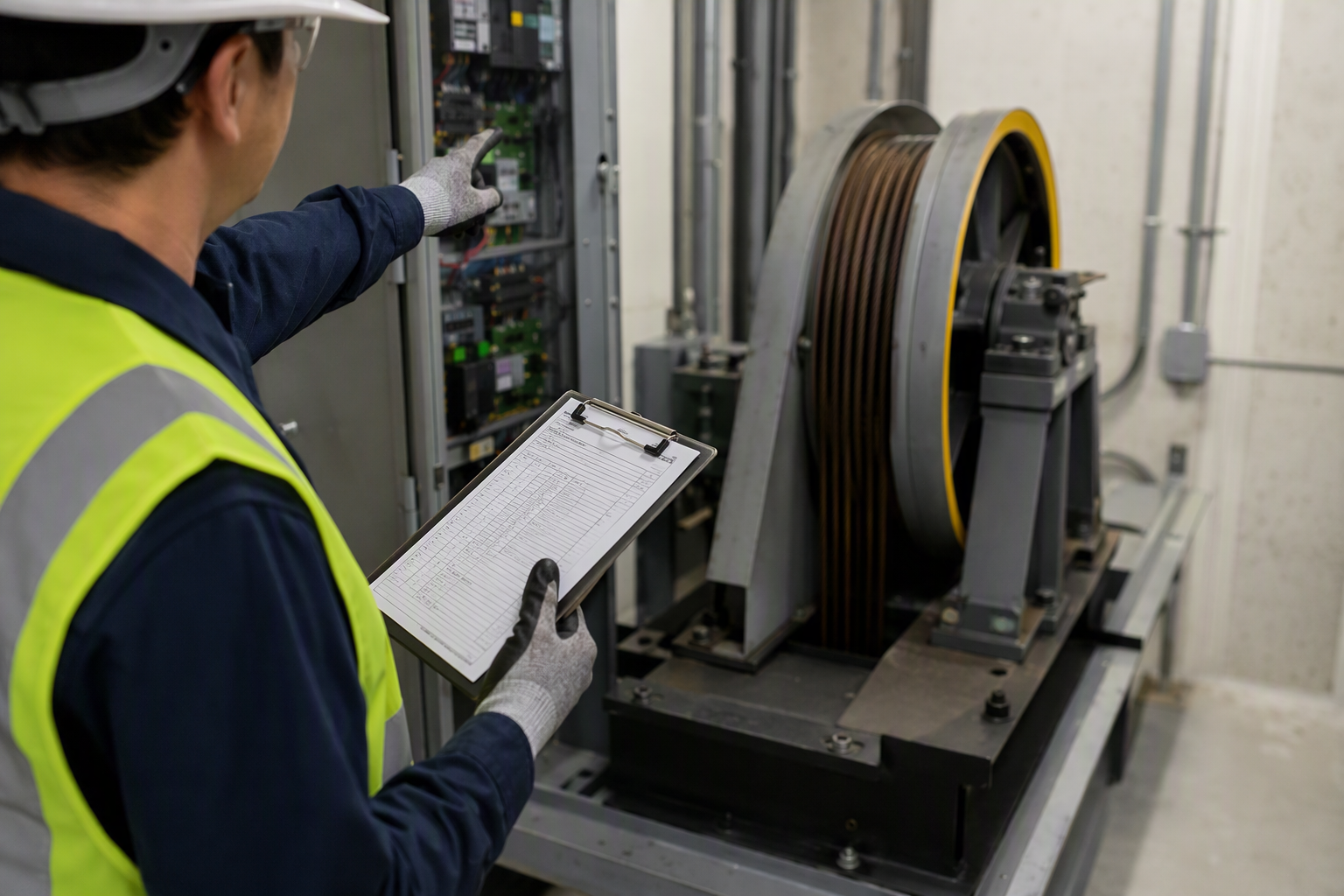
The single largest non-negotiable cost driver in any elevator maintenance budget is statutory compliance. In the United States, elevator safety is governed primarily by the ASME A17.1 Safety Code for Elevators and Escalators, which establishes minimum standards for design, construction, installation, operation, inspection, testing, and maintenance. Most state and local jurisdictions adopt ASME A17.1 by reference, meaning the code’s inspection and testing intervals are effectively legal requirements.
Key compliance cost categories include:
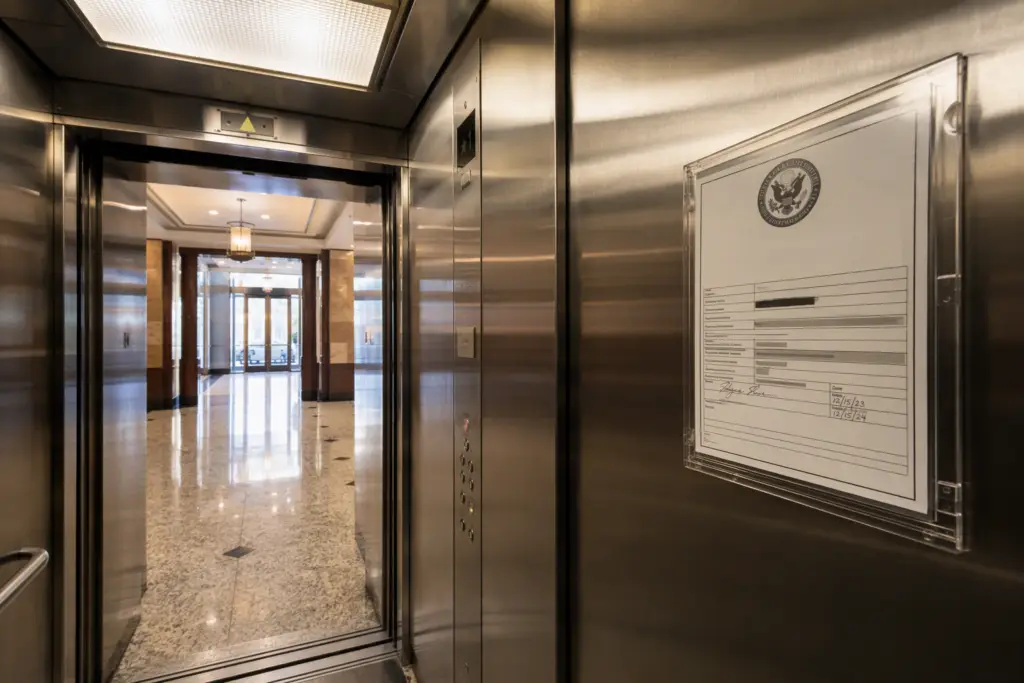
- Periodic inspections: ASME A17.1 requires routine inspections and tests at defined intervals. These must typically be performed by a Qualified Elevator Inspector (QEI) certified under the ASME QEI-1 Standard for the Qualification of Elevator Inspectors. Inspection fees, permit costs, and any corrective work identified during inspection are direct budget line items.
- Five-year full-load tests: Most jurisdictions require a full-load safety test every five years, which may involve taking equipment offline and can surface deferred maintenance needs that become immediately billable.
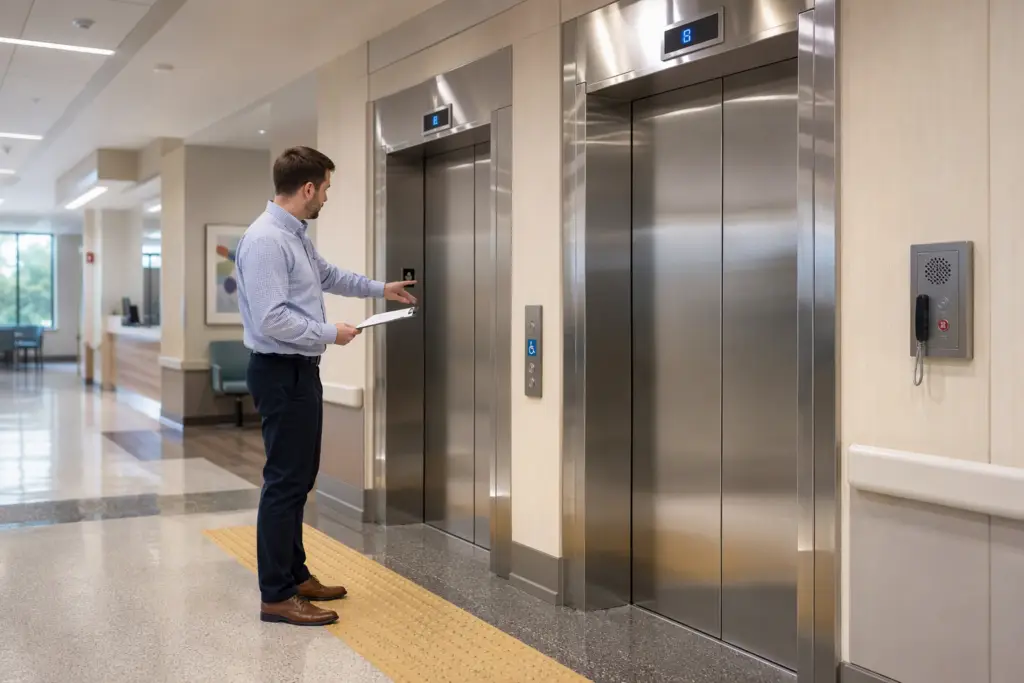
- ADA accessibility requirements: Buildings open to the public must ensure elevator accessibility under the Americans with Disabilities Act (ADA). Retrofits for door timing, button labeling, Braille, and auditory signals can appear as maintenance or capital costs depending on accounting treatment.
- OSHA machine room and pit safety: Elevator machine rooms and pits are covered by OSHA general industry standards. Proper lighting, guarding, housekeeping, and lockout/tagout procedures must be maintained, and any deficiencies discovered during maintenance visits can generate corrective costs.
Budget planners should request a compliance calendar from their elevator service provider at the start of each planning cycle, mapping every required inspection, test, and permit renewal to a month so costs can be accrued accurately rather than absorbed as surprises.
—
What Are the Primary Cost Drivers for Elevator Maintenance and Repairs?
Beyond compliance, elevator maintenance costs are shaped by a set of well-understood technical and operational variables. Understanding these drivers allows finance and facilities teams to build defensible budget models.
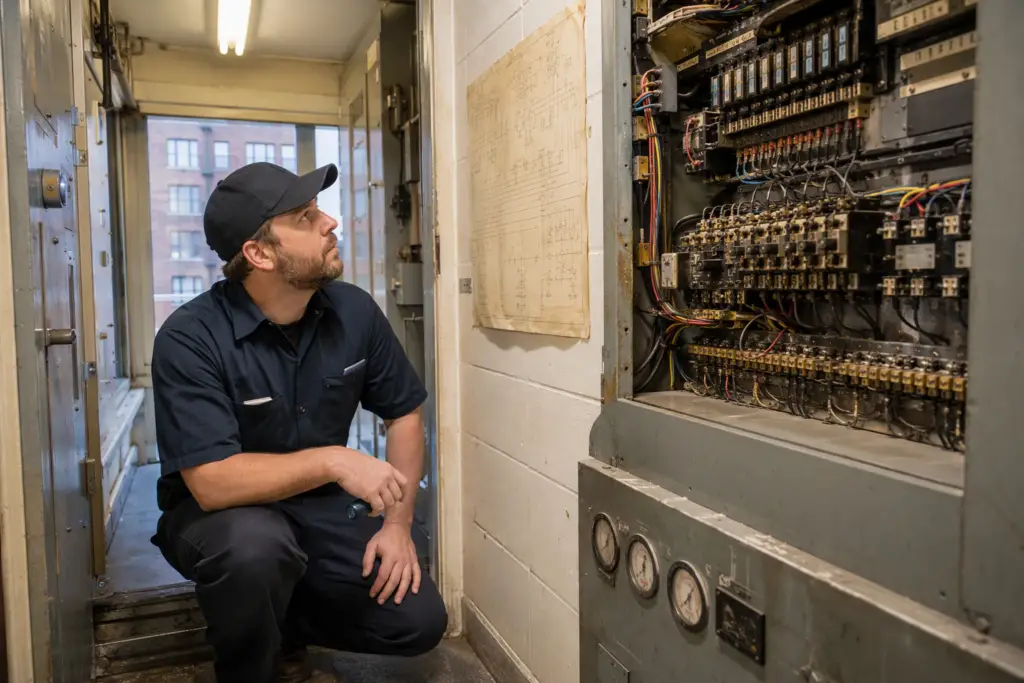
- Equipment age: Older elevators — generally those more than 20 years old — consume maintenance hours disproportionately. Aging relay-logic controls, worn hydraulic seals, deteriorating wire ropes, and obsolete components that require custom fabrication or sourcing all increase cost per service event.
- Number of units: Multi-unit buildings benefit from volume pricing with service contractors, but the total maintenance budget scales with unit count. Each elevator should carry its own budget line with individual maintenance histories informing the allocation.
- Usage intensity: A high-rise residential building where a single elevator serves 200 units runs far more duty cycles per day than a low-traffic commercial building. Door operators, cab interiors, and mechanical drive components wear at a rate proportional to trips, not calendar time.
- Drive system type: Hydraulic elevators and traction elevators have meaningfully different maintenance profiles. Hydraulic systems require fluid management, cylinder inspection, and environmental compliance for oil containment; traction systems require wire rope inspection, sheave maintenance, and brake testing.
- Modernization status: Elevators that have been modernized within the past 10–15 years — particularly those with updated solid-state controls — tend to have lower routine maintenance costs and better parts availability than legacy systems.
- Contract structure: Full-service maintenance contracts that include parts and callbacks offer budget predictability at a higher base cost. Oil-and-grease contracts shift repair risk to the building owner, producing lower monthly line items but volatile capital exposure when components fail.
—
How Should Facility Managers Structure an Elevator Maintenance Budget?
A well-structured elevator maintenance budget typically contains four distinct categories, each funded separately to avoid internal cross-subsidization that obscures true cost performance.
- Planned preventive maintenance (PM): This is the contracted cost of scheduled lubrication, adjustment, inspection, and testing visits performed on a defined frequency — monthly, quarterly, or semi-annually depending on the contract tier. This cost is highly predictable and should be the starting baseline for any budget.
- Compliance and permitting: Inspection fees, permit renewals, and any corrective work mandated by the authority having jurisdiction (AHJ) following an inspection. This line item should be built from the compliance calendar described above.
- Reactive repairs and callbacks: Even well-maintained elevators require unscheduled service. Budget planners should review the prior two to three years of callback history to establish a realistic baseline, applying a trend adjustment for equipment aging.
- Capital reserve for major component replacement: Wire ropes, hydraulic cylinders, door operators, controllers, and cab interiors all have finite service lives. A capital reserve — often computed as a percentage of replacement value, similar to a building depreciation model — ensures that major replacements do not appear as budget surprises. Buildings without existing reserve studies should commission one before finalizing the 2027 budget.
—
What Is a Realistic Contingency to Include in an Elevator Budget?
Because elevators contain mechanical, electrical, hydraulic, and structural subsystems that interact in complex ways, even excellent preventive maintenance does not eliminate unplanned failures entirely. Standard facilities management practice recommends a contingency reserve on top of planned expenditures. The appropriate contingency level depends on equipment age, usage intensity, and historical callback frequency — factors that are highly site-specific. Buildings with older equipment or limited maintenance histories should carry a larger contingency than those operating recently modernized systems under comprehensive service agreements.
Quality Elevator Company works with building owners and facility managers to analyze equipment-specific maintenance histories and recommend reserve levels grounded in the actual condition of each unit — not generic industry averages — because generic averages can significantly under- or over-fund a specific portfolio’s real exposure.
—
How Does the ADA Affect Elevator Maintenance Budgets?
The Americans with Disabilities Act requires that elevators in covered facilities remain accessible and operational. This creates two distinct budget implications. First, ADA-mandated features — door-reopening devices, cab dimensions, tactile controls, audible signals — must be kept in working order as part of routine maintenance. Failures that render an elevator non-compliant can expose building owners to complaints, investigations, and remediation orders. Second, buildings undergoing modernization or significant alterations may trigger ADA path-of-travel obligations that require bringing existing elevator accessibility features up to current standards, generating a capital cost that must be forecasted during the planning cycle.
—
What Should Be Included in an Elevator Service Contract Review Before 2027?
Before finalizing the 2027 fiscal year budget, building owners and facility managers should conduct a thorough review of existing elevator service contracts. Key review points include:
- Scope of covered work: Identify exactly which components, labor categories, and service events are included versus excluded. Callbacks, parts, and emergency service are common exclusion points that generate out-of-contract billing.
- Escalation clauses: Many multi-year service contracts include annual escalation provisions tied to labor cost indices. Confirm the escalation formula and model its impact on the 2027 line item.
- Parts sourcing commitments: Agreements that allow the contractor to use proprietary parts exclusively can create price exposure when components are not available through competitive channels.
- Performance metrics and reporting: Contracts that include documented maintenance logs, inspection reports, and callback response records provide the data needed to manage cost and compliance proactively.
- Termination and transition terms: Understanding the conditions and costs of switching providers helps budget planners evaluate the true total cost of the current agreement versus alternatives.
—
How Do Industry Trends in 2025 and 2026 Affect 2027 Elevator Budgets?
Several meaningful trends visible in 2025 and 2026 will shape elevator maintenance economics heading into 2027:
- Supply chain normalization and parts lead times: The disruptions that extended parts lead times significantly in prior years have been easing, but availability of legacy components for older elevator systems remains a structural challenge as original manufacturers discontinue support for aging product lines.
- Remote monitoring and predictive maintenance adoption: Building owners are increasingly evaluating elevator monitoring platforms that use sensor data to identify wear conditions before they produce failures. While these systems carry their own implementation and subscription costs, they can reduce emergency callback frequency and extend the useful life of components — a favorable long-term budget dynamic.
- Code update cycles: ASME A17.1 is updated periodically, and jurisdictions adopt new editions on varying schedules. Code changes can introduce new testing requirements or mandate retrofits that create compliance costs not present in prior budgets. Monitoring the adoption status of the current ASME A17.1 edition in each jurisdiction where a building owner operates is a critical planning step for 2027.
- Labor market conditions: Elevator mechanic labor remains a specialized skilled trade with limited supply relative to demand in many markets. Labor cost trends in the local market should be factored into contract renewal negotiations and budget modeling.
- Sustainability and energy efficiency initiatives: Many building owners are integrating elevator modernization into broader sustainability programs, driven by energy benchmarking requirements and ESG reporting commitments. Variable-frequency drives, regenerative drives, and LED cab lighting upgrades may appear in 2027 capital budgets as sustainability line items rather than pure maintenance expenditures.
—
How Do I Prioritize Repairs When the Budget Is Constrained?
When available funding is limited, prioritization must be driven by risk rather than convenience. A structured approach to constrained elevator maintenance budgets follows this sequence:
- Address all life-safety deficiencies first: Any item cited by an inspector as a life-safety violation under the ASME A17.1 Safety Code for Elevators and Escalators or flagged by the authority having jurisdiction must be corrected before other discretionary spending. Operating an elevator with an open life-safety deficiency creates legal and liability exposure that dwarfs the repair cost.
- Preserve ADA compliance: Failures that render a public elevator non-compliant with the ADA should be prioritized second, both for ethical reasons and because ADA complaints trigger regulatory processes.
- Correct items approaching failure threshold: Components with documented wear trends that indicate imminent failure — identified through maintenance logs or condition assessments — should be scheduled before they produce emergency callbacks, which are typically more expensive than planned replacements.
- Defer cosmetic and non-functional improvements: Cab interior refinishing, lighting upgrades for aesthetics rather than safety, and non-structural modernization elements are the appropriate items to defer when budgets are constrained.
- Document all deferrals formally: Every deferred item should be logged with its justification and revisited in the next budget cycle. Undocumented deferrals become invisible until they produce failures or citations.
—
How Do I Compare Elevator Service Vendors When Budgeting?
Vendor comparison is a critical budget discipline that is often bypassed when incumbent relationships are long-standing. When evaluating elevator service contractors for the 2027 budget cycle, consider the following qualitative and structural factors:
- Technical capability for your specific equipment: Some contractors specialize in particular elevator types, drive systems, or brands. Confirm that a prospective vendor has documented experience servicing your specific equipment.
- Transparency of maintenance documentation: Quality vendors provide complete, time-stamped maintenance logs after every visit, enabling building owners to verify that contracted services were actually performed.
- Parts inventory and sourcing: Ask prospective vendors about their parts inventory practices and lead times for components specific to your equipment. A vendor with strong parts availability can reduce callback duration and minimize tenant disruption.
- Compliance expertise: The vendor’s familiarity with the AHJ in your jurisdiction — including current code adoption status and inspection process — is a meaningful differentiator that affects compliance risk.
- References from comparable facilities: Request and contact references from building owners with similar portfolio size, equipment age, and usage profiles.
Quality Elevator Company provides building owners and facility managers with detailed, equipment-specific assessments designed to support data-driven vendor evaluation and budget planning — replacing guesswork with documented equipment condition and projected cost trajectories.
—
What Is the Role of a Reserve Study in Elevator Budget Planning?
A reserve study — sometimes called a capital needs assessment — is a formal engineering evaluation of a building’s major systems, including elevators, that projects component replacement costs over a multi-year horizon and calculates the reserve funding required to meet those costs without special assessments. For condominium associations, the role of reserve studies is increasingly mandated by state law. For commercial building owners, reserve studies provide the defensible documentation that finance teams and lenders require to justify capital reserve contributions.
An elevator-specific reserve study component should include a condition assessment of each unit, estimated remaining useful life for major components, projected replacement cost in current dollars, and an inflation adjustment for the projected replacement year. This data feeds directly into the capital reserve line of the annual budget.
—
When Should I Budget for Elevator Modernization Instead of Ongoing Repairs?
At some point in an elevator’s life cycle, the total cost of maintaining aging equipment — in parts, labor, downtime, and compliance risk — exceeds the annualized cost of modernization. Identifying that crossover point is a financial and technical analysis that should be triggered by specific conditions rather than arbitrary timelines:
- Repeated failures of the same component despite correct repairs
- Parts that are no longer manufactured and must be sourced as used or custom-fabricated
- Controls that are no longer supported by the manufacturer
- Callback frequency that is producing unacceptable tenant disruption despite competent maintenance
- Pending code adoption that will require significant retrofit expenditure on aging equipment
- A capital reserve study that projects major component replacements within a five-year window
When these signals appear, a modernization cost-benefit analysis — comparing the net present value of continued maintenance against the levelized annual cost of modernization — is the appropriate tool for the 2027 budget conversation. Quality Elevator Company supports this analysis with equipment-condition data and projected maintenance cost trajectories grounded in actual service history rather than industry averages.
—
How Far in Advance Should I Begin the 2027 Elevator Budget Planning Process?
Given the complexity of elevator budgeting — compliance calendars, contract reviews, reserve studies, and vendor comparisons — beginning the planning process at least six months before the 2027 fiscal year start date is strongly advisable. For organizations with large portfolios, complex equipment, or pending modernization decisions, a twelve-month planning horizon is more appropriate. Key milestones in a structured planning timeline include:
- Twelve months out: Commission a condition assessment of all elevator units and review maintenance histories for the prior three years.
- Nine months out: Complete the compliance calendar for the coming fiscal year, identifying all required inspections, tests, and permit renewals by month.
- Six months out: Review existing service contracts for escalation clauses, scope gaps, and renewal terms. Issue RFPs if vendor evaluation is planned.
- Four months out: Finalize reserve study inputs and capital reserve contribution for the budget year.
- Two months out: Submit completed elevator budget — PM costs, compliance costs, reactive repair contingency, and capital reserve — for finance review and approval.
- One month out: Confirm contract renewals or new agreements are executed and compliance calendar is shared with the service provider.
—
How Can Quality Elevator Company Help With 2027 Budget Planning?
Quality Elevator Company is a data-driven elevator service provider that works with building owners, facility managers, and property management firms to build defensible, compliance-grounded maintenance budgets. By combining documented equipment condition assessments, compliance calendar development, and transparent service reporting, Quality Elevator Company enables clients to replace reactive budget management with a proactive, evidence-based planning approach — reducing unplanned cost exposure and ensuring that every elevator in the portfolio meets its life-safety and accessibility obligations heading into 2027 and beyond.
—
Get a Free Elevator Assessment Before You Finalize Your 2027 Budget
The most accurate elevator budget starts with documented equipment data, not estimates. Contact Quality Elevator Company for a free elevator assessment — a no-obligation evaluation of your equipment’s condition, compliance status, and projected maintenance trajectory to support your 2027 fiscal year planning.
Call Quality Elevator Company today: 301-779-9116
Need elevator service you can rely on? Quality Elevator Company is ready to help.