Hospital & Healthcare Elevator Maintenance: Safety Considerations and Compliance Requirements
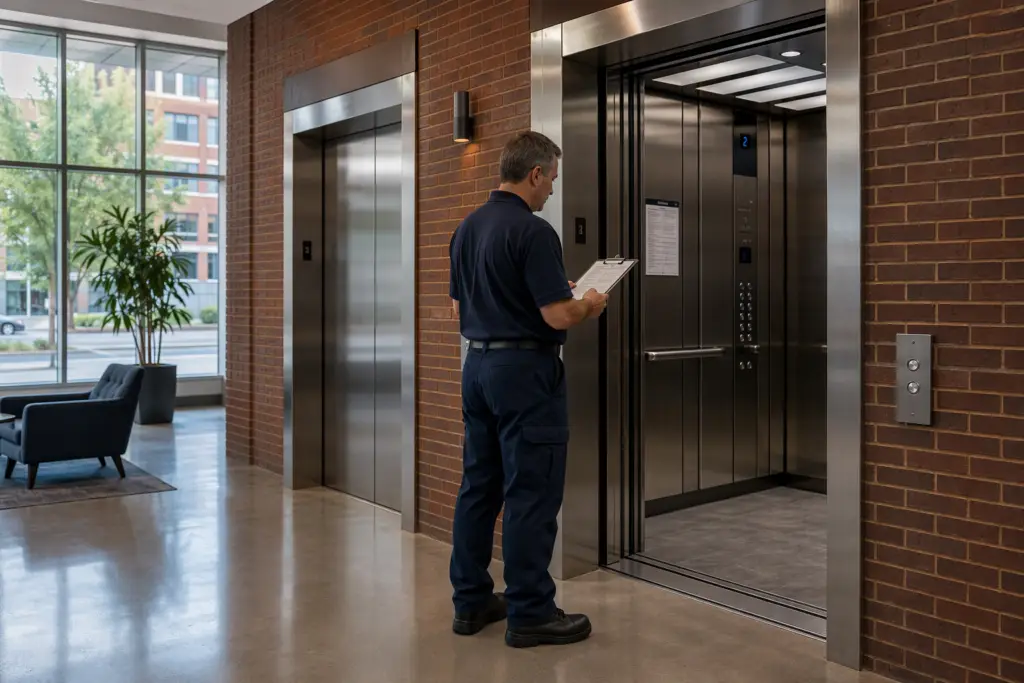
Healthcare elevators are not ordinary vertical transportation systems. They move patients on gurneys, transport life-critical medications and equipment, and must remain operational even during power outages or emergencies. A single unexpected breakdown can disrupt patient care, delay surgical procedures, or compromise infection control. Understanding the specific maintenance and safety requirements that apply to hospital and healthcare facility elevators is essential for facility managers, compliance officers, and safety directors operating in Baltimore, MD, Washington, DC, Philadelphia, PA, and Richmond, VA.
What Makes Healthcare Elevator Maintenance Different From Standard Commercial Elevator Service?
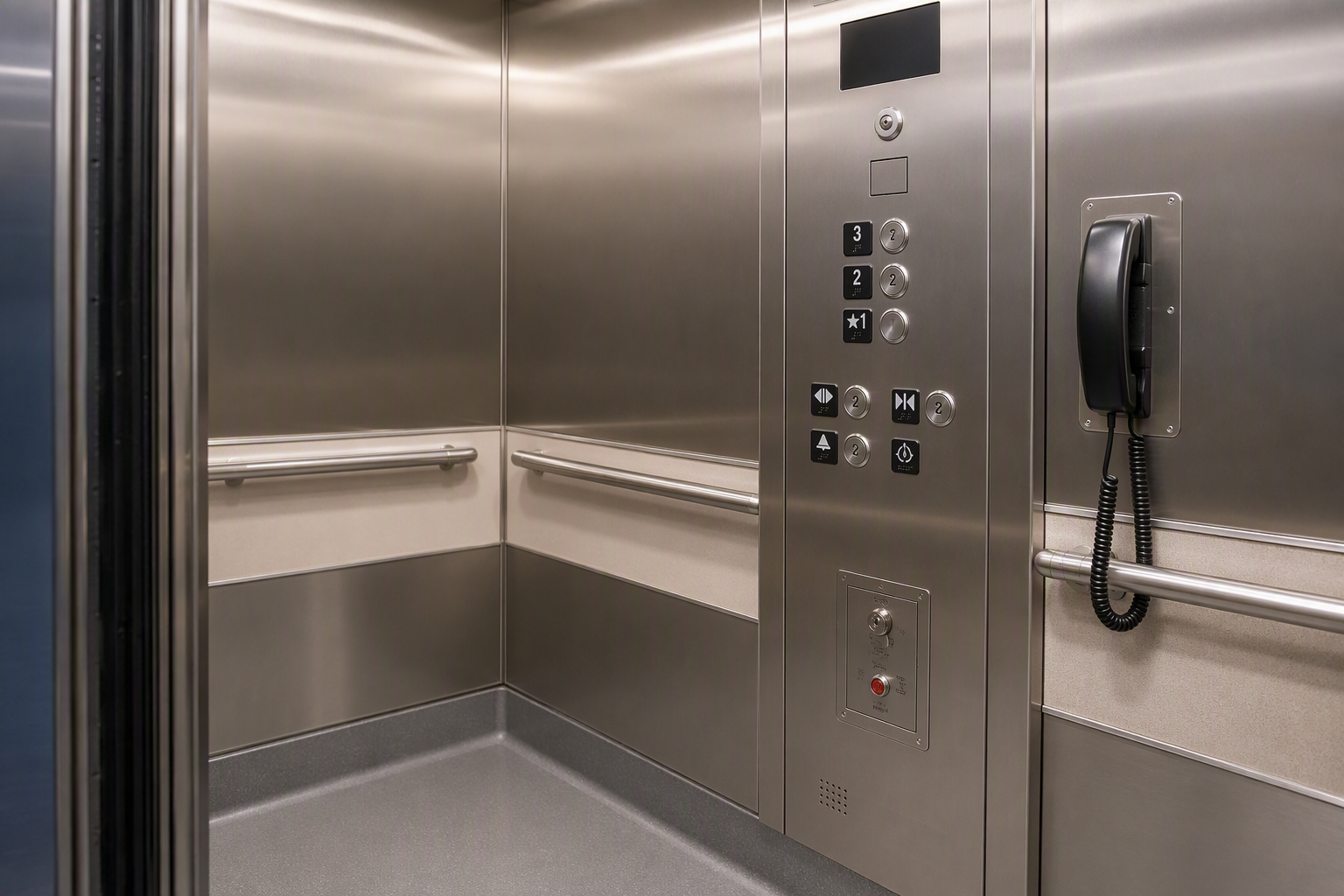
Healthcare elevators operate under unique demands that standard commercial elevators do not face. Key differences include:
- 24/7 operational requirements: Hospitals cannot afford planned or unplanned downtime during patient care hours. Maintenance must be scheduled during low-traffic periods, often late at night, without compromising the elevator’s availability for emergencies.
- Heavier and more varied loads: Hospital elevators routinely carry hospital beds, imaging equipment, surgical carts, and bariatric patients, requiring capacity ratings and structural tolerances beyond typical office or retail elevators.
- Infection control obligations: Every service visit introduces the risk of cross-contamination. Technicians working in clinical environments must follow facility-specific infection prevention protocols, use appropriate personal protective equipment, and avoid introducing contaminants into sterile or semi-sterile zones.
- Emergency power integration: Life-safety codes require designated hospital elevators to be connected to emergency power systems so they remain functional during a power failure.
- Regulatory scrutiny: Healthcare facilities are subject to oversight by The Joint Commission, state health departments, and local authority having jurisdiction (AHJ) inspectors, all of whom may review elevator maintenance records as part of facility-wide accreditation surveys.
Quality Elevator Company works with healthcare facility managers across the mid-Atlantic region to develop maintenance programs tailored to the specific operational and regulatory demands of hospital environments.
Which Codes and Standards Govern Hospital Elevator Safety?
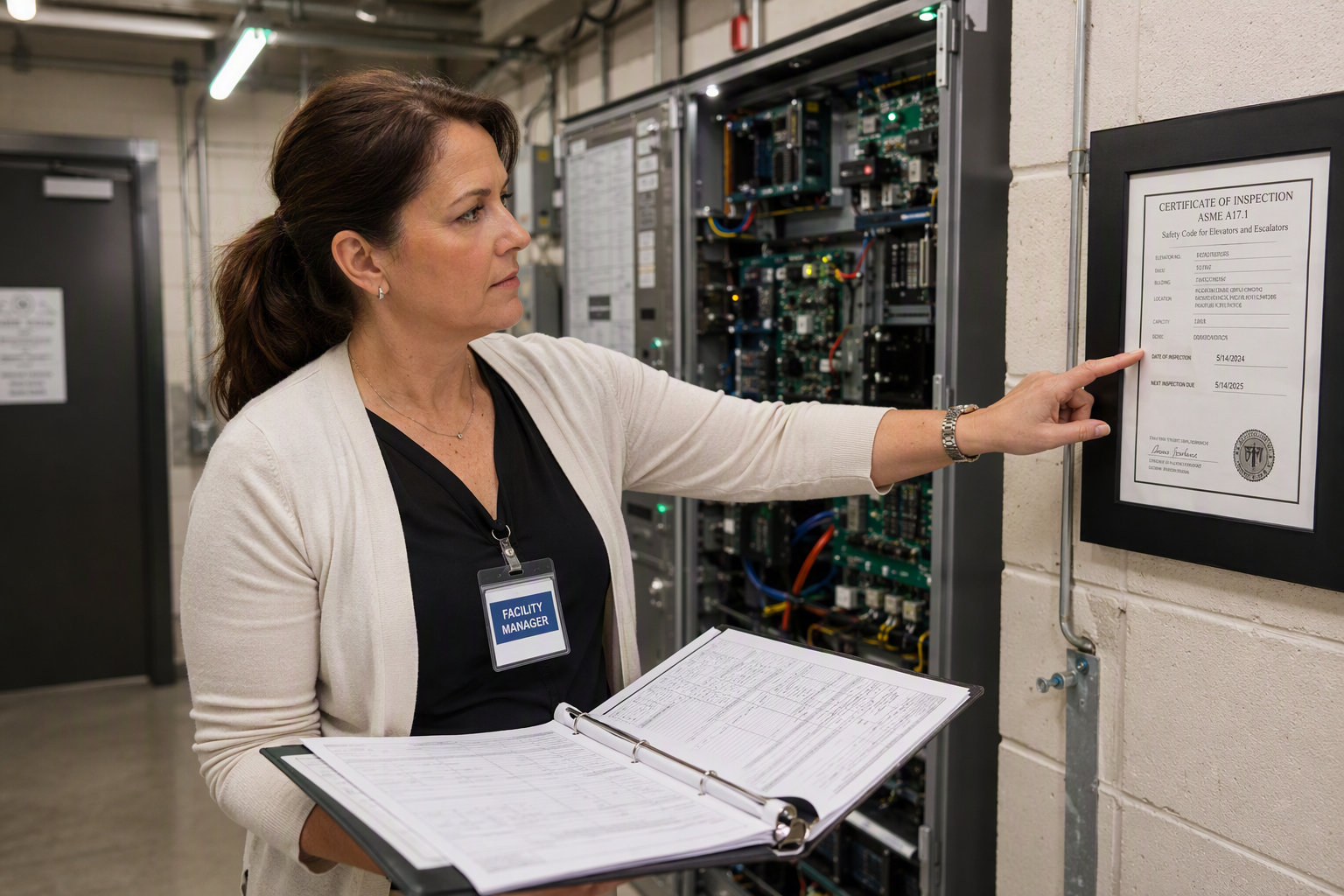
Healthcare elevator compliance draws from multiple overlapping standards. Facility managers should be familiar with each:
- ASME A17.1 Safety Code for Elevators and Escalators: This is the foundational code governing elevator design, installation, inspection, testing, and maintenance across North America. The 2019 edition (adopted at varying paces by states through 2026) specifies minimum inspection intervals, load testing requirements, and safety device standards directly applicable to healthcare elevators.
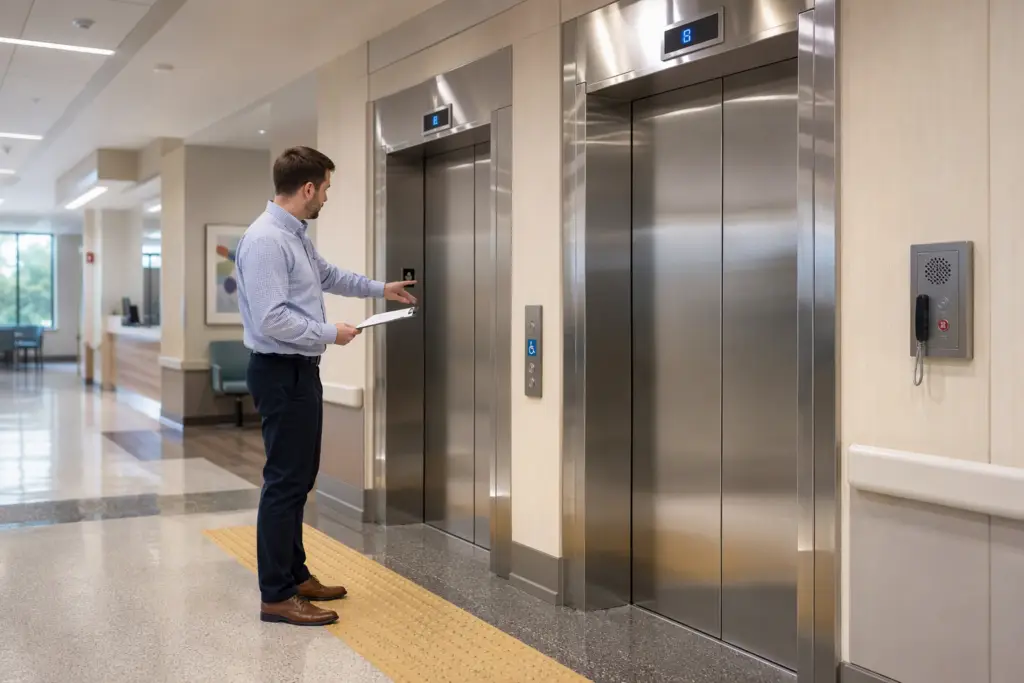
- Americans with Disabilities Act (ADA): ADA standards mandate minimum cab dimensions, door timing, button height, audible signals, and Braille signage. Healthcare facilities serving patients with mobility impairments must maintain ADA compliance continuously, not just at installation.
- NFPA 101 Life Safety Code: This code specifies requirements for elevators used for occupant evacuation during fire emergencies, including firefighters’ service operation (Phase I and Phase II recall).
- NFPA 110 Emergency and Standby Power Systems: Governs the emergency power connections required to keep designated hospital elevators operational during outages.
- State and local AHJ requirements: Maryland, Virginia, Pennsylvania, and Washington, DC each maintain their own elevator inspection boards and may impose requirements beyond the base ASME A17.1 code. Facilities must confirm which edition of the code their jurisdiction has adopted.
- OSHA standards: Elevator maintenance technicians performing work in healthcare settings must comply with applicable OSHA regulations covering lockout/tagout procedures, fall protection, and confined space entry.
How Often Should Hospital Elevators Be Inspected and Tested?
Under ASME A17.1, elevators are subject to periodic inspections and tests at intervals defined by the code and enforced by the local AHJ. For healthcare environments, the practical standard exceeds the minimum:
- Periodic inspections: Most jurisdictions require annual or semi-annual inspections by a licensed elevator inspector representing the AHJ.
- Maintenance visits: A comprehensive preventive maintenance contract for a hospital elevator typically specifies more frequent visits than the code minimum, given the volume of use and the life-safety implications of failure.
- Category 1 tests: Required annually under ASME A17.1, these tests verify the operation of all safety devices without applying the full rated load.
- Category 5 tests: Required every five years, Category 5 tests involve running the elevator at full rated load and verifying that all safety systems — including the governor, safeties, and buffers — perform as designed. These tests require taking the elevator out of service and must be carefully coordinated with hospital operations teams.
Quality Elevator Company coordinates inspection and testing schedules directly with hospital facilities departments to minimize disruption to patient transport operations.
What Are the Emergency Power and Backup Operation Requirements for Hospital Elevators?
When utility power fails, hospital operations cannot stop. NFPA 110 and state life-safety codes require that a designated number of elevators in a healthcare facility be connected to the facility’s emergency generator system. Key considerations include:
- Emergency-designated elevators must automatically transfer to generator power and return to a defined landing within a specified time after a power failure.
- The emergency power system must be tested regularly, and elevator behavior during transfer must be verified as part of that testing.
- Elevator controllers and drives must be compatible with generator power, which can have different voltage and frequency characteristics than utility power — an incompatibility that causes elevator faults during the exact moment backup power is needed most.
- Battery lowering devices may be required for traction elevators not connected to emergency power, allowing safe lowering and door opening to evacuate trapped passengers.
What Bariatric and Heavy-Load Considerations Apply to Healthcare Elevators?
Modern healthcare facilities must plan for bariatric patient transport. Standard commercial elevators often have rated capacities and cab dimensions that are insufficient for bariatric beds, imaging equipment, or motorized surgical tables. Healthcare elevator specifications frequently include:
- Rated load capacities well above standard passenger elevator ratings to accommodate heavy medical equipment and bariatric patients.
- Wider and deeper cab dimensions to allow gurney turns and equipment maneuvering.
- Reinforced flooring and leveling systems to reduce the trip hazard created when an elevator car does not align precisely with the floor — a particular concern when moving patients on wheeled equipment.
- Wider door openings with longer hold-open times to accommodate beds and wheelchairs without triggering door obstruction faults.
Maintenance programs for these elevators must verify that rated capacities are still valid, that floor-leveling accuracy is within tolerance, and that door timing is adjusted appropriately for healthcare use.
How Does Infection Control Affect Elevator Maintenance Procedures in Hospitals?
Hospitals operate under strict infection prevention standards. Elevator maintenance in healthcare settings must account for:
- Coordination with the facility’s infection control team before any work in isolation units, operating room floors, or immunocompromised patient areas.
- Use of appropriate PPE by maintenance technicians, which may vary by floor or unit designation.
- Cleaning and disinfection of surfaces disturbed during maintenance, including control panels, door edges, and threshold plates, using facility-approved disinfectants.
- Containment of debris, lubricants, and tools to prevent contamination of clinical areas adjacent to elevator lobbies.
What Happens When a Hospital Elevator Fails? A Step-by-Step Response Protocol
When a hospital elevator experiences an outage or entrapment, a clear response protocol protects patients and staff:
- Alert the facility maintenance or engineering team immediately using the hospital’s established communication system.
- Verify no passengers are trapped. Use the elevator’s two-way communication system (required under ASME A17.1) to confirm cab status before taking any other action.
- If passengers are trapped, contact emergency services as required by facility protocol. Do not attempt passenger self-rescue by forcing doors.
- Notify the elevator service provider to dispatch a qualified technician. Document the time of notification.
- Activate alternative transport protocols — stairwell assists, use of remaining operational elevators — to maintain patient care flow.
- Secure the elevator lobby to prevent further passengers from attempting to use the out-of-service unit.
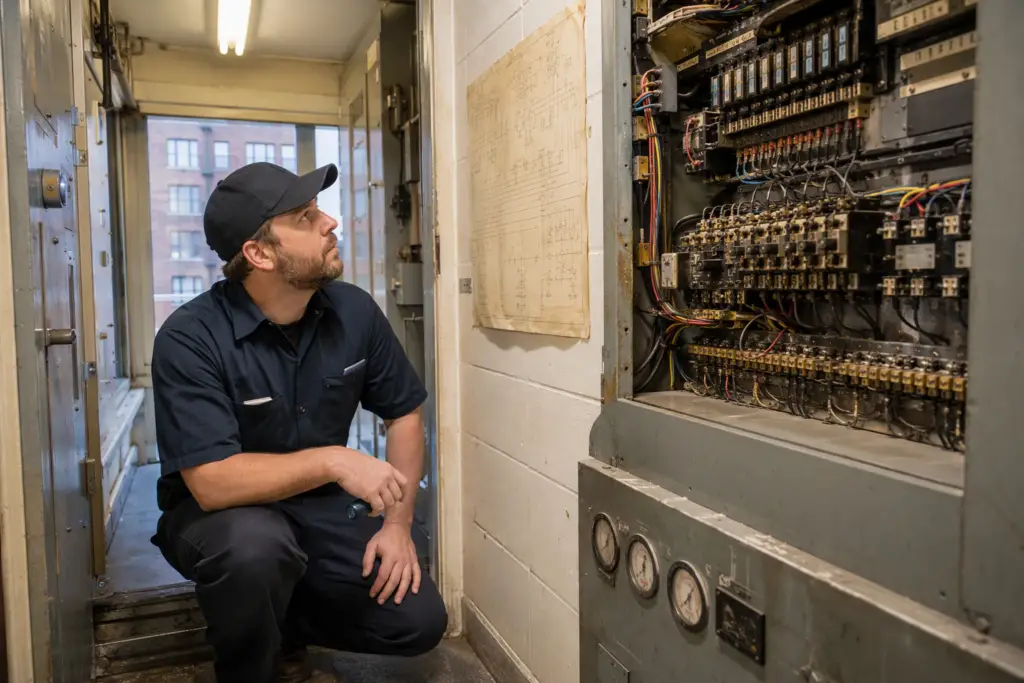
- Upon technician arrival, provide access to the machine room, pit, and related mechanical spaces according to the facility’s vendor access protocols.
- Document the incident including time, nature of failure, passengers involved, and resolution. Retain records for AHJ and accreditation review.
What ADA Compliance Issues Are Most Common in Healthcare Facility Elevators?
ADA compliance is not a one-time installation checklist — it is an ongoing operational obligation. Common deficiencies found during healthcare facility ADA reviews include:
- Door close times that exceed ADA limits, reducing accessibility for patients using mobility aids.
- Worn or missing Braille signage on call buttons and cab controls.
- Cab lighting levels that have degraded below the minimum required for visually impaired users.
- Floor level indicators and audible signals that have failed or been disabled.
- Leveling accuracy drift that creates a raised threshold edge between cab floor and corridor floor, creating a tripping hazard for wheelchair users and patients on gurneys.
Regular maintenance inspections by Quality Elevator Company include an ADA compliance check so facilities can address deficiencies before an accreditation survey or complaint triggers a formal review.
How Should Healthcare Facilities Evaluate Elevator Service Contracts?
Not all elevator maintenance contracts are structured to meet the demands of a healthcare environment. When evaluating service agreements, facility managers should look for:
- Explicit provisions for after-hours and emergency service given the 24/7 nature of hospital operations.
- Inclusion of Category 1 and Category 5 testing coordination within the contract scope.
- Documentation practices that support accreditation readiness, including maintenance logs formatted for Joint Commission review.
- Technician familiarity with healthcare-specific infection control protocols.
- Geographic coverage: a provider serving Baltimore, Washington, DC, Philadelphia, and Richmond with local technician deployment reduces response delays for multi-site health systems.
- Transparency around parts availability and the use of OEM-compatible components.
Questions Your Inspector Will Ask
Whether the inspector represents the local AHJ, The Joint Commission, or a state health department, the following questions are commonly raised during healthcare elevator reviews. Facility managers should be prepared with current documentation for each:
- When was the last annual (Category 1) inspection, and where are the records?
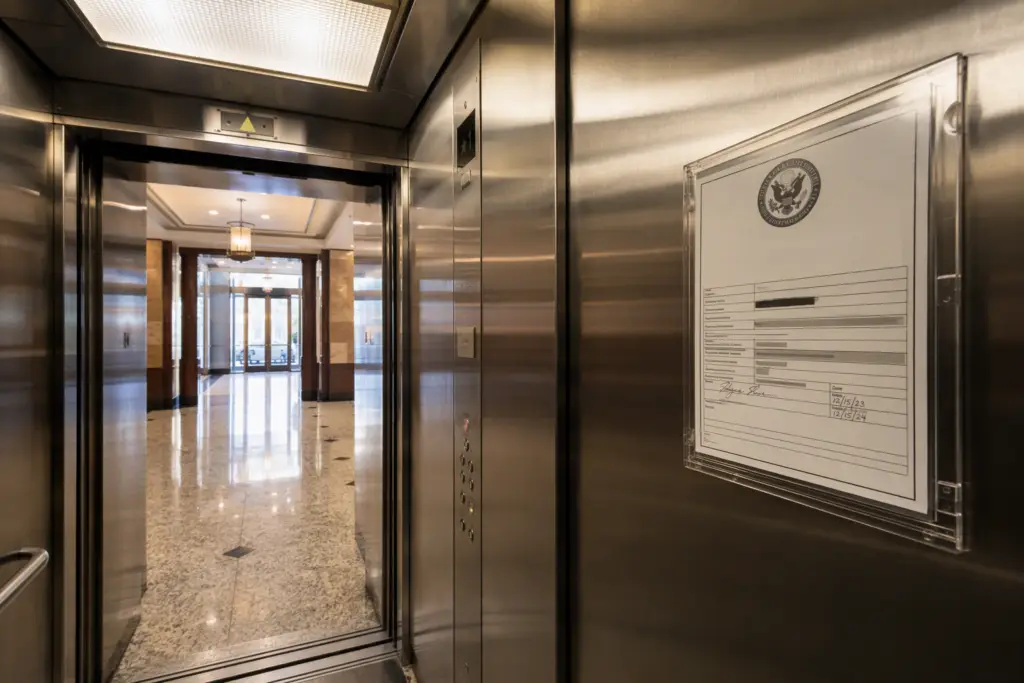
- Is the elevator’s current certificate of inspection posted and within its validity period?
- When was the last Category 5 test performed, and by whom?
- Are the elevators designated for emergency power connected to the generator, and has transfer been tested?
- Does the two-way communication system in each cab function correctly?
- Are firefighters’ service (Phase I and Phase II recall) features tested and operational?
- Is the rated load capacity marked in each cab, and has the cab been modified in any way that could affect that rating?
- Do maintenance records show the frequency and scope of preventive maintenance visits?
- Are there any open violations, correction notices, or outstanding work orders from the AHJ?
- Has elevator maintenance personnel complied with facility infection control requirements when accessing clinical floors?
Quality Elevator Company provides maintenance documentation formatted to support accreditation and AHJ review, helping facility teams answer these questions with confidence.
What Should Healthcare Facilities Budget for Elevator Maintenance and Modernization?
Elevator maintenance and modernization costs in healthcare settings vary based on the number of units, equipment age, drive system type, and the scope of compliance upgrades required. Rather than citing figures that may not reflect a specific facility’s conditions, healthcare facility managers are best served by requesting a site-specific assessment that accounts for:
- Current equipment condition and remaining useful life of major components.
- Compliance gaps relative to the current adopted edition of ASME A17.1 in the applicable jurisdiction.
- ADA deficiencies requiring correction.
- Emergency power integration status and any required upgrades.
- Modernization options that may reduce long-term maintenance costs compared to continuing to maintain aging legacy systems.
A free elevator assessment from Quality Elevator Company provides a clear picture of current condition, compliance status, and prioritized recommendations — without obligation.
How Does Elevator Modernization Improve Safety and Compliance in Healthcare Settings?
Aging hospital elevator systems present compounding risks: older controls are harder to maintain, replacement parts become scarce, and legacy systems may not support current code-required safety features. Modernization — replacing major systems such as the controller, drive, and door operator while retaining the hoistway structure — can deliver:
- Improved floor-leveling accuracy, directly reducing trip hazard risk for patients and staff.
- Faster and more reliable door operation with obstruction detection meeting current code standards.
- Compatibility with modern emergency power systems and firefighters’ service requirements.
- Reduced energy consumption, which supports healthcare facility sustainability goals.
- Digital diagnostics and remote monitoring capability, allowing proactive fault identification before a failure occurs.
Healthcare facilities in Baltimore, Washington, DC, Philadelphia, and Richmond trust Quality Elevator Company to keep their vertical transportation systems safe, compliant, and operationally reliable. Whether the need is a comprehensive maintenance agreement, a pre-accreditation compliance review, or a modernization assessment, Quality Elevator Company brings the technical depth and healthcare-environment awareness that clinical settings demand.
Contact Quality Elevator Company for a free elevator assessment. Call 301-779-9116 to schedule your no-obligation site review and receive a prioritized compliance and maintenance recommendation for your healthcare facility.
Need elevator service you can rely on? Quality Elevator Company is ready to help.