Commercial Elevator Inspection: Frequency, Failure Protocols, and Compliance Guide
Commercial elevators carry passengers, freight, and the legal responsibility of building owners every single day. Understanding inspection schedules, what inspectors examine, and exactly what happens when a unit fails is essential for property managers, facility directors, and building owners across Maryland, Washington DC, Pennsylvania, and Virginia. This comprehensive FAQ covers every dimension of commercial elevator inspection — from applicable codes and state-specific rules to re-inspection timelines, liability exposure, and maintenance best practices.
How Often Does a Commercial Elevator Need to Be Inspected?
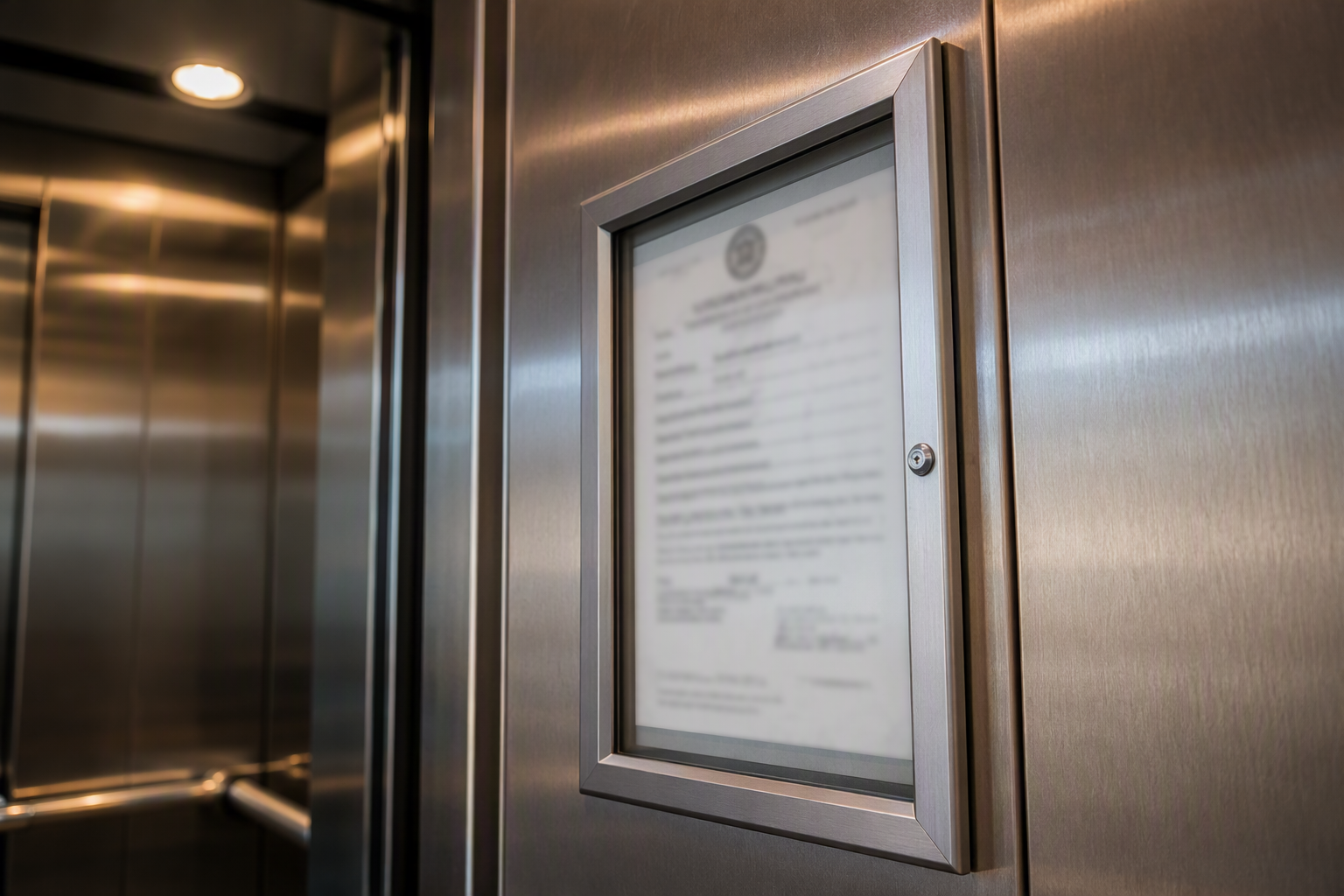
Most commercial elevators are required by law to undergo a full inspection at least once every 12 months, though specific intervals depend on jurisdiction, elevator type, and classification under applicable codes.
The governing national standard is the ASME A17.1 Safety Code for Elevators and Escalators, which establishes the baseline technical requirements that state and local authorities adopt and sometimes supplement with stricter schedules. As of the 2022 edition (the most current edition in widespread adoption as of 2026), ASME A17.1 classifies inspections into periodic and annual categories, with the more critical safety tests — such as governor and safety device tests — required at defined multi-year intervals.
Beyond the national baseline, each state adopts its own inspection frequency rules. Maryland, Washington DC, Pennsylvania, and Virginia each have distinct requirements that building owners must navigate. A failure to schedule inspections on the correct cycle is itself a code violation independent of any mechanical deficiency found during the inspection.
What Are the Specific Inspection Requirements in Maryland, Washington DC, Pennsylvania, and Virginia?
Each jurisdiction served by Quality Elevator Company applies its own inspection cycle, licensing rules for inspectors, and permit renewal processes on top of the ASME A17.1 baseline.
The table below summarizes the general inspection frequency framework in each market. Building owners should always verify current requirements with their local authority having jurisdiction (AHJ), as regulations are updated periodically.
| Jurisdiction | General Annual Inspection Requirement | Governing Authority | Operating Permit Renewal |
|---|---|---|---|
| Maryland (Baltimore) | Annual inspection required; high-use commercial elevators may trigger more frequent review | Maryland Department of Labor – Elevator Safety Unit | Annual operating permit tied to passed inspection |
| Washington DC | Annual inspection required; DC also mandates semi-annual safety tests for certain elevator classes | DC Department of Consumer and Regulatory Affairs (DCRA) | Certificate of Occupancy for elevator tied to current inspection approval |
| Pennsylvania (Philadelphia) | Annual inspection required; Philadelphia L&I enforces its own permit cycle | PA Department of Labor & Industry / Philadelphia L&I | Annual license renewal; sticker displayed in cab |
| Virginia (Richmond) | Annual inspection required under Virginia Uniform Statewide Building Code | Virginia Department of Labor and Industry (DOLI) | Annual certificate of operation posted in elevator cab |
Quality Elevator Company maintains current working knowledge of the AHJ requirements in all four of these markets, which is critical because inspector requirements, permit fees, and re-inspection procedures differ meaningfully from city to city.
What Does a Commercial Elevator Inspection Actually Cover?
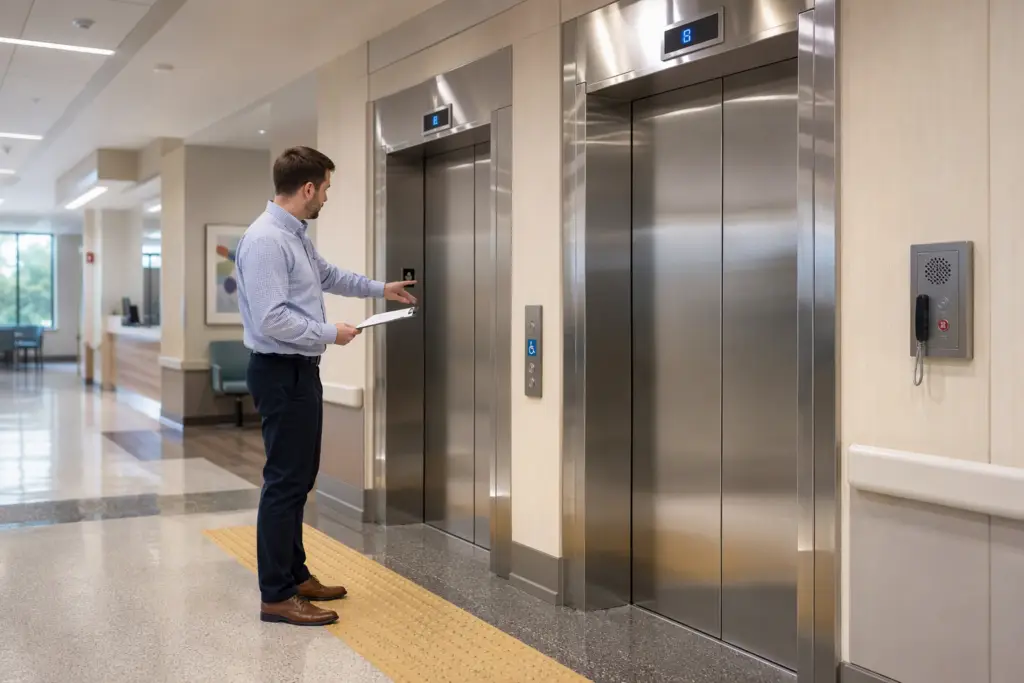
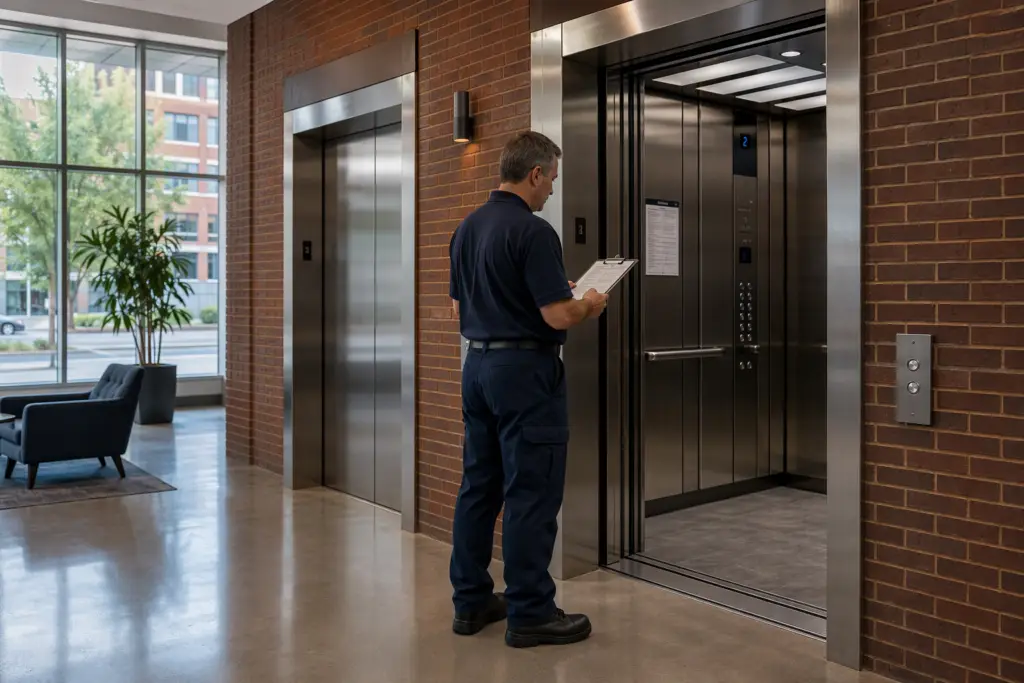
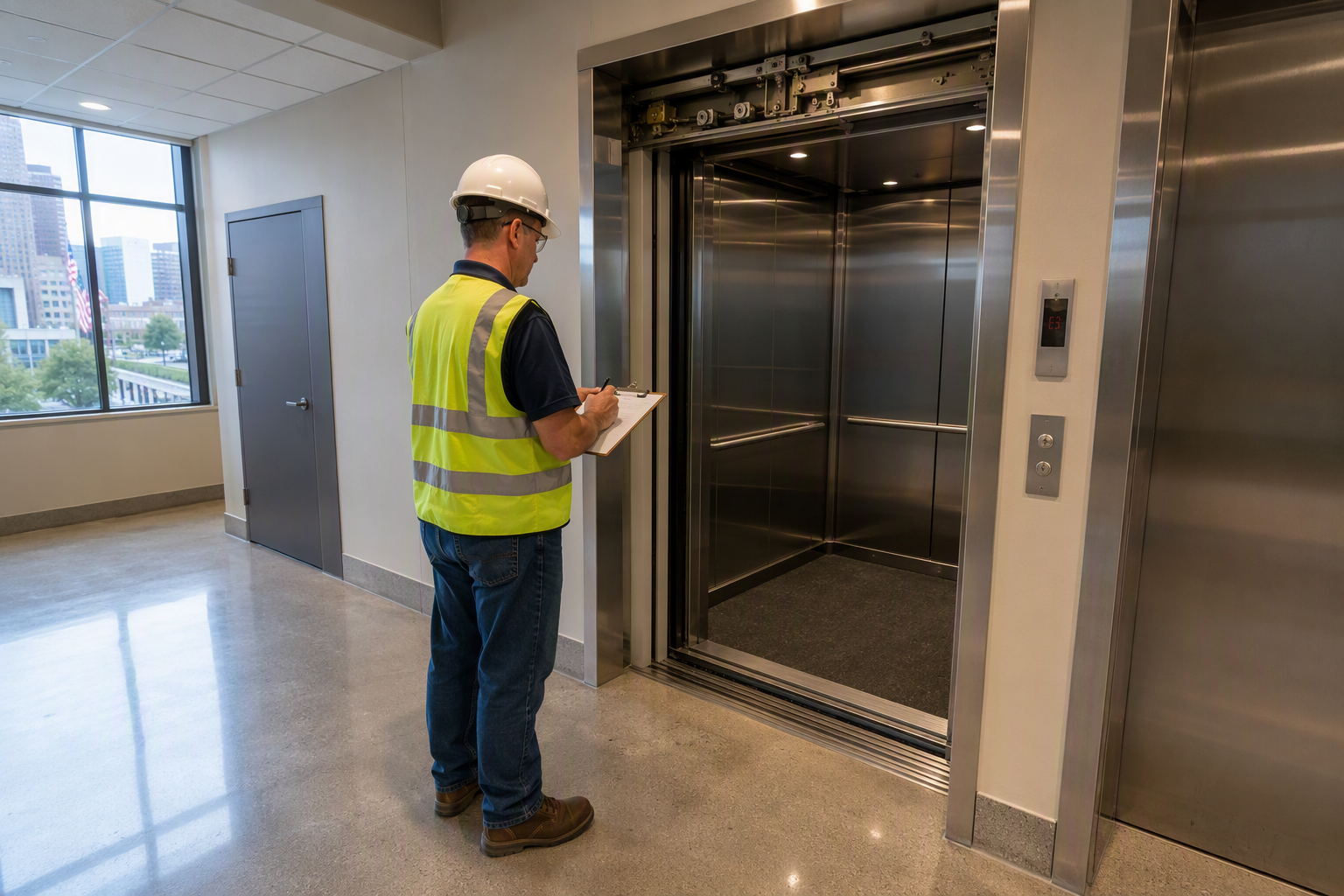
A standard commercial elevator inspection examines the mechanical, electrical, and safety systems of the elevator against the requirements of ASME A17.1, as adopted by the local AHJ.
Inspectors typically evaluate the following systems and components during an annual inspection:
- Machine room condition, lighting, ventilation, and fire rating compliance
- Traction machine, sheaves, ropes, and rope fastenings
- Governor and overspeed safety system
- Buffers (car and counterweight)
- Guide rails, brackets, and fastenings
- Car and counterweight safeties
- Doors, door operators, interlocks, and reopening devices
- Control systems and wiring
- Lighting within the cab, pit, and machine room
- Emergency communication system (phone or two-way device)
- Pit conditions — cleanliness, lighting, stop switch, and ladder
- Load capacity placard and current certificate posting
- ADA accessibility features including compliant controls, door timing, and signage (see ADA.gov for requirements)
Certain tests, such as the full-load safety test and governor test, follow a multi-year cycle defined in ASME A17.1 and may be required less frequently than the annual inspection but must still be tracked and documented by the building owner or their elevator service contractor.
Who Is Qualified to Inspect a Commercial Elevator?
Commercial elevator inspections must be performed by a licensed elevator inspector — a credential distinct from an elevator mechanic or maintenance technician.
In all four jurisdictions served by Quality Elevator Company, the inspector must hold a QEI (Qualified Elevator Inspector) certification issued under the standards of the ASME QEI-1 standard, or must be employed directly by the state authority. Third-party inspection firms and state inspectors both perform inspections depending on the jurisdiction. In Maryland and Virginia, building owners commonly engage licensed third-party inspection agencies. In Philadelphia, the city’s L&I department schedules inspections through its own process. Washington DC uses a combination of city inspectors and approved third-party inspectors.
It is important to understand that the maintenance contractor — such as Quality Elevator Company — is not the same entity as the inspector. The maintenance contractor prepares the equipment for inspection; the inspector is the independent authority who evaluates compliance.
What Happens Immediately When a Commercial Elevator Fails Inspection?
When a commercial elevator fails inspection, it must be placed out of service immediately — the inspector issues a written order, and the elevator cannot legally be operated until deficiencies are corrected and a re-inspection is passed.
The failure sequence typically unfolds as follows:
- Inspector issues a written violation notice identifying each deficiency, the applicable code section violated, and the required corrective action.
- Elevator is locked out of service. The AHJ or inspector places the unit out of service; operating a failed elevator exposes the building owner to significant legal and insurance liability.
- Building owner or property manager notifies the elevator maintenance contractor immediately so repairs can be scoped and scheduled.
- Maintenance contractor corrects all cited deficiencies. This may involve part procurement, testing, and documentation of completed work.
- Building owner requests a re-inspection through the AHJ or the third-party inspection agency, depending on jurisdiction.
- Re-inspection is conducted. The inspector verifies that every cited deficiency has been resolved to code compliance.
- Operating permit or certificate is reinstated once all items pass, and the elevator is returned to service legally.
The timeline from failure to return-to-service depends entirely on the nature of the deficiency, parts availability, and the re-inspection scheduling window of the local AHJ. Minor violations may be resolved in days; major mechanical deficiencies or outdated equipment can take weeks or longer.
What Are the Most Common Reasons a Commercial Elevator Fails Inspection?
The most frequently cited deficiencies on commercial elevator inspection reports involve door safety devices, emergency communication failures, and deferred maintenance items that accumulate over time.
Common failure categories include:
- Door interlocks that are worn, misaligned, or failing to meet ASME A17.1 force and timing requirements
- Non-functional or non-compliant emergency telephone or two-way communication system
- Inadequate machine room conditions — poor lighting, improper storage, or compromised fire separation
- Pit deficiencies — standing water, inadequate lighting, missing or non-functional stop switch
- Expired or overdue periodic tests (governor, buffer, safety)
- Missing or illegible load capacity placard
- Non-compliant or expired operating certificate not posted in cab
- Worn rope or rope attachment issues identified during rope inspection
- Control system deficiencies — outdated or malfunctioning relay logic or solid-state systems
- ADA non-compliance on controls, signage, or door timing where ADA standards apply (see ADA.gov)
Proactive maintenance by a qualified elevator service contractor is the most reliable way to avoid inspection failures. Quality Elevator Company provides preventive maintenance programs designed specifically to keep commercial elevators in continuous code compliance across its Baltimore, Washington DC, Philadelphia, and Richmond service territories.
What Are the Legal and Financial Consequences of Operating a Failed Elevator?
Continuing to operate a commercial elevator after a failed inspection is illegal, exposes building owners to regulatory fines, and can void insurance coverage in the event of an incident.
Specific consequences can include:
- Regulatory fines: State elevator safety authorities in Maryland, Virginia, Pennsylvania, and DC each have authority to issue civil penalties for operating elevators without a valid certificate or against an out-of-service order. Fine amounts vary by jurisdiction and violation severity.
- Stop-use orders: Authorities can issue formal stop-use orders enforceable by law, and continued operation can result in escalating penalties.
- Insurance liability: If a passenger is injured in an elevator that has failed inspection and was operated anyway, the building owner’s general liability coverage may be disputed or denied.
- ADA exposure: If the only accessible route for individuals with disabilities involves the failed elevator, the building may also face accessibility compliance issues under the Americans with Disabilities Act.
- Worker safety liability: For elevators used by workers, OSHA standards related to safe workplaces may also be implicated when equipment known to be unsafe continues in use.
How Long Does a Building Owner Have to Fix Violations After a Failed Inspection?
The correction timeline depends on whether the violation is classified as an immediate safety hazard or a non-critical deficiency, with imminent hazards requiring the elevator to remain out of service until corrected and re-inspected.
Most AHJs distinguish between two categories of violations. Imminent hazard violations — such as failed door interlocks, broken safety devices, or structural deficiencies — require the elevator to be immediately taken out of service and kept out of service until the deficiency is corrected. Non-critical or administrative violations — such as a missing placard or expired permit posting — may carry a grace period of 30 to 90 days depending on jurisdiction, during which the elevator may remain in operation while the correction is made. Building owners should never assume a violation is non-critical without written confirmation from the inspector or AHJ.
How Much Does It Cost to Fix a Failed Elevator Inspection?
Repair costs after a failed inspection vary widely based on the specific deficiencies cited, the age of the equipment, parts availability, and labor requirements — costs can range from a few hundred dollars for minor adjustments to tens of thousands for major component replacements or code upgrades.
The most cost-effective strategy is preventing failures through consistent preventive maintenance. When deficiencies are caught and corrected during routine service visits rather than during an official inspection, building owners avoid the additional costs of re-inspection fees, out-of-service downtime, expedited parts procurement, and potential regulatory fines. Quality Elevator Company’s maintenance programs are structured to identify developing deficiencies before they reach inspection-level failures.
What Is the Difference Between a Periodic Inspection and a Routine Maintenance Visit?
A periodic inspection is a formal, code-mandated evaluation conducted by a licensed third-party or government inspector to determine regulatory compliance, while a routine maintenance visit is performed by the elevator service contractor to keep the equipment operating safely and reliably between inspections.
These are two distinct activities with different purposes, different personnel, and different documentation requirements. The maintenance contractor — such as Quality Elevator Company — performs regularly scheduled visits to lubricate components, test safety devices, adjust door operations, and identify wear before it becomes a safety or compliance issue. The inspector, by contrast, is an independent authority evaluating whether the equipment meets the minimum standards required by code. Building owners need both: maintenance visits to keep the equipment in condition, and formal inspections to obtain and maintain the legal authority to operate the elevator.
Do New Commercial Elevators Also Require Inspection Before Being Placed in Service?
Yes — all new commercial elevators must pass a full acceptance inspection and receive an initial operating permit before they can be legally placed into service, regardless of how recently they were installed.
The acceptance inspection under ASME A17.1 is more comprehensive than a routine annual inspection. It verifies that the installation complies with the approved plans, all safety devices function correctly, the equipment meets the applicable edition of the code in effect at the time of the permit, and all required tests have been performed and documented. Only after the AHJ issues an initial certificate of operation can the elevator legally carry passengers. This applies to new installations, major alterations, and in some cases significant repairs that are classified as alterations under ASME A17.1.
What Records Must a Building Owner Maintain for Elevator Compliance?
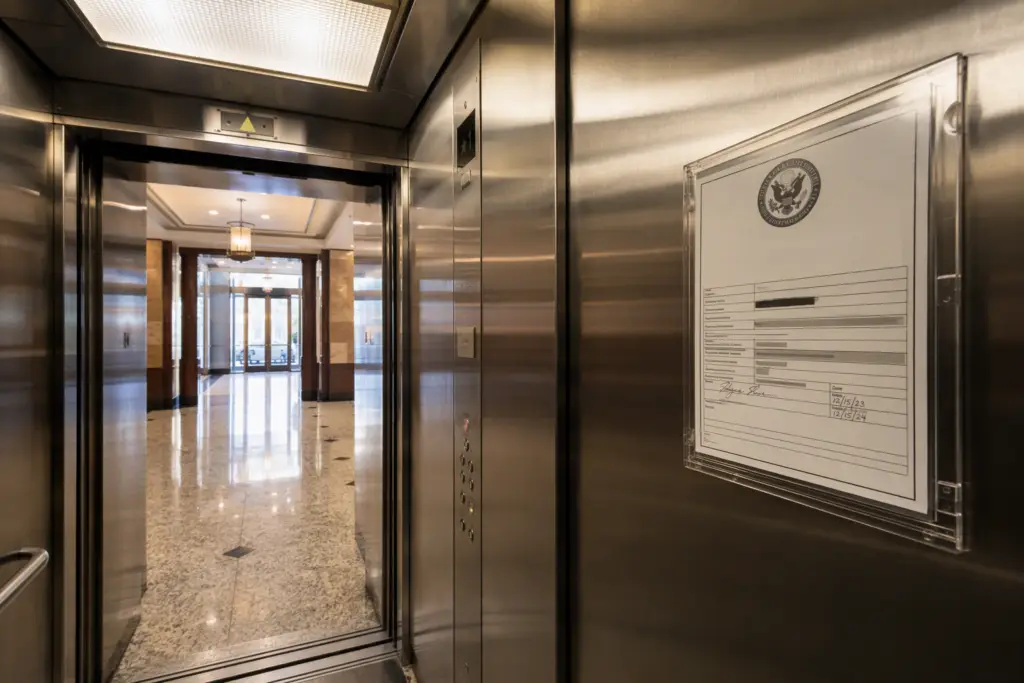
Building owners are required to maintain the current operating certificate posted in the elevator cab and to retain inspection reports, test records, and maintenance logs for a period specified by the local AHJ — typically a minimum of several years.
Key documents to maintain include:
- Current certificate of operation or operating permit (must be posted in the cab)
- Most recent annual inspection report
- Records of all periodic tests (governor, buffer, safety) with dates and results
- Maintenance log from the service contractor documenting all visits, findings, and work performed
- Documentation of any repairs, alterations, or parts replacements
- Records of any previous violations and the corrective actions taken
In the event of an incident or a regulatory audit, the absence of proper records can itself constitute a violation and can significantly complicate insurance claims or legal defense. Quality Elevator Company provides clients with organized documentation of all maintenance and test activities performed.
What Is the Role of ASME A17.1 in Commercial Elevator Compliance?
The ASME A17.1 Safety Code for Elevators and Escalators is the foundational national standard that defines the technical requirements for elevator design, installation, operation, maintenance, inspection, and testing in the United States and Canada.
ASME A17.1 is not self-enforcing — it becomes legally binding when adopted by a state or local authority. Most states, including Maryland, Virginia, and Pennsylvania, adopt ASME A17.1 by reference into their elevator safety regulations, which means that compliance with the code is a legal requirement, not merely a best practice. The code is updated on a regular cycle; as of 2026, the 2022 edition is the most recent edition with widespread jurisdictional adoption, though some jurisdictions operate under earlier adopted editions. Building owners should confirm with their AHJ which edition applies locally.
How Do ADA Requirements Interact With Elevator Inspection Compliance?
The Americans with Disabilities Act imposes accessibility requirements on commercial elevators that are evaluated as part of the inspection process in many jurisdictions, meaning ADA non-compliance can contribute to or trigger inspection failures.
ADA Standards for Accessible Design specify requirements for elevator call button height and reach, Braille and raised character signage, door width and timing, audible and visual floor indicators, and cab dimensions. While ADA enforcement is primarily a civil rights matter handled through the Department of Justice rather than a building safety inspection program, many local AHJs incorporate ADA accessibility checks into their elevator inspection protocols. A building that fails to maintain ADA-compliant elevator features may face both state inspection violations and separate ADA complaints from users with disabilities.
What Should a Building Owner Do to Prepare an Elevator for Annual Inspection?
Preparing an elevator for annual inspection involves ensuring the machine room and pit are clean and accessible, all documentation is organized and current, and the elevator service contractor has performed a pre-inspection maintenance review to identify and correct any outstanding issues.
A practical pre-inspection checklist includes:
- Confirm the inspection date with the AHJ or inspection agency well in advance — do not let the inspection arrive without a scheduled appointment.
- Schedule a pre-inspection maintenance visit with the elevator service contractor to test all safety devices, doors, and emergency systems.
- Verify the machine room is clean, properly lit, free of stored materials unrelated to elevator equipment, and properly secured.
- Check the pit for water accumulation, verify the pit light functions, confirm the stop switch is accessible and operational, and remove any debris.
- Confirm emergency phone functionality — test the two-way communication device and verify it connects to a monitored line.
- Review the cab interior — check load placard, current certificate posting, lighting, and emergency lighting.
- Gather all documentation — compile previous inspection reports, test records, and maintenance logs for the inspector’s review.
- Ensure all overdue periodic tests (governor, buffer, safety) are scheduled and completed before the inspection if they fall due.
How Often Must Elevator Safety Devices Like Governors and Buffers Be Tested?
Under ASME A17.1, elevator governors, car and counterweight safeties, and buffers must be tested at intervals defined in the code — for hydraulic buffers this is typically every five years, and for governor and safety device tests the interval depends on elevator type and specific test classification.
These periodic tests are distinct from and supplemental to the annual inspection. They require specific test conditions — such as full-load car travel at governor tripping speed — that go beyond what can be observed in a routine annual inspection. Failure to conduct these tests on schedule is a code violation in itself and will be cited during the annual inspection when the inspector reviews test documentation. Building owners relying on an elevator service contractor should confirm that the maintenance agreement explicitly includes tracking and scheduling these periodic tests.
What Is the Difference Between a Full Elevator Modernization and a Code Violation Repair?
A code violation repair addresses a specific cited deficiency to restore the elevator to compliance with the code edition under which it was originally permitted, while a modernization upgrades major systems — controls, machines, doors — typically to meet a more current edition of ASME A17.1 or to extend the useful life of the equipment.
In some cases, an inspection failure can trigger a requirement for modernization rather than simple repair. This happens when the cited deficiency involves a system that is no longer repairable to code because replacement parts are unavailable or because the failure constitutes an alteration under ASME A17.1 that triggers compliance with the current code edition. Building owners with older equipment should work with a qualified elevator service company to understand whether cited violations can be corrected as repairs or whether a broader modernization scope is required. Quality Elevator Company serves as a resource for building owners navigating these decisions in Baltimore, Washington DC, Philadelphia, and Richmond.
Can a Building Be Fined If Its Elevator Inspection Certificate Expires?
Yes — an expired operating certificate or permit is itself a violation in every jurisdiction served by Quality Elevator Company, even if the elevator is mechanically sound, and building owners can face fines and be required to remove the elevator from service until the permit is renewed through a current inspection.
The operating certificate or permit is the legal authorization to operate the elevator. It has an expiration date, and that date is typically tied to the most recent passed inspection. Building owners and property managers should calendar inspection renewal dates well in advance and not rely on the AHJ to send reminder notices — the obligation to maintain a current permit rests with the building owner. In high-rise buildings with multiple elevators, tracking individual permit expiration dates across units is a meaningful administrative task that benefits from systematic management.
How Does Elevator Inspection Compliance Affect Property Insurance and Tenant Leases?
Commercial property insurance policies typically require that building systems including elevators be maintained in compliance with applicable codes and held current on required inspections — a lapsed or failed inspection can create coverage gaps that expose building owners to uninsured liability.
Commercial lease agreements for office buildings, retail properties, and multifamily properties increasingly include provisions requiring landlords to maintain elevators in code-compliant, operational condition. A prolonged elevator outage resulting from a failed inspection and extended repair period can trigger lease provisions, tenant rent abatement claims, or ADA accessibility disputes if the elevator is the only accessible means of vertical travel in the building. Proactive elevator maintenance and inspection compliance is therefore not only a regulatory obligation but a direct component of risk management and tenant relations for commercial property owners.
Why Should Building Owners in Baltimore, DC, Philadelphia, and Richmond Choose a Single Regional Elevator Service Partner?
Working with a single elevator service company that holds active licensing and understands AHJ requirements across multiple jurisdictions simplifies compliance management, improves documentation continuity, and creates a single point of accountability for inspection preparation and violation response.
For property management companies, REITs, or institutional owners with elevator assets in multiple markets, managing separate contractors in each city introduces coordination complexity, inconsistent documentation practices, and varying response protocols when inspections are upcoming or violations are issued. Quality Elevator Company operates across Baltimore, Washington DC, Philadelphia, and Richmond as a certified elevator service provider, giving multi-market building owners a unified service relationship backed by local knowledge of each jurisdiction’s inspection requirements, AHJ processes, and code adoption status.
Need elevator service you can rely on? Quality Elevator Company is ready to help.