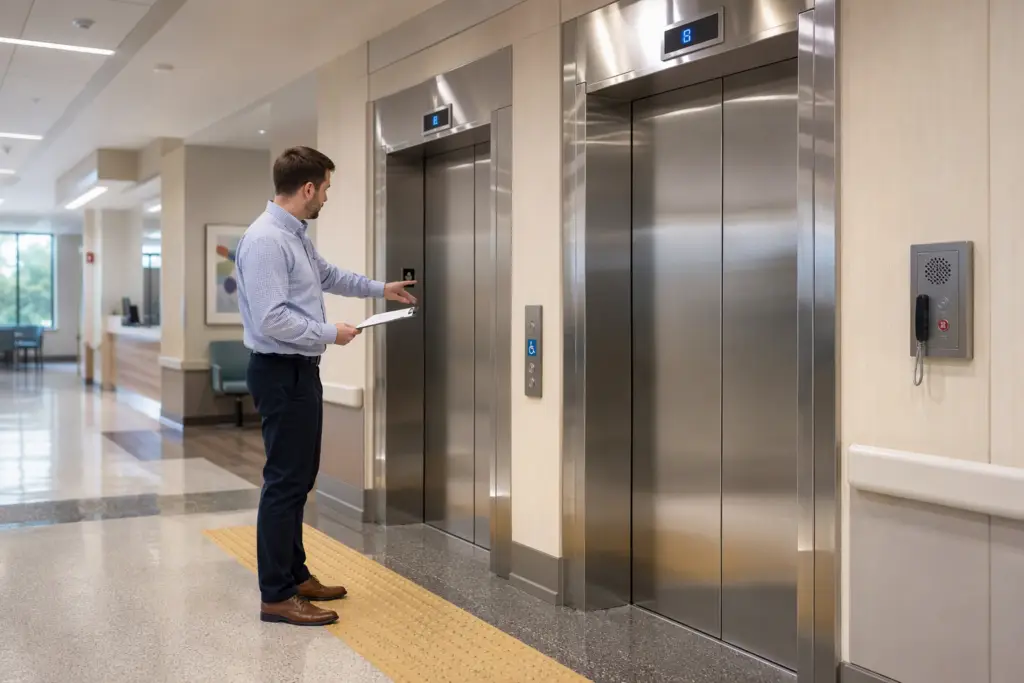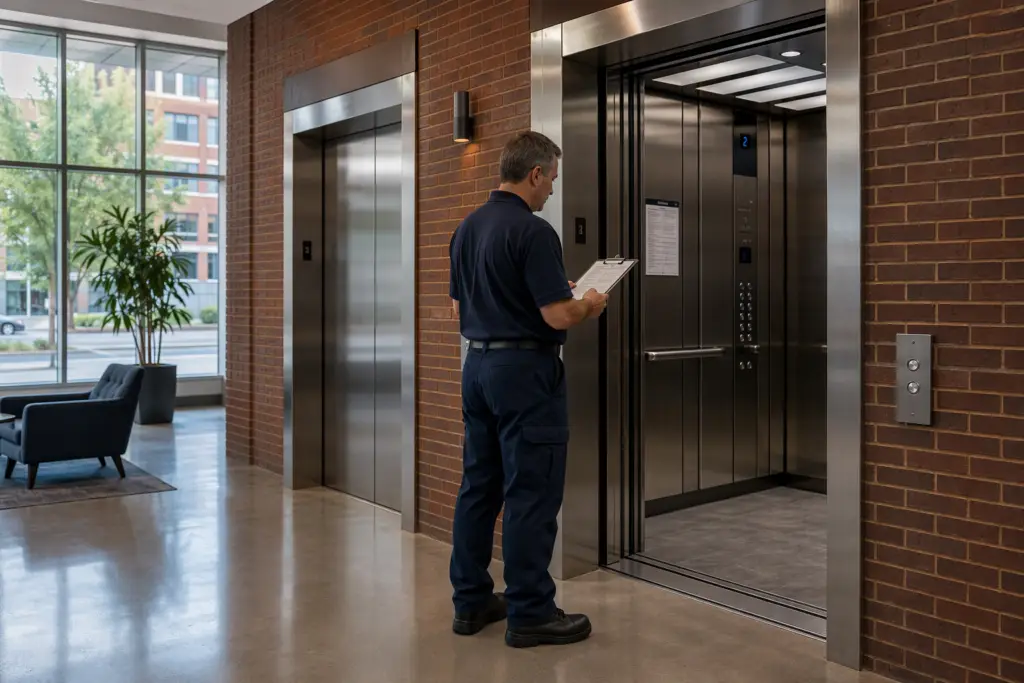
Freight and warehouse elevator compliance depends on four primary factors: the applicable edition of the national safety code adopted by each state or jurisdiction, the elevator’s rated load capacity and class designation, the frequency of mandatory inspections, and the scope of preventive maintenance required to maintain a valid certificate of operation. Facility managers in Maryland, DC, Virginia, and Pennsylvania must navigate overlapping federal OSHA rules and local elevator inspection authorities simultaneously.
What Are the Core Federal and National Code Requirements for Freight Elevators?
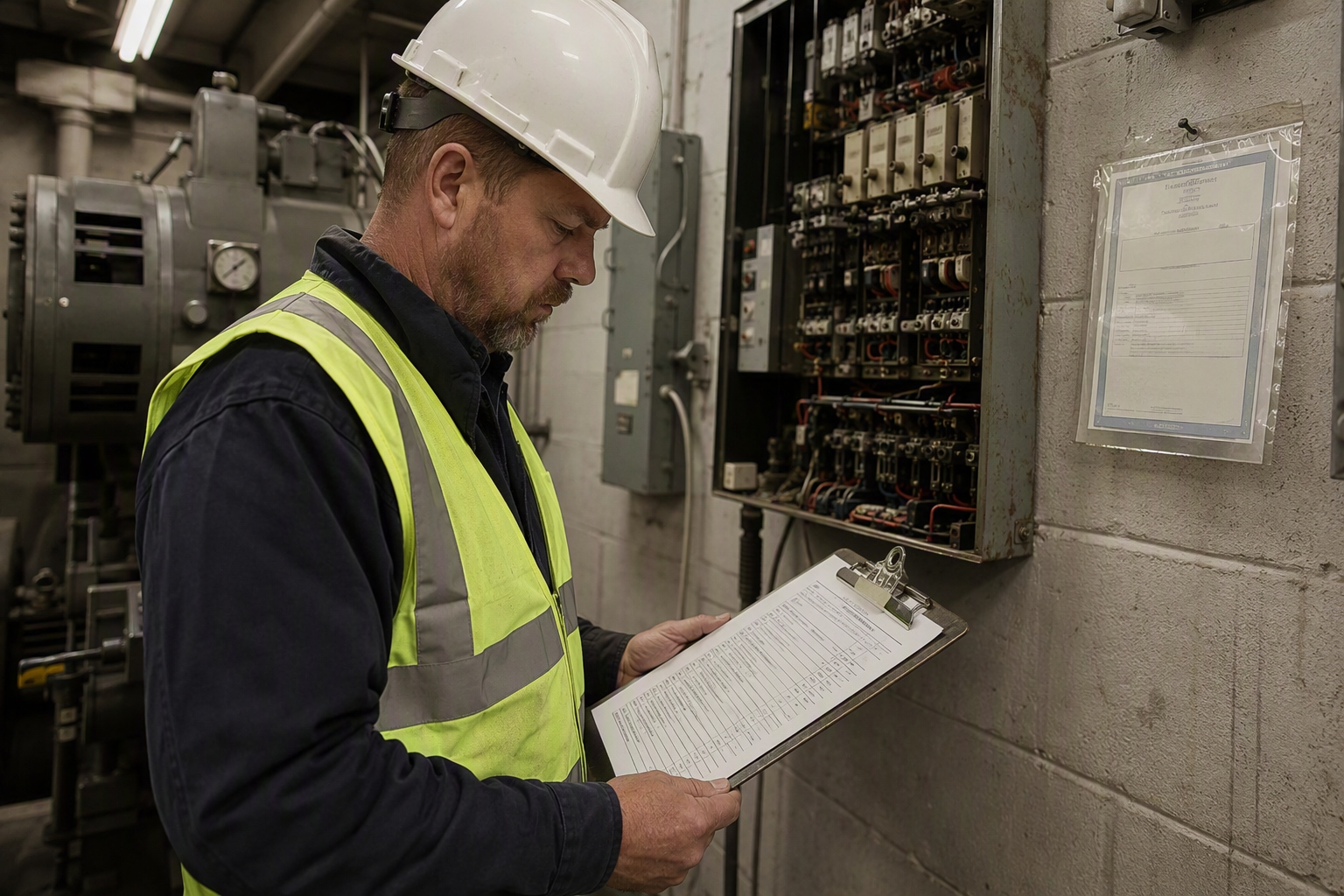
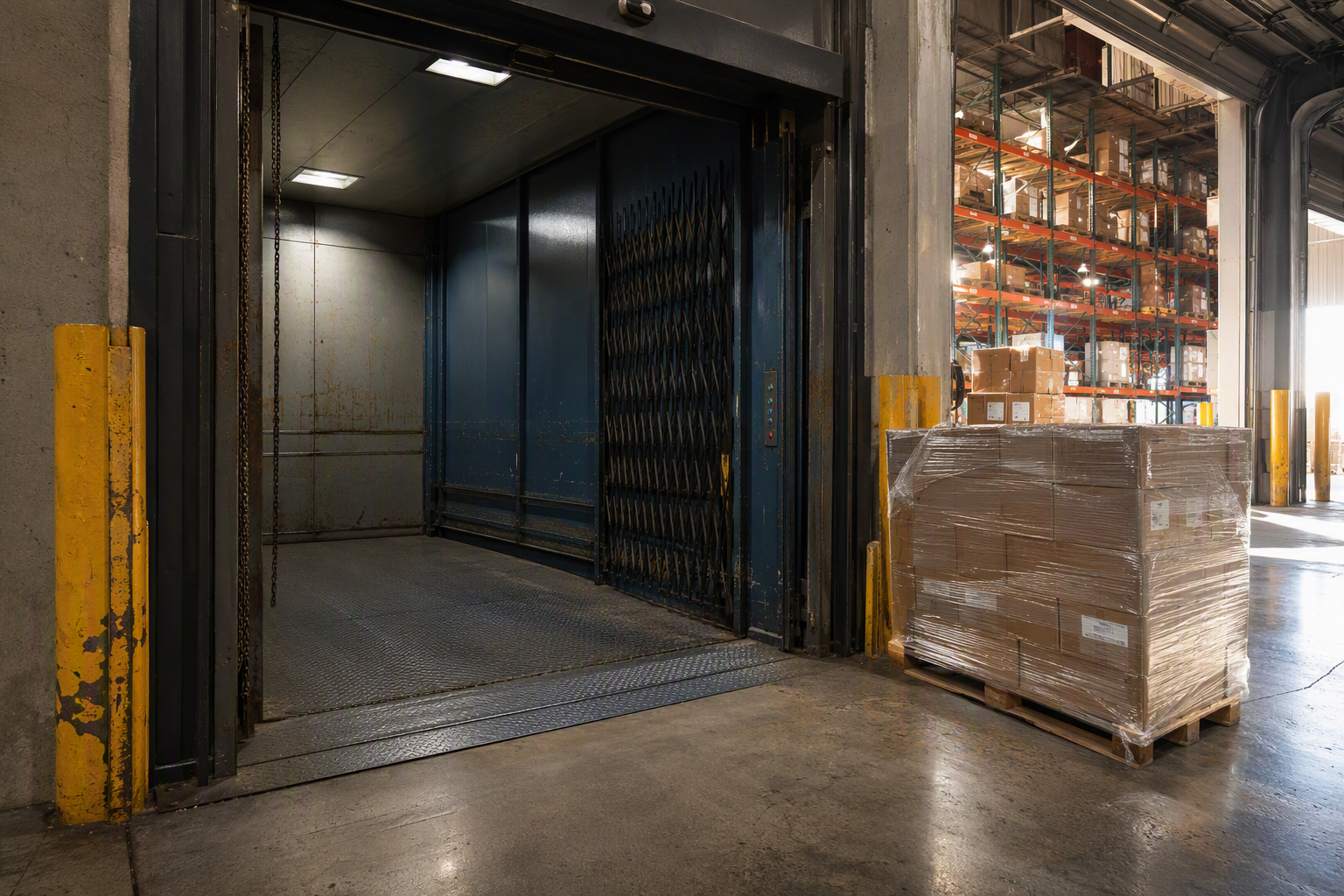
The foundation of freight elevator regulation across all four jurisdictions is the ASME A17.1 Safety Code for Elevators and Escalators. This code, updated on a regular cycle and referenced in its most current adopted edition by each state, governs the design, construction, installation, operation, inspection, testing, and maintenance of freight and material lifts. It classifies freight elevators into distinct loading classes:
- Class A – General Freight Loading: Load is distributed over the car platform; typical warehouse and distribution center use.
- Class B – Motor Vehicle Loading: Vehicles drive directly onto the platform.
- Class C1 – Industrial Truck Loading: Loaded trucks are carried on the platform; truck does not remain during travel.
- Class C2 – Industrial Truck Loading: Loaded truck is carried and remains on the platform during travel.
- Class C3 – Other Loading: Concentrated loads not covered by other classes.
Each class carries specific structural, door, and control requirements. Facility operators must confirm that their elevator’s original class designation still matches current operational use — a common compliance gap when warehouse operations evolve over time.
In addition to ASME A17.1, OSHA standards under 29 CFR 1910 (General Industry) address material handling equipment, guarding, and employee safety around powered industrial equipment including freight lifts. OSHA does not independently regulate elevator mechanical systems, but employers bear responsibility for ensuring that equipment used in a working environment meets both elevator code and general industry safety standards simultaneously.
How Do Maryland, DC, Virginia, and Pennsylvania Differ in Their Freight Elevator Requirements?
| Jurisdiction | Governing Authority | Base Code Referenced | Inspection Frequency | Certificate of Operation Required? | Independent Inspector Allowed? |
|---|---|---|---|---|---|
| Maryland | Maryland Department of Labor – Division of Labor and Industry | ASME A17.1 (state-adopted edition) | Annual inspection required; periodic tests per code cycle | Yes | Yes, through licensed third-party inspectors |
| Washington, DC | DC Department of Consumer and Regulatory Affairs (DCRA) / DLCP | ASME A17.1 (DC-adopted edition) | Annual inspection; DC mandates strict certificate renewal timelines | Yes | Permitted through qualified inspection companies |
| Virginia | Virginia Department of Labor and Industry (DOLI) – Elevator Unit | ASME A17.1 (Virginia-adopted edition); Virginia Statewide Fire Prevention Code interplay | Annual routine inspection; five-year full load test requirements | Yes | Yes, third-party QEI-certified inspectors accepted |
| Pennsylvania | Pennsylvania Department of Labor and Industry – Bureau of Occupational and Industrial Safety (BOIS) | ASME A17.1 (Pennsylvania-adopted edition) | Annual inspection; periodic load and safety tests per code | Yes | Yes, through licensed inspection agencies |
Note: Each jurisdiction may operate on a slightly different adopted code edition. Facility managers should confirm the currently enforced edition with their local elevator inspection authority, as adoption cycles vary and 2026 may see updated editions in effect in select jurisdictions.
What Load Rating and Capacity Rules Apply to Warehouse Freight Elevators?
Under ASME A17.1, every freight elevator must be permanently rated for its maximum load capacity, displayed conspicuously in the car. The rated load must reflect the actual class of loading and must account for the weight of handling equipment such as forklifts or pallet jacks when those are used on the platform.
Key load rating compliance points include:
- The rated load placard must be posted and legible at all times.
- The car structure, platform, and guide rails must be designed to the rated capacity and class.
- Overloading a freight elevator is a violation under both ASME A17.1 and applicable OSHA general industry provisions.
- Load testing at the rated capacity (and in many jurisdictions, at a percentage above rated capacity per ASME test requirements) must be performed at mandated intervals and documented.
- Any operational change that increases loads or changes loading class requires engineering review and, in most jurisdictions, a new permit and inspection.
What Preventive Maintenance Standards Must Freight Elevators Meet?
Preventive maintenance for freight elevators is not optional — it is a regulatory requirement under ASME A17.1, which mandates that a maintenance program be in place and that maintenance records be kept and made available to inspectors. Specific maintenance obligations include:
- Regular lubrication of all moving parts per manufacturer specifications.
- Inspection and adjustment of brakes, safeties, buffers, and limit switches.
- Testing of emergency stop systems and interlocks on freight doors.
- Verification that load-sensing and overload detection devices function properly.
- Inspection of wire ropes or hydraulic systems for wear, corrosion, or fluid leaks.
- Documentation of all maintenance activities in a log kept on-site or readily accessible.
Freight elevators in warehouse environments experience higher duty cycles, heavier loads, and more severe operating conditions than passenger elevators. This means maintenance intervals that are technically code-minimum may be insufficient to prevent premature wear or unexpected shutdowns in high-throughput facilities. A qualified service provider can recommend maintenance schedules tailored to actual operational intensity.
What Are the ADA Requirements for Freight and Warehouse Elevators?
The Americans with Disabilities Act (ADA) applies to elevators in facilities that are subject to ADA coverage. While purely private freight operations may have limited ADA elevator requirements, facilities where employees with disabilities use freight elevators as part of their work environment must ensure accessible controls, adequate door timing, and compliance with applicable ADA elevator standards. When a freight elevator also serves as the only means of vertical access for employees, ADA requirements become especially significant.
ADA Standards for Accessible Design specify requirements for call button placement, floor designation controls, audible signals, and door operation timing. Facility managers should consult with a qualified elevator compliance specialist to determine the precise ADA obligations for their specific configuration and use case.
What Is the Step-by-Step Process for Bringing a Freight Elevator Into Compliance?
- Audit Current Equipment Status: Identify the elevator’s installation year, current class designation, rated load, and last inspection date. Locate all existing certificates of operation and maintenance records.
- Identify the Applicable Jurisdiction and Code Edition: Confirm which state or DC authority has jurisdiction and which edition of ASME A17.1 is currently enforced in that jurisdiction as of 2026.
- Engage a Qualified Elevator Service Company: Retain a licensed, independent elevator service provider to conduct a compliance assessment. Quality Elevator Company provides freight elevator assessments across Maryland, DC, Virginia, and Pennsylvania.
- Perform Required Repairs and Updates: Address any deficiencies identified in the assessment, including safety device updates, door system repairs, or control modernization required by the adopted code.
- Schedule and Pass Mandatory Inspection: Coordinate with a QEI-certified inspector or the jurisdictional authority to conduct the required annual inspection and any applicable periodic tests (such as five-year load tests).
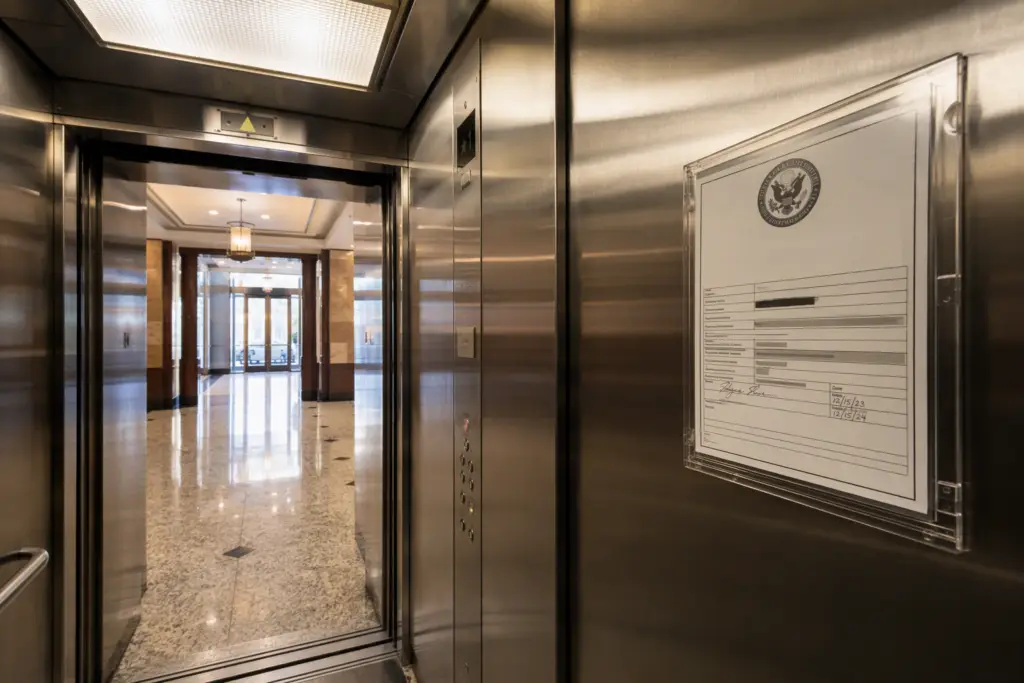
- Obtain and Post Certificate of Operation: Ensure the current certificate is posted in the elevator car as required by each jurisdiction.
- Establish a Documented Maintenance Program: Implement a written preventive maintenance schedule with a qualified service provider and maintain all records on-site.
- Re-Evaluate When Operations Change: Any change in loading class, rated capacity, or physical modification triggers a new permitting and inspection cycle in most jurisdictions.
How Do Compliance Costs and Timelines Compare Across Jurisdictions?
| Compliance Factor | Maryland | Washington, DC | Virginia | Pennsylvania |
|---|---|---|---|---|
| Inspection Scheduling Lead Time | Varies by county; state authority or third-party inspector | Can be longer due to high urban volume; plan ahead | DOLI scheduling or third-party QEI; varies by region | BOIS or approved agency; rural areas may have shorter waits |
| Permit Requirements for Modifications | Required for any alteration; permit from state authority | Required; DLCP permit process applies | Required; DOLI permit prior to work | Required; BOIS permit and plan review for alterations |
| Consequence of Operating Without Valid Certificate | Orders to cease operation; potential fines | Stop-use orders; significant civil penalties possible | Stop-use orders; civil penalty exposure | Mandatory shutdown; civil penalties under state code |
| Maintenance Record Requirement | ASME A17.1 mandated; must be available to inspectors | ASME A17.1 mandated; DC inspectors may request on-site | ASME A17.1 mandated; DOLI may review during inspection | ASME A17.1 mandated; BOIS inspection process includes review |
What Are the Pros and Cons of Different Maintenance Contract Structures for Freight Elevators?
| Contract Type | What Is Covered | Pros | Cons | Best For |
|---|---|---|---|---|
| Full Maintenance (Comprehensive) | Labor, parts, repairs, callbacks, and regulatory compliance support | Predictable costs; broadest protection; strongest compliance posture | Higher monthly cost; requires careful contract review for exclusions | High-volume warehouse operations with continuous freight movement |
| Preventive Maintenance Only | Scheduled inspections, lubrication, adjustments; repairs billed separately | Lower baseline cost; code-compliant maintenance program in place | Repair costs unpredictable; potential for delays if parts needed | Facilities with newer equipment and lower duty cycles |
| Time and Materials (On-Call) | Service only when requested; no scheduled visits | No ongoing commitment | Does not satisfy ASME A17.1 documented maintenance program requirement; high risk of compliance failure | Not recommended as a primary strategy for any commercial freight elevator |
| Manufacturer Service Agreement | OEM-specific maintenance tied to original manufacturer | Original parts; may preserve warranty on newer units | Often more expensive; limited flexibility; may not be available for older equipment | Recently installed equipment still under manufacturer warranty |
| Independent Service Provider Contract | Full or preventive maintenance through a certified independent company | Competitive pricing; flexibility; no manufacturer lock-in; works across all brands and ages of equipment | Quality varies by provider; vetting required | Multi-elevator facilities, aging equipment, or facilities seeking cost-effective compliance |
What Safety Devices Are Specifically Required on Freight Elevators?
Under ASME A17.1, freight elevators must be equipped with a specific set of safety devices that differ in some respects from passenger elevator requirements. Required safety systems include:
- Car and counterweight safeties: Mechanical devices that stop and hold the car if overspeed or free fall is detected.
- Buffers: Energy-absorbing devices in the pit to cushion impact in the event of travel below the lowest landing.
- Interlocks on freight doors: Prevent car movement unless all doors are fully closed and locked — critical for biparting and vertically sliding freight doors.
- Overspeed governor: Triggers safety application if car speed exceeds set limits.
- Terminal stopping devices: Prevent over-travel at top and bottom of travel.
- Pit lighting and stop switch: Required for safe access during maintenance.
- Load weight indicator or overload device: Required in certain configurations and jurisdictions.
What Happens If a Freight Elevator Fails Inspection?
When a freight elevator fails a required inspection in any of the four jurisdictions, the consequences follow a generally consistent pattern across Maryland, DC, Virginia, and Pennsylvania:
- The inspector issues a written notice of violation identifying specific deficiencies.
- The jurisdictional authority may issue a stop-use or out-of-service order, prohibiting operation until deficiencies are corrected.
- The facility must engage a licensed elevator contractor to perform the required corrections.
- A re-inspection is required before the elevator can return to service.
- Continued operation of an elevator under a stop-use order can result in civil penalties and, in serious cases, regulatory action against the facility operator.
Facilities that proactively maintain their freight elevators with a qualified service provider significantly reduce the risk of unexpected inspection failures and the costly downtime that results.
How Does OSHA Interact With State Elevator Inspection Requirements?
OSHA does not perform elevator inspections under the same framework as state elevator inspection authorities, but its general industry standards create parallel obligations for employers. Under OSHA’s general duty clause and specific material handling standards, employers must:
- Ensure that freight elevators used by employees are maintained in safe operating condition.
- Train workers on safe loading practices and load limits.
- Prohibit use of equipment that has known defects or is under a stop-use order.
- Document hazard assessments related to powered industrial vehicle use in proximity to freight elevator openings.
A facility that holds a valid state inspection certificate but has an ongoing mechanical issue that creates employee hazard could still face an OSHA citation. Compliance with both regulatory frameworks simultaneously is the required standard.
When Should a Freight Elevator Be Modernized Rather Than Maintained?
Modernization becomes worth evaluating when one or more of the following conditions apply:
- The elevator control system relies on relay logic or components for which parts are no longer manufactured, creating reliability and safety risks.
- Repeated inspection violations point to systemic issues beyond routine maintenance.
- The elevator was installed under a significantly older code edition and does not meet current code requirements for safety devices or door systems.
- Operational demands have changed such that the original load class or capacity is no longer appropriate.
- Energy consumption of an older hydraulic or traction system creates significant operational cost.
Modernization projects in Maryland, DC, Virginia, and Pennsylvania require permits and plan review through the applicable jurisdictional authority and must meet the current adopted edition of ASME A17.1 for all altered components.
Why Choose an Independent Elevator Service Provider for Freight Elevator Compliance?
Independent elevator service companies are not tied to a single manufacturer, which means they can service, maintain, and support freight elevators from any manufacturer and of any age. For warehouse and distribution facilities operating aging or mixed fleets of freight elevators, this flexibility is practically important.
Quality Elevator Company is a certified independent elevator service provider serving Maryland, Washington DC, Virginia, and Pennsylvania. Quality Elevator Company works with facility managers and building owners to ensure freight and warehouse elevators meet all applicable ASME, OSHA, ADA, and jurisdictional inspection requirements. Services include compliance assessments, preventive maintenance programs, repair services, and coordination support for the inspection and certification process.
Choosing an independent provider with demonstrated knowledge of multi-jurisdictional compliance requirements is especially valuable for organizations operating freight elevators across more than one of the four covered jurisdictions, where code edition differences, inspection authority contacts, and permitting processes all vary.
Ready to Confirm Your Freight Elevator Is Fully Compliant?
Compliance with ASME A17.1, OSHA requirements, and jurisdiction-specific inspection mandates across Maryland, DC, Virginia, and Pennsylvania is not optional — and the consequences of non-compliance include operational shutdowns, regulatory penalties, and employee safety risk.
Contact Quality Elevator Company for a free elevator assessment. Call us at 301-779-9116 to schedule your consultation and ensure your freight or warehouse elevator meets every applicable requirement in your jurisdiction.
Need elevator service you can rely on? Quality Elevator Company is ready to help.