Elevator Requirements & Special Considerations for Apartment & Multifamily Buildings
Apartment and multifamily residential buildings present a distinct set of elevator compliance obligations and operational considerations. From the moment a building is designed to the day a routine inspection is completed, property managers and owners must navigate a layered framework of national codes, state regulations, and local amendments. This guide covers every dimension of that framework — compliance, equipment selection, accessibility, maintenance, and how to work with a qualified service provider like Quality Elevator Company to keep residents safe and buildings code-compliant across Baltimore, Washington DC, Philadelphia, and Richmond.
What Federal Codes Govern Elevators in Apartment Buildings?
Two primary federal frameworks apply to elevators in multifamily residential properties.
The ASME A17.1 Safety Code for Elevators and Escalators is the foundational technical standard adopted by most states and municipalities. It governs design, construction, installation, operation, inspection, testing, maintenance, alteration, and repair of elevators. The current edition (2019, with ongoing 2026 guidance updates) defines minimum requirements for everything from cab size and door operation to safeties, buffers, and machine room conditions.
The Americans with Disabilities Act (ADA) requires that elevators serving public and common-use areas in multifamily housing with four or more stories be accessible to people with disabilities. ADA Standards for Accessible Design specify minimum cab dimensions, door clear widths, control panel heights, and two-way emergency communication systems.
Together, these two frameworks create the baseline that every apartment building elevator must meet — before state and local amendments are layered on top.
How Do State and Local Requirements Differ Across Baltimore, DC, Philadelphia, and Richmond?
Each jurisdiction served by Quality Elevator Company enforces its own elevator safety program, typically adopting ASME A17.1 as a base and adding state-specific amendments:
- Maryland (Baltimore): The Maryland Department of Labor, Licensing and Regulation administers elevator safety. Inspections are required at defined intervals under the state’s elevator safety law, and permits are required before installation or alteration.
- Washington DC: The DC Department of Consumer and Regulatory Affairs (DCRA) oversees elevator licensing and inspection. DC adopts ASME A17.1 with local amendments, and annual operating certificates are required for all commercial and residential elevators.
- Pennsylvania (Philadelphia): The Pennsylvania Department of Labor & Industry enforces the Pennsylvania Elevator and Escalator Safety Act. Philadelphia additionally has its own Department of Licenses and Inspections, creating a two-layer permit and inspection requirement.
- Virginia (Richmond): The Virginia Department of Labor and Industry administers the Virginia Elevator Safety Law. The Commonwealth adopts ASME A17.1 and requires periodic inspections by licensed inspectors.
Property managers should confirm the current edition of ASME A17.1 adopted in their specific jurisdiction, as this affects which technical requirements apply to existing installations versus new construction. Quality Elevator Company maintains working knowledge of requirements across all four markets and can help owners identify exactly which version and local amendments govern their property.
What Are the ADA Cab Dimension Requirements for Residential Elevators?
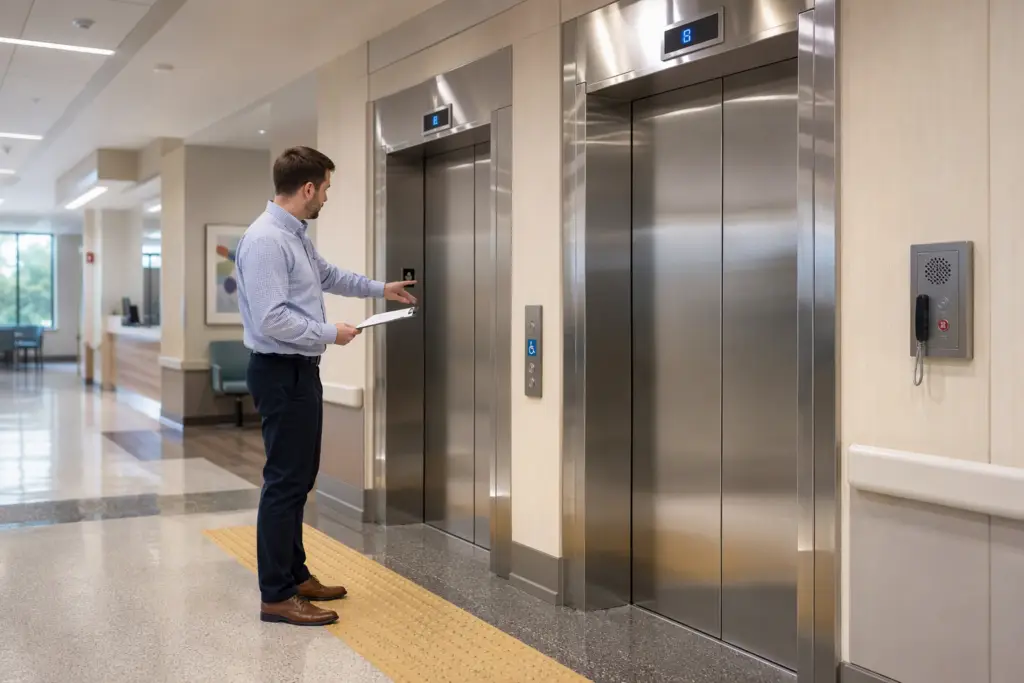
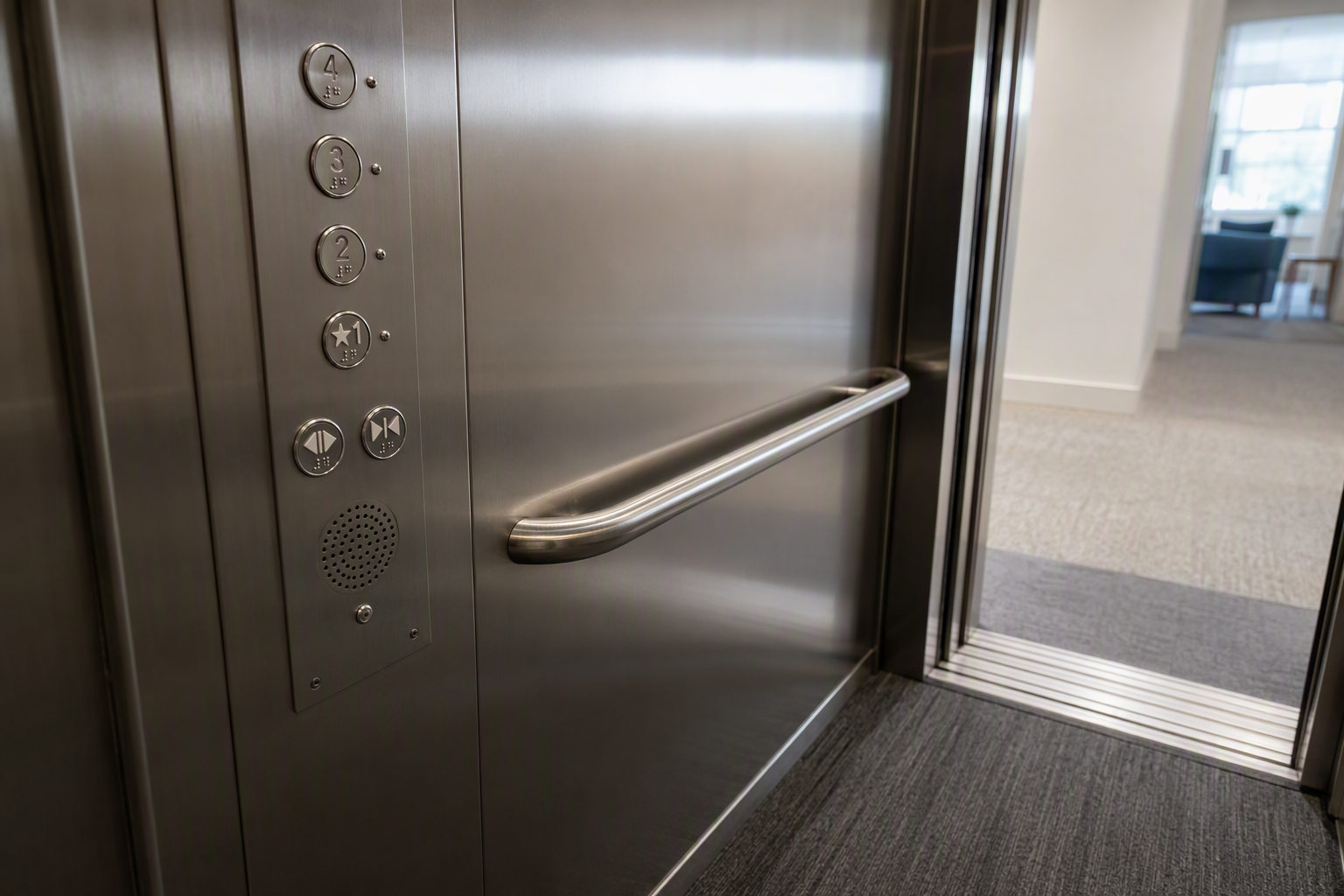
Under ADA Standards for Accessible Design, passenger elevator cabs in buildings subject to ADA must provide sufficient floor space to allow a wheelchair user to enter, maneuver, and exit. The standards specify minimum interior dimensions for cab width and depth depending on the door configuration (centered vs. off-centered). Control panels must have buttons no higher than a maximum reach range, raised characters and Braille for floor designations, and audible signals at each floor.
For multifamily buildings covered by the Fair Housing Act — generally those with four or more units in buildings with three or more stories — accessible elevator access to all floors is required, and elevator dimensions must accommodate wheelchair users in common areas.
What Load Capacity Is Required for Apartment Building Elevators?
ASME A17.1 sets minimum rated load requirements based on the elevator’s intended use and the number of passengers it is designed to carry. For typical multifamily residential use, elevators must be rated to safely carry the weight of a full car of occupants plus furniture, appliances, and move-in loads that are common in apartment settings. A qualified elevator consultant or contractor — such as Quality Elevator Company — will perform a load calculation during the design or modernization phase to match rated capacity to actual building use patterns. Undersized capacity is a common code deficiency identified during inspections.
What Emergency Communication Systems Are Required?
Both ASME A17.1 and ADA requirements mandate a means of two-way communication inside every elevator cab. This system must connect occupants to someone capable of providing assistance or summoning emergency services. In a multifamily residential building, this typically means a telephone or intercom system that connects to a staffed monitoring center or emergency dispatch — not simply a phone that rings to an unmonitored line.
Key requirements include:
- The communication system must function during a power outage (battery backup required).
- Visual indicators are required to accommodate occupants who are deaf or hard of hearing.
- The system must identify the building and elevator location to the responding party.
Many older apartment elevators have outdated telephone systems that no longer meet current code — particularly as analog phone lines are decommissioned in favor of VoIP. This is one of the most frequently cited deficiencies in multifamily elevator inspections.
How Often Do Apartment Building Elevators Need to Be Inspected?
Inspection intervals are set by state and local jurisdictions, generally referencing ASME A17.1 inspection and test requirements. Most jurisdictions require:
- Annual routine inspections by a licensed elevator inspector to verify the elevator is operating safely and all safety devices are functional.
- Periodic full-load tests (often every five years) to verify the elevator’s safety and suspension systems perform as designed under rated load conditions.
- Category 5 tests (full-load, full-speed safety tests) at intervals defined by the adopted ASME A17.1 edition and state rules.
Failing to schedule and document required inspections can result in operating certificate revocation, building code violations, and — in the event of an incident — significant liability exposure for the property owner.
What Maintenance Requirements Apply to Multifamily Residential Elevators?
ASME A17.1 requires that a maintenance control program be established and followed for every elevator. This program must include a documented maintenance log, periodic lubrication and adjustment intervals, and records of all work performed. Maintenance must be performed by or under the direct supervision of a licensed elevator mechanic.
For apartment buildings, maintenance considerations include:
- High door-cycle frequency from resident traffic, delivery services, and moving days — door operator and door contact components require frequent inspection.
- Vandalism and misuse are more common in residential settings; cab interiors, control panels, and door edges need regular assessment.
- Hydraulic elevator systems common in low-rise apartment buildings require hydraulic fluid integrity checks and cylinder condition monitoring.
Quality Elevator Company provides maintenance programs specifically structured for multifamily properties, designed to address these common residential use patterns and keep inspection records audit-ready.
What Modernization Triggers Compliance Upgrades?
When an apartment building elevator is altered or modernized, ASME A17.1 and jurisdictional rules typically require that the altered systems be brought into compliance with current code — and in some cases, that other systems in the elevator be upgraded as well. Common modernization triggers include:
- Replacement of the elevator controller or drive system.
- Replacement of the car operating panel or hall fixtures.
- Cab interior renovation exceeding a defined scope.
- Addition of new floors or changes to travel distance.
- Conversion from hydraulic to traction drive (or vice versa).
Property owners should consult with a licensed elevator contractor before beginning any modernization work to understand the full compliance scope triggered by their planned changes. Unanticipated upgrade requirements are one of the most common sources of cost overruns in multifamily elevator modernization projects.
What Are the Fire Service and Emergency Operation Requirements?
ASME A17.1 requires that elevators in buildings with fire alarm systems be equipped with Phase I Emergency Recall and Phase II Emergency In-Car Operation. These features return the elevator to a designated floor when a fire alarm activates and allow firefighters to operate the elevator manually. Requirements include:
- A key-operated Phase I recall switch at the designated level.
- Key-operated Phase II controls inside the cab.
- Smoke detectors in machine rooms, at the top of hoistways, and at designated landing lobbies (where required by the adopted code edition).
- Firefighter cab lighting and door hold-open provisions.
Many older multifamily buildings have fire service systems that were compliant under older code editions but do not meet current standards. When a full modernization or alteration is performed, jurisdictions typically require these systems to be updated.
Questions Your Inspector Will Ask
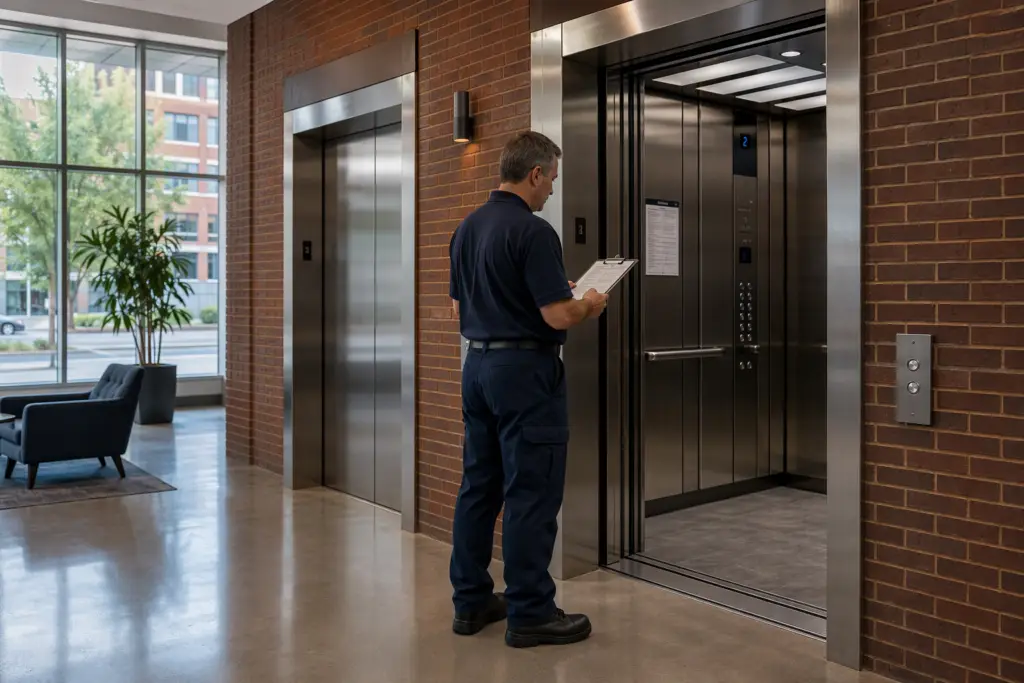
When a state or local elevator inspector arrives at a multifamily property, the following questions and document requests are standard. Property managers should be prepared to answer all of them:
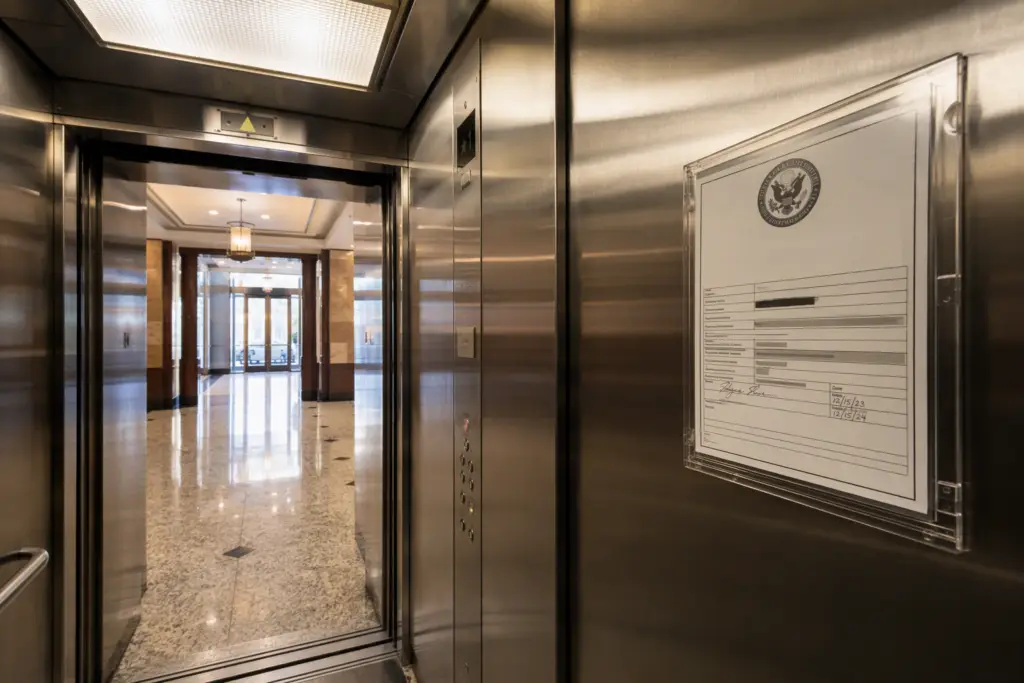
- Is the current operating certificate posted inside the elevator cab? Most jurisdictions require the certificate to be visible to passengers.
- Where is the maintenance log, and when was the last service visit? Inspectors will review the maintenance control program log for completeness and frequency.
- When was the last Category 1 and Category 5 test performed, and where is the documentation? Test records must be retained and available for review.
- Is the machine room secured and free of storage? ASME A17.1 prohibits the use of machine rooms for any purpose other than elevator equipment.
- Is the emergency lighting and communication system operational? Inspectors will test both systems during the inspection.
- Have any alterations been made since the last inspection, and were permits obtained? Unpermitted alterations are a code violation and may require immediate remediation.
- Is the pit ladder, lighting, and stop switch accessible and functional? Pit conditions are a standard inspection checkpoint under ASME A17.1.
- Are door reversal devices and safety edges functioning correctly? Door-related injuries are among the most common elevator incidents in residential buildings.
How Should a Property Manager Select an Elevator Service Contractor?
Selecting a qualified elevator service contractor for a multifamily building involves more than price comparison. Key criteria include:
- Licensure: The contractor and mechanics must hold current state licenses in the jurisdiction where the building is located.
- Code familiarity: The contractor must be current on the edition of ASME A17.1 adopted in the jurisdiction and any local amendments.
- Documentation practices: A reputable contractor provides detailed maintenance logs, test records, and inspection-ready documentation.
- Scope of services: Look for a contractor who can handle maintenance, modernization, and code-compliance consulting under one roof — reducing the coordination burden on property management staff.
Quality Elevator Company serves multifamily properties across Baltimore, Washington DC, Philadelphia, and Richmond with licensed technicians and compliance expertise specific to each jurisdiction’s adopted standards and local amendments.
What Should a Property Owner Do After a Failed Inspection?
- Obtain the written inspection report and identify every cited deficiency with its specific code reference.
- Contact a licensed elevator contractor immediately to review the deficiencies and provide a scope of corrective work.
- Determine whether the elevator must be taken out of service pending repairs — some deficiencies require immediate shutdown; others permit continued operation with conditions.
- Schedule and complete all corrective work within the timeframe specified by the inspection authority.
- Request a re-inspection and ensure all documentation of completed repairs is compiled and available for the reinspecting authority.
- Update the maintenance control program to prevent recurrence of the cited deficiencies.
Quality Elevator Company assists multifamily property owners and managers through every step of this process, from deficiency review to completed reinspection documentation.
What Are the Costs and Timelines for Multifamily Elevator Modernization?
Costs and timelines for elevator modernization in apartment buildings vary significantly based on the age and configuration of existing equipment, the scope of work required, the jurisdiction’s permit process, and equipment lead times. Rather than publish figures that may not reflect current market conditions, property owners should request detailed proposals from qualified contractors based on a site assessment of their specific equipment.
What is consistent across projects is that permit approval timelines vary by jurisdiction — DC and Philadelphia, for example, have distinct permitting processes that must be factored into project scheduling. A contractor familiar with local processes, like Quality Elevator Company, can provide realistic timeline guidance during the proposal phase.
Schedule Your Free Elevator Assessment
Whether a building is due for inspection, considering modernization, or simply needs a compliance review, Quality Elevator Company provides free elevator assessments for multifamily and apartment properties across Baltimore MD, Washington DC, Philadelphia PA, and Richmond VA. A licensed professional will evaluate current equipment condition, identify any code compliance gaps, and provide a clear path forward — with no obligation.
Contact Quality Elevator Company for a free elevator assessment: 301-779-9116
Need elevator service you can rely on? Quality Elevator Company is ready to help.