Do I Need an Elevator Operating Certificate in Maryland? Complete FAQ Guide
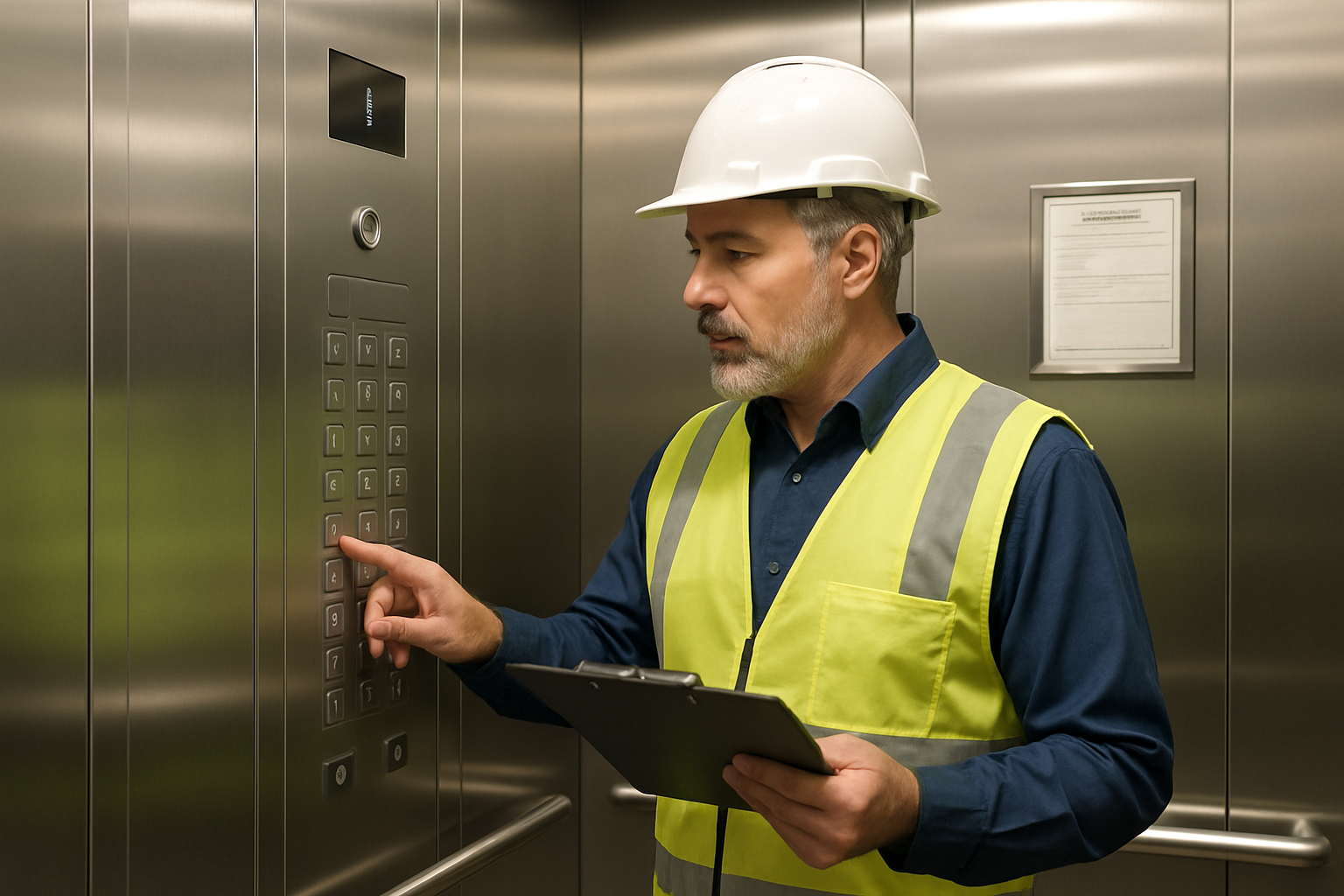
After 15-plus years in the elevator industry, I’ve answered this question more times than I can count — usually from a building owner who just received a notice of violation or a property manager preparing for their first inspection. The rules in Maryland are clear, but they catch a lot of people off guard. This guide covers everything you need to know about elevator operating certificates in Maryland, from legal requirements and costs to timelines, exemptions, and what happens if you don’t comply.
What Is an Elevator Operating Certificate in Maryland?

An Elevator Operating Certificate is the official authorization issued by the Maryland Department of Labor that legally permits a conveyance device — elevator, escalator, dumbwaiter, moving walk, or platform lift — to operate within the state.
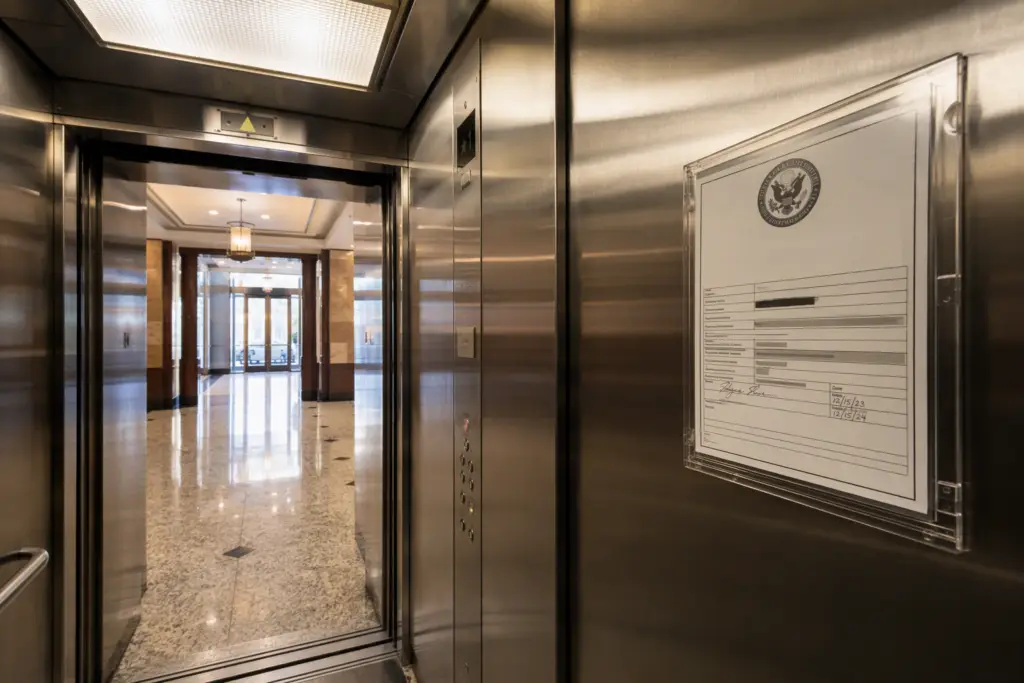
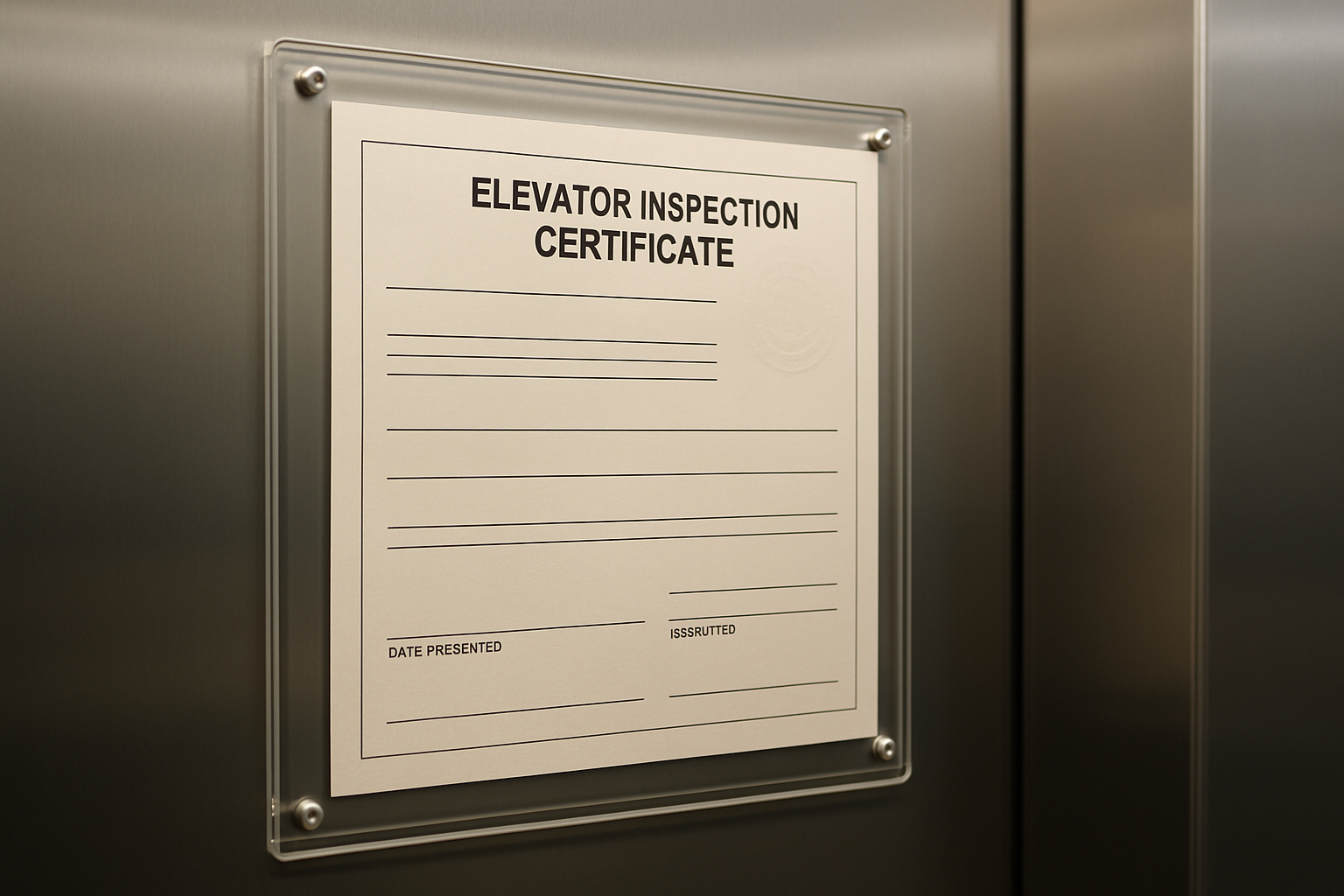
Maryland regulates elevators under the Maryland Elevator Safety Law (Labor and Employment Article, §12-901 et seq.). This law requires that every covered conveyance pass a state-approved safety inspection conducted by a licensed elevator inspector before a certificate is issued or renewed. The certificate must be physically posted inside the elevator car and be available for review at all times. Without it, operating your elevator is a violation of state law and exposes you to significant fines and liability.
Who Is Required to Have an Elevator Operating Certificate in Maryland?
Any owner or lessee of a conveyance device that serves the public, employees, or tenants in Maryland is legally required to obtain and maintain a valid Elevator Operating Certificate.
This covers a broad range of property types: commercial office buildings, apartment complexes, retail centers, hospitals, hotels, government facilities, warehouses, and manufacturing plants. The requirement applies whether the building is privately or publicly owned. If the elevator is accessible to anyone other than the private homeowner — including guests, customers, employees, or contractors — a certificate is required. Single-family private residences with a residential elevator used exclusively by the homeowner and their household are the primary exemption, but even this has nuances worth confirming with the state before assuming you’re exempt.
What Laws and Codes Govern Elevator Certification in Maryland?
Maryland elevator certification is governed by a combination of state law, state administrative code, and nationally adopted safety standards.
The primary governing statute is the Maryland Elevator Safety Law under the Labor and Employment Article (§12-901 et seq.). Administrative rules are found in the Code of Maryland Regulations (COMAR) Title 09.12. Maryland has adopted the ASME A17.1/CSA B44 Safety Code for Elevators and Escalators as its baseline technical standard. For platform lifts and stairway chairlifts, ASME A18.1 applies. The Maryland Department of Labor’s Division of Labor and Industry administers and enforces all of these requirements statewide. Any amendments or local jurisdiction overlays should be verified directly with the Division, as interpretations can be updated between inspection cycles.
How Do You Obtain an Elevator Operating Certificate in Maryland?
The process for obtaining a certificate follows a defined sequence that begins before the elevator is ever put into service and repeats every year at renewal.
For new installations, the owner or elevator contractor must submit permit applications to the Maryland Department of Labor prior to beginning work. Once installation is complete, a licensed third-party elevator inspector — approved by the state — performs a full acceptance inspection to verify the equipment meets ASME A17.1/CSA B44 and all applicable COMAR requirements. The inspector submits findings to the state, and if the unit passes, the Department of Labor issues the Elevator Operating Certificate. For annual renewals, a periodic inspection is conducted by a licensed inspector, and the certificate is reissued upon passing. The certificate must then be posted in the elevator cab before the unit resumes or continues operation.
What Happens If You Operate an Elevator Without a Valid Certificate in Maryland?
Operating a conveyance without a valid Elevator Operating Certificate is a direct violation of the Maryland Elevator Safety Law and carries serious consequences for building owners and lessees.
The Maryland Department of Labor has authority to order an elevator taken out of service immediately upon discovering an expired or missing certificate. Beyond forced shutdown, owners can face civil penalties under the Labor and Employment Article. Repeat violations or willful non-compliance increase penalty exposure. Beyond state penalties, operating without a certificate creates significant liability exposure in the event of an incident or injury — insurers and courts will treat a lapsed certificate as evidence of negligence. Property managers should treat the certificate renewal date with the same urgency as a fire inspection deadline.
How Much Does It Cost to Get an Elevator Operating Certificate in Maryland?
The total cost to obtain or renew an Elevator Operating Certificate in Maryland involves two separate components: the state inspection fee and the third-party inspector’s fee.
The Maryland Department of Labor charges a permit and certificate fee that varies by conveyance type and is set by regulation under COMAR Title 09.12. Building owners should confirm current fee schedules directly with the Division of Labor and Industry, as these figures are subject to legislative or regulatory revision. Separately, the licensed third-party elevator inspection company charges its own inspection fee, which varies based on conveyance type, geographic location, and the inspector’s schedule. For most commercial elevators in Maryland, building owners should budget for both the state fee and the inspector’s fee together when planning annual maintenance costs. Quality Elevator Company can coordinate the inspection scheduling process and ensure your equipment is prepared before the inspector arrives, which reduces the risk of a failed inspection requiring a costly re-inspection visit.
How Long Does It Take to Get an Elevator Operating Certificate in Maryland?
The timeline depends on whether you are seeking a certificate for a new installation, a renewal, or a certificate following a violation or lapsed status.
For annual renewals on equipment that is well-maintained and passes inspection on the first visit, the process is typically straightforward: the licensed inspector conducts the periodic inspection, submits the results to the Maryland Department of Labor, and the certificate is issued. The practical timeline from inspection to receiving the certificate can range from a few days to a few weeks depending on state processing volume. For new installations, the full permit-to-certificate timeline depends on how quickly permit applications are processed and how soon an approved inspector can be scheduled after installation is complete. For elevators coming out of a violation or extended out-of-service status, additional documentation or re-inspection steps may be required before a certificate is issued, which can extend the timeline further. Building owners should schedule inspections well in advance of their certificate expiration date — at minimum 60 days — to avoid any lapse in certification.
What Types of Conveyances Require an Elevator Operating Certificate in Maryland?
The Maryland Elevator Safety Law applies to a broader range of equipment than most building owners initially expect. The certificate requirement is not limited to traditional passenger elevators.
Covered conveyances under Maryland law and COMAR Title 09.12 include: traction and hydraulic passenger elevators, freight elevators, escalators, moving walks, dumbwaiters, platform lifts (vertical and inclined), stairway chairlifts in commercial or multi-unit residential settings, and material lifts. Each conveyance type is subject to its applicable ASME standard and must be individually permitted, inspected, and certificated. A building with three elevators, one escalator, and two platform lifts requires separate certificates for each unit. Building owners managing multiple conveyances should maintain a tracking system for each unit’s certificate expiration date to avoid any gaps in compliance.
Does a Single-Family Home Elevator in Maryland Need an Operating Certificate?
This is one of the most common points of confusion, and the answer depends on how the elevator is used and who has access to it.
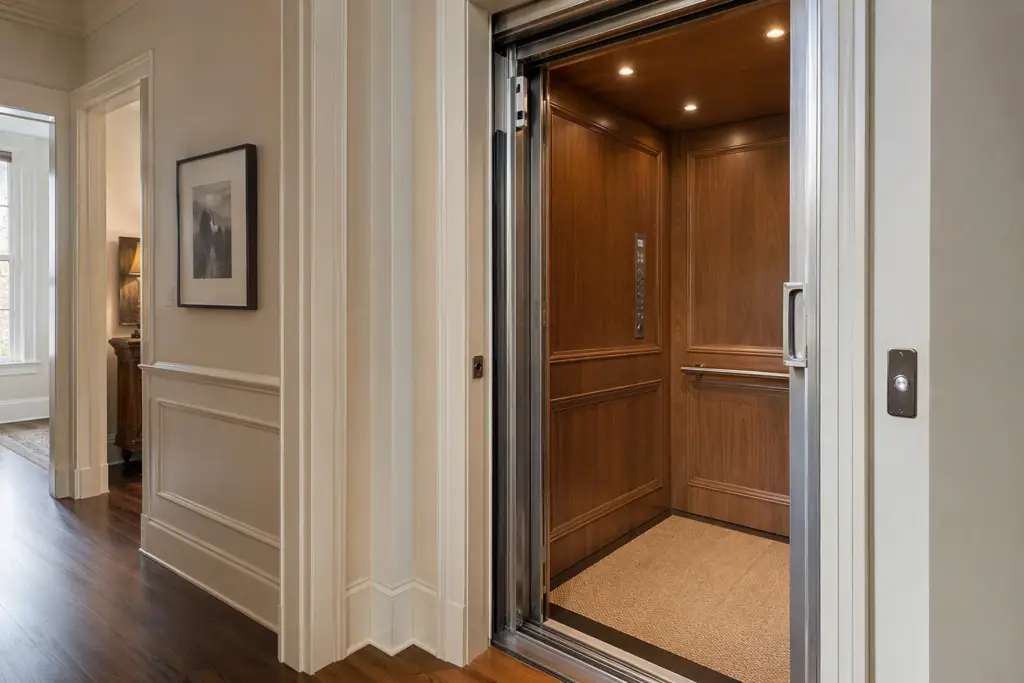
Residential elevators installed in single-family private residences and used exclusively by the homeowner and members of their household are generally exempt from the Elevator Operating Certificate requirement under Maryland law. However, this exemption is narrowly defined. If the property is a multi-unit residential building — including condominiums, townhome communities with shared vertical access, or assisted living facilities structured as residential — the exemption does not apply and certificates are required. Additionally, if a private residence is used for any commercial purpose, or if the elevator is accessible to employees, caregivers, or contractors on a regular basis, the exemption may not apply. Before assuming an exemption, homeowners and property owners should consult directly with the Maryland Department of Labor’s Division of Labor and Industry or an IUEC-certified elevator technician to confirm their specific situation.
How Does Quality Elevator Company Help Maryland Building Owners Stay Certified?
Quality Elevator Company provides end-to-end support for Maryland building owners navigating the elevator operating certificate process — from coordinating licensed inspections to performing any required repairs before the inspector arrives.
Our IUEC-certified technicians are familiar with COMAR Title 09.12 requirements and the ASME A17.1/CSA B44 standards enforced by Maryland inspectors. We help building owners identify and correct code deficiencies before the inspection visit, which reduces the risk of a failed inspection, a required re-inspection fee, and the liability exposure that comes with a gap in certification. We also maintain records of each unit’s inspection history and certificate expiration dates for clients on our maintenance agreements, so you never miss a renewal deadline. If you’ve received a notice of violation or your certificate has already lapsed, contact Quality Elevator Company directly — we can help you prioritize repairs and get your equipment back into compliant operation as quickly as possible.
Need elevator service you can rely on? Quality Elevator Company is ready to help.