Signs Your Elevator Needs to Be Replaced or Modernized Before It Becomes a Liability
An elevator that is overdue for modernization is not simply an inconvenience — it is a measurable liability for building owners and property managers. Frequent breakdowns strand passengers, outdated components fail safety inspections, non-compliant cabins expose owners to ADA litigation, and aging control systems drive energy costs higher every year. Recognizing the warning signs early — before a regulatory citation, a passenger injury, or a catastrophic mechanical failure — is the most cost-effective strategy available. The sections below answer every major question building owners in Baltimore, Washington DC, Philadelphia, and Richmond ask when evaluating whether to modernize or replace their elevator systems.
What are the most urgent signs that an elevator needs modernization or replacement?
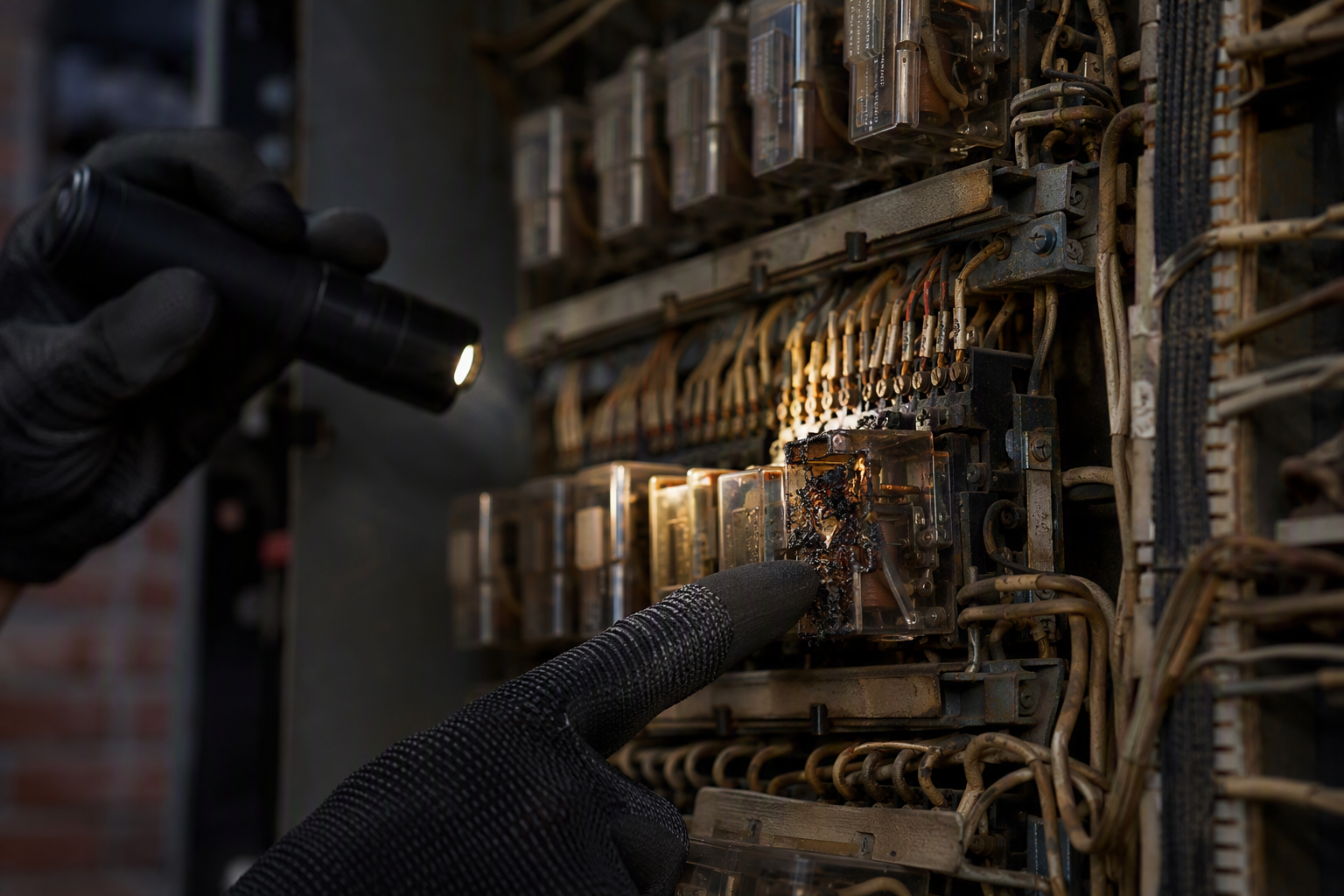
The most urgent signs are repeated entrapments, door malfunctions, failed safety inspections, visible hydraulic leaks, and control systems that manufacturers no longer support with replacement parts.
When an elevator traps passengers between floors or experiences door-related incidents — the leading cause of elevator injuries — immediate action is required. Building owners carry direct liability for passenger safety, and a history of entrapments documented in service logs becomes powerful evidence in litigation. Control systems manufactured before the widespread adoption of microprocessor-based technology are often beyond their economic service life, meaning replacement parts are scarce, expensive, or simply unavailable. When a single failed relay can ground an elevator for weeks while a part is sourced, the system has crossed from a maintenance problem into a liability event.
How old does an elevator have to be before modernization is necessary?
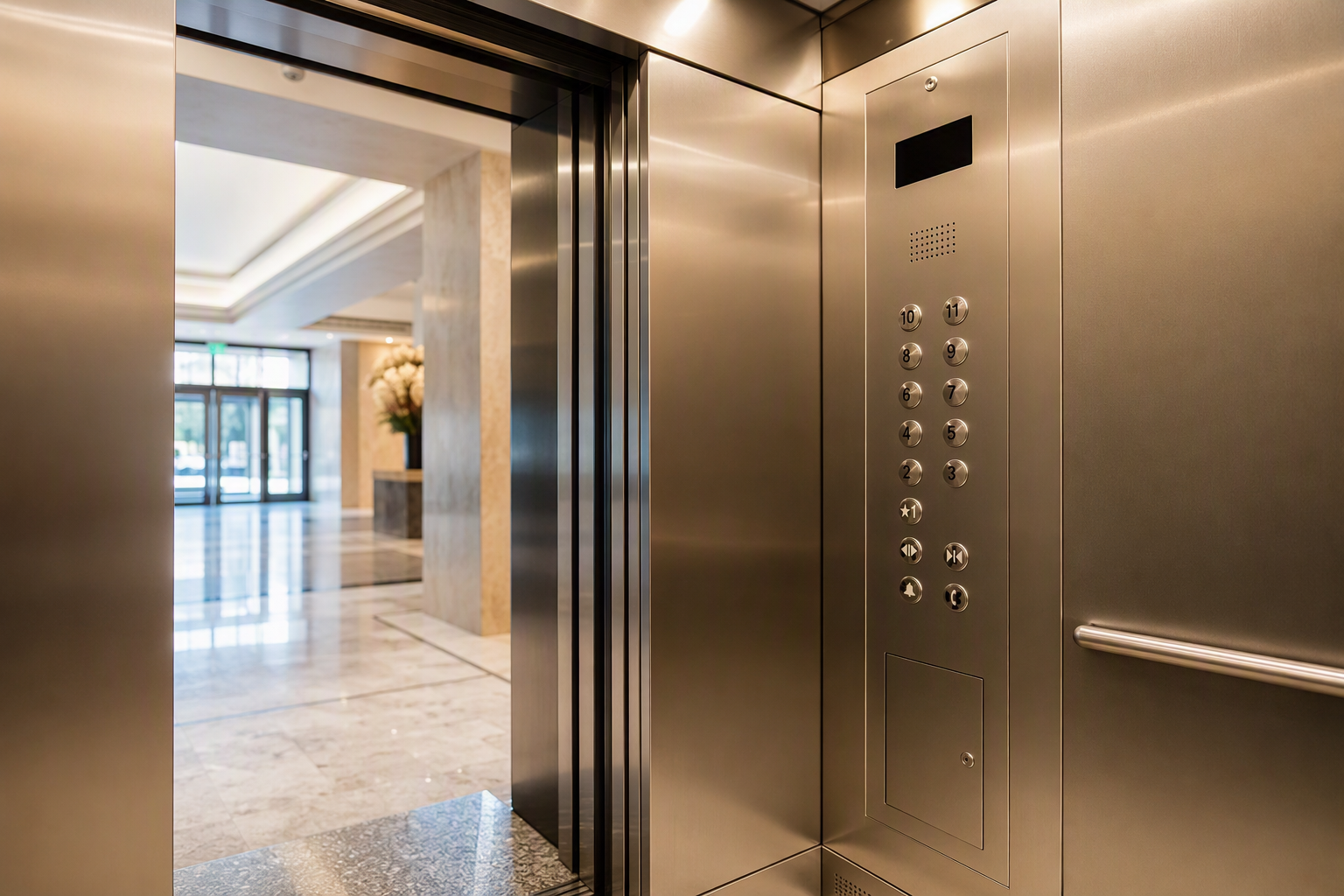
There is no universal age threshold, but elevators older than 20–25 years frequently begin to exhibit the combination of mechanical wear, obsolete controls, and code non-compliance that makes modernization the most prudent course.
Age alone is not disqualifying — a well-maintained elevator in a low-traffic environment can remain serviceable longer. The more meaningful benchmark is the convergence of factors: Are OEM parts still available? Does the elevator meet the edition of the ASME A17.1 Safety Code for Elevators and Escalators that your jurisdiction has adopted? Are maintenance labor hours rising year over year? When multiple factors converge simultaneously, the economic and legal case for modernization becomes compelling regardless of calendar age.
What does ASME A17.1 require, and how does it determine whether an elevator is compliant?
The ASME A17.1 Safety Code for Elevators and Escalators establishes minimum design, installation, operation, inspection, testing, and maintenance standards for elevators across North America, and local jurisdictions in Maryland, DC, Virginia, and Pennsylvania adopt specific editions of this code into law.
ASME A17.1 is a living document updated on a regular cycle. When a jurisdiction adopts a newer edition, previously installed equipment is evaluated under ASME A17.3, the companion standard for existing installations. ASME A17.3 identifies safety devices that must be retrofitted even on older elevators — including governor and safety device testing intervals, car door restrictor requirements, and pit lighting standards. Building owners who are unaware of the edition their jurisdiction has adopted may be unknowingly operating non-compliant equipment. A qualified elevator contractor can cross-reference the installed equipment against the applicable code edition and produce a gap analysis identifying required retrofits.
What ADA requirements apply to existing elevators, and can non-compliance create liability?
Under the Americans with Disabilities Act (ADA), elevators in facilities covered by Title II or Title III must meet accessibility standards, and failure to maintain accessible operation — including door timing, call button height, floor annunciation, and Braille signage — can result in civil complaints and litigation.
The ADA requires that elevators providing access to multiple floors be kept in working order and that accessibility features be functional. Common compliance gaps in older equipment include door close times that are too fast for mobility-device users, inoperative audible floor annunciators, missing or worn Braille floor designations, and call buttons that do not meet the specified mounting height or tactile requirements. Even an elevator that was ADA-compliant when installed can fall out of compliance if components are replaced with non-compliant parts or if features are disabled. Building owners in Baltimore, Washington DC, Philadelphia, and Richmond should treat ADA compliance as an ongoing operational requirement, not a one-time installation check.
What are the most common mechanical warning signs that indicate an elevator is failing?
The most common mechanical warning signs include unusual noises during travel, leveling errors at floor landings, excessive vibration, sluggish door operation, and hydraulic fluid leaks visible in the pit or machine room.
Leveling errors — where the cab stops several inches above or below a floor landing — are both a safety hazard and an ADA compliance issue, because a misleveled cab creates a tripping hazard and may make the elevator inaccessible to wheelchair users. Hydraulic leaks are particularly serious: underground hydraulic cylinders that develop leaks can contaminate soil and groundwater, creating environmental liability in addition to the mechanical hazard. Unusual noises from the sheave, motor, or guide rails often indicate worn bearings or deteriorated rope condition. Any of these symptoms warrants immediate professional evaluation rather than deferred maintenance.
How do rising maintenance costs signal that replacement or modernization is overdue?
When annual maintenance and repair expenditure on a single unit begins to approach or exceed the annualized cost of a modernization project, the elevator has crossed an economic threshold that almost always favors capital investment over continued repairs.
This threshold — sometimes called the repair-versus-replace crossover — is reached when aging equipment requires increasingly frequent service calls, when each repair resolves one failure only to surface another, and when proprietary or obsolete parts command premium pricing due to scarcity. Building managers who track per-unit maintenance spend over a rolling three-year period often find that the trajectory is unmistakably upward. A formal lifecycle cost analysis, which a qualified elevator service company can provide, compares projected future repair costs against the capitalized cost of modernization to produce a quantitative basis for the decision.
| Evaluation Factor | Modernization Candidate | Full Replacement Candidate | Immediate Action Required |
|---|---|---|---|
| Equipment Age | 15–25 years, structurally sound | 25+ years, significant wear throughout | Any age: failed inspection or entrapment history |
| Hoistway / Shaft Condition | Structurally intact, code-compliant dimensions | Requires structural remediation | Active water intrusion or fire suppression failure |
| Controls & Drive | Outdated but upgradeable; parts available | Obsolete; OEM support discontinued | Non-functional; no available replacement parts |
| ADA Compliance Gaps | Minor: signage, timing adjustments | Major: cab dimensions, platform access | Active ADA complaint filed |
| Annual Repair Trend | Stable or modestly increasing | Steeply increasing year over year | Single repair exceeds modernization milestone cost |
| Energy Consumption | Improvable with drive upgrade | Holistically inefficient; full overhaul needed | Utility compliance violation |
| Safety Device Status | Testable; passes with maintenance | Worn beyond adjustment; fails load testing | Governor, buffers, or safeties condemned |
What happens if a building owner ignores elevator modernization warning signs?
Ignoring modernization warning signs exposes building owners to regulatory fines, forced shutdown orders, personal injury lawsuits, and in jurisdictions that require current certificates of operation, the inability to legally operate the elevator at all.
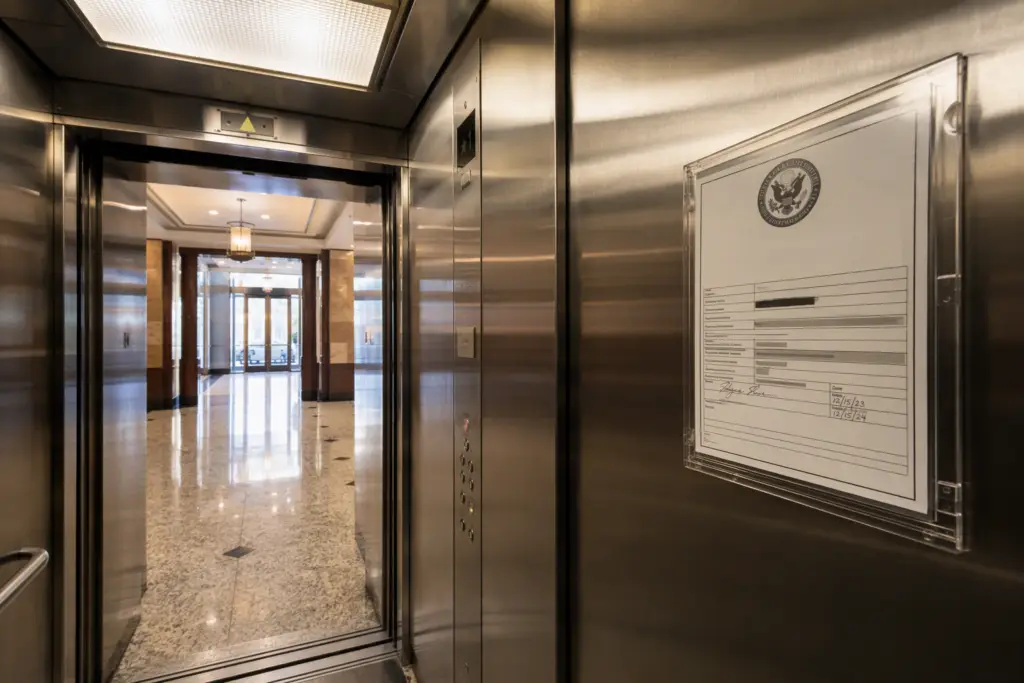
State elevator safety programs in Maryland, Virginia, Pennsylvania, and the District of Columbia all carry enforcement authority, including the power to issue out-of-service orders and civil penalties. An elevator operating without a current, valid certificate of inspection is an immediate liability and, in some contexts, constitutes a building code violation that affects the property’s certificate of occupancy. Beyond regulatory risk, a passenger injury on a documented-deficiency elevator almost always results in litigation where maintenance records, inspection reports, and service invoices are discoverable — creating a paper trail that is very difficult to defend against.
What is elevator modernization, and what components are typically included?
Elevator modernization is the process of replacing selected major components — typically the control system, drive, door operator, and safety devices — while retaining the existing hoistway, cab structure, and guide rails, resulting in a functionally updated elevator at a lower cost and construction impact than full replacement.
A comprehensive modernization scope typically includes: replacement of the relay-logic or outdated solid-state controller with a current microprocessor-based control system; installation of a variable voltage variable frequency (VVVF) drive for energy efficiency and ride quality; new door operator and door detection technology to reduce entrapments; updated car operating panel and hall fixtures to meet current ADA and code requirements; new governor, car safeties, and buffer inspection or replacement; and updated pit lighting, stop switches, and emergency communication systems to comply with current ASME A17.1 requirements. The scope is always validated against the specific code edition adopted by the local jurisdiction.
What is the difference between elevator modernization and full elevator replacement?
Modernization retains the existing hoistway structure and replaces major mechanical and electrical components, while full replacement involves removing and rebuilding the entire system including the hoistway — a significantly more disruptive and costly undertaking typically justified only when the hoistway itself is structurally deficient or dimensionally non-compliant.
Full replacement is relatively rare in existing occupied buildings because it requires extended downtime, significant structural work, and building permit processes comparable to new construction. Most elevators that have deteriorated to the point of impracticality for modernization are candidates for replacement of the entire mechanical system within a retained hoistway. A thorough assessment by a qualified elevator contractor — such as the evaluations provided by Quality Elevator Company across its Baltimore, Washington DC, Philadelphia, and Richmond service territory — will determine which path is structurally and economically appropriate for a specific installation.
How long does elevator modernization typically take, and how much downtime should building owners expect?
The duration of elevator modernization depends on the scope of work, parts lead times, and building access conditions, but a typical full-scope modernization of a single commercial elevator requires planned downtime measured in weeks rather than months.
Lead times for control system components, door operators, and custom cab finishes are the most common sources of schedule variability. In multi-elevator buildings, modernization is typically sequenced so that at least one elevator remains in service at all times. Building owners should request a written project timeline from their elevator contractor before work begins, and should ensure that temporary service provisions — including accessible alternatives for elevator-dependent users — are addressed in the project plan. Jurisdictions may also require permit processing time before work can commence, a variable that a knowledgeable local contractor will factor into the schedule.
What inspection and testing requirements apply under state law in Maryland, DC, Virginia, and Pennsylvania?
Each jurisdiction in Quality Elevator Company’s service territory maintains its own elevator safety program with mandatory annual or periodic inspection requirements, and operating without a current certificate of inspection is a violation regardless of the elevator’s mechanical condition.
In Maryland, the Division of Labor and Industry administers the elevator safety program under the Maryland Elevator Safety Law. The District of Columbia Department of Consumer and Regulatory Affairs (DCRA) enforces elevator regulations within the District. Virginia’s Department of Labor and Industry enforces the Virginia Elevator Safety Law statewide. Pennsylvania’s Department of Labor and Industry administers the Uniform Construction Code elevator provisions. Each program requires that elevators be inspected by a licensed third-party inspector or state inspector on a defined cycle, and that identified deficiencies be corrected within specified timeframes. Building owners who receive inspection deficiency notices should treat them as legally enforceable correction orders, not suggestions. Quality Elevator Company operates in all four jurisdictions and is familiar with each program’s specific requirements and timelines.
What role does OSHA play in elevator safety for commercial buildings?
The Occupational Safety and Health Administration (OSHA) has jurisdiction over elevator safety as it relates to worker exposure, including construction and maintenance workers who work in or around elevator hoistways, pits, and machine rooms.
For building owners, OSHA’s primary relevance is in the context of maintenance and construction activities: an elevator contractor performing work in a pit or hoistway must comply with OSHA standards for confined space entry, fall protection, and lockout/tagout procedures. Building owners who allow maintenance access without verifying that the contractor follows OSHA-compliant safety protocols can share liability for worker injuries. Selecting a qualified, compliant elevator service company is therefore not only a quality consideration but a safety and liability consideration as well.
What are the energy efficiency and sustainability arguments for elevator modernization?
Older hydraulic and traction elevator systems consume substantially more energy than modernized equivalents equipped with VVVF drives, regenerative systems, and LED cab lighting, making modernization a meaningful contributor to a building’s sustainability profile and operating cost reduction.
Hydraulic elevators that use petroleum-based fluid in above-ground or underground cylinders also carry ongoing environmental risk. Many building owners and property managers in jurisdictions with energy benchmarking requirements — including Washington DC, which mandates energy benchmarking for commercial buildings above a certain square footage — find that elevator modernization contributes measurably to improved benchmarking scores. Beyond compliance, reduced energy consumption translates directly to lower utility costs over the elevator’s useful life. These factors should be included in any lifecycle cost analysis comparing modernization to continued operation of aging equipment.
What questions should building owners ask when evaluating elevator modernization vendors?
Building owners should evaluate vendors on the basis of licensing and insurance, familiarity with local code editions, transparency of scope documentation, parts sourcing and warranty terms, project management experience in occupied buildings, and the ability to provide verifiable references for comparable modernization projects.
A qualified vendor will provide a written scope of work that specifies every component to be replaced, the code compliance basis for each specification, the warranty terms for both parts and labor, and the process for managing unforeseen conditions discovered during teardown. Vendors who propose scope without a site survey or who cannot identify the specific code edition that governs the installation should be viewed with caution. Building owners in the Baltimore, Washington DC, Philadelphia, and Richmond markets can request a comprehensive elevator assessment from Quality Elevator Company as a starting point for the vendor evaluation process.
What should building owners do immediately if they suspect their elevator is unsafe?
If an elevator is suspected to be unsafe, the immediate priority is to take the unit out of service, notify passengers if anyone is aboard, contact a licensed elevator service company for emergency evaluation, and notify the applicable state elevator safety authority if a reportable incident has occurred.
- Remove the elevator from service immediately. Place the elevator on independent service or shut it down at the main line disconnect. Post clear signage at every landing indicating the elevator is out of service.
- Verify no passengers are trapped. Confirm the cab is empty before shutting down power. If a passenger is trapped, call emergency services and your elevator contractor simultaneously — do not attempt a non-professional rescue.
- Document the condition. Photograph and note any visible deficiencies — unusual sounds, fluid leaks, leveling errors, door malfunctions — and the date and time of the last service call or inspection.
- Contact a licensed elevator service company. Request an emergency evaluation. The contractor should perform a comprehensive safety inspection before the elevator is returned to service.
- Notify the applicable state elevator authority. In Maryland, DC, Virginia, and Pennsylvania, reportable incidents involving passenger injury or entrapment must be reported to the state elevator safety program within the timeframes specified by each jurisdiction’s regulations.
- Obtain written clearance before returning to service. Do not return the elevator to passenger service until the service company provides written confirmation that the identified deficiencies have been corrected and the unit is safe to operate.
How does a building owner compare the total cost of modernization versus the cost of continued repairs?
A lifecycle cost analysis that projects the net present value of continued repair expenditures against the capitalized cost of modernization — accounting for downtime costs, liability exposure, energy savings, and residual useful life — provides the most defensible financial basis for the modernization decision.
The repair scenario should include not only anticipated parts and labor costs but also the cost of unplanned downtime (lost productivity, tenant complaints, potential lease implications), the cost of risk management for an aging system (increased insurance premiums or self-insured liability), and the opportunity cost of capital tied up in recurring repairs. The modernization scenario should include the full project cost, financing cost if applicable, energy savings over the system’s projected useful life, and the reduction in risk-related costs. Building owners who have not performed this analysis often find that the true cost of continuing to operate aging equipment significantly exceeds their intuition about repair costs.
What warranties and guarantees should accompany an elevator modernization project?
A properly structured elevator modernization contract should include manufacturer warranties on all major components, a contractor workmanship warranty, and a defined post-completion maintenance period during which the contractor is responsible for correcting deficiencies at no additional cost.
Component warranties vary by manufacturer and product type — control systems, door operators, and drive systems typically carry separate warranty terms. The contractor’s workmanship warranty should cover installation defects for a minimum period following acceptance. Building owners should also clarify what the warranty covers in terms of response obligations: a warranty that takes days to respond to a post-completion failure provides limited practical value in a building where elevator availability is critical. All warranty terms should be reviewed in writing before contract execution.
What are the signs that a hydraulic elevator specifically needs replacement or major remediation?
Hydraulic elevator-specific warning signs include underground cylinder corrosion or leaks, petroleum-based fluid contamination in the pit or surrounding soil, loss of holding pressure causing the cab to drift downward, and jacking unit components that are no longer manufactured or supported.
Underground single-bottom hydraulic cylinders installed before the adoption of double-bottom or PVC-lined cylinder requirements are a particular concern. Corrosion of the outer steel casing can result in hydraulic fluid leaking into the surrounding soil — an environmental liability that can trigger regulatory action under state environmental programs independent of the elevator safety program. The remediation of a contaminated hydraulic cylinder site can be substantially more costly than proactive cylinder replacement or conversion to a holeless hydraulic or traction system. Building owners with older hydraulic elevators should verify the cylinder type and condition as a priority.
How do tenant and occupant experience considerations factor into the modernization decision?
Elevator reliability is a material factor in tenant satisfaction, lease renewal decisions, and property valuation, and recurring elevator failures — even when not immediately dangerous — erode the building’s competitive position in the commercial or multifamily real estate market.
In commercial office buildings, elevator downtime disrupts tenant operations and can trigger lease provisions related to building services. In multifamily residential buildings, elevator failures disproportionately affect elderly residents and residents with disabilities, creating both reputational damage and potential Fair Housing Act implications. In healthcare and assisted living facilities, elevator reliability is directly tied to patient and resident safety. Property managers who receive elevator-related complaints from tenants should treat them as early indicators of a system approaching its useful life limit, not as routine service tickets to be closed without strategic assessment.
How can building owners in Baltimore, Washington DC, Philadelphia, and Richmond get started with an elevator assessment?
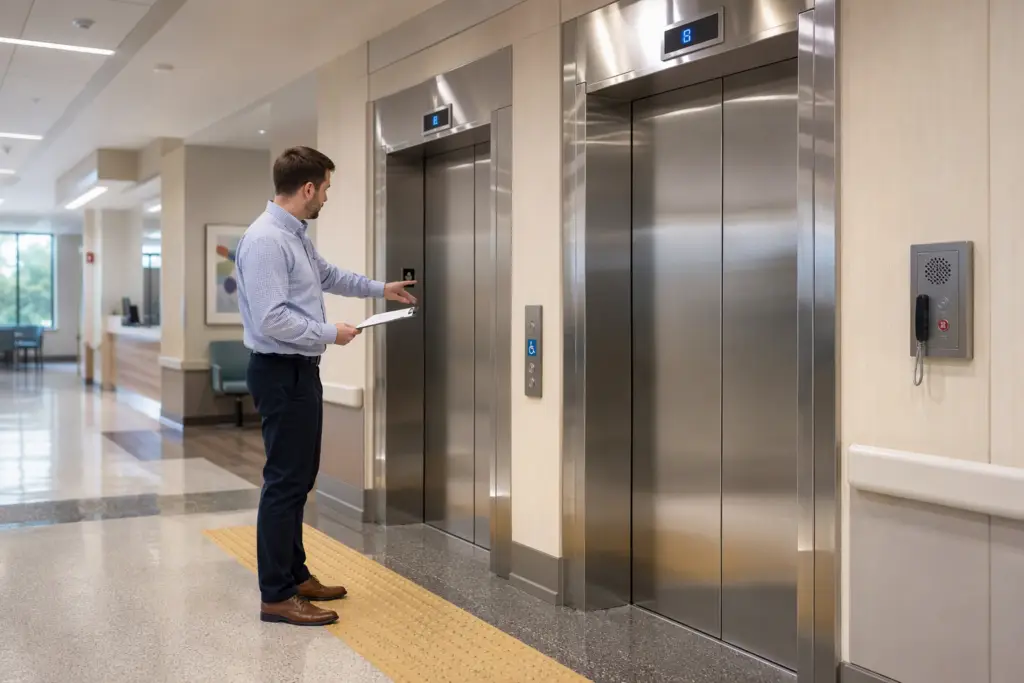
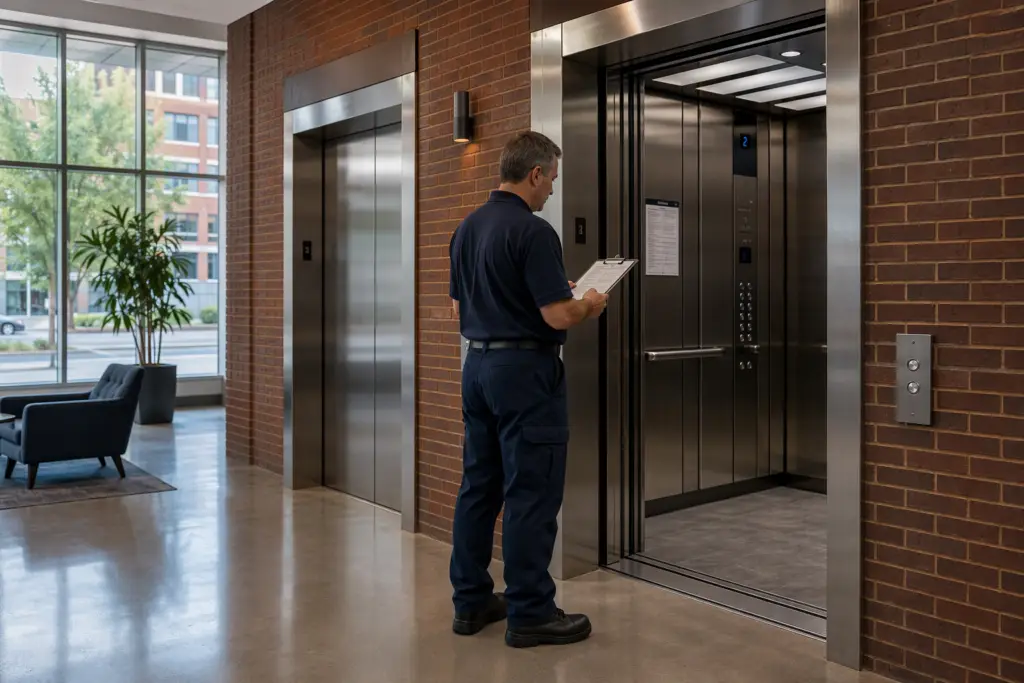
Building owners in these markets can initiate the process by scheduling a comprehensive on-site elevator assessment with a qualified elevator service company, which should include a review of maintenance history, inspection records, current component condition, applicable code compliance status, and a written recommendation with modernization or replacement options.
Quality Elevator Company serves building owners, property managers, and facility directors across Baltimore MD, Washington DC, Philadelphia PA, and Richmond VA, providing assessments that evaluate all of the factors described in this guide — from mechanical condition and ASME A17.1 compliance to ADA accessibility and lifecycle cost analysis. An assessment produces the documented baseline that building owners need to make a defensible, informed decision about the future of their elevator equipment. Starting with a professional assessment is consistently the lowest-risk and most cost-effective first step, regardless of where a building owner believes their equipment falls on the modernization timeline.
Schedule Your Free Elevator Assessment
Do not wait for a failed inspection, a passenger incident, or a regulatory citation to evaluate the condition of your elevator. Contact Quality Elevator Company for a free elevator assessment and receive a written evaluation of your equipment’s condition, compliance status, and modernization or replacement options. Quality Elevator Company serves building owners and property managers throughout Baltimore MD, Washington DC, Philadelphia PA, and Richmond VA.
Call Quality Elevator Company today: 301-779-9116
A qualified elevator professional will review your maintenance history, inspect your equipment, identify any compliance gaps under ASME A17.1 and ADA requirements, and provide a clear, actionable recommendation — before your elevator becomes a liability.
Need elevator service you can rely on? Quality Elevator Company is ready to help.