Quick Answer: Before calling a technician, building managers can safely check for tripped breakers, door obstructions, overload conditions, and emergency stop button positions — simple inspections that resolve many common elevator issues without requiring a service visit.
Elevator downtime is disruptive, costly, and — in many cases — avoidable with a methodical pre-call inspection. This guide walks building managers and facilities staff through the safe, non-technical checks they can perform on-site before dispatching a certified elevator technician. Knowing what to look for not only saves time and money, it also helps technicians arrive with the right information to resolve issues faster.
What Can a Building Manager Safely Check on an Elevator?
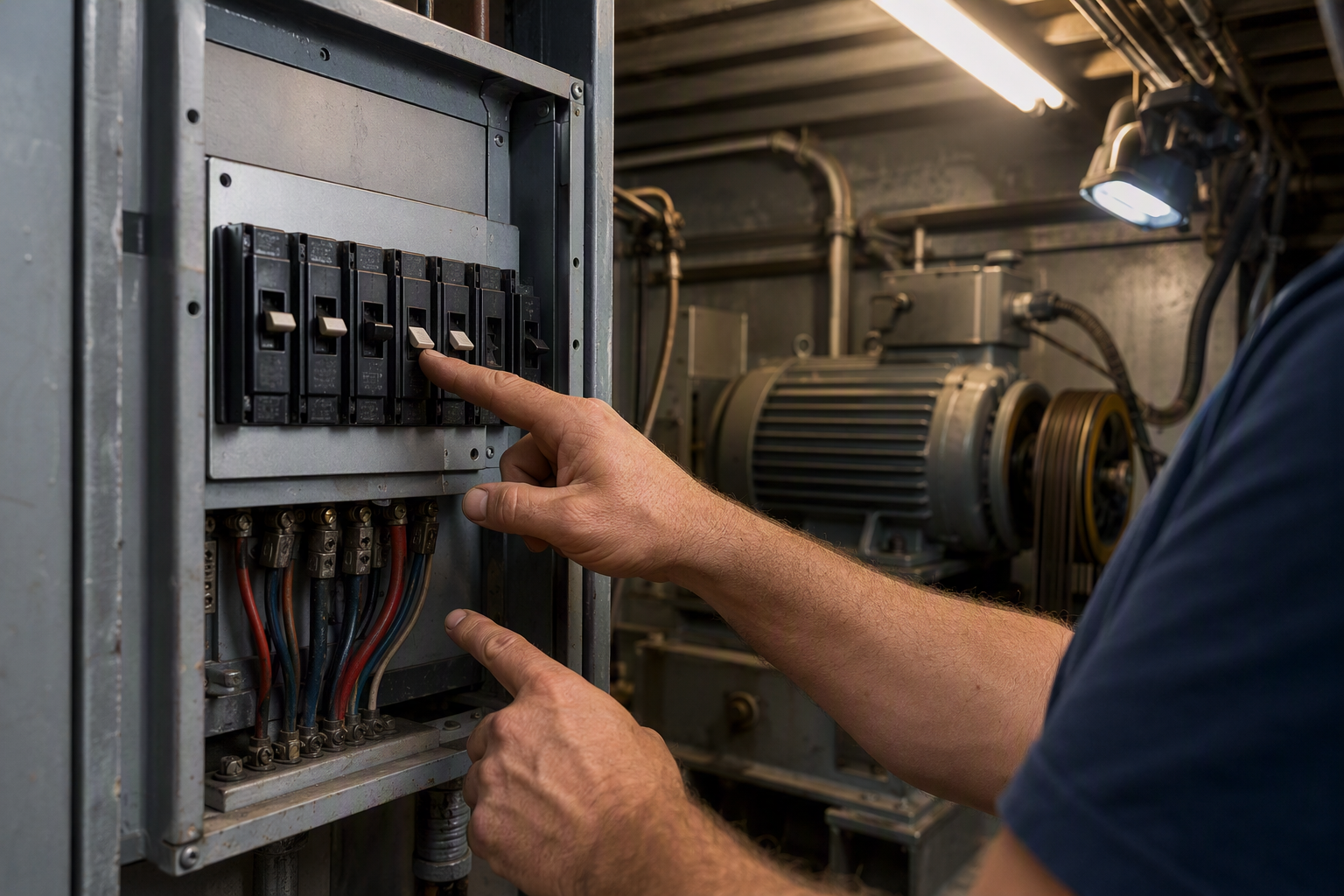
Building managers are not expected to perform mechanical repairs — those must always be handled by licensed elevator professionals in compliance with ASME A17.1 Safety Code for Elevators and Escalators. However, a number of surface-level checks fall well within a building manager’s safe scope of responsibility. These include verifying power supply, inspecting door tracks, reviewing the control panel, and checking for user error issues such as overloading or emergency stop activation.
| Check Type | Safe for Building Manager? | Requires Certified Technician? | Typical Resolution Time |
|---|---|---|---|
| Tripped circuit breaker | ✅ Yes | Only if breaker trips repeatedly | Minutes |
| Emergency stop button activated | ✅ Yes | No | Minutes |
| Door track obstruction | ✅ Yes (visual only) | If track is damaged | Minutes to hours |
| Overload condition | ✅ Yes | No | Immediate |
| Unusual noises or vibration | ⚠️ Document only | Yes — diagnosis required | Varies |
| Error codes on control panel | ⚠️ Record and report | Yes — code interpretation | Varies |
| Leveling issues (floor misalignment) | ❌ No | Yes — safety risk | Technician visit required |
| Hydraulic fluid leak | ❌ No | Yes — environmental & safety issue | Technician visit required |
| Rope or cable inspection | ❌ No | Yes — per ASME A17.1 | Scheduled inspection |
What Should You Do Immediately When an Elevator Stops Working?
Follow these steps in order before contacting a service provider. These actions protect building occupants and give a technician the information needed to respond efficiently.
- Check for passengers trapped inside. Communicate through the intercom or phone line to confirm whether anyone is in the cab. If passengers are trapped, contact emergency services and your elevator service provider immediately — do not attempt to manually open the doors.
- Secure the elevator entrance. Place visible signage or barriers at all landings to prevent additional users from attempting to call the elevator.
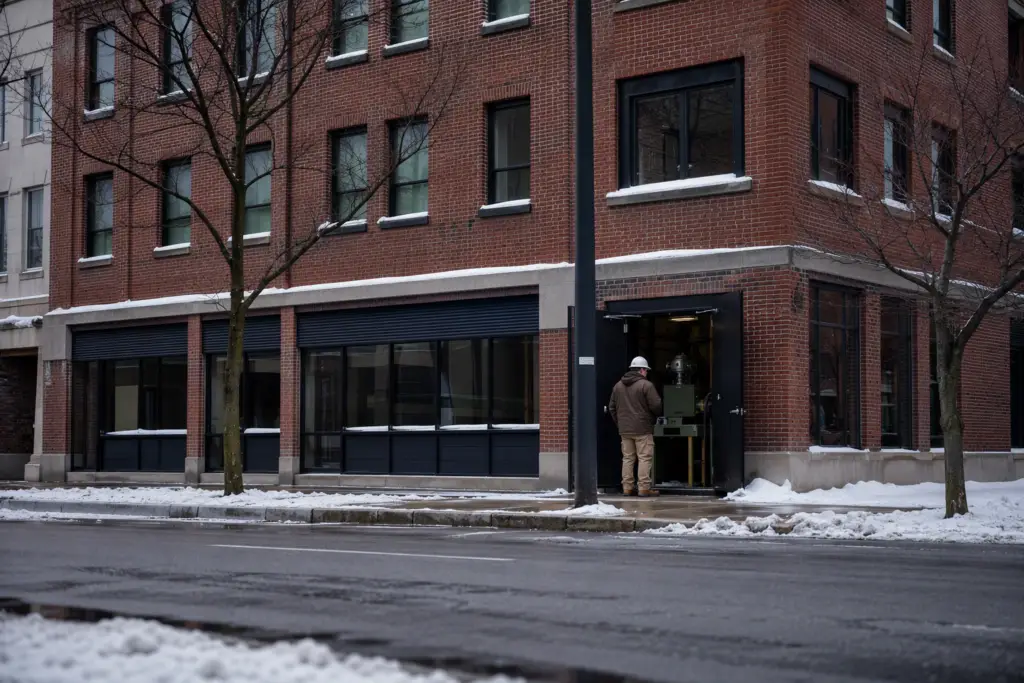
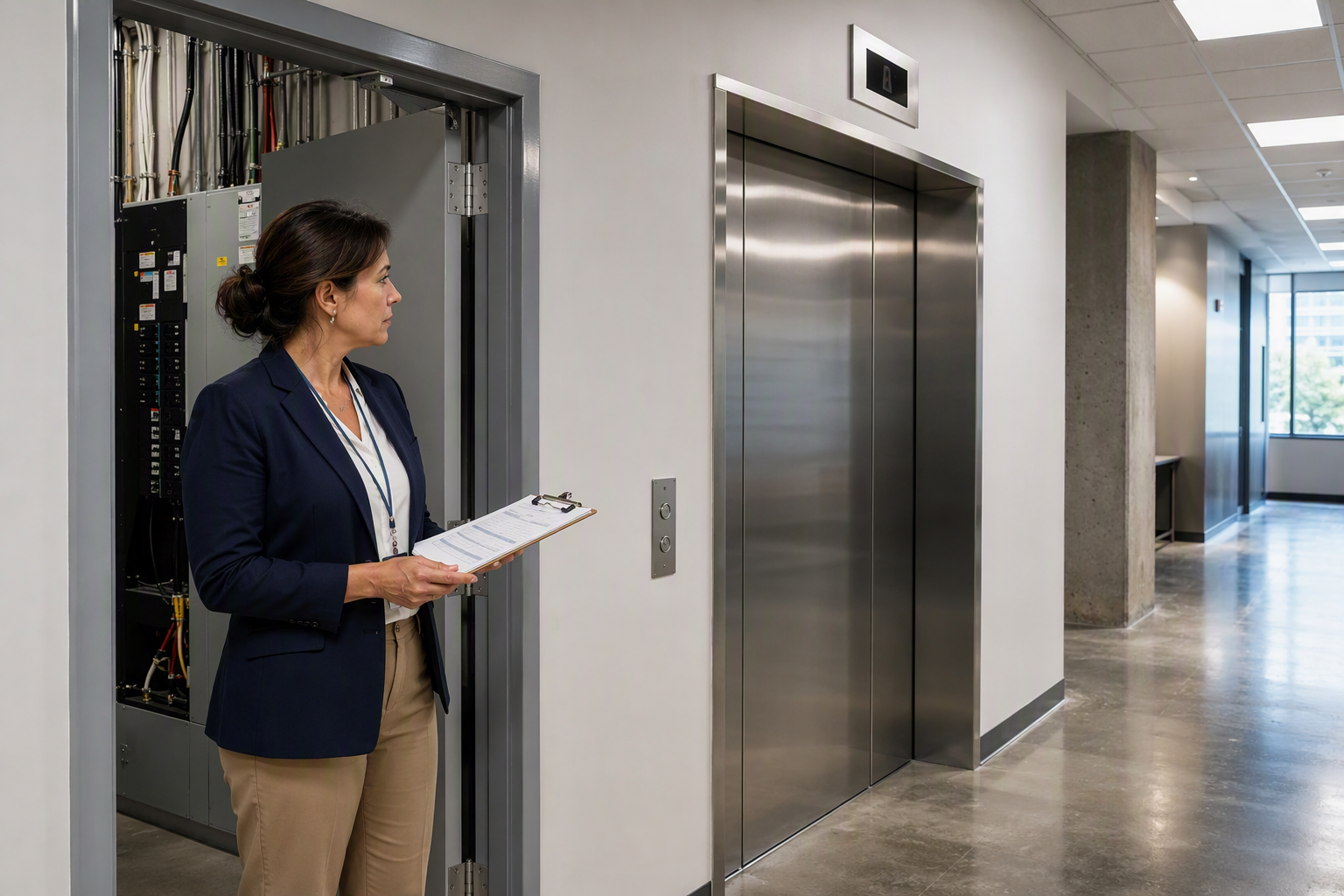
- Locate the machine room. Go to the elevator machine room and check whether the main power disconnect switch or circuit breaker has tripped.
- Reset the breaker once (if tripped). If the breaker has tripped and this is a first-time occurrence, reset it. If it trips again, leave it off and call a certified technician — repeated tripping indicates an electrical fault.
- Check the emergency stop switch. Inside the car (if accessible) or at the controller, verify the emergency stop has not been accidentally activated.
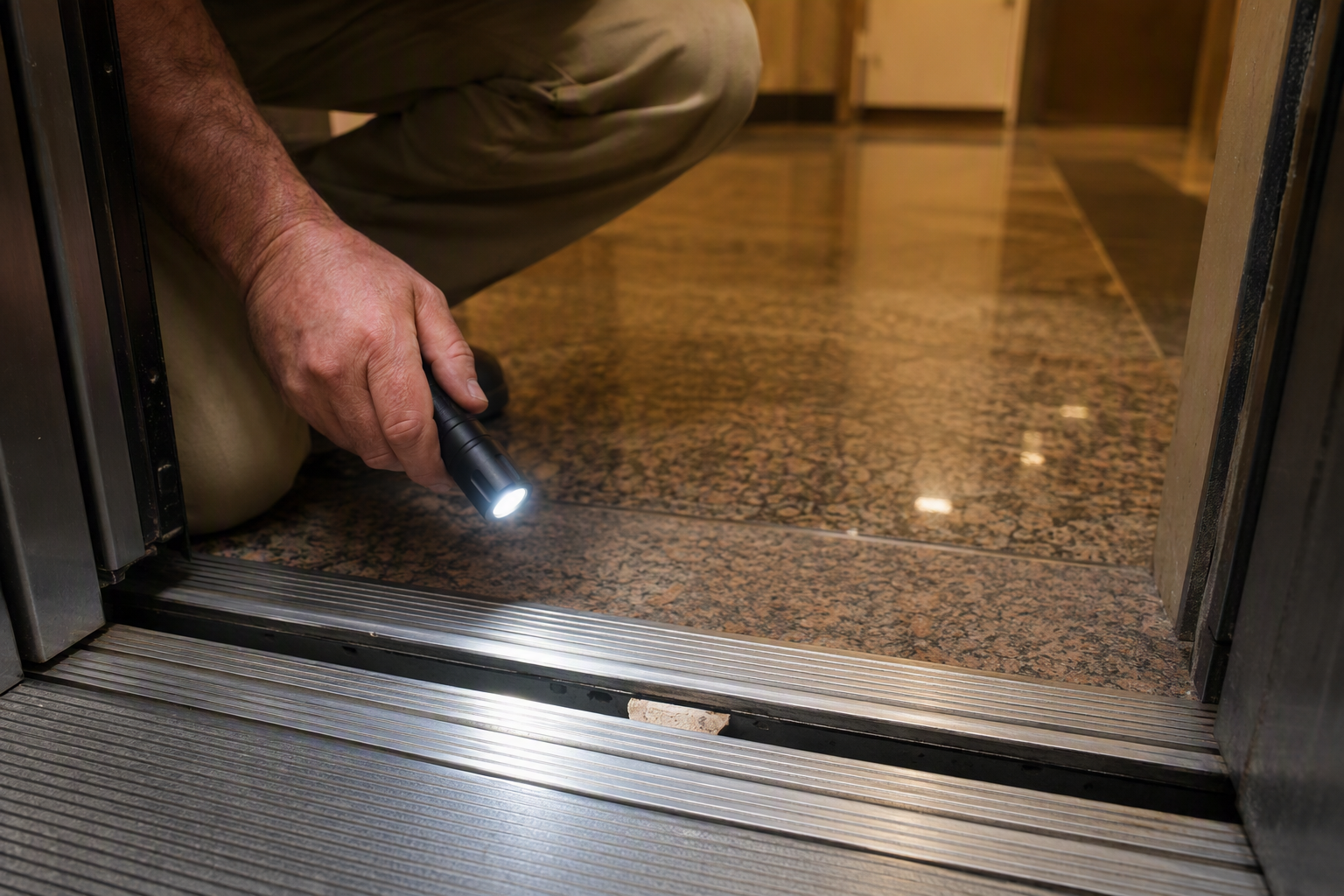
- Inspect door tracks for visible obstructions. Look for debris, a stuck object, or a door that is visibly off-track from a safe distance. Do not attempt to force doors open.
- Record any error codes displayed. Photograph or write down any fault codes shown on the elevator controller panel. This information is essential for the technician.
- Document the sequence of events. Note the last known floor, the time of failure, any unusual sounds, and whether the issue occurred after a power outage or building event.
- Contact your certified elevator service provider. Share all documented details when you call. Quality Elevator Company recommends having this log ready before the call to speed up dispatch and diagnosis.
What Are the Most Common Elevator Problems Building Managers Encounter?
| Problem | Likely Cause | Manager Can Resolve? | Technician Needed? | Compliance Risk if Ignored? |
|---|---|---|---|---|
| Elevator won’t respond to calls | Power interruption, tripped breaker, emergency stop | Possibly | If basic reset fails | Moderate |
| Doors open and close repeatedly | Door sensor obstruction or misalignment | Visual check only | Yes — sensor or track repair | High — entrapment risk |
| Elevator stops between floors | Safety circuit activation, leveling fault | No | Yes — immediately | High — ADA and ASME concern |
| Slow or jerky movement | Drive system wear, lubrication issue | No | Yes | Moderate to high |
| Loud or unusual noises | Sheave wear, guide rail issues, loose components | Document only | Yes | Moderate |
| Buttons unresponsive | Control board fault, wiring issue | No | Yes | Low to moderate |
| Overload light stays on | Passengers or freight over capacity | Yes — clear the car | Only if persists when empty | Moderate |
| Cab lights out | Bulb failure or wiring fault | Bulb replacement only (if designed for it) | Yes for wiring | Low — ADA lighting concern |
How Does Elevator Troubleshooting Relate to Compliance and Code Requirements?
Elevator safety in the United States is governed primarily by the ASME A17.1 Safety Code for Elevators and Escalators, which establishes inspection intervals, maintenance requirements, and safety device standards. Most jurisdictions adopt this code or a derivative. Workplace safety aspects fall under the purview of OSHA, particularly for elevators in industrial or multi-employer environments.
Accessibility requirements — including door timing, leveling tolerances, and cab dimensions — are addressed under the Americans with Disabilities Act (ADA). Building managers should be aware that allowing an out-of-compliance elevator to continue operating, even temporarily, can expose building owners to regulatory and legal liability.
Key compliance reminders for building managers:
- Never bypass or disable safety devices, even temporarily — this violates ASME A17.1 requirements.
- Keep a current copy of the elevator inspection certificate posted inside the cab or as required by local jurisdiction.
- Maintain a maintenance log that documents all issues, resets, and service calls — this record is reviewed during state or local inspections.
- Ensure door closing force and timing meet ADA standards; deviations are a common citation.
When Should You Stop Troubleshooting and Call a Technician Immediately?
Certain conditions require immediate professional intervention and must not be handled by building staff under any circumstances:
- Passengers are trapped inside the car — this is an emergency requiring certified personnel and, in many cases, fire department or emergency services response.
- The car is not level with the floor — a gap between the cab floor and landing floor is a tripping and fall hazard and indicates a serious leveling or braking fault.
- Visible smoke, burning smell, or sparks — evacuate the area and call emergency services before contacting elevator service.
- Hydraulic fluid is visible on the floor or pit — this is both an environmental hazard and a mechanical emergency under applicable codes.
- The elevator has been out of service following a fire or seismic event — do not restore power or resume operation until a certified technician has completed a post-event inspection.
- The circuit breaker trips more than once — repeated tripping signals an underlying electrical fault that must be diagnosed professionally.
What Information Should You Have Ready When Calling an Elevator Service Company?
A well-prepared service call reduces technician travel time and helps ensure the right parts and expertise are dispatched on the first visit. Have the following ready:
- Elevator make, model, and unit serial number (typically found on a data plate in the machine room or cab)
- Type of elevator: hydraulic, traction (geared or gearless), or machine-room-less (MRL)
- Date and time the problem began
- Specific symptoms: error codes, floor where the car stopped, sounds heard
- Whether the problem is intermittent or continuous
- Recent service history, including date of last inspection and any recent repairs
- Whether any building events preceded the issue (power outage, construction work, water intrusion)
- Number of elevators in the building and whether other units are affected
How Does Preventive Maintenance Reduce the Need for Emergency Troubleshooting?
| Maintenance Approach | Frequency | Pros | Cons | Best For |
|---|---|---|---|---|
| Reactive (call only when broken) | As needed | No upfront cost | Higher emergency rates, longer downtime, compliance risk | Very low-traffic buildings |
| Scheduled Preventive Maintenance | Monthly or quarterly | Reduces breakdowns, supports compliance, extends equipment life | Ongoing contract cost | Most commercial and residential buildings |
| Full-Service Maintenance Contract | Includes callbacks and parts | Predictable budgeting, priority response, comprehensive coverage | Higher monthly cost | High-traffic, high-rise, or critical-use buildings |
| Remote Monitoring + Maintenance | Continuous + scheduled | Proactive fault detection, reduced emergency calls | Requires compatible elevator controller | Modern or recently modernized elevators |
A structured maintenance program aligned with ASME A17.1 requirements reduces the frequency of unexpected failures. Building managers working with an independent, certified provider like Quality Elevator Company gain a knowledgeable partner who knows the specific service history of each unit — leading to faster diagnosis and fewer repeat issues.
What Is the Difference Between an Independent Elevator Company and a Manufacturer-Tied Provider?
| Factor | Independent Provider (e.g., Quality Elevator Company) | Manufacturer-Tied / OEM Provider |
|---|---|---|
| Equipment coverage | Multi-brand capability | Typically limited to own brand |
| Parts sourcing | Access to multiple suppliers; often competitive pricing | Proprietary parts; potential price premium |
| Contract flexibility | Customizable service plans | Standardized packages |
| Local accountability | Direct relationship with local team | May route through regional call centers |
| Compliance expertise | Broad code knowledge across jurisdictions | Strong on own product line |
| Modernization options | Vendor-neutral recommendations | May favor own products |
For building managers responsible for mixed-brand elevator portfolios or older equipment, an independent certified provider offers broader expertise and fewer conflicts of interest. Quality Elevator Company operates as a certified independent service company, providing objective assessments regardless of elevator brand or manufacturer.
What Elevator Problems Are Covered Under ADA Compliance?
The Americans with Disabilities Act (ADA) requires that elevators serving multiple floors in public accommodations and commercial facilities be maintained in working order. A frequently malfunctioning elevator can constitute a failure to provide accessible service to individuals with disabilities. Specific ADA-relevant issues building managers should monitor include:
- Door reopening devices that fail to respond to obstruction
- Floor-leveling issues that create uneven surfaces at the landing
- Cab lighting that falls below required illumination levels
- Audible and visual signals (floor indicators, door open/close signals) that are non-functional
- Control button height and tactile marking requirements
When any of these conditions exist, the building manager should prioritize service and document the response timeline in maintenance records.
How Can Building Managers Use Elevator Logs to Prevent Problems?
Maintaining a detailed elevator log is one of the most effective tools a building manager has for catching developing problems before they cause downtime. A well-kept log should include:
- Date and nature of each reported complaint or malfunction
- Actions taken by building staff (e.g., breaker reset)
- Date, scope, and technician notes from every service visit
- All inspection certificates and their expiration dates
- Dates of any parts replaced or adjustments made
This log serves multiple functions: it informs technicians of recurring patterns, supports compliance inspections, and provides documentation if an injury or incident occurs. Quality Elevator Company recommends reviewing elevator logs at least quarterly to identify trends that warrant a preventive service call.
What Are the Signs That an Elevator Needs Modernization Rather Than Repair?
Some issues are symptomatic of aging infrastructure where repair costs approach or exceed the value of continued service. Signs that a modernization evaluation may be warranted include:
- Recurring breakdowns despite regular maintenance
- Difficulty sourcing replacement parts for obsolete controllers or components
- Increasing service call frequency over a short period
- Non-compliance with current editions of ASME A17.1 or local code requirements
- Energy inefficiency compared to current drive technology standards
- Persistent leveling issues that are not resolved by standard adjustment
A certified elevator company can conduct a full assessment to compare the cost trajectory of continued maintenance against a modernization investment — providing building owners with objective, data-supported guidance.
Summary: Troubleshooting Decision Framework
| Situation | Recommended Action | Urgency Level |
|---|---|---|
| Passenger trapped in car | Call emergency services + elevator company immediately | 🔴 Emergency |
| Smoke, burning smell, or sparks | Evacuate, call emergency services first | 🔴 Emergency |
| Car not level with floor | Take out of service, call technician | 🔴 Urgent |
| Hydraulic fluid leak | Take out of service, call technician | 🔴 Urgent |
| Breaker trips repeatedly | Leave off, call technician | 🟠 Same Day |
| Unusual noises or vibration | Document, schedule inspection | 🟠 Soon |
| Single tripped breaker (first time) | Reset once; monitor | 🟡 Monitor |
| Emergency stop accidentally activated | Reset, verify car operation | 🟡 Self-resolve |
| Door obstruction (visual only) | Clear obstruction, test operation | 🟡 Self-resolve |
| Overload light (car too full) | Reduce occupancy or load | 🟢 User correction |
Get a Professional Elevator Assessment from Quality Elevator Company
Building managers who follow this guide will handle the most common, safe-to-address elevator issues confidently — and know precisely when to call in a certified professional. Quality Elevator Company is a certified independent elevator service provider serving building managers who need reliable, code-compliant elevator maintenance, repair, and modernization support.
Whether an elevator is showing early warning signs, overdue for inspection, or experiencing recurring faults, a professional assessment from Quality Elevator Company provides a clear picture of the equipment’s condition, compliance status, and service needs — without manufacturer bias.
Contact Quality Elevator Company for a free elevator assessment: 301-307-5363
Need elevator service you can rely on? Quality Elevator Company is ready to help.