Elevator Service in Baltimore, MD | Quality Elevator Company
Quick Answer: If your elevator fails inspection in Baltimore, MD, the unit must be taken out of service immediately, and you are required to correct all cited violations and pass a follow-up inspection before the elevator can legally return to operation — Quality Elevator Company helps Baltimore building owners navigate every step of that process.
A failed elevator inspection is one of the most stressful events a Baltimore building owner or property manager can face. Riders expect safe, reliable vertical transportation, regulators expect full code compliance, and downtime costs money. Understanding exactly what Maryland law requires — and knowing what to do next — makes the difference between a fast return to service and a prolonged shutdown. Quality Elevator Company serves the Baltimore metro area and surrounding Maryland markets, providing certified inspection support, violation correction, and follow-up testing so buildings can get back in operation correctly and on time.
What Happens Immediately After an Elevator Fails Inspection in Maryland?
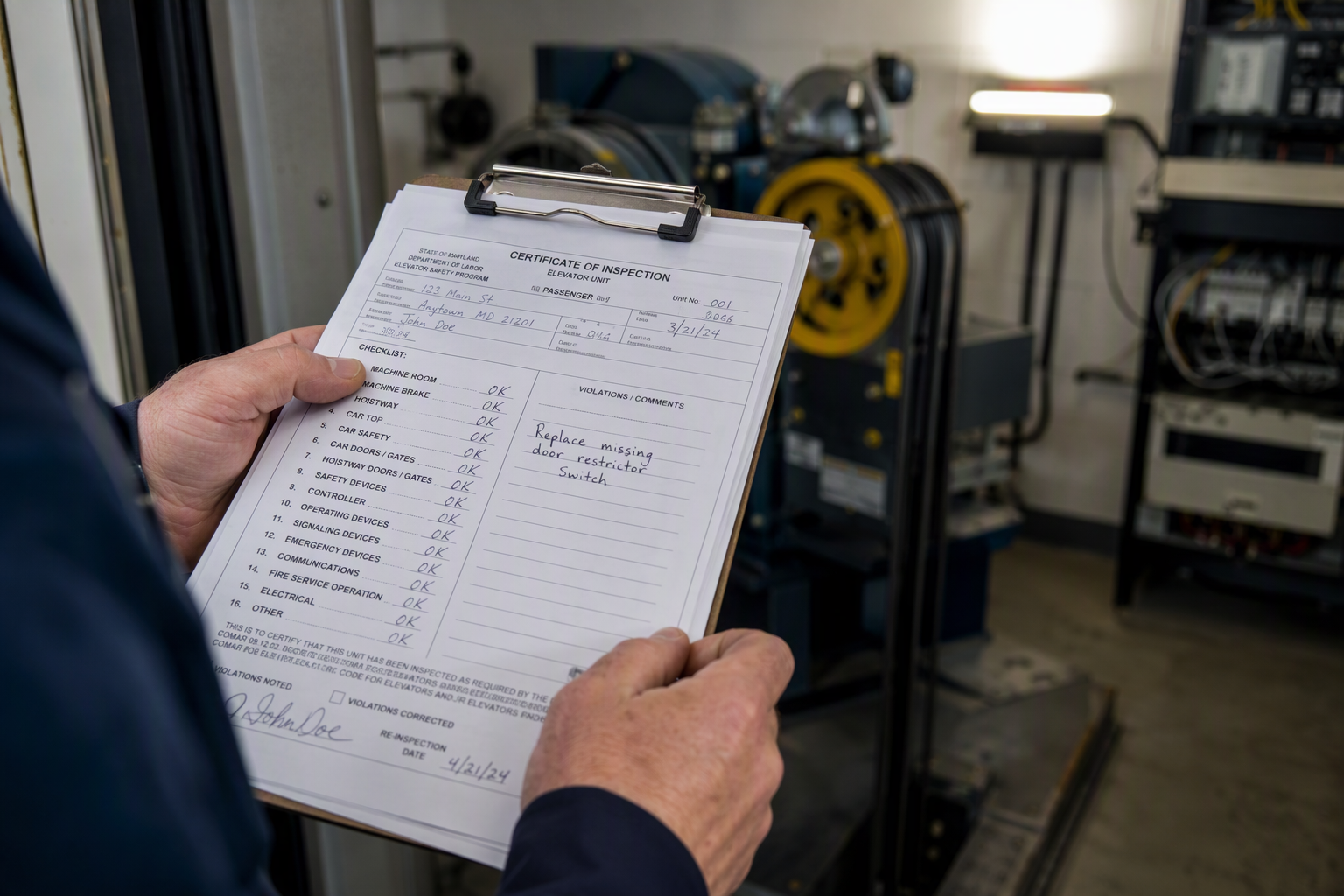
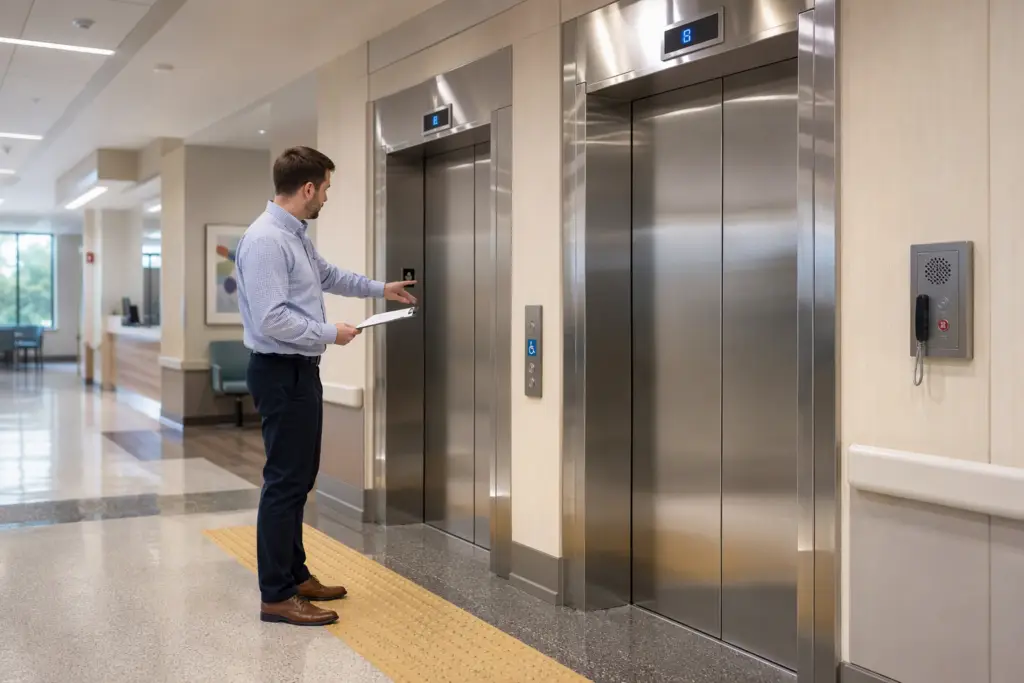
When a Maryland-licensed elevator inspector determines that a unit does not meet code requirements, several things happen in quick succession:
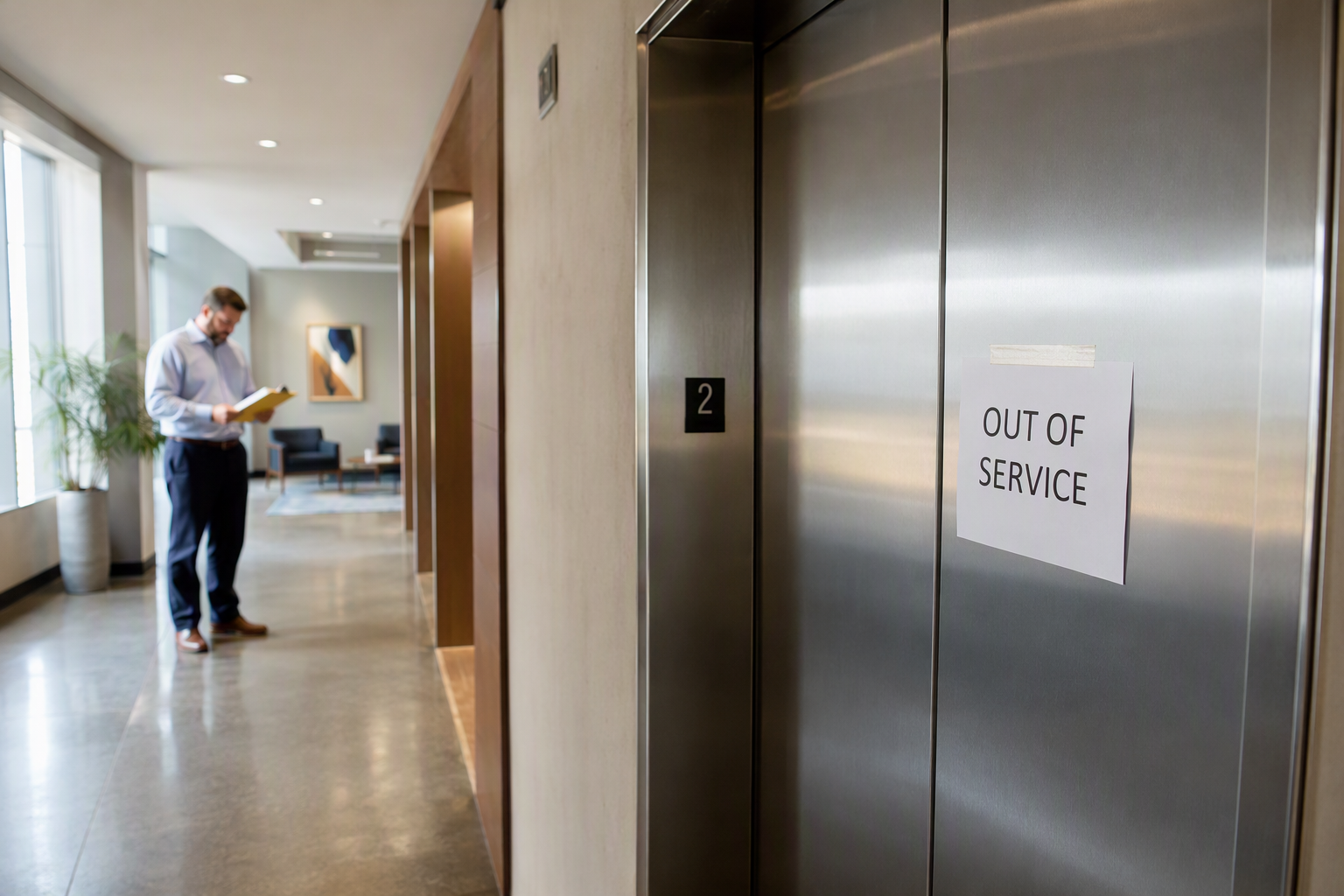
- The elevator is placed out of service. The inspector will either post a notice of violation or require the building owner to cease elevator operation. Under Maryland’s elevator safety program, administered through the Division of Labor and Industry, no failed elevator may legally transport passengers until all cited deficiencies are corrected and a satisfactory follow-up inspection is completed.
- A written inspection report is issued. The report lists every deficiency found, the specific code section violated, and the classification of each item (such as an immediate hazard versus a non-critical deficiency).
- The building owner is notified of correction deadlines. Maryland sets deadlines based on severity. Immediately hazardous conditions require the elevator to be taken out of service on the spot. Other deficiencies carry a mandated correction period defined in the inspection order.
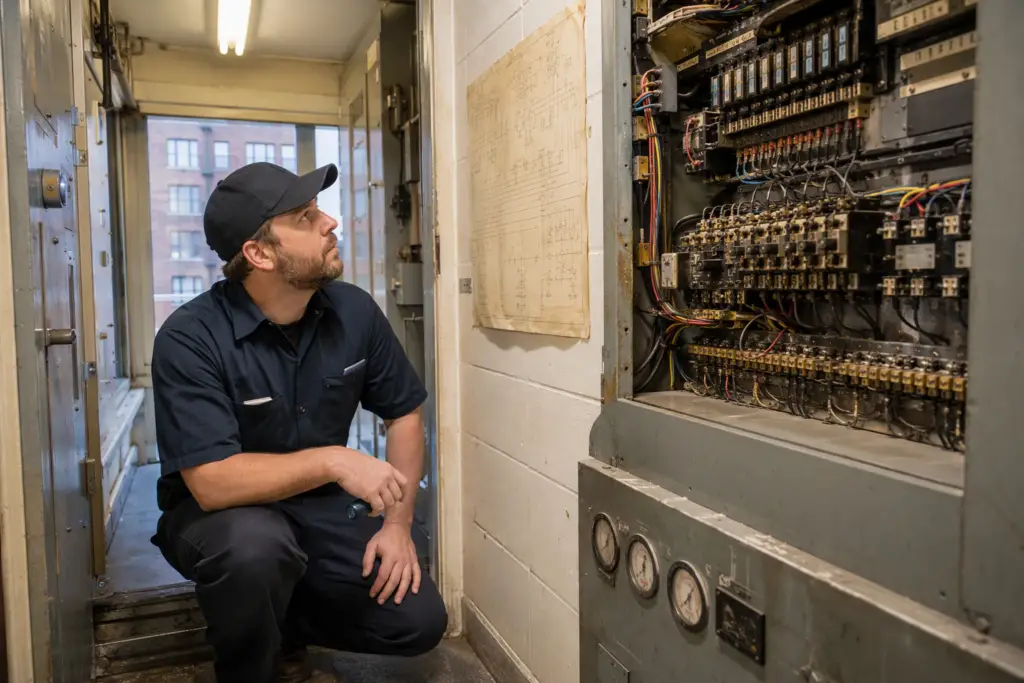
- The elevator company of record must be contacted. The building owner or property manager should notify their licensed elevator contractor immediately so repair scheduling can begin.
- All corrections must be documented. Before a follow-up inspection is requested, the contractor completing the repairs must provide written documentation of every corrective action taken.
- A follow-up inspection is requested and conducted. The building owner or contractor submits a request for a reinspection through Maryland’s Division of Labor and Industry. Only after the reinspection results in a passing certificate may the elevator return to service.
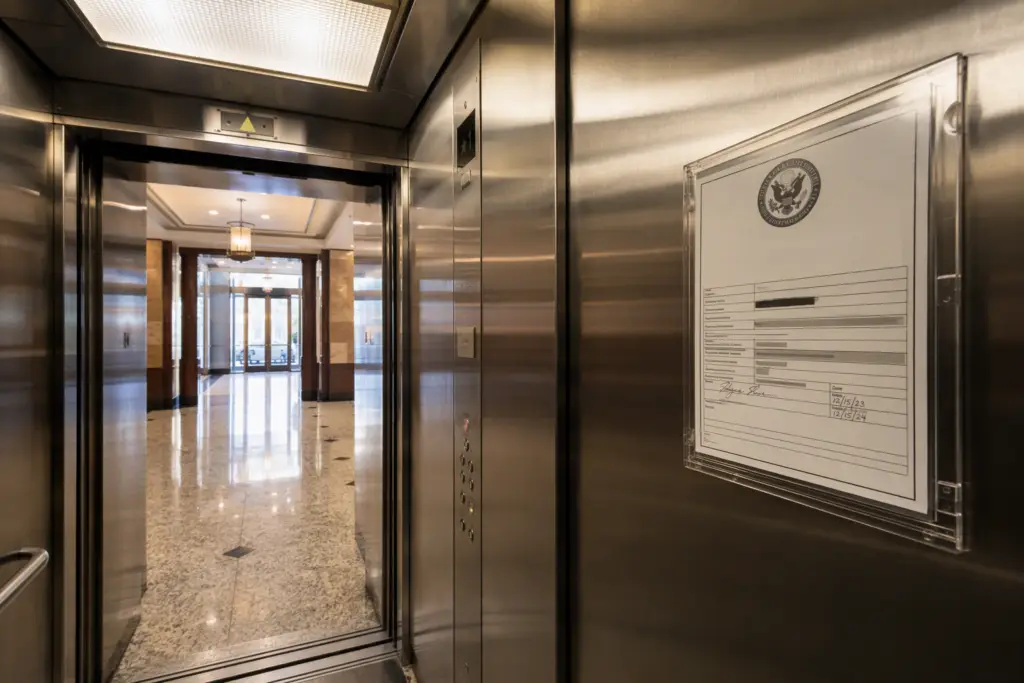
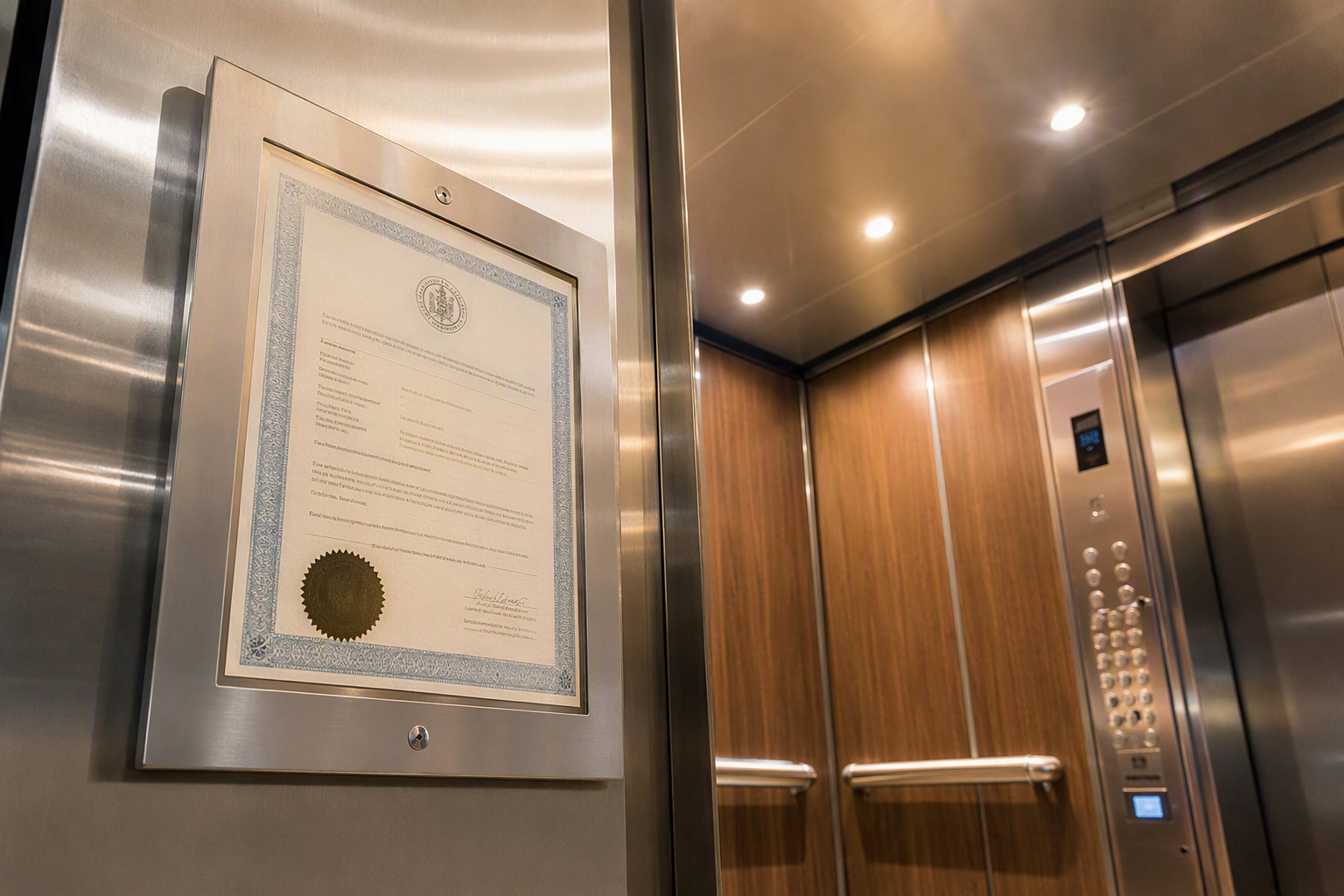
- A new certificate of operation is issued. Once the elevator passes, the certificate must be posted in the elevator car as required by Maryland regulation.
Which Maryland Codes and Standards Govern Elevator Inspections?
Maryland elevator inspections are conducted against the ASME A17.1 Safety Code for Elevators and Escalators, the nationally recognized standard that Maryland has adopted by reference into its state elevator safety law. The 2016 edition of ASME A17.1 has served as Maryland’s adopted baseline in recent years; building owners should confirm with the Maryland Division of Labor and Industry which edition applies to their specific installation, as newer construction may be subject to updated provisions relevant to 2026 compliance reviews.
For elevators in buildings covered by federal accessibility law, compliance with the Americans with Disabilities Act (ADA) is a parallel obligation. A failed elevator that serves as the accessible route for a public accommodation or commercial facility creates both a safety code violation and a potential ADA accessibility gap — both must be addressed.
Workplace elevators in commercial or industrial settings may also trigger OSHA considerations if the equipment is used by employees as part of their duties.
What Are the Most Common Reasons Elevators Fail Inspection in Baltimore?
Baltimore’s older commercial building stock — including historic office towers downtown, mixed-use residential buildings in neighborhoods like Federal Hill and Hampden, and institutional facilities throughout the region — means elevator systems often carry significant age. Common violation categories include:
- Door safety device failures: Malfunctioning door reopening devices, worn sill guards, or failed interlocks are among the most frequently cited items under ASME A17.1.
- Brake and drive system deficiencies: Worn brake linings, governor rope issues, or drive motor abnormalities that affect safe stopping distances.
- Emergency lighting and communication failures: Maryland requires functional emergency lighting and a two-way communication system in every elevator car. Inoperative phones or lighting are automatic failures.
- Overdue periodic tests: ASME A17.1 mandates specific periodic tests — including the Category 1 annual test and the Category 5 five-year full-load safety test — at defined intervals. Missing a required test period results in a violation.
- Documentation gaps: Missing maintenance records, unsigned test reports, or absent certificates of operation can trigger a failed status even when the mechanical condition is adequate.
- Oil or hydraulic fluid leaks: Common in older hydraulic elevators prevalent in Baltimore’s mid-rise buildings.
- Non-compliant signage or capacity postings: Missing or incorrect load ratings posted in the car.
How Long Does It Take to Return a Failed Elevator to Service?
The timeline depends on the nature and number of deficiencies cited. Minor documentation issues or failed lighting components can often be corrected within days. Mechanical repairs requiring replacement parts — particularly for older elevator models with limited parts availability — may take longer. Hydraulic jack replacements or major drive system overhauls represent the longest-lead repairs.
Once repairs are complete, the reinspection scheduling process through the Maryland Division of Labor and Industry adds additional time. Building owners should factor in both the repair timeline and the government scheduling window when communicating expectations to tenants and occupants. Working with a contractor experienced in the Baltimore regulatory environment helps avoid delays caused by incomplete documentation submissions or missed procedural steps.
What Are the Consequences of Operating an Elevator After a Failed Inspection?
Operating an elevator that has been ordered out of service in Maryland is a serious legal violation. Consequences can include monetary civil penalties, escalating fines for each day of continued non-compliance, and in cases involving injury, significant liability exposure for the building owner. Maryland’s Division of Labor and Industry has authority to pursue enforcement action independent of any civil litigation that might arise from an incident involving a non-compliant elevator.
From an insurance standpoint, carriers may deny claims arising from incidents involving an elevator that was legally out of service at the time of the event, compounding the financial risk substantially.
What Should Baltimore Building Owners Do Between the Failed Inspection and Reinspection?
- Secure the elevator immediately. Lock or barricade the cab and post clear, visible out-of-service signage on every landing that the elevator serves.
- Notify all affected parties. Tenants, property management teams, and any ADA-dependent users need prompt, clear communication about alternative access routes.
- Review the inspection report in detail. Understand every cited item, its classification, and the stated correction deadline before discussing scope with a contractor.
- Contact a licensed Maryland elevator contractor. Obtain a written scope of work that addresses every cited deficiency — not just the most visible ones.
- Confirm parts availability. For older systems, parts lead times can affect the overall timeline significantly; a qualified contractor will flag this early.
- Maintain a written record of all corrective actions. Photographs, parts receipts, technician work orders, and test results should all be preserved for the reinspection file.
- Submit the reinspection request promptly. Once all corrections are complete and documented, submit through the appropriate Maryland channel without delay to begin the scheduling queue.
How Does Quality Elevator Company Support Baltimore Buildings Through the Correction Process?
Quality Elevator Company is a certified elevator service company serving Baltimore, MD and surrounding communities throughout the Maryland market. The team works with building owners, property managers, and facilities directors to identify every cited violation, develop a compliant correction plan, source required components, perform all necessary repairs, and prepare the complete documentation package required for a successful reinspection submission.
Quality Elevator Company’s service area includes Baltimore City and the broader metro region — including commercial corridors, residential high-rises, healthcare facilities, government buildings, and educational institutions across central Maryland. When an elevator fails inspection, the team is available to provide a rapid assessment and a prioritized correction plan so that downtime is managed as efficiently as the regulatory process allows.
Does a Failed Inspection Automatically Mean the Elevator Needs Full Replacement?
Not necessarily. Many failed inspections result from targeted deficiencies — a single failed safety device, an overdue periodic test, or a documentation gap — that can be corrected without major capital expenditure. A qualified elevator contractor will evaluate the full scope of violations and the overall condition of the system to give the building owner an honest assessment of whether targeted repairs, a modernization, or eventual replacement is the most appropriate path.
Older Baltimore installations that have accumulated multiple deferred maintenance items across several inspection cycles may find that a modernization addresses all outstanding violations more cost-effectively than piecemeal repair — but that determination should be made on a case-by-case basis with a licensed contractor, not assumed from a single failed inspection notice.
Schedule a Free Consultation
If your elevator has failed inspection in Baltimore, MD — or if you want to ensure your system is positioned to pass its next scheduled inspection — Quality Elevator Company is ready to help. Contact the team today to schedule a free consultation and get a clear, honest assessment of your next steps.
Call Quality Elevator Company: 301-779-9116
Serving Baltimore City and the greater Maryland metro area — certified elevator service you can count on when compliance, safety, and uptime matter most.
Need elevator service you can rely on? Quality Elevator Company is ready to help.