Elevator Inspection Requirements: DC vs Maryland vs Virginia Compared
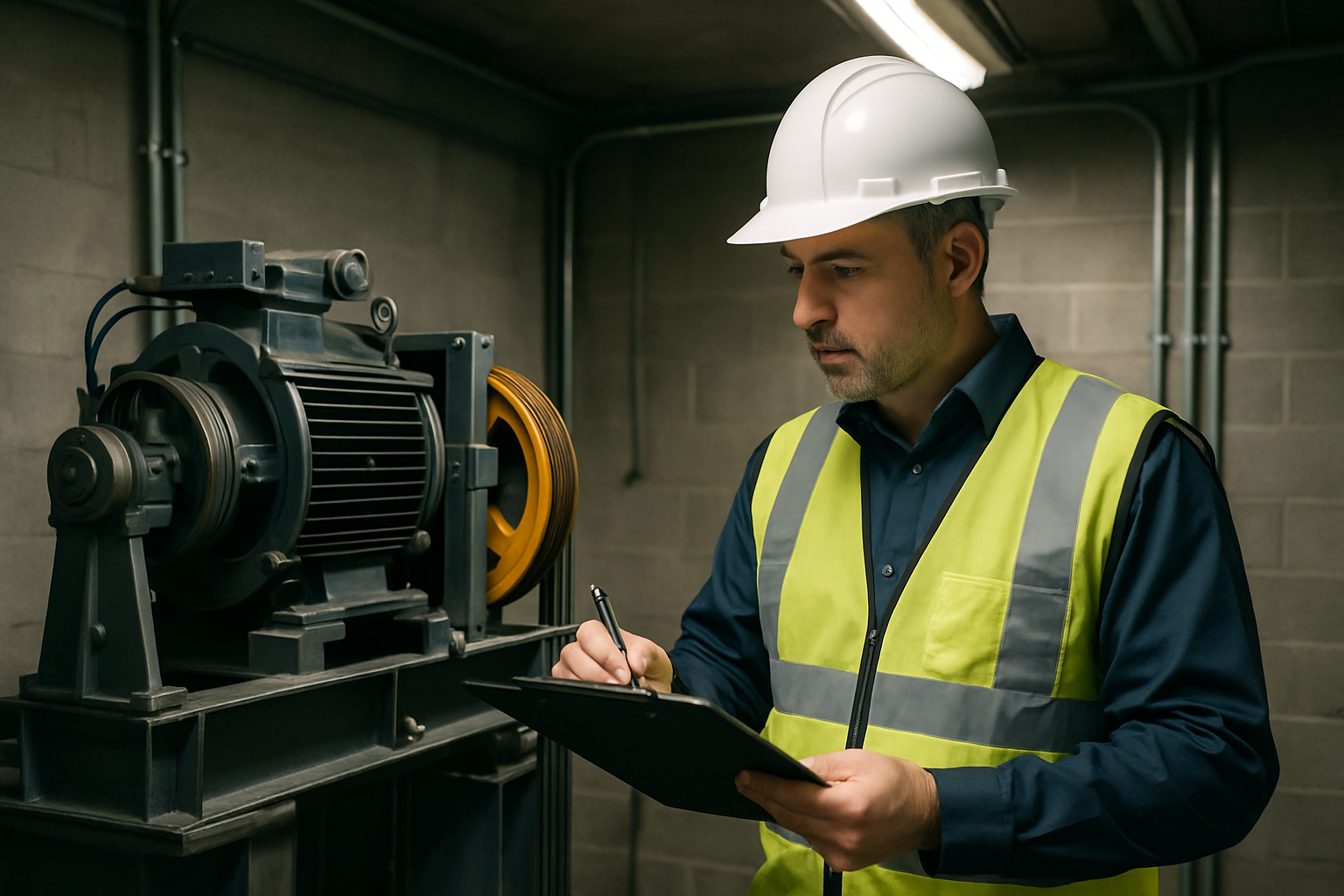
After 15+ years inspecting and servicing elevators across the Mid-Atlantic region, I’ve watched building owners get caught off guard by the differences between DC, Maryland, and Virginia inspection requirements. What passes in one jurisdiction can trigger a violation notice in another. This comprehensive guide breaks down exactly what each jurisdiction requires so you stay compliant, avoid fines, and most importantly, keep your passengers safe.
What Are the Core Elevator Inspection Requirements in Washington DC, Maryland, and Virginia?
All three jurisdictions require annual elevator inspections using ASME A17.1 Safety Code for Elevators and Escalators as the baseline standard, but each has its own enforcement agency, permit structure, and supplemental rules. Violations in any jurisdiction can result in mandatory shutdown orders and civil penalties, making jurisdiction-specific compliance a priority for any building owner or property manager in the Mid-Atlantic region.
Here is a side-by-side breakdown of the most critical inspection parameters across all three jurisdictions as of 2026:
| Requirement | Washington DC | Maryland | Virginia |
|---|---|---|---|
| Governing Body | DC DCRA (Dept. of Consumer & Regulatory Affairs) | MD Dept. of Labor, Licensing & Regulation (DLLR) | VA Dept. of Labor & Industry (DOLI) |
| Base Code Adopted | ASME A17.1 / 2019 Edition | ASME A17.1 / 2019 Edition | ASME A17.1 / 2019 Edition |
| Inspection Frequency | Annual (every 12 months) | Annual (every 12 months) | Annual (every 12 months) |
| Witness Inspection Required? | Yes — by DCRA-licensed inspector | Yes — by DLLR-licensed inspector | Yes — by DOLI-licensed inspector |
| Third-Party Inspectors Allowed? | Yes, if DCRA-approved | Yes, if DLLR-certified | Yes, if DOLI-certified |
| Permit Required for New Install? | Yes | Yes | Yes |
| Typical Annual Permit/Registration Fee | $150–$400 per unit | $75–$250 per unit | $50–$200 per unit |
| Hydraulic Elevator Additional Requirements | 5-year load test required | 5-year load test required | 5-year load test required |
| Escalator Inspection Cycle | Annual | Annual | Annual |
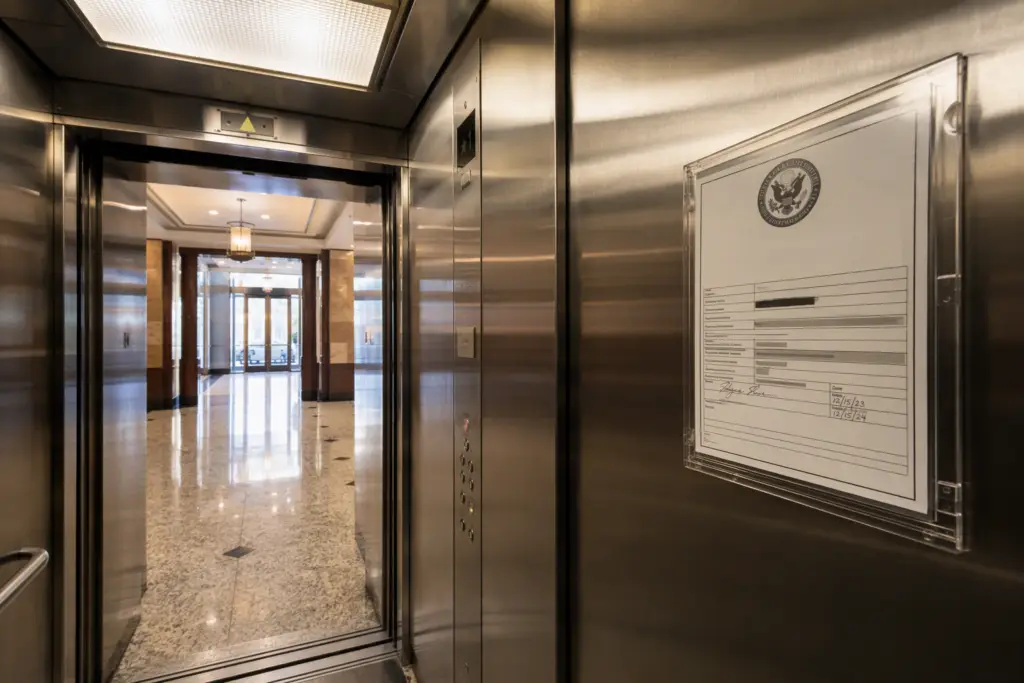
| Operating Certificate Display Required? | Yes — in elevator cab | Yes — in elevator cab | Yes — in elevator cab |
| Penalty for Non-Compliance | Up to $2,000/day | Up to $1,000/violation | Up to $1,000/violation |
How Often Must Elevators Be Inspected in Each Jurisdiction?
All three jurisdictions mandate annual inspections for standard passenger and freight elevators. However, inspection intervals vary by equipment type:
- Traction elevators (DC, MD, VA): Annual inspection plus a Category 1 test annually and a Category 5 full-load safety test every 5 years, per ASME A17.1 Section 8.6.
- Hydraulic elevators (DC, MD, VA): Annual inspection plus a 5-year pressure vessel and safety test. Underground hydraulic cylinders require additional environmental compliance review under each jurisdiction’s environmental protection rules.
- Escalators and moving walks (DC, MD, VA): Annual inspection required in all three jurisdictions, with brake and handrail tests performed at each visit.
- Limited-use/limited-application (LULA) elevators: Annual inspection required in all three jurisdictions; classified under ASME A17.1 Part X.
- Dumbwaiters and material lifts: Annual inspection required under ASME A17.1 Part VII in DC, MD, and VA, though enforcement priority differs by jurisdiction.
Inspection intervals reset from the date of the most recent passed inspection, not from the calendar year start. Building owners should track their individual unit inspection dates rather than assuming a January renewal cycle applies uniformly.
What Is the Elevator Inspection Process in DC, Maryland, and Virginia?
While the core inspection checklist is derived from ASME A17.1 in all three jurisdictions, the administrative process — from scheduling to receiving your operating certificate — differs meaningfully between DC, Maryland, and Virginia.
Washington DC Elevator Inspection Process (DCRA)
- Submit an elevator registration application and fee to DCRA prior to the expiration of the current operating certificate.
- Schedule a witnessed inspection with a DCRA-licensed inspector or an approved third-party inspector.
- The elevator mechanic or service contractor performs the required tests; the inspector witnesses and documents results.
- DCRA reviews the inspection report and issues a new operating certificate upon passing. Deficiencies must be corrected and re-inspected before a certificate is issued.
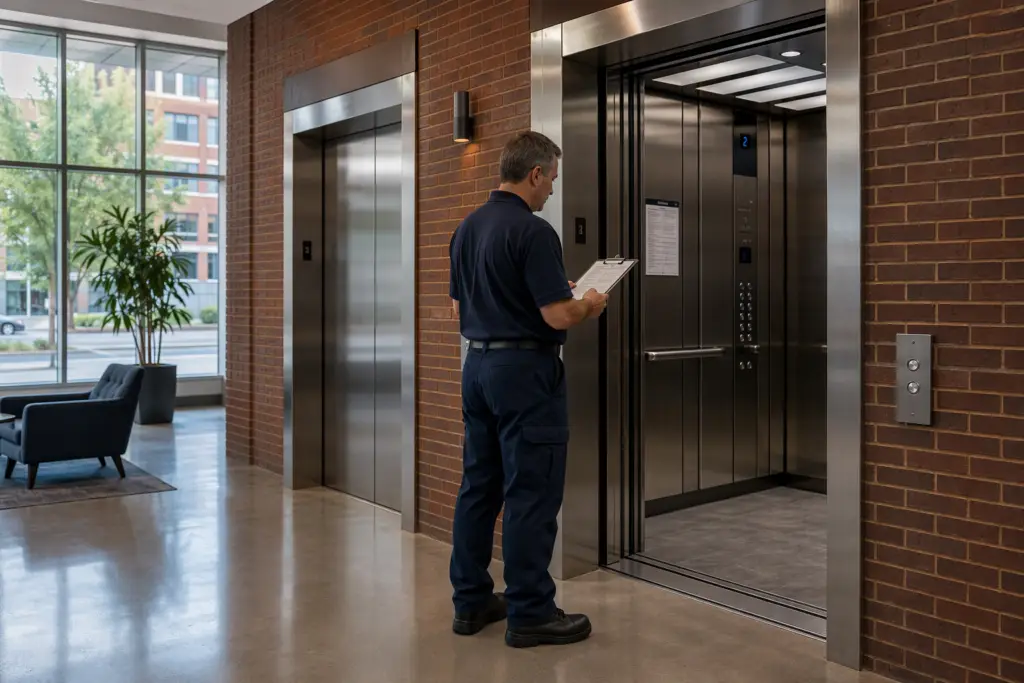
- The operating certificate must be posted inside the elevator cab at all times.
Maryland Elevator Inspection Process (DLLR)
- Register the elevator unit with the Maryland Department of Labor and pay the applicable annual registration fee.
- DLLR assigns a state inspector or the owner may engage a DLLR-certified third-party inspection company.
- The licensed elevator mechanic performs the required operational tests while the inspector witnesses the procedure.
- Passed units receive a Maryland elevator operating permit; failed units receive a written deficiency notice with a correction deadline.
- Operating permits must be displayed in the elevator cab.
Virginia Elevator Inspection Process (DOLI)
- File for an annual permit with the Virginia Department of Labor and Industry and submit the appropriate fee based on equipment type and jurisdiction locality.
- Schedule a witnessed inspection with a DOLI-certified inspector. Virginia allows DOLI-certified third-party inspectors, which many building owners in Northern Virginia use to reduce scheduling delays.
- The elevator contractor performs the required tests; the inspector documents results and submits the inspection report to DOLI.
- Upon approval, DOLI issues an operating permit valid for 12 months.
- The permit must be posted inside the elevator cab.
How Much Does Elevator Inspection and Compliance Cost in DC, Maryland, and Virginia?
Elevator inspection costs in the DC-Maryland-Virginia region consist of three distinct expense categories: government permit/registration fees, third-party inspection fees (if applicable), and any repair costs required to achieve compliance. Building owners should budget for all three separately.
Government Permit and Registration Fees
- Washington DC (DCRA): Approximately $150–$400 per unit annually, depending on elevator type and capacity. Fees are set by DCRA and are subject to revision; confirm current rates directly with DCRA.
- Maryland (DLLR): Approximately $75–$250 per unit annually. Maryland’s fee schedule is tiered by equipment type and is published by the Maryland Department of Labor.
- Virginia (DOLI): Approximately $50–$200 per unit annually. Virginia localities may impose additional local fees; Northern Virginia jurisdictions such as Fairfax County and Arlington County should be verified separately with DOLI.
Third-Party Inspection Fees
When building owners engage a certified third-party inspection firm rather than waiting for a state inspector, additional fees apply. In the Mid-Atlantic market, third-party elevator inspection fees typically range from $150 to $500 per unit per inspection, depending on equipment type, building location, and inspector availability. These fees are separate from government permit fees and are paid directly to the inspection company. At Quality Elevator Company, we coordinate third-party inspection scheduling as part of our full-service maintenance agreements.
Repair and Remediation Costs Following Inspection
Failed inspections require remediation before a certificate or permit is issued. Common deficiency repairs that affect compliance across all three jurisdictions include:
- Door interlock replacement or adjustment
- Governor and safeties recertification
- Hydraulic fluid containment upgrades
- Emergency lighting and communication system repairs
- Firefighter service phase I and phase II functionality restoration
Repair costs vary significantly based on equipment age, type, and scope. Buildings with elevators installed prior to 1993 frequently face higher remediation costs due to the gap between legacy equipment and current ASME A17.1 (2019 Edition) requirements.
What Happens If Your Elevator Fails Inspection in DC, Maryland, or Virginia?
A failed elevator inspection does not automatically mean an immediate shutdown in all cases, but the consequences escalate quickly if deficiencies are not corrected within the timeframes set by each jurisdiction.
Washington DC Failed Inspection Consequences
DCRA has authority to issue a stop-use order requiring the elevator to be taken out of service immediately if a deficiency is deemed an imminent safety hazard. For non-imminent deficiencies, DCRA issues a Notice of Violation with a correction deadline. Failure to correct violations and pass a re-inspection can result in civil fines of up to $2,000 per day per unit. Continued operation of an elevator under a stop-use order constitutes a criminal violation under DCMR Title 12.
Maryland Failed Inspection Consequences
The Maryland Department of Labor may issue an out-of-service order for safety-critical deficiencies. Non-critical deficiencies receive a written correction notice. Maryland’s penalty structure allows fines of up to $1,000 per violation. Repeat violations or failure to respond to correction notices can result in escalated enforcement action and referral to the Maryland Office of the Attorney General.
Virginia Failed Inspection Consequences
DOLI issues a written deficiency report for each failed item. Elevators with imminent hazard deficiencies are placed out of service immediately. Virginia imposes civil penalties of up to $1,000 per violation. In Northern Virginia, local building officials in jurisdictions such as Arlington County and the City of Alexandria may coordinate enforcement with DOLI, adding a secondary layer of compliance pressure for property owners.
Are There Different Rules for Residential vs. Commercial Elevators in DC, Maryland, and Virginia?
Yes. Residential elevators — defined as private residence elevators serving a single-family home — are treated differently from commercial passenger elevators in all three jurisdictions, though the distinctions are often misunderstood by building owners.
Washington DC
DC generally does not require annual third-party inspections for single-family private residence elevators that are not accessible to the public. However, elevators in multi-family residential buildings (condominiums, apartment buildings) are subject to the full DCRA annual inspection requirement. Mixed-use buildings with residential elevator access must comply with full commercial inspection standards.
Maryland
Maryland exempts private residence elevators from state inspection requirements under COMAR 09.12.52 when the elevator serves only a single-family dwelling and is not accessible to the general public. However, elevators in multi-family residential buildings with three or more units are subject to full annual DLLR inspection requirements.
Virginia
Virginia exempts private residential elevators from DOLI annual inspection requirements when installed in a single-family residence under the Virginia Uniform Statewide Building Code. Multi-family residential buildings — including condominiums and apartment complexes — are required to comply with full annual DOLI inspection requirements regardless of occupancy classification.
Building owners with elevators that straddle residential and commercial use classifications should consult directly with their respective state agency or contact Quality Elevator Company for a jurisdiction-specific compliance assessment.
How Do DC, Maryland, and Virginia Handle Elevator Modernization and Code Compliance Upgrades?
Elevator modernization projects — including controller replacements, drive upgrades, and cab renovations — trigger permit and inspection requirements in all three jurisdictions that go beyond the standard annual inspection. Understanding the modernization compliance pathway in each jurisdiction prevents costly project delays.
Washington DC Modernization Requirements
Any alteration to an elevator in DC that affects the safety, operation, or load-carrying capacity of the unit requires a new construction permit from DCRA prior to commencing work. After modernization work is completed, a full Category 1 or Category 5 acceptance test is required — witnessed by a DCRA-licensed inspector — before the elevator can return to service. Modernized equipment must meet current ASME A17.1 (2019 Edition) standards.
Maryland Modernization Requirements
Maryland DLLR requires an alteration permit for any work that modifies a listed major component of an elevator system. Upon project completion, a full acceptance test witnessed by a DLLR-licensed inspector is required. Maryland’s modernization rules specifically address the integration of legacy mechanical components with new electronic controls, which is a common challenge in older Mid-Atlantic commercial buildings.
Virginia Modernization Requirements
Virginia DOLI requires an installation/alteration permit for elevator modernization projects. Post-completion acceptance testing must be witnessed by a DOLI-certified inspector. Virginia follows the ASME A17.1 (2019 Edition) alteration provisions, which specify when a partial modernization triggers full current-code compliance versus grandfathered code compliance. Consulting with a licensed elevator contractor before beginning modernization work is essential to avoid triggering unintended full-code upgrade obligations.
Frequently Asked Questions: Elevator Inspection Requirements in DC, Maryland, and Virginia
Can the same inspector conduct elevator inspections in DC, Maryland, and Virginia?
Not automatically. Each jurisdiction certifies and licenses its own inspectors independently. A DCRA-approved inspector in Washington DC is not automatically authorized to conduct witnessed inspections in Maryland or Virginia. Inspectors who work across all three jurisdictions must hold separate certifications from DCRA, DLLR, and DOLI. Many inspection companies operating in the Mid-Atlantic region maintain multi-jurisdiction certifications, but building owners should verify inspector credentials for each specific jurisdiction before scheduling.
How long does it take to get an elevator operating certificate after a passed inspection?
Processing times vary by jurisdiction and current agency workload. In Washington DC, DCRA typically issues operating certificates within 2–4 weeks of a passed inspection report submission, though processing times can extend during high-volume periods. Maryland DLLR generally processes operating permits within 1–3 weeks of a passed inspection. Virginia DOLI typically issues permits within 1–2 weeks. Building owners approaching their certificate expiration date should schedule inspections at least 60 days in advance to account for processing delays and any re-inspection requirements resulting from deficiencies.
What documentation must building owners keep on file for elevator inspections in DC, Maryland, and Virginia?
All three jurisdictions require building owners to maintain an on-site inspection record file that includes: the current valid operating certificate or permit, the most recent inspection report, maintenance and service logs, and records of any alteration or modernization permits and acceptance tests. DC, Maryland, and Virginia inspectors may request to review this documentation during annual inspections. ASME A17.1 (2019 Edition) Section 8.7 also requires that a maintenance control program (MCP) be documented and maintained by the elevator service contractor. Failure to produce required documentation during an inspection can itself constitute a violation.
Does elevator inspection compliance differ for ADA-accessible elevators or platform lifts?
Yes, with important distinctions. Platform lifts and vertical platform lifts (VPLs) installed for ADA accessibility compliance in DC, Maryland, and Virginia are regulated under ASME A18.1 Safety Standard for Platform Lifts and Stairway Chairlifts, rather than ASME A17.1. Annual inspections are required for platform lifts in all three jurisdictions, but the specific test categories and acceptance criteria differ from standard passenger elevators. Inclined stairway chairlifts serving private residences may be exempt from state inspection requirements in Maryland and Virginia but should be verified on a case-by-case basis. ADA compliance obligations under the Americans with Disabilities Act are federal requirements enforced separately from state elevator safety inspection mandates — passing a state elevator inspection does not confirm ADA compliance, and vice versa.
What is the timeline for correcting elevator inspection deficiencies in DC, Maryland, and Virginia?
Correction timelines depend on the severity of the deficiency as classified by the inspecting agency. In all three jurisdictions, imminent safety hazard deficiencies require the elevator to be taken out of service immediately and remain out of service until the hazard is corrected and a re-inspection is passed. Non-imminent deficiencies typically receive a written correction deadline of 30 to 90 days, depending on the nature of the violation and the jurisdiction’s discretion. DC DCRA, Maryland DLLR, and Virginia DOLI each have formal processes for requesting deadline extensions when parts procurement or construction scheduling creates legitimate delays — building owners should submit extension requests in writing before the original deadline expires to avoid escalated enforcement action.
Need elevator service you can rely on? Quality Elevator Company is ready to help.