Who to Contact for Elevator Inspection Requirements in Washington, DC
Understanding exactly who governs elevator safety in the District of Columbia — and how to reach them — is the first step toward keeping a building compliant, reducing liability, and protecting the people who ride elevators every day. This page maps the full regulatory landscape, explains the inspection process, and answers the questions building owners, property managers, and facilities teams ask most often.
Which DC Government Office Oversees Elevator Inspections?
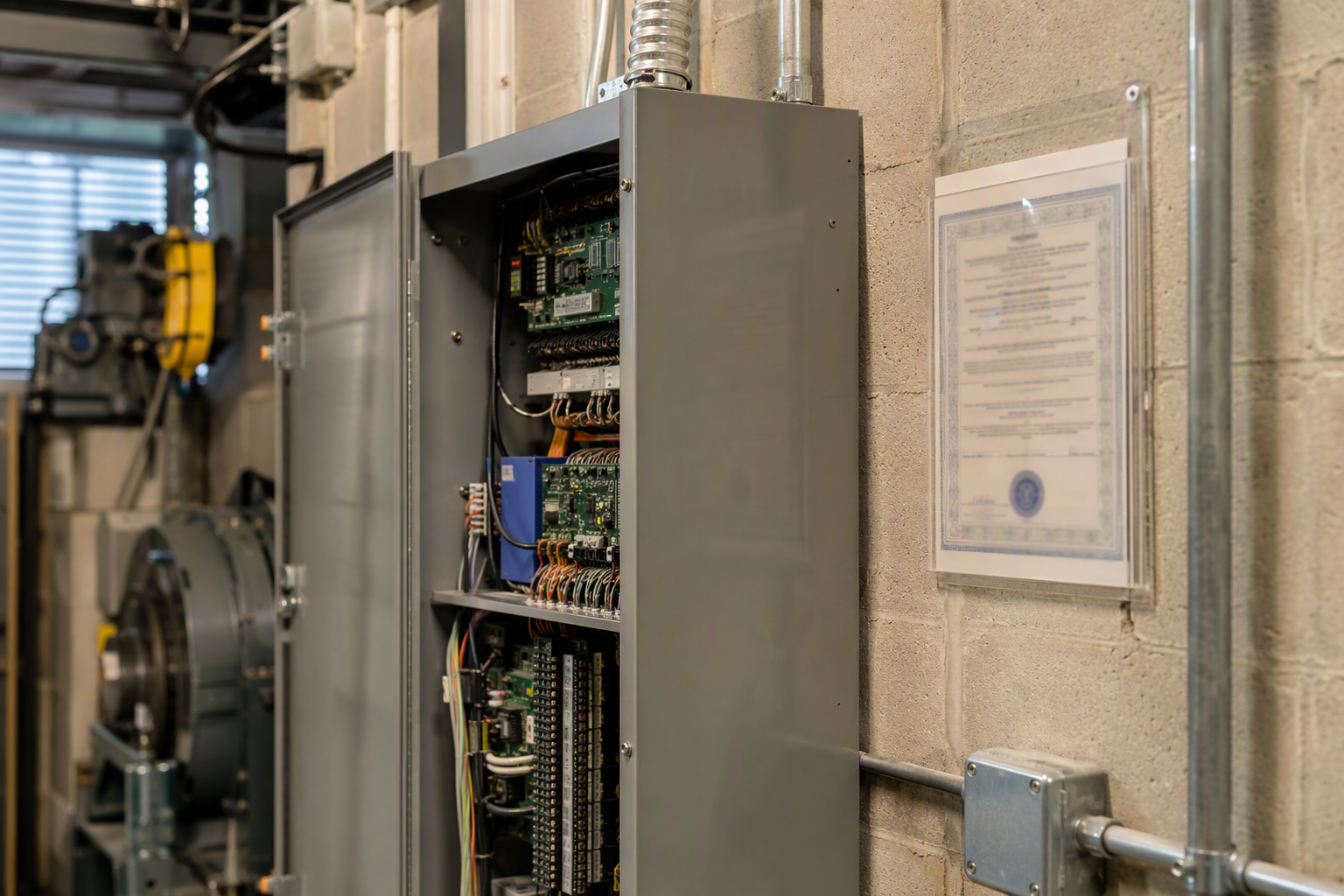
The primary regulatory authority for elevator inspections in Washington, DC is the DC Department of Buildings (DOB), which absorbed the elevator inspection and licensing functions formerly held by the DC Department of Consumer and Regulatory Affairs (DCRA). The DOB enforces the DC Construction Codes, including the elevator safety provisions that align with the ASME A17.1 Safety Code for Elevators and Escalators, the national standard adopted by the District.
Building owners and property managers should direct all questions about inspection scheduling, Certificate of Inspection renewals, violation notices, and licensing of elevator contractors to the DC Department of Buildings. The agency can be reached through its official website, and its Elevator Inspection Unit is the correct point of contact for compliance questions specific to the District.
For workplace elevator safety concerns involving employees — for example, elevator machinery room conditions or construction hoists — OSHA (Occupational Safety and Health Administration) standards may also apply, particularly for construction and freight lift equipment.
For questions about elevator accessibility for people with disabilities, the Americans with Disabilities Act (ADA) sets federal accessibility requirements that run parallel to DC’s local inspection regime.
What Is the Role of a Licensed Elevator Inspection Agency in DC?
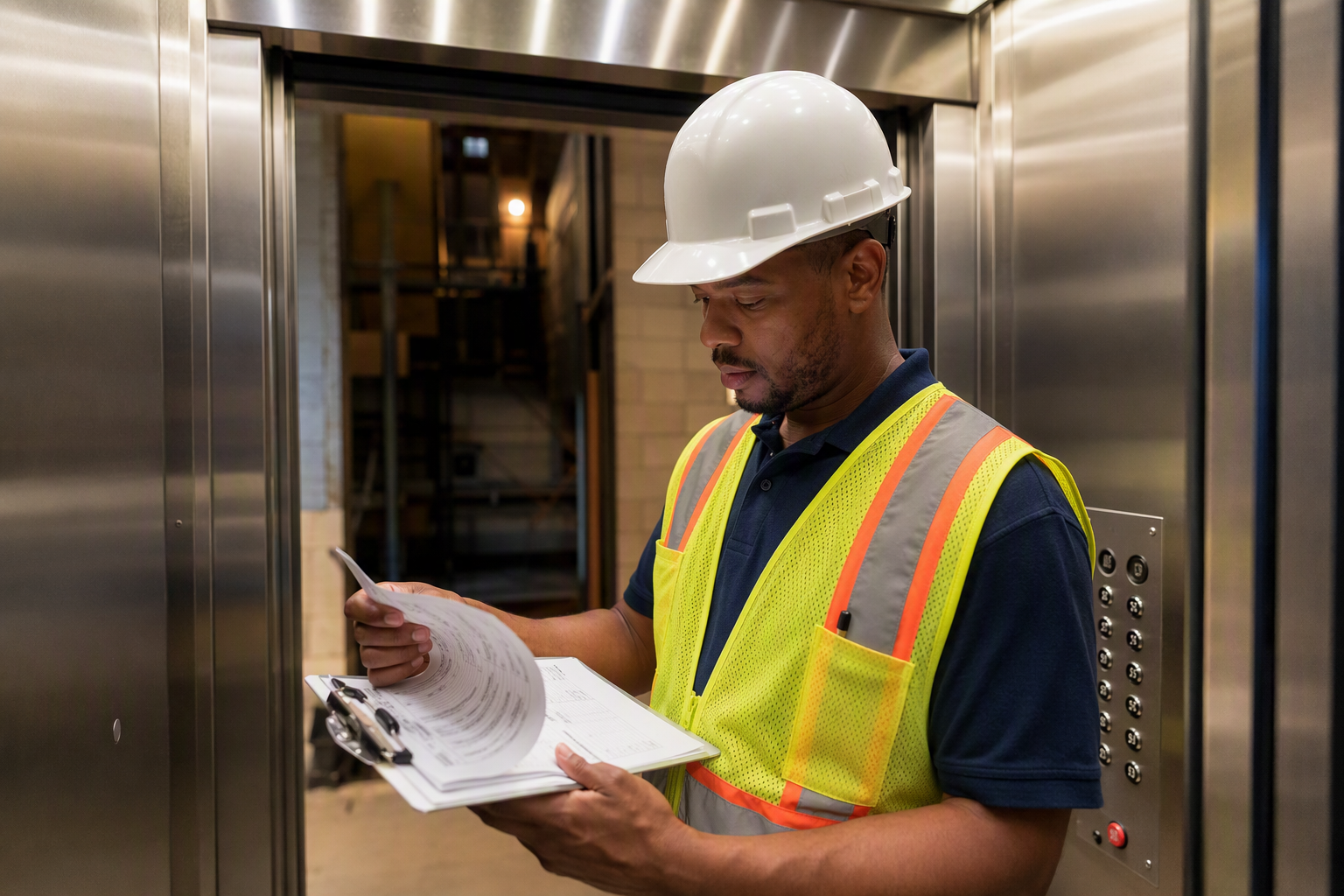
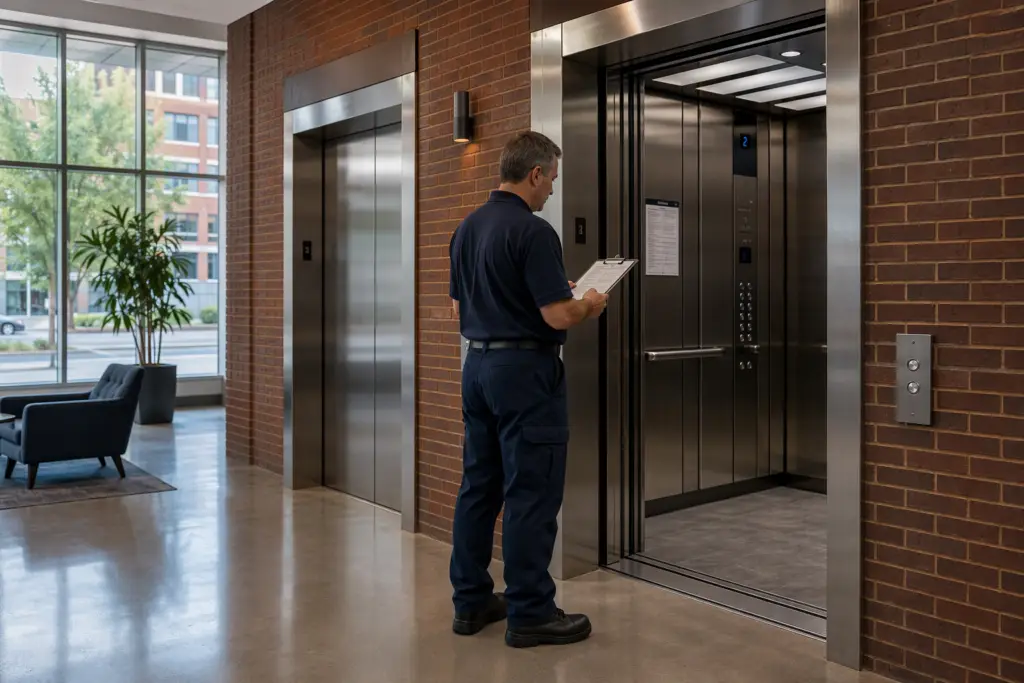
In Washington, DC, the actual physical inspection of elevator equipment is typically carried out by a third-party licensed elevator inspection agency or a qualified elevator inspector authorized by the DOB — not by a government employee visiting every building on a routine basis. This means the practical first call for most building owners is not the DOB itself, but rather a licensed inspection firm or a full-service elevator company that employs qualified inspectors.
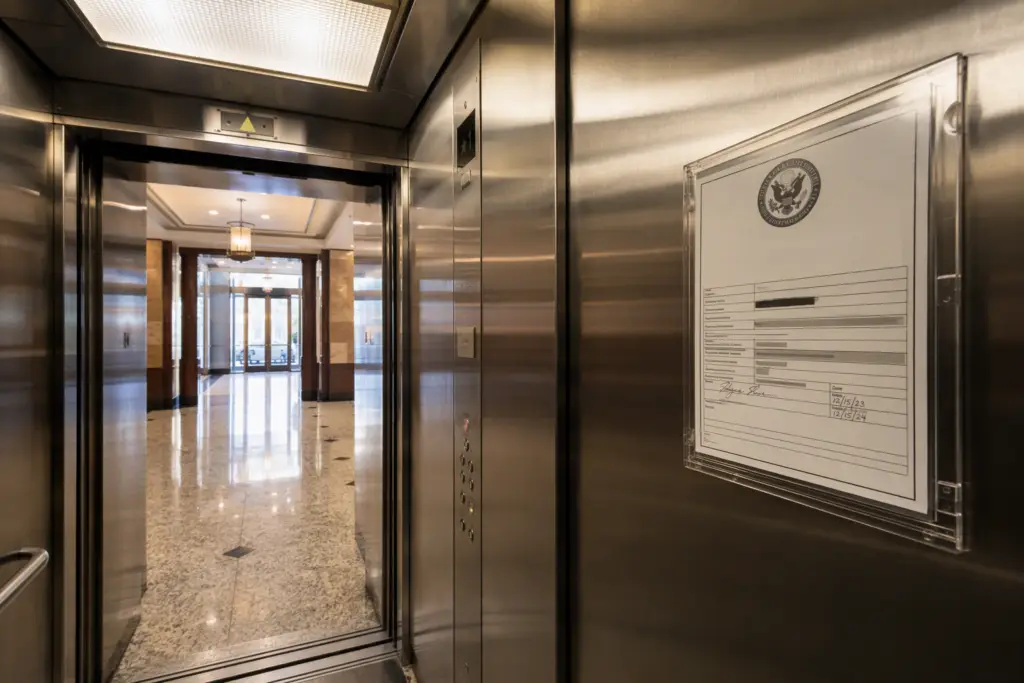
After a licensed inspector conducts the inspection and the equipment passes, the findings are submitted to the DOB, which then issues the Certificate of Inspection that must be posted in the elevator cab. If deficiencies are found, the building owner must arrange for a licensed elevator contractor to make repairs before a certificate is issued or renewed.
Quality Elevator Company works with building owners in the DC region to coordinate the inspection process end to end — from connecting clients with qualified inspectors to performing any remediation work required before a certificate can be issued.
How Often Are Elevator Inspections Required in Washington, DC?
DC elevator inspection intervals are governed by the adopted edition of the ASME A17.1 Safety Code for Elevators and Escalators. Under ASME A17.1, the code specifies periodic inspection and test requirements that jurisdictions adopt as their enforcement baseline. The District’s construction codes incorporate these requirements, meaning inspections are required on a recurring schedule — typically annually for most passenger and freight elevators — with more intensive load and safety tests required on a longer cycle.
Building owners should confirm the exact current interval with the DC Department of Buildings, as code adoption cycles can result in specific local amendments. What is consistent is that operating an elevator without a current, posted Certificate of Inspection is a violation that can result in the equipment being placed out of service.
What Does the Elevator Inspection Process in DC Look Like Step by Step?
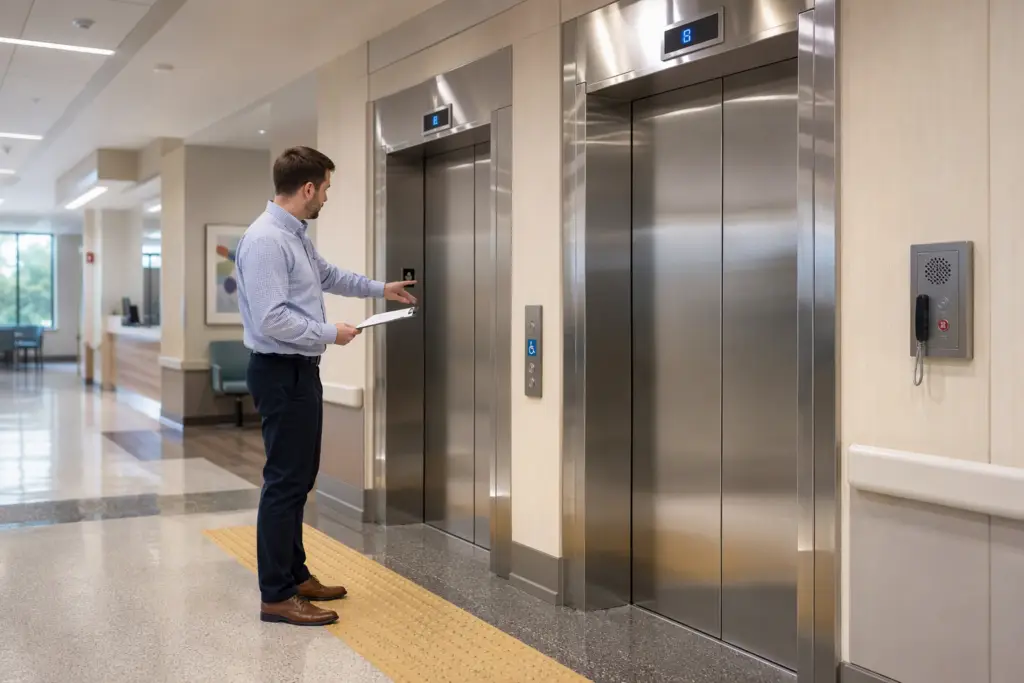
- Verify current inspection status. Check the Certificate of Inspection posted in the elevator cab. Note the expiration date and the inspection category (routine periodic inspection vs. a five-year load test, for example).
- Engage a licensed elevator contractor or inspection agency. Contact a firm licensed by the DC Department of Buildings to schedule the required inspection. Inspectors must hold credentials recognized by the DOB.
- Prepare the equipment and access. Ensure the machine room is accessible, lighting is functional, safety records are available, and any known deficiencies have been documented in advance.
- Undergo the inspection. The licensed inspector performs all required tests per the adopted edition of the ASME A17.1 Safety Code for Elevators and Escalators, including safety device checks, governor and buffer tests, and operational tests.
- Receive the inspection report. The inspector issues a written report. If the elevator passes, documentation is submitted to the DOB.
- Address any deficiencies. If violations or deficiencies are noted, engage a licensed elevator contractor to complete required repairs within the timeframe specified by the DOB.
- Obtain and post the Certificate of Inspection. Once the DOB processes the passing report, a new Certificate of Inspection is issued and must be posted in the elevator cab before the unit is returned to service or continues operating.
- Maintain inspection records. Keep copies of all inspection reports, certificates, repair records, and maintenance logs. These may be requested during future inspections or DOB audits.
What Standards Govern Elevator Safety in DC?
Washington, DC adopts the ASME A17.1 Safety Code for Elevators and Escalators as the technical backbone of its elevator safety regulations. ASME A17.1 covers design, construction, installation, operation, inspection, testing, maintenance, alteration, and repair of elevators, dumbwaiters, escalators, moving walks, and related equipment.
In addition to ASME A17.1, the following standards and laws are relevant to DC elevator compliance:
- ASME A17.3 Safety Code for Existing Elevators and Escalators — governs retrofit and upgrade requirements for elevators installed before the current edition of A17.1 took effect, which is particularly relevant in DC’s older building stock.
- Americans with Disabilities Act (ADA) — requires that elevators in most commercial buildings serving the public meet accessibility standards, including cab dimensions, door timing, control button specifications, and Braille markings.
- OSHA 29 CFR Part 1926 Subpart N — applies to construction hoists and material lifts at active construction sites within the District.
- DC Construction Codes — the District’s locally amended building code, which references and incorporates ASME standards and may include DC-specific amendments.
What Types of Elevators Require Inspection in DC?
The DC DOB’s elevator inspection program covers a broad range of conveyance equipment, not only traditional passenger elevators. Equipment categories that typically require periodic inspection and certification include:
- Traction passenger elevators (geared and gearless)
- Hydraulic passenger elevators
- Freight elevators
- Dumbwaiters
- Escalators and moving walks
- Limited-use/limited-application (LU/LA) elevators
- Vertical platform lifts and inclined wheelchair lifts in certain applications
- Construction hoists (subject to OSHA requirements at active job sites)
Building owners with any of these equipment types should confirm their specific inspection schedule and category requirements with the DOB or a qualified elevator consulting firm like Quality Elevator Company.
What Happens If an Elevator Fails Inspection in DC?
When an elevator fails an inspection in Washington, DC, the licensed inspector issues a deficiency report identifying each code violation and the applicable section of the ASME A17.1 Safety Code for Elevators and Escalators or local construction code that has been violated. Depending on the severity of the deficiency, the DOB may:
- Issue a notice of violation with a required correction timeline
- Order the elevator placed out of service immediately until repairs are completed
- Assess civil fines for continued operation of non-compliant equipment
- Require a re-inspection before a new Certificate of Inspection is issued
Critical safety deficiencies — such as failures in the governor, safety, or brake systems — typically require immediate shutdown. Non-critical deficiencies may allow continued operation under a conditional status while repairs are scheduled. In all cases, the building owner bears responsibility for engaging a licensed elevator contractor to complete remediation work promptly.
Quality Elevator Company provides inspection readiness assessments and repair services to help building owners address deficiencies before they escalate into out-of-service orders or fines.
What Are the Consequences of Operating an Elevator Without a Valid Certificate in DC?
Operating an elevator in Washington, DC without a current, posted Certificate of Inspection is a code violation that exposes building owners to a range of consequences. These include civil fines issued by the DC Department of Buildings, forced shutdown of the elevator until compliance is achieved, and potential liability in the event of an injury or incident involving an uncertified unit. Insurance carriers may also deny coverage for incidents involving equipment that was not in compliance at the time of loss.
Beyond the regulatory penalties, operating an uncertified elevator signals to tenants, visitors, and inspectors that the building’s maintenance program may be deficient — a reputational risk that is difficult to reverse quickly.
How Does ADA Compliance Intersect With Elevator Inspection in DC?
The Americans with Disabilities Act (ADA) establishes federal requirements for elevator accessibility that are separate from — but coexist with — DC’s safety inspection regime. An elevator can pass a DOB safety inspection and still be out of compliance with ADA accessibility standards if, for example, the cab dimensions are insufficient, controls are not within reach range, Braille and tactile characters are missing from buttons, or auditory signals do not function properly.
When building owners undergo a safety inspection, it is also an appropriate time to review ADA compliance. The DOB inspection focuses on mechanical safety; ADA compliance is a separate federal obligation enforced through the Department of Justice and private litigation. Building owners with older elevators should specifically assess whether their equipment meets current ADA Standards for Accessible Design, which apply to alterations and new construction as well as ongoing access requirements in places of public accommodation.
What Should Building Owners in DC Look for When Choosing an Elevator Inspection or Maintenance Contractor?
Not all elevator service providers are equal, and the choice of contractor directly affects both safety outcomes and compliance standing. When evaluating an elevator inspection or maintenance contractor in Washington, DC, building owners should consider:
- DOB licensing: The contractor and any inspectors must hold current licenses recognized by the DC Department of Buildings.
- Familiarity with DC-specific code amendments: The District may have local amendments to the adopted ASME codes that a contractor unfamiliar with the jurisdiction could miss.
- Scope of services: A contractor who can both inspect and perform remediation work reduces coordination complexity and time between deficiency identification and correction.
- Documentation practices: The contractor should provide thorough written reports that clearly identify each finding, the applicable code section, and recommended corrective action.
- Experience with the building’s equipment type: Traction, hydraulic, LU/LA, and escalator equipment each have distinct inspection and maintenance requirements.
Quality Elevator Company serves the DC region with a data-driven, compliance-focused approach to elevator maintenance, inspection coordination, and repair — helping building owners maintain continuous compliance and avoid service disruptions.
What Industry Trends Are Affecting DC Elevator Inspections in 2025 and 2026?
Several trends are reshaping how elevator inspections and compliance are managed in Washington, DC and across the broader industry as 2025 transitions into 2026:
- Remote monitoring and predictive maintenance: Building owners are increasingly adopting connected elevator monitoring systems that provide real-time data on equipment condition. While these systems do not replace mandatory periodic inspections, they help building managers identify developing issues before they become inspection failures or service disruptions.
- Modernization of aging equipment: DC’s substantial stock of older commercial and residential buildings means a significant portion of elevators in the District are operating on aging hydraulic or older traction systems. The ASME A17.3 Safety Code for Existing Elevators and Escalators drives ongoing retrofit requirements, and 2025–2026 is seeing continued pressure on building owners to modernize older equipment to meet current safety benchmarks.
- Increased regulatory scrutiny: Following high-profile elevator incidents in urban jurisdictions nationally, regulatory agencies including DC’s DOB have signaled heightened enforcement attention. Building owners who have deferred maintenance or allowed inspection certificates to lapse are at greater risk of proactive DOB action.
- Sustainability and energy efficiency: Modernization projects increasingly incorporate regenerative drives and energy-efficient components, aligning compliance upgrades with broader building sustainability goals.
- Digital permitting and record-keeping: DC is expanding digital permitting workflows, which affects how inspection records are submitted and how certificates are issued and tracked — making accurate digital documentation more important than ever for building owners.
Quick Reference: Key Contacts for DC Elevator Inspection Compliance
| Contact / Authority | Role in DC Elevator Compliance | When to Contact |
|---|---|---|
| DC Department of Buildings (DOB) | Primary regulatory authority; issues Certificates of Inspection; enforces DC Construction Codes | Certificate renewals, violation notices, contractor licensing questions, permit applications |
| Licensed Elevator Inspection Agency / Contractor | Performs physical inspections; submits results to DOB; performs repairs | Scheduling inspections, addressing deficiencies, routine maintenance |
| ASME (standard-setting body) | Publishes A17.1 and A17.3 codes adopted by DC | Technical code questions; reference via ASME Codes & Standards |
| US Department of Justice / ADA | Enforces federal accessibility requirements for elevator cab and controls | ADA accessibility questions; reference via ADA.gov |
| OSHA | Workplace safety for elevators at active construction sites and in occupational settings | Construction hoist compliance; reference via OSHA.gov |
Note: This table lists regulatory contacts and their functions. Inspection intervals and specific code section numbers should be confirmed directly with the DC DOB and a licensed contractor, as local code amendments may apply.
Summary: What Building Owners in DC Need to Know
Elevator inspection requirements in Washington, DC are administered by the DC Department of Buildings, enforced through the adopted ASME A17.1 Safety Code for Elevators and Escalators, and carried out in practice by licensed third-party elevator inspection agencies and contractors. Building owners do not navigate this process alone — the right licensed service partner manages the inspection scheduling, identifies and remediates deficiencies, and handles documentation with the DOB so that a valid Certificate of Inspection is always posted in the cab.
Compliance is not a one-time event. It is an ongoing cycle of periodic inspections, routine maintenance, and timely modernization as code requirements evolve. Building owners who treat elevator compliance proactively — rather than reactively — experience fewer service disruptions, lower long-term costs, and significantly reduced liability exposure.
Quality Elevator Company brings a compliance-first, data-driven approach to elevator service in the DC region, helping property managers and building owners stay ahead of inspection requirements, address deficiencies efficiently, and maintain continuous certification.
Ready to Stay Ahead of DC Elevator Inspection Requirements?
Contact Quality Elevator Company for a free elevator assessment. Whether a building is facing an upcoming inspection, dealing with a deficiency notice, or simply seeking a qualified partner to manage the compliance cycle, the Quality Elevator Company team is available to help.
Contact Quality Elevator Company for a free elevator assessment: 301-779-9116
Need elevator service you can rely on? Quality Elevator Company is ready to help.