Elevator maintenance is one of the most consequential — and often misunderstood — line items in a building operations budget. The price a building owner pays each year depends on a cluster of factors: the type and number of elevators, the age of the equipment, local jurisdiction requirements, contract type (full maintenance vs. oil-and-grease), and whether the provider is an independent company or a large OEM. Understanding each variable before signing a contract protects both the budget and the occupants who rely on the elevator every day.
What Factors Affect the Price of Elevator Maintenance?
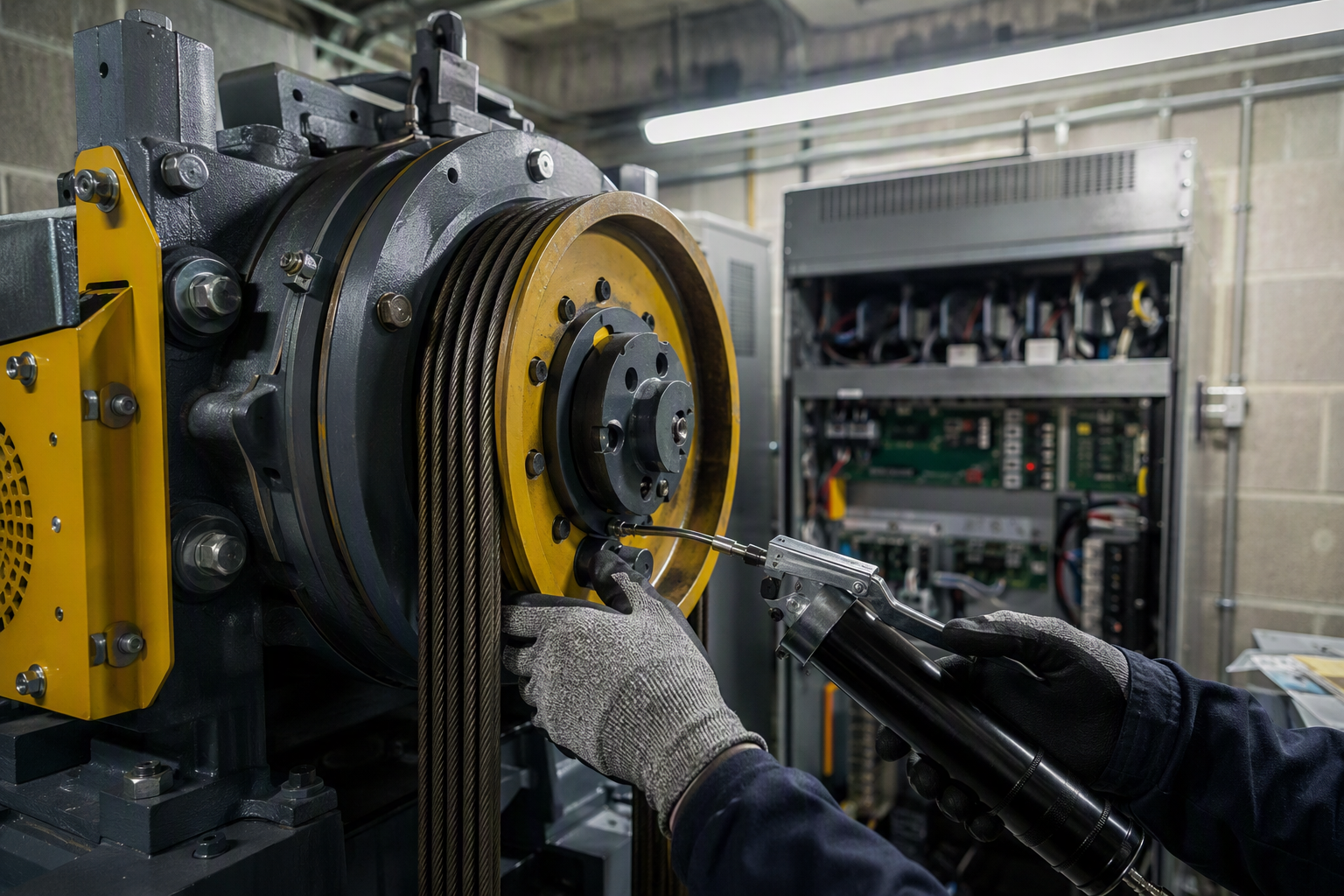
No two elevator maintenance agreements are identical, because no two buildings are identical. The following factors are the primary drivers of annual cost:
- Elevator type: Hydraulic, traction (geared or gearless), MRL (machine-room-less), and freight elevators each carry different labor and parts demands.
- Age and condition of equipment: Older units with obsolete controllers or worn mechanical components require more technician time and harder-to-source parts.
- Number of units in the building: Multi-unit contracts typically offer per-unit savings compared to single-elevator agreements.
- Contract scope: Full-maintenance contracts cover parts and labor; oil-and-grease (O&G) contracts cover lubrication and adjustments only, leaving parts as additional billable items.
- Local jurisdiction and code requirements: Each of the four metro areas — Baltimore, Washington DC, Philadelphia, and Richmond — has its own inspection schedules, permit fees, and code adoption timelines that affect total compliance cost.
- Building usage and traffic: A high-rise office tower with continuous peak-hour traffic creates more wear than a low-rise residential building, increasing service frequency.
- OEM vs. independent provider: Original equipment manufacturers and large nationals often command a premium compared to certified independent service companies offering equivalent technical quality.
Elevator Maintenance Contract Types: A Side-by-Side Comparison

| Contract Type | What’s Included | Best For | Key Risk |
|---|---|---|---|
| Full Maintenance | Labor, parts, lubrication, adjustments, callbacks | Older equipment; high-traffic buildings; predictable budgeting | Higher monthly premium; exclusions on major modernization items |
| Oil & Grease (O&G) | Lubrication, minor adjustments only | New equipment under OEM warranty; low-traffic buildings | Unpredictable parts and labor costs billed separately |
| Parts & Labor | Labor included; parts billed at cost | Mid-range buildings seeking partial budget control | Parts markups can erode savings vs. full maintenance |
| Inspection-Only | Annual or semi-annual code inspection | Buildings with in-house facilities teams handling routine work | Does not satisfy ongoing preventive maintenance obligations |
How Do Elevator Types Compare in Annual Maintenance Demands?
| Elevator Type | Common Settings | Relative Maintenance Intensity | Key Maintenance Items |
|---|---|---|---|
| Hydraulic | Low-rise commercial, medical | Moderate | Pump unit, hydraulic fluid, cylinder seals, valve adjustment |
| Geared Traction | Mid-rise office, residential | Moderate–High | Gearbox lubrication, brake adjustment, rope inspection |
| Gearless Traction | High-rise, high-traffic | High | Motor brushes (DC) or drive boards (AC), sheave wear, rope tension |
| MRL (Machine-Room-Less) | Modern mid-rise, hotels | Moderate (but specialized) | Controller access, drive unit, compact machinery in hoistway |
| Freight / Industrial | Warehouses, loading docks | High | Heavy-duty door operators, structural guides, overload components |
What Are the Compliance and Inspection Requirements That Affect Annual Cost?
Compliance is not optional — it is a direct cost driver in every market Quality Elevator Company serves. The ASME A17.1 Safety Code for Elevators and Escalators establishes the foundational safety standards adopted (with local amendments) by Maryland, the District of Columbia, Pennsylvania, and Virginia. Each jurisdiction sets its own inspection frequency, permit fee schedule, and enforcement authority.
- Baltimore, MD: The Maryland Department of Labor enforces elevator safety under state law, requiring periodic inspections that tie directly to certificate-of-operation renewals. Missing an inspection date can trigger fines and forced shutdown.
- Washington, DC: DCRA (Department of Consumer and Regulatory Affairs) administers elevator permits and annual inspections. Buildings must maintain current operating certificates to remain legally open to the public.
- Philadelphia, PA: The City of Philadelphia Department of Licenses and Inspections oversees elevator inspections and requires operating permits renewed on a schedule tied to inspection results.
- Richmond, VA: The Virginia Department of Labor and Industry enforces the Virginia Uniform Statewide Building Code, which incorporates ASME A17.1 provisions for elevator safety.
Buildings open to the public must also satisfy ADA (Americans with Disabilities Act) requirements for elevator accessibility, including operational reliability standards that make consistent preventive maintenance a legal imperative, not just a financial one. Workplace elevators serving employees also fall under OSHA general duty obligations for safe working conditions.
Independent Service Provider vs. OEM/National Company: A Pros and Cons Comparison
| Factor | Independent (e.g., Quality Elevator Company) | OEM / Large National |
|---|---|---|
| Pricing flexibility | Generally more competitive; no corporate overhead premium | Often higher; standardized national rate structures |
| Local market knowledge | Strong; jurisdictional familiarity in Baltimore, DC, Philadelphia, Richmond | Variable; technicians may cover large geographic territories |
| Contract customization | High; terms negotiable to fit building needs | Lower; standardized contract templates |
| Parts availability | Multi-brand sourcing; not restricted to one OEM’s supply chain | Proprietary parts often required; potential for higher markup |
| Accountability | Direct ownership accountability; decision-makers accessible | Corporate chain of command; slower escalation |
| Technical scope | Broad multi-brand expertise across hydraulic, traction, MRL | Deep expertise in own brand; may be less familiar with other makes |
What Should Be Included in a Complete Annual Elevator Maintenance Plan?
A well-structured maintenance plan goes beyond oiling bearings and adjusting doors. Building owners should verify that any agreement they sign addresses the following elements:
- Monthly or quarterly preventive maintenance visits (frequency determined by usage and equipment type)
- Full lubrication of all mechanical components per the ASME A17.1 maintenance schedule
- Safety device testing: governors, safeties, buffers, interlocks
- Door operator adjustment and alignment (the leading cause of service calls)
- Controller inspection and firmware or relay review
- Pit inspection: sump pump, lighting, clearances
- Machine room or hoistway inspection per applicable code
- Callback/emergency response coverage
- Coordination of annual third-party inspection for jurisdiction certificate renewal
- Written documentation of all work performed (required for code compliance audits)
How to Evaluate and Compare Elevator Maintenance Bids?
- Define your elevator inventory first. Document make, model, installation year, and usage class for every unit before requesting proposals. Incomplete information produces bids that cannot be compared apples-to-apples.
- Specify contract scope in writing. Ask each bidder to quote the same scope — full maintenance or O&G — so price differences reflect provider value, not scope gaps.
- Request a complete exclusions list. Understand exactly what the contract does not cover. Hidden exclusions on major components are common and can produce large unplanned expenses.
- Verify jurisdiction compliance familiarity. Ask each provider to confirm they handle inspection coordination and permit filings for your specific city or county.
- Review callback and response terms. Understand the contractual commitment for entrapment response versus routine callback, and how overtime or after-hours calls are billed.
- Check parts sourcing transparency. Ask whether replacement parts are billed at cost-plus or included, and whether OEM, rebuilt, or third-party parts are used.
- Ask for maintenance logs from current clients. A reputable provider will offer references and sample maintenance records demonstrating documentation quality.
- Compare total cost of ownership, not headline price. A lower monthly fee on an O&G contract may produce higher total spend than a full-maintenance contract once callback labor and parts are added.
What Happens If Elevator Maintenance Is Deferred or Skipped?
Deferred maintenance is among the most expensive decisions a building owner can make. When routine service intervals are skipped, several consequences compound:
- Accelerated component wear: Mechanical parts operating without lubrication or calibration degrade faster, converting routine maintenance costs into capital replacement costs.
- Increased callback frequency: Deferred maintenance elevators generate significantly more emergency service calls, each billed outside the contract and at premium labor rates.
- Compliance exposure: Jurisdictions in Maryland, DC, Pennsylvania, and Virginia may issue notices of violation, impose fines, or order the elevator shut down if maintenance records are absent or inspection results are unsatisfactory.
- Liability risk: A documented gap in maintenance history creates significant legal exposure if an occupant is injured and litigation follows.
- Insurance implications: Some commercial property insurers review elevator maintenance records during underwriting or claims investigations; inadequate records may affect coverage determinations.
What Is the ROI of Preventive Maintenance vs. Reactive Repair?
| Metric | Preventive Maintenance Approach | Reactive / Deferred Approach |
|---|---|---|
| Cost predictability | High — fixed annual contract amount | Low — variable, spike-prone |
| Equipment lifespan | Extended through consistent care | Shortened; major components wear prematurely |
| Modernization timeline | Deferred — well-maintained units operate longer before needing replacement | Accelerated — neglected equipment reaches end-of-life sooner |
| Tenant satisfaction | High — fewer outages and entrapments | Low — frequent breakdowns affect tenant experience and retention |
| Compliance standing | Strong — records support certificate renewals | Weak — gaps in records create regulatory risk |
| Emergency repair costs | Minimized through early detection | Frequent and often significant |
What Are Common Hidden Costs in Elevator Maintenance Contracts?
Building owners who focus only on the monthly contract fee often encounter additional charges that were not clearly disclosed. Common hidden or overlooked costs include:
- Permit and inspection fees: Some contracts exclude the cost of jurisdiction-required annual inspections and operating permits, which carry their own fee schedules set by each city or state agency.
- After-hours and overtime labor: Callbacks outside standard business hours are frequently billed at premium rates not included in the base contract.
- Vandalism and misuse repairs: Damage caused by tenants or the public is typically excluded from maintenance contracts.
- Entrapment response beyond defined windows: Contract language around entrapment response obligations should be reviewed carefully for geographic and time-of-day limitations.
- Major modernization components: Controllers, motors, and structural components are commonly excluded even from full-maintenance contracts; understanding the threshold between maintenance and modernization is essential.
- Travel charges: Providers based far from the building’s location may bill travel time, effectively raising the per-visit cost.
How Does Building Location Within the Mid-Atlantic Region Affect Elevator Maintenance Costs?
Building owners in Baltimore, Washington DC, Philadelphia, and Richmond operate under different regulatory frameworks, labor markets, and cost-of-living environments — all of which influence elevator maintenance pricing:
- Baltimore: Maryland-licensed elevator mechanics operate under collective bargaining agreements in many market segments. The volume of mid-century commercial buildings creates high demand for expertise in older hydraulic and traction equipment.
- Washington, DC: The DC market is one of the most heavily regulated in the region. High commercial building density, a significant proportion of federal and institutional properties, and DCRA’s active enforcement posture make compliance management a material part of total maintenance cost.
- Philadelphia: Pennsylvania’s statewide licensing framework and Philadelphia’s own L&I oversight create a dual-layer compliance environment. The city’s mix of historic buildings and modern high-rises demands broad technical range from service providers.
- Richmond: Virginia’s market tends to feature more competitive pricing relative to the larger metro markets to the north, though state enforcement of the Uniform Statewide Building Code’s elevator provisions is consistent and rigorous.
Why Should Building Owners Choose Quality Elevator Company?
Quality Elevator Company is a certified, independent elevator service company serving building owners across Baltimore, Washington DC, Philadelphia, and Richmond. As an independent provider, Quality Elevator Company is not tied to any single manufacturer’s parts supply chain or pricing structure, allowing for transparent, competitive contract terms tailored to the specific needs of each building.
Quality Elevator Company’s technicians are trained across multiple elevator makes and models — hydraulic, traction, MRL, and freight — and maintain familiarity with the distinct inspection and permitting requirements of each jurisdiction in the Mid-Atlantic region. Building owners receive direct access to decision-makers, detailed maintenance documentation, and contract structures designed to protect both budget predictability and compliance standing.
For building owners evaluating a new maintenance agreement, renewing an existing contract, or concerned about the condition of aging equipment, Quality Elevator Company offers a free elevator assessment — a no-obligation review of equipment condition, current maintenance coverage, and compliance status.
Get a Free Elevator Assessment from Quality Elevator Company
Understand exactly what your elevator maintenance should cost, what your current contract may be missing, and what compliance requirements apply to your building in Baltimore, DC, Philadelphia, or Richmond.
Contact Quality Elevator Company for a free elevator assessment: 301-779-9116
Need elevator service you can rely on? Quality Elevator Company is ready to help.