Elevator Modernization ROI Statistics: What Building Owners Need to Know
Building owners and facility managers evaluating capital expenditures increasingly turn to elevator modernization as a strategic investment. Unlike purely cosmetic upgrades, elevator modernization addresses mechanical, electrical, and control system components simultaneously — generating returns across energy efficiency, maintenance reduction, tenant satisfaction, and regulatory compliance. This page compiles the most authoritative data and expert analysis available on elevator modernization ROI statistics to help decision-makers build a clear business case.
—
What Does Elevator Modernization ROI Actually Mean?
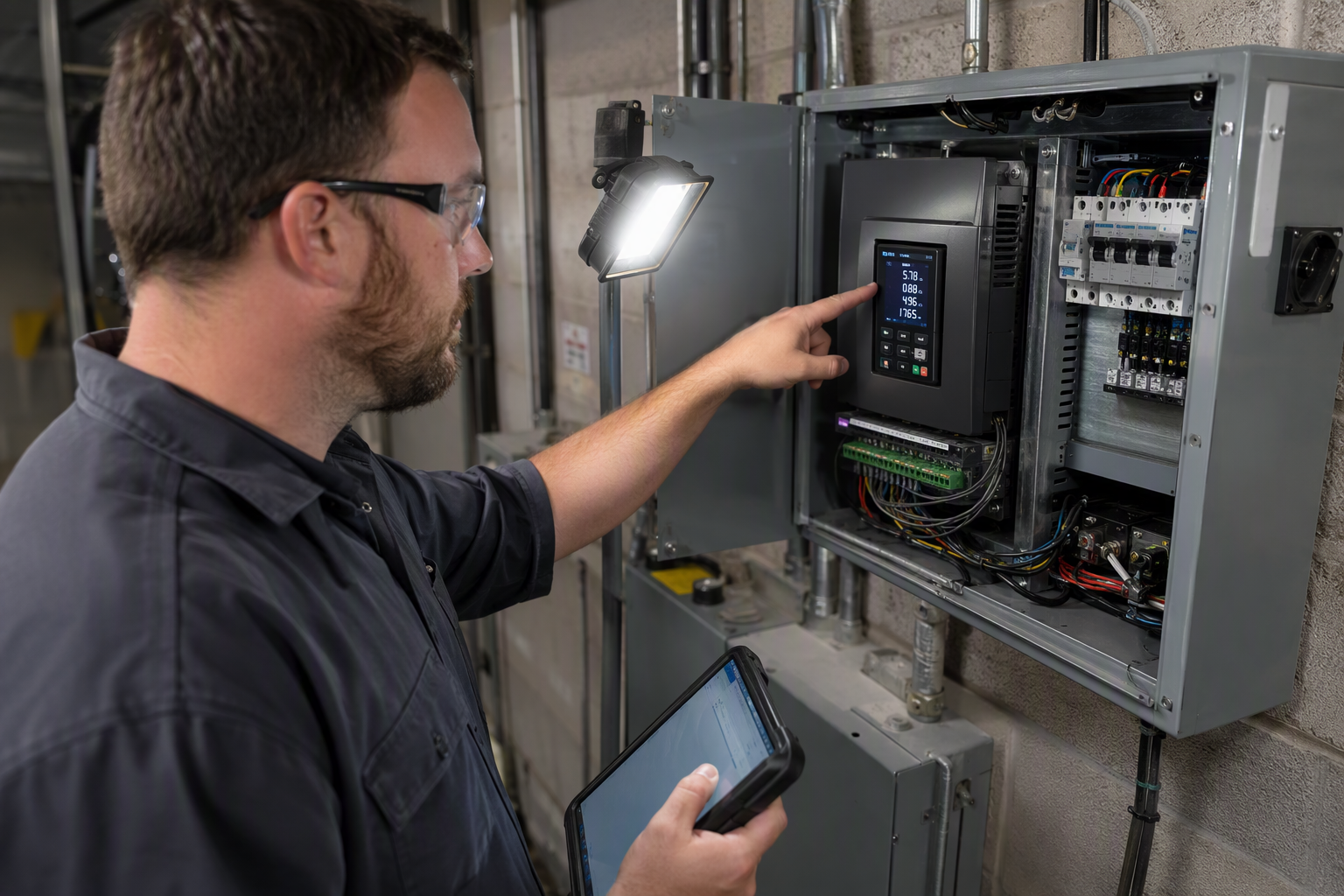
Return on investment for elevator modernization is measured across several distinct value streams, not a single metric. Building owners typically evaluate ROI through the lens of operating cost reduction, capital expenditure avoidance, property valuation impact, and risk mitigation. Each of these streams contributes to the total financial picture, and no single figure captures the full return without accounting for all of them together.
A modernized elevator system typically replaces aging hydraulic or traction components, upgrades control logic and dispatch software, installs regenerative drive technology, and brings the installation into alignment with current safety codes. The combination of these improvements creates compounding returns over time rather than a one-time payoff.
—
What Are the Most Important Energy Efficiency Statistics for Elevator Modernization?

Energy consumption is one of the most directly measurable ROI factors in elevator modernization. Older hydraulic elevator systems are among the most energy-intensive equipment in mid-rise and low-rise buildings. Modern variable-frequency drive (VFD) technology and regenerative drives substantially reduce this consumption.
According to the ASME Codes and Standards framework that governs elevator design and performance — including the ASME A17.1 Safety Code for Elevators and Escalators — modern drive systems must meet performance standards that inherently favor energy efficiency over legacy designs. Buildings that upgrade to systems meeting current ASME standards therefore benefit from efficiency gains as a byproduct of code compliance.
Qualitatively, industry engineering literature consistently identifies regenerative drive systems as capable of returning energy back to the building’s electrical grid during descent cycles, reducing net energy draw during peak hours. Buildings with high elevator utilization rates — such as multi-tenant office towers and senior living facilities — see proportionally greater energy savings than low-traffic residential installations.
—
How Does Elevator Modernization Affect Maintenance Costs?
Aging elevator systems require disproportionately high maintenance investment. As mechanical components approach and exceed their design service life, the frequency of service calls, parts replacements, and emergency repairs increases substantially. Modernization resets this cost curve by replacing worn components with current-generation equipment under full manufacturer warranty.
The relationship between equipment age and maintenance cost is well established in facilities management practice. Older relay-based control systems are particularly costly to maintain because replacement parts are increasingly scarce and technicians certified in legacy systems represent a shrinking labor pool. Transitioning to solid-state, microprocessor-based controls eliminates this exposure.
Building owners also reduce liability exposure through modernization. Elevators operating on outdated safety systems carry greater risk of incident, and the financial consequences of a serious elevator-related incident — including legal costs, regulatory penalties, and insurance implications — can dwarf the cost of modernization itself. Quality Elevator Company evaluates maintenance cost trajectories as part of its data-driven assessment process, helping building owners quantify the gap between continued maintenance spending and modernization investment.
—
What Compliance Costs Does Elevator Modernization Help Buildings Avoid?
Regulatory compliance is a significant and often underestimated component of elevator modernization ROI. Buildings that fail to maintain elevators in accordance with current code requirements face inspection failures, mandatory shutdowns, and escalating fines that directly affect operating income.
The ASME A17.1 Safety Code for Elevators and Escalators is the foundational safety standard governing elevator installation and operation across most U.S. jurisdictions. Editions of this code are updated on a regular cycle, and local Authorities Having Jurisdiction (AHJs) adopt new editions according to their own schedules — meaning the specific code edition enforced in a given building’s location may differ from a neighboring municipality. Modernization projects designed to current code editions protect buildings against the cost of incremental retrofits as enforcement standards evolve.
Accessibility compliance under the Americans with Disabilities Act (ADA) is an additional compliance driver. Elevator cab dimensions, door operation timing, control panel heights, and auditory/visual call indicators are all subject to ADA requirements. Non-compliant installations expose building owners to discrimination complaints and legal action. Modernization that addresses ADA requirements simultaneously with mechanical upgrades consolidates compliance costs into a single project rather than multiple sequential interventions.
Workplace safety obligations under OSHA standards also apply to elevator maintenance operations. Buildings with documented safety deficiencies in elevator equipment may face OSHA scrutiny in the event of a maintenance technician injury, adding regulatory risk that modernization helps eliminate.
—
How Does Elevator Modernization Affect Property Value?
Commercial real estate appraisers and lenders evaluate building systems condition as a material factor in property valuation. Elevators in poor condition or approaching end of design service life are flagged in property condition assessments (PCAs), which can reduce appraised value, trigger lender-required escrow holdbacks, or complicate refinancing and sales transactions.
Conversely, recently modernized elevator systems with documented compliance records and active service agreements strengthen a building’s position in due diligence. In competitive multi-tenant office and residential markets, elevator performance is a factor in tenant retention and lease renewal decisions. High-traffic buildings where elevator downtime creates tenant disruption face measurable occupancy risk from deferred modernization.
Senior living and healthcare facilities face particularly acute property value implications from elevator performance, as regulatory surveys and licensing inspections explicitly assess life-safety systems including vertical transportation. Modernization in these asset classes carries compounded ROI through both property value protection and regulatory compliance assurance.
—
What Is the Typical Timeline for Elevator Modernization Projects?
Project timeline is a key variable in ROI calculation because elevator downtime during modernization represents a cost — both operational and reputational — that must be weighed against total project return.
How a Typical Elevator Modernization Project Proceeds
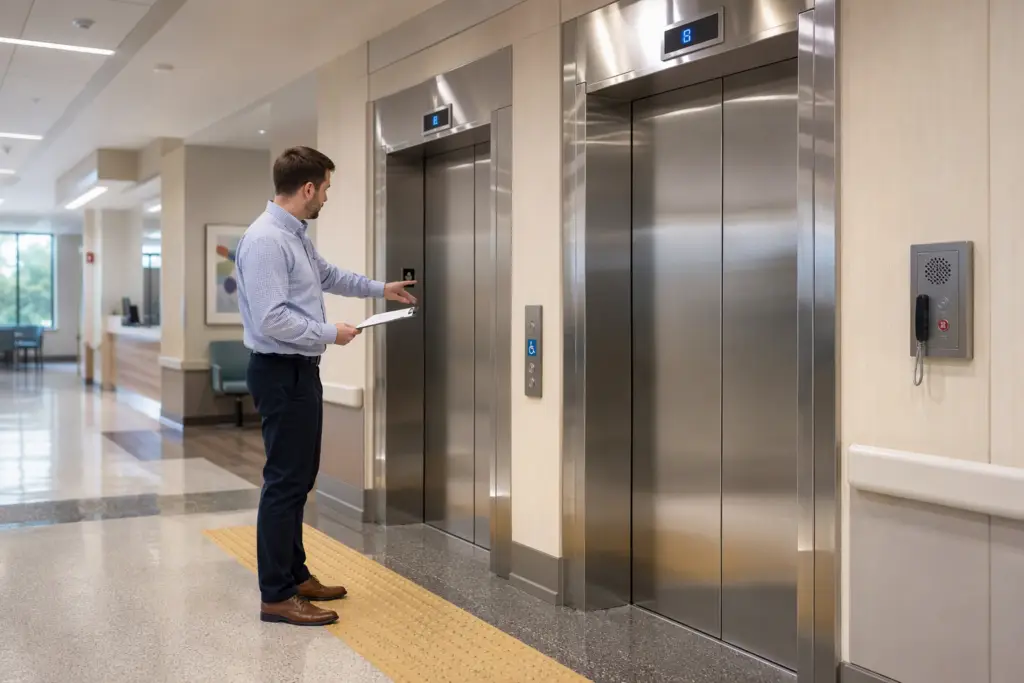
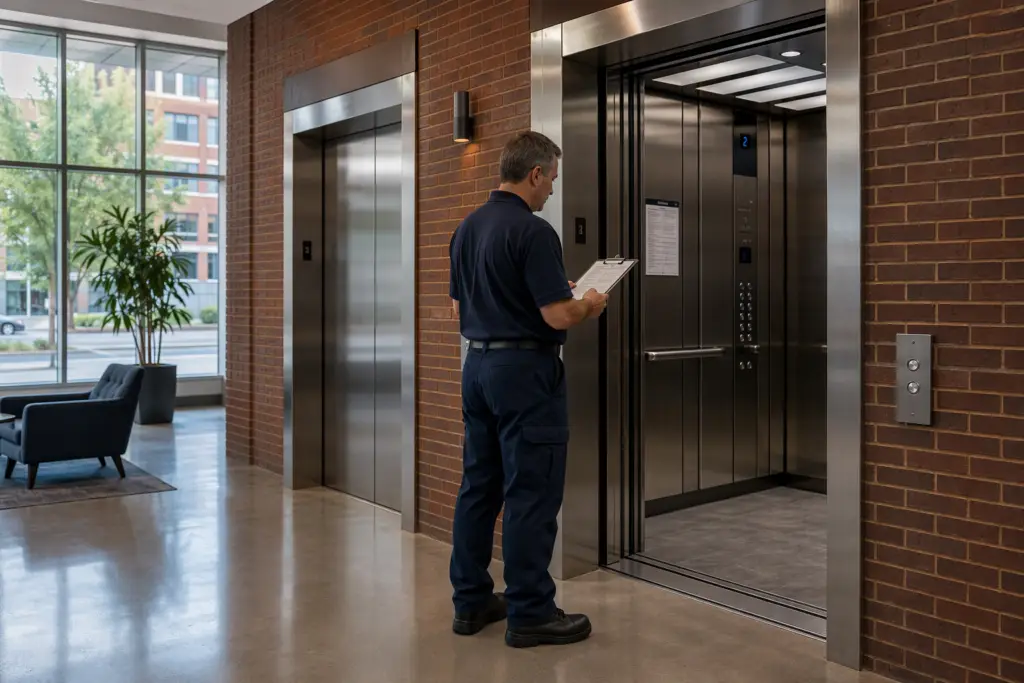
- Assessment and Scope Development: A qualified elevator contractor conducts a comprehensive inspection of existing equipment, documents deficiencies against current code requirements, and develops a detailed scope of work. Quality Elevator Company performs this assessment as a no-cost service for building owners evaluating modernization.
- Engineering and Permitting: Modernization projects require engineering drawings and permit applications submitted to the local AHJ. Permit timelines vary by jurisdiction and can range from weeks to several months in heavily regulated markets.
- Equipment Procurement: Control panels, drive systems, door operators, cab finishes, and other components are ordered from manufacturers. Supply chain conditions in 2025–2026 continue to influence lead times, making early procurement planning critical to project scheduling.
- Phased Shutdown and Installation: In multi-elevator buildings, modernization is typically sequenced so that at least one elevator remains operational at all times, minimizing tenant disruption. Single-elevator buildings require coordinated communication with building occupants and ADA accommodation planning during shutdown periods.
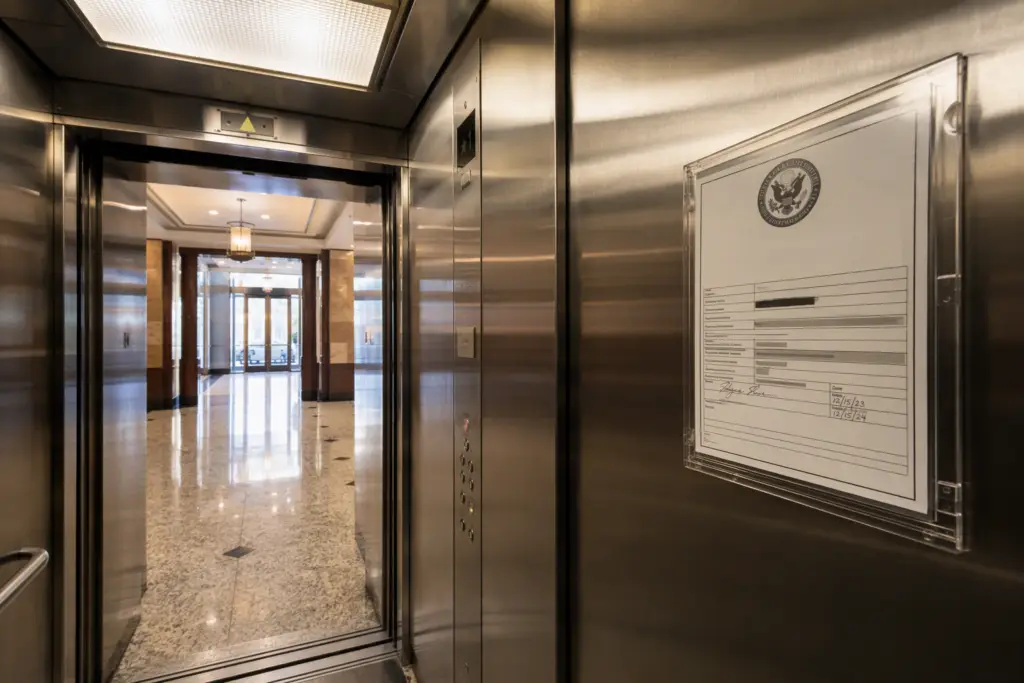
- Inspection and Acceptance: Upon completion, the AHJ conducts a final inspection and issues a new certificate of operation. This document is essential for building compliance records and insurance purposes.
- Post-Completion Verification: A period of performance monitoring follows installation to confirm that energy savings, call response times, and reliability metrics are meeting projected targets.
—
What Equipment Components Drive the Highest ROI in Modernization?
Not all modernization components contribute equally to return on investment. Understanding which system elements generate the greatest financial impact helps building owners prioritize scope when budget constraints require phased approaches.
Control System Replacement: Transitioning from relay-based or older microprocessor controls to current-generation solid-state dispatch systems typically yields the broadest ROI across reliability, energy efficiency, and maintenance cost reduction. Modern controls also support remote monitoring and predictive maintenance analytics, adding further operational value.
Drive System Upgrades: Variable-frequency drives and regenerative drive technology target energy consumption directly. In high-utilization buildings, drive system upgrades can generate measurable reductions in electricity costs that contribute to payback calculations.
Door Operator and Safety System Modernization: Door-related incidents account for a substantial share of elevator service calls and liability events. Replacing worn door operators, safety edges, and detection systems reduces both maintenance frequency and incident risk.
Machine Room and Hydraulic System Improvements: Older hydraulic systems using petroleum-based oils carry environmental liability risk in addition to energy and maintenance costs. Conversion to biodegradable hydraulic fluids or traction systems where feasible addresses environmental exposure that can become a material cost in the event of a spill or soil contamination event.
—
How Do Elevator Modernization ROI Statistics Compare Across Building Types?
ROI profiles differ meaningfully across asset classes, and building owners benefit from evaluating modernization through the lens of their specific occupancy type rather than relying on generalized figures.
Commercial Office Buildings: Elevator performance is directly linked to tenant experience and lease competitiveness. In markets where tenants have multiple options, elevator reliability and wait time are documented factors in renewal decisions. Modernization ROI in office settings includes both hard cost savings and occupancy protection value.
Multi-Family Residential: Resident satisfaction and regulatory compliance drive ROI in this category. Older hydraulic systems in mid-rise residential buildings often represent the single largest deferred maintenance liability on a building’s balance sheet, and modernization eliminates that exposure while improving daily resident experience.
Healthcare and Senior Living: Regulatory scrutiny is most intense in this asset class. CMS surveys, state licensing inspections, and accreditation reviews all assess elevator safety and reliability. Modernization ROI in healthcare settings includes significant risk mitigation value that goes beyond direct financial returns.
Hospitality: Guest experience metrics in hotels include elevator wait time and reliability. Properties with documented elevator failures during peak periods report measurable impacts on review scores, which influence future booking revenue — creating an indirect but quantifiable ROI dimension for modernization investment.
—
What Are the Key Industry Trends Affecting Elevator Modernization ROI in 2025–2026?
Several converging trends are shaping the modernization ROI landscape as building owners evaluate projects in 2025 and 2026.
Remote Monitoring and Predictive Maintenance: Modern elevator control systems increasingly support IoT-enabled remote monitoring platforms that flag anomalies before they become failures. This shift from reactive to predictive maintenance fundamentally changes the cost structure of elevator operations and represents one of the most significant value-add features of current-generation modernization packages.
Sustainability and ESG Reporting: Institutional building owners facing environmental, social, and governance (ESG) reporting obligations are incorporating elevator energy consumption into their emissions inventories. Modernization projects that document energy reduction contribute measurable data to ESG disclosures, which are increasingly material to institutional investors and lenders.
Code Edition Adoption: As jurisdictions continue adopting updated editions of the ASME A17.1 Safety Code for Elevators and Escalators, buildings that have not modernized face growing gaps between their installed equipment and current standards. The cost of incremental compliance retrofits typically exceeds the cost of planned modernization when accumulated over time.
Supply Chain Normalization: After significant disruption in prior years, elevator component supply chains are gradually stabilizing, though lead times for specialty components remain longer than pre-disruption baselines. Building owners who initiate modernization planning early benefit from better scheduling predictability and reduced risk of project delays.
Labor Market for Legacy Equipment: The pool of technicians trained and certified on legacy relay-based elevator control systems continues to shrink as those systems age out of service. Buildings that continue to operate aging equipment face increasing difficulty securing qualified maintenance labor, which drives up service costs and response times over the medium term.
—
How Should Building Owners Select an Elevator Modernization Vendor?
Vendor selection is a critical determinant of modernization ROI. The quality of engineering assessment, scope development, component selection, and post-installation support all materially affect whether a project achieves its projected returns.
Building owners should evaluate prospective vendors on their ability to document project scope against current code requirements, their familiarity with local AHJ inspection processes, their manufacturer relationships for component procurement, and their capacity to provide ongoing service following project completion. A vendor who cannot articulate how the proposed scope addresses current ASME A17.1 and ADA requirements is not positioned to maximize compliance-related ROI.
Quality Elevator Company approaches modernization as a data-driven process, beginning with a thorough assessment that documents existing equipment condition, identifies code compliance gaps, and models the cost trajectory of continued operation versus modernization investment. This analytical foundation allows building owners to evaluate modernization not as a discretionary expense but as a capital allocation decision with quantifiable financial logic.
—
What Questions Should Building Owners Ask Before Approving a Modernization Project?
The following questions help building owners structure their evaluation process and ensure modernization proposals are complete and financially defensible.
Does the scope address all current code requirements? Partial modernizations that address only visible components while leaving outdated safety systems in place may not satisfy AHJ inspectors and can require costly follow-up retrofits.
What is the projected maintenance cost trajectory without modernization? A qualified vendor should be able to document the expected increase in service call frequency, parts costs, and potential downtime associated with continued operation of aging equipment.
What warranty coverage applies to modernized components? Manufacturer warranties on control systems, drive equipment, and door operators are material to the first several years of post-modernization cost projections.
How will the project be sequenced to minimize building disruption? Phasing and communication planning directly affect tenant satisfaction and the reputational dimension of modernization ROI.
What monitoring capabilities will the modernized system provide? Remote monitoring and diagnostic access are increasingly standard features of modern installations and contribute meaningfully to long-term maintenance cost reduction.
—
Is Elevator Modernization Tax Deductible or Eligible for Incentives?
Tax treatment of elevator modernization expenditures depends on how the project is classified under applicable tax code provisions — specifically whether expenditures qualify as capital improvements or repairs. Building owners should consult qualified tax advisors regarding the specific treatment applicable to their property and modernization scope.
ADA-related accessibility improvements may qualify for specific tax incentives under federal tax provisions designed to encourage accessibility upgrades. The ADA.gov resource provides guidance on accessibility requirements, and tax advisors familiar with accessibility improvement credits can help building owners identify available incentives that reduce the net cost — and therefore improve the effective ROI — of modernization projects that include ADA compliance components.
Energy efficiency improvements may qualify for utility rebate programs in certain service territories. Building owners should contact their utility provider to identify whether elevator drive system upgrades are eligible for rebates, which can meaningfully reduce payback periods on energy-focused modernization investments.
—
How Does Quality Elevator Company Support the Modernization ROI Evaluation Process?
Quality Elevator Company provides building owners with the analytical foundation needed to make defensible modernization investment decisions. The assessment process documents existing equipment condition against current code standards, identifies the specific compliance gaps that represent regulatory and liability risk, and supports building owners in developing capital planning projections that reflect the true cost of both action and inaction.
By treating modernization as a data-driven business case rather than a reactive maintenance decision, Quality Elevator Company helps clients capture the full spectrum of ROI — from direct energy and maintenance savings to compliance risk mitigation, property value protection, and tenant retention value.
—
Summary: Key Takeaways on Elevator Modernization ROI
- Elevator modernization ROI is multi-dimensional, spanning energy savings, maintenance cost reduction, compliance risk mitigation, and property value protection.
- Compliance with the ASME A17.1 Safety Code for Elevators and Escalators and ADA accessibility requirements is a financial driver, not merely a regulatory obligation.
- The cost trajectory of maintaining aging equipment typically worsens over time as parts availability decreases and qualified legacy service labor becomes scarcer.
- Regenerative drive systems, modern control technology, and remote monitoring capabilities represent the highest-ROI components of most modernization scopes.
- Building type significantly affects ROI profile — healthcare, senior living, and high-traffic commercial properties typically achieve the broadest returns.
- Early planning and phased execution minimize disruption and position building owners to take advantage of supply chain normalization trends in 2025–2026.
- Tax incentives and utility rebates may reduce net project cost — building owners should consult qualified advisors to identify applicable programs.
—
Get Your Free Elevator Assessment from Quality Elevator Company
Understanding the ROI of elevator modernization starts with an accurate picture of your current system’s condition, compliance status, and cost trajectory. Quality Elevator Company provides building owners with a comprehensive, no-cost elevator assessment that documents existing equipment against current code requirements and supports data-driven modernization planning.
Contact Quality Elevator Company for a free elevator assessment: 301-779-9116
Need elevator service you can rely on? Quality Elevator Company is ready to help.