Elevator Downtime Cost Statistics: What Building Owners and Facility Managers Need to Know
Unplanned elevator outages are not merely an inconvenience. For commercial landlords, hospital administrators, hotel operators, and residential property managers, every hour an elevator sits idle translates into measurable financial harm. Understanding the full spectrum of elevator downtime costs — from direct repair invoices to long-term tenant turnover — is essential for making informed decisions about maintenance, modernization, and service contracts. Quality Elevator Company helps building stakeholders evaluate these risks with a data-driven approach to elevator service and preventive maintenance.
What Are the Primary Cost Categories of Elevator Downtime?

Elevator downtime costs fall into several distinct categories, each with its own financial profile. Building owners who account for all of them — rather than just the immediate repair bill — consistently find that the true cost of an outage is far higher than anticipated.
- Emergency repair and labor costs: Unplanned repairs typically carry premium labor rates, after-hours surcharges, and expedited parts procurement costs compared with scheduled maintenance work.
- Lost productivity: In office buildings, manufacturing facilities, and hospitals, employees and patients unable to reach upper floors lose productive time. This cost scales directly with occupancy, building height, and the number of elevators out of service.
- Revenue loss: Hotels, retail centers, and mixed-use developments can experience direct revenue loss when guests, shoppers, or tenants cannot access upper floors or amenities.
- Tenant attrition and lease renegotiation: Repeated outages erode tenant confidence. In competitive commercial real estate markets, tenants may exercise lease break clauses or negotiate rent reductions when elevator reliability becomes a recurring issue.
- Liability and ADA compliance exposure: When an elevator outage prevents individuals with disabilities from accessing services, building owners may face complaints under the Americans with Disabilities Act (ADA), which requires accessible routes to all programs and services. Legal defense costs and settlements can significantly exceed the original repair cost.
- Regulatory fines and reinspection fees: Buildings operating elevators outside required inspection and maintenance schedules — as outlined in codes such as the ASME A17.1 Safety Code for Elevators and Escalators — may face fines, mandatory shutdowns, and reinspection fees imposed by the authority having jurisdiction (AHJ).
- Reputation and brand damage: For hospitality brands, healthcare systems, and Class A office properties, elevator failures reported publicly can affect occupancy rates and brand perception in ways that persist well beyond the physical repair.
Why Is It Difficult to Find a Single “Average” Elevator Downtime Cost?
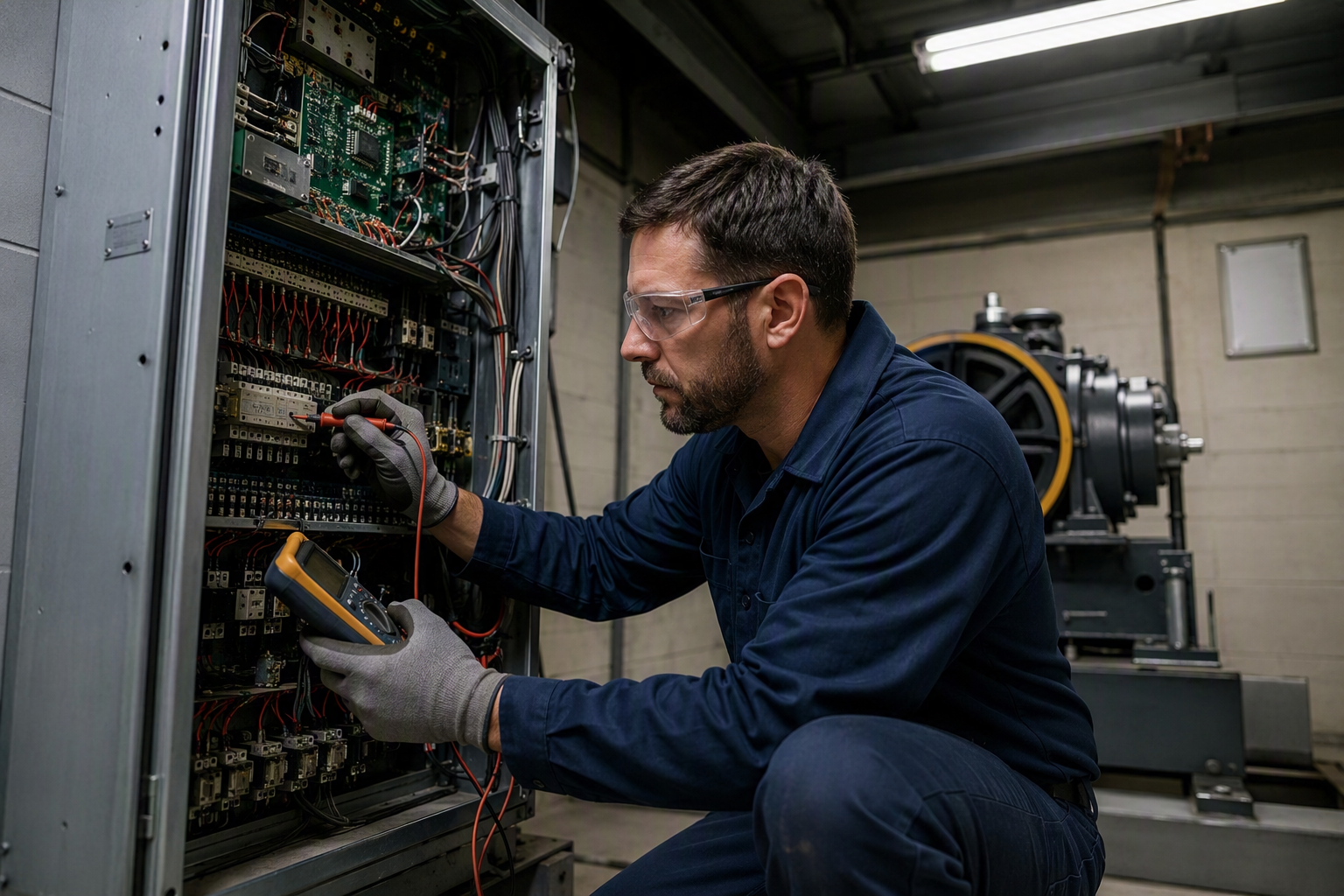
Building type, elevator age, local labor markets, parts availability, and the number of units affected all create enormous variability in downtime costs. A single elevator outage in a low-rise suburban office building carries a fundamentally different financial footprint than an outage in a 40-story downtown hospital or a high-volume airport terminal. For this reason, aggregated industry averages — when cited without methodology — should be treated with caution. The more actionable approach is to assess costs by category and building context, which is the methodology Quality Elevator Company applies during property assessments.
What Does Regulatory Non-Compliance Add to Elevator Downtime Costs?
Compliance failures compound downtime costs substantially. The ASME A17.1 Safety Code for Elevators and Escalators establishes the baseline safety requirements adopted by most U.S. jurisdictions. When an elevator is found out of compliance during an outage investigation — whether due to deferred maintenance, missed inspections, or outdated components — authorities having jurisdiction can mandate extended shutdowns until all deficiencies are corrected. These mandatory shutdowns extend the downtime window from hours to days or weeks.
Additionally, OSHA standards governing workplace safety can apply when elevator failures create hazardous conditions for workers, including maintenance personnel and building staff. OSHA citations carry penalty structures that escalate with the severity of the violation and the employer’s compliance history.
ADA-related costs are particularly significant. Under the ADA, facilities must maintain accessible routes in working order. While the ADA acknowledges that temporary outages occur, patterns of repeated failures or unreasonably long repair timelines can result in formal complaints, Department of Justice investigations, and civil litigation — each carrying its own cost burden.
How Does Building Type Affect Elevator Downtime Costs?
The financial impact of an elevator outage is not uniform across property types. Understanding how building use amplifies or mitigates these costs helps facility managers prioritize investment in reliability.
- Hospitals and healthcare facilities: Patient transport, equipment movement, and staff efficiency are all directly tied to vertical transportation. An elevator outage in a clinical setting can delay procedures, compromise patient safety, and trigger regulatory scrutiny from healthcare accreditation bodies — costs that far exceed any repair invoice.
- Hotels and hospitality: Guest satisfaction scores, online reviews, and direct bookings are directly affected by elevator availability. A guest stranded without elevator access on an upper floor is likely to leave a negative review that influences future booking decisions at scale.
- Commercial office buildings: Tenant leases in Class A and Class B office buildings increasingly include service level expectations. An elevator outage during peak business hours can trigger formal landlord notices and, in some cases, rent abatement clauses.
- Residential multifamily: For older adults, individuals with disabilities, and residents on upper floors, elevator outages are not a minor inconvenience — they are a functional barrier. Prolonged outages in residential buildings generate tenant complaints, regulatory scrutiny, and potential housing code violations.
- Retail and mixed-use: Multi-level retail environments depend on customer mobility. Outages on upper floors can reduce foot traffic, decrease sales, and shift customer patterns in ways that persist after the elevator is restored.
What Are the Hidden Costs of Deferred Elevator Maintenance?
Deferred maintenance is consistently cited by industry professionals as the leading driver of unplanned elevator downtime. When routine lubrication, component inspections, and minor adjustments are skipped to reduce short-term costs, the probability of a major component failure increases substantially. The hidden costs of this approach include:
- Accelerated wear on drive systems, ropes, and guide rails — components that are expensive to replace and require extended lead times for procurement
- Increased frequency of nuisance shutdowns triggered by safety circuits responding to out-of-tolerance conditions
- Higher emergency labor rates when failures occur outside normal business hours
- Reduced useful life of the entire elevator system, compressing the timeline to a full modernization project
- Cumulative compliance gaps that require correction before the elevator can be returned to service
Quality Elevator Company emphasizes a preventive maintenance model precisely because the cost of regular, scheduled service is consistently lower than the aggregate cost of repeated emergency responses and deferred component replacement.
What Should Building Owners Do Immediately When an Elevator Goes Out of Service?
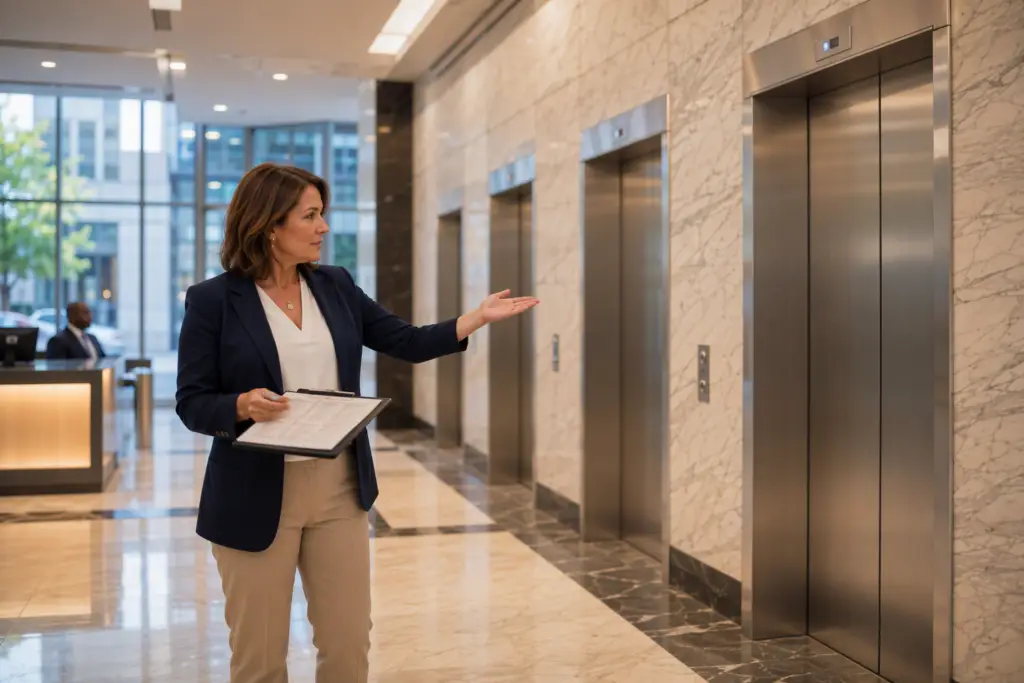
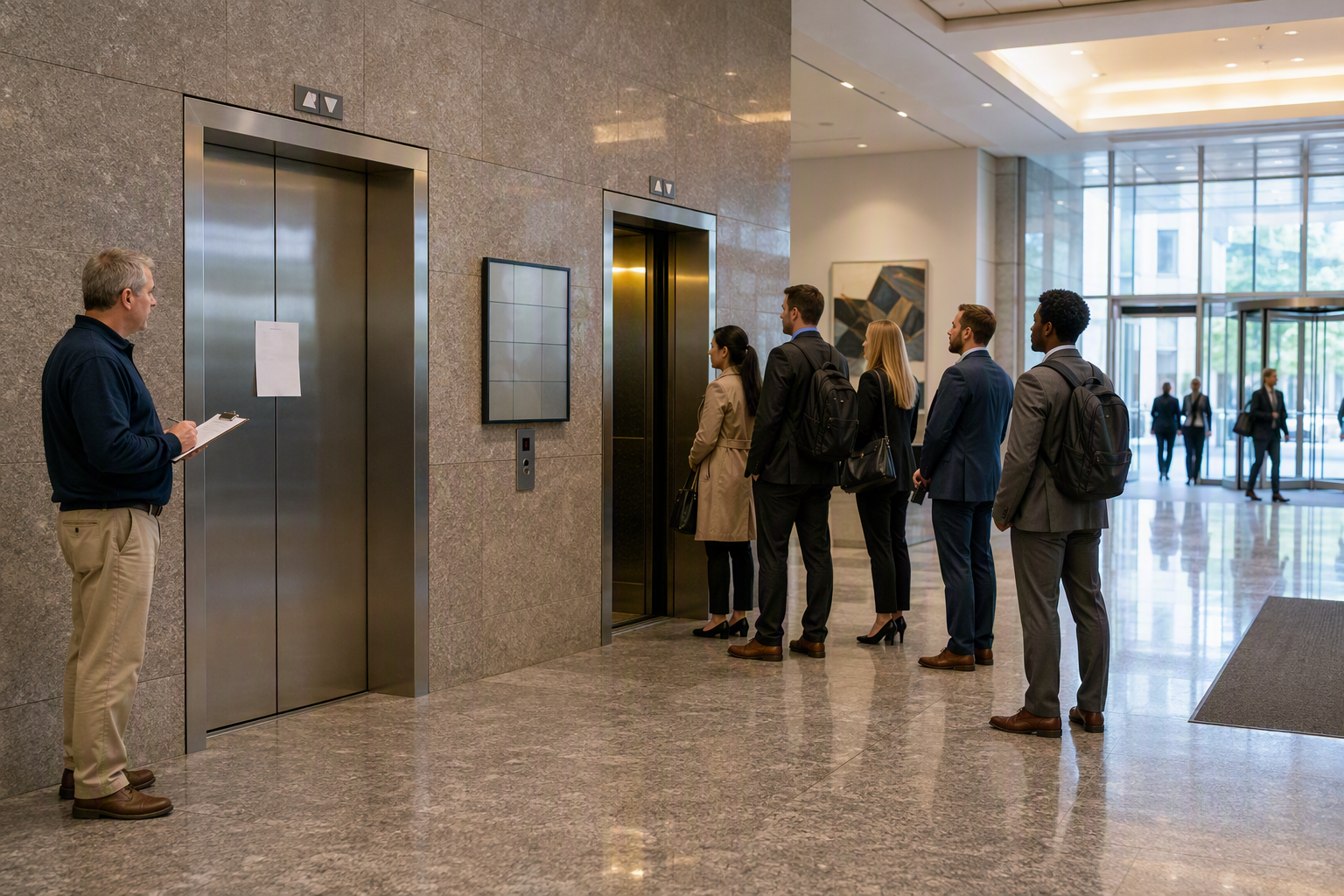
- Notify occupants promptly. Post clear signage at all elevator lobbies and, where applicable, send building-wide communications so occupants can plan alternative routes immediately.
- Assess ADA compliance impact. Determine whether the outage affects the only accessible route to any floor or service. If so, implement an interim accommodation plan — such as designated staff assistance — while repairs are underway, consistent with ADA requirements.
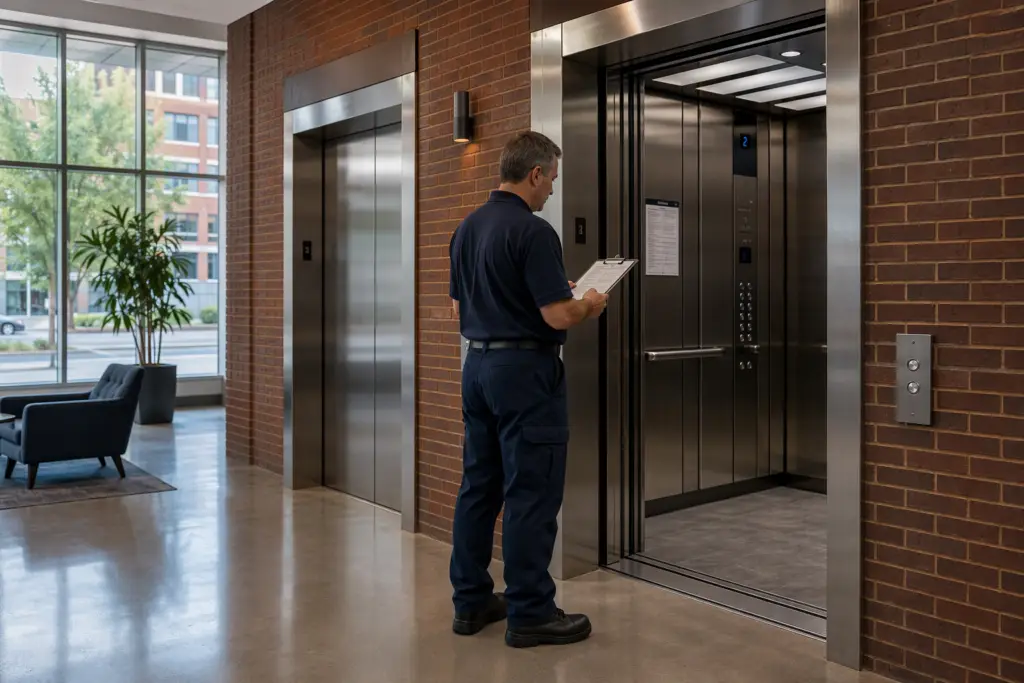
- Contact a licensed elevator service provider. Initiate a service call with a qualified technician to conduct a diagnostic inspection. Do not attempt to reset or restart a tripped elevator without professional assessment.
- Document the outage. Record the time the outage was reported, any unusual conditions noted by occupants, and all communications with the service provider. This documentation is critical for warranty claims, insurance purposes, and regulatory inquiries.
- Notify the authority having jurisdiction if required. Some jurisdictions require building owners to report elevator outages or entrapments to the local elevator inspection authority within a defined timeframe. Verify your local requirements.
- Review your service contract. Confirm what your maintenance agreement covers — specifically whether emergency response, parts, and labor are included or billed separately — so financial exposure can be assessed quickly.
- Communicate an estimated restoration timeline. Once a diagnosis is available, communicate the expected repair timeline to building management, affected tenants, and, where applicable, your property insurer.
- Conduct a post-repair review. After service is restored, schedule a review with your elevator service provider to identify whether the failure reveals a broader maintenance gap or modernization need.
How Do Elevator Age and Technology Affect Downtime Frequency and Cost?
Older elevator systems — particularly those using hydraulic technology installed before the 1990s or traction systems with relay-logic controls — experience higher downtime rates than modern microprocessor-controlled units. Parts availability for legacy systems is a growing concern: as manufacturers discontinue components, procurement delays extend repair timelines and costs proportionally.
Modern elevator systems with remote monitoring capability can detect anomalies before they cause a full outage, allowing service providers to schedule repairs proactively. This connected technology is transforming elevator maintenance from a reactive model to a predictive one — and the financial implications are significant. Buildings that modernize to systems with condition-monitoring capabilities report fewer emergency calls and shorter average repair durations, though specific figures vary by property and service provider.
What Role Does an Elevator Maintenance Contract Play in Controlling Downtime Costs?
The structure of a maintenance contract directly affects both the frequency of outages and the financial exposure when they occur. Comprehensive maintenance agreements typically include scheduled lubrance and adjustment visits, 24-hour emergency response, and parts coverage — shifting much of the variable cost risk from the building owner to the service provider. Time-and-materials arrangements, by contrast, expose building owners to the full cost of emergency labor rates and parts markups each time a failure occurs.
When evaluating maintenance contracts, building owners should assess the scope of covered components, the service provider’s parts inventory and sourcing relationships, and the specific response protocols outlined in the agreement. Quality Elevator Company works with property owners to identify the contract structure that aligns with their risk tolerance and budget constraints.
How Does Elevator Downtime Affect Property Valuation?
Elevator reliability has a measurable impact on commercial property valuation through its effect on net operating income (NOI). Properties with documented histories of repeated elevator outages may experience higher vacancy rates, lower achievable rents, and increased tenant improvement allowances — all of which reduce NOI and, by extension, appraised value. In due diligence reviews for property acquisitions, elevator condition reports and maintenance records are increasingly scrutinized by buyers and their lenders.
A building with a well-documented preventive maintenance history and recent modernization represents lower operational risk, which is reflected in capitalization rate assumptions and overall valuation. Conversely, a property with deferred elevator maintenance may require purchase price adjustments or escrowed funds to address anticipated capital expenditures.
What Industry Trends Are Shaping Elevator Downtime and Costs in 2025 and 2026?
Several converging trends are reshaping how building owners and service providers approach elevator reliability and downtime cost management heading into 2026:
- Predictive maintenance technology: The adoption of IoT sensors and remote monitoring platforms is accelerating across the elevator industry. These systems generate continuous performance data that allows service providers to identify developing issues before they cause failures, shifting the industry’s cost profile toward prevention rather than emergency response.
- Supply chain normalization — but ongoing parts risk: Global supply chain disruptions of recent years created significant parts delays for elevator repairs. While conditions have improved, the underlying vulnerability for legacy systems with discontinued components remains. Building owners with aging equipment face disproportionate exposure to extended downtime from parts unavailability.
- Tightening ADA enforcement focus: Enforcement activity related to accessible route obligations — including elevator maintenance — has remained active. Building owners are advised to treat elevator reliability as a compliance matter, not merely an operational one.
- Energy efficiency and modernization incentives: Some jurisdictions are introducing incentive programs for elevator modernization that improve energy efficiency. These programs can offset modernization costs while simultaneously improving reliability and reducing downtime frequency.
- Code edition updates: Jurisdictions continue to adopt updated editions of the ASME A17.1 Safety Code for Elevators and Escalators. Building owners should work with qualified service providers to understand which code edition applies in their jurisdiction and what compliance obligations flow from recent adoptions.
How Can Building Owners Compare Elevator Service Providers on Reliability Outcomes?
When evaluating elevator service companies, building owners should look beyond price and focus on factors that directly predict downtime frequency and response quality:
- Technician training standards and ongoing education in manufacturer-specific systems
- Local parts inventory depth and access to manufacturer supply chains
- Transparency in maintenance records and service reporting
- Contract terms governing emergency response, parts coverage, and escalation procedures
- References from comparable building types in the local market
- Familiarity with the specific elevator models and control systems in your building
Quality Elevator Company provides prospective clients with thorough elevator assessments that document current system condition, identify reliability risks, and outline maintenance and modernization options — giving building owners the information they need to make decisions grounded in actual equipment data rather than estimates.
Is Elevator Downtime Covered by Commercial Property Insurance?
Standard commercial property insurance policies generally cover physical damage to elevator equipment resulting from covered perils — fire, vandalism, certain mechanical breakdowns under equipment breakdown endorsements. However, business interruption losses attributable to elevator downtime are typically only covered when the outage results from a covered physical loss event, and coverage terms vary significantly by policy.
Building owners should review their policies specifically for elevator-related business interruption coverage, equipment breakdown endorsements, and any exclusions related to deferred maintenance. Insurers increasingly request elevator maintenance records during underwriting and after a claim, making a documented preventive maintenance history valuable from both an operational and insurance standpoint.
What Are the ASME Code Requirements That Affect Elevator Downtime Risk?
The ASME A17.1 Safety Code for Elevators and Escalators establishes requirements for elevator inspection, testing, and maintenance that directly affect downtime risk. Key provisions relevant to reliability include requirements for periodic maintenance by qualified personnel, defined testing intervals for safety devices such as governors and buffers, and documentation standards for maintenance records.
Jurisdictions that have adopted recent code editions also incorporate requirements for firefighters’ emergency operation, seismic performance in applicable zones, and pit safety features — all of which must be maintained in working order. Failures in any of these systems can trigger mandatory shutdowns by the authority having jurisdiction, extending downtime beyond the immediate mechanical repair.
Compliance with OSHA standards is also relevant during maintenance and repair activities, particularly standards governing lockout/tagout procedures, confined space entry for pit work, and personal protective equipment — requirements that affect how quickly and safely repairs can be completed.
How Does Quality Elevator Company Approach Downtime Cost Reduction?
Quality Elevator Company approaches elevator reliability as a system-level challenge rather than an event-by-event repair problem. The company’s service methodology emphasizes thorough equipment assessment, documented preventive maintenance, and proactive identification of components approaching end of service life — all aimed at reducing the frequency and duration of unplanned outages.
For building owners dealing with aging equipment, Quality Elevator Company provides modernization analysis that weighs the ongoing cost of emergency maintenance against the capital investment in updated components and control systems. For properties with newer equipment, the focus is on structured preventive maintenance programs designed to maintain manufacturer performance specifications and code compliance over time.
The company works across a range of building types — commercial, residential, healthcare, and institutional — and brings familiarity with the regulatory environment governing elevator operation in each sector.
Summary: Key Takeaways on Elevator Downtime Costs
- Elevator downtime costs extend well beyond repair invoices to include productivity loss, revenue impact, tenant attrition, liability exposure, and regulatory penalties.
- Building type is the most important variable in determining the financial severity of an outage — healthcare and hospitality properties face the steepest costs.
- Deferred maintenance consistently drives higher long-term downtime costs than structured preventive maintenance programs.
- ADA and ASME code compliance obligations create a regulatory cost layer that compounds when outages are prolonged or recurrent.
- Modern elevator technology with remote monitoring capability offers meaningful downtime reduction compared to legacy systems.
- Comprehensive maintenance contracts shift variable emergency cost risk and support documented compliance histories valuable to insurers and lenders.
Get a Professional Elevator Assessment from Quality Elevator Company
Understanding your building’s elevator downtime risk starts with an honest assessment of current equipment condition, maintenance history, and compliance status. Quality Elevator Company provides free elevator assessments that give building owners and facility managers the data they need to make informed decisions about maintenance, modernization, and service contracts.
Contact Quality Elevator Company for a free elevator assessment: 301-779-9116
Need elevator service you can rely on? Quality Elevator Company is ready to help.