How to Evaluate and Switch Elevator Service Vendors in Healthcare Facilities
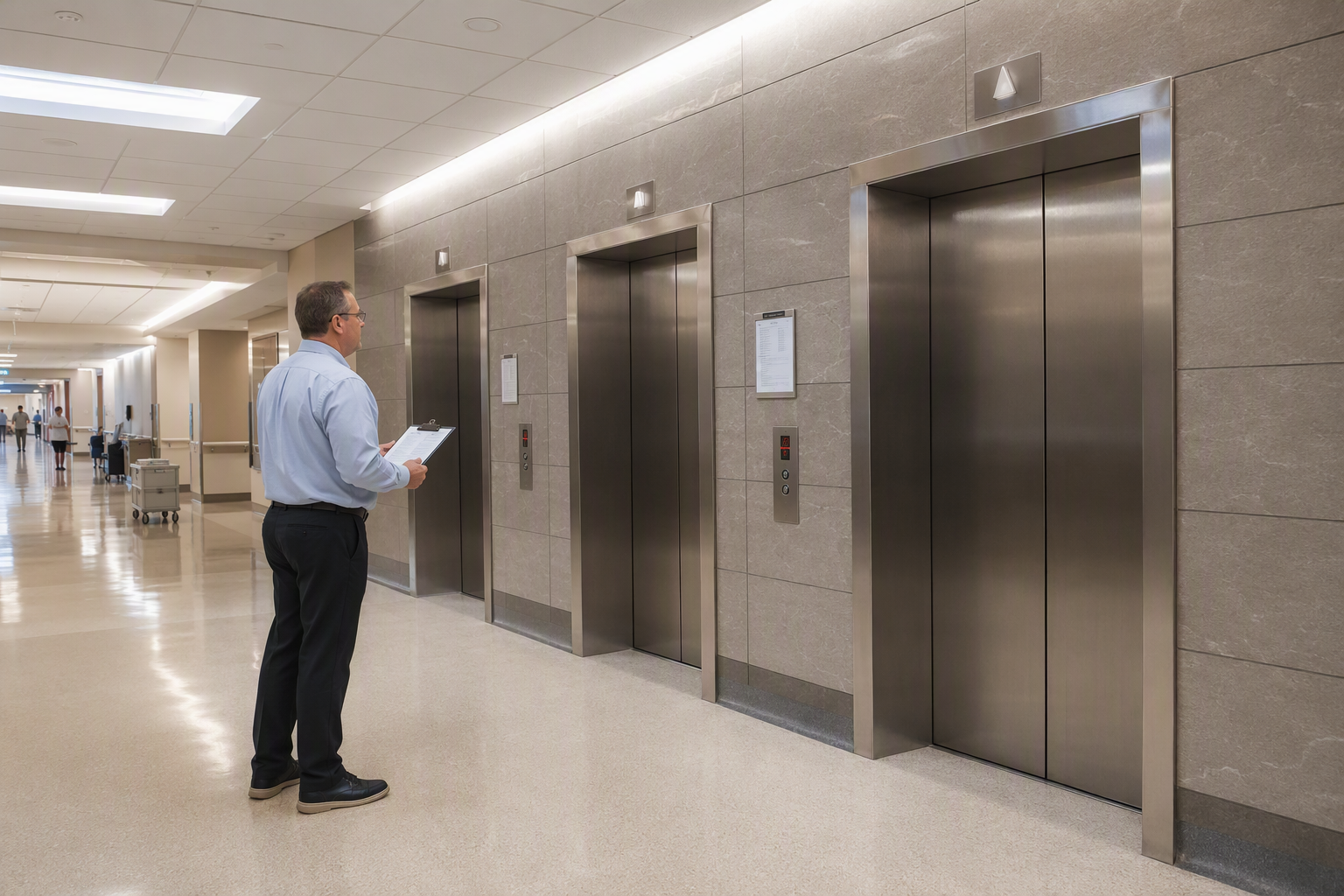
Elevators in hospitals, medical office buildings, long-term care facilities, and outpatient centers are not optional infrastructure — they are life-safety systems. When a service vendor underperforms, the consequences reach beyond inconvenience: delayed patient transport, failed inspections, regulatory exposure, and potential liability. This guide walks healthcare facility managers and directors of engineering through every stage of evaluating an existing vendor relationship and making a compliant, low-disruption switch.
What compliance standards govern hospital and healthcare elevator service?
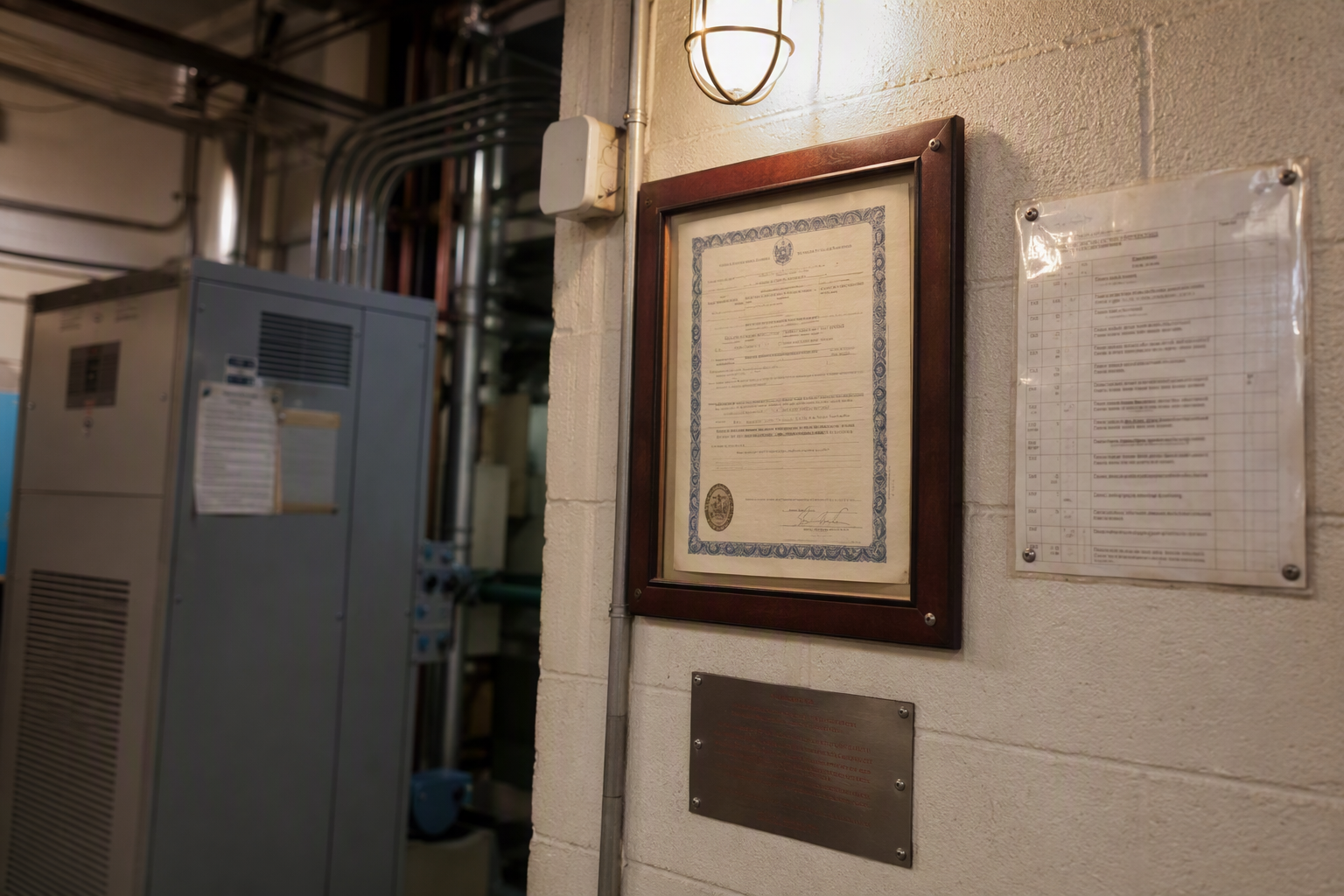
Healthcare elevators operate under a layered compliance framework that any qualified service vendor must demonstrate mastery of:
- ASME A17.1 Safety Code for Elevators and Escalators: The foundational national code governing design, installation, operation, inspection, testing, and maintenance of elevators. The 2022 edition (currently applicable in most jurisdictions in 2026) sets specific requirements for emergency operations, firefighter service, and periodic inspection intervals.
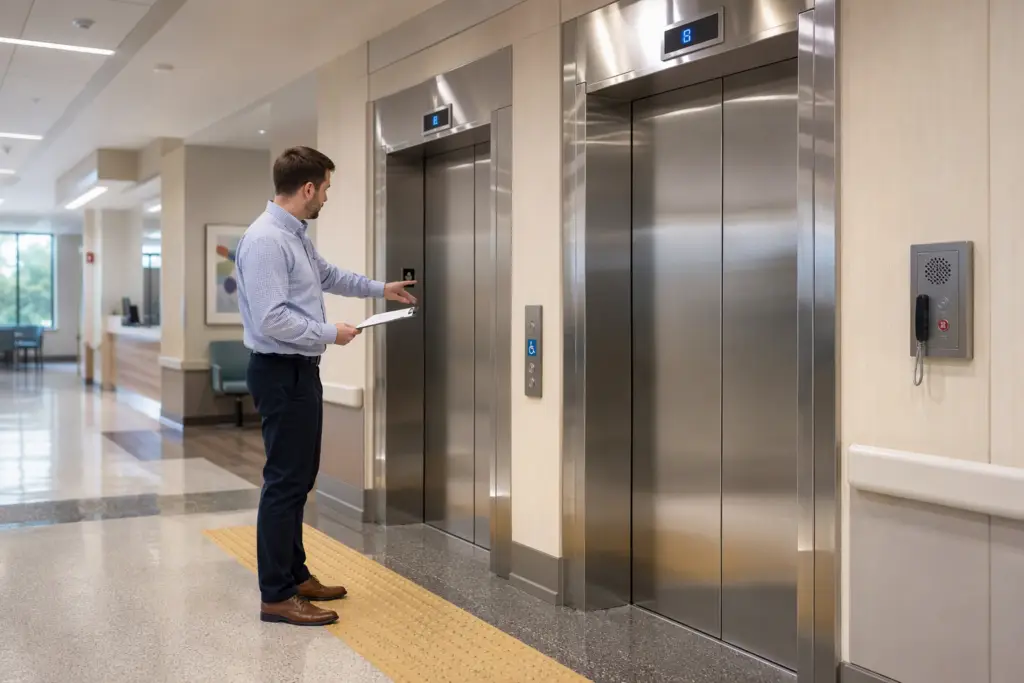
- Americans with Disabilities Act (ADA): Requires that elevators serving public and common-use areas in healthcare facilities meet accessibility standards — including cab dimensions, control height, door timing, and tactile signage. Non-compliance can trigger federal complaints and require costly retrofits.
- State elevator safety codes: Maryland, Virginia, Pennsylvania, and the District of Columbia each adopt and enforce elevator safety regulations through their respective labor or licensing departments. These jurisdictions reference ASME A17.1 but may impose additional inspection frequency or permitting requirements. Confirm the current edition adopted in your state before any service transition.
- The Joint Commission and CMS standards: Hospitals and other Joint Commission–accredited or CMS-certified facilities must maintain documented evidence of elevator preventive maintenance and corrective repairs. Elevator maintenance records are regularly reviewed during Environment of Care (EC) surveys.
- OSHA General Duty Clause: Employers, including healthcare facility operators, are responsible for protecting employees from recognized hazards. Elevator entrapments, door malfunctions, and leveling failures in clinical areas constitute recognized hazards under this standard.
Quality Elevator Company maintains compliance expertise across all four markets — Baltimore MD, Washington DC, Philadelphia PA, and Richmond VA — and can document service work in formats accepted by state inspectors and accreditation surveyors.
What are the warning signs that a healthcare facility should consider switching elevator vendors?

Facility managers should treat the following as documented indicators that a vendor evaluation is overdue:
- Repeated callbacks for the same mechanical failures without root-cause resolution
- Inspection violations or deficiencies noted on state inspection certificates that remain uncorrected past the required timeframe
- Difficulty obtaining maintenance logs, parts records, or inspection certificates on request
- Entrapments involving patients, staff, or visitors — particularly if incident frequency is increasing
- Vendor technicians unfamiliar with the specific controller or drive technology installed in your building
- Poor communication during emergencies, including delayed response to entrapment calls
- Invoices for parts or labor that do not align with the scope of a full-maintenance contract
- ADA-related callbacks — door reopening failures, leveling drift — that recur without permanent correction
How should a healthcare facility audit its current elevator maintenance records?
Before issuing any request for proposal or contacting a new vendor, the facility’s engineering or facilities team should conduct an internal records audit:
- Collect the current state inspection certificate for every elevator and escalator on the property and verify that no outstanding violations exist.
- Request from the incumbent vendor a complete maintenance history for each unit, including all service calls, parts replaced, and lubrication logs for the past 24 months.
- Pull all entrapment and incident reports and cross-reference them against the maintenance log to identify recurring failure patterns.
- Confirm that firefighter emergency operation testing, required under ASME A17.1, has been performed and documented within the required intervals.
- Review the existing service contract to identify notice periods, equipment ownership clauses (particularly for proprietary controllers), and any exclusivity provisions that could affect a transition.
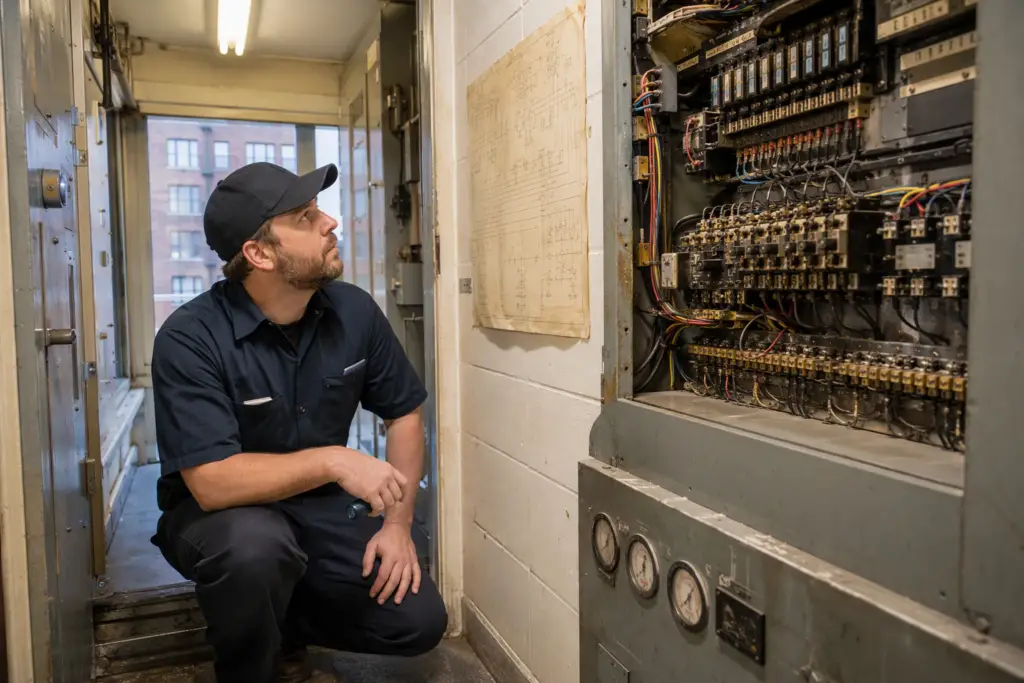
- Assess the physical condition of machine rooms, pits, and hoistways against ASME standards for cleanliness and safety.
What should a healthcare facility include in an elevator service RFP?
A well-structured request for proposal protects the facility and surfaces meaningful differences between competing vendors. Include the following elements:
- Full equipment inventory: manufacturer, model, controller type, year of installation, and drive system for each unit
- Current inspection status and any outstanding violations or notices
- Scope definition: whether the contract is oil-and-grease, full maintenance, or full maintenance with modernization options
- Documentation requirements: format and frequency of maintenance logs, inspection reports, and corrective repair records aligned with Joint Commission EC standards
- Emergency response expectations: defined protocols for entrapment response and after-hours callbacks
- Technician qualification requirements: familiarity with your specific controller make and model
- Compliance representations: written commitment to ASME A17.1 and ADA standards, and knowledge of state code adoptions in your jurisdiction
- References from comparable healthcare accounts in your market
How do you compare elevator service proposals fairly across vendors?
Proposals from different vendors are rarely structured identically. To compare them fairly:
- Normalize each proposal to the same scope — a “full maintenance” contract from one vendor may exclude items another vendor includes by default.
- Evaluate parts exclusions carefully. Some contracts exclude hydraulic cylinders, rails, structural components, or proprietary software updates.
- Ask each vendor to specify whether they employ their own licensed mechanics or subcontract the work. In healthcare environments, continuity and accountability matter.
- Request a sample maintenance log and corrective repair report so you can evaluate whether the documentation will satisfy Joint Commission reviewers.
- Assess the vendor’s familiarity with your specific equipment. A vendor with documented experience on your controller type will diagnose faults faster and reduce equipment downtime.
What is the step-by-step process for switching elevator service vendors in a healthcare facility?
- Complete the internal records audit described above and identify any open violations or pending repairs the incumbent vendor is responsible for resolving before contract end.
- Review the existing contract for required notice period — typically 30 to 90 days — and serve written notice within that window to avoid automatic renewal.
- Issue the RFP to a shortlist of qualified vendors and evaluate responses using a standardized scoring matrix.
- Select the preferred vendor and negotiate contract terms, including transition provisions, documentation handoff, and any modernization roadmap.
- Schedule a joint walkthrough with the outgoing and incoming vendors — or with the incoming vendor alone if the outgoing party is uncooperative — to document current equipment condition and outstanding items.
- Obtain all equipment documentation from the outgoing vendor: wiring diagrams, parts manuals, access codes, and proprietary controller credentials. Note that some manufacturers restrict access to proprietary software; address this in the contract and, if necessary, escalate to the equipment OEM.
- Notify state elevator safety authorities if required by your jurisdiction of the change in service firm of record.
- Brief the facility’s clinical and facilities staff on the new vendor’s contact protocols and emergency procedures.
- Confirm that the new vendor has performed an initial condition assessment and that all findings are documented in writing before the first scheduled preventive maintenance visit.
What risks exist when switching elevator vendors and how can they be mitigated?
Transition risks are real but manageable with preparation:
- Proprietary controller lock-in: Some equipment manufacturers restrict third-party access to controller diagnostics. Before switching, the facility should request controller access credentials from the OEM directly or include an open-access requirement in any future modernization specifications.
- Documentation gaps: If the outgoing vendor has incomplete records, the incoming vendor should perform a full condition audit at transition and document the baseline independently.
- Inspection timing: If a state annual inspection is scheduled during or shortly after the transition, coordinate with the new vendor to ensure it is not missed. A lapsed inspection certificate in a healthcare facility can trigger survey findings.
- Staff communication: Clinical staff who rely on elevators for patient transport should receive clear communication about any planned maintenance windows during the transition period.
How long does switching elevator service vendors typically take?
The timeline depends primarily on the notice period in the existing contract and the complexity of the equipment portfolio. A single-building medical office with standard equipment may transition in 30 days. A multi-tower hospital campus with varied controller types and proprietary systems may require 60 to 90 days or more to execute a full, documented transition. Planning the transition during a lower-acuity period — avoiding Joint Commission survey windows, for example — reduces operational risk.
Does switching vendors affect a facility’s state elevator inspection status?
No — the state inspection certificate is issued to the building, not the service vendor. However, some jurisdictions require notification when the firm of record changes, and the new vendor should confirm this requirement for Maryland, DC, Pennsylvania, and Virginia accounts specifically. Any open violations on the certificate remain the facility’s responsibility regardless of which vendor is in place; the transition is an opportunity to close those items formally with the incoming provider.
What questions should a healthcare facility ask during vendor interviews?
- Can you provide references from hospitals or healthcare facilities currently under contract with you in this market?
- What is your documented protocol for elevator entrapments involving patients or medical personnel?
- How do you document compliance with ASME A17.1 firefighter emergency operation testing requirements?
- Are your technicians familiar with our specific controller make and model?
- How will maintenance records be provided — format, frequency, and access method?
- What is your process when a violation is noted during a state inspection?
- How do you handle ADA-related callbacks such as door timing drift or leveling failures?
Questions Your Inspector Will Ask
State elevator inspectors and Joint Commission Environment of Care surveyors commonly ask the following. Your new vendor should be prepared to support documentation for all of them:
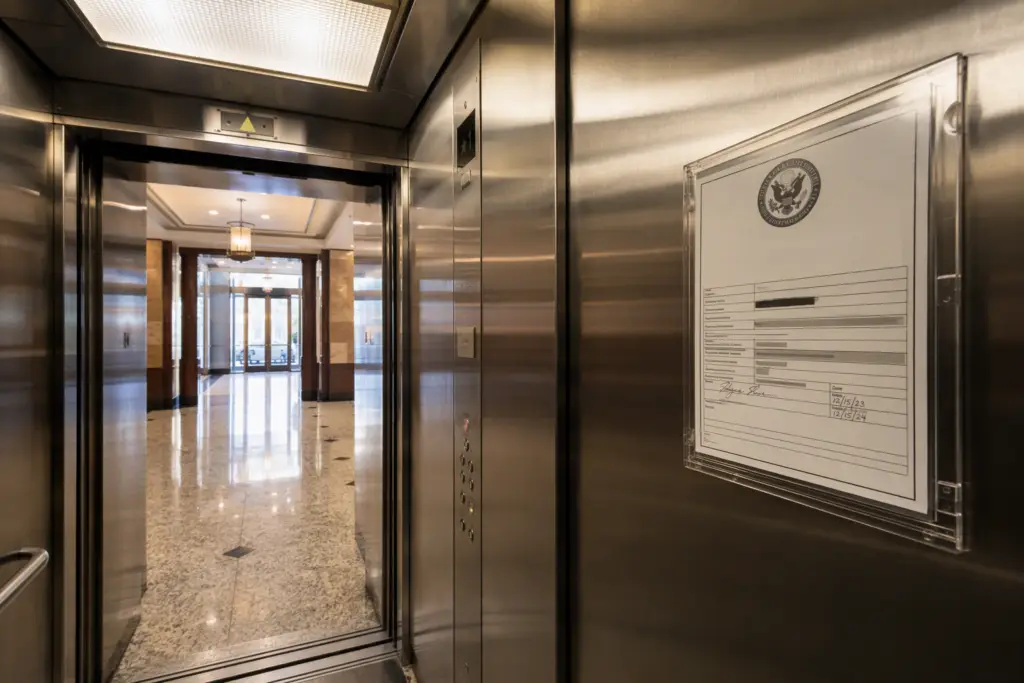
- Is the current inspection certificate posted inside the cab? Required in all four jurisdictions served by Quality Elevator Company.
- Has firefighter emergency operation (Phase I and Phase II) been tested within the required interval? Frequency and documentation requirements are set under ASME A17.1.
- Is the machine room clean, properly lit, and free of non-elevator storage? A common citation that reflects on maintenance quality.
- Are maintenance logs available and current? Joint Commission EC standards require documented evidence of preventive maintenance completion.
- Have all previously cited violations been corrected and signed off? Open violations from a prior inspection cycle create immediate findings.
- Are pit ladder, pit lighting, and pit stop switch compliant? Inspectors check these on virtually every visit.
- Are ADA-required features — door hold-open time, cab height, control panel reach range — functioning correctly?
- Is there a current service contract in place, and who is the firm of record? Inspectors in some jurisdictions require this to be on file.
Why do healthcare facilities in Baltimore, DC, Philadelphia, and Richmond choose Quality Elevator Company?
Quality Elevator Company serves healthcare accounts across Maryland, the District of Columbia, Pennsylvania, and Virginia with a focus on code-compliant, fully documented preventive maintenance and responsive corrective service. Healthcare facility teams working with Quality Elevator Company receive maintenance records formatted to support Joint Commission Environment of Care documentation requirements and state inspection compliance. The company’s technicians are trained on a wide range of elevator and escalator systems common in the healthcare built environment across these markets.
For facility managers preparing to evaluate vendors or execute a transition, Quality Elevator Company offers a structured assessment process designed to establish an accurate equipment baseline, identify open compliance items, and produce a transition documentation package the facility can present to inspectors and surveyors.
Start Your Healthcare Elevator Vendor Evaluation Today
Switching elevator service vendors in a healthcare facility requires careful documentation, compliance coordination, and a structured transition plan. Quality Elevator Company provides free elevator assessments for healthcare facilities across Baltimore MD, Washington DC, Philadelphia PA, and Richmond VA — giving facility managers the baseline data they need to make an informed vendor decision.
Contact Quality Elevator Company for a free elevator assessment: 301-779-9116
Need elevator service you can rely on? Quality Elevator Company is ready to help.