Emergency Elevator Repair in Washington DC: Complete FAQ Guide
When an elevator fails unexpectedly in Washington DC — whether in a government building, a commercial high-rise, a hotel, or a residential complex — every minute of downtime carries real consequences: stranded passengers, liability exposure, ADA compliance violations, and disrupted building operations. This comprehensive FAQ covers everything property managers, building owners, and facility directors need to know about emergency elevator repair in Washington DC, from the moment of failure through to full code-compliant restoration.
What counts as a true elevator emergency in Washington DC?
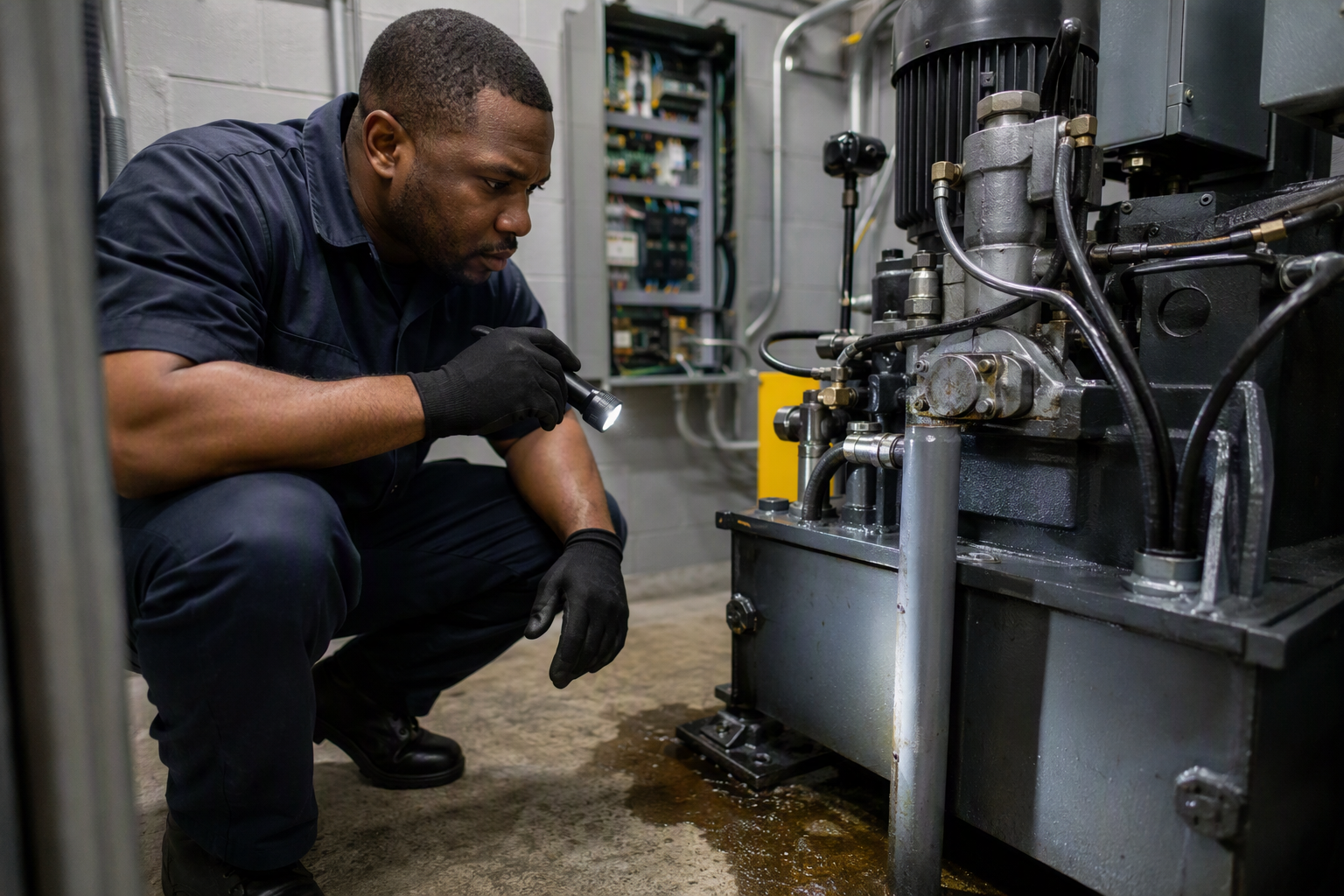
A true elevator emergency is any condition that either endangers occupants or renders the elevator unsafe for continued operation, including passenger entrapment, door malfunctions that prevent exit, unusual noises indicating mechanical failure, leveling problems, smoke or burning odors, electrical faults, or hydraulic fluid leaks.
Washington DC elevator owners and operators should understand that not all outages are equal. A routine mechanical fault causing an elevator to go out of service is serious, but it differs from a life-safety emergency. True emergencies requiring immediate action include:
- Passenger entrapment — Any person trapped inside a stalled elevator car must be freed by a qualified technician or emergency responder. Passengers should never attempt to force doors or exit through ceiling hatches without professional guidance.
- Door failures — Doors that will not open at a landing, or that open between floors, create immediate fall hazards and must be addressed without delay.
- Abnormal movement or leveling failure — If a car stops significantly above or below a floor landing, there is a trip-and-fall risk. This condition also indicates a potential drive or brake system problem.
- Burning smells or smoke — These may indicate motor overheating, electrical arcing, or hydraulic oil contacting hot components. The elevator machine room should be inspected immediately.
- Hydraulic leaks — Hydraulic elevators that develop oil leaks can fail suddenly and present environmental hazards under DC and federal regulations.
Under ASME A17.1 Safety Code for Elevators and Escalators, any device that does not meet the code’s safety requirements must be removed from service until it is repaired and restored to compliant condition. Building owners who continue to operate unsafe elevators face liability under both DC municipal code and federal ADA requirements.
What should building staff do immediately when an elevator fails?
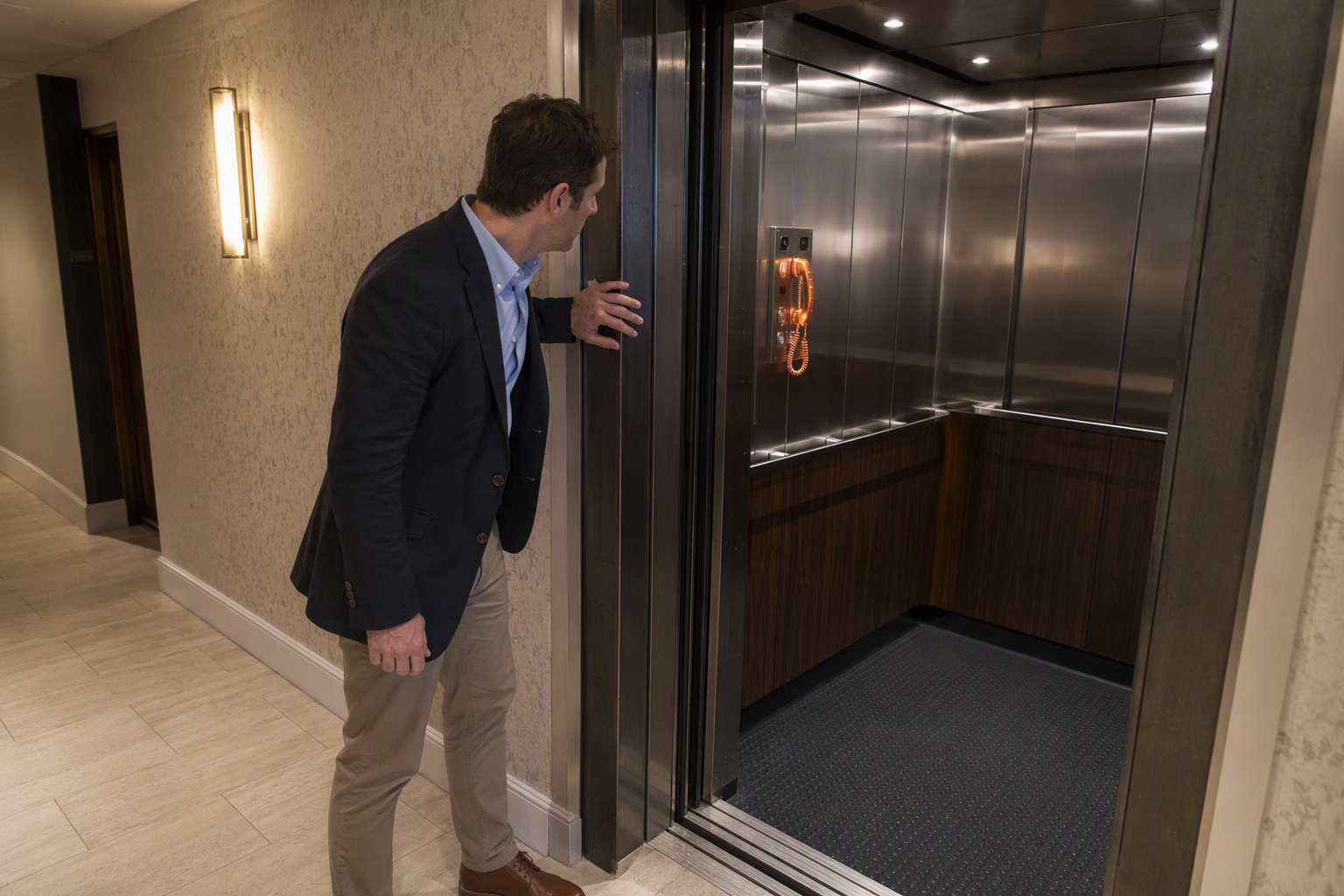
Building staff should follow a clear emergency protocol: secure the elevator, communicate with any trapped passengers, notify emergency services if entrapment is confirmed, and contact a certified elevator service company to dispatch a technician.
- Disable the elevator at the main line disconnect or emergency stop switch — This prevents the car from attempting further movement and protects both passengers and equipment from additional damage.
- Communicate with trapped passengers immediately — Use the in-car emergency telephone (required under ASME A17.1) to reassure occupants, confirm the number of people inside, and assess any medical emergencies.
- Call 911 if passengers are in medical distress or cannot be communicated with — DC Fire and EMS are trained in passenger retrieval; however, they do not repair the elevator itself.
- Post “Out of Service” signage at all landings — Prevent additional users from attempting to board the elevator or pressing call buttons.
- Contact a licensed elevator service company — Provide the make, model, and location of the elevator, a description of the fault, and whether passengers are currently trapped.
- Document the incident — Record the time of failure, symptoms observed, and all actions taken. This documentation supports regulatory reporting requirements and any insurance claims.
- Notify the DC Department of Consumer and Regulatory Affairs (DCRA) — Washington DC requires elevator owners to report certain incidents, including passenger entrapments and accidents, to the local authority having jurisdiction (AHJ).
- Secure the machine room — Keep unauthorized personnel away from the elevator machine room, pit, and hoistway until the technician arrives.
Who is responsible for emergency elevator repairs in a Washington DC building?
Under Washington DC law, the building owner or property management company bears legal responsibility for maintaining elevators in safe, code-compliant condition, which includes arranging emergency repairs when failures occur.
This responsibility is not transferable to tenants or elevator passengers, regardless of lease terms. Washington DC enforces elevator safety through the DCRA’s Elevator Inspection Program. Owners of buildings with elevators must maintain valid inspection certificates — devices without current certificates are in violation even before a mechanical failure occurs.
Property managers should ensure they have an active service contract with a certified elevator company that includes emergency response provisions. Buildings in Washington DC that serve the public or house tenants also have ongoing obligations under the Americans with Disabilities Act (ADA), which requires that accessible routes — including elevators in multi-story buildings — be maintained and operational. An elevator outage that removes the only accessible route to upper floors in a public accommodation may constitute an ADA violation requiring prompt remediation.
What regulations govern elevator safety and emergency repairs in Washington DC?
Washington DC elevator safety is governed primarily by ASME A17.1, locally adopted municipal regulations enforced by the DCRA, federal ADA requirements, and OSHA standards that apply to elevator technicians working on the equipment.
| Regulation / Standard | Governing Body | Primary Application | Reference |
|---|---|---|---|
| ASME A17.1 Safety Code for Elevators and Escalators | American Society of Mechanical Engineers | Design, construction, installation, operation, inspection, testing, maintenance, alteration, and repair of elevators | asme.org/codes-standards |
| ASME A17.3 Safety Code for Existing Elevators and Escalators | American Society of Mechanical Engineers | Retroactive safety requirements for elevators already in service | asme.org/codes-standards |
| Americans with Disabilities Act (ADA) | U.S. Department of Justice | Accessible route requirements, elevator availability in public accommodations and commercial facilities | ada.gov |
| OSHA 29 CFR 1926 Subpart R | U.S. Occupational Safety and Health Administration | Worker safety during elevator installation, maintenance, and repair operations | osha.gov |
| DC Municipal Regulations — DCRA Elevator Inspection Program | DC Department of Consumer and Regulatory Affairs | Local licensing, inspection certificates, incident reporting, and enforcement within Washington DC | DCRA.dc.gov (consult directly) |
It is important to note that Washington DC adopts ASME codes by reference and may enforce specific editions. Property managers should verify with the DCRA which edition is currently in force in 2026, as code adoptions can lag behind the most recent ASME publications. Quality Elevator Company maintains current knowledge of the applicable code editions in all markets it serves, including Washington DC.
How quickly does an elevator need to be repaired after an emergency shutdown?
There is no single mandated repair timeline in ASME A17.1 or DC regulations, but elevators must remain out of service until the fault is corrected, inspected, and cleared — and ADA obligations may require prioritizing repairs that affect the only accessible route in a building.
The practical urgency of emergency repairs depends on several factors: the nature of the fault, parts availability, the type of building, and whether the elevator is the only accessible means of vertical travel. In buildings subject to the ADA — virtually all commercial properties and public accommodations in Washington DC — a prolonged outage affecting accessibility can trigger complaints to the U.S. Department of Justice and civil litigation. Building owners should treat elevator accessibility as a continuous obligation, not a best-effort target.
From a practical standpoint, common emergency repairs such as door operator replacements, controller faults, and brake adjustments can often be resolved within hours if a well-equipped service company responds promptly. More complex issues — such as traction machine overhauls, hydraulic cylinder replacements, or control system failures requiring specialized parts — may require additional time and interim planning, such as posting staff to assist building occupants or arranging temporary lift solutions for ADA-covered individuals.
What are the most common causes of emergency elevator failures in Washington DC?
The most common causes of emergency elevator failures include door system malfunctions, worn brake components, control system faults, aging hydraulic components, and deferred maintenance that allows minor issues to escalate into full failures.
Washington DC’s building stock includes a wide range of elevator vintages — from historic federal and commercial buildings with older traction systems to modern high-rises with microprocessor controls. Each presents distinct failure modes:
- Door operator failures — The door system is the single most common source of elevator service calls. Worn rollers, misaligned tracks, failing door motors, and defective door safety edges all cause entrapments and unplanned shutdowns.
- Brake system wear — Traction elevator brakes are safety-critical components. Worn brake linings or improper brake adjustment can cause the car to overshoot landings or fail to hold position, triggering safety circuits that shut the elevator down.
- Control system and circuit board failures — Older relay-logic controllers and modern microprocessor-based controllers can both fail due to age, moisture, power surges, or component degradation. Sourcing replacement circuit boards for discontinued controllers can be a significant challenge.
- Hydraulic leaks and pump failures — Hydraulic elevators in older Washington DC buildings may have aging cylinders prone to seepage. A failed hydraulic pump or ruptured seal will cause the car to settle or refuse to travel.
- Safety device activation — ASME A17.1-required safety devices, including overspeed governors, buffer impacts, and pit flooding switches, will intentionally shut an elevator down when they detect unsafe conditions. While this is correct behavior, the elevator remains out of service until the underlying condition is corrected and the device is manually reset by a technician.
- Power quality issues — Washington DC’s power grid serves high-density commercial and government facilities. Voltage fluctuations, phase loss, and power outages are common triggers for elevator faults, particularly on systems with sensitive electronic controls.
What qualifications should an emergency elevator repair company have in Washington DC?
Emergency elevator repair companies working in Washington DC must employ technicians certified or licensed in accordance with local requirements, follow ASME A17.1 repair procedures, and hold appropriate contractor licensing recognized by the DCRA.
When evaluating an emergency elevator service provider, building owners should confirm:
- Technician qualifications — Elevator mechanics should hold certifications consistent with local licensing requirements. The DCRA oversees elevator contractor and mechanic licensing in Washington DC.
- Familiarity with the elevator type — Service companies should demonstrate experience with the specific brand and type of equipment installed, whether it is a traction, hydraulic, or MRL (machine-room-less) system.
- Compliance knowledge — The company must understand current ASME A17.1 requirements and local DC enforcement practices, including post-repair inspection and certificate reinstatement procedures.
- Parts inventory and procurement capability — Emergency repairs are only as fast as parts availability. A well-resourced company maintains critical spare parts inventory and established supply chains for major elevator manufacturers.
- Insurance and bonding — Verify that the company carries adequate general liability and workers’ compensation coverage before allowing work to begin.
Quality Elevator Company is a certified elevator service company serving Washington DC and surrounding markets, with the technical expertise to respond to emergency repair situations and restore elevators to code-compliant operation.
Can a building continue operating with an elevator out of service in Washington DC?
A building may continue operating with an elevator out of service only if it can remain compliant with ADA accessibility requirements, applicable fire codes, and local DC regulations — in many multi-story buildings, this is not possible without triggering legal obligations.
In buildings where the out-of-service elevator is the sole accessible means of vertical travel, the ADA imposes an obligation on covered entities to provide alternative access for individuals with disabilities. This may include offering services on an accessible floor, providing staff assistance, or temporarily relocating functions. These are interim accommodations, not substitutes for repairing the elevator.
Property owners should also review their lease agreements and insurance policies, as elevator outages that cause tenant disruption or injury may trigger contractual obligations and claims. Proactive communication with tenants and expedited repair efforts are strongly advised.
What happens after the emergency repair is completed — is an inspection required?
Yes, in Washington DC, elevators that have undergone repairs affecting safety-related components typically require inspection and approval by the authority having jurisdiction before being returned to passenger service.
Under ASME A17.1, alterations and certain repairs require witnessing by an authorized inspector. Washington DC’s DCRA elevator program enforces this requirement locally. The certified elevator service company performing the repair is responsible for understanding when a post-repair inspection is required and for coordinating with the DCRA accordingly.
Building owners should not assume that because a technician has cleared the fault and the elevator runs, it is automatically compliant and legally operable. Returning an elevator to service without required inspection can expose the owner to enforcement action and ongoing liability. Quality Elevator Company’s service process includes identifying post-repair inspection requirements and supporting the reinstatement of valid operating certificates.
How does emergency elevator repair differ from routine maintenance in Washington DC?
Emergency elevator repair addresses an immediate, unplanned failure that has taken the elevator out of service or created a safety hazard, while routine maintenance is a scheduled, proactive program designed to prevent those failures from occurring in the first place.
The distinction matters practically because emergency repairs are typically unplanned, time-pressured, and may involve sourcing parts on short notice — all factors that affect complexity and resolution time. Routine maintenance, by contrast, allows technicians to catch wear, adjust components, lubricate moving parts, test safety devices, and replace consumables before they cause a shutdown.
ASME A17.1 requires that elevators be maintained in a safe operating condition. A documented, consistent maintenance program is not optional — it is a code requirement. Buildings without active maintenance contracts are more likely to experience emergency failures and may face regulatory scrutiny if an incident occurs and maintenance records cannot be produced. Property managers in Washington DC are advised to treat their elevator maintenance program as infrastructure-critical, not discretionary.
What is involved in a hydraulic elevator emergency repair versus a traction elevator emergency repair?
Hydraulic and traction elevator emergencies involve fundamentally different systems, failure modes, and repair procedures — hydraulic emergencies often center on fluid and mechanical pump systems, while traction emergencies typically involve brake, motor, rope, or control system components.
Hydraulic elevator emergencies in Washington DC may involve:
- Loss of hydraulic pressure due to pump failure or fluid leaks, causing the car to descend or refuse to travel upward
- Ruptured or leaking hydraulic cylinders — a particularly serious issue in older single-bottom cylinders, which ASME A17.1 and ASME A17.3 have addressed through modernization requirements
- Hydraulic fluid contamination or overheating, which affects system performance and can damage pump components
- Environmental containment requirements — DC regulations and federal environmental guidelines require proper management of spilled hydraulic fluid
Traction elevator emergencies may involve:
- Brake failures causing the car to move uncontrolled or fail to hold position at a landing
- Worn or broken hoist ropes requiring immediate replacement before the elevator can resume service
- Drive machine failures — motor or gearbox problems that prevent the car from traveling
- Counterweight or governor issues that activate emergency stop mechanisms
- Controller and drive faults on variable-frequency drive (VFD) systems that require specialized diagnostic capability
How can building owners in Washington DC prepare for elevator emergencies before they happen?
Proactive preparation — including maintaining an active service contract, keeping equipment documentation current, training building staff on emergency protocols, and ensuring communication systems are functional — significantly reduces the impact of elevator emergencies when they occur.
- Establish a service contract with a certified elevator company — Choose a company with demonstrated capability in emergency response for the specific equipment types in the building.
- Maintain a current equipment file — Keep records of the elevator make, model, serial number, last inspection date, and maintenance history in an accessible location. Technicians dispatched for emergencies can respond more effectively with this information.
- Test the emergency telephone monthly — ASME A17.1 requires a means of two-way communication in elevator cars. Test it regularly to ensure it connects to a monitored location and that the building address is correctly registered with the monitoring service or call center.
- Train building staff on the emergency response protocol — Staff should know how to disable the elevator, communicate with trapped passengers, contact emergency services, and reach the elevator service company without delay.
- Post emergency instructions at each elevator landing — Include the elevator service company’s emergency contact number alongside the DCRA information and building management contact.
- Verify inspection certificates are current — A lapsed inspection certificate is a compliance violation independent of mechanical condition. Review certificate expiration dates proactively.
- Schedule periodic safety audits — Beyond routine maintenance, periodic independent assessments can identify emerging issues before they cause emergency shutdowns.
What should building owners know about elevator entrapment liability in Washington DC?
Building owners in Washington DC face significant legal exposure when passengers are entrapped in elevators, particularly if deferred maintenance, a lapsed inspection certificate, or delayed response contributed to the incident.
Liability in elevator entrapment cases typically examines whether the owner fulfilled their duty of care under DC law, which includes maintaining the elevator in code-compliant condition, ensuring valid inspection certificates, and responding appropriately to known defects. Courts and insurers will look for maintenance records, inspection history, and documentation of prior complaints or repair orders.
Owners who cannot demonstrate a consistent maintenance program or who continued to operate an elevator with known deficiencies are in a significantly weaker legal position. The ADA adds a further dimension when entrapped individuals include passengers with disabilities whose ability to self-rescue is limited. Proper maintenance programs, current inspection certificates, and prompt emergency response are the most effective risk mitigation tools available.
How do emergency elevator repairs affect a building’s inspection certificate in Washington DC?
Depending on the nature of the repair, a building’s elevator inspection certificate may need to be updated or reissued by the DCRA before the elevator can legally return to passenger service following an emergency repair.
The DCRA’s elevator inspection program issues certificates of operation that have defined validity periods. When a repair involves components that are subject to inspection under ASME A17.1 — including safety devices, brakes, buffers, door interlocks, and structural components — the jurisdiction’s inspector may need to witness a test before reinstating the certificate. The elevator service company performing the repair should advise the building owner on whether a post-repair inspection is required and assist with scheduling.
Returning an elevator to service on an expired or invalidated certificate while the building is occupied can constitute a violation under DC regulations and exposes the owner to fines and enforcement action. Building owners should never assume the elevator is operationally cleared without confirming the certificate status with their service provider and the DCRA.
What role does OSHA play in emergency elevator repair situations?
OSHA standards apply to the safety of the elevator technicians performing emergency repairs, establishing requirements for lockout/tagout procedures, personal protective equipment, hoistway access, and pit safety that service companies must follow during all repair work.
Under OSHA regulations, elevator mechanics working in hoistways, machine rooms, and pits are subject to specific safety requirements governing fall protection, electrical hazard control, and the control of hazardous energy (lockout/tagout). In emergency situations where there is pressure to restore service quickly, it is critical that the service company does not bypass these safety procedures. A technician injured on site compounds the building owner’s liability and delays repair completion.
Building owners facilitating emergency repair work should ensure that the machine room and pit are accessible, clear of obstacles, and that unauthorized personnel are kept away from the work area. Cooperation with the service technician’s safety protocol is both legally required and practically important for efficient repair work.
What types of elevators commonly require emergency repairs in Washington DC commercial buildings?
Washington DC’s commercial and government building stock encompasses hydraulic elevators in low-rise buildings, geared and gearless traction elevators in mid- and high-rise structures, and an increasing number of machine-room-less (MRL) traction systems in newer construction — each requiring specialized emergency repair capability.
The variety of elevator types across Washington DC’s diverse building stock means that emergency repair providers must be capable across multiple platforms:
- Hydraulic elevators — Common in commercial buildings up to approximately six stories, older hotel properties, and parking structures. Emergency failures often involve hydraulic system components.
- Geared traction elevators — Found in mid-rise office and residential buildings. These systems use a gearbox between the motor and sheave; gearbox failures are a specific emergency failure mode.
- Gearless traction elevators — Standard in high-rise buildings throughout downtown Washington DC. These high-speed systems often have sophisticated control systems and proprietary components that require manufacturer-specific knowledge.
- MRL (machine-room-less) traction elevators — Common in newer construction. The controller and drive are located within the hoistway, which requires specific access and diagnostic procedures during emergencies.
- Platform lifts and LULAs — Vertical platform lifts and Limited Use/Limited Application elevators are frequently used for ADA compliance in historic DC buildings where full elevator installation is impractical. Emergency failures on these units still trigger ADA obligations.
How should property managers evaluate competing emergency elevator repair companies in Washington DC?
Property managers should evaluate emergency elevator repair companies on the basis of confirmed local licensing and certifications, demonstrated familiarity with the specific elevator equipment in the building, parts sourcing capability, and a transparent repair process including post-repair documentation.
| Evaluation Criterion | Why It Matters | How to Verify |
|---|---|---|
| DC/Local Contractor Licensing | Required to legally perform elevator repair work in Washington DC under DCRA oversight | Request license number; verify with DCRA |
| ASME A17.1 Compliance Knowledge | All repairs must restore the elevator to code-compliant condition | Ask how post-repair inspection and certificate reinstatement is handled |
| Equipment-Specific Experience | Different elevator brands and types require specialized knowledge and tooling | Provide make/model of your elevator; ask for references on similar equipment |
| Parts Inventory and Sourcing | Emergency repair speed depends on parts availability | Ask about common parts stocked and typical lead times for specialty components |
| OSHA-Compliant Safety Practices | Required by law; non-compliant technicians increase owner liability | Ask about lockout/tagout procedures and safety program documentation |
| Insurance and Bonding | Protects the building owner from liability for technician injuries on site | Request certificates of insurance; verify coverage amounts |
| Post-Repair Documentation | Supports ADA defense, regulatory compliance, and insurance claims | Request a sample repair report; confirm it includes parts replaced and test results |
Quality Elevator Company operates as a certified elevator service company in Washington DC and neighboring markets including Baltimore MD, Philadelphia PA, and Richmond VA, providing the technical depth and regulatory awareness that emergency elevator situations demand.
What are the signs that an elevator needs emergency attention versus routine service scheduling in Washington DC?
An elevator needs emergency attention when it poses an immediate risk to passenger safety, is currently trapping or has recently trapped an occupant, or is exhibiting symptoms that indicate imminent mechanical failure — these situations cannot wait for a scheduled service visit.
Use this guidance to triage elevator problems appropriately:
Requires emergency response immediately:
- Passenger currently trapped in car
- Burning smell or smoke from machine room or elevator shaft
- Car moving with doors open
- Elevator moving past top or bottom floor (runaway)
- Visible hydraulic fluid on pit floor or in the cab
- Any abnormal sound indicating structural failure (grinding, loud banging)
- Car stopping significantly above or below floor level
Requires prompt service (next available technician, not necessarily emergency dispatch):
- Elevator intermittently failing to respond to calls
- Doors slow to open or close but operating without trapping passengers
- Unusual vibration or noise during normal travel not accompanied by other symptoms
- Control panel buttons unresponsive
Appropriate for scheduled maintenance visit:
- Interior cosmetic damage (scratched panels, damaged floor covering)
- Lighting failures inside the cab (provided emergency lighting remains functional)
- Minor door alignment that does not affect safe operation
Does routine preventive maintenance reduce the risk of emergency elevator failures in Washington DC?
Yes — a structured, code-compliant preventive maintenance program is the most effective measure available to building owners for reducing the frequency and severity of emergency elevator failures.
ASME A17.1 requires that elevators be maintained in a safe operating condition, but the practical benefits of preventive maintenance go well beyond compliance. Consistent maintenance allows technicians to identify and correct wear patterns before they cause failure, calibrate safety devices to ensure they operate within specification, and maintain accurate service records that document the elevator’s condition over time.
Buildings with documented preventive maintenance programs also benefit from a clearer picture of equipment condition, which supports capital planning for modernization projects before major components reach the end of serviceable life. Deferred maintenance invariably increases both the frequency of emergency calls and the cost of repairs, as components are allowed to deteriorate beyond the point where adjustment or minor part replacement would have been sufficient.
For Washington DC property managers overseeing older elevator inventory, working with Quality Elevator Company to establish a proactive maintenance schedule aligned with ASME A17.1 requirements is an investment that directly reduces emergency repair exposure and regulatory risk.
What should building owners know about elevator modernization as an alternative to repeated emergency repairs?
When an elevator requires repeated emergency repairs — particularly on aging traction or hydraulic systems — modernization of key components may be a more cost-effective and code-compliant long-term solution than continued emergency patching of obsolete equipment.
Elevator modernization typically involves replacing high-wear or obsolete systems — controls, door operators, drive machines, or hydraulic units — while retaining the structural hoistway and cab. Modernization can also bring older elevators into compliance with current ASME A17.3 Safety Code for Existing Elevators requirements and improve ADA accessibility features.
For Washington DC building owners experiencing recurring emergency failures, an assessment from a certified elevator service company can clarify whether continued repair investment is economically sound relative to a targeted modernization. Key indicators that modernization warrants consideration include: discontinued controller models for which replacement circuit boards are no longer available, hydraulic cylinders approaching the age thresholds addressed in ASME A17.3, and documented patterns of repeat failures in the same system components.
Get Expert Help With Emergency Elevator Repair in Washington DC
When an elevator fails in your Washington DC building, you need a certified service company that understands local regulations, has experience with the full range of commercial elevator equipment, and can restore your elevator to code-compliant, safe operation without delay.
Contact Quality Elevator Company for a free elevator assessment. Serving Washington DC, Baltimore MD, Philadelphia PA, and Richmond VA.
Call: 301-779-9116
Need elevator service you can rely on? Quality Elevator Company is ready to help.