Senior Living Elevator Requirements: A Complete Comparison and Decision Guide
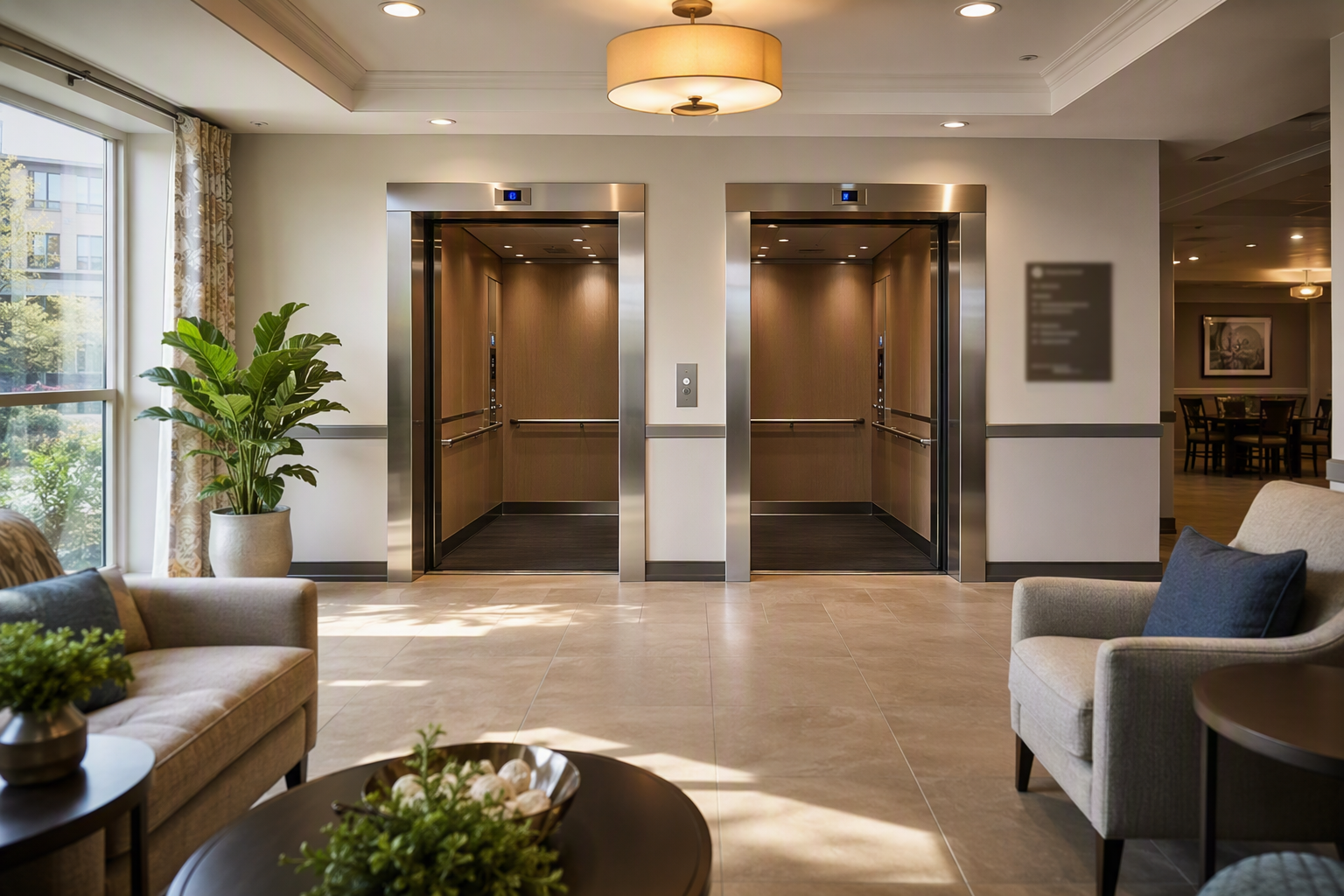
Choosing and maintaining the correct elevator system for a senior living community is one of the most consequential infrastructure decisions a facility operator can make. The right elevator supports resident independence, satisfies federal and state regulators, and protects the facility from costly violations. The wrong choice — or deferred maintenance — can endanger residents and trigger enforcement action. This guide compares the available options, explains the governing codes, and helps facility managers and owners make a confident, compliant decision.
What Federal Codes Govern Elevators in Senior Living Facilities?
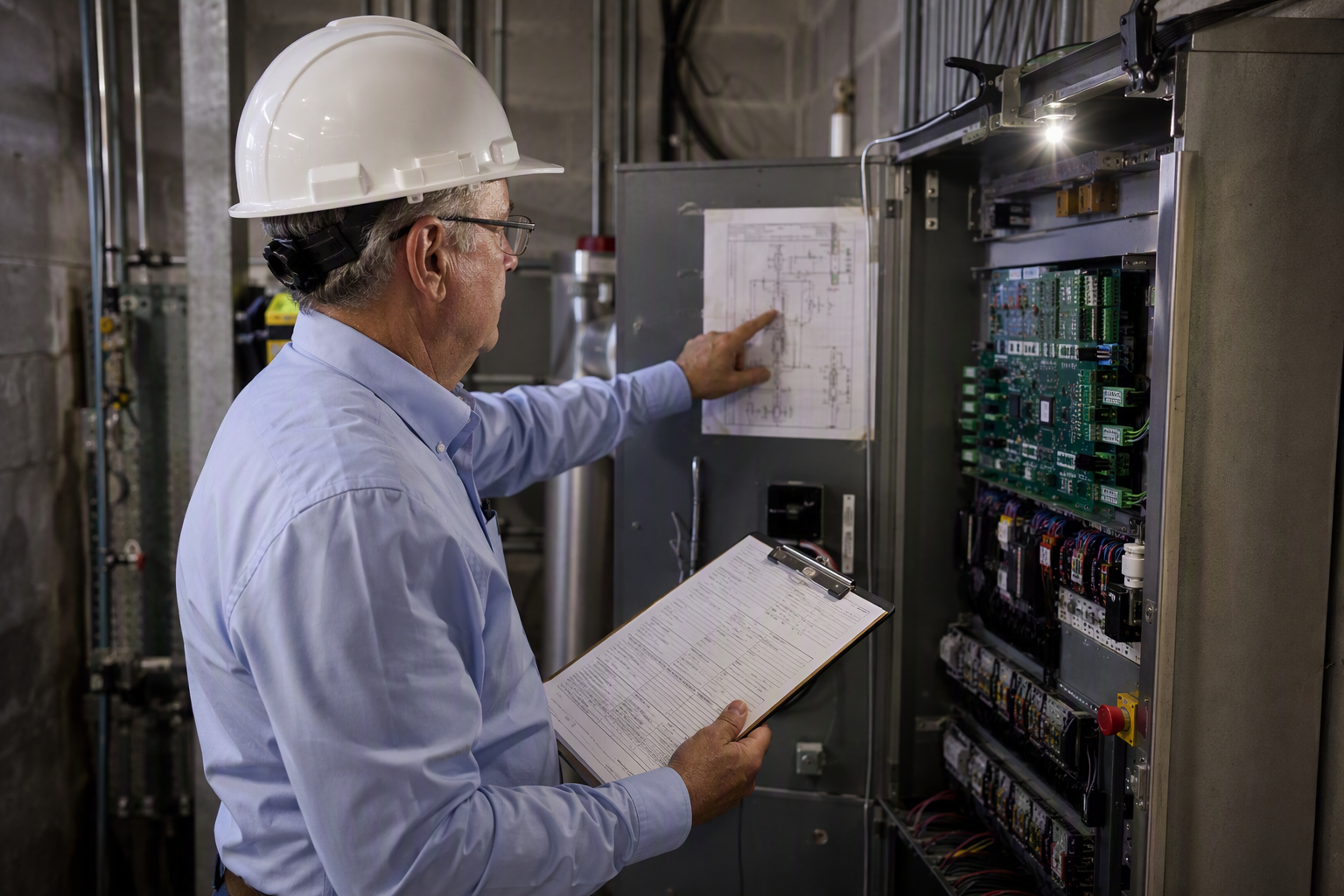
Two primary federal frameworks shape elevator requirements in senior living settings.
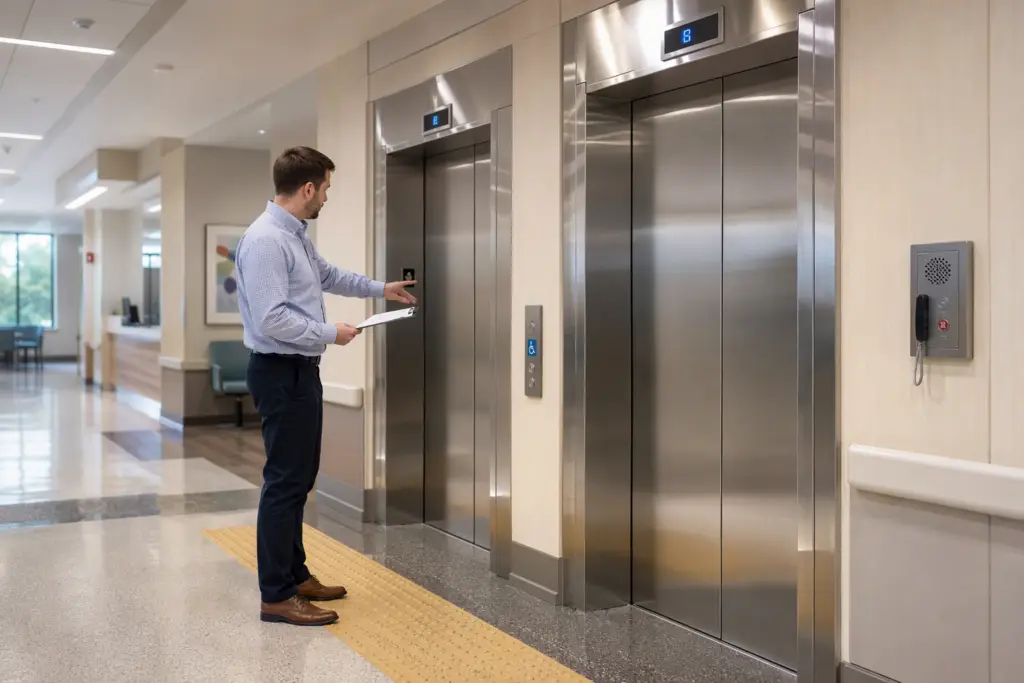
The Americans with Disabilities Act (ADA) establishes accessibility requirements for elevators serving the public and residents in multi-story buildings. For senior living communities, ADA compliance is not optional — it governs cab dimensions, door clear width, control panel height, floor call buttons, tactile markings, and audible signals, among other elements.
The ASME A17.1 Safety Code for Elevators and Escalators is the primary safety and construction standard adopted by most U.S. states and local jurisdictions. It governs installation, inspection intervals, load ratings, emergency communication systems, and ongoing maintenance requirements. Facilities should verify which edition of ASME A17.1 their state has adopted, as code adoption cycles vary; the 2019 and 2022 editions are among the most widely referenced as of 2026.
In addition, the Occupational Safety and Health Administration (OSHA) sets requirements that protect workers who service and maintain elevator equipment inside facilities.
State and local jurisdictions layer additional requirements on top of these federal standards. Facility managers must confirm local adoption with their Authority Having Jurisdiction (AHJ).
What Types of Elevators Are Suitable for Senior Living Communities?
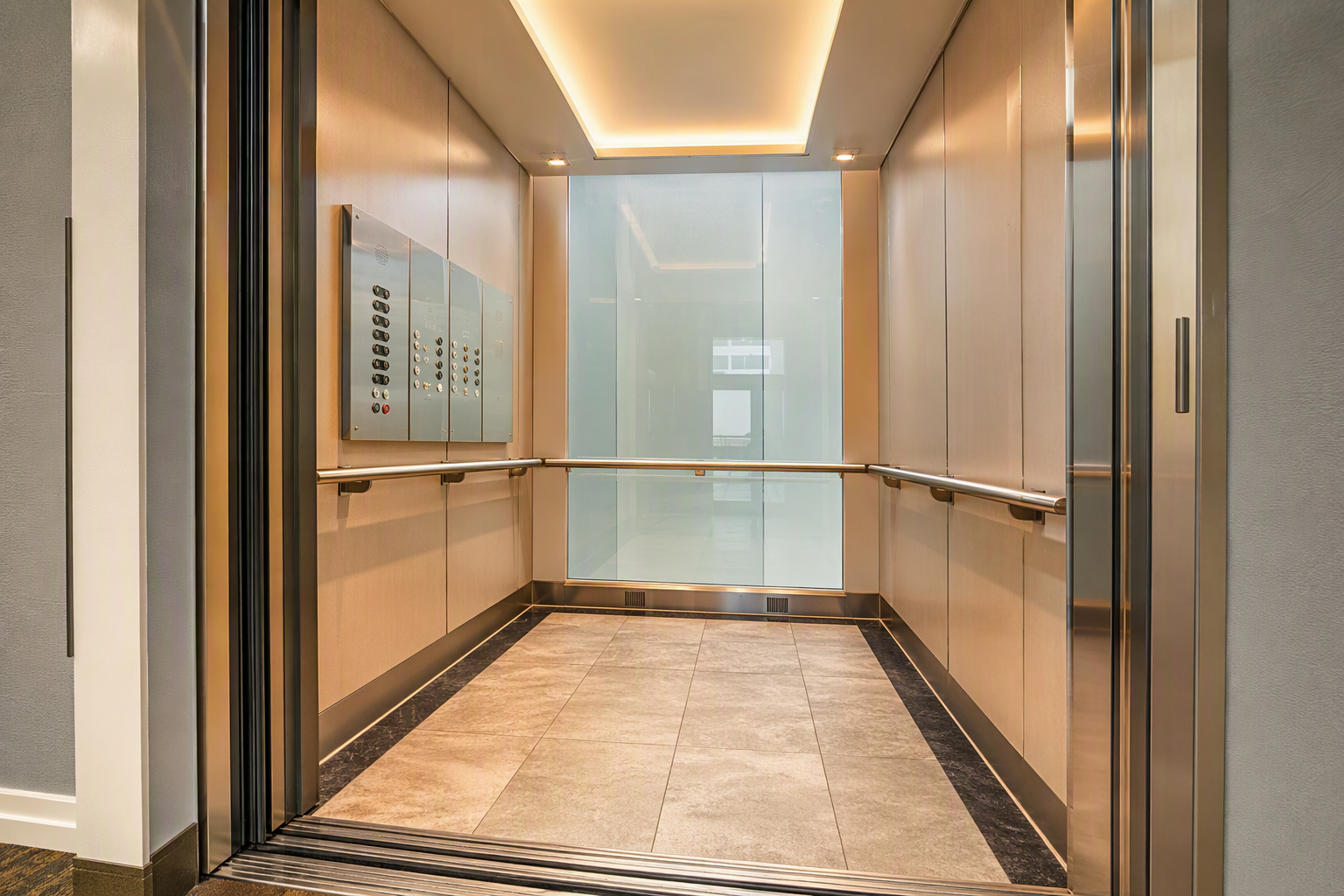
Not every elevator type is equally appropriate for a senior living environment. The table below compares the most common options across the factors that matter most to facility operators.
| Elevator Type | Best For | ADA Compliant | ASME A17.1 Covered | Typical Pros | Typical Cons |
|---|---|---|---|---|---|
| Hydraulic Elevator | Low-rise buildings (2–4 floors) | Yes, when properly configured | Yes | Lower initial cost, smooth ride, reliable for low rises | Slower speed, oil leak risk, energy use can be higher |
| Traction (MRL) Elevator | Mid- to high-rise buildings | Yes, when properly configured | Yes | Energy efficient, faster, no machine room needed | Higher upfront installation cost, complex components |
| Geared Traction Elevator | Mid-rise buildings with machine room space | Yes, when properly configured | Yes | Proven technology, wide service availability | Requires dedicated machine room, more maintenance points |
| Vertical Platform Lift (VPL) | Short rises, single-floor transitions, retrofits | Conditionally (ADA Section 4.11) | ASME A18.1 (not A17.1) | Lower cost, smaller footprint, easier retrofit | Not a substitute for full elevator in most multi-story settings |
Note: Compliance status depends on proper design, installation, and configuration. Confirm requirements with your AHJ and a certified elevator contractor.
What Are the ADA Accessibility Requirements Elevators Must Meet?
Under the ADA, elevators in senior living facilities that serve multiple floors must meet detailed accessibility specifications. Key requirements include:
- Door clear width: Doors must provide sufficient clear opening width to accommodate wheelchair users, as defined in ADA Standards for Accessible Design.
- Cab size: Interior dimensions must accommodate mobility devices including power wheelchairs.
- Call button height: Floor call buttons and cab controls must be mounted within reach ranges for seated users.
- Tactile markings: Floor designations must include raised characters and Braille on jambs.
- Audible and visual signals: Elevators must provide both audible and visual indicators for floor arrival and direction of travel.
- Two-way emergency communication: The cab must include a system allowing communication without requiring voice.
- Leveling: Elevators must arrive level with the landing floor within a compliant tolerance to prevent tripping hazards for residents using walkers or wheelchairs.
Facilities serving residents with dementia or significant cognitive impairment may also consider additional design features — such as simplified controls and visual contrast — that go beyond code minimums to promote safe, independent use.
How Do ASME A17.1 Inspection Requirements Apply to Senior Living Elevators?
The ASME A17.1 Safety Code for Elevators and Escalators requires periodic inspections and tests by qualified inspectors. These typically include:
- Annual routine inspections of operating systems, safety devices, and cab conditions
- Periodic (less frequent) full load tests and safety device tests on defined intervals
- Maintenance logs that must be kept current and available for inspection by the AHJ
Inspection intervals and specific test requirements are set by the adopted edition of ASME A17.1 in the facility’s jurisdiction. Facility managers should request current certificates of inspection and verify that maintenance records are complete — gaps in documentation can result in violations even when the equipment is mechanically sound.
What Is the Typical Timeline for Elevator Installation or Modernization in a Senior Living Facility?
Timeline varies significantly based on whether a facility is installing a new elevator or modernizing an existing one, as well as permitting requirements in the local jurisdiction. General phases to plan for include:
- Needs assessment and site evaluation: Evaluate building height, resident population, traffic patterns, and existing infrastructure.
- Code and AHJ review: Confirm which edition of ASME A17.1 and local codes apply; obtain pre-application guidance if available from the AHJ.
- Design and specification: Work with an elevator contractor and, if required, a licensed engineer to produce construction documents.
- Permitting: Submit plans and obtain elevator permits from the AHJ; timing varies widely by jurisdiction.
- Equipment procurement: Lead times for elevator equipment can be extended depending on type and market conditions; plan procurement early.
- Installation or modernization: Physical installation work; duration depends on system complexity and building conditions.
- Inspection and final acceptance: AHJ inspection, testing per ASME A17.1, and issuance of operating certificate.
- Staff and resident orientation: Communicate changes and emergency procedures to staff and residents before opening the elevator to full use.
Modernization projects — which update key components of an existing elevator to current code — are often faster than full new installations but still require permitting and final inspection. Facilities should engage a qualified elevator service company early to develop an accurate project schedule.
New Installation vs. Modernization: Which Is Right for a Senior Living Facility?
| Factor | New Installation | Modernization of Existing Elevator |
|---|---|---|
| When appropriate | New construction or adding elevator to building without one | Existing elevator aging, failing code, or experiencing frequent breakdowns |
| Relative cost | Higher — includes full shaft, structural, and equipment costs | Lower — leverages existing shaft and structure |
| Disruption to residents | Significant during construction phase | Moderate; can sometimes be phased to limit downtime |
| Code compliance outcome | Built to current code from the ground up | Brings existing system to current code requirements |
| Long-term reliability | New components throughout; longest service life | Depends on scope; key components renewed |
| Best for senior living when | Building is new or elevator infrastructure does not exist | Existing elevator is past its useful service life or non-compliant |
What Are the Emergency Communication Requirements for Senior Living Elevators?
Both the ADA and the ASME A17.1 Safety Code for Elevators and Escalators require that elevator cabs include a two-way emergency communication system. For senior living facilities, this requirement carries additional operational weight because residents may be medically frail, hearing-impaired, or cognitively impaired.
Facilities should ensure that:
- The emergency communication system connects to a location that is staffed or monitored at all times the building is occupied
- The system does not rely solely on voice communication, in compliance with ADA provisions for users with hearing impairments
- Emergency lighting in the cab meets code requirements so residents are not in complete darkness during a power interruption
- Staff are trained on emergency evacuation procedures specific to elevator entrapments, in accordance with local AHJ requirements
How Should a Senior Living Facility Choose Between an Independent Elevator Company and an OEM Service Provider?
| Consideration | Independent Elevator Company | OEM (Original Equipment Manufacturer) Service |
|---|---|---|
| Equipment brand flexibility | Typically services multiple brands | Primarily services own brand |
| Pricing structure | Often competitive; not tied to proprietary parts pricing | May carry premium for proprietary parts and labor |
| Local responsiveness | Often more locally focused | Varies by regional infrastructure of OEM |
| Code compliance expertise | Qualified independents maintain full code knowledge | Strong on own equipment; broad code expertise varies |
| Contract flexibility | Often more negotiable terms | May require longer-term proprietary service agreements |
| Best for senior living when | Facility has mixed equipment, values competitive pricing, or wants a long-term local partner | Facility has a single brand under active warranty or complex proprietary controls |
Quality Elevator Company is an independent elevator service provider that works with multiple equipment brands, allowing senior living facilities to receive unbiased guidance, competitive maintenance agreements, and code-compliant service without being locked into a single manufacturer’s ecosystem.
What Maintenance Practices Are Required to Keep Senior Living Elevators Compliant?
Ongoing maintenance is not optional under ASME A17.1 — it is a code requirement. For senior living facilities, a compliant maintenance program typically includes:
- Establish a written maintenance control program (MCP): ASME A17.1 requires a documented MCP tailored to each elevator installation. The MCP specifies what is to be maintained, how often, and by whom.
- Schedule routine maintenance visits: Frequency is driven by the MCP and equipment type; do not defer scheduled visits.
- Maintain complete service records: All maintenance, repairs, and inspections must be logged and available to the AHJ on request.
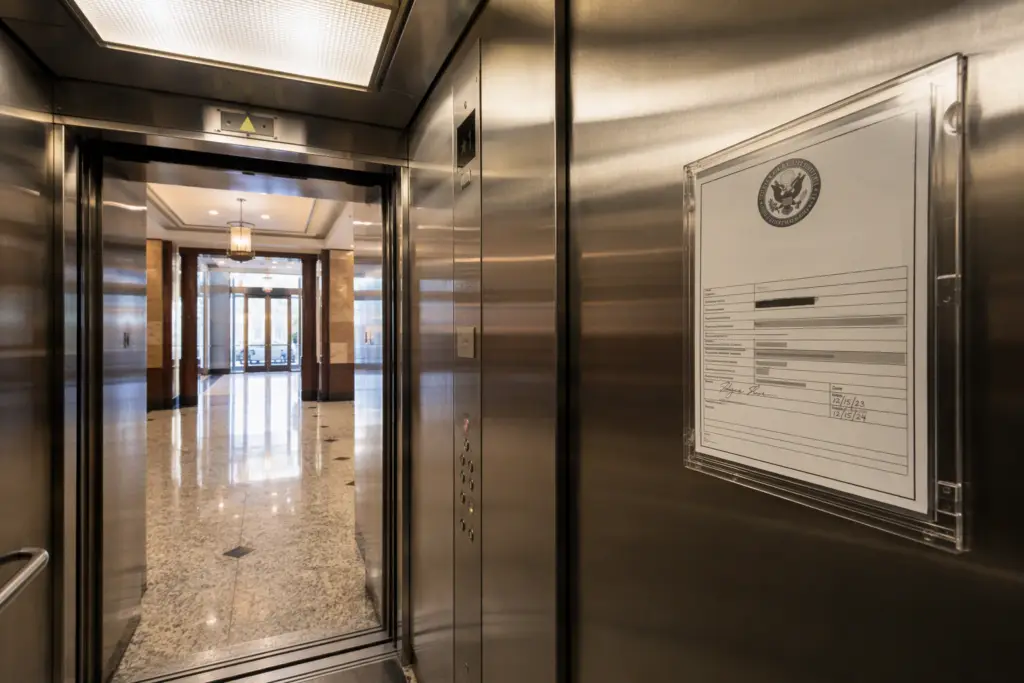
- Track and renew inspection certificates: Operating certificates expire; facilities must track renewal dates and ensure inspections are completed on time.
- Address violations promptly: Inspection findings must be corrected within the timeframe specified by the AHJ. Operating an elevator with unresolved violations is a significant legal and safety risk.
- Plan for modernization proactively: Rather than waiting for failure, facilities should engage their elevator contractor to assess when key components are approaching the end of useful service life.
What Happens if a Senior Living Facility’s Elevator Is Out of Compliance?
Non-compliance with ASME A17.1 or ADA standards can result in:
- Shutdown orders from the AHJ, rendering the elevator inoperable until corrections are made
- Civil penalties and fines from state elevator inspection authorities
- ADA complaints and potential litigation from residents or their families
- Increased liability exposure if a resident is injured and non-compliance is documented
- Reputational damage and potential impacts on licensing or certification for the facility
For a senior living community where residents depend on vertical access for daily living and emergency egress, elevator downtime is not merely an inconvenience — it can constitute a health and safety emergency. Proactive compliance management is far less costly than reactive enforcement response.
How Can a Senior Living Facility Evaluate Its Current Elevator’s Compliance Status?
Facility managers who are uncertain about their elevator’s compliance status can take the following steps:
- Locate current inspection certificates: Valid certificates should be posted in or near the elevator cab. Confirm the expiration date and the name of the issuing authority.
- Review open violations: Contact the AHJ to confirm whether any outstanding violations or orders are on record for the facility’s elevator equipment.
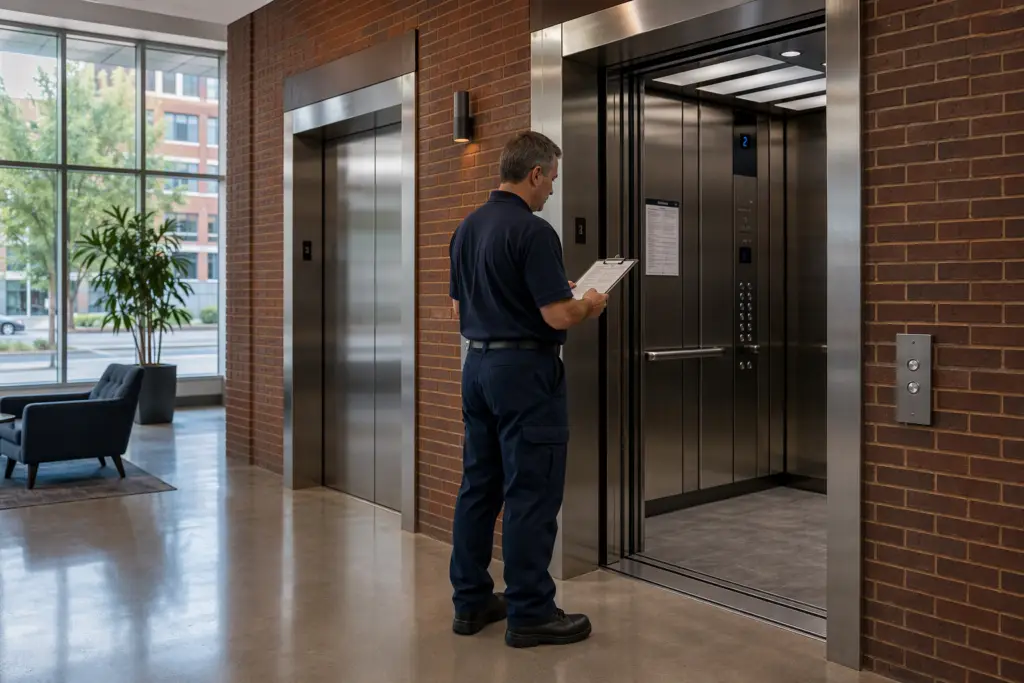
- Audit maintenance records: Confirm that the elevator’s maintenance control program is current, that all scheduled maintenance has been performed, and that records are complete.
- Conduct an ADA accessibility audit: Walk through the ADA Standards for Accessible Design checklist for elevators and compare against current cab and landing conditions.
- Engage a qualified elevator contractor for an independent assessment: A professional assessment can identify code gaps, aging components, and modernization needs before they become enforcement issues.
Quality Elevator Company provides independent elevator assessments for senior living facilities, evaluating equipment condition, code compliance status, and maintenance program adequacy — without any obligation tied to a specific equipment brand or manufacturer relationship.
What Questions Should Senior Living Facility Operators Ask a Prospective Elevator Service Company?
Before engaging any elevator service provider, facility operators should ask:
- Are your technicians trained to work on the specific equipment installed in our building?
- Are you familiar with the edition of ASME A17.1 adopted by our jurisdiction?
- Can you provide a written maintenance control program as required by ASME A17.1?
- How do you handle emergency calls when an elevator is out of service?
- Do you have experience serving senior living or healthcare facilities specifically?
- Can you provide references from other multi-story residential or senior living properties you service?
- How do you document and report maintenance and inspection activity?
- What is your process for notifying facilities of upcoming code changes that may affect their equipment?
Pros and Cons Summary: Key Decision Factors for Senior Living Elevator Planning
| Decision Factor | Pros of Acting Proactively | Cons of Deferring Action |
|---|---|---|
| Compliance management | Avoids enforcement orders, fines, and liability exposure | Risk of shutdown, penalties, and litigation |
| Planned modernization | Predictable cost and scheduling; minimal disruption | Emergency repairs are costlier and less controllable |
| ADA accessibility | Protects resident independence and supports census goals | ADA complaints, resident dissatisfaction, reputational damage |
| Maintenance program | Extended equipment life, fewer breakdowns, documented compliance | Accelerated component wear, unexpected outages, inspection failures |
| Service provider selection | Right partner brings code expertise, documentation, and reliability | Wrong partner creates compliance gaps and service deficiencies |
Ready to Ensure Your Senior Living Elevator Is Fully Compliant?
Elevator compliance in a senior living setting is too important to leave to guesswork. Quality Elevator Company provides independent, manufacturer-neutral elevator assessments for senior living facilities — evaluating code compliance, ADA accessibility, maintenance program status, and modernization needs.
Contact Quality Elevator Company for a free elevator assessment: 301-779-9116
Our team will review your equipment, identify any compliance gaps, and provide a clear, actionable plan — with no obligation and no pressure tied to a specific equipment brand.
Need elevator service you can rely on? Quality Elevator Company is ready to help.