Elevator Service in Baltimore, MD | Quality Elevator Company
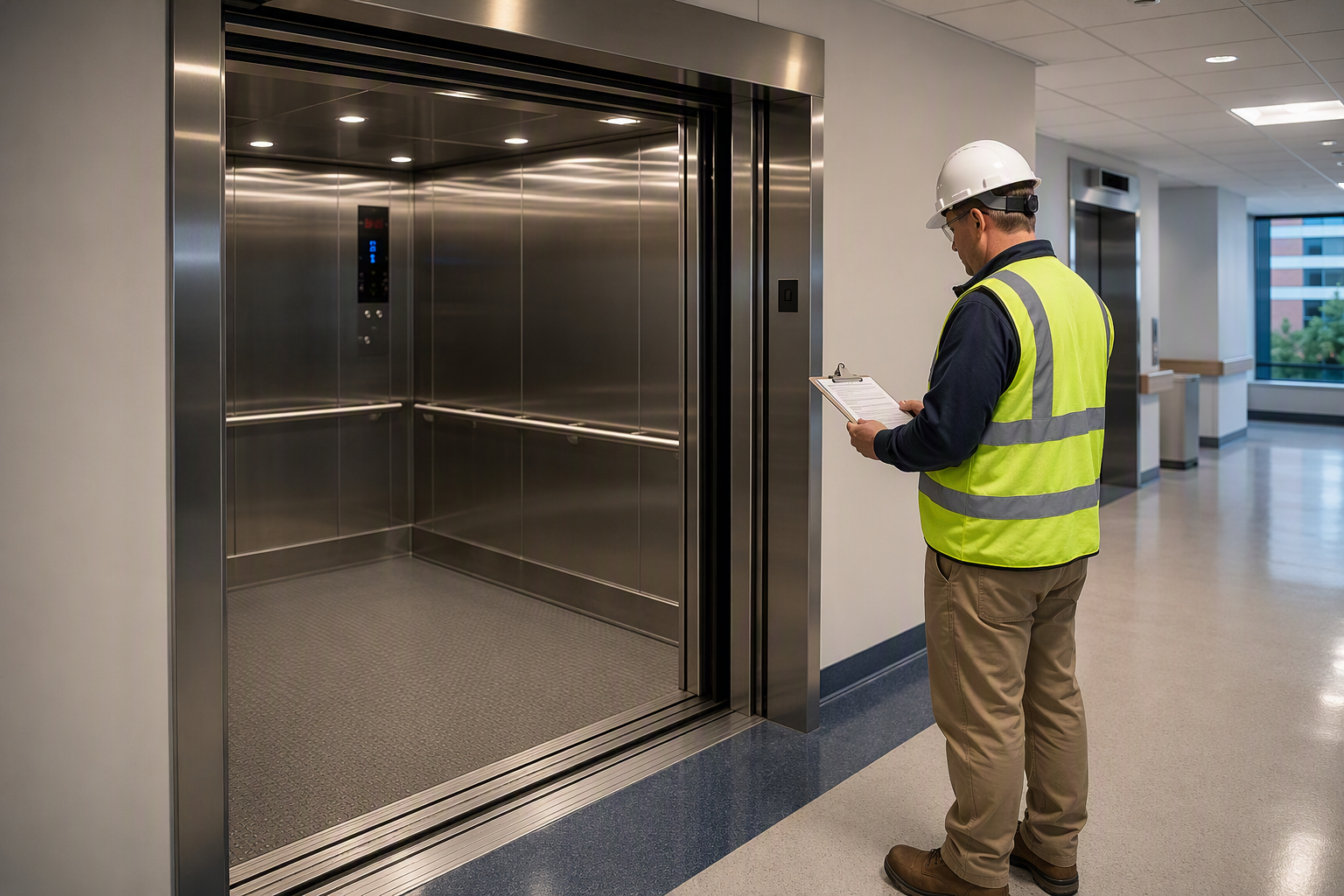
Healthcare facilities in Baltimore, MD depend on fully operational, code-compliant elevators every hour of every day. From transporting patients on gurneys to moving critical medical equipment between floors, hospital and clinical elevators face demands that far exceed those of standard commercial buildings. Quality Elevator Company provides certified elevator maintenance, inspection, and repair services tailored to the specific regulatory requirements that govern healthcare environments in Maryland.
What elevator codes apply to healthcare facilities in Maryland?
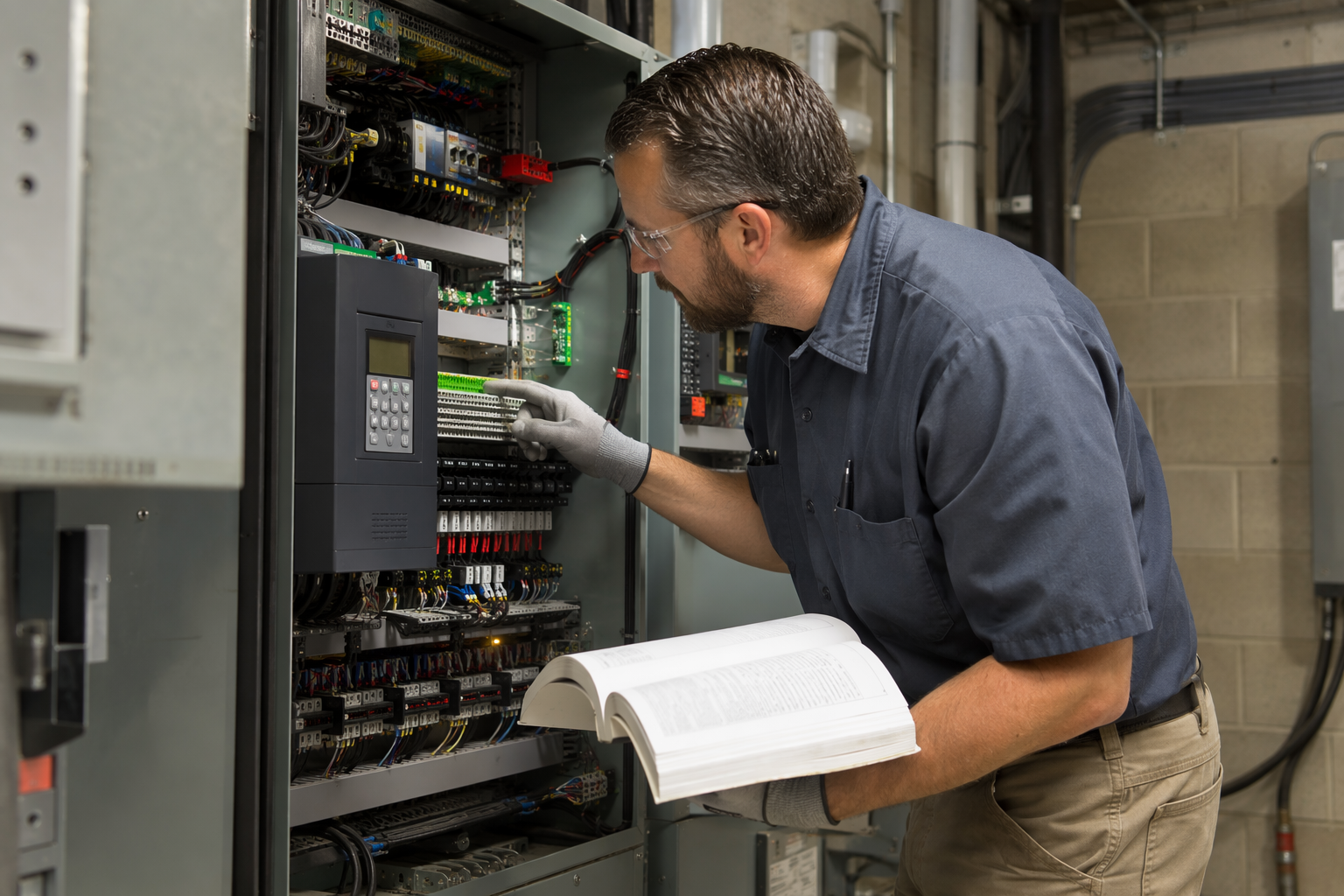
Maryland healthcare facilities must comply with a layered framework of elevator codes and standards. At the foundation is the ASME A17.1 Safety Code for Elevators and Escalators, the nationally recognized standard adopted by Maryland and enforced through the Maryland Department of Labor’s Elevator Safety Unit. This code governs the design, construction, installation, operation, inspection, testing, maintenance, alteration, and repair of elevators.
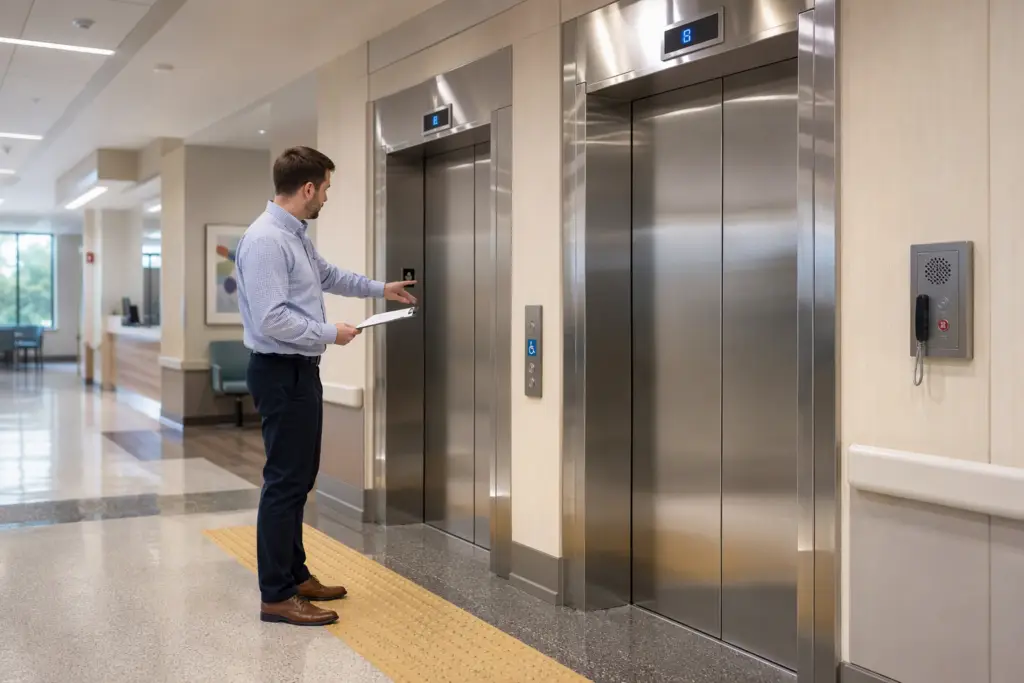
In addition to ASME A17.1, healthcare facilities must satisfy ADA accessibility requirements, which mandate specific cab dimensions, door timing, control placement, and signage to ensure access for patients with disabilities. Facilities accredited by The Joint Commission (TJC) or certified under Medicare and Medicaid conditions of participation are also subject to Environment of Care (EC) standards that include elevator reliability and emergency function requirements.
Baltimore City and the surrounding jurisdictions additionally follow the Maryland Building Performance Standards, which incorporate elevator provisions affecting new construction and major renovations at healthcare campuses. Staying current with the 2025–2026 code cycle is essential for any facility undergoing expansion or equipment replacement.
Why are elevator code requirements stricter for hospitals and clinics?
Hospitals, surgery centers, long-term care facilities, and outpatient clinics operate under heightened elevator standards because elevator failures in these environments can directly compromise patient safety. An elevator malfunction that traps a patient mid-transfer or prevents a crash cart from reaching an upper floor in a timely manner represents a life-safety risk, not merely a convenience issue.
The ASME A17.1 code addresses healthcare-specific concerns through requirements for hospital-duty elevators, including higher load ratings, wider and taller cab dimensions to accommodate stretchers and medical equipment, two-speed door operation, and fireman’s emergency operation features. These provisions are not optional enhancements — they are code minimums that facilities must meet and maintain.
How often must healthcare facility elevators be inspected in Maryland?
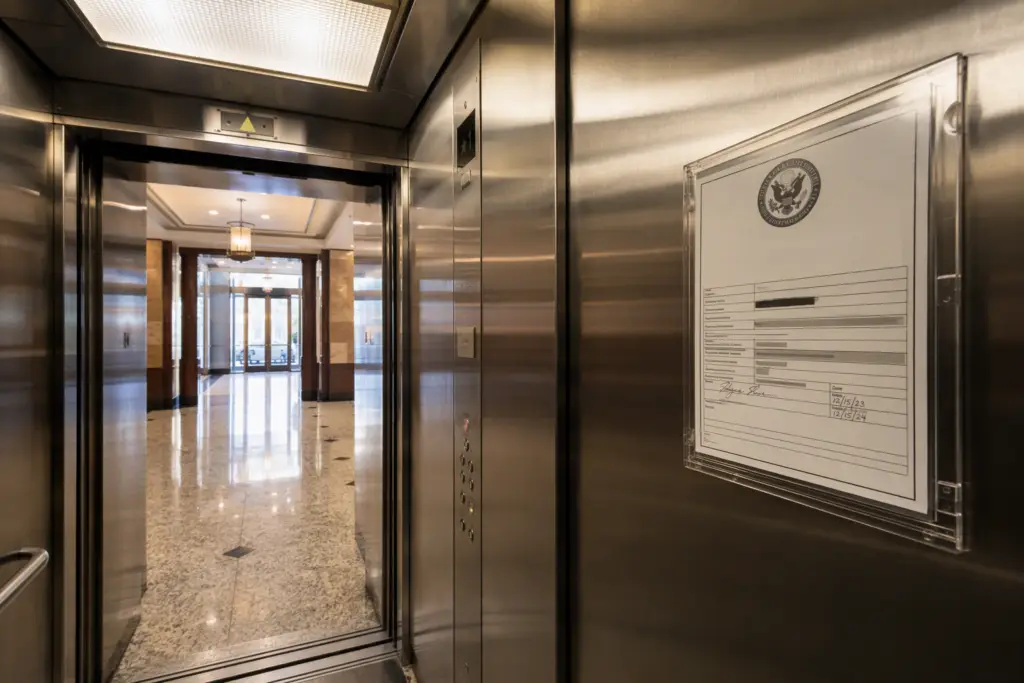
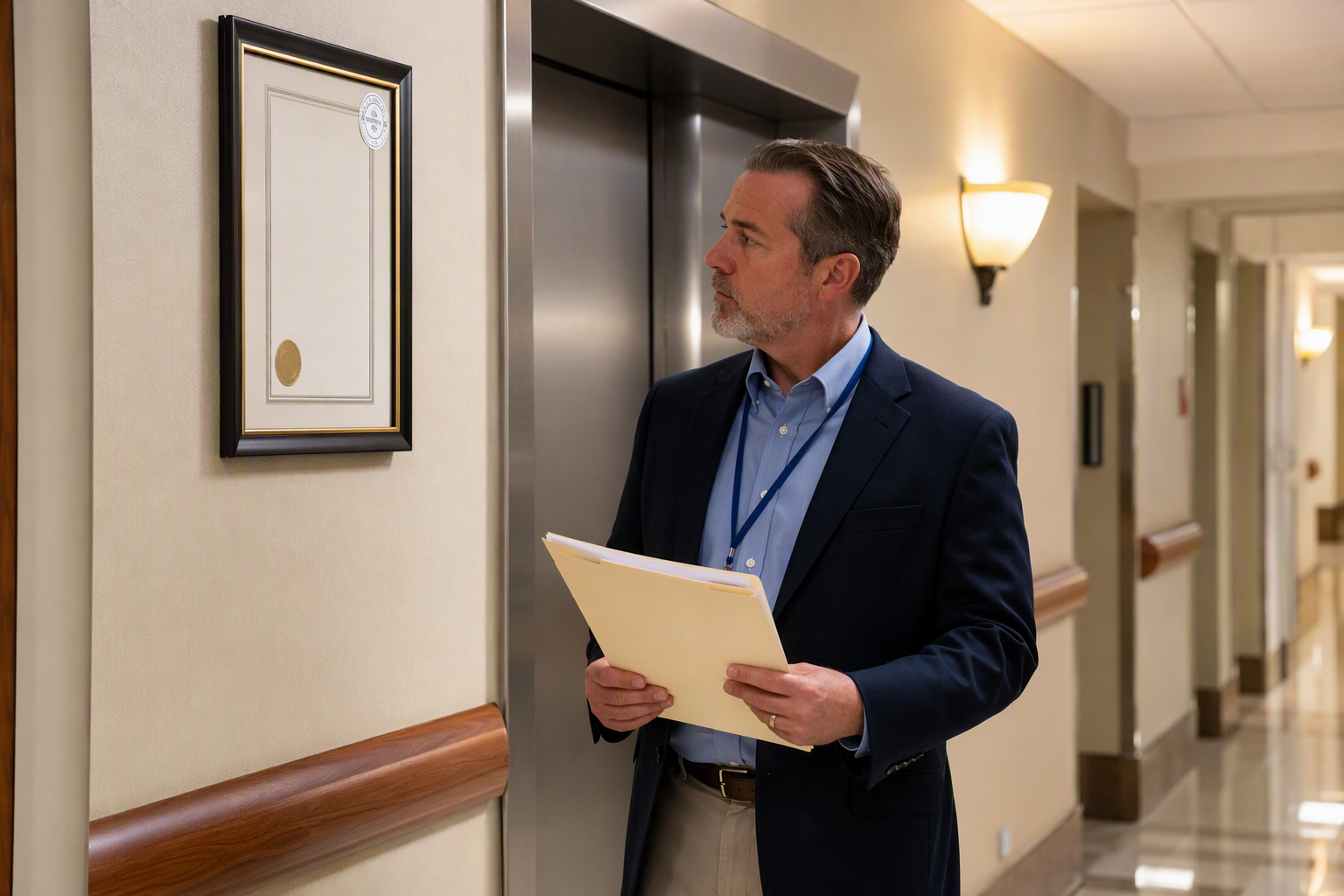
Maryland law requires that all elevators, including those in healthcare settings, undergo periodic inspections by a licensed elevator inspector. The ASME A17.1 standard and Maryland’s adoption rules specify routine periodic inspections as well as witnessing of tests at defined intervals. Healthcare facilities should confirm their current inspection certificate is posted in each elevator cab, as Maryland requires valid certificates to be displayed and available for review.
Beyond mandatory state inspections, healthcare facilities benefit from more frequent preventive maintenance visits to minimize unplanned downtime. Accrediting bodies such as The Joint Commission review maintenance logs during surveys, making thorough documentation a compliance requirement, not just a best practice.
What should a healthcare facility do immediately if an elevator fails or traps a passenger?
- Activate the in-cab emergency communication system to contact building security or operations staff.
- Instruct any trapped passengers to remain calm and avoid attempting to force doors open.
- Contact your licensed elevator service contractor to dispatch a qualified technician.
- Notify facility management and document the time, elevator identification number, and nature of the malfunction.
- If the situation involves a medical emergency, simultaneously contact emergency services (911).
- Restrict access to the affected elevator and post clear out-of-service notices to redirect staff and patients.
- Upon resolution, request a written service report from the contractor before returning the elevator to service.
Quality Elevator Company maintains availability for urgent service needs at Baltimore-area healthcare facilities, understanding that elevator downtime in a clinical environment cannot follow a standard business-hours timeline.
What ADA requirements must Baltimore healthcare elevators meet?
Under the Americans with Disabilities Act, healthcare facility elevators must provide accessible features including cab dimensions that accommodate wheelchair users, door-open timing sufficient to allow safe entry and exit, audible and visible floor indicators, raised and Braille signage on control panels, and call buttons at compliant heights. Facilities that fail to maintain these features risk ADA violations and potential liability, particularly given the patient population served.
When healthcare facilities undergo renovation or install new elevator equipment, ADA requirements apply as a condition of the alteration. Quality Elevator Company works with Baltimore healthcare clients to assess current installations against current ADA guidelines and identify any deficiencies that should be addressed proactively.
What is the difference between preventive maintenance and a code-required inspection for healthcare elevators?
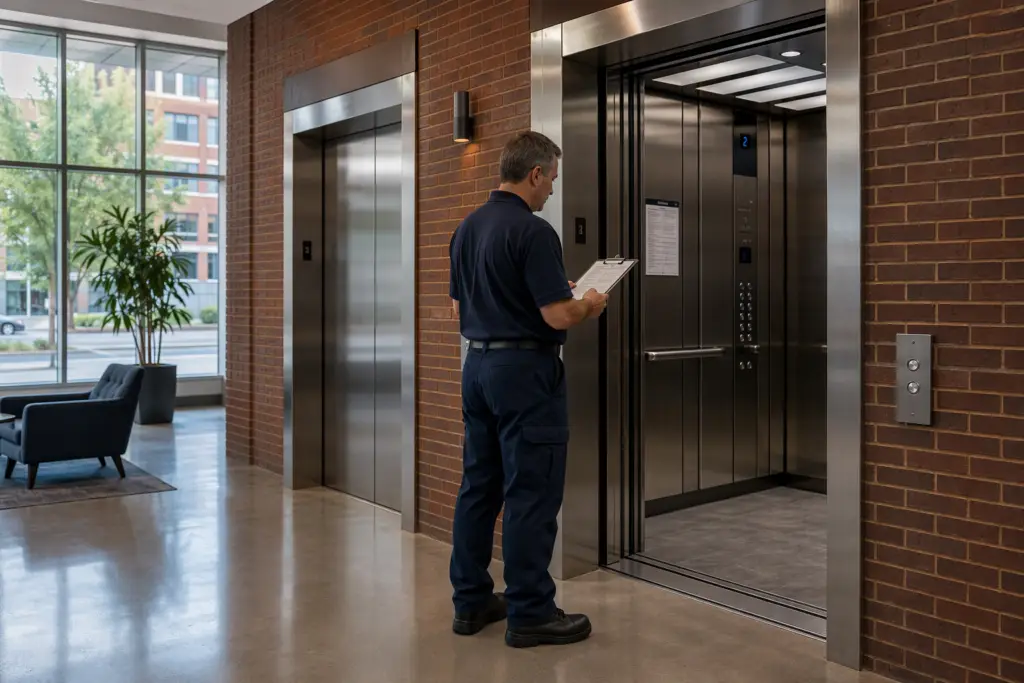
A code-required inspection is performed by a licensed third-party or state elevator inspector who evaluates the elevator against ASME A17.1 requirements and issues a certificate of compliance. This inspection is a regulatory checkpoint — it does not include ongoing servicing or parts replacement.
Preventive maintenance is a separate, ongoing program performed by a licensed elevator service contractor such as Quality Elevator Company. It includes lubrication, adjustments, parts inspection, testing of safety devices, and early identification of wear before failures occur. For healthcare facilities, where elevator downtime carries direct patient care implications, a robust preventive maintenance agreement is the foundation of a sound equipment management strategy.
How does Quality Elevator Company serve the Baltimore healthcare market?
Quality Elevator Company is a certified elevator service provider serving Baltimore, MD and the surrounding region. The company’s service territory includes hospitals, ambulatory surgery centers, medical office buildings, rehabilitation facilities, long-term care communities, and behavioral health campuses throughout the Baltimore metropolitan area.
Healthcare clients work with a team that understands the intersection of elevator code compliance, ADA requirements, Joint Commission Environment of Care standards, and the operational realities of facilities that cannot simply close an elevator bank and wait. Quality Elevator Company provides maintenance agreements, modernization assessments, code compliance reviews, and responsive repair services designed around the schedules and sensitivities of healthcare environments.
Documentation is treated as a core deliverable — not an afterthought. Facilities receive service records formatted to support accreditation surveys, internal audits, and state inspector reviews.
When should a healthcare facility consider elevator modernization rather than continued repairs?
Older elevator equipment in healthcare settings can reach a point where maintaining code compliance and reliable performance through repairs alone becomes increasingly difficult and costly. Signs that modernization may be warranted include frequent unplanned service calls, difficulty sourcing replacement parts for legacy components, failure to meet current ASME A17.1 or ADA standards, and increasing door or drive system malfunctions.
Modernization projects for healthcare elevators require careful planning to minimize clinical disruption. Phased approaches, off-hours scheduling, and coordination with facility operations teams are all strategies that Quality Elevator Company employs when working with Baltimore healthcare clients on equipment upgrades. A consultation can help facilities understand the scope, regulatory implications, and long-term cost impact of modernization versus continued maintenance of aging equipment.
Schedule a Free Consultation
Healthcare facilities in Baltimore, MD cannot afford elevator code gaps or unexpected downtime. Quality Elevator Company provides expert elevator maintenance, inspection support, ADA compliance assessments, and modernization planning for the full spectrum of healthcare environments across the Baltimore region.
Contact Quality Elevator Company today to schedule a free consultation and learn how a proactive compliance and maintenance strategy can protect your patients, your staff, and your facility.
Call Quality Elevator Company: 301-779-9116
Need elevator service you can rely on? Quality Elevator Company is ready to help.