What Is Emergency Elevator Repair in Philadelphia and When Is It Needed?
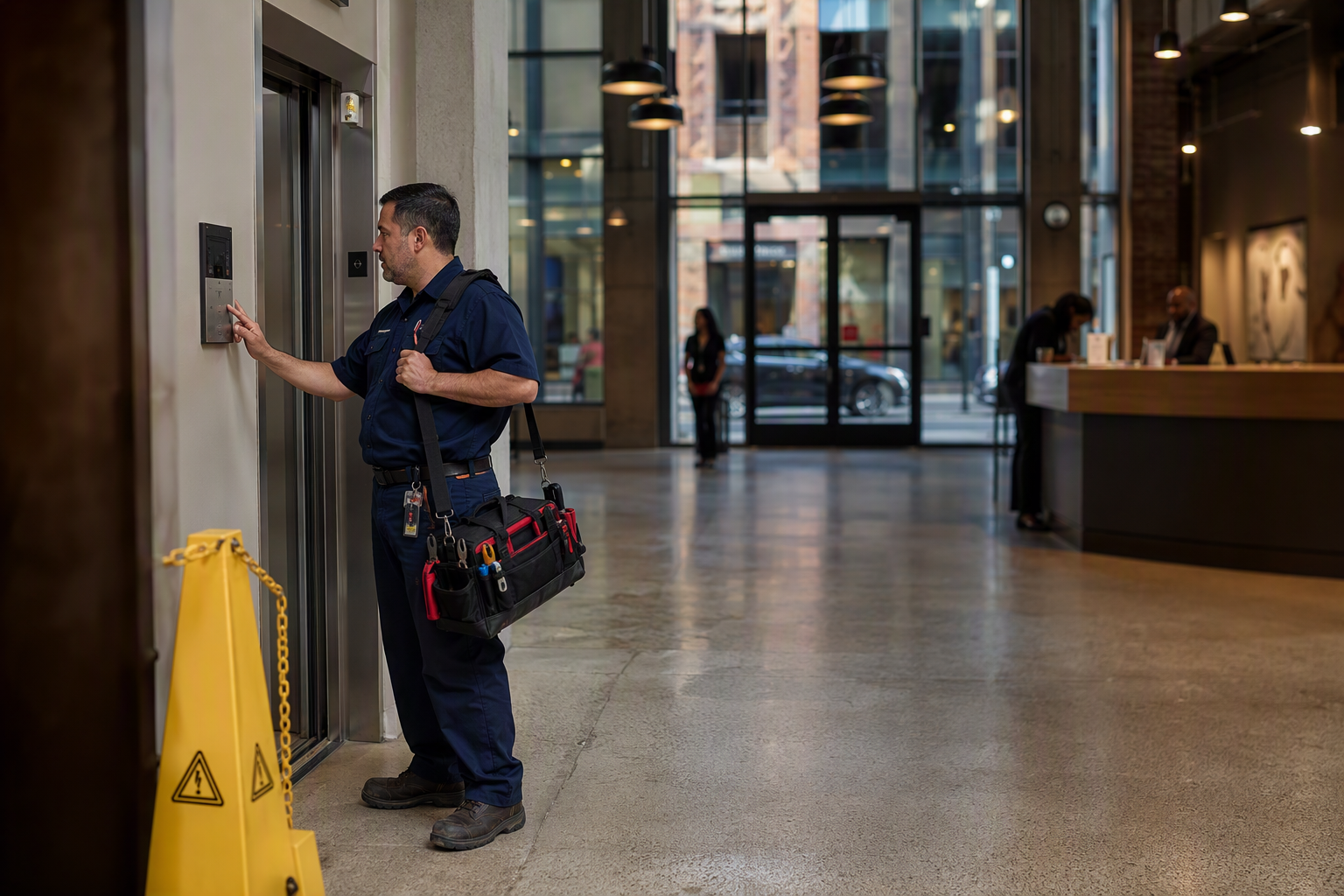
Emergency elevator repair in Philadelphia refers to unscheduled, urgent service required when an elevator poses a safety risk, traps occupants, or fails to operate — situations that demand immediate response from a licensed elevator contractor.
A building elevator can fail for many reasons: power surges, worn brake components, door operator malfunctions, hydraulic fluid loss, or control system faults. Not every malfunction constitutes a true emergency, but any condition that traps passengers, creates a fall hazard, or causes the elevator to move uncontrolled must be treated as one. Pennsylvania law requires that out-of-service elevators in public buildings be appropriately tagged and barricaded until a licensed contractor restores them to safe, code-compliant operation.
Philadelphia’s dense commercial real estate stock — hospitals, universities, high-rise offices, and multifamily housing — means that elevator downtime carries serious consequences for occupants and building owners alike. Understanding what triggers an emergency call, and knowing exactly who to contact, reduces risk and liability significantly.
What Are the Most Common Causes of Emergency Elevator Breakdowns in Philadelphia?
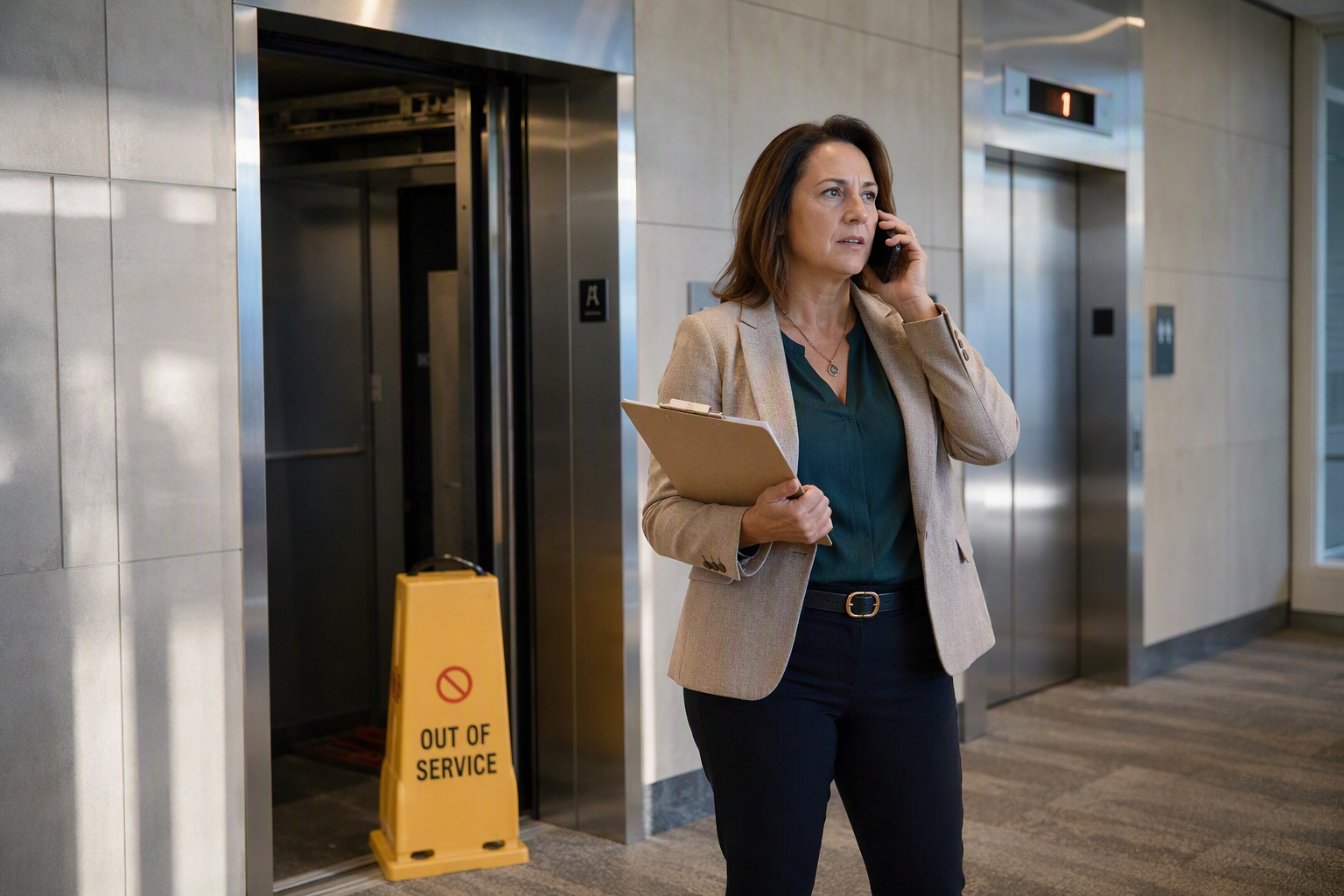
The most common causes of emergency elevator breakdowns include door system failures, hydraulic oil leaks, worn or snapped suspension ropes, control board faults, and overload or safety circuit trips.
Door-related failures account for a large share of elevator outages. Worn gibs, misaligned door tracks, and failing door operators can cause the elevator to stop mid-run or refuse to close properly, triggering the door safety circuit. Because Philadelphia experiences cold winters and humid summers, thermal expansion and contraction accelerate wear on mechanical door components.
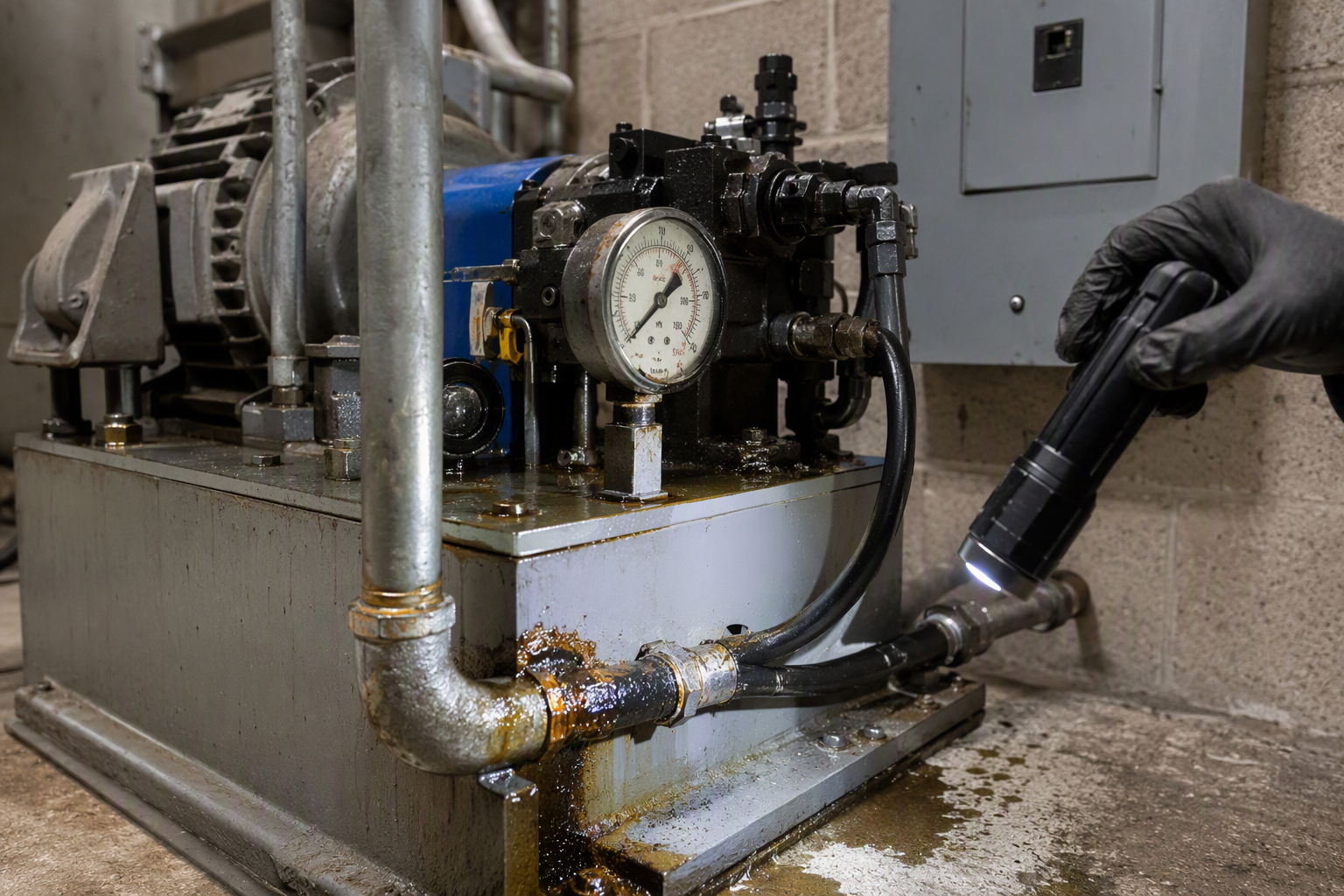
Hydraulic elevators, common in low-rise Philadelphia commercial buildings built before the 1990s, are susceptible to oil line ruptures and pump failures. Traction elevators in high-rise buildings can experience rope wear, brake pad deterioration, and governor failures — all of which activate safety systems that bring the car to an emergency stop. Control board failures, often triggered by electrical surges during storm events, are another frequent culprit across all elevator types.
What Should Building Managers Do Immediately When an Elevator Breaks Down?
When an elevator breaks down, building managers should follow a structured emergency protocol to protect occupants and limit liability while awaiting the arrival of a certified elevator technician.
- Determine whether passengers are trapped. Check the intercom or phone system and communicate with anyone inside the car. If passengers are present, reassure them, advise them to remain calm, and confirm the car is stationary.
- Do not attempt a manual rescue without trained personnel. Unauthorized individuals should never attempt to open hoistway doors or manually lower a hydraulic car — improper rescue can result in serious injury.
- Contact emergency services if entrapment is confirmed. Philadelphia Fire Department personnel are trained in elevator passenger rescue. Call 911 for any occupied, stalled car.
- Shut down and lock out the elevator at the machine room controller. If the car is empty and safe, isolate the elevator using the main line disconnect and post visible out-of-service signage on all lobby doors.
- Barricade all elevator lobby entrances to prevent building occupants from attempting to use a disabled elevator.
- Contact a licensed Philadelphia elevator contractor such as Quality Elevator Company to dispatch a certified mechanic for assessment and repair.
- Document the incident. Record the time of failure, car position, any error codes displayed, and the names of any affected occupants for liability and regulatory reporting purposes.
- Notify your building’s insurance carrier if the outage involves property damage or passenger injury.
What Are Philadelphia’s Legal Requirements for Elevator Operation and Emergency Repair?
Philadelphia elevators are regulated under Pennsylvania’s Uniform Construction Code, administered by the Pennsylvania Department of Labor and Industry, which requires that all elevator installation, alteration, and major repair work be performed by a licensed elevator contractor and inspected by a certified inspector.
Pennsylvania’s elevator safety program is governed by the Pennsylvania Elevator and Kindred Equipment Act, which adopts the ASME A17.1 Safety Code for Elevators and Escalators as the technical standard of record. Under this framework, any elevator found to be unsafe must be immediately taken out of service and may not be returned to operation until repairs are completed and, in many cases, re-inspected by a state-authorized inspector.
Buildings covered by the Americans with Disabilities Act must also consider ADA accessibility obligations. A prolonged elevator outage in a building where the elevator is the only accessible route to upper floors may constitute an ADA violation and expose building owners to federal complaint proceedings. Prompt emergency repair is therefore not just a safety imperative — it is a legal one.
Workplace settings are additionally subject to OSHA standards governing the safe use of elevators in commercial and industrial environments. Employers have a general duty to maintain equipment that does not expose workers to recognized hazards.
How Long Does Emergency Elevator Repair Typically Take in Philadelphia?
The duration of an emergency elevator repair depends on the nature of the fault — straightforward issues such as a tripped safety circuit or a door sensor reset may be resolved within an hour, while structural component failures involving special-order parts can extend downtime to several days.
Philadelphia’s urban geography means that qualified technicians can generally reach most Center City, University City, and Northeast Philadelphia locations efficiently. However, parts availability is a significant variable. Common wear items such as door rollers, gibs, and controller fuses are typically stocked on service vehicles. Major components — hydraulic cylinders, new rope sets, governor assemblies, or proprietary control boards for older elevator models — may require sourcing from distributors, which extends repair timelines.
Building owners can reduce average repair duration by maintaining a current service agreement with a licensed contractor, which ensures that the contractor has equipment records and is familiar with the specific elevator model on site. Preventive maintenance programs that track component wear also reduce the likelihood that a failure will occur without warning.
What Is the Difference Between Emergency Repair and Routine Maintenance for Philadelphia Elevators?
Emergency repair addresses an active, unplanned failure that renders the elevator unsafe or inoperable, while routine maintenance is a scheduled program of inspection, lubrication, adjustment, and component testing designed to prevent failures from occurring.
| Factor | Emergency Repair | Routine Maintenance |
|---|---|---|
| Trigger | Unplanned failure or safety incident | Scheduled intervals per service agreement |
| Code Basis | ASME A17.1 — restoration to safe condition | ASME A17.1 — ongoing compliance requirements |
| Typical Scope | Component diagnosis, failed part replacement, safety verification | Lubrication, adjustment, worn-part identification, testing |
| ADA Implications | Prolonged outage may trigger ADA accessibility violation | Proper maintenance reduces downtime and ADA risk |
| OSHA Relevance | Unsafe elevator must be tagged out per OSHA lockout/tagout standards | Ongoing maintenance supports OSHA general duty compliance |
| Cost Pattern | Variable; depends on failure severity and parts required | Predictable; set by maintenance agreement terms |
| Inspector Involvement | Required for major repairs before return to service (PA law) | Annual or periodic state inspection of maintained equipment |
Which Types of Elevators Require Emergency Repair Most Frequently in Philadelphia Buildings?
Hydraulic elevators and older traction elevators — many of which were installed in Philadelphia’s substantial pre-1980s commercial and residential building stock — require emergency repair more frequently than modern machine-room-less (MRL) traction systems.
Holeless and in-ground hydraulic elevators serving two- to five-story buildings are prevalent across South Philadelphia, Center City, and the surrounding neighborhoods. These systems rely on oil-based hydraulic fluid under pressure, making them vulnerable to seal degradation, pump wear, and line ruptures — all of which can cause a sudden car drop or inability to move. Environmental regulations in Pennsylvania also require that hydraulic units have secondary containment for oil — a failed containment system may trigger both a repair call and a regulatory notification.
Older geared traction elevators in Philadelphia’s historic office buildings often use relay-logic controllers that have been out of manufacture for decades. When a relay or contactor fails, sourcing a replacement can be challenging, and downtime extends accordingly. Modern MRL traction elevators use microprocessor-based controls that offer better diagnostics, though they require technicians trained in digital control systems.
What Qualifications Should a Philadelphia Emergency Elevator Repair Company Have?
A qualified Philadelphia emergency elevator repair company must hold a Pennsylvania elevator contractor license, employ mechanics who are certified under a recognized elevator industry training program, and carry appropriate liability and workers’ compensation insurance.
Pennsylvania’s Department of Labor and Industry requires that elevator contractors be licensed under the state’s elevator safety law before performing installation, alteration, or major repair work. Mechanics working on elevators in Pennsylvania must also meet qualification standards set forth under the applicable regulations. Building owners should verify that any contractor they engage — particularly for after-hours emergency calls — holds a current, valid state license.
Beyond licensing, technical competency matters. Elevator technology spans relay-logic, microprocessor, and destination-dispatch control systems, as well as hydraulic, geared traction, gearless traction, and MRL drive types. A capable contractor should demonstrate familiarity with the specific equipment in a given building. Quality Elevator Company serves Philadelphia buildings across this full spectrum of elevator types and control systems, providing technically grounded emergency and maintenance services throughout the region.
Does ASME A17.1 Apply to Emergency Elevator Repairs in Philadelphia?
Yes — the ASME A17.1 Safety Code for Elevators and Escalators is the foundational technical standard governing all elevator repair work in Pennsylvania, including emergency repairs, and compliance with its requirements is mandatory before any repaired elevator is returned to passenger service.
ASME A17.1 establishes requirements for the design, construction, installation, operation, inspection, testing, maintenance, alteration, and repair of elevators and related conveyances. When a repair is classified as a “major alteration” under A17.1 definitions, Pennsylvania law requires that an authorized inspector witness a load test and issue an updated operating certificate before the elevator resumes service.
Even for repairs that do not rise to the level of a major alteration, the contractor is required to restore all safety devices to fully functional condition and verify that the elevator operates within the parameters defined by A17.1 and the equipment’s original design specifications. Returning an elevator to service with a bypassed safety device — even temporarily — is a violation of both ASME A17.1 and Pennsylvania law.
How Do ADA Requirements Affect Emergency Elevator Repair Timelines in Philadelphia?
Under the Americans with Disabilities Act, buildings where an elevator provides the only accessible path to program areas or services must take steps to ensure that people with disabilities can still access those services during an elevator outage, which creates legal pressure to minimize repair timelines.
The ADA’s Title III (for public accommodations) and Title II (for state and local government entities) both require that accessibility be maintained. When the sole accessible elevator is out of service, building owners may be required to provide an alternative means of access — such as relocating services to an accessible floor — or face potential ADA complaints filed with the U.S. Department of Justice or through private litigation.
For Philadelphia healthcare facilities, universities, government buildings, and hotels — all common in the city’s diverse building stock — this is a significant operational and legal consideration. Engaging a reliable emergency elevator repair contractor with strong parts availability reduces the window of ADA exposure.
What Safety Risks Are Associated with Delaying Emergency Elevator Repair?
Delaying emergency elevator repair exposes building occupants to serious physical safety risks, exposes building owners to significant legal liability, and may cause a code-compliant elevator to deteriorate further into a more costly failure condition.
A car that has stopped due to a safety circuit trip may have done so because a brake, buffer, or overspeed governor detected an out-of-tolerance condition. Attempting to reset and run the elevator without diagnosing the root cause bypasses the protective intent of the ASME A17.1 safety system. Secondary failures — rope breaks, brake seizures, or hydraulic line ruptures — can follow and result in free-fall or uncontrolled movement events that cause severe injury.
From a liability standpoint, Pennsylvania property owners have a duty of care to maintain safe premises. Operating a known-defective elevator, or failing to take it out of service promptly, creates a basis for personal injury claims. Regulatory penalties for operating elevators without a current certificate of inspection or in a known unsafe condition can also be imposed by the Pennsylvania Department of Labor and Industry.
How Can Philadelphia Building Owners Reduce the Frequency of Emergency Elevator Breakdowns?
Philadelphia building owners can substantially reduce the frequency of emergency elevator breakdowns by enrolling in a comprehensive preventive maintenance program managed by a licensed elevator contractor, which enables systematic identification and replacement of worn components before they cause unplanned failures.
Preventive maintenance under ASME A17.1 encompasses periodic lubrication of all moving parts, adjustment of door clutches and interlocks, testing of safety devices including governors and buffers, inspection of suspension ropes for wire breaks and elongation, and review of control system diagnostics. A well-executed maintenance program generates a component history that allows a skilled technician to predict when a part is approaching the end of its service life.
Building owners should also consider keeping a limited inventory of high-demand consumable parts — such as door rollers, fuses, and controller fuses specific to their elevator model — in coordination with their service contractor. This reduces parts-sourcing delays when a failure does occur. Quality Elevator Company offers preventive maintenance programs tailored to the specific elevator inventory of buildings throughout Philadelphia, helping owners shift from reactive emergency spending to planned maintenance expenditures.
What Information Should Building Managers Have Ready Before Calling for Emergency Elevator Repair?
Before placing an emergency elevator repair call, building managers should gather the elevator’s make and model, the nature of the fault or symptom observed, the car’s last known position, the building address with floor and entrance details, and any error codes displayed on the controller or cab panel.
Having the elevator’s maintenance records and the current inspection certificate on hand also helps the responding technician understand the system’s service history and any prior issues. For buildings with multiple elevators, identifying the specific car number or bank affected — and whether any other elevators remain in service — allows the contractor to prioritize and plan the response appropriately. Providing accurate information from the outset reduces diagnostic time on site and helps ensure the technician arrives with the most likely replacement components.
What Is the Role of the Philadelphia Fire Department in Elevator Emergencies?
The Philadelphia Fire Department is responsible for passenger rescue from stalled elevators — their role is specifically limited to safely extracting trapped occupants, not to performing mechanical repairs or restoring the elevator to service.
When a passenger is trapped in a stalled elevator car, the fire department’s elevator rescue protocol involves assessing the car’s position relative to the nearest landing, using tools to manually release the hoistway door interlock if necessary, and guiding passengers out safely. Building owners and managers should understand that a fire department rescue does not resolve the underlying mechanical fault — a licensed elevator contractor must still respond to diagnose and repair the cause of the stoppage before the elevator can return to service.
Philadelphia building codes require that elevator machine rooms be accessible to authorized personnel, including fire department responders. Machine room doors must be clearly labeled and keys must be available to building staff and emergency services. Compliance with these requirements is part of the broader ASME A17.1 and local code framework.
How Does Emergency Elevator Repair in Philadelphia Differ from Other Markets?
Emergency elevator repair in Philadelphia involves navigating Pennsylvania-specific licensing and inspection requirements, a large stock of older traction and hydraulic equipment in the city’s historic building inventory, and urban logistics that differ from suburban or rural markets.
Philadelphia’s building stock includes a substantial number of structures built in the early-to-mid twentieth century, many of which contain relay-logic elevator control systems, older hydraulic units, and non-standard components that are no longer in active production. This contrasts with newer suburban construction where modern MRL traction or machine-room traction systems are standard. Technicians serving Philadelphia must therefore maintain proficiency across a wider range of legacy and contemporary technologies.
Regulatory differences also matter: Pennsylvania administers its own elevator safety program through the Department of Labor and Industry, with its own licensing, inspection, and permit requirements distinct from Maryland, Virginia, or Washington DC. Quality Elevator Company operates across all four of its service markets — Baltimore, Washington DC, Philadelphia, and Richmond — and maintains familiarity with the applicable regulatory frameworks in each jurisdiction, including the Philadelphia-specific inspection and permitting processes administered through Pennsylvania.
What Questions Should Philadelphia Building Owners Ask When Vetting Emergency Elevator Repair Contractors?
Philadelphia building owners should ask prospective emergency elevator repair contractors about their Pennsylvania elevator contractor license status, familiarity with the specific elevator make and model on site, parts sourcing capabilities, and their protocol for documenting repairs for regulatory compliance purposes.
Additional key questions include:
- Does the contractor carry current general liability and workers’ compensation insurance, and can certificates be provided?
- Is the contractor authorized to perform emergency work on the specific control system brand installed in the building?
- What is the contractor’s process for notifying the building owner of required regulatory inspections following a major repair?
- Does the contractor provide written repair documentation that can be retained for the building’s compliance records?
- Is the contractor familiar with Pennsylvania’s inspection and permit requirements for major repairs and alterations?
- Does the contractor offer a preventive maintenance agreement that would provide priority scheduling in the event of a future emergency?
Vetting contractors on these criteria — rather than on price alone — significantly reduces the risk of receiving substandard work that fails regulatory scrutiny or creates ongoing safety exposure.
What Are the Most Important Safety Devices That Emergency Technicians Inspect During an Elevator Repair?
During an emergency elevator repair, certified technicians must verify the functional status of the elevator’s core safety devices — including the overspeed governor, safety gear, buffers, door interlocks, and brake assembly — before the car is returned to passenger service, as required by ASME A17.1.
The overspeed governor monitors car velocity and triggers the safety gear if the car exceeds its rated speed in the descending direction. Safety gear clamps onto the guide rails and arrests the car. Buffers at the bottom of the hoistway absorb energy in the event of an over-travel condition. Door interlocks prevent hoistway doors from opening unless the car is present and leveled at the landing — a critical fall-prevention device. The brake assembly holds the car stationary when the elevator is stopped and provides stopping force during controlled descent.
If the emergency was triggered by a safety circuit trip, the technician must determine which device initiated the trip, confirm that the fault has been resolved, and test the device for proper reset and function. Bypassing or defeating any of these devices — even temporarily — is prohibited under ASME A17.1 and represents a serious safety violation.
How Do Weather Events Affect Emergency Elevator Repair Needs in Philadelphia?
Philadelphia’s seasonal weather patterns — including nor’easter snowstorms, summer thunderstorms with power surges, and freeze-thaw cycles — create predictable spikes in elevator emergency calls that building owners can partially mitigate through targeted seasonal maintenance.
Power surges during summer thunderstorms are a leading cause of controller board failures and blown fuses. Installing appropriate surge protection devices on elevator power supply circuits is a recognized mitigation measure. Freeze-thaw cycles affect hydraulic systems by causing fluid viscosity changes that stress pump seals and cylinders, particularly in older in-ground hydraulic units. Cold weather can also cause door operator mechanisms to stiffen, increasing the likelihood of door-related safety trips.
Building owners in Philadelphia are advised to schedule a seasonal preventive maintenance visit — particularly before winter — to address these weather-related vulnerability points. A licensed elevator contractor can assess surge protection adequacy, check hydraulic fluid condition, and adjust door systems for seasonal temperature changes as part of a comprehensive maintenance protocol.
What Documentation Is Required After an Emergency Elevator Repair in Philadelphia?
After an emergency elevator repair in Philadelphia, the contractor must provide the building owner with a written repair report detailing the fault diagnosed, components replaced or adjusted, safety devices tested, and the elevator’s restored compliance status — and if the repair constitutes a major alteration under Pennsylvania law, an inspection and updated operating certificate are required before return to service.
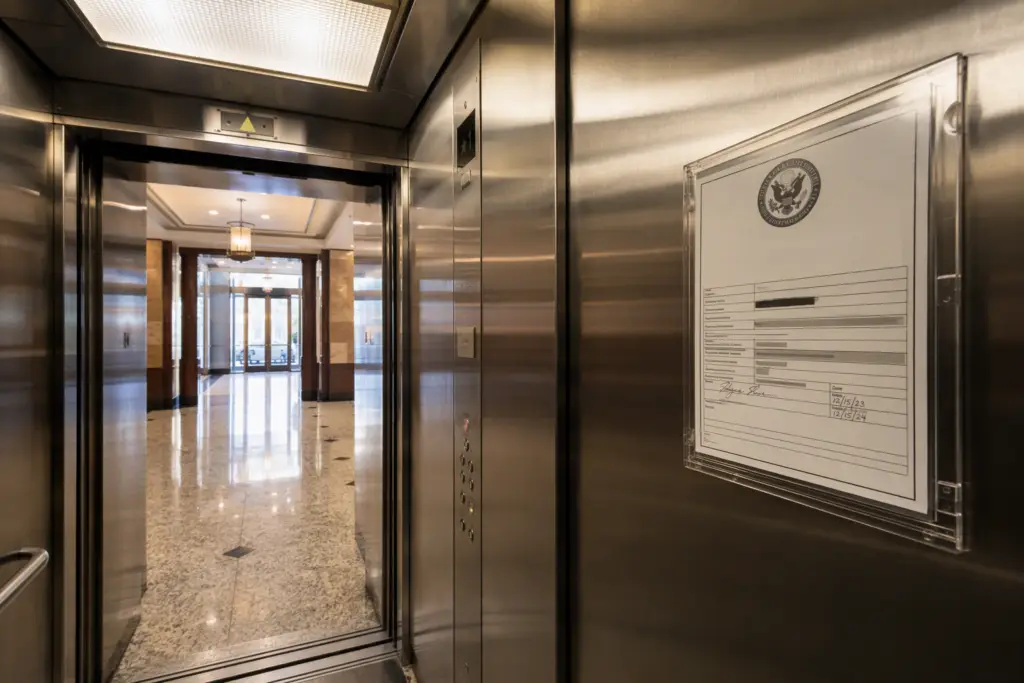
Pennsylvania’s elevator safety regulations require that the current operating certificate be posted in the elevator or machine room and that maintenance and repair records be retained for inspection by authorized state inspectors. Failure to maintain these records can result in regulatory penalties and may complicate insurance claims arising from an elevator incident.
Building owners should retain copies of all emergency repair documentation in a dedicated elevator maintenance file, alongside annual inspection certificates, maintenance logs, and any test reports generated under ASME A17.1 periodic testing requirements. This documentation record demonstrates due diligence and is essential in the event of a regulatory audit or litigation.
Why Should Philadelphia Building Owners Choose Quality Elevator Company for Emergency Elevator Repair?
Quality Elevator Company is a certified elevator service company with established operations in Philadelphia, Baltimore, Washington DC, and Richmond — offering building owners in the Philadelphia market a regionally experienced contractor with demonstrated familiarity with Pennsylvania’s elevator licensing, inspection, and code compliance requirements.
Quality Elevator Company’s Philadelphia service covers the full range of elevator types and control systems found in the city’s diverse building stock, from legacy relay-logic traction elevators in historic downtown buildings to modern hydraulic and MRL systems in newer construction. The company’s technicians are trained to the technical standards of the ASME A17.1 Safety Code for Elevators and Escalators and operate within the regulatory framework established by Pennsylvania’s Department of Labor and Industry.
Beyond emergency response, Quality Elevator Company provides preventive maintenance programs designed to reduce emergency call frequency, extend equipment service life, and support ongoing ADA and OSHA compliance for Philadelphia building owners. Engaging a single, regionally accountable contractor for both maintenance and emergency response creates continuity of equipment knowledge that improves diagnostic accuracy and reduces repair timelines when emergencies do occur.
Get Expert Emergency Elevator Repair Service in Philadelphia
Don’t wait until a breakdown becomes a liability. Whether you manage a single elevator in a South Philadelphia walk-up or a multi-car installation in a Center City high-rise, proactive service from a licensed, experienced contractor is the most effective way to protect occupants, maintain regulatory compliance, and control long-term maintenance costs.
Contact Quality Elevator Company for a free elevator assessment. Our team serves Philadelphia, Baltimore, Washington DC, and Richmond with comprehensive elevator maintenance, repair, and code compliance services.
Call us today: 301-779-9116
Need elevator service you can rely on? Quality Elevator Company is ready to help.