Hotel Elevator Maintenance Best Practices: A Complete Comparison and Decision Guide
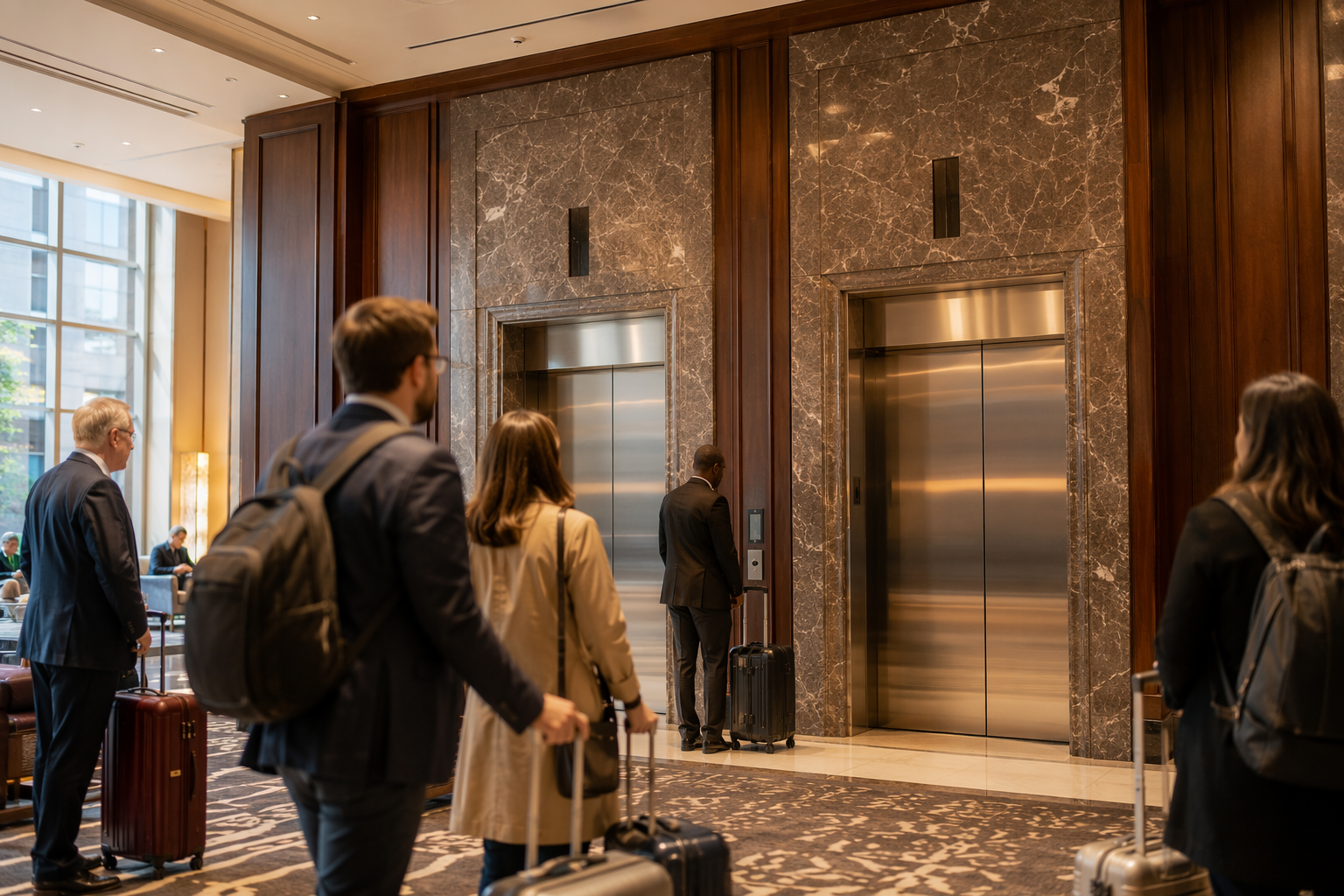
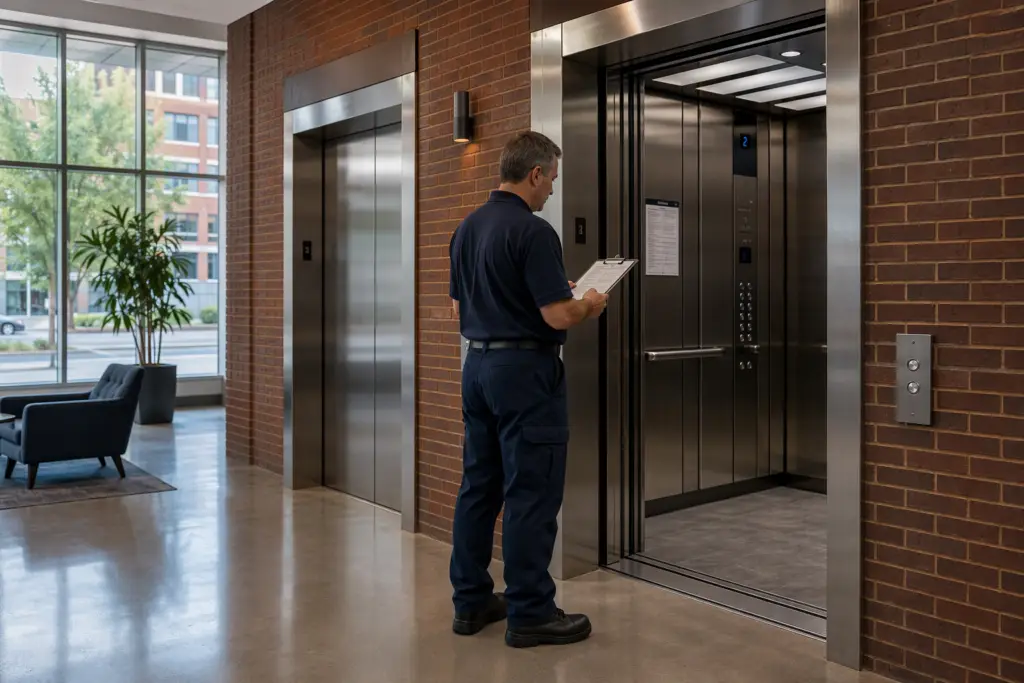
For hotel operators, elevators are not a background utility — they are a guest-facing asset that directly affects safety, satisfaction scores, brand reputation, and legal standing. A single unplanned outage during peak occupancy can cascade into negative reviews, ADA complaints, and regulatory citations. This guide compares maintenance approaches, outlines compliance requirements, and provides a clear framework for making the right service decision for your property in 2026.
Why Hotel Elevators Require a Specialized Maintenance Approach
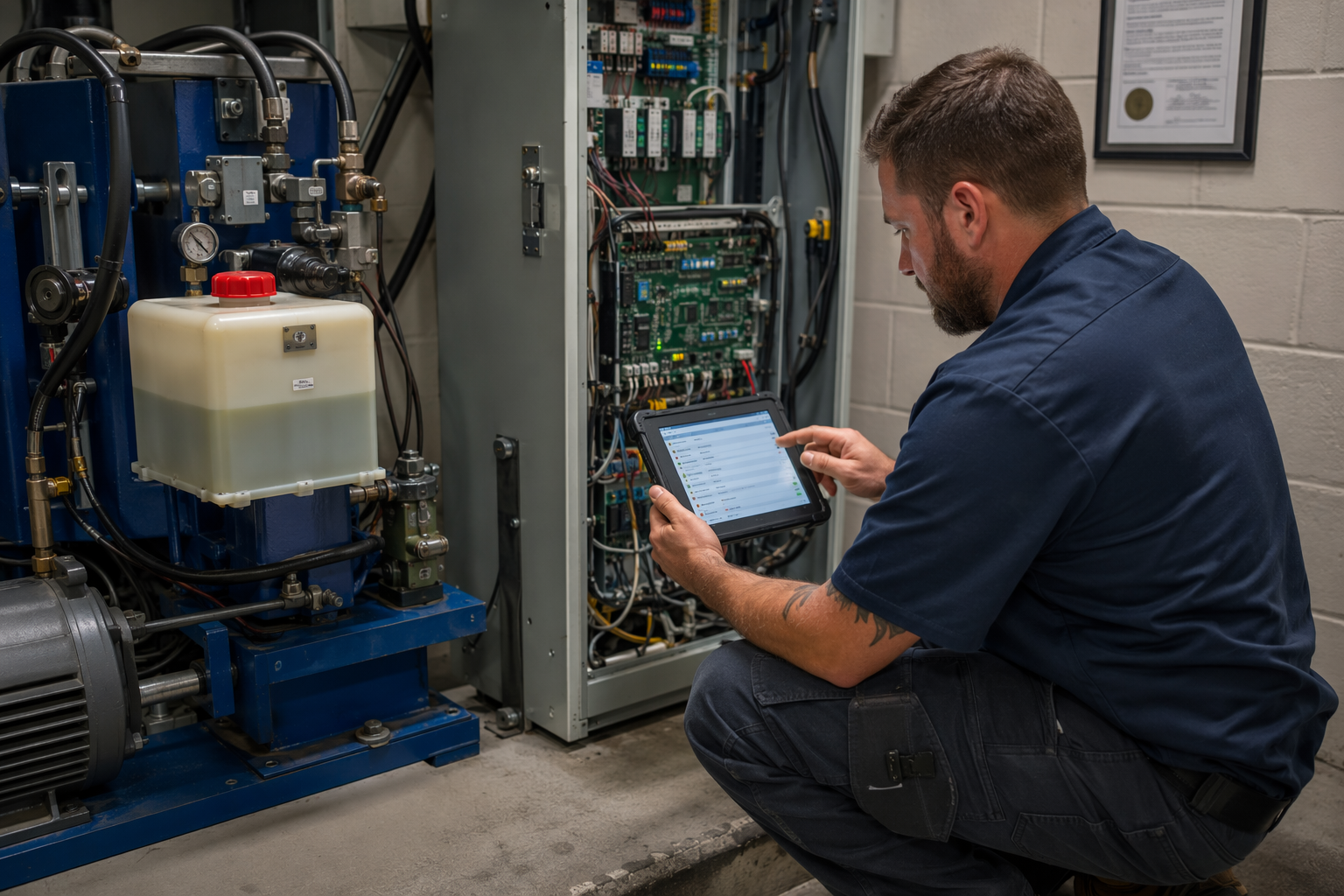
Hotels place unusually high demand on elevator systems. Unlike office buildings or residential towers, hotels operate elevators around the clock, seven days a week, with traffic patterns that spike during check-in, checkout, meal service, and event periods. Luggage, housekeeping carts, room service trolleys, and high-heel wear all accelerate component fatigue beyond what standard commercial duty cycles anticipate.
Beyond wear, hotel elevators must meet overlapping regulatory frameworks: state and local elevator codes (typically adopted from or aligned with ASME A17.1 Safety Code for Elevators and Escalators), ADA accessibility requirements, and OSHA standards for workers who service or use the equipment. Failing any of these can result in forced shutdowns, fines, and civil liability.
Quality Elevator Company serves hotel operators as a certified independent service provider, offering maintenance programs specifically scoped to the demands of hospitality properties — without the brand lock-in of OEM contracts.
Maintenance Program Types: Full Comparison Table

Hotel operators typically choose among three service models. Each has meaningful trade-offs in cost structure, flexibility, coverage depth, and vendor dependency.
| Factor | In-House Maintenance | OEM / Manufacturer Contract | Independent Certified Provider (e.g., Quality Elevator Company) |
|---|---|---|---|
| Cost Structure | High fixed labor costs; requires certified staff on payroll | Typically higher monthly fees; parts markups often included | Competitive flat-rate or tiered contracts; transparent parts pricing |
| Parts Availability | Must source independently; risk of procurement delays | Proprietary parts access but may limit third-party options | Multi-brand parts sourcing; not limited to one manufacturer |
| Regulatory Compliance Expertise | Depends entirely on internal staff qualifications | Strong for own equipment; may lag on code updates for legacy units | Maintains current knowledge across multiple code jurisdictions |
| Flexibility / Customization | High flexibility but requires significant management overhead | Contracts often rigid; penalties for early termination | Contracts tailored to property size, usage, and budget |
| Multi-Brand Equipment Support | Possible if staff is cross-trained | Limited to manufacturer’s own systems | Full multi-brand capability across elevator and escalator types |
| Accountability | Internal — may lack independent audit trail | Vendor-controlled reporting | Third-party documentation; owner retains all records |
| Scalability (Multiple Properties) | Difficult to scale without significant HR investment | Possible with multi-site OEM agreements | Portfolio contracts available; consistent standards across sites |
| Best Suited For | Very large properties with dedicated engineering teams | New installations still under warranty periods | Most hotels seeking compliance, value, and service flexibility |
Preventive vs. Reactive Maintenance: Pros, Cons, and ROI Comparison
| Factor | Reactive (Fix-on-Failure) Maintenance | Preventive Maintenance Program | Predictive / Condition-Based Maintenance |
|---|---|---|---|
| Upfront Cost | Low — no scheduled service fees | Moderate — recurring contract cost | Higher — requires monitoring hardware and data analysis |
| Long-Term Cost | High — emergency labor, expedited parts, guest disruption costs | Lower — failures caught early, major repairs reduced | Lowest over time — interventions timed to actual need |
| Guest Impact Risk | High — outages unpredictable and visible | Low — scheduled downtime during low-occupancy windows | Very low — failures anticipated before they occur |
| Compliance Posture | Risky — inspections may reveal deferred issues | Strong — documentation supports inspection readiness | Strong — continuous data supports compliance evidence |
| Typical ROI Timeline | Negative ROI when major failures occur | Positive ROI over 12–24 months of consistent program | Positive ROI realized over 24–36 months as data matures |
| Best For | Properties with very old equipment near full replacement | Most hotels — the industry-standard best practice | High-rise luxury hotels with modern elevator control systems |
Industry consensus and guidance from ASME standards favor structured preventive maintenance as the baseline expectation for commercial vertical transportation. Reactive-only approaches are difficult to defend during regulatory inspections or liability proceedings following an incident.
What Does a Complete Hotel Elevator Preventive Maintenance Checklist Include?
A comprehensive preventive maintenance visit for a hotel elevator system should cover the following categories. Frequency of each task varies by equipment age, usage intensity, and applicable jurisdiction requirements under ASME A17.1.
Monthly Inspection Tasks
- Lubrication of guide rails, sheaves, and mechanical components
- Door operation, alignment, and safety edge testing
- Emergency lighting and communication system verification
- Leveling accuracy check at each floor
- Control panel and button response test
- Safety device function verification
Quarterly Inspection Tasks
- Brake adjustment and wear assessment
- Drive belt or rope tension measurement
- Hydraulic fluid inspection and leak check (hydraulic units)
- Machine room temperature and ventilation review
- Full door closer and restrictor function test
Annual Inspection Tasks
- Full safety test per applicable state code (typically aligned with ASME A17.1)
- Governor and safety device load test
- Buffer oil level and condition
- Complete wire rope or chain inspection
- ADA compliance review of cab interior, controls, and audible signals per ADA Standards for Accessible Design
- Preparation and submission of inspection records to the authority having jurisdiction (AHJ)
What Steps Should a Hotel Take Immediately After an Elevator Failure?
When an elevator goes out of service unexpectedly at a hotel property, a defined response protocol minimizes guest impact, liability exposure, and downtime.
- Verify no guests are trapped. Attempt communication via the cab’s emergency phone. If a passenger is confirmed entrapped, contact emergency services immediately per OSHA guidance on emergency response before any other action.
- Secure the elevator and post out-of-service signage at all landings to prevent further boarding attempts.
- Notify your certified elevator service provider to dispatch a qualified technician.
- Document the failure condition — note error codes displayed, any unusual sounds or movements reported by guests, and the time of last known normal operation.
- Activate the property’s guest accommodation protocol — inform front desk staff, direct guests to alternative access, and flag accessibility needs for ADA-protected guests.
- Retain all written records of the incident, the response, and the technician’s written findings for the maintenance log and potential regulatory review.
- Do not return the elevator to service until the technician has cleared it in writing and any required AHJ notification has been completed.
How Does ADA Compliance Affect Hotel Elevator Maintenance?
Under the Americans with Disabilities Act, hotels are required to maintain accessible features in operable condition. This means elevator maintenance programs must address more than mechanical function — they must specifically preserve accessibility features including:
- Audible and visual floor indicators
- Braille and raised character control buttons
- Door timing settings that accommodate mobility device users
- Leveling accuracy that prevents trip hazards at cab entries
- Two-way emergency communication accessible to hearing-impaired guests
Deferred maintenance that allows any of these features to degrade may constitute an ADA violation. Quality Elevator Company incorporates ADA accessibility verification into every scheduled maintenance visit for hotel clients.
What Are the Most Common Elevator Problems Found in Hotels?
Hotel-specific usage patterns create predictable failure modes that maintenance programs should prioritize:
- Door system failures — the most frequent cause of service calls in high-traffic settings; door edges, closers, and tracks degrade rapidly under constant use and luggage contact
- Leveling drift — caused by brake wear and control system drift; creates trip hazards and ADA non-compliance
- Hydraulic seal degradation — common in older hydraulic units, especially in properties with fluctuating ambient temperatures
- Control system faults — modern microprocessor controllers can develop software or sensor faults that require firmware review
- Emergency phone non-compliance — communication devices require testing and documentation to satisfy both code and liability requirements
- Cab interior damage — while cosmetic, cab damage affects guest perception and may conceal underlying panel or fixture issues
How Often Should Hotel Elevators Be Inspected?
Inspection frequency is governed by the authority having jurisdiction (AHJ) in each state or municipality, and most jurisdictions base their requirements on the ASME A17.1 Safety Code for Elevators and Escalators (2022 edition, with 2026 updates where adopted). In general:
- Routine maintenance visits are typically performed monthly or quarterly depending on contract level and usage intensity
- Annual safety inspections by a licensed third-party inspector are required in most U.S. jurisdictions
- Five-year full-load safety tests (Category 5) are required in many states for traction elevators
- Hydraulic units may require additional periodic pressure and oil testing per state-specific adoption of ASME standards
Hotel operators should confirm the specific inspection cycle required by their local AHJ. Quality Elevator Company manages inspection scheduling and documentation on behalf of hotel clients as part of comprehensive maintenance contracts.
What Should Hotels Look for When Selecting an Elevator Maintenance Provider?
Not all elevator service providers are equally suited to hospitality environments. When evaluating vendors, hotel procurement and facilities teams should assess the following criteria:
| Selection Criterion | Why It Matters for Hotels |
|---|---|
| Multi-brand service capability | Hotels often have mixed equipment fleets from acquisitions or renovations |
| Documented compliance management | Inspection certificates and maintenance logs must be audit-ready at all times |
| ADA familiarity | Accessibility compliance is a legal requirement, not optional |
| Contract flexibility | Hotel management transitions and brand flag changes require adaptable agreements |
| Transparent reporting | Ownership of maintenance data matters for asset valuation and due diligence |
| Parts inventory and sourcing independence | Proprietary parts lock-in can increase costs and extend downtime |
| Knowledge of local AHJ requirements | State and municipal code adoption varies; local expertise reduces compliance risk |
Quality Elevator Company meets all of these criteria as an independent certified elevator service company serving hotel properties.
How Does Elevator Maintenance Affect Hotel Brand Standards and Guest Reviews?
Major hotel brands and franchisors include elevator performance and appearance in quality assurance audits. An elevator that is slow, noisy, poorly lit, or out of service — even temporarily — is frequently mentioned in online guest reviews. Consistent preventive maintenance directly supports:
- Passing franchisor quality assurance inspections
- Maintaining positive guest satisfaction scores tied to management agreements
- Reducing the frequency of guest-visible disruptions during high-occupancy periods
- Supporting property valuations during refinancing or sale processes, where maintenance records are reviewed during due diligence
What Is the Difference Between a Maintenance Contract and a Full-Service Contract?
Hotel operators often encounter two primary contract structures from elevator service providers:
- Maintenance-Only Contract: Covers scheduled visits, lubrication, adjustments, and minor parts. Major component replacements are billed separately. Lower monthly cost but less cost predictability.
- Full-Service (Comprehensive) Contract: Covers all of the above plus parts and labor for most repairs, including significant component replacements. Higher monthly cost but protects against large unplanned expenditures — often preferred for hotels due to high traffic and the unpredictability of wear.
Quality Elevator Company offers both structures and can help hotel operators model the total cost of ownership for each approach based on their specific equipment inventory and usage profile.
How Should Hotels Plan Elevator Maintenance Around Occupancy Cycles?
Scheduling maintenance with minimal guest impact requires coordination between the service provider and the hotel’s front office and engineering teams. Best practices include:
- Scheduling routine visits during low-occupancy periods (mid-week, off-peak seasons)
- Avoiding maintenance windows during confirmed group blocks, events, or peak check-in/checkout hours
- For multi-car installations, staggering maintenance so at least one car remains in service at all times
- Communicating planned service in advance to front desk staff so guests can be proactively directed
- Completing all work with documentation signed off before returning the unit to service
What Regulatory Standards Govern Hotel Elevator Safety in 2026?
Hotel elevator safety in the United States is governed by a layered framework:
- ASME A17.1 Safety Code for Elevators and Escalators — the primary technical standard adopted by most U.S. states and municipalities, setting requirements for design, installation, maintenance, and inspection
- ADA Standards for Accessible Design — federal accessibility requirements applicable to public accommodations including hotels
- OSHA standards — applicable to elevator maintenance workers and to workplace safety in machine rooms and pits
- State and local elevator safety codes — which may adopt ASME standards with amendments, or maintain separate requirements enforced by the state AHJ
Hotel operators should work with their maintenance provider to confirm which edition of ASME A17.1 has been adopted in their jurisdiction, as adoption timelines vary by state.
Summary: Key Decision Factors for Hotel Elevator Maintenance
| Decision Factor | Recommended Approach |
|---|---|
| Service model | Independent certified provider for most hotels; OEM only during active warranty periods |
| Contract type | Full-service comprehensive contract for high-traffic hotel properties |
| Maintenance philosophy | Preventive as the baseline; predictive where modern control systems allow |
| Compliance management | Provider must manage ASME, ADA, and OSHA documentation proactively |
| Scheduling | Coordinate with occupancy calendar; stagger multi-car service |
| Incident response | Written protocol in place before any failure occurs |
Ready to Protect Your Guests and Your Property?
Quality Elevator Company provides certified elevator maintenance programs designed specifically for hotel and hospitality properties. From compliance documentation to multi-brand service capability, every program is built around your property’s operational needs — not a manufacturer’s service model.
Contact Quality Elevator Company for a free elevator assessment — call 301-779-9116 today.
Need elevator service you can rely on? Quality Elevator Company is ready to help.