Elevator Inspection Checklist: Requirements, Frequency & Compliance Guide
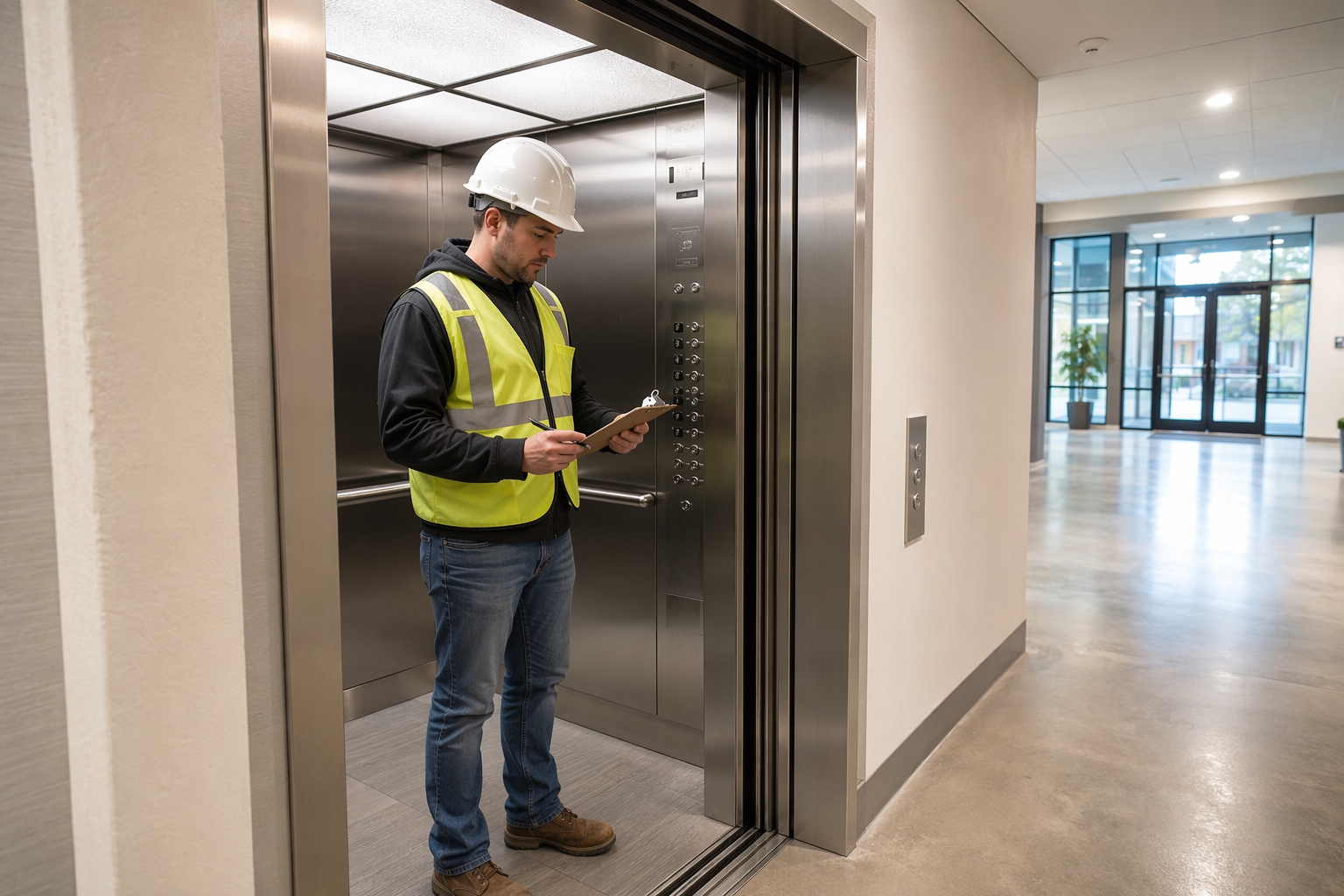
Elevator inspections are one of the most consequential maintenance obligations a building owner or facility manager faces. Missing a required inspection, overlooking a safety device, or failing to document findings correctly can result in permit revocation, significant liability exposure, and — most critically — passenger harm. This guide provides a structured, code-referenced elevator inspection checklist along with answers to the questions building professionals ask most.
What Is an Elevator Inspection Checklist?
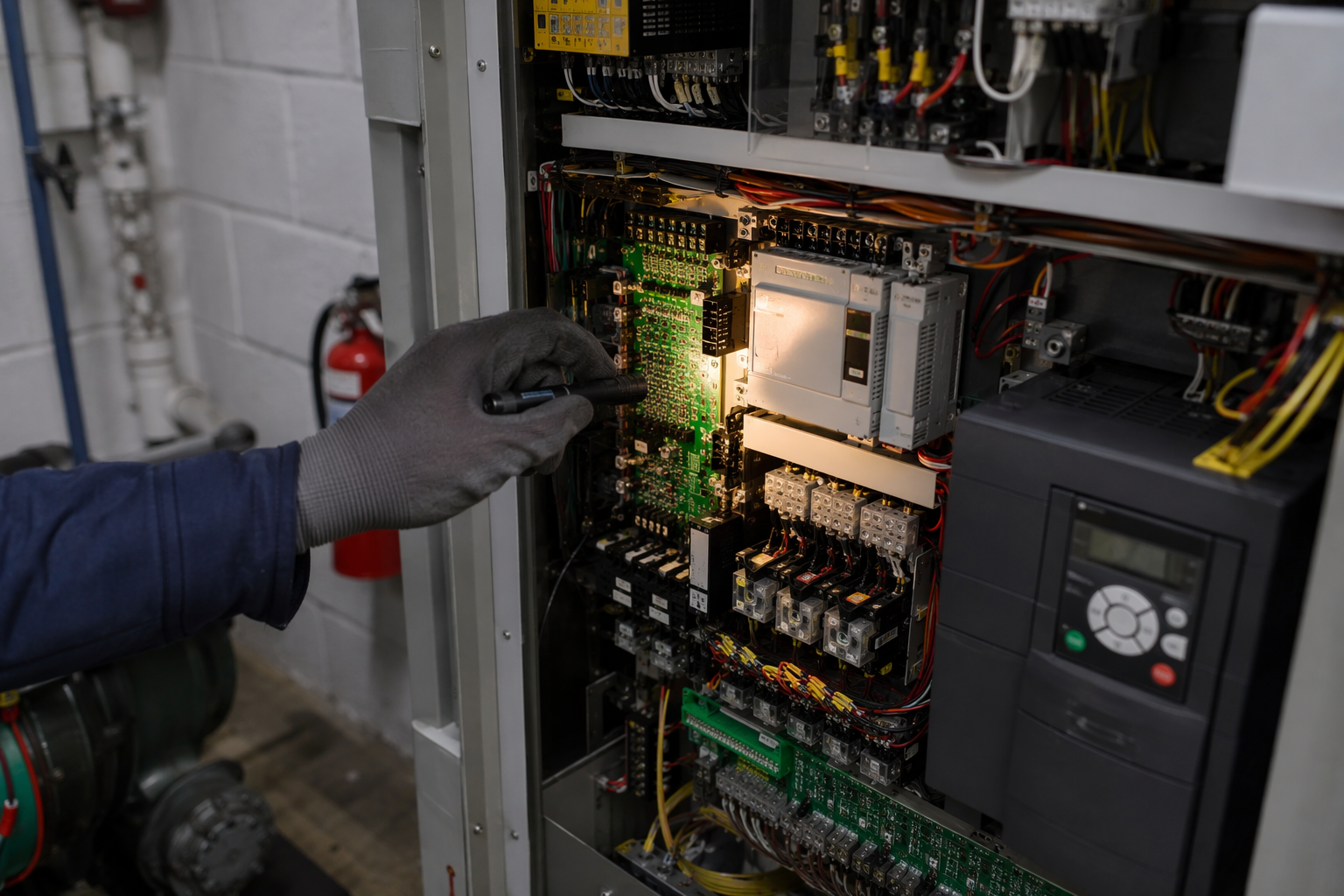
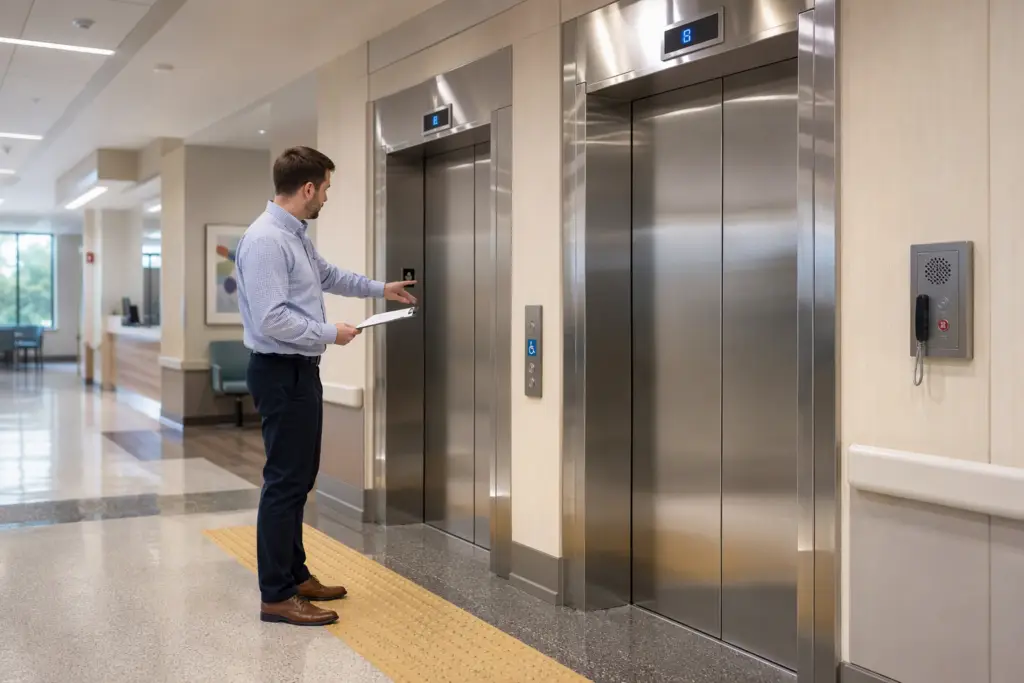
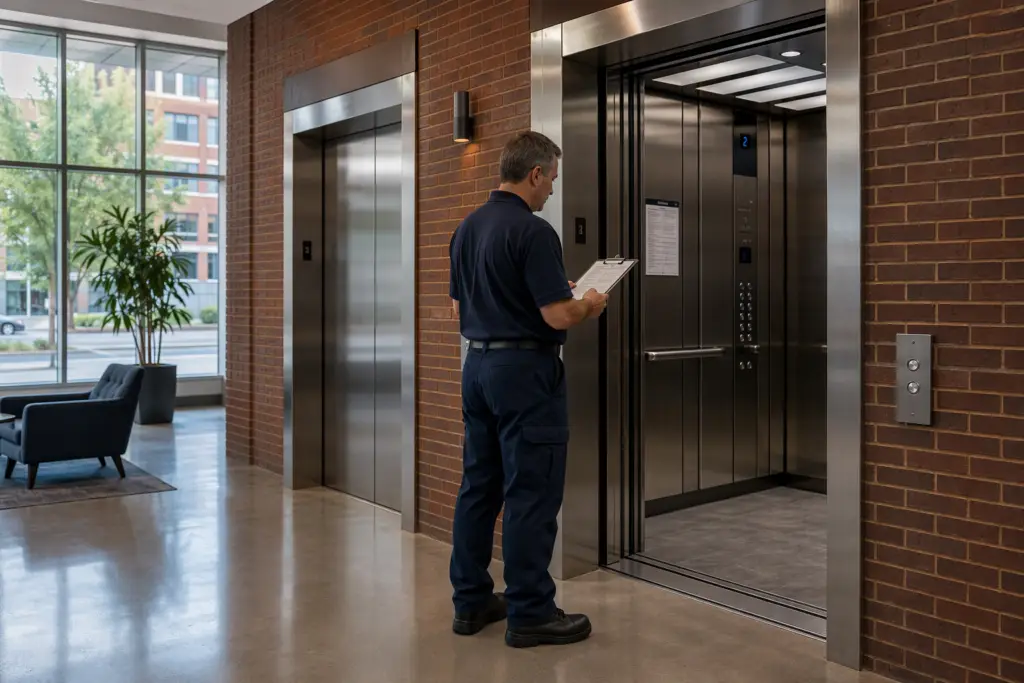
An elevator inspection checklist is a structured document used by qualified inspectors — and in many jurisdictions, licensed elevator inspectors specifically — to systematically evaluate every safety-critical element of an elevator system. The checklist ensures that no component is skipped, that findings are recorded consistently, and that the inspection meets the minimum requirements set by the governing safety code for the jurisdiction.
In the United States, the foundational document governing elevator safety is the ASME A17.1 Safety Code for Elevators and Escalators, which defines inspection and test procedures in detail. Most states and municipalities adopt ASME A17.1 by reference, sometimes with local amendments. Building owners should always confirm which edition of the code their AHJ has adopted, as this affects which tests are mandatory and at what intervals.
What Are the Core Sections of an Elevator Inspection Checklist?
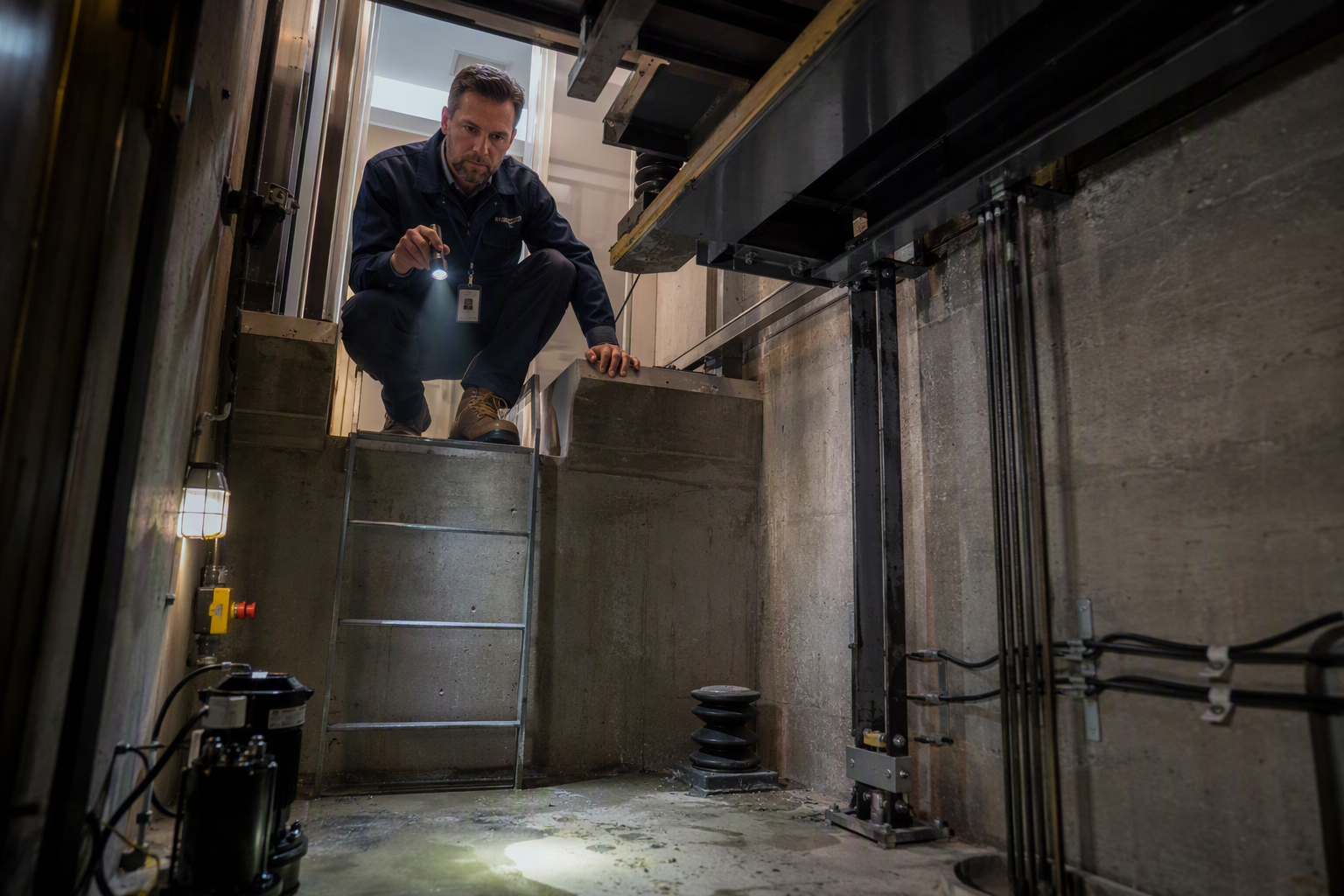
A thorough elevator inspection checklist is organized into logical zones of the elevator system. The sections below reflect the categories addressed in the ASME A17.1 Safety Code for Elevators and Escalators.
1. Machine Room and Control Space
- Adequate lighting and ventilation present
- Room access restricted to authorized personnel
- Fire suppression system and extinguisher in place and current
- Controller, drives, and electrical panels free of damage or moisture intrusion
- Emergency stop switch operational
- Oil levels in hydraulic units within acceptable range (hydraulic elevators)
- No storage of non-elevator materials in the machine room
2. Hoistway and Pit
- Pit access door self-closing and self-latching
- Pit lighting functional and switch accessible from pit entrance
- Pit stop switch operational
- Pit ladder secure and meeting code dimensions
- Sump pump or drainage functional (where water intrusion is possible)
- No accumulation of debris, oil, or water in pit
- Hoistway free of unauthorized penetrations
- Guide rails properly lubricated and fastened
- Buffers in correct position and free of damage
- Traveling cable in good condition with no visible wear
3. Car and Cab Interior
- Emergency lighting functional (tests with normal power disconnected)
- Emergency alarm bell audible at designated location
- Two-way communication system operational (per ADA and ASME requirements)
- Car operating panel markings legible, including floor designations and Braille
- Capacity and data plate displayed and legible
- Ventilation functional
- Flooring, walls, and ceiling structurally sound and free of hazards
- Car leveling within acceptable tolerance at all landings
4. Door Operation
- Car door and hoistway door interlock devices operational — this is one of the most critical safety tests
- Door reopening device (safety edge or light curtain) functioning correctly
- Door open and close times within code tolerances
- No gap between car and hoistway doors exceeding permitted limits
- Hoistway door gibs and tracks free of damage
- Door restrictors (if applicable) operational
5. Safety Devices and Brakes
- Governor rope and governor mechanism inspected
- Safety (safeties) device tested per ASME A17.1 intervals
- Brakes properly adjusted and holding capacity
- Overspeed governor set point within code specifications
- Terminal stopping devices (normal and final) operational
- Anti-creep leveling device functional (hydraulic elevators)
6. Hydraulic System (Hydraulic Elevators Only)
- No visible leaks in piping, cylinder, or fittings
- Pressure relief valve set within manufacturer and code specifications
- Low-oil protection device functional
- Rupture valve (if installed) functional
- Underground hydraulic cylinder inspection records current per local requirements
7. Machine (Traction Elevators)
- Sheave and wire rope condition — look for broken wires, corrosion, and uneven wear
- Rope tension equalized across all ropes
- Motor and brake clearances within specifications
- Drive system free of unusual noise or vibration
8. ADA Accessibility Compliance
- Call buttons at accessible height and properly illuminated
- Braille and raised character markings on all controls
- Audible and visual signals at landings
- Door timing meets minimum requirements for accessible travel
- Car dimensions meet minimum clear floor space standards under ADA
How Often Does an Elevator Need to Be Inspected?
Inspection frequency is governed by the AHJ adopting the ASME A17.1 Safety Code for Elevators and Escalators and the companion inspection standard ASME QEI-1 (Standard for the Qualification of Elevator Inspectors). Most jurisdictions require at minimum an annual routine inspection, with periodic tests — such as safety tests and pressure relief valve tests — performed at longer intervals, often every one to five years depending on the test type and local amendments.
Building owners should obtain the current inspection interval schedule from their local elevator authority, as intervals vary by state and by the type of elevator equipment involved. Failing to complete a required periodic test on schedule can result in permit suspension and mandatory shutdown of the elevator.
What Are the Required Tests vs. Routine Inspections?
The ASME A17.1 Safety Code for Elevators and Escalators distinguishes between routine inspections and periodic tests. Routine inspections are visual and operational checks performed annually (or as required by the AHJ). Periodic tests involve physical operation of safety systems under load or simulated failure conditions and are performed less frequently — typically every one, three, or five years depending on the test.
Common periodic tests include:
- Safety test (full load): Verifies the safety device stops and holds the elevator car at rated load and overspeed
- Governor test: Confirms the governor trips within its set speed range
- Hydraulic pressure and relief valve test: Confirms the system holds pressure and relieves at the correct set point
- Rupture valve test (hydraulic): Confirms the valve closes at the required flow rate
- Firefighters’ emergency operation test: Confirms Phase I and Phase II emergency recall function correctly
What Happens During a Failed Elevator Inspection?
When an inspector identifies a condition that violates the adopted code, the AHJ typically issues a violation order requiring corrective action within a specified timeframe. For immediately dangerous conditions — such as a failed interlock, non-functional safety device, or structural hazard — the AHJ may require the elevator to be taken out of service immediately until the deficiency is corrected and the elevator passes a follow-up inspection.
Building owners who continue to operate an elevator with an outstanding violation order or without a valid operating permit face regulatory penalties and bear significant liability in the event of an injury. Quality Elevator Company works with building owners and property managers to resolve inspection violations efficiently and document corrective actions for reinspection.
What Do Elevator Inspection Violations Typically Involve?
While specific violation statistics vary by jurisdiction and are not available in a single national dataset, inspection authorities and industry professionals consistently identify the following as among the most common deficiencies found during routine inspections:
- Door interlock failures or worn interlock rollers and gibs
- Non-functional or degraded door reopening devices
- Inoperative or inadequate emergency communication systems
- Expired or overdue periodic tests (safety, governor, or hydraulic)
- Machine room housekeeping and access violations
- Pit conditions — water accumulation, debris, or non-functional lighting
- Worn wire ropes approaching or exceeding discard criteria
- Missing or illegible data plates and capacity signs
- ADA accessibility deficiencies on controls or signage
- Hydraulic oil leaks
Who Is Qualified to Perform an Elevator Inspection?
Under most state regulations adopting ASME A17.1 and the companion ASME QEI-1 standard, elevator inspections must be conducted by a qualified elevator inspector who meets the qualifications defined in QEI-1. In many jurisdictions, this means the inspector must hold a state or local inspector’s license. Third-party inspections performed by insurance company inspectors are accepted in some states in lieu of government inspectors.
Building owners and facility managers should not rely on elevator maintenance technicians alone to fulfill the formal inspection requirement — maintenance and inspection are distinct functions. The maintenance technician services and repairs the equipment; the qualified inspector independently verifies compliance with the code.
What Is the Role of OSHA in Elevator Inspections?
OSHA has jurisdiction over elevator safety in workplaces and construction sites, particularly under 29 CFR 1910 (General Industry) and 29 CFR 1926 (Construction). OSHA standards require that powered platforms, manlifts, and personnel hoists used in construction meet specific safety standards, and employers have a general duty to provide a workplace free from recognized hazards — which includes elevators in commercial and industrial buildings. OSHA may also investigate elevator-related workplace accidents independent of state elevator authority inspections.
What Should Building Owners Do Immediately After Receiving an Inspection Report?
- Read the entire inspection report carefully and note each violation or advisory item with its assigned priority or deadline.
- Contact a licensed elevator service company to review the specific deficiencies and obtain a written scope of corrective work.
- Prioritize immediately dangerous conditions — if the AHJ has flagged the elevator as unsafe for operation, take it out of service until repairs are completed.
- Schedule corrective repairs in advance of the AHJ’s stated compliance deadline to allow time for parts procurement and any required follow-up inspection scheduling.
- Obtain written documentation from the elevator contractor confirming each deficiency has been corrected, including parts replaced and tests performed.
- Arrange for the follow-up or reinspection through the AHJ or approved third-party inspector.
- Retain all inspection reports, violation notices, and correction documentation in permanent building records — many jurisdictions require records to be maintained on-site and available for review.
How Does Elevator Type Affect the Inspection Checklist?
The elevator inspection checklist varies based on elevator type. The three most common types — traction, hydraulic, and MRL (machine-room-less) — each have distinct components and therefore distinct inspection points:
- Traction elevators: Wire rope condition, sheave wear, counterweight, and overhead machine room components receive focused attention.
- Hydraulic elevators: The hydraulic cylinder, piping, oil reservoir, rupture valve, and anti-creep device are system-specific inspection points not applicable to traction units. Underground cylinders add an additional compliance dimension related to environmental protection requirements in many states.
- Machine-room-less (MRL) traction elevators: Because the drive machinery is located in the hoistway or overhead space rather than a dedicated machine room, inspection access procedures differ, and inspectors must follow the manufacturer’s specific access protocol.
- Limited-use/limited-application (LULA) elevators: These are covered under specific ASME A17.1 requirements that differ from standard passenger elevators, including modified performance requirements.
What Is the Difference Between an Elevator Maintenance Contract and an Inspection?
An elevator maintenance contract defines the ongoing service obligations of an elevator company — lubrication, adjustments, parts replacement, and emergency response. It does not substitute for a formal code inspection conducted by a qualified elevator inspector and reported to the AHJ. The two are complementary: regular maintenance keeps the equipment in safe operating condition, while formal inspections provide the independent, code-mandated verification that the equipment actually meets minimum safety standards.
Building owners should review their maintenance contracts carefully to understand exactly what is included versus what is billed separately (such as parts, major repairs, or testing costs associated with periodic tests). Quality Elevator Company helps building owners align their maintenance programs with upcoming inspection requirements so that periodic tests are planned and budgeted in advance rather than treated as unexpected expenses.
What Are the 2025–2026 Trends in Elevator Inspection and Compliance?
Several developments are shaping how elevator inspections are conducted and what inspectors focus on in 2025 and 2026:
- Remote monitoring and predictive maintenance: An increasing number of elevator systems are being equipped with IoT-based monitoring that transmits operational data in real time. While this data does not replace formal inspections, it enables maintenance providers to identify developing faults before they escalate into inspection failures or entrapments.
- Modernization pressure from code updates: As jurisdictions update to more recent editions of ASME A17.1, older elevator installations may face mandatory modernization requirements — particularly around door interlock technology, firefighters’ emergency operation, and accessibility compliance under ADA.
- Increased regulatory scrutiny in high-density urban markets: Several major municipalities have increased inspection staffing and enforcement activity in response to high-profile elevator-related incidents, resulting in shorter timelines for violation correction and more rigorous reinspection protocols.
- Documentation and digital recordkeeping: Inspectors and AHJs are increasingly accepting — or requiring — digital inspection reports and electronic permit systems, which changes how building owners store and retrieve compliance records.
- Focus on aging equipment: A significant portion of the commercial elevator fleet in the United States consists of units installed decades ago. Inspectors are paying closer attention to wear-related deficiencies in aging equipment, and building owners with older elevators should expect more advisory items and modernization recommendations in current inspection cycles.
What Records Should Building Owners Maintain for Elevator Inspections?
Most AHJs require that the following records be kept current and accessible, often within or immediately adjacent to the elevator machine room or a designated building location:
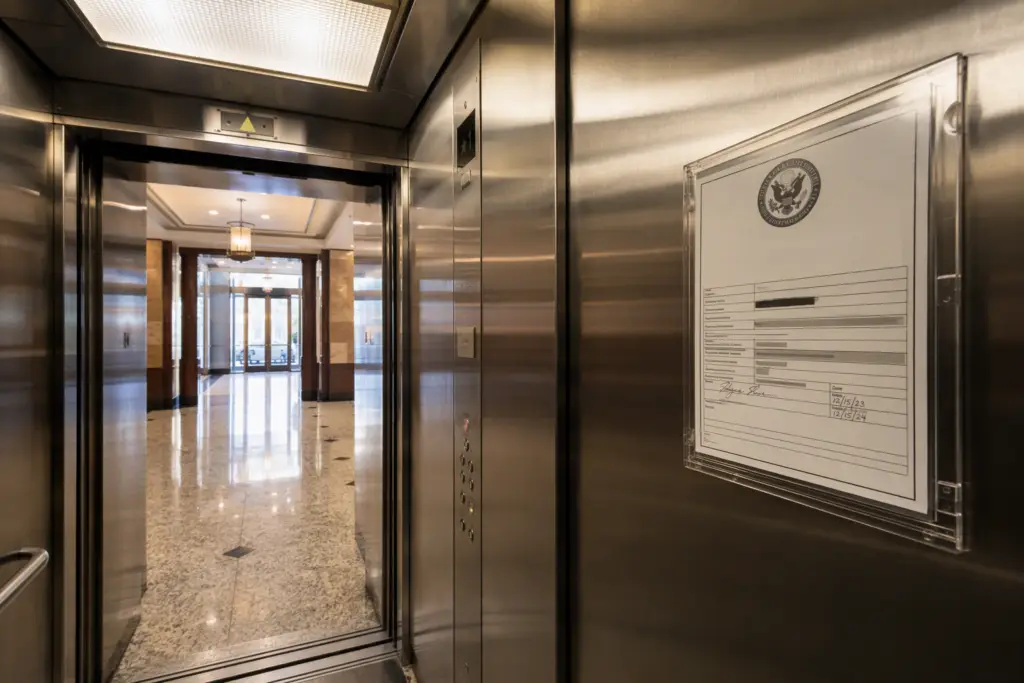
- Current operating permit or certificate of inspection
- Most recent inspection report from the AHJ or approved inspector
- Records of all periodic tests performed and their dates
- Maintenance logs or service records from the elevator contractor
- Any outstanding violation notices and documentation of corrective actions taken
- Contractor’s reports of major repairs or alterations
Failure to maintain accessible records is itself a citable violation in many jurisdictions. Building owners should treat inspection documentation with the same priority as fire safety and building permit records.
How Does the Sourced Data on Elevator Safety Code Requirements Break Down?
| Category | Inspection Type | Governing Standard |
|---|---|---|
| Routine visual and operational inspection | Annual (minimum; AHJ may require more frequently) | ASME A17.1 |
| Safety device (safeties) test | Periodic (interval set by AHJ per code edition adopted) | ASME A17.1 |
| Hydraulic pressure & relief valve test | Periodic (interval set by AHJ per code edition adopted) | ASME A17.1 |
| Firefighters’ emergency operation | Annual functional test | ASME A17.1 |
| ADA accessibility compliance | Verified at inspection; alterations trigger full compliance review | ADA Standards for Accessible Design |
| Workplace elevator safety (construction/industrial) | Employer duty; investigated by federal or state agency | OSHA |
Note: Exact periodic test intervals vary by jurisdiction based on the edition of ASME A17.1 adopted and any local amendments. Always confirm requirements with your AHJ.
How Can Quality Elevator Company Help with Elevator Inspection Compliance?
Quality Elevator Company provides elevator maintenance, repair, and modernization services with a compliance-focused approach. The team works alongside building owners, property managers, and facility directors to ensure that elevator equipment is prepared for formal inspections, that deficiencies identified in inspection reports are corrected efficiently, and that documentation is organized and accessible for regulatory review.
For buildings approaching a periodic test cycle — such as a five-year safety test or hydraulic pressure test — advance planning with a knowledgeable elevator company can prevent the downtime, emergency repair costs, and permit complications that arise when equipment is not ready for required testing. Quality Elevator Company provides assessment services to help building owners understand the current condition of their equipment and plan for upcoming inspection obligations.
Get a Free Elevator Assessment from Quality Elevator Company
Whether a formal inspection is approaching, a violation notice has been received, or a building’s elevator equipment has not been thoroughly evaluated recently, Quality Elevator Company is ready to help. A proactive assessment can identify developing deficiencies before they become code violations or safety incidents.
Contact Quality Elevator Company for a free elevator assessment: 301-779-9116
Need elevator service you can rely on? Quality Elevator Company is ready to help.