University Elevator ADA Compliance: What Campus Facilities Teams Need to Know
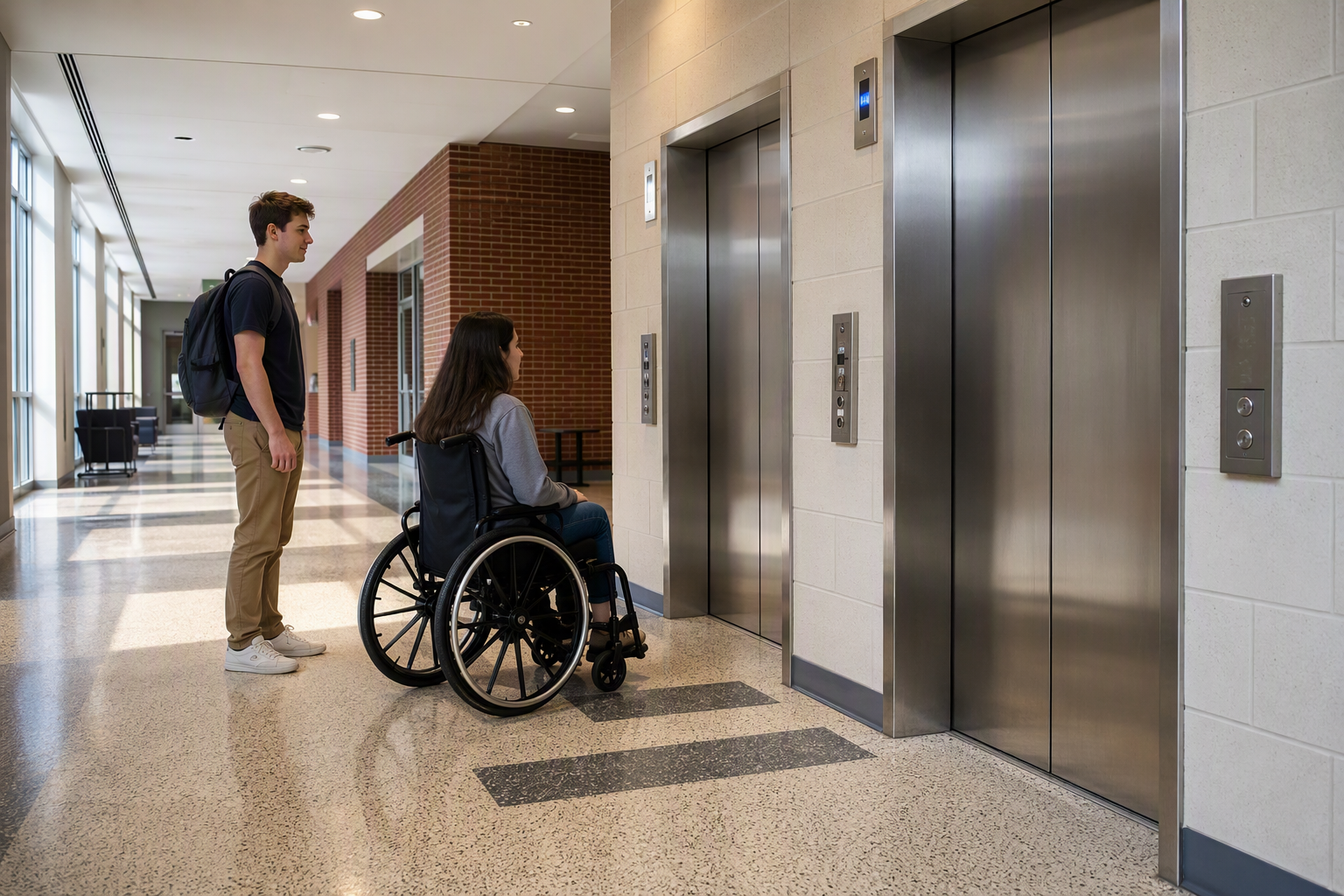
University campuses across Baltimore, Washington DC, Philadelphia, and Richmond face a complex intersection of federal accessibility law, state safety codes, and institutional accountability when it comes to elevator systems. Academic buildings, dormitories, libraries, research facilities, and student unions all depend on vertical transportation that is not only safe but fully accessible to students, faculty, staff, and visitors with disabilities. Falling short of these requirements can trigger federal complaints, civil litigation, and disruption to campus operations.
Quality Elevator Company works with institutional facilities teams throughout the mid-Atlantic region to evaluate, repair, modernize, and maintain elevator systems so that universities remain on the right side of every applicable code.
What ADA Requirements Apply to University Elevators?
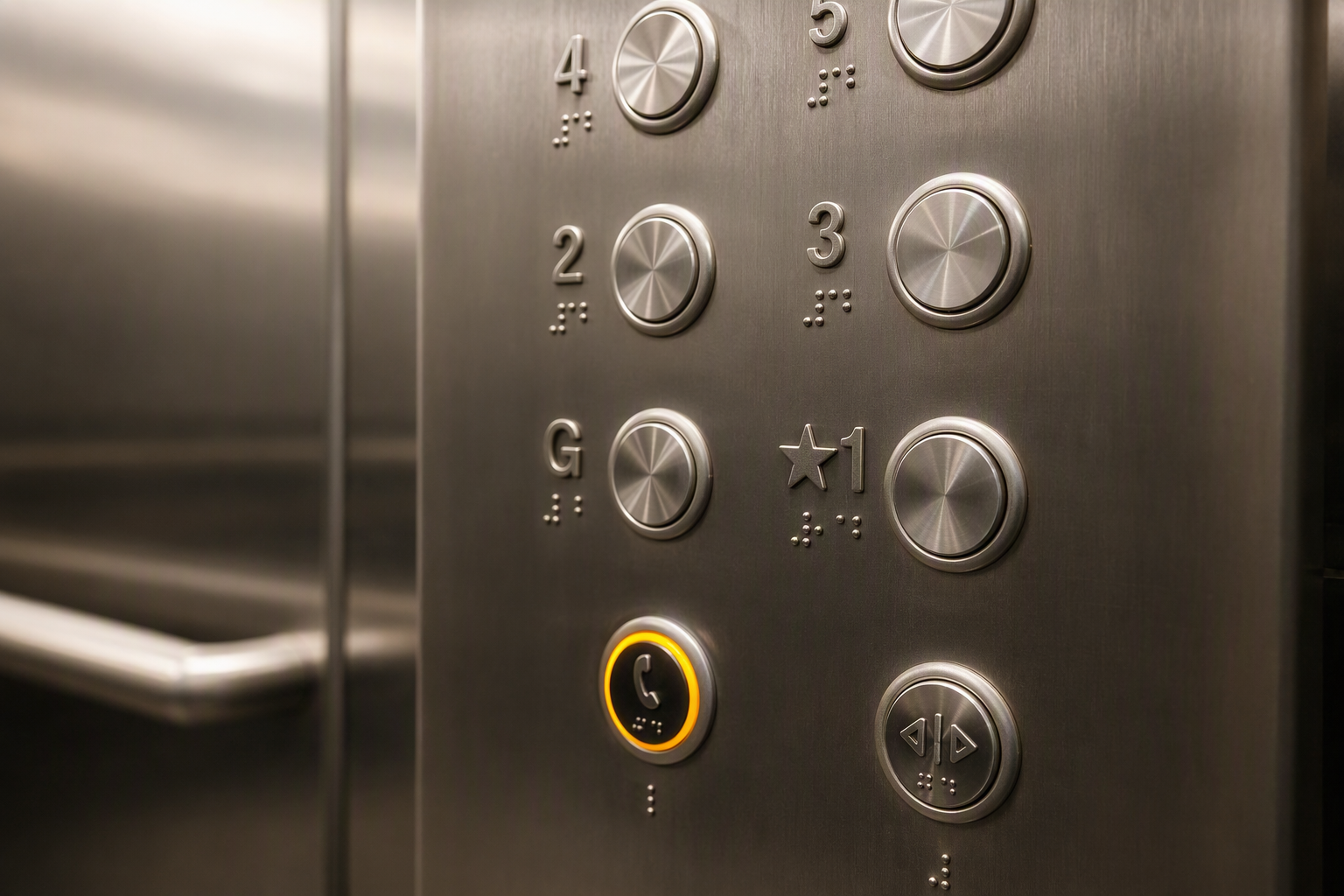
The Americans with Disabilities Act establishes baseline accessibility requirements for elevators in places of public accommodation and commercial facilities — categories that include virtually every building on a university campus. Under ADA Standards for Accessible Design, university elevators must meet criteria across several categories:
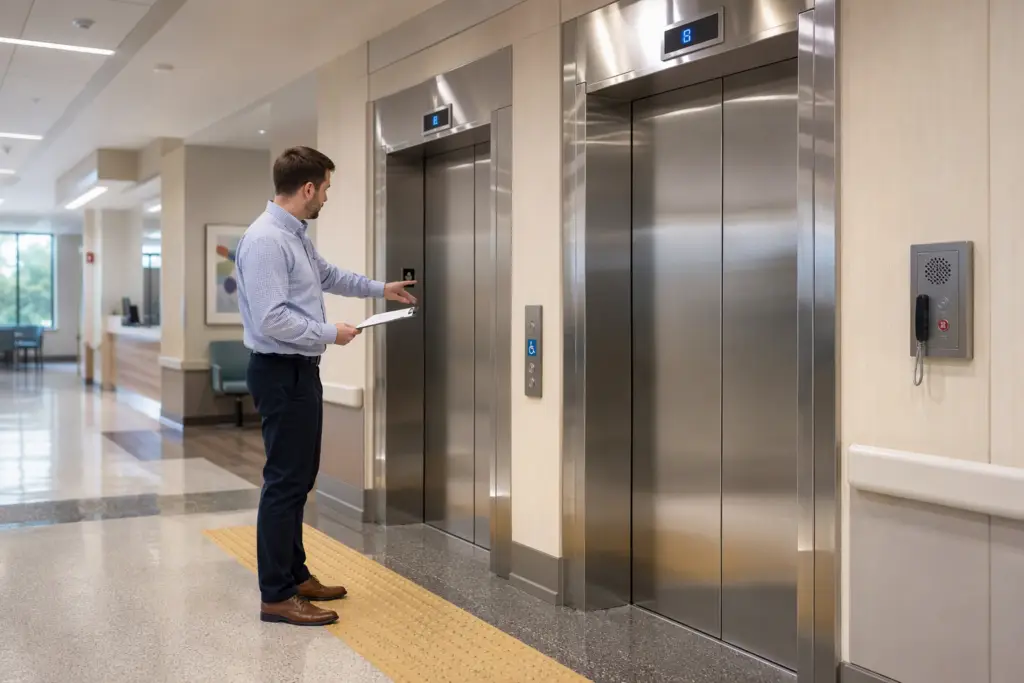
- Call buttons: Located no higher than 54 inches above the floor, raised or flush, and with a visual indicator when the call is registered.
- Hall signals: Visible and audible signals indicating car arrival and direction of travel.
- Cab dimensions: Minimum inside dimensions that allow a wheelchair user to enter, turn, and exit — typically requiring a clear floor space of at least 51 inches deep and 68 inches wide for center-opening doors.
- Door timing: Doors must remain open long enough for a person using a mobility device to enter or exit safely.
- Control panels: Floor buttons, emergency controls, and emergency communication devices positioned within accessible reach ranges.
- Braille and raised characters: Floor designations and control labels must include tactile characters and Grade 2 Braille.
- Floor announcement: Audible annunciation of floors served and direction of travel.
- Emergency two-way communication: A hands-free system that connects trapped passengers to emergency services, accessible to people with hearing or speech disabilities.
Universities that received federal funding — including Title IV student aid — are also subject to Section 504 of the Rehabilitation Act, which parallels ADA requirements and applies to all programs and facilities.
How Does ASME A17.1 Interact with ADA Compliance for Campus Elevators?
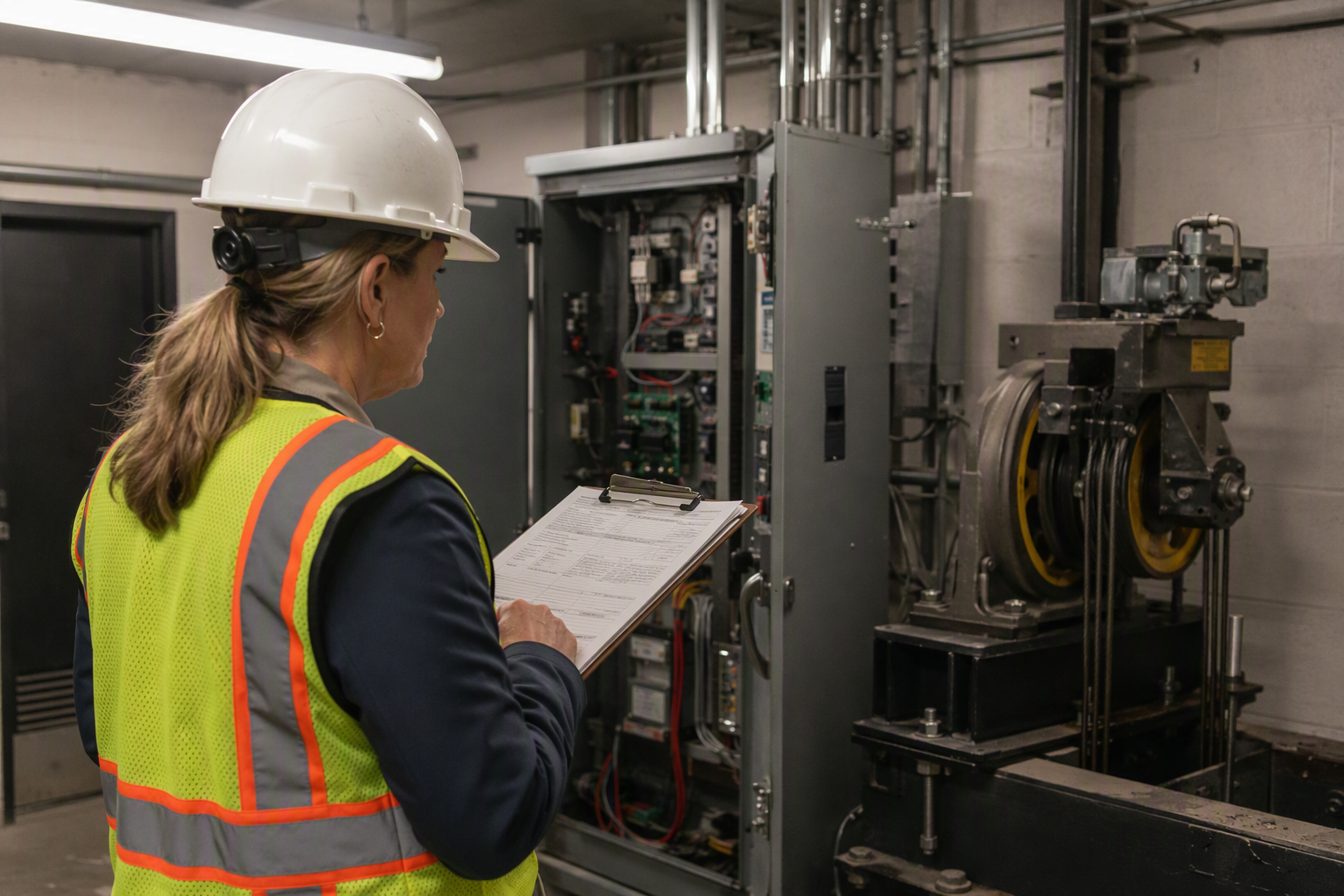
The ASME A17.1 Safety Code for Elevators and Escalators governs the mechanical and electrical safety of elevator equipment, while the ADA governs accessibility. These two frameworks overlap significantly on university campuses because an elevator that fails safety inspections is also an elevator that may be taken out of service — creating an immediate accessibility gap for students with disabilities.
States in the mid-Atlantic region adopt ASME A17.1 by reference, meaning Maryland, Virginia, Pennsylvania, and the District of Columbia each enforce a version of this code through their respective elevator safety inspection programs. The 2019 edition of ASME A17.1/CSA B44 is the most widely adopted reference standard as of 2026, though universities should confirm which edition their state has currently adopted.
Key ASME A17.1 provisions relevant to ADA compliance include door reopening devices, leveling accuracy (to minimize the gap between cab floor and landing), and requirements for emergency lighting and communication systems.
Which University Buildings Require ADA-Compliant Elevators?
Any multi-story university building that is open to the public or used by students, staff, or faculty must provide accessible vertical access. This includes:
- Academic classroom and lecture hall buildings
- Residence halls and dormitories
- Libraries and research centers
- Student unions and recreation centers
- Administrative offices
- Performing arts facilities and sports venues
- Medical and counseling centers on campus
- Parking structures with elevator access to campus buildings
Historic buildings present a specific challenge. While the ADA provides some flexibility for facilities where full compliance would threaten historic character, universities are still required to provide program accessibility — meaning the function offered in an inaccessible historic building must be available in an accessible alternative location.
What Are the Consequences of Non-Compliance for a University?
A university that fails to maintain ADA-compliant elevators faces several categories of risk:
- Federal complaints: Students, employees, or visitors may file complaints with the U.S. Department of Education’s Office for Civil Rights or the U.S. Department of Justice.
- Civil litigation: Private lawsuits under Title II or Title III of the ADA can result in injunctive relief and attorneys’ fees.
- State enforcement: State elevator safety agencies may issue citations, impose fines, or order equipment out of service following failed inspections.
- Reputational damage: Accessibility failures affect a university’s ability to recruit and retain students and employees with disabilities.
- Loss of federal funding: Persistent non-compliance with Section 504 can jeopardize federal financial assistance programs.
How Often Do University Elevators Need to Be Inspected?
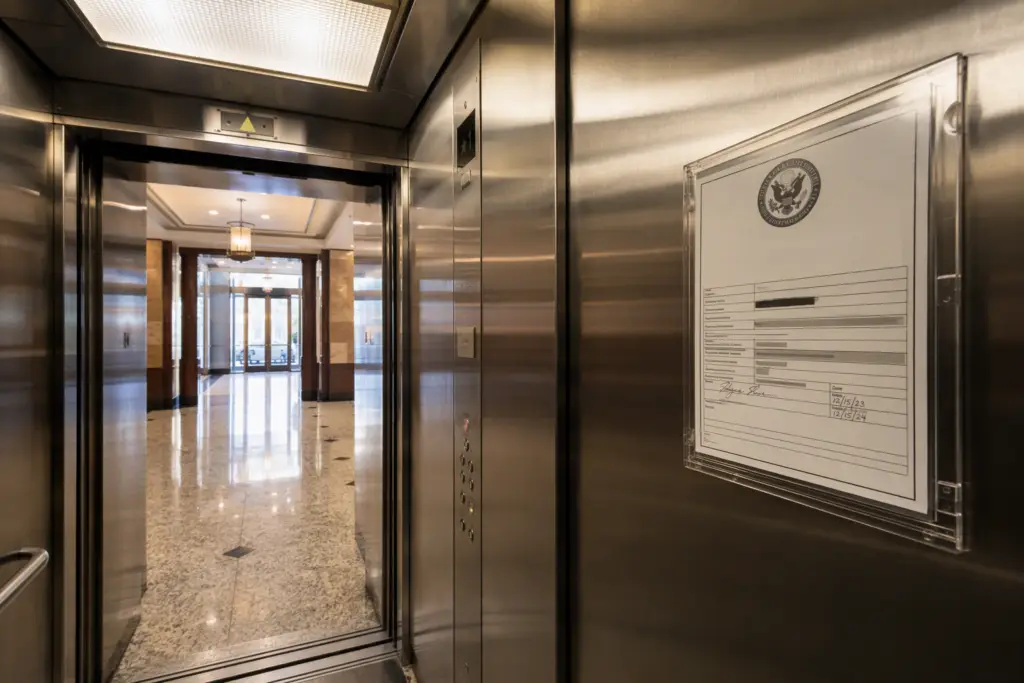
Inspection frequency is set by state elevator safety programs, which generally follow the intervals referenced in ASME A17.1. Most jurisdictions in Maryland, Virginia, Pennsylvania, and DC require annual routine inspections and periodic (typically five-year) load and safety tests. Universities should maintain current certificates of inspection for every elevator on campus, as these are frequently requested during ADA compliance reviews and disability services audits.
Quality Elevator Company assists university facilities departments in tracking inspection schedules across multiple buildings and coordinating testing to minimize disruption to campus operations.
What Is the Process for Bringing an Out-of-Compliance University Elevator into ADA Compliance?
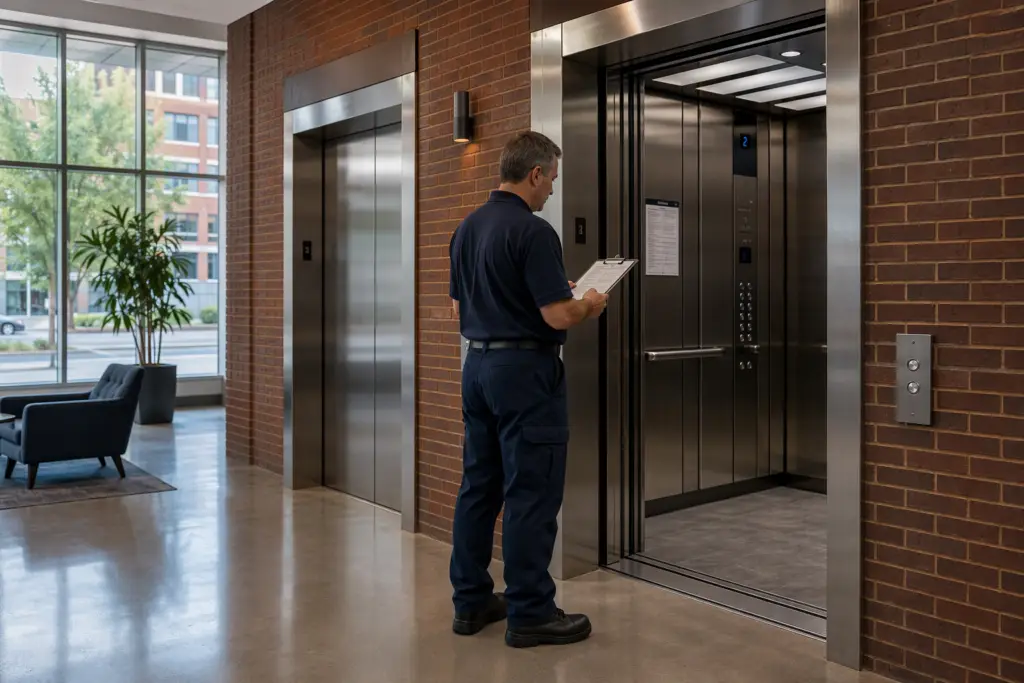
- Commission an accessibility audit. A qualified elevator service provider examines every elevator on campus against current ADA Standards and the applicable ASME A17.1 edition, documenting deficiencies in writing.
- Prioritize by risk. Deficiencies that create immediate barriers to access or pose safety hazards are addressed first. Items that affect only a portion of users may be scheduled in a second phase.
- Obtain permits. Any modification to elevator equipment requires permits from the state elevator safety authority having jurisdiction. Permit requirements vary by state and scope of work.
- Perform the remediation work. This may include replacing control panels, upgrading door operators and timing systems, installing audible and visual signals, adding Braille signage, or undertaking a full cab modernization.
- Schedule re-inspection. Following the remediation, a licensed inspector verifies compliance and issues an updated certificate.
- Document everything. Maintain records of the audit, permits, work orders, inspection certificates, and any variance requests as part of the university’s ADA transition plan documentation.
How Long Does a University Elevator ADA Compliance Project Take?
Timeline varies based on the number of elevators, the scope of deficiencies identified, permit processing times in the local jurisdiction, and equipment lead times. Minor remediation — such as replacing signage, adjusting door timing, or upgrading an emergency communication system — can often be completed within days to a few weeks per unit. A full cab modernization on an older elevator may take several months from permit approval through final inspection. Universities planning a campus-wide compliance initiative should begin the audit and planning process well before any regulatory deadline or accreditation review.
What Does University Elevator Modernization Typically Involve?
Older campus elevators — particularly those installed before the ADA was enacted in 1990 — often require more than targeted fixes to achieve full compliance. Modernization projects commonly address:
- Replacement of hydraulic or traction drive systems with energy-efficient controllers
- New cab interiors with compliant control panel heights and layouts
- Updated door operators with compliant reopening devices and timing
- Installation of destination dispatch or standard hall fixture systems with compliant call button heights and visual indicators
- Digital floor annunciation systems
- Emergency lighting and two-way communication upgrades
- Leveling system improvements to achieve flush landing accuracy
How Do Universities in Baltimore, DC, Philadelphia, and Richmond Handle Jurisdiction-Specific Requirements?
Each state and the District of Columbia maintains its own elevator safety program with specific permit requirements, inspection protocols, and adopted code editions. Maryland, Virginia, Pennsylvania, and DC each have separate licensing and inspection frameworks, meaning a university with buildings in multiple jurisdictions — or a university system with campuses in more than one state — must navigate multiple sets of requirements simultaneously.
Quality Elevator Company holds the licenses and maintains familiarity with inspection authorities across all four of these markets, allowing facilities teams to work with a single service partner rather than managing multiple regional vendors.
Questions Your Inspector Will Ask
When a state elevator inspector or an ADA compliance reviewer visits a university campus, facilities staff should be prepared to address the following:
- Are current certificates of inspection posted in every elevator cab, and are they unexpired?
- Do all call buttons comply with the maximum height requirement and include visual confirmation indicators?
- Are hall lanterns visible and audible from the elevator entrance on each floor?
- Do cab interiors provide sufficient turning radius and clear floor space for wheelchair users?
- Is the emergency two-way communication system hands-free and functional?
- Are all floor designations marked in raised characters and Braille at the correct height?
- Do door reopening devices function correctly and are door open times sufficient?
- Is cab floor leveling within the tolerance required by the adopted ASME A17.1 edition?
- Has the most recent periodic load test been conducted and documented?
- Are maintenance records current and available for review?
How Should a University Choose an Elevator Service Partner for ADA Compliance Work?
Universities evaluating elevator service providers for compliance-related work should consider:
- Licensure in the relevant jurisdiction(s): Confirm the provider holds active licenses to perform elevator work in every state or municipality where campus buildings are located.
- Familiarity with higher education facilities: Campus environments involve complex scheduling constraints, occupied buildings, and stakeholder communication requirements that differ from commercial properties.
- Documentation capability: ADA compliance requires thorough written records. A service partner should provide detailed audit reports, permit documentation, and post-work inspection summaries.
- Service continuity: Universities depend on consistent elevator availability. A service partner should offer preventive maintenance programs that reduce unplanned outages.
- Multi-jurisdiction experience: For university systems operating in more than one state, a provider with coverage across markets reduces coordination complexity.
Quality Elevator Company serves university and institutional clients across Baltimore, Washington DC, Philadelphia, and Richmond with a focus on code compliance, clear documentation, and reliable preventive maintenance.
What Preventive Maintenance Practices Help Universities Stay Continuously Compliant?
Achieving ADA compliance through a remediation project is only the beginning. Maintaining compliance requires ongoing attention to elevator performance, including:
- Scheduled lubrication, adjustment, and testing of door operators to maintain compliant timing and reopening sensitivity
- Regular testing of audible and visual signals and emergency communication systems
- Leveling checks to ensure cab floors remain flush with landings
- Prompt response to reported accessibility issues from students, faculty, or staff with disabilities
- Tracking of state inspection renewal dates to ensure certificates never lapse
- Review of ASME A17.1 and ADA updates as code editions are adopted by state authorities
A well-structured preventive maintenance agreement with Quality Elevator Company provides universities with documented service intervals, inspection preparation support, and a consistent point of contact for compliance questions throughout the year.
Get a Free Elevator Assessment for Your Campus
University facilities teams in Baltimore, Washington DC, Philadelphia, and Richmond can take the first step toward verified ADA compliance today. Contact Quality Elevator Company for a free elevator assessment and find out exactly where your campus stands against current ADA and ASME A17.1 requirements.
Contact Quality Elevator Company for a free elevator assessment: 301-779-9116
Need elevator service you can rely on? Quality Elevator Company is ready to help.