Office Building Elevator Inspection Schedule: Requirements, Timelines & Compliance Data
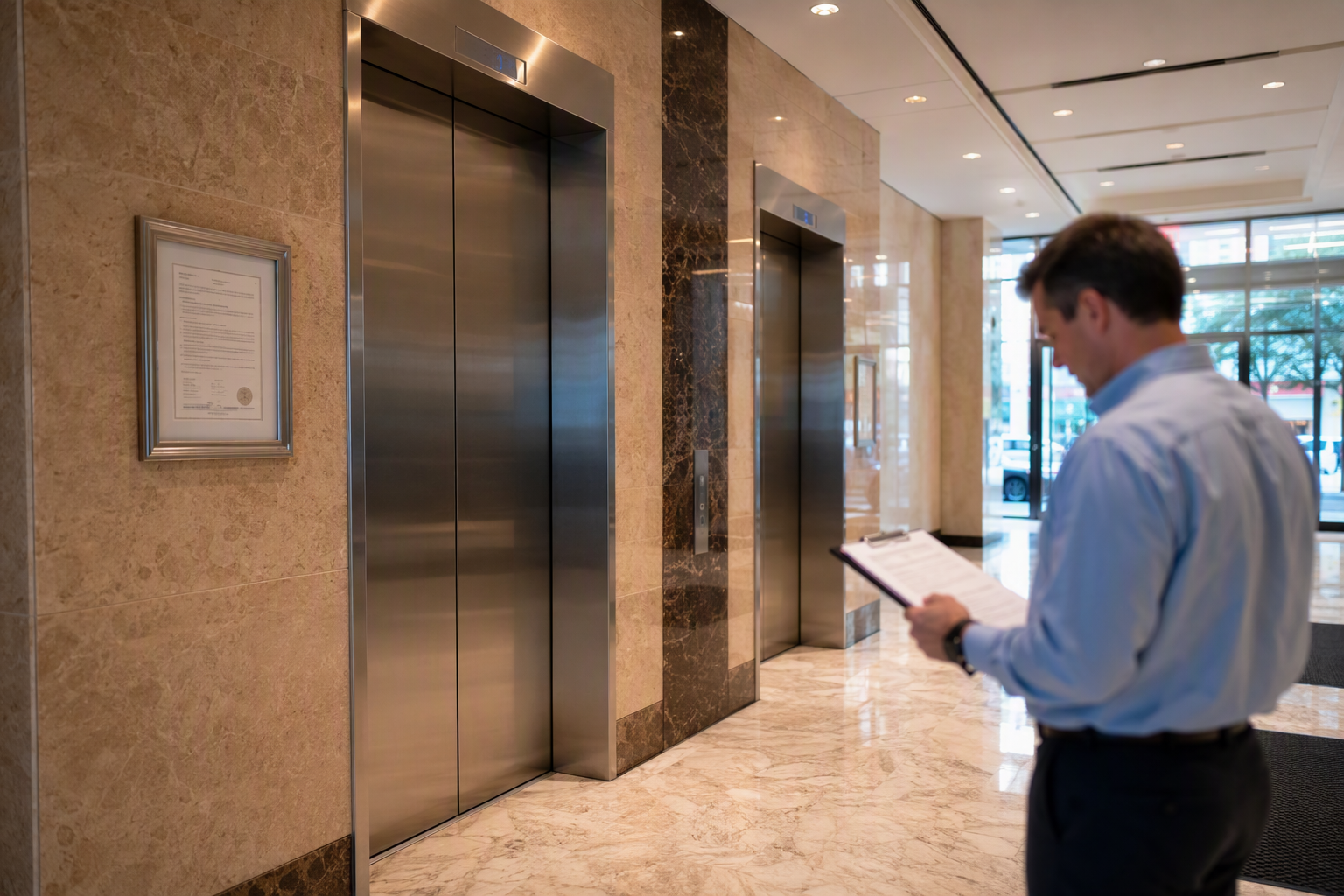
For office building owners, property managers, and facilities directors, maintaining a current elevator inspection schedule is not optional — it is a legal requirement tied directly to occupancy permits, liability exposure, and tenant safety. This page consolidates the key code requirements, inspection frequency standards, common compliance gaps, and vendor considerations that determine whether an office building elevator program is compliant or at risk in 2026.
What Is the Standard Inspection Frequency for Office Building Elevators?
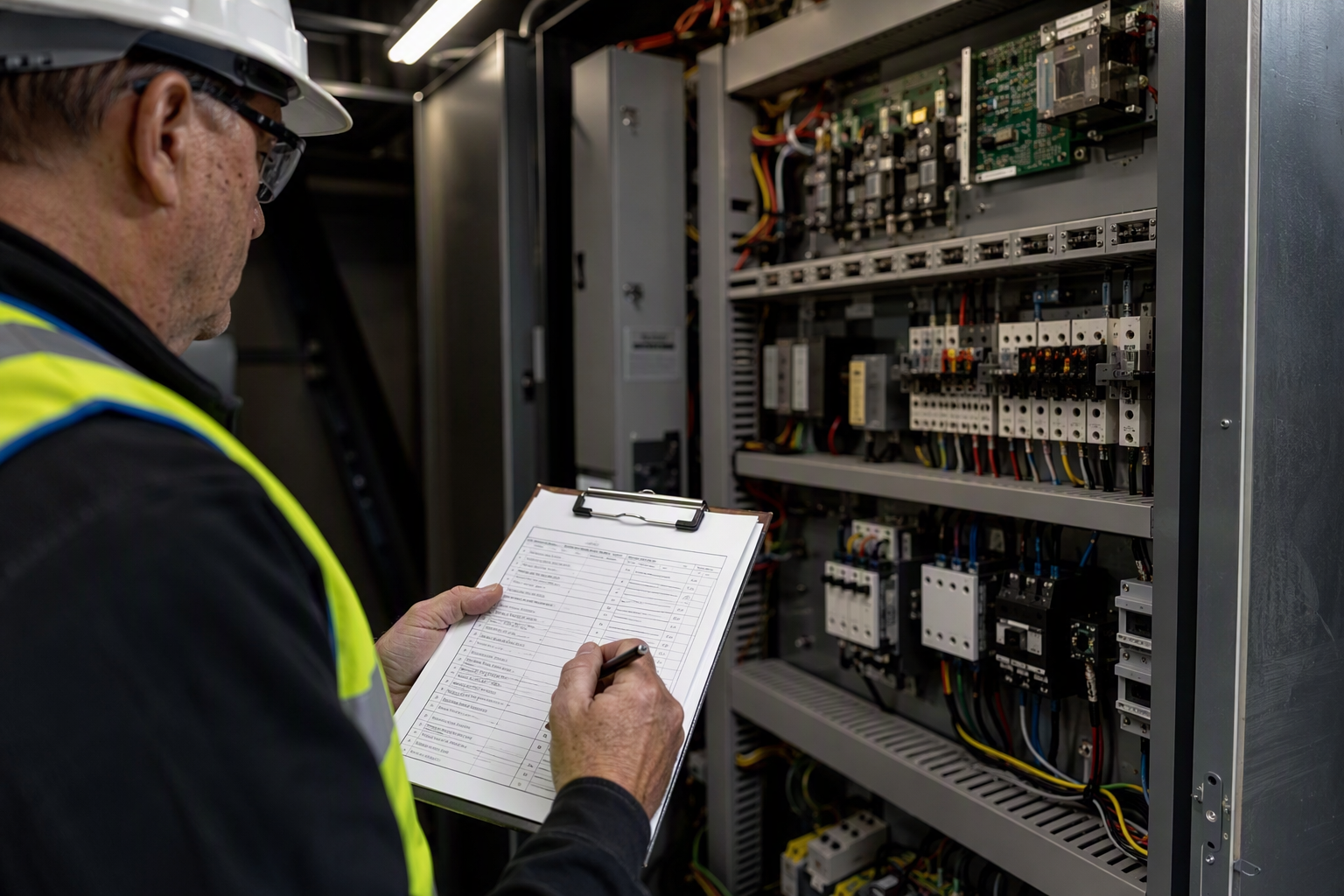
The foundational framework for elevator inspection frequency in the United States is established by the ASME A17.1 Safety Code for Elevators and Escalators. Under this code, inspections fall into two primary categories:
- Periodic Inspections: Required at regular intervals — typically annual — to verify that all safety systems, doors, controls, and mechanical components are functioning within code tolerances.
- Periodic Tests: More rigorous evaluations performed at longer intervals, including five-year no-load and full-load tests of safety and governor systems.
Most state elevator safety programs adopt ASME A17.1 (or its Canadian counterpart, ASME A17.1/CSA B44) as their baseline, then layer additional or more frequent requirements on top. This means an office building’s inspection schedule is determined by whichever standard is more stringent — the state code or the ASME model code.
| Inspection / Test Type | Typical Interval Under ASME A17.1 | Who Performs |
|---|---|---|
| Periodic Safety Inspection | Annual (varies by jurisdiction) | State/AHJ-licensed inspector |
| Category 1 Test (annual) | Annually | Certified elevator contractor |
| Category 3 Test (safety/governor) | Every 3 years (select units) | Certified elevator contractor |
| Category 5 Test (full-load safety) | Every 5 years | Certified elevator contractor with inspector witness |
Note: Specific intervals are subject to the Authority Having Jurisdiction (AHJ) in each state. Always verify with your local elevator safety bureau.
How Do State Laws Affect an Office Building’s Elevator Inspection Schedule?
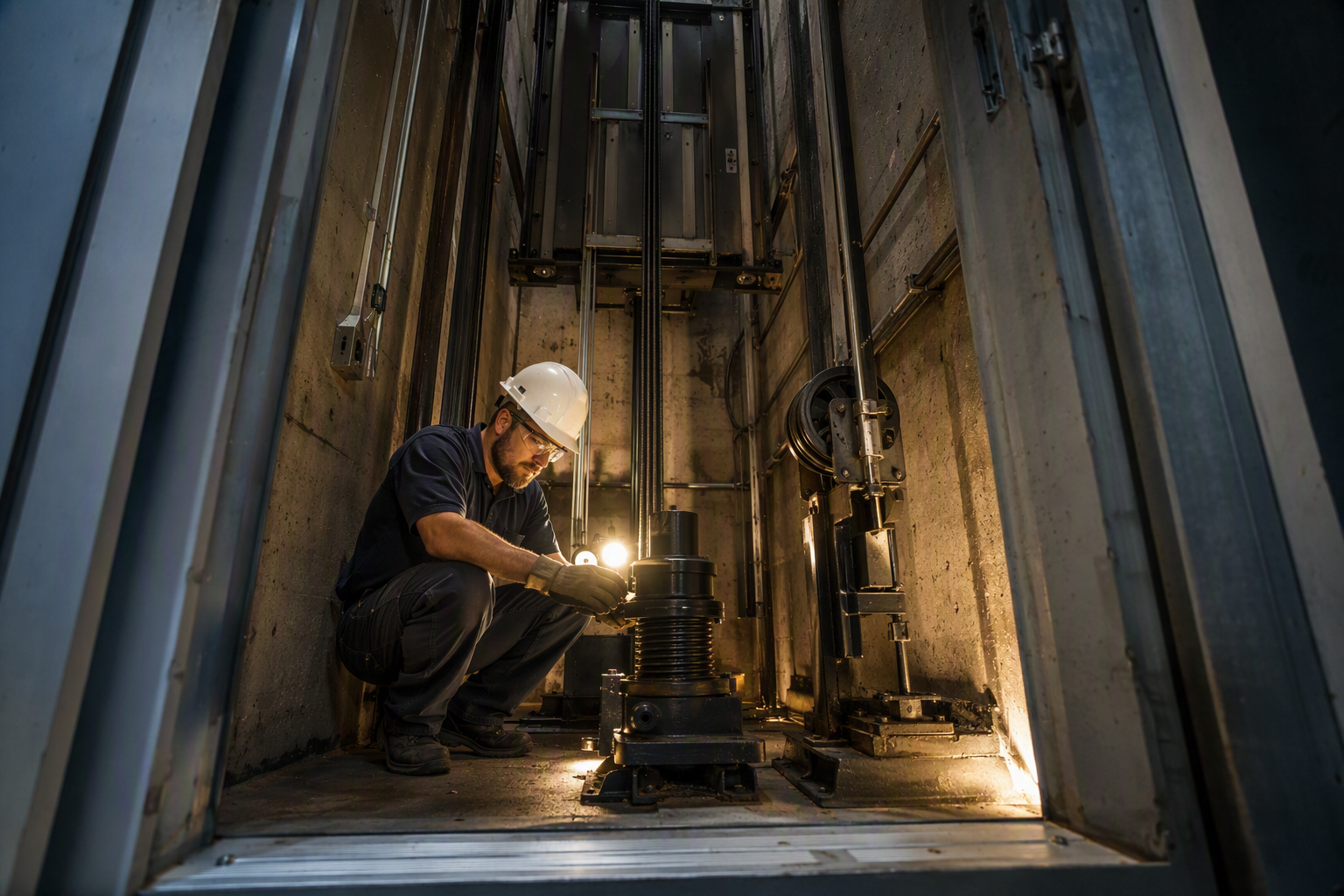
While ASME A17.1 provides the national framework, each state’s elevator safety bureau or department of labor establishes its own inspection cycle, certificate renewal process, and enforcement mechanism. Some states mandate semi-annual inspections for high-traffic commercial buildings; others allow annual cycles with owner-maintained logs between official visits.
Key variables that states use to differentiate inspection schedules include:
- Building occupancy type: High-rise office towers with hundreds of daily occupants may face more frequent inspection requirements than low-rise suburban office buildings.
- Elevator age and type: Hydraulic elevators, traction elevators, and machine-room-less (MRL) systems may each fall under distinct testing protocols.
- Permit history: Buildings with prior violations or lapsed certificates are often placed on accelerated inspection cycles by the AHJ.
- Modernization status: Following a major modernization project, an elevator typically requires a new acceptance inspection before returning to its standard periodic schedule.
Property managers operating across multiple states must maintain a jurisdiction-specific compliance calendar, as a single national schedule will not satisfy every AHJ’s requirements.
What Happens If an Office Building Misses Its Elevator Inspection Deadline?
Missing a required inspection deadline triggers consequences that can escalate quickly. The typical enforcement sequence follows a predictable pattern:
- Certificate expiration: The building’s operating certificate lapses, making continued elevator operation unlawful in most jurisdictions.
- Notice of violation: The AHJ issues a formal violation notice, often with a compliance deadline of 30 to 90 days depending on state rules.
- Mandatory shutdown order: If the violation is not resolved, inspectors have authority in most states to post an “out of service” order, physically shutting down the elevator until compliance is achieved.
- Fines and penalties: Daily civil penalties accrue during the non-compliant period. The amount varies substantially by jurisdiction.
- Liability exposure: A lapsed inspection certificate significantly strengthens a plaintiff’s position in any personal injury litigation arising from elevator operation during the non-compliant period.
- Occupancy permit risk: In severe cases, municipal authorities may suspend the building’s certificate of occupancy, triggering lease obligations and tenant claims.
Quality Elevator Company helps office building owners build proactive inspection calendars that eliminate the risk of lapsed certificates before they become enforcement issues.
What Does an Annual Elevator Inspection for an Office Building Actually Cover?
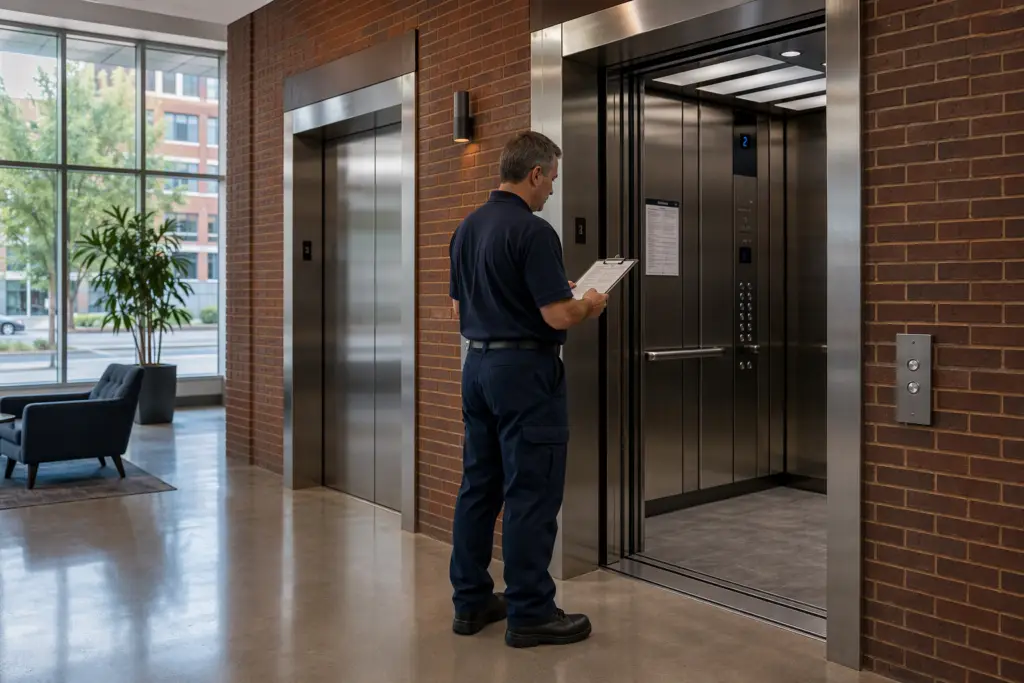
A properly conducted annual inspection under the ASME A17.1 Safety Code for Elevators and Escalators is a systematic verification, not a casual walkthrough. Core inspection components typically include:
- Door operation, alignment, and safety edge function
- Emergency stop and alarm systems
- Pit condition, lighting, and drainage
- Machine room environment, temperature, and equipment condition
- Governor and overspeed safety device functionality
- Buffer and counterweight clearances
- Lighting in cab, hoistway, and machine room
- Emergency communication system (telephone/intercom) operability
- Load capacity signage accuracy
- Firefighters’ emergency operation (FEO) testing
- Leveling accuracy at each floor
- Hydraulic system integrity (for hydraulic units)
The inspection results in a written report. If deficiencies are found, the building owner receives a correction notice specifying which items must be remediated and by what deadline before the operating certificate is renewed.
How Does ADA Compliance Factor Into the Elevator Inspection Process?
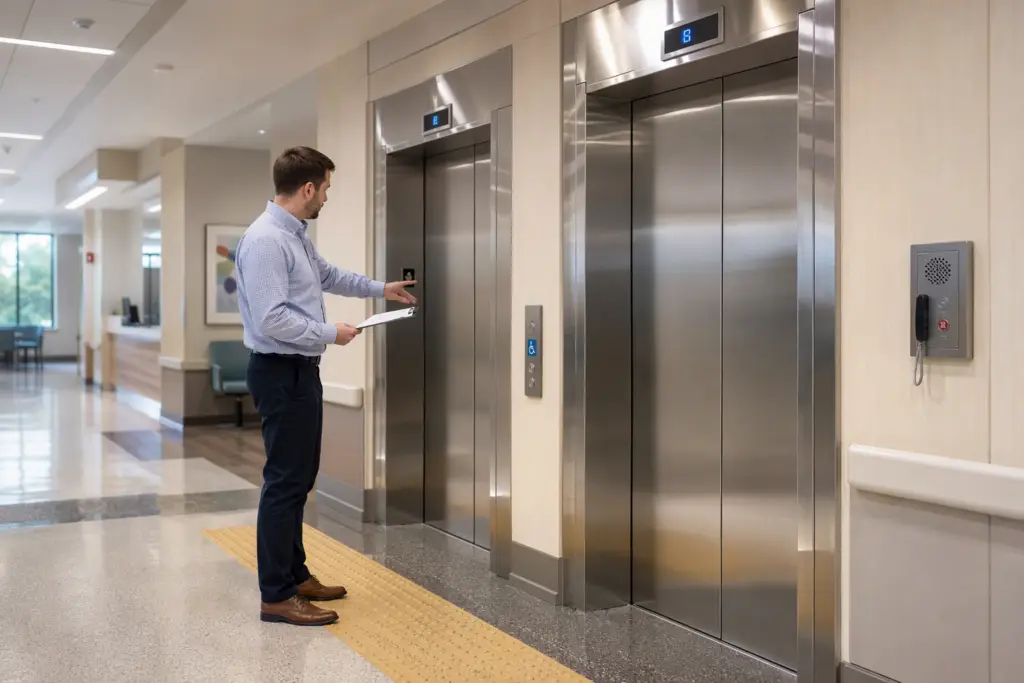
Elevator inspections under ASME A17.1 focus on mechanical safety, but office buildings must also maintain compliance with ADA (Americans with Disabilities Act) accessibility requirements. These are separate regulatory obligations that can surface during a comprehensive elevator audit even when the mechanical inspection passes.
Common ADA-related elevator requirements for office buildings include:
- Minimum cab interior dimensions for wheelchair accessibility
- Braille and raised character floor designations on control panels
- Audible and visible floor indicators
- Door reopening device response time requirements
- Hall call button height and positioning standards
- Emergency two-way communication accessibility
A building that passes its annual mechanical inspection but has out-of-compliance accessibility features still carries legal risk under the ADA. Quality Elevator Company evaluates both mechanical and accessibility compliance as part of its comprehensive assessment approach.
What Are the OSHA Requirements Related to Elevator Safety in Office Buildings?
While elevator-specific inspection cycles are governed by state AHJs under ASME standards, OSHA (Occupational Safety and Health Administration) maintains overlapping jurisdiction, particularly regarding elevator maintenance worker safety, machine room access protocols, and lockout/tagout procedures during servicing.
Office building facilities teams should be aware that OSHA standards affect:
- Procedures technicians must follow when performing maintenance or inspections (lockout/tagout, fall protection in pits and on top of cars)
- Machine room access restrictions and documentation requirements
- Recordkeeping obligations for workplace incidents involving elevator equipment
Ensuring that any elevator service contractor operating in an office building follows OSHA-compliant safe work practices is a building owner responsibility, not solely the contractor’s.
What Is a Category 5 Test and When Is It Required for Office Building Elevators?
The Category 5 test — sometimes called the “full-load safety test” — is among the most rigorous periodic tests required under the ASME A17.1 Safety Code for Elevators and Escalators. It involves intentionally triggering the elevator’s safety mechanism under full rated load conditions to verify that the car will stop and hold safely if the governor detects an overspeed condition.
Key facts about Category 5 testing in office buildings:
- Required on a five-year cycle for traction elevators with safeties
- Must be witnessed by an authorized inspector in most jurisdictions
- Requires the elevator to be taken out of service for a period, which demands scheduling coordination in occupied office buildings
- Results in wear to safety components, meaning post-test inspection of the guide rails and safety jaws is standard practice
- Failure during a Category 5 test requires immediate corrective action before the elevator can return to service
Scheduling a Category 5 test in an occupied office building requires advance notice to tenants and careful timing — typically evenings, weekends, or phased shutdowns when multiple elevators are involved.
How Should an Office Building Develop an Elevator Inspection Calendar?
A well-structured elevator inspection calendar ensures no deadline is missed and that all required tests are scheduled before certificates lapse. The process for building a reliable calendar involves the following steps:
- Inventory all elevator units: Document each elevator by unit number, type (hydraulic, traction, MRL), rated capacity, and installation or last modernization date.
- Identify the governing jurisdiction: Confirm which state agency or local AHJ has authority and obtain a copy of the current inspection cycle requirements for each unit type.
- Pull existing certificate expiration dates: Retrieve current operating certificates for every unit and note expiration dates.
- Map required test categories to dates: Layer annual (Category 1), three-year (Category 3, where applicable), and five-year (Category 5) test deadlines onto a master calendar.
- Schedule inspections 60–90 days before expiration: Build in buffer time for scheduling, deficiency corrections, and re-inspection if needed.
- Assign internal ownership: Designate a facilities team member responsible for tracking calendar milestones and coordinating with the elevator service contractor.
- Build a deficiency tracking log: Document any items cited in prior inspections, their corrective action status, and deadlines to prevent repeat violations.
- Review the calendar annually: Code editions update, jurisdictions change requirements, and elevator unit histories evolve — the calendar needs a formal annual review.
Quality Elevator Company provides office building operators with structured compliance documentation support as part of its service relationship, helping facilities teams maintain calendar accuracy without relying solely on memory or manual tracking.
What Factors Drive the Cost of Elevator Inspections and Testing for Office Buildings?
The cost of elevator inspection and testing in office buildings is not uniform. Several factors influence what a building owner will pay for compliant inspection services:
- Number of units: Buildings with larger elevator banks require more inspector time and more extensive logistical coordination.
- Test category: A Category 5 full-load safety test involves significantly more preparation, equipment, and inspector time than a routine annual inspection.
- Elevator type and age: Older equipment may require more time to inspect due to complexity, non-standard components, or legacy wiring configurations.
- Jurisdiction fees: Many states and municipalities charge permit or certificate fees through the AHJ separately from the contractor’s service fee.
- Scheduling constraints: Off-hours or weekend inspections required to minimize tenant disruption in occupied office buildings typically carry a scheduling premium.
- Deficiency remediation: If the inspection surfaces corrective items, the cost of parts, labor, and potential re-inspection adds to total compliance spend.
- Modernization status: Elevators that have recently undergone modernization require an acceptance inspection before entering the periodic inspection cycle, which is an additional cost event.
Comparing service proposals solely on inspection fee without accounting for test category coverage, deficiency response protocols, and re-inspection policies produces an incomplete cost picture.
How Do You Choose the Right Elevator Inspection and Service Vendor for an Office Building?
Vendor selection for elevator inspection and maintenance in office buildings carries compliance and operational consequences. Criteria that distinguish reliable providers from lower-quality alternatives include:
- State licensure: The contractor must hold a current elevator contractor license valid in the specific jurisdiction. Verify — do not assume.
- Inspector credentials: The individual performing the inspection should hold QEI (Qualified Elevator Inspector) certification or equivalent state-recognized credentials where required by the AHJ.
- Code familiarity: The vendor should demonstrate current working knowledge of both ASME A17.1 and the local jurisdiction’s adopted code edition.
- Documentation practices: Inspection reports should be comprehensive, clearly structured, and delivered promptly — not months after the visit.
- Deficiency response capability: A vendor that inspects but cannot perform corrective repairs creates a coordination gap that delays certificate renewal.
- Multi-unit coordination experience: For office buildings with multiple elevators, the vendor should have demonstrated protocols for phased testing that minimize operational disruption.
- Transparency on test scheduling: Category 3 and Category 5 test deadlines should appear in the vendor’s communications proactively, not reactively.
Quality Elevator Company operates as a data-driven service provider, delivering inspection documentation and compliance tracking that gives office building operators clear visibility into their elevator portfolio’s status at any point in the inspection cycle.
What Trends Are Shaping Office Building Elevator Inspection Requirements in 2025–2026?
The elevator inspection and compliance landscape for office buildings is evolving on several fronts heading into 2026. Key qualitative trends shaping the field include:
- Remote monitoring and condition-based maintenance: An increasing number of elevator systems are being equipped with IoT sensors that transmit real-time performance data. While this does not replace required periodic inspections under ASME A17.1, it is influencing how AHJs think about maintenance documentation and how owners manage risk between inspection cycles.
- Modernization-driven inspection surges: Post-pandemic office repositioning has accelerated elevator modernization projects in aging commercial buildings, triggering a wave of acceptance inspections that are creating scheduling backlogs in some jurisdictions.
- Code edition updates: ASME A17.1 is updated on a regular cycle, and some states are in the process of adopting more recent editions. Buildings need to confirm which edition their jurisdiction has formally adopted, as compliance requirements can shift between editions.
- Workforce and inspector availability: Qualified elevator inspectors remain in limited supply in many metropolitan markets. This is increasing lead times for scheduling inspections, reinforcing the importance of building in 60–90 day lead time before certificate expiration.
- ESG and building certification programs: Elevator safety and maintenance documentation is increasingly appearing as a component of ESG reporting, LEED operations credits, and WELL Building certification maintenance requirements, raising the profile of compliance records beyond pure regulatory compliance.
- Cybersecurity for connected elevators: As elevator systems gain network connectivity, building owners and AHJs are beginning to consider cybersecurity protocols as an operational safety matter — a trend expected to gain more formal structure in the coming code cycles.
What Records Should an Office Building Keep Related to Elevator Inspections?
Robust recordkeeping is both a regulatory requirement and a risk management tool. Office buildings should maintain the following elevator inspection documentation:
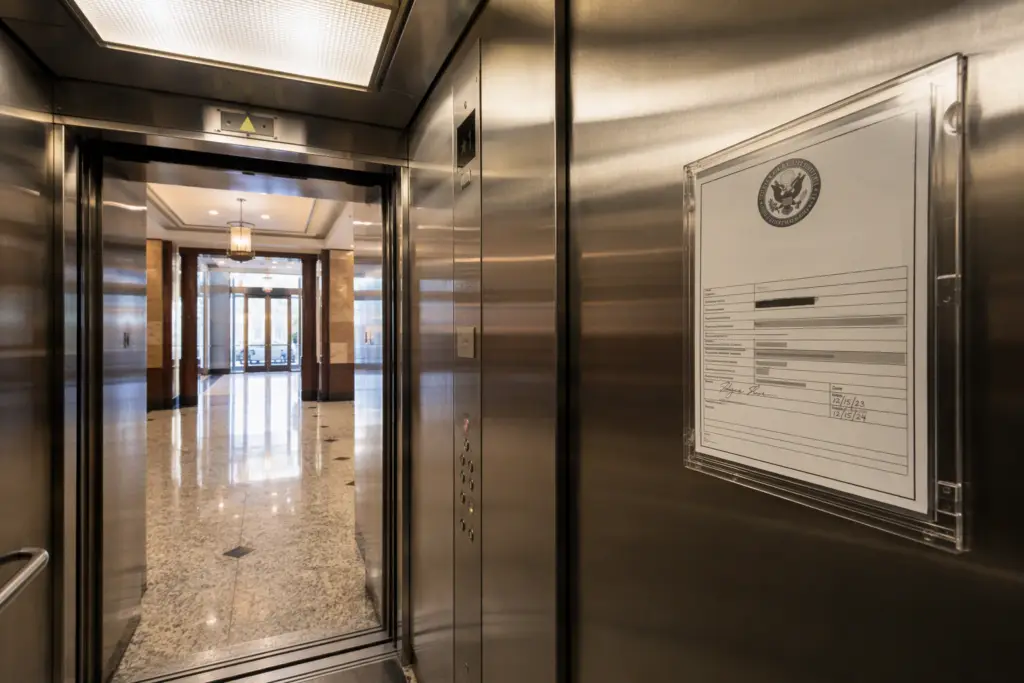
- Current operating certificates for each elevator unit (often required to be posted in the cab or readily available on-site)
- All periodic inspection reports, including citations and deficiency notices
- Corrective action documentation — work orders, parts receipts, and re-inspection sign-offs — for every cited deficiency
- Category 1, 3, and 5 test reports with inspector sign-off
- Maintenance logbooks or service records for each unit
- Acceptance inspection reports following any modernization or major alteration
- Any AHJ correspondence, violation notices, or variance approvals
- Emergency incident reports and follow-up investigations
Many AHJs require that inspection certificates be available for review on demand. Incomplete records during an AHJ audit or following an incident can turn a manageable compliance situation into a significantly more serious legal or regulatory exposure.
How Quickly Does an Office Building Need to Correct Deficiencies Found During an Elevator Inspection?
Deficiency correction timelines vary by the severity of the finding and the jurisdiction’s rules. In general, elevator inspection findings are categorized by risk level:
- Immediately dangerous conditions: Items that pose an imminent risk to life safety require the elevator to be taken out of service immediately, with no grace period for correction. The unit cannot return to service until the deficiency is remediated and, in many jurisdictions, re-inspected.
- Non-imminent hazards: Items that represent code non-conformance but do not create an immediate danger are typically assigned a correction deadline — commonly 30, 60, or 90 days depending on the jurisdiction.
- Minor or administrative items: Documentation gaps or minor adjustment items may be corrected within the standard certificate renewal cycle.
Failure to meet assigned correction deadlines typically results in the AHJ escalating enforcement action, up to and including a shutdown order. Working with a service provider who can respond to deficiency findings with repair capability — not just inspection capability — is critical for meeting correction timelines without extended downtime.
Summary: Key Compliance Benchmarks for Office Building Elevator Inspection
- Annual periodic inspections are the baseline standard under ASME A17.1 Safety Code for Elevators and Escalators — local jurisdictions may require more frequent cycles
- Five-year Category 5 full-load safety tests are required for traction elevators with safeties
- ADA accessibility compliance is a parallel obligation independent of mechanical inspection passage
- OSHA standards govern safe work practices during elevator maintenance and inspection activities
- Inspection certificate expiration triggers a legal prohibition on elevator operation in most jurisdictions
- Comprehensive recordkeeping — certificates, reports, deficiency corrections — is both a regulatory and risk management requirement
- Scheduling inspections 60–90 days before expiration builds essential buffer for deficiency correction and re-inspection
Get a Free Elevator Compliance Assessment for Your Office Building
Maintaining a compliant elevator inspection schedule in an office building requires precise tracking, current code knowledge, and a service partner who can move from inspection to correction without coordination delays. Quality Elevator Company provides data-driven compliance support for office building operators across all elevator types and jurisdictions.
Contact Quality Elevator Company for a free elevator assessment: 301-779-9116
Need elevator service you can rely on? Quality Elevator Company is ready to help.