Best Elevator Maintenance Company in Washington DC: Complete FAQ Guide
Finding the best elevator maintenance company in Washington DC requires evaluating technical expertise, regulatory compliance, service scope, and local market knowledge. This comprehensive FAQ guide answers every question building owners, property managers, and facility directors ask when selecting an elevator service partner in the DC metro area — from inspection frequency and compliance codes to cost factors and what to look for in a maintenance contract.
What makes an elevator maintenance company the best choice in Washington DC?
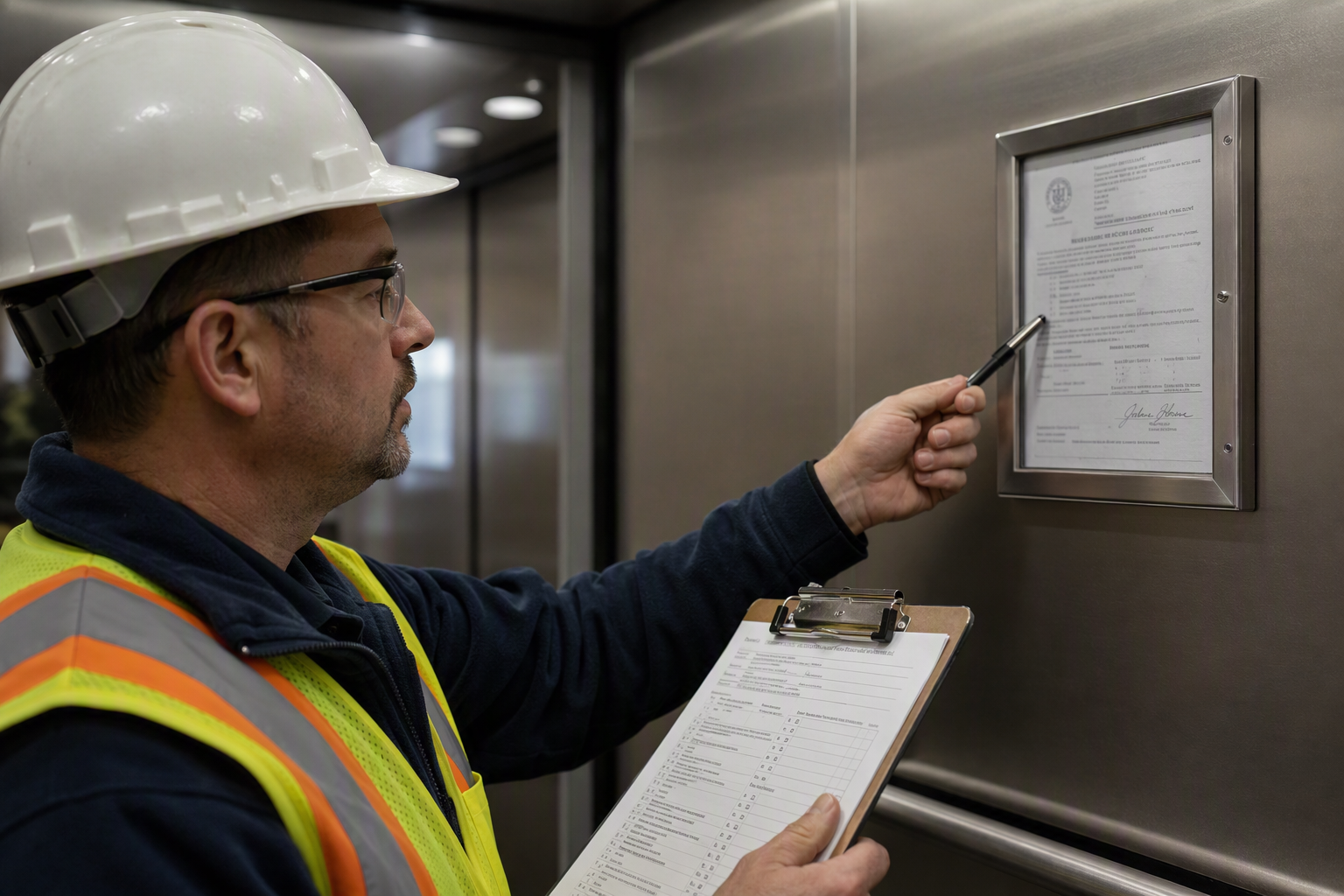
The best elevator maintenance company in Washington DC combines certified technical expertise, deep familiarity with DC-specific regulations, comprehensive preventive maintenance programs, and a demonstrated ability to keep elevators compliant with ASME A17.1 Safety Code for Elevators and Escalators and local District requirements.
Washington DC’s building stock is extraordinarily diverse — from historic federal-adjacent office buildings in Georgetown and Capitol Hill to modern high-rises in NoMa and the Wharf. A top-tier elevator maintenance company must be fluent in servicing legacy hydraulic systems installed decades ago alongside cutting-edge machine-room-less traction elevators in newly constructed mixed-use developments.
Key differentiators to evaluate include: scope of preventive maintenance agreements, familiarity with DC’s Department of Consumer and Regulatory Affairs (DCRA) inspection process, ability to source parts across multiple manufacturers, and a transparent approach to identifying modernization needs before they become safety failures. Quality Elevator Company serves the Washington DC market with all of these capabilities, providing building owners with a single accountable partner for ongoing elevator health.
How often are elevator inspections required in Washington DC?
In Washington DC, most passenger elevators are required to undergo a thorough inspection and witness test annually, in alignment with the ASME A17.1 Safety Code for Elevators and Escalators, which DC has adopted as its governing standard.
Beyond the annual third-party inspection, the ASME A17.1 code distinguishes between periodic inspections and periodic tests. Periodic tests — including the five-year full-load safety test for traction elevators and the five-year pressure test for hydraulic units — occur on longer cycles but carry significant preparation requirements. Failing to track these test cycles is one of the most common compliance gaps seen in DC commercial buildings.
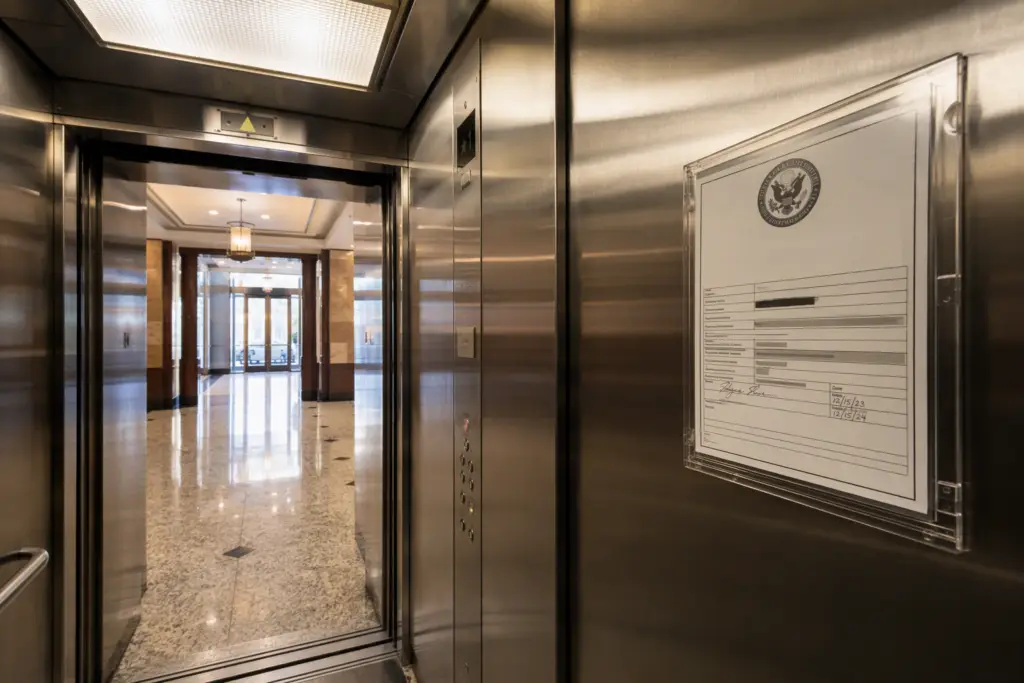
DC’s DCRA requires that a valid Certificate of Inspection be posted in or near each elevator cab. An elevator operating without a current certificate exposes building owners to fines, mandatory shutdowns, and liability exposure. A qualified maintenance company will proactively track inspection schedules and coordinate with licensed third-party inspectors on behalf of the building owner.
What does a comprehensive elevator preventive maintenance agreement include?
A comprehensive elevator preventive maintenance agreement covers systematic inspection and lubrication of all mechanical and electrical components, real-time safety device testing, code compliance tracking, and documented service reports after every visit.
Specifically, a full-scope agreement typically includes the following service categories:
- Mechanical components: Inspection and lubrication of the machine, motor, sheaves, guide rails, rollers, and buffers.
- Electrical systems: Testing of door operator circuits, selector systems, limit switches, and leveling devices.
- Safety devices: Verification of governor, safeties, oil buffers, and car and counterweight guards.
- Door systems: Adjustment of door timing, door reopening devices, and clutch mechanisms — the source of the majority of elevator-related injuries according to industry safety literature.
- Hydraulic systems (where applicable): Fluid level checks, pump unit inspection, and valve testing.
- Code compliance documentation: Maintenance of the logbook required under ASME A17.1 and coordination with inspection authorities.
Agreements vary widely in what they exclude. Building owners should carefully review clauses covering parts, entrapment callback response, and modernization recommendations to understand the true scope of coverage.
What is the difference between a full-coverage and a basic elevator maintenance contract?
A full-coverage maintenance contract includes labor, parts, and repairs within its scope, while a basic (or “oil and grease”) contract covers only routine lubrication and inspection visits, billing separately for all parts and repair labor.
The table below illustrates how the two contract structures compare across key service dimensions relevant to Washington DC building owners:
| Service Element | Basic / Oil & Grease Contract | Full-Coverage Contract |
|---|---|---|
| Routine lubrication visits | Included | Included |
| Safety device testing | Included | Included |
| Repair labor (non-emergency) | Billed separately | Included |
| Replacement parts | Billed separately | Included (typically with exclusions) |
| Emergency callback labor | Billed separately | Included |
| ASME A17.1 code compliance tracking | Varies by provider | Typically included |
| Modernization recommendations | Varies by provider | Typically included |
| Budget predictability | Lower base cost, variable total spend | Higher base cost, predictable spend |
For high-traffic commercial buildings in Washington DC — government contractors, law firms, healthcare facilities, and hospitality properties — full-coverage agreements are generally more cost-effective over a multi-year horizon because they eliminate budget surprises and incentivize the maintenance company to keep equipment in excellent condition to reduce its own repair costs.
Which ASME and ADA codes govern elevator maintenance in Washington DC?
Washington DC elevators are primarily governed by the ASME A17.1 Safety Code for Elevators and Escalators for mechanical safety and operational standards, and the Americans with Disabilities Act (ADA) for accessibility requirements.
ASME A17.1 establishes minimum requirements for the design, construction, installation, operation, inspection, testing, maintenance, alteration, and demolition of elevators and escalators. It is the foundational safety standard and is periodically updated — maintenance companies operating in 2026 should reference the current code edition adopted by the District.
The ADA mandates that elevators in multi-story facilities must meet specific accessibility dimensions, including minimum cab size, door width, control panel height, and tactile and audio signals. Existing buildings undergoing alterations that trigger ADA path-of-travel upgrades may need to bring elevators into full compliance. A qualified elevator maintenance company will flag ADA deficiencies during routine inspections and provide remediation options.
Additionally, OSHA regulations under OSHA standards apply to elevator construction and maintenance work environments, governing the safety of the technicians performing service. Building owners benefit from working with a company whose field practices meet OSHA requirements, as improper maintenance work in elevator pits and machine rooms creates liability exposure for the building.
What are the most common elevator problems in Washington DC commercial buildings?
The most common elevator problems in Washington DC commercial buildings include door-related malfunctions, leveling errors, hydraulic fluid leaks in older systems, and outdated controller failures — many of which are preventable with consistent maintenance.
Door system failures account for a disproportionate share of elevator service calls. Door operators, clutches, and safety edges wear through high-cycle usage in busy office buildings, and misadjusted door timing leads to both passenger injuries and chronic nuisance callbacks. Many DC office towers date from the 1970s and 1980s and operate hydraulic systems that, while durable, are increasingly difficult to source parts for and present environmental risks from aging fluid reservoirs.
Controller obsolescence is a significant concern in older DC buildings. Legacy relay-logic controllers cannot support modern diagnostic software, making fault isolation time-consuming and parts availability unpredictable. A proactive maintenance company will include controller condition assessments as part of its annual review, helping building owners plan modernization capital expenditures before a catastrophic failure forces an emergency replacement at premium cost.
How should a building owner evaluate and compare elevator maintenance companies in Washington DC?
Building owners should evaluate elevator maintenance companies based on their regulatory compliance track record, contract transparency, technician qualifications, parts sourcing capabilities, and demonstrated experience with the specific equipment types in the building.
A structured evaluation process helps avoid common selection mistakes. Consider requesting the following from each candidate:
- Sample maintenance agreement with all exclusions clearly identified
- Documentation of the company’s familiarity with DC DCRA inspection processes
- References from comparable building types in the DC metro area
- A written explanation of how callbacks and entrapment situations are handled
- Evidence of OSHA-compliant safety programs for field technicians
- A modernization assessment or equipment condition report for the building’s elevators
Be cautious of contracts that auto-renew with minimal notice periods, contain broad exclusions for “obsolete” parts without defining obsolescence, or lack specific language about what happens during inspection failures. Quality Elevator Company provides prospective clients in Washington DC with transparent contract reviews as part of its free elevator assessment process.
What should building owners do immediately when an elevator fails or traps passengers?
When an elevator fails or traps passengers, building owners and property managers must follow a clear, sequential protocol to ensure passenger safety and regulatory compliance.
- Contact emergency services if passengers are in distress. If a passenger reports a medical emergency, difficulty breathing, or signs of panic that cannot be managed, call 911 immediately — do not attempt to free the elevator without professional assistance in those circumstances.
- Use the elevator’s emergency communication system. Modern elevator cabs are required by ASME A17.1 to have a two-way communication device. Use it to communicate with trapped passengers, confirm their status, and advise them to remain calm and not attempt to exit the car.
- Notify your elevator maintenance company immediately. Contact your service provider’s emergency line. Building staff should never attempt to manually release elevator doors or move the car without authorization from a licensed elevator mechanic.
- Secure the elevator out of service. Once the situation is resolved, lock out the elevator and post “Out of Service” signage to prevent reuse until the cause is diagnosed and corrected.
- Document the incident. Record the time, floor of entrapment, duration, number of passengers, conditions reported, and actions taken. This documentation supports insurance claims and regulatory inquiries.
- File required reports. Depending on the nature of the failure, DC regulations may require a written report to DCRA. Your maintenance company should advise on reportable incident thresholds.
- Request a written root cause analysis. Before returning the elevator to service, obtain a written explanation of the failure cause and corrective action taken from your maintenance provider.
How does elevator modernization differ from routine maintenance, and when is it necessary?
Elevator modernization involves replacing or upgrading major system components — controllers, motors, door operators, or cab interiors — beyond the scope of routine maintenance, and it becomes necessary when aging equipment can no longer be maintained to code or operated safely and efficiently.
Modernization is not a single event but a spectrum of scope. A targeted modernization might replace only the controller and selector system to restore diagnostic capability and parts availability. A comprehensive modernization replaces virtually everything except the hoistway structure, resulting in a functionally new elevator in an existing shaft — typically faster, more energy-efficient, and fully compliant with current ASME A17.1 and ADA standards.
Indicators that modernization is becoming necessary include: repeated failures of the same components within short intervals, inability to source OEM replacement parts, increasing energy consumption, code violations identified during inspections that cannot be corrected through repair, and passenger experience complaints related to ride quality or leveling.
Quality Elevator Company’s technicians serving the Washington DC market assess modernization needs as part of ongoing maintenance relationships, providing building owners with phased modernization planning that aligns capital expenditures with building lifecycle goals.
What is the typical timeline for an elevator modernization project in Washington DC?
A targeted elevator modernization in Washington DC typically takes several weeks from contract execution to final inspection, while a comprehensive modernization of a full traction elevator system can span several months depending on equipment procurement lead times and permit processing.
The general phases of a modernization project proceed as follows:
- Assessment and specification: A licensed elevator contractor surveys the existing equipment and produces a detailed specification of components to be replaced and the code basis for the work.
- Permitting: Plans and specifications are submitted to DC DCRA for permit review. Permit processing timelines vary; experienced contractors familiar with DC’s process can anticipate and respond to common review comments efficiently.
- Equipment procurement: Major components — controllers, machines, door operators — are ordered. Global supply chain conditions can affect lead times, making early procurement critical.
- Installation: Existing components are removed and new equipment is installed. For occupied buildings, contractors sequence work to minimize elevator downtime, often working nights or weekends.
- Witnessing and inspection: A licensed DC inspector witnesses the completion tests required by ASME A17.1 before the elevator is returned to service.
- Certificate issuance: Upon passing inspection, the DCRA issues a new Certificate of Operation, which must be posted in the elevator cab.
How does ADA compliance apply to existing elevators in Washington DC buildings?
The ADA requires that elevators in new construction and altered multi-story facilities meet specific accessibility standards, and alterations to a building can trigger an obligation to bring existing elevators into compliance along the path of travel.
Key ADA elevator requirements that building owners and managers in Washington DC must understand include: minimum interior cab dimensions, minimum door clear width, accessible controls positioned at heights usable from a wheelchair, Braille and raised-character floor designations, and audible and visual floor indicators. Older DC buildings that predate ADA enactment frequently have non-compliant controls or undersized cabs that require attention when the building undergoes any covered alteration.
Elevator maintenance companies can serve as a first line of ADA awareness during routine visits by identifying visible deficiencies — burned-out floor indicators, missing Braille overlays, or inoperative door reopen devices — and escalating them to building management. Proactive identification avoids the more disruptive and costly corrections that result from formal accessibility complaints.
What qualifications should elevator maintenance technicians have in Washington DC?
Elevator maintenance technicians working in Washington DC must hold appropriate mechanic licensing as required by DC regulations, and should demonstrate training and proficiency with the specific elevator manufacturers and equipment types present in the buildings they service.
The elevator industry’s primary apprenticeship and journeyman training pathway is administered through the National Elevator Industry Educational Program (NEIEP), which provides structured technical training. Technicians who have completed recognized training programs and who maintain continuing education in current code editions bring measurable value to building owners.
From an OSHA compliance standpoint, technicians must be trained in confined space entry procedures applicable to elevator pits, electrical safety practices, and fall protection when working at heights in hoistways. Building owners have an interest in verifying that their maintenance contractor maintains active safety training programs for all field personnel, as inadequately trained technicians working in their building creates potential liability exposure for the property owner.
How does elevator maintenance for high-rise buildings differ from low-rise or residential elevators?
High-rise elevator systems in Washington DC differ from low-rise and residential systems in their mechanical complexity, traffic management requirements, safety system sophistication, and the operational consequences of downtime — all of which demand a higher level of maintenance intensity and technical specialization.
High-rise buildings typically use geared or gearless traction elevator systems with sophisticated dispatch algorithms, group controllers, and destination dispatch systems. These systems require technicians trained in the manufacturer’s proprietary software and control logic. High-traffic systems accumulate wear cycles far faster than low-rise equipment, making the frequency and thoroughness of lubrication, adjustment, and component inspection directly proportional to long-term reliability.
Residential elevators — including the platform lifts and home elevators increasingly common in DC’s upscale townhome market — operate under different code sections and have different service requirements. However, they are not exempt from safety regulation. ASME A17.1 covers a broad range of conveyance types, and residential units must still receive periodic inspection and maintenance to remain safe for occupant use.
What role does elevator maintenance play in building sustainability and energy efficiency goals?
Proper elevator maintenance directly supports building sustainability goals by ensuring that drive systems, lighting, and ventilation within elevator cabs operate at designed efficiency levels, and by identifying opportunities to upgrade to energy-recovering drive systems during modernization cycles.
Modern variable-voltage, variable-frequency (VVVF) drive systems that replace older single- or two-speed motor configurations significantly reduce energy consumption. Regenerative drives — which return braking energy to the building’s electrical grid — are now standard in new elevator installations and are available as modernization upgrades in existing hoistways. For Washington DC buildings pursuing LEED certification or compliance with DC’s Building Energy Performance Standards (BEPS), elevator system efficiency is a legitimate component of overall building energy management.
Routine maintenance contributes to energy efficiency by ensuring that mechanical friction points are properly lubricated, door operators are correctly adjusted to minimize motor load, and standby mode programming is functioning as designed. Neglected maintenance allows these efficiency losses to compound over time.
How should property managers handle elevator maintenance documentation and recordkeeping?
Property managers should maintain a complete elevator records file that includes the current Certificate of Inspection, all maintenance service reports, test records, repair invoices, modernization permits, and any correspondence with regulatory authorities — organized and accessible for inspector review at any time.
The ASME A17.1 Safety Code requires that a maintenance log be kept in or near the machine room, documenting each maintenance visit, the work performed, and the technician’s identification. This log is reviewed during annual inspections and is a primary indicator of whether a building’s maintenance program is active and compliant.
Best practices for documentation management include keeping both physical and digital copies of all records, tracking upcoming inspection and test due dates in a calendar system with advance reminders, and ensuring that incoming property managers or facility directors receive a complete records transfer during staff transitions. A reputable maintenance company will provide detailed service reports after each visit that are suitable for inclusion in the building’s records file.
What factors influence the cost of elevator maintenance contracts in Washington DC?
The cost of an elevator maintenance contract in Washington DC is influenced by the number of elevators, their type and age, travel height, equipment complexity, the scope of coverage selected, and the condition of the equipment at the time the contract is initiated.
Hydraulic elevators generally cost less to maintain than complex high-speed traction systems, though aging hydraulic systems with obsolete components can reverse this relationship. Elevators that have been deferred on maintenance — entering a new contract in poor condition — typically carry higher costs because the maintenance company assumes greater repair risk. A thorough pre-contract condition assessment protects both parties by establishing a documented baseline and allowing accurate pricing.
Building owners should resist the temptation to select a maintenance provider based solely on the lowest quoted monthly rate. A contract that excludes parts, callbacks, and most repair scenarios may carry a lower headline number but produce substantially higher actual spend than a more comprehensive agreement. Transparent contract comparison — line by line against a standardized checklist of covered services — is the appropriate evaluation method.
How does Quality Elevator Company’s service area coverage benefit Washington DC building owners?
Quality Elevator Company’s presence across the Baltimore, Washington DC, Philadelphia, and Richmond markets means that DC building owners benefit from a service organization with regional scale, broad equipment knowledge, and the operational infrastructure of a company that maintains a large and diverse elevator portfolio across the Mid-Atlantic region.
Regional coverage matters for DC building owners who manage properties in multiple markets — a single maintenance partner covering a portfolio across DC, Baltimore, and Richmond simplifies contract administration, standardizes service reporting, and creates accountability through a unified vendor relationship. It also means that parts inventory and technical resources available across the regional organization can be brought to bear on DC service needs.
For property management companies and real estate investment trusts operating in the Mid-Atlantic, consolidating elevator maintenance with a provider like Quality Elevator Company that serves all of their major markets offers both operational and financial efficiency advantages.
What are the risks of deferring elevator maintenance in Washington DC?
Deferring elevator maintenance in Washington DC creates escalating risks including code violations, mandatory shutdowns by DCRA, accelerated component wear that increases repair costs, passenger safety incidents, and personal injury liability exposure for building owners and managers.
From a regulatory standpoint, elevators found to be operating in unsafe condition during a DCRA inspection can be immediately taken out of service and sealed, leaving building occupants without vertical transportation until corrections are completed and a re-inspection is passed. In multi-story office buildings, ADA-accessible elevator service is often legally mandated, meaning an elevator shutdown may simultaneously create a regulatory violation under the ADA.
The financial consequences of deferred maintenance are non-linear. Small, inexpensive repairs that are deferred allow secondary wear to propagate through connected systems. A worn door clutch that goes unadjusted for months may ultimately damage the door operator, the controller door circuit, and the landing door interlock — turning a minor adjustment into a multi-component replacement. Consistent preventive maintenance interrupts this damage cascade at the least costly intervention point.
How do elevator maintenance contracts handle equipment from multiple manufacturers?
A qualified independent elevator maintenance company should be capable of servicing equipment from all major manufacturers — including Otis, KONE, Schindler, ThyssenKrupp, Mitsubishi, and others — without restricting building owners to proprietary parts or manufacturer-exclusive service arrangements.
Manufacturer-affiliated service programs can offer advantages for newer equipment under warranty, but they may limit building owners’ negotiating leverage and create dependency on a single vendor’s pricing for parts and labor. Independent elevator service companies that are fluent across multiple manufacturers give building owners the flexibility to obtain competitive pricing and to standardize maintenance across a mixed-manufacturer portfolio.
Critical evaluation questions when assessing a maintenance provider’s multi-manufacturer capability include: Does the company stock or have access to parts for the specific controller brands in the building? Are technicians trained on the diagnostic software for those controllers? Can the company perform the five-year tests required by ASME A17.1 on all equipment types present? Quality Elevator Company’s technicians are trained across a broad range of elevator types and manufacturers serving the Washington DC market.
What trends are shaping elevator maintenance in Washington DC in 2026?
The most significant trends shaping elevator maintenance in Washington DC in 2026 include the adoption of remote monitoring and predictive maintenance technology, modernization demand driven by aging building stock, growing emphasis on energy efficiency tied to DC’s building performance regulations, and increased regulatory scrutiny of maintenance documentation quality.
Remote monitoring systems — which use sensors and connectivity to transmit real-time equipment status data to service teams — represent a meaningful shift in how maintenance is delivered. Rather than waiting for a fault to occur and be reported, connected systems can identify anomalous patterns in door timing, motor current, or leveling performance before a failure occurs. This predictive capability reduces unplanned downtime and allows maintenance visits to be targeted at emerging issues rather than scheduled solely by calendar.
Washington DC’s commitment to building energy performance — reflected in local benchmarking and performance standard regulations — is driving building owners to evaluate elevator system efficiency as part of broader capital improvement planning. Elevator modernization projects that incorporate regenerative drives and LED cab lighting contribute measurably to building energy performance metrics. Maintenance companies that can speak fluently to these energy dimensions provide greater value than those focused solely on mechanical uptime.
Ready to Work With a Trusted Elevator Maintenance Company in Washington DC?
Quality Elevator Company provides certified elevator maintenance, inspections, and modernization services to commercial and residential properties throughout Washington DC, Baltimore MD, Philadelphia PA, and Richmond VA. Whether managing a single elevator or a multi-building portfolio, building owners and property managers rely on Quality Elevator Company for code-compliant service, transparent contracts, and technical expertise across all major elevator types and manufacturers.
Contact Quality Elevator Company for a free elevator assessment. Call 301-779-9116 to schedule your consultation with the Quality Elevator Company team serving Washington DC.
Need elevator service you can rely on? Quality Elevator Company is ready to help.