Elevator Service Contract Negotiation Tips: A Complete Comparison and Decision Guide

Elevator service contracts are long-term financial and safety commitments. A poorly negotiated agreement can leave building owners overpaying for coverage gaps, exposed to compliance liability, or locked into a single vendor with no competitive alternative. This guide breaks down every factor that matters — from contract types and cost structures to compliance standards and vendor selection — so building owners, facility managers, and property managers can negotiate from a position of knowledge.
What Are the Main Types of Elevator Service Contracts?
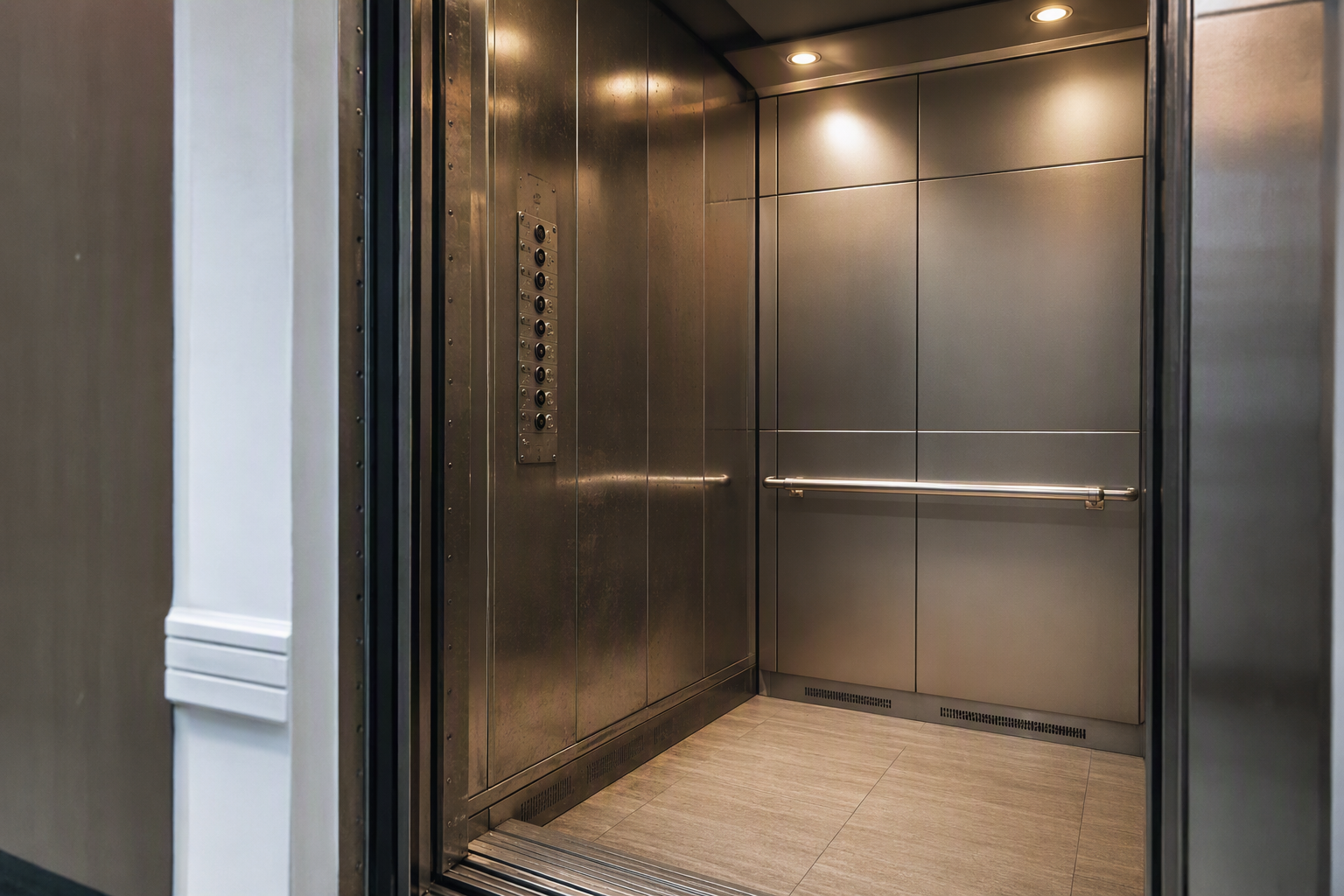
Before negotiating any terms, decision-makers need to understand which contract structure they are starting from. Each type allocates risk and cost differently between the building owner and the service provider.
| Contract Type | What Is Covered | Owner’s Risk Level | Best For | Key Negotiation Focus |
|---|---|---|---|---|
| Full Maintenance | All labor, routine maintenance, most parts, and callbacks | Low | High-traffic commercial or residential buildings | Parts exclusions list, callback response terms |
| Examination / Inspection Only | Periodic inspections and lubrication only | High | Low-use buildings with newer equipment | Frequency of visits, written inspection reports |
| Oil and Grease (O&G) | Lubrication, minor adjustments, no parts | High | Budget-constrained owners with in-house maintenance staff | Scope clarity, add-on repair pricing caps |
| Parts and Labor | Labor plus a defined list of covered parts | Medium | Mid-age equipment in moderate-traffic buildings | Covered parts schedule, exclusion carve-outs |
| Modernization-Inclusive | Maintenance plus a modernization credit or schedule | Low–Medium | Buildings planning equipment upgrades | Modernization timeline, credit applicability |
What Should Every Elevator Service Contract Include?
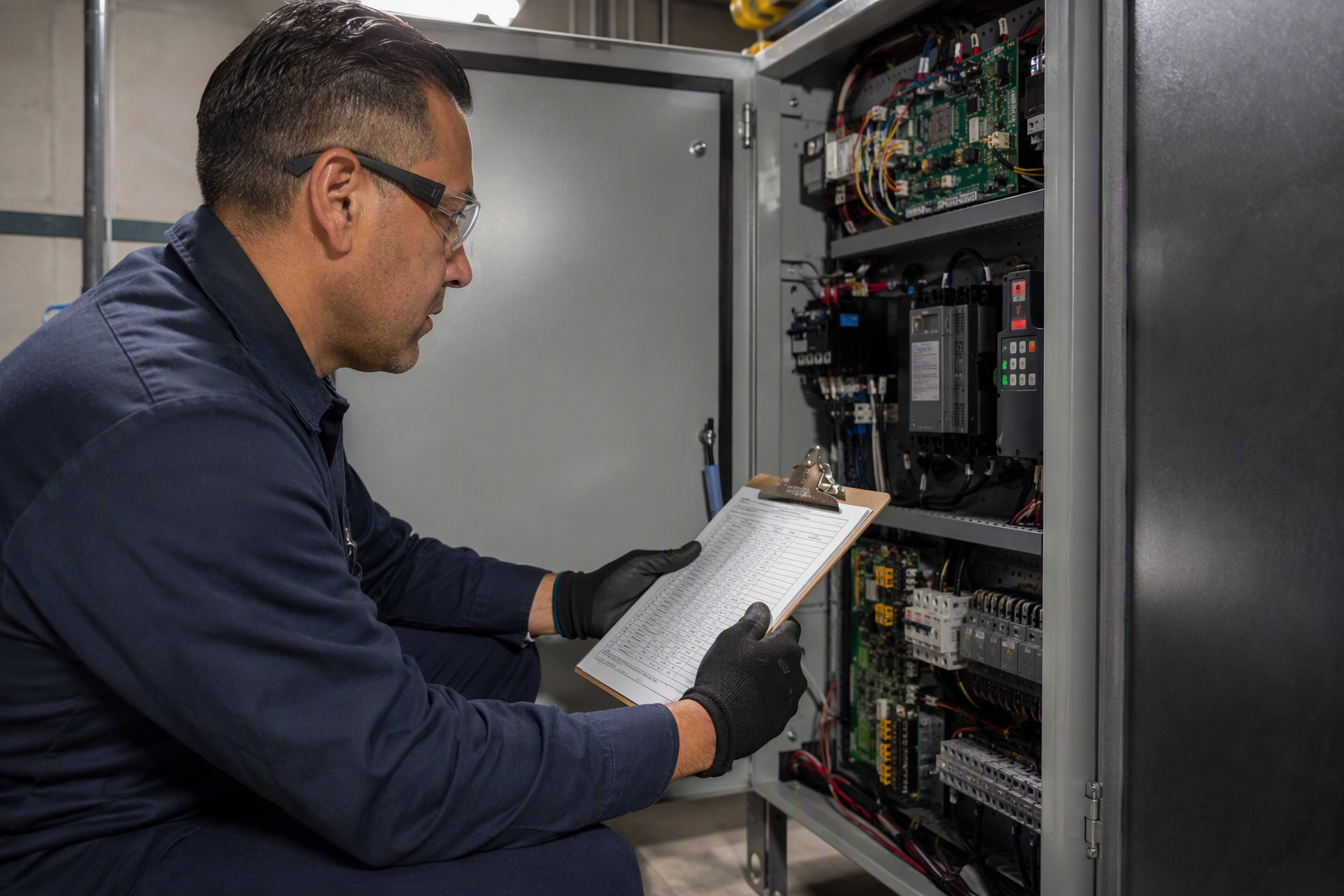
Regardless of contract type, certain provisions protect the building owner’s interests and ensure compliance with applicable standards. Negotiators should verify each of the following is addressed before signing.
- Scope of Work: A specific, written list of all tasks included in routine maintenance visits.
- Parts Exclusions Schedule: An itemized list of what is not covered, so there are no surprise invoices.
- Callback Response Terms: Defined maximum response windows for entrapment and non-entrapment situations, in writing.
- Compliance Guarantee: A clause confirming the contractor will maintain the elevator in compliance with the edition of ASME A17.1 Safety Code for Elevators and Escalators enforced in the jurisdiction.
- Inspection and Testing Records: Written documentation provided to the building owner after every inspection or test.
- ADA Compliance Responsibility: Clarity on which party is responsible for maintaining features required under the Americans with Disabilities Act.
- Termination and Cancellation Terms: Notice periods, penalties, and conditions under which either party may exit the agreement.
- Price Escalation Caps: Annual increase limits tied to a published index rather than open-ended escalation clauses.
- Proprietary Parts and Tools Disclosure: A requirement that the contractor discloses when proprietary components are installed that could limit future vendor choice.
How Do Full Maintenance Contracts Compare to Inspection-Only Agreements?
| Factor | Full Maintenance | Inspection Only |
|---|---|---|
| Coverage Breadth | Comprehensive — parts, labor, callbacks typically included | Narrow — visual checks and lubrication only |
| Predictability of Costs | High — fixed monthly or annual fee | Low — unexpected repairs billed separately |
| Compliance Support | Contractor typically manages code compliance tasks | Owner largely responsible for repair compliance |
| Vendor Lock-in Risk | Higher if proprietary parts are used | Lower — easier to switch vendors |
| Best ROI Scenario | Aging equipment, high use, multi-unit properties | New equipment under manufacturer warranty |
| Negotiation Complexity | High — many clauses to review | Lower — simpler scope |
What Are the Pros and Cons of Independent Versus OEM Service Providers?
| Factor | OEM (Original Equipment Manufacturer) Provider | Independent Service Provider |
|---|---|---|
| Parts Access | Direct access to proprietary OEM parts | Access to multi-brand aftermarket and OEM parts |
| Contract Flexibility | Lower — standardized contract terms | Higher — terms are more negotiable |
| Pricing Competition | Limited — no competitive pressure within the brand | Higher — competes across brands and service tiers |
| Proprietary Lock-in | Common — software and parts may restrict switching | Lower — incentive to use open-platform components |
| Compliance Knowledge | Strong for own equipment | Broad — covers multiple brands and jurisdictions |
| Local Responsiveness | Varies by regional coverage | Often stronger in specific local markets |
| Recommended For | New equipment still under warranty | Post-warranty equipment, mixed-brand portfolios, cost-conscious owners |
Quality Elevator Company is an independent certified elevator service provider. Because Quality Elevator Company is not tied to a single manufacturer, building owners can negotiate contract terms without the structural conflict of interest that arises when the equipment manufacturer also holds the maintenance contract.
How Should Building Owners Prepare Before Negotiating an Elevator Service Contract?
Preparation is the single largest determinant of negotiation outcome. Follow these steps before sitting down with any service provider.
- Audit existing equipment. Document the make, model, age, and current condition of every elevator unit in the building.
- Review the current contract. Identify all exclusions, escalation clauses, and termination notice requirements in any existing agreement.
- Obtain at least three competitive bids. Use identical scope-of-work documents so proposals are directly comparable.
- Request a copy of the contractor’s insurance certificates. Verify coverage types and limits are adequate for your building’s liability exposure.
- Confirm the contractor’s compliance knowledge. Ask specifically about the edition of ASME A17.1 enforced in your jurisdiction and how they manage required periodic tests.
- Identify jurisdiction-specific inspection requirements. Many states and municipalities require annual or periodic third-party inspections independent of the maintenance contract.
- Check OSHA vertical transportation standards relevant to your building type, particularly for construction hoists or freight elevators in commercial settings.
- Clarify ADA obligations. Review which accessibility features must be maintained under the Americans with Disabilities Act and confirm who bears responsibility in the proposed contract.
What Clauses Are Most Commonly Unfavorable to Building Owners?
Experienced facility managers consistently identify the following contract provisions as areas where building owners unknowingly surrender leverage.
- Automatic renewal with short opt-out windows: Contracts that auto-renew for multi-year terms unless canceled within a narrow window — sometimes as short as 30 to 60 days — can trap owners in outdated agreements.
- Open-ended escalation clauses: Provisions that allow annual price increases without a ceiling or index cap expose owners to unpredictable cost growth over a multi-year term.
- Broad parts exclusion language: Vague language such as “major components excluded” without a defined list can result in significant repairs being billed outside the contract.
- Proprietary controller installation: When a contractor installs a proprietary control system, the owner may be unable to switch providers without a costly controller replacement.
- No performance benchmarks: Contracts without defined uptime expectations or callback response time standards leave building owners with no contractual recourse for poor service.
- Unilateral scope reduction rights: Language allowing the contractor to reduce the service scope without a corresponding price reduction shifts value away from the owner.
How Do Compliance Requirements Affect Contract Negotiations?
Compliance obligations are non-negotiable — but who bears contractual responsibility for them is very much negotiable. The 2025 and 2026 editions of the ASME A17.1 Safety Code for Elevators and Escalators specify required maintenance, inspection, and testing intervals. Building owners should ensure their contracts explicitly assign responsibility for all code-mandated tasks rather than assuming the maintenance contractor will handle them by default.
Accessibility compliance under the Americans with Disabilities Act also creates ongoing maintenance obligations for elevator cab features, door timing, and controls. These requirements should be addressed in writing within the service agreement.
Workplace safety requirements applicable to elevator service technicians fall under OSHA standards. Building owners should verify that any contractor operating on their property maintains current OSHA compliance for their workforce, and that the contract indemnifies the building owner appropriately.
What Is the Best Contract Length for an Elevator Service Agreement?
Contract length is a strategic negotiation point, not a fixed industry standard. Shorter terms — typically one to two years — preserve competitive leverage and allow building owners to renegotiate as equipment ages or market conditions change. Longer terms — three to five years — can sometimes produce better pricing but reduce flexibility and increase exposure to unfavorable escalation clauses.
| Term Length | Advantages | Disadvantages | Best Scenario |
|---|---|---|---|
| 1 Year | Maximum flexibility; easy to switch providers | May carry higher annual rate; more frequent bidding required | New buildings, uncertain occupancy, first-time vendor relationships |
| 2–3 Years | Moderate pricing stability; reasonable flexibility | Moderate lock-in; escalation caps critical | Established properties with known equipment condition |
| 4–5 Years | Potential for best rate; reduces procurement effort | High lock-in; requires strong cancellation and performance clauses | Large portfolios with multiple units and proven vendor performance |
How Can Building Owners Evaluate Whether a Service Provider Is Performing?
Ongoing contract management is as important as the initial negotiation. Building owners should establish performance benchmarks at the time of contract execution and monitor them consistently throughout the agreement term.
- Maintenance visit logs: Require written documentation of every scheduled maintenance visit, including tasks completed and technician identification.
- Callback frequency tracking: Monitor the number of unplanned service calls over time. An increasing trend may signal that scheduled maintenance is insufficient.
- Inspection certificate currency: Verify that required governmental inspection certificates are current and posted as required by local jurisdiction.
- Parts replacement transparency: Require advance written notification and approval before non-emergency parts replacements are made.
- Annual performance reviews: Schedule a formal review with the service provider at least annually to discuss performance, upcoming code changes, and equipment condition trends.
When Should a Building Owner Consider Switching Elevator Service Providers?
Contract renegotiation and provider changes are appropriate responses to specific performance and market conditions. Consider initiating a competitive review when any of the following are present.
- The current contract is approaching renewal with no escalation cap in place.
- Unplanned repair invoices are routinely appearing outside the contract scope.
- Compliance documentation is incomplete or unavailable upon request.
- The contractor has installed proprietary components that were not disclosed in advance.
- Response times for callbacks are not being met consistently.
- The building has changed ownership, use type, or occupancy level significantly.
- Equipment has aged to the point where a different contract tier would provide better value.
Quality Elevator Company provides independent elevator assessments that give building owners objective information about their equipment’s condition and current contract value — without the bias of a provider who profits from the existing agreement.
What Questions Should Building Owners Ask Prospective Contractors During Negotiation?
The following questions help building owners distinguish between contractors who can provide compliant, high-quality service and those who cannot.
- Which edition of ASME A17.1 is currently enforced in this jurisdiction, and how does your maintenance program address its requirements?
- Will any proprietary parts or control systems be installed that could limit our ability to switch providers in the future?
- What is specifically excluded from this contract, and can you provide that list in writing before we sign?
- What is the annual price escalation mechanism, and is it capped?
- What documentation will we receive after each maintenance visit and inspection?
- How do you handle compliance with ADA accessibility requirements for elevator features?
- What are the exact terms and notice periods required to cancel or non-renew this agreement?
- Can you provide references from building owners with comparable properties and equipment profiles?
Summary: Key Elevator Service Contract Negotiation Factors at a Glance
| Negotiation Factor | Owner-Favorable Position | Red Flag to Watch For |
|---|---|---|
| Contract Type | Clearly defined scope with itemized task list | Vague “full service” language without task specification |
| Parts Coverage | Inclusive list of covered parts with exclusions schedule | Exclusions referenced by general category only |
| Escalation | Annual cap tied to a published index | Open-ended “at our discretion” language |
| Term Length | Matched to equipment age and ownership plans | Long term with short cancellation window |
| Compliance Assignment | Explicit responsibility for ASME, ADA, and local code compliance | Compliance obligations left unstated |
| Performance Benchmarks | Written callback and uptime standards | No performance metrics included |
| Proprietary Technology | Disclosure and consent required before installation | No mention of proprietary component policy |
| Documentation | Written records provided after every visit | Records only available upon formal request |
Ready to Negotiate a Better Elevator Service Contract?
Building owners who enter contract negotiations without objective, third-party information consistently pay more and receive less. Quality Elevator Company provides independent elevator assessments that give facility managers and property owners the knowledge they need to negotiate effectively — without the conflict of interest that comes from a provider tied to a single manufacturer or existing contract.
Contact Quality Elevator Company for a free elevator assessment: 301-779-9116
Need elevator service you can rely on? Quality Elevator Company is ready to help.