How Long Does It Take to Modernize an Elevator Without Disrupting Healthcare Tenants?
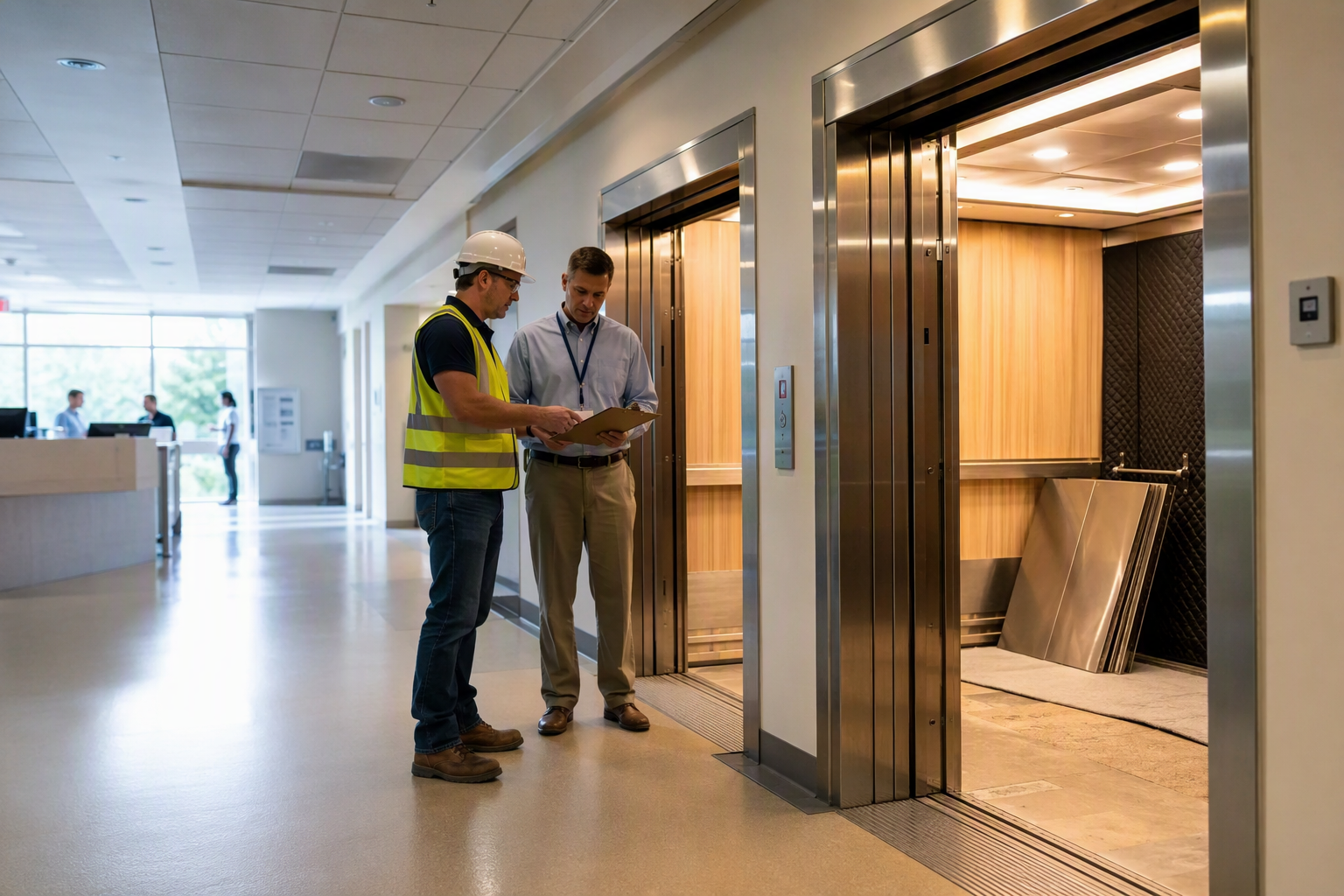
Elevator modernization is one of the most consequential infrastructure investments a hospital, medical office building, or outpatient clinic can make. Unlike a commercial office tower, a healthcare facility operates around the clock, moves patients on gurneys and in wheelchairs, transports medication carts and sterile supplies, and cannot tolerate unpredictable downtime. Understanding the realistic timeline — and the strategies that compress it — is essential before a single panel is removed.
Quality Elevator Company works with healthcare facility managers across Baltimore MD, Washington DC, Philadelphia PA, and Richmond VA to plan modernizations that protect patient access, meet every applicable code, and keep operations running during construction.
What Does “Elevator Modernization” Actually Mean in a Healthcare Setting?
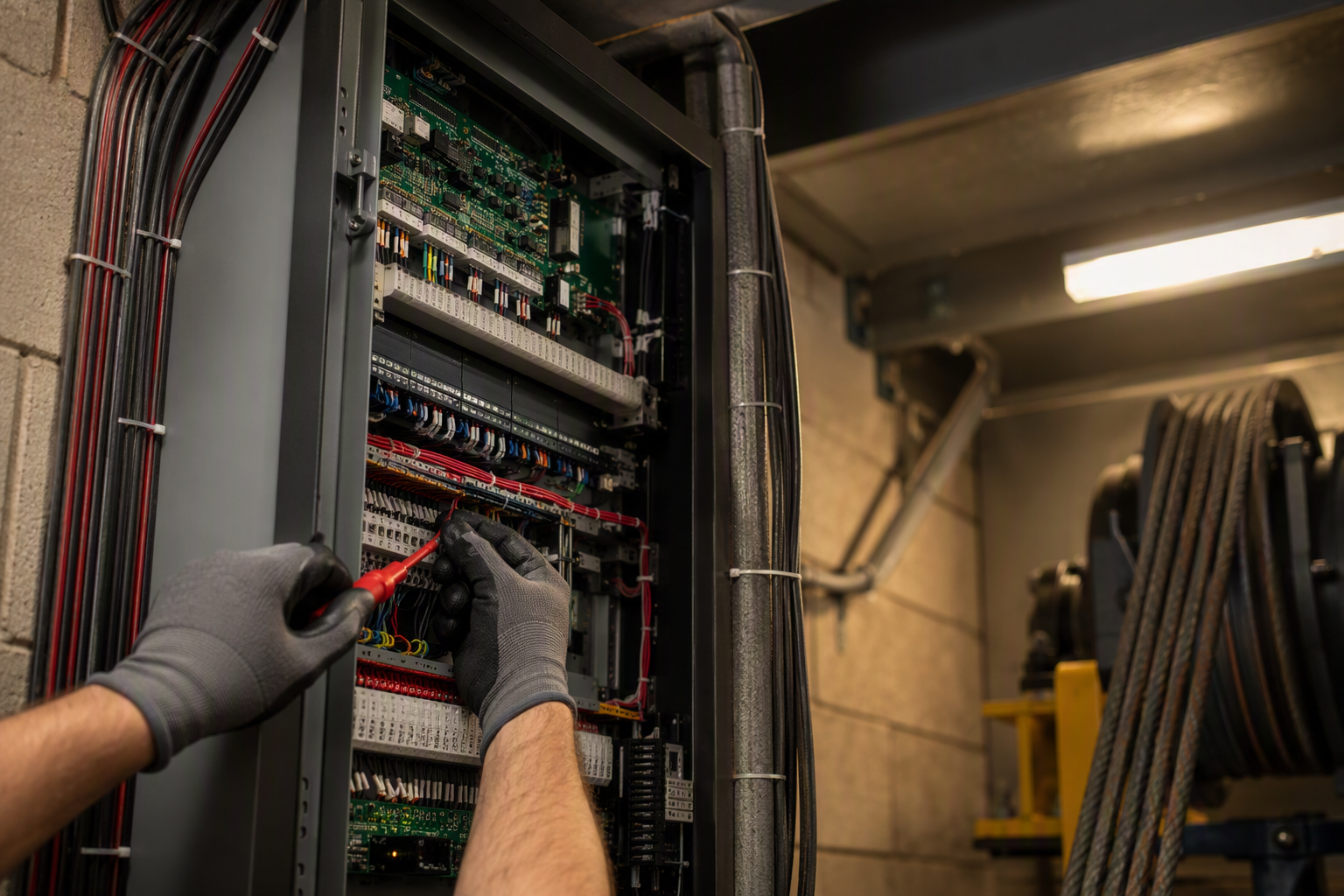
Modernization is not a simple repair. It is the systematic replacement of aging elevator components — typically the control system, drive unit, cab interior, door operators, and safety devices — to bring the unit into compliance with current codes and extend its service life. In a healthcare environment, modernization often includes upgrading to hospital-duty specifications: wider cab dimensions, heavier weight capacities, hands-free or low-touch controls, and enhanced infection-control surfaces.
The scope of work directly determines the timeline. A partial modernization focused on the controller and drive may be completed in two to four weeks. A full gut-and-rebuild that includes pit, machine room, cab, and all hall fixtures can run eight to twelve weeks per elevator — longer in older buildings with non-standard shaft configurations common in historic Baltimore or Washington DC medical campuses.
Which Compliance Codes Apply to Hospital and Medical Facility Elevators?
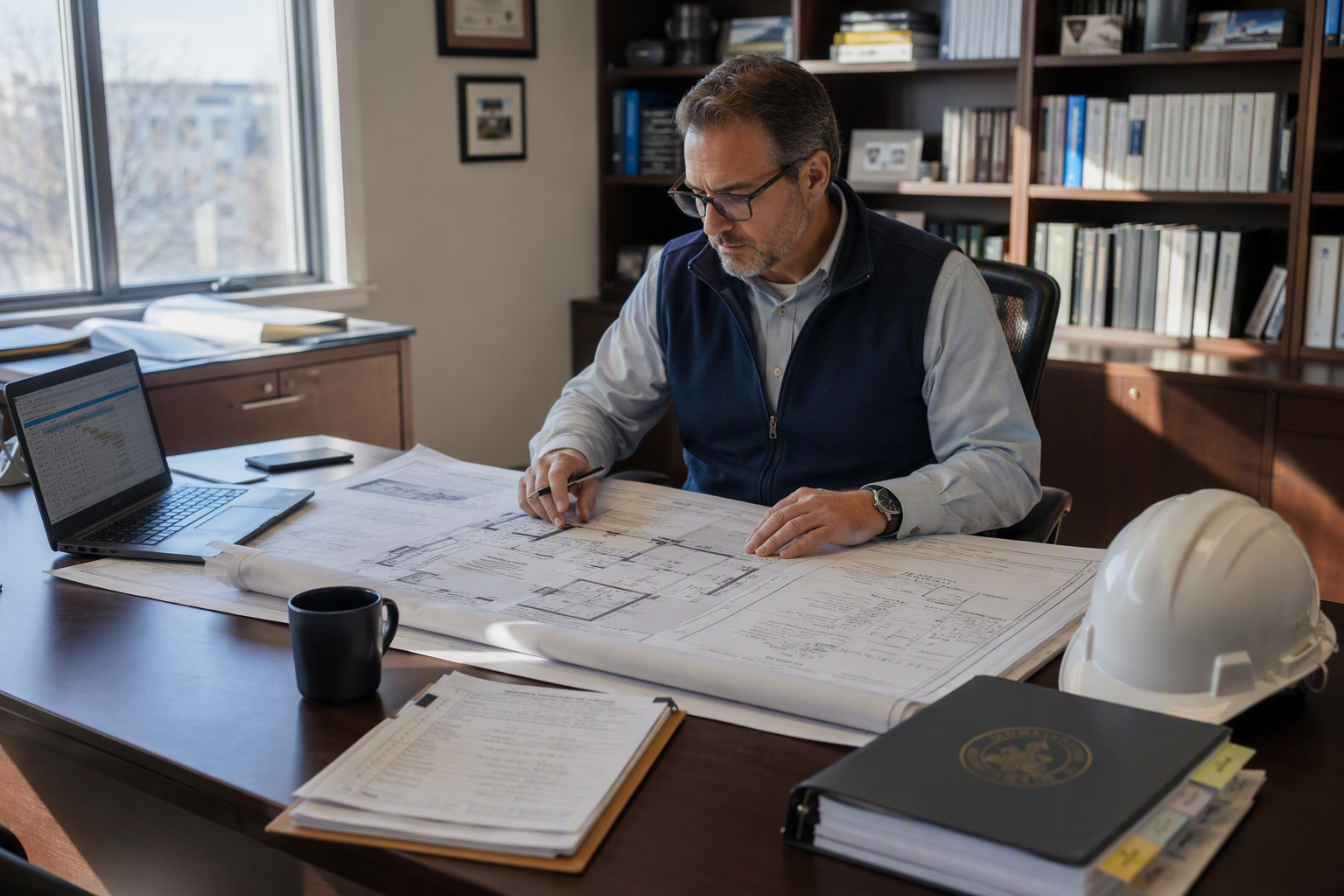
Healthcare elevators are governed by an overlapping set of federal, state, and national standards. Facility managers need to understand all of them before approving any modernization scope.
- ASME A17.1 Safety Code for Elevators and Escalators: The foundational national standard governing design, installation, inspection, and testing of elevator equipment. The 2022 edition (referenced in 2026 adoptions by several Mid-Atlantic jurisdictions) includes updated safety device requirements that commonly trigger mandatory upgrades during modernization permitting.
- ADA Standards for Accessible Design: Federal requirements mandate accessible controls, audible signals, Braille markings, and minimum cab dimensions. Healthcare occupancies serve a high proportion of mobility-impaired individuals, making full ADA compliance non-negotiable and subject to close inspection.
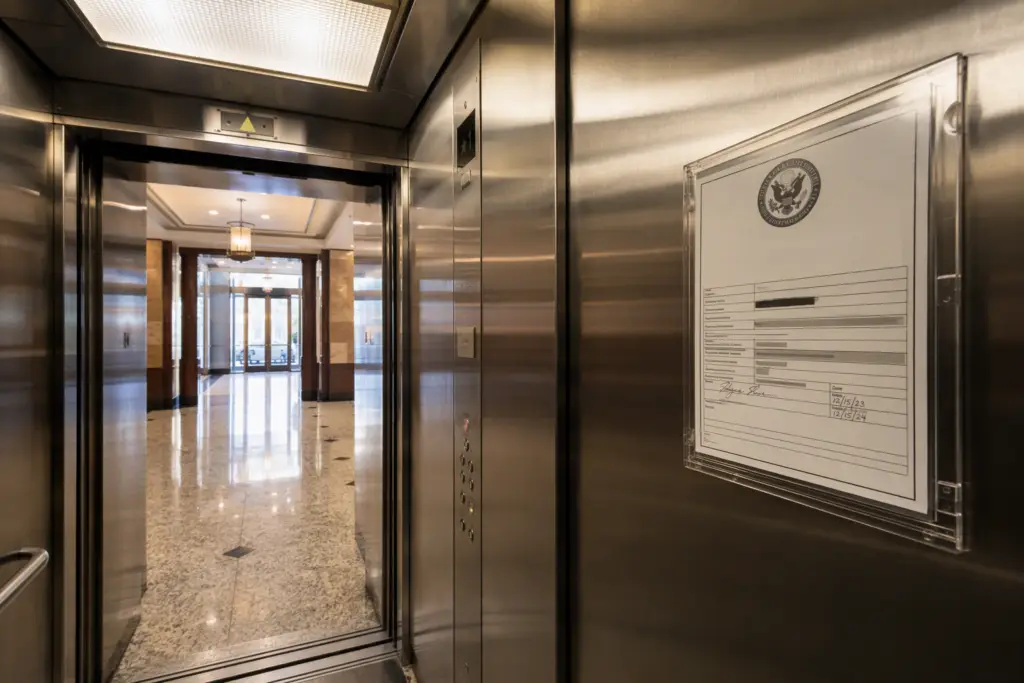
- State Elevator Codes (MD, DC, PA, VA): Each jurisdiction in Quality Elevator Company’s service area administers its own elevator inspection program. Maryland, Virginia, Pennsylvania, and the District of Columbia each require a permit before modernization work begins, a third-party inspection upon completion, and a new certificate of operation before the elevator returns to service.
- The Joint Commission and CMS Facility Guidelines: Hospitals accredited by The Joint Commission or participating in Medicare/Medicaid programs must demonstrate that vertical transportation supports the Environment of Care standards. An elevator out of compliance can trigger findings during survey.
- OSHA General Industry Standards: Technician safety during modernization — including lockout/tagout procedures, machine room access, and pit entry protocols — must follow OSHA requirements, which also protect healthcare staff and contractors sharing the building during construction.
How Is a Healthcare Elevator Modernization Scheduled to Minimize Disruption?
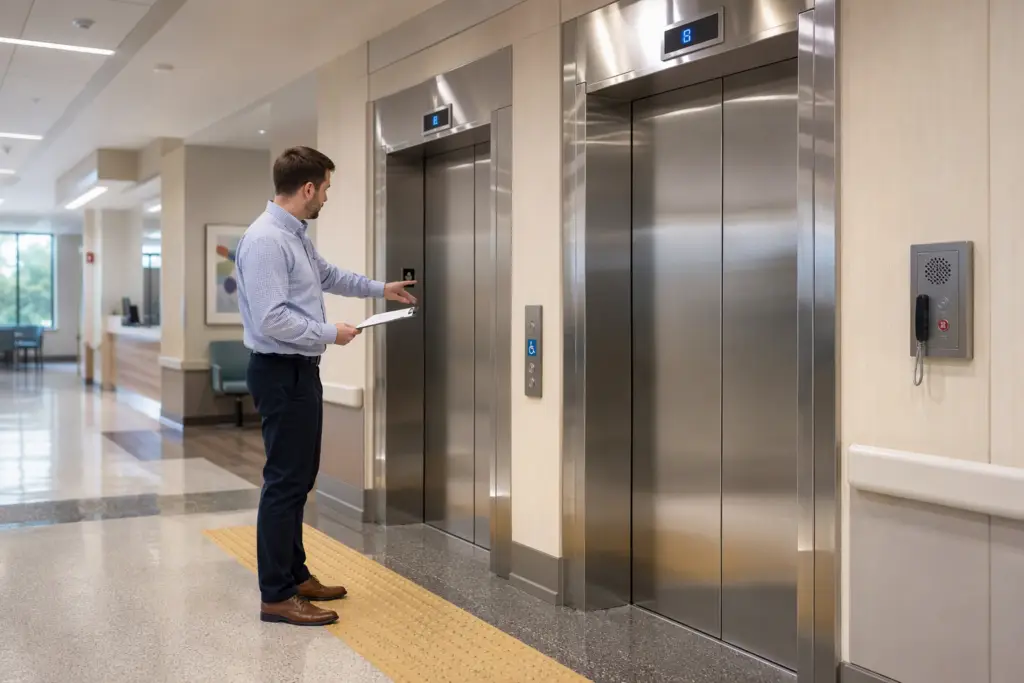
The single most effective disruption-mitigation strategy is phased scheduling. In a building with multiple elevators, work is staggered so that at least one elevator serving each critical floor remains operational at all times. A qualified contractor will conduct a traffic analysis before submitting a phasing plan.
- Pre-project traffic study: Identify peak-use hours, critical patient transport routes, and floors that cannot tolerate reduced access (ICU, surgery, emergency departments). This data drives the phasing sequence.
- Permit application: Submit modernization drawings and specifications to the applicable state or DC elevator authority. Allow time for plan review — timelines vary by jurisdiction but are typically several weeks.
- Stakeholder communication: Notify nursing staff, facilities management, and department heads of the planned outage schedule at least two to four weeks in advance. Post lobby and corridor signage on the day work begins.
- Temporary access planning: Confirm that service elevators, stairwells, and any freight lifts are fully operational and meet accessibility requirements before the first modernization elevator goes out of service.
- Overnight and weekend shifts: In high-acuity facilities, Quality Elevator Company can structure modernization work primarily during overnight or weekend hours to limit impact on daytime patient transport volumes.
- Daily briefings: Maintain a daily communication channel with the facility manager so any schedule deviation — equipment delivery delay, inspection scheduling — is reported immediately rather than discovered at shift change.
- Inspection and witness testing: When work is complete, coordinate the state inspection date. The elevator cannot return to passenger service until the inspector issues a temporary or permanent certificate of operation.
- Return-to-service walkthrough: Before reopening to patients, confirm all cab features, door timing, emergency communications, and accessible controls meet the agreed-upon specifications.
What Equipment Components Are Typically Replaced During Modernization?
A comprehensive healthcare elevator modernization typically addresses the following systems, each of which carries its own lead time and installation window:
- Control system: Modern microprocessor controllers replace relay-logic panels that are frequently decades old and impossible to source parts for. Controller replacement alone accounts for a meaningful portion of the project timeline.
- Drive unit: Variable-voltage, variable-frequency (VVVF) drives replace older hydraulic or single-speed motor-generator sets, improving energy efficiency and ride quality — important for patient comfort.
- Door operators and tracks: Heavy-duty door systems designed for gurney and bed clearance are a healthcare-specific upgrade. Slow, inconsistent doors are the most common source of injury in hospital elevators.
- Cab interior: Antimicrobial wall panels, seamless flooring, and stainless-steel handrails replace porous materials that cannot be effectively disinfected — a direct infection-control requirement.
- Safety devices: Governor, safeties, buffers, and door protective devices must meet current ASME A17.1 requirements as a condition of permit approval in all four Mid-Atlantic jurisdictions.
- Emergency communications: Two-way voice communication systems must comply with both ADA requirements and hospital emergency management protocols.
How Do Lead Times for Parts Affect the Healthcare Modernization Timeline?
Supply chain conditions for elevator components have become a material scheduling factor. Control panels, VVVF drives, and specialized hospital-duty door operators may carry lead times of several weeks to several months depending on manufacturer and configuration. The safest project timelines are built by ordering long-lead items before the permit is even approved, so that components arrive on site concurrent with permit issuance — not after. Facilities that rush into a modernization contract without confirming parts availability often experience prolonged outages that far exceed the original estimate.
What Are the Consequences of Deferring Elevator Modernization in a Healthcare Facility?
Deferred modernization carries compounding risk. Aging control systems generate increasing numbers of service calls, each of which causes an unplanned outage with no advance notice to staff or patients. Outdated safety devices may fail inspection under current ASME A17.1 requirements, resulting in a forced out-of-service order from the state elevator authority. That forced outage is unplanned and unscheduled — the most disruptive outcome possible for a healthcare operation. Additionally, a hospital that cannot demonstrate compliant vertical access during a Joint Commission survey or CMS inspection may face direct regulatory findings.
How Does a Modernization Differ from an Elevator Repair or Maintenance Contract?
Maintenance and repair address specific component failures on an existing system. Modernization replaces the system itself — typically because the original components are obsolete, parts are no longer manufactured, or the cumulative cost of repairs has exceeded the value of continuing to maintain aging equipment. A healthcare facility manager weighing modernization versus continued maintenance should consider: frequency of current service calls, availability of replacement parts for the existing controller, whether the current cab meets current ADA and infection-control standards, and the cost and disruption profile of a forced out-of-service order compared to a planned modernization.
What Should Healthcare Facility Managers Look for When Evaluating Elevator Contractors?
Not every elevator contractor has experience navigating the specific constraints of an operating healthcare environment. Facility managers in Baltimore, Washington DC, Philadelphia, and Richmond should evaluate contractors on the following criteria:
- Demonstrated experience with phased modernization in occupied healthcare or similarly complex buildings
- Familiarity with permitting requirements in the specific jurisdiction where the facility is located
- Ability to provide a written phasing plan and stakeholder communication protocol before contract execution
- Capacity to perform off-hours work without premium scheduling delays
- Knowledge of hospital-duty equipment specifications and infection-control material requirements
- References from comparable healthcare modernization projects in the same regional market
Quality Elevator Company serves healthcare clients across the Mid-Atlantic region and is familiar with the elevator code adoption status and inspection processes in Maryland, the District of Columbia, Pennsylvania, and Virginia.
Questions Your Inspector Will Ask
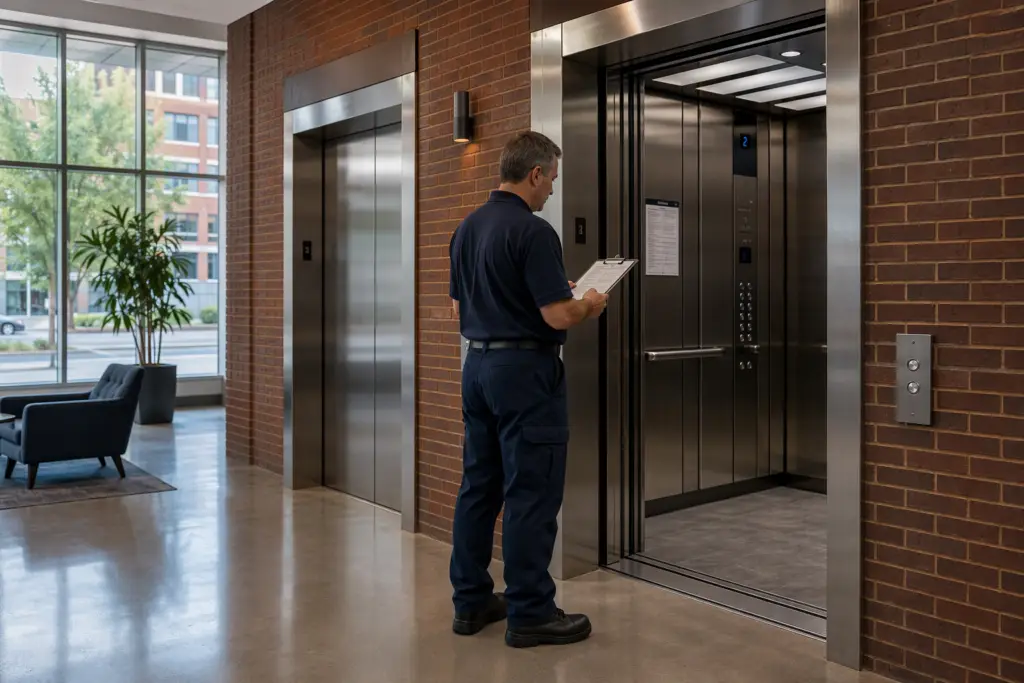
Before an elevator modernization in a healthcare facility passes final inspection, the state elevator inspector — and potentially a Joint Commission Environment of Care surveyor — will review the following. Facility managers should confirm answers to each of these before scheduling inspection:
- Was a permit issued before work began? Work performed without a permit will be ordered removed or redone at the owner’s expense.
- Does the control system conform to the edition of ASME A17.1 currently adopted by this jurisdiction? Inspectors will verify the controller meets the code edition in force at the time the permit was issued.
- Have all safety devices been tested and documented? Governor, safeties, oil buffers, and door protective devices each require documented test results.
- Do accessible features meet ADA Standards? Control button height, Braille, audible floor signals, and cab dimensions are verified during inspection under ADA guidelines.
- Is the machine room properly secured and labeled? OSHA and state codes require restricted access and hazard labeling in machine rooms.
- Is two-way emergency communication operational and tested? Inspectors test in-cab emergency phones as a mandatory item.
- Are all as-built drawings and wiring diagrams on file in the machine room? Required by ASME A17.1 and confirmed at inspection.
- Has the load test been performed and documented? Rated-load tests are required after major modernization work before a certificate of operation is issued.
Does Elevator Modernization Require the Building to Notify Patients or Visitors?
While there is no single federal notification mandate specific to elevator outages in healthcare facilities, The Joint Commission’s Environment of Care standards expect hospitals to manage planned disruptions proactively as part of their facilities management program. Best practice — followed by Quality Elevator Company on all healthcare projects — is to post written notice at elevator lobbies, elevator doors, and at building entrances at least 48 to 72 hours before a planned outage, and to brief relevant department managers so staff can prepare patient transport logistics in advance.
How Far in Advance Should a Healthcare Facility Start Planning an Elevator Modernization?
Given permit lead times, parts procurement, contractor scheduling, and the phasing complexity of an operating healthcare building, a realistic planning horizon is six to twelve months before the desired start date. Facilities in older Mid-Atlantic cities — where historic building configurations, limited machine room access, and congested construction schedules are common — should plan toward the longer end of that range. Waiting until equipment failure forces the issue eliminates all planning flexibility and typically results in longer, more disruptive outages.
Ready to Plan Your Healthcare Elevator Modernization?
Quality Elevator Company provides comprehensive elevator modernization services for hospitals, medical office buildings, outpatient clinics, and long-term care facilities across Baltimore MD, Washington DC, Philadelphia PA, and Richmond VA. Every modernization engagement begins with a no-obligation facility assessment that evaluates current equipment condition, applicable code requirements, phasing options, and realistic timeline projections — so facility managers can make informed decisions before committing to a scope of work.
Contact Quality Elevator Company for a free elevator assessment: 301-779-9116
Need elevator service you can rely on? Quality Elevator Company is ready to help.