Hotel Elevator Maintenance: Top Rated Practices for Healthcare-Adjacent Hospitality Facilities
Hotels operating in major metro markets — including Baltimore MD, Washington DC, Philadelphia PA, and Richmond VA — face a specific set of elevator maintenance challenges. Guest safety, operational continuity, and regulatory compliance must all be balanced simultaneously. When a hotel also serves guests with healthcare needs, such as extended-stay medical travelers, hospital-adjacent properties, or facilities with assisted-living wings, the standards governing elevator performance become even more consequential. This guide outlines top-rated practices that hotel facility managers rely on to keep elevators safe, compliant, and dependable year-round.
What Are the Most Important Hotel Elevator Maintenance Practices?
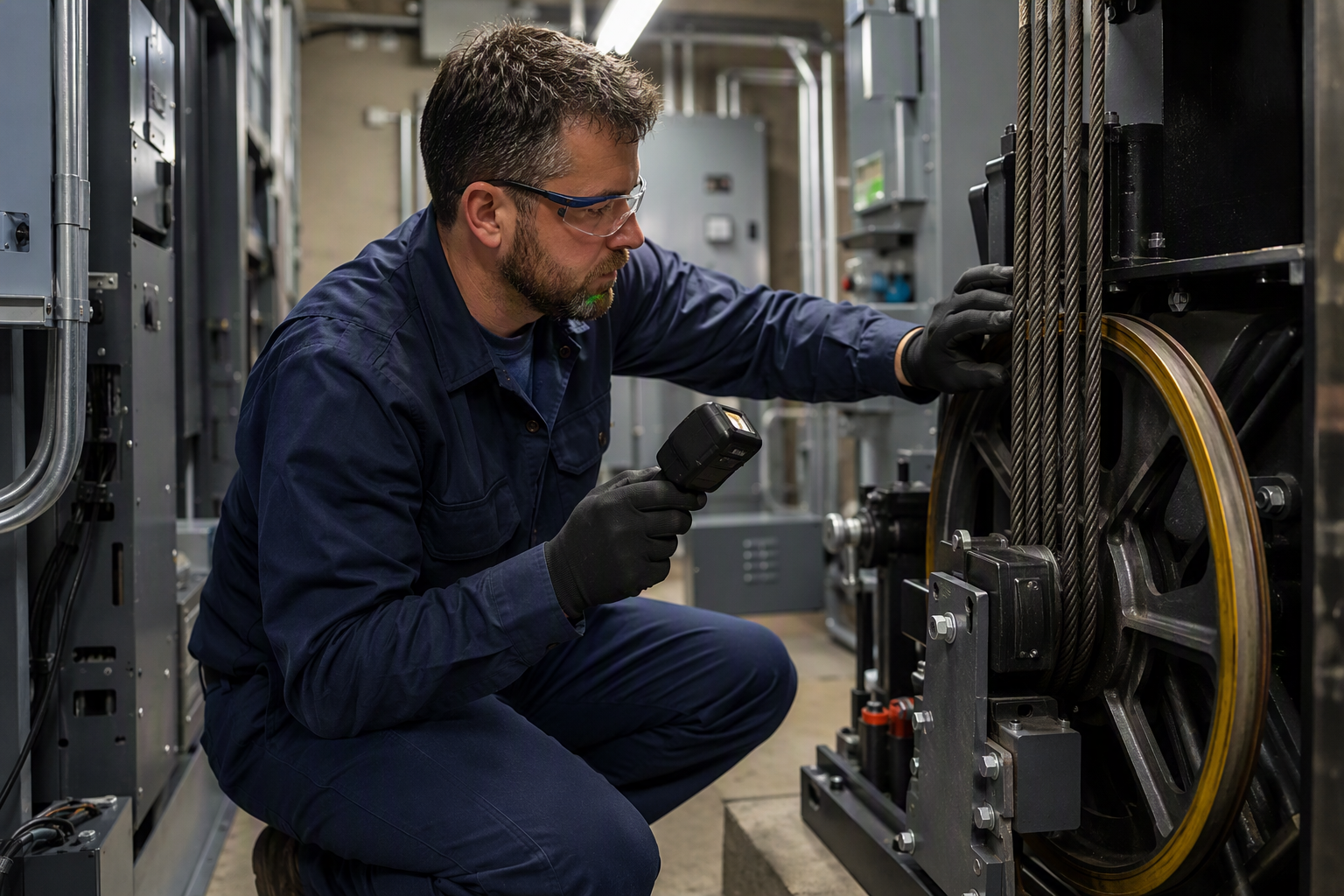
Effective hotel elevator maintenance is built on four interdependent pillars: preventive maintenance, code compliance, accessibility assurance, and documented recordkeeping. Each pillar supports the others, and a gap in any one of them can result in regulatory violations, guest injury, or costly unplanned downtime.
- Preventive Maintenance (PM): Regularly scheduled inspection and lubrication of cables, sheaves, guide rails, safeties, buffers, door operators, and control systems before failures occur.
- Code Compliance: Ongoing alignment with ASME A17.1 Safety Code for Elevators and Escalators and applicable state amendments, which govern inspection intervals, safety device testing, and modernization thresholds.
- ADA Accessibility: Continuous verification that cab dimensions, door timing, control panel heights, tactile indicators, and audible signals meet ADA Standards for Accessible Design — critical for guests with mobility limitations or medical equipment.
- Recordkeeping: Maintaining a complete, date-stamped maintenance log that satisfies state elevator inspection authorities and provides documentation during liability reviews.
Quality Elevator Company structures its hotel maintenance programs around all four pillars, with service coverage across Baltimore, Washington DC, Philadelphia, and Richmond.
Why Does ASME A17.1 Apply to Hotel Elevators?
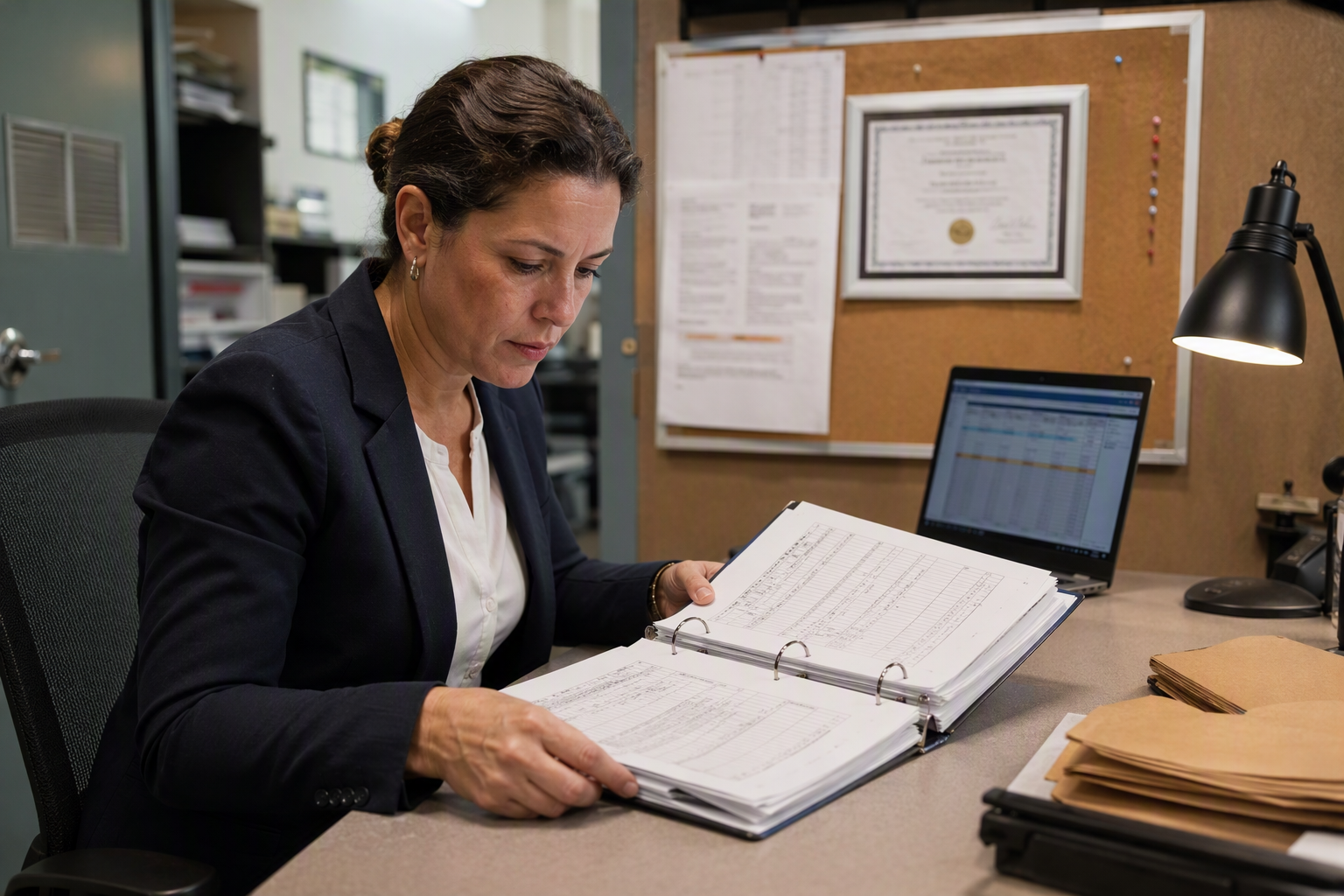
ASME A17.1 Safety Code for Elevators and Escalators is the foundational safety standard adopted — often with state-specific amendments — by Maryland, Virginia, Pennsylvania, the District of Columbia, and virtually every U.S. jurisdiction. It prescribes design, construction, installation, operation, inspection, testing, maintenance, alteration, and repair requirements for elevators in all building types, including hotels.
Key ASME A17.1 requirements relevant to hotel operations include:
- Periodic inspection and witnessing of safety tests by a Qualified Elevator Inspector (QEI).
- Maintenance, repair, and replacement of components in accordance with manufacturer specifications and code-prescribed intervals.
- Governor and safety device testing to confirm overspeed protection is functional.
- Door reopening device testing to ensure passenger entrapment is prevented.
- Firefighters’ Emergency Operation (FEO) testing — especially important in hotels where fire evacuation protocols are established.
The 2019 and 2022 editions of ASME A17.1 introduced updated language around maintenance control programs (MCP), requiring elevator owners to have a documented, written program in place. In 2026, facility managers should confirm their current maintenance provider is operating against the edition their jurisdiction has adopted.
How Does ADA Compliance Affect Hotel Elevator Maintenance?
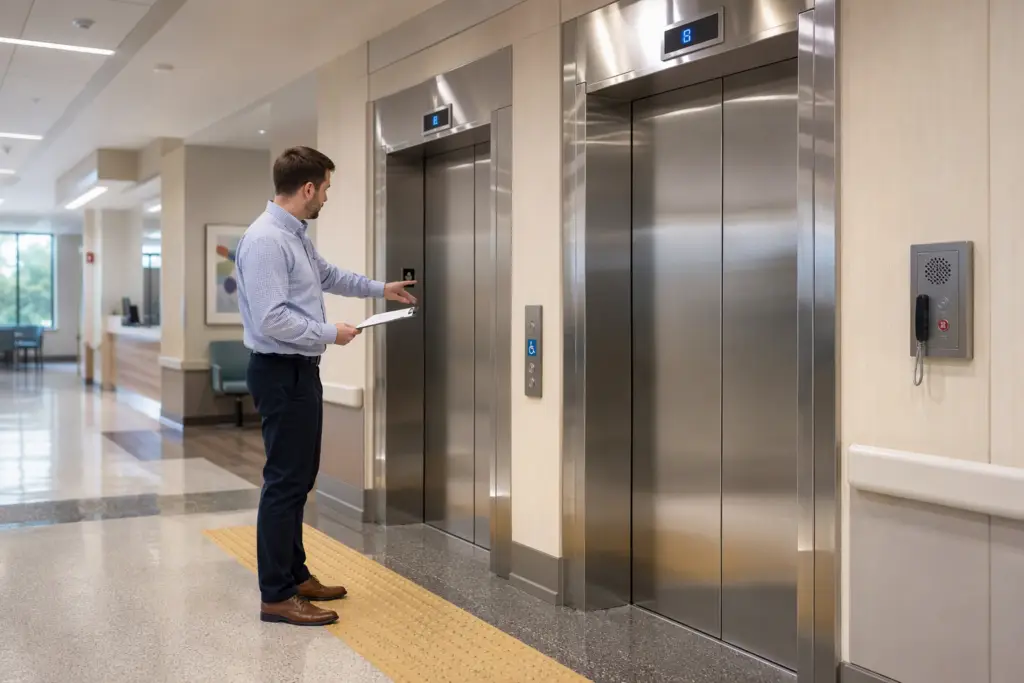
Hotels are public accommodations under Title III of the Americans with Disabilities Act, which means elevators serving guests must meet accessibility requirements. Maintenance teams must verify that accessible features remain functional between inspections — not just at the time of a periodic test.
ADA-related maintenance checkpoints for hotel elevators include:
- Door dwell time set to allow passengers using wheelchairs, walkers, or IV poles adequate time to enter and exit.
- Floor call buttons and cab controls positioned at heights accessible to wheelchair users.
- Raised characters and Braille on control panels remain legible and intact.
- Audible and visual floor indicators functioning correctly.
- Emergency two-way communication systems fully operational — particularly important for guests with hearing or speech impairments.
For hotels near medical centers or serving extended-stay healthcare travelers, these features are not incidental — they are essential to the guest experience and a legal obligation.
What Is a Maintenance Control Program and Does My Hotel Need One?
A Maintenance Control Program (MCP), as defined in ASME A17.1, is a written document that specifies the tasks, intervals, and procedures a qualified elevator contractor must follow to maintain a specific elevator installation. It is not a generic checklist — it is unit-specific and must be kept on-site or made readily available to inspectors.
Hotels with elevators in jurisdictions that have adopted the editions of ASME A17.1 requiring MCPs — which includes Maryland, Virginia, Pennsylvania, and DC — are required to have one in place. Quality Elevator Company develops and maintains unit-specific MCPs as part of its hotel maintenance agreements, ensuring each property in its service territory has documentation that satisfies local inspector requirements.
What Should a Hotel Elevator Preventive Maintenance Schedule Include?
A robust preventive maintenance schedule addresses every major subsystem of the elevator on a defined frequency. The following components represent a comprehensive PM scope for hotel elevators:
- Monthly: Door operator adjustments, lubrication of door tracks and hangers, inspection of safety edges and light curtains, cab cleanliness and lighting check, emergency communication test.
- Quarterly: Governor and tension sheave inspection, brake adjustment verification, controller contact inspection, leveling accuracy check, pit and overhead inspection.
- Semi-Annual: Full rope and hitch inspection, buffer test review, hoistway clearance inspection, firefighters’ emergency operation functional test.
- Annual / Per Code Cycle: Witnessing of safety tests by a QEI, load test if required, full documentation review and MCP update.
How Should a Hotel Respond to an Elevator Breakdown or Entrapment?
- Confirm with guests via the two-way communication system that no one is injured and instruct them to remain calm.
- Contact your certified elevator service provider immediately to dispatch a qualified technician.
- Notify hotel security and front desk staff to monitor the situation and keep guests informed.
- Do not attempt to manually open elevator doors or move the car without a trained elevator mechanic present.
- If a guest reports a medical concern, contact emergency services in parallel with the elevator service call.
- Once the unit is restored to service, document the event, cause, and corrective action in the maintenance log.
- If the failure involved a safety device, do not return the elevator to service until a qualified technician has verified the safety system is fully reset and functional.
OSHA recordkeeping requirements may apply if a hotel employee was involved in or affected by an elevator-related incident. Facility managers should consult their safety officer to determine applicable reporting obligations.
What Are the Signs That a Hotel Elevator Needs Modernization Rather Than Repair?
Older elevator systems reach a point where repair frequency, parts availability, and safety performance indicate that modernization is the more cost-effective and compliant path forward. Key indicators include:
- Repeated callbacks for the same mechanical or electrical failures.
- Control system components that are obsolete and no longer supported by manufacturers.
- Inability to meet current ASME A17.1 or ADA requirements without component replacement.
- Ride quality complaints from guests — excessive vibration, noise, or leveling inaccuracy.
- Energy consumption substantially higher than modern comparable systems.
- Difficulty sourcing replacement parts within a timeframe that avoids extended downtime.
Quality Elevator Company conducts condition assessments for hotel operators across Baltimore, Washington DC, Philadelphia, and Richmond to help ownership teams make informed decisions about repair versus modernization on a unit-by-unit basis.
How Do Hotel Elevator Standards Differ When the Property Serves Healthcare Travelers?
Hotels that function as extended-stay or healthcare-adjacent facilities — such as those near major hospital campuses in Baltimore, DC, Philadelphia, or Richmond — encounter elevator use patterns that differ from typical transient lodging. Guests may be traveling with medical equipment including wheelchairs, walkers, portable oxygen, or infusion pumps. Some guests may be immunocompromised or have mobility limitations that make elevator reliability a clinical concern.
While no separate code tier exists exclusively for “healthcare-adjacent hotels,” the practical maintenance standard is heightened:
- Door dwell times should be extended and verified regularly to accommodate slow-moving guests.
- Cab capacity and leveling precision are more consequential when guests use wheeled medical equipment.
- Hygiene protocols for cab interiors should be coordinated with housekeeping, particularly for high-touch surfaces.
- Emergency two-way communication must be tested more frequently given the higher probability that a stranded guest could have a medical vulnerability.
Questions Your Inspector Will Ask
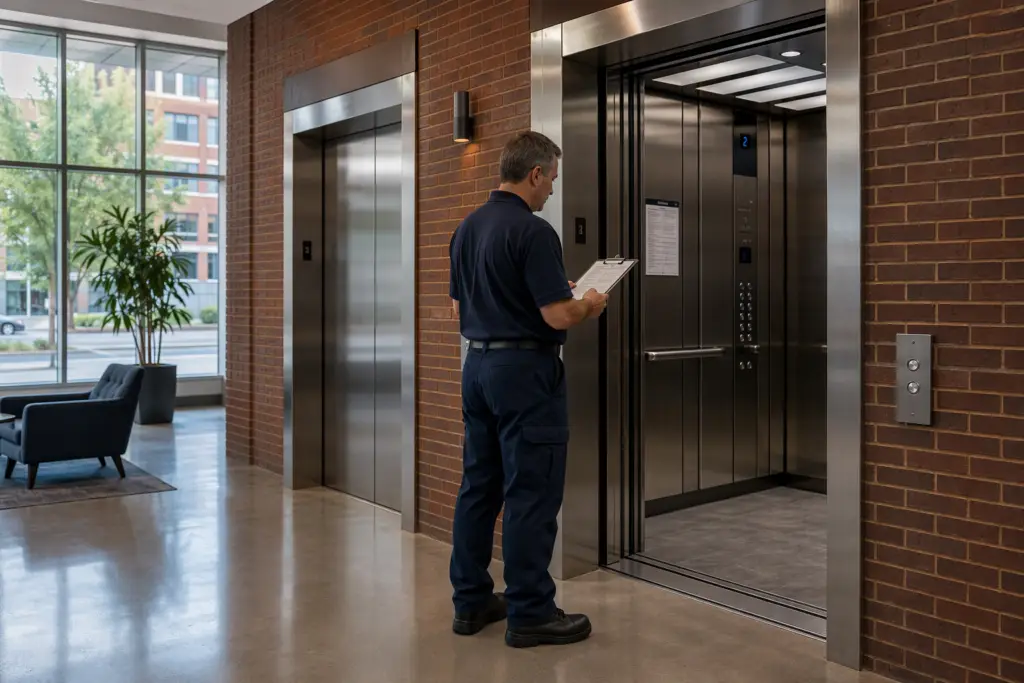
When a Qualified Elevator Inspector (QEI) or state inspector arrives at a hotel property, facility managers should be prepared to answer the following:
- Is your Maintenance Control Program (MCP) on file and current? Inspectors will request the unit-specific written document and verify it reflects actual maintenance performed.
- When was the last governor and safety device test performed and witnessed? Test dates and witness signatures must appear in the maintenance log.
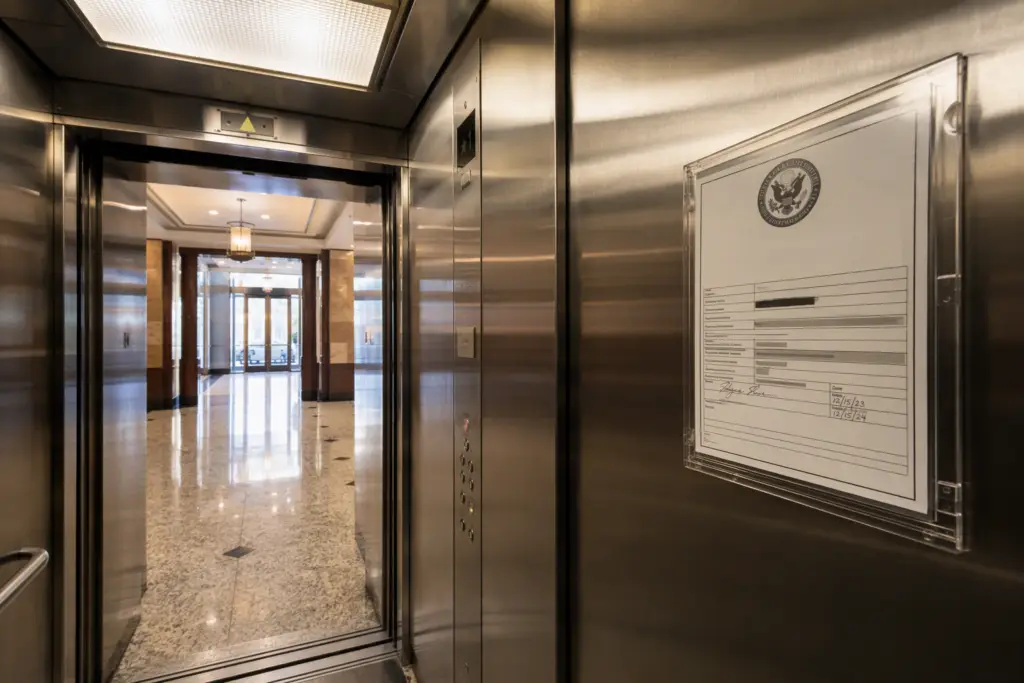
- Is the current Certificate of Inspection posted in the elevator cab? Most jurisdictions require this to be visible to passengers.
- Has the firefighters’ emergency operation been tested this inspection cycle? Inspectors will perform or witness this test and verify prior documentation.
- Are all safety edges and door reopening devices functional? Inspectors typically test door reversal behavior directly.
- Are the two-way emergency communication systems operational? Inspectors call each unit to confirm connectivity.
- Has any alteration been made to the elevator since the last inspection? Unauthorized alterations are a common compliance finding that can result in the unit being taken out of service.
- Who is your elevator contractor and are they licensed in this jurisdiction? Inspectors verify contractor credentials.
Quality Elevator Company prepares hotel clients for inspections by reviewing all documentation and performing a pre-inspection walkthrough to identify any open items before the official inspection date.
How Do I Choose the Right Elevator Maintenance Vendor for My Hotel?
Vendor selection for hotel elevator maintenance should be based on verifiable factors rather than price alone. Criteria that distinguish qualified contractors include:
- Licensure in the specific jurisdiction where the hotel operates — Maryland, Virginia, Pennsylvania, and DC each have their own elevator contractor licensing requirements.
- Demonstrated familiarity with the edition of ASME A17.1 adopted in the local market.
- Capacity to develop and maintain a unit-specific Maintenance Control Program.
- Transparent maintenance logs that hotel ownership can review at any time.
- A track record of working with commercial hospitality properties in the region.
Quality Elevator Company serves hotel clients across Baltimore MD, Washington DC, Philadelphia PA, and Richmond VA, providing maintenance programs tailored to the regulatory environment and guest-service demands of each market.
What Recordkeeping Is Required for Hotel Elevator Compliance?
Proper recordkeeping is not optional — it is a code requirement and a critical liability management tool. Hotel facilities should maintain:
- A maintenance log for each elevator unit documenting all PM visits, repairs, and parts replacements with dates and technician identification.
- Copies of all inspection certificates and violation notices.
- The current Maintenance Control Program for each unit.
- Records of all safety tests, including governor tests, buffer tests, and firefighters’ operation tests.
- Documentation of any alterations and the permits or approvals obtained.
These records should be retained for a period that satisfies both local elevator authority requirements and the hotel’s general liability documentation policies. Facility managers should confirm the required retention period with their jurisdiction’s elevator enforcement office.
Schedule Your Hotel Elevator Assessment Today
Maintaining elevators in a hotel environment — especially one serving guests with healthcare needs — requires a structured, compliant, and documented approach. Whether the property is in Baltimore MD, Washington DC, Philadelphia PA, or Richmond VA, Quality Elevator Company provides certified maintenance programs built around ASME A17.1 requirements, ADA accessibility standards, and the practical demands of continuous hospitality operations.
Contact Quality Elevator Company for a free elevator assessment at 301-779-9116.
Need elevator service you can rely on? Quality Elevator Company is ready to help.