Quick Answer: Choose a full maintenance contract when your elevator experiences frequent use, is older, or when unplanned repair costs and compliance liability outweigh the higher monthly premium; choose a parts-only or oil-and-grease contract when your equipment is newer, lightly used, and your budget favors predictable, lower baseline costs with acceptable out-of-pocket repair risk.
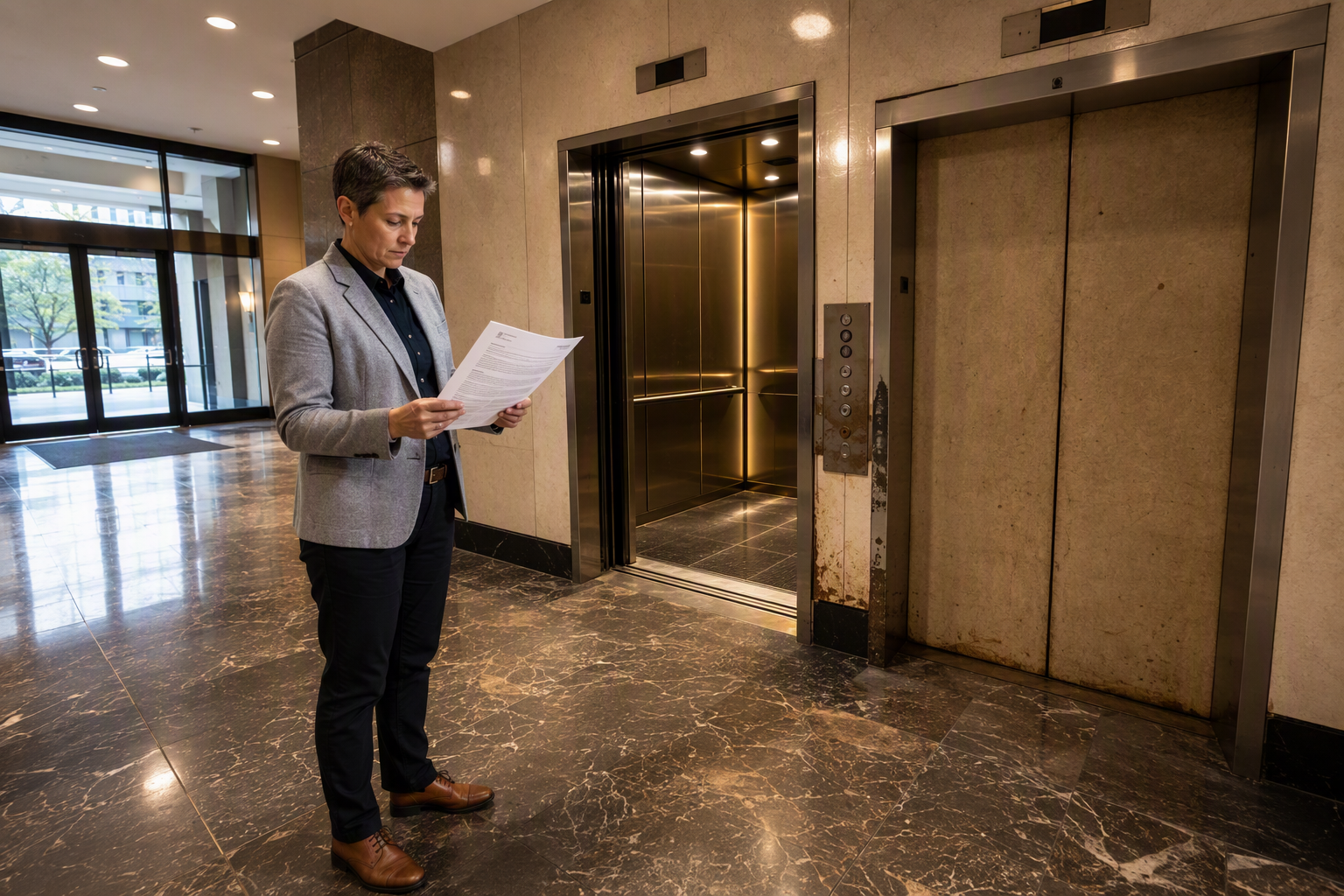
Selecting the right elevator service contract is one of the most consequential facilities decisions a building owner or property manager will make. The wrong coverage level can mean surprise repair invoices that strain capital budgets, compliance gaps that trigger regulatory action, or unnecessary spending on coverage a low-traffic building simply does not need. This guide breaks down every factor — cost structure, risk exposure, compliance obligations, equipment age, and vendor selection — so you can make a fully informed decision in 2026 and beyond.
What Is a Full Elevator Maintenance Contract?
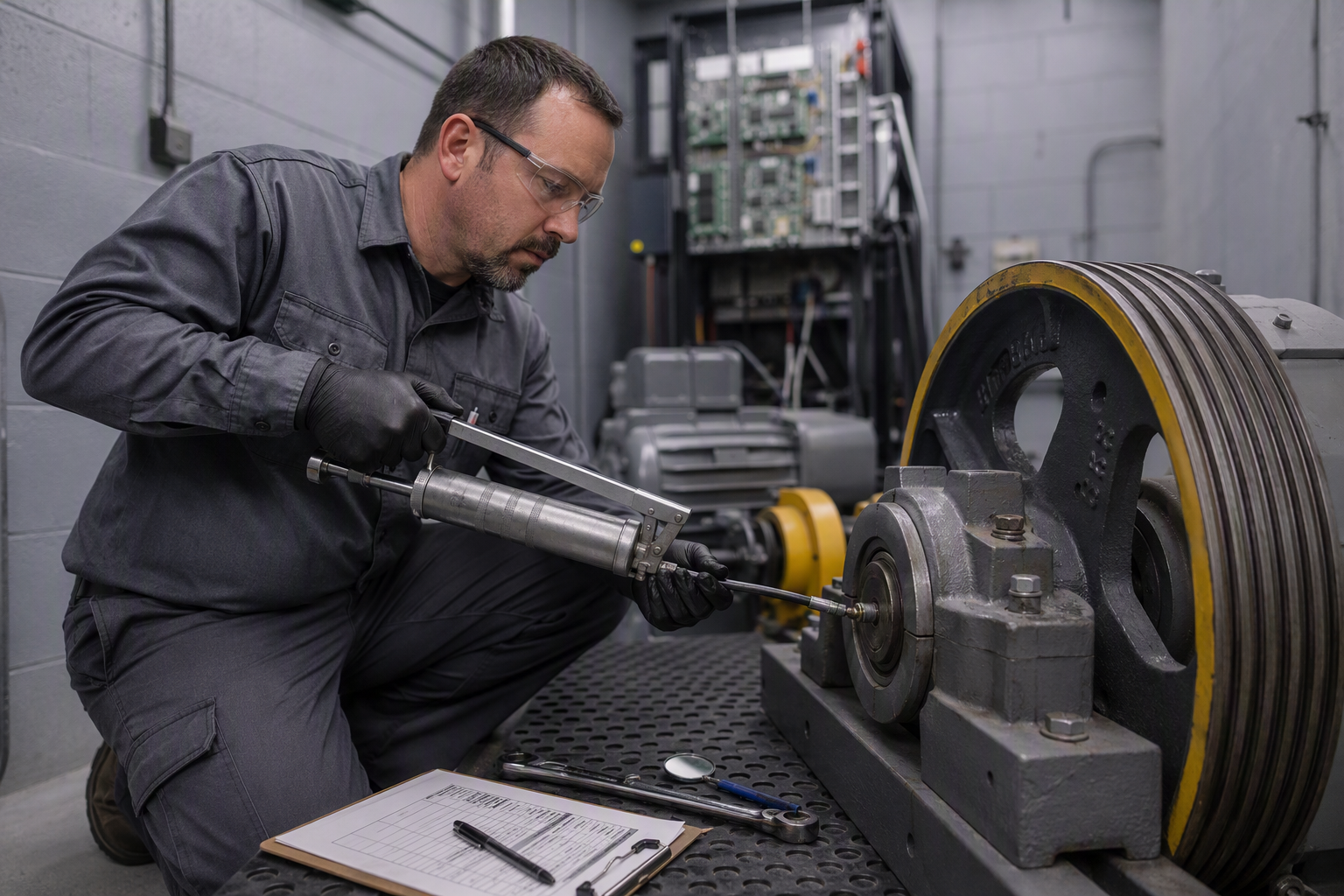
A full maintenance contract (sometimes called a comprehensive contract) bundles preventive maintenance visits, lubrication, adjustments, emergency call-backs, and replacement of most worn or failed parts into a single recurring fee. The service provider assumes the financial risk of parts failure within the contract’s defined scope.
Coverage under a full maintenance agreement typically includes:
- Scheduled preventive maintenance on a defined frequency
- Lubrication of all required components
- Adjustment of safety devices and controls
- Parts replacement for components that wear under normal use (motors, contactors, ropes, door operators, etc.)
- Emergency callback service
- Assistance preparing documentation for inspections required under codes such as the ASME A17.1 Safety Code for Elevators and Escalators
What is typically excluded even from full contracts: vandalism damage, modernization components, proprietary parts restricted by the original equipment manufacturer, and code-mandated upgrades triggered by a jurisdiction’s adoption of a newer edition of ASME A17.1.
What Is a Parts-Only or Oil-and-Grease Contract?

A parts-only contract (also called a “lubrication and examination” or “oil-and-grease” contract) covers scheduled maintenance visits, lubrication, and basic adjustments — but does not include replacement parts or labor for repairs. When a component fails, the building owner pays separately for parts and labor.
This contract type is the entry-level option in the industry. It is appropriate in specific circumstances but exposes building owners to unpredictable repair costs when equipment ages or component failure rates increase.
Side-by-Side Comparison: Full Maintenance vs. Parts-Only Contracts
| Factor | Full Maintenance Contract | Parts-Only / Oil-and-Grease Contract |
|---|---|---|
| Monthly Cost | Higher recurring premium | Lower recurring premium |
| Repair Cost Risk | Largely absorbed by provider (within scope) | Fully borne by building owner |
| Budget Predictability | High — single line item per month | Low — variable repair invoices |
| Best Fit: Equipment Age | Older or mid-life equipment (higher failure probability) | New or recently modernized equipment under manufacturer warranty |
| Best Fit: Traffic Volume | High-traffic: commercial, residential high-rise, healthcare | Low-traffic: small residential, storage, light commercial |
| Compliance Support | Typically includes documentation assistance and safety device testing | Maintenance visits only; inspection prep may be extra |
| Emergency Callbacks | Usually included in contract scope | Billed separately at time-and-material rates |
| Provider Risk Alignment | Provider is incentivized to prevent failures | Provider profits when parts fail (potential conflict of interest) |
| Contract Flexibility | Typically longer terms (1–5 years) | Often available on shorter terms |
| Ideal Building Type | Office towers, hotels, hospitals, multifamily high-rise | Small retail, low-rise residential, infrequently used lifts |
Pros and Cons at a Glance
| Full Maintenance Contract | Parts-Only Contract | |
|---|---|---|
| Pros |
|
|
| Cons |
|
|
How Does Equipment Age Affect Which Contract Makes Sense?
Equipment age is the single most influential factor in the coverage decision. Newer elevators — particularly those still within an original equipment manufacturer’s warranty period — carry a lower probability of major component failure. In that scenario, paying the higher premium of a full maintenance contract may not deliver proportional value during the early years of an installation.
As equipment passes the mid-life stage, mechanical and electrical components accumulate wear. Door operators, ropes, controllers, and safety devices all have finite service lives. At this stage, the financial risk of a parts-only contract rises sharply, because a single major repair — such as a controller replacement or hoist rope renewal — can cost more than a year’s difference in premium between the two contract types.
Building owners should request a condition assessment of their equipment before signing any contract. Quality Elevator Company provides a free elevator assessment that evaluates component condition, remaining service life, and the coverage level best matched to each installation’s risk profile.
What Compliance and Code Requirements Should Influence My Contract Choice?
Elevator compliance obligations are non-negotiable and exist independently of which contract type a building owner selects. Jurisdictions across the United States adopt editions of the ASME A17.1 Safety Code for Elevators and Escalators to govern inspection intervals, safety device testing, and equipment standards. Failure to maintain compliant equipment can result in shutdown orders, fines, and civil liability.
Full maintenance contracts typically scope in the labor and documentation support needed to prepare for these inspections. Parts-only contracts generally do not — meaning building owners may face additional charges for safety device testing, certificate renewals, and compliance documentation under a lower-tier agreement.
Buildings subject to Americans with Disabilities Act (ADA) requirements must also ensure elevators remain operational and accessible. Extended downtime caused by unplanned repairs under a parts-only contract can create ADA compliance exposure for buildings where elevator access is required.
Workplace safety standards administered by OSHA also apply to elevator maintenance activities. Confirm that any service provider, regardless of contract type, follows applicable OSHA standards for confined space entry, lockout/tagout, and related procedures.
How Do I Evaluate the True Cost of Each Contract Type?
Comparing contracts on monthly premium alone is misleading. A thorough cost comparison requires accounting for the full expected spend over the contract term, including out-of-pocket repair exposure under a parts-only agreement.
Use the following framework to compare total cost of ownership:
- Identify the contract premium difference — Calculate the annual premium difference between a full maintenance contract and a parts-only contract for your specific installation.
- Assess component risk — Request a condition report identifying components approaching end of service life. Estimate replacement costs for each.
- Factor in callback frequency — Review your elevator’s service history. Buildings with frequent entrapments or service calls face higher exposure under a parts-only contract where callbacks are billed separately.
- Include compliance costs — Determine what safety device testing, documentation, and inspection support will cost if not included in a parts-only scope.
- Account for downtime cost — Estimate the business or tenant impact of extended outages. For income-producing properties or healthcare facilities, elevator downtime has a direct financial consequence.
- Calculate break-even repair threshold — The point at which total out-of-pocket repair costs under a parts-only contract equal or exceed the premium difference is your break-even threshold. If your equipment’s condition suggests this threshold is likely to be crossed, the full maintenance contract delivers better value.
Are There Contract Types Between Full Maintenance and Parts-Only?
Yes. The market offers intermediate contract structures that building owners should be aware of:
- Comprehensive-minus contracts: Full maintenance coverage with specific high-cost components excluded (e.g., machine room equipment or proprietary controllers). Lower premium than a true full contract, but leaves defined gaps.
- Capped repair contracts: Parts-only baseline with a defined annual cap on out-of-pocket repair costs. Provides partial budget predictability while keeping the base premium lower.
- Tiered coverage by equipment zone: Some providers allow different coverage levels for different components — for example, full coverage on safety-critical systems and parts-only on non-critical finishes or fixtures.
Understanding these hybrid structures can help building owners find a coverage level that fits both their risk tolerance and budget constraints.
Does the Number of Elevators in My Building Change the Decision?
Building size and elevator count matter significantly. A single-elevator building faces complete loss of vertical transportation during any repair period. That concentrated risk — particularly in buildings where elevator access is required under the ADA — favors the predictability and callback inclusion of a full maintenance contract.
Multi-elevator buildings can absorb a single unit being out of service more readily, which may reduce the urgency argument for full coverage on every unit. However, high-traffic buildings with many units often find that the economies of scale in negotiating a full maintenance portfolio contract reduce the per-unit premium, making comprehensive coverage the financially superior option across the entire fleet.
How Do I Evaluate and Compare Elevator Service Providers?
Contract type is only one dimension of the decision. The quality and reliability of the service provider determines whether any contract’s written scope translates into actual performance. When evaluating providers, consider the following:
- Independence vs. OEM affiliation: Independent elevator service companies are not contractually restricted to proprietary parts, which can reduce repair costs and shorten lead times for components.
- Scope clarity: Request a written definition of every included and excluded item before signing. Vague language around “normal wear” or “non-proprietary parts” creates dispute risk.
- Documentation practices: Providers should supply written maintenance logs, safety device test records, and callback reports that support regulatory inspections under ASME A17.1.
- Contract term and exit provisions: Understand the notice period and early termination conditions before committing to a multi-year agreement.
- References: Request references from buildings comparable in size, traffic, and equipment type to your own.
Quality Elevator Company is an independent, certified elevator service provider serving building owners who want transparent, unbiased guidance on coverage selection — without the conflicts of interest that can arise from OEM-affiliated providers whose parts revenue depends on equipment failure.
What Should I Do Before Signing Any Elevator Service Contract?
- Order a third-party condition assessment of your elevator equipment to establish a documented baseline of component health.
- Pull your equipment’s service history — frequency of callbacks, types of repairs, and any outstanding code violations or inspection notices.
- Confirm your jurisdiction’s current adopted edition of the ASME A17.1 Safety Code for Elevators and Escalators and any local amendments that affect inspection intervals or mandatory upgrades.
- Obtain at least two written contract proposals — one full maintenance and one parts-only — for direct comparison on scope, exclusions, and term.
- Calculate your total cost of ownership using the six-step framework described earlier in this guide.
- Review all exclusion language carefully, particularly around proprietary parts, modernization components, and vandalism.
- Confirm the provider’s documentation practices and verify they align with your jurisdiction’s inspection requirements.
- Negotiate the contract term and exit provisions before executing. Multi-year agreements with difficult exit clauses limit your flexibility if service quality deteriorates.
Can I Switch Contract Types Mid-Term?
Upgrading from a parts-only contract to a full maintenance contract mid-term is possible but typically requires renegotiation. Some providers include escalation clauses that allow coverage upgrades; others treat it as a new contract with its own term commitment. Downgrading from full maintenance to parts-only mid-term is less commonly permitted without triggering early termination provisions.
Building owners are generally best served by selecting the right coverage level from the outset — based on a thorough equipment assessment — rather than negotiating changes after signing. A free elevator assessment from Quality Elevator Company can establish the information needed to make the correct initial selection.
Which Contract Type Is Better for Older Buildings Undergoing Modernization?
Buildings in a phased modernization program occupy a complex middle ground. Pre-modernization equipment typically warrants full maintenance coverage because aging components carry elevated failure risk. Post-modernization, newly installed components may be under manufacturer warranty, temporarily reducing the value differential of a full contract.
The practical approach for modernizing buildings is to negotiate a full maintenance contract that explicitly addresses the transition period — specifying how coverage terms shift as modernized components come online and how warranty interactions are handled. Independent service providers like Quality Elevator Company, who are not restricted to OEM parts pricing, are well positioned to structure these transitional agreements fairly.
Summary Decision Framework
| Your Building Profile | Recommended Contract Direction |
|---|---|
| Equipment older than mid-life, high component wear documented | Full Maintenance Contract |
| New installation or recently modernized, under warranty | Parts-Only or Oil-and-Grease Contract |
| High-traffic building (office, hotel, hospital, high-rise residential) | Full Maintenance Contract |
| Low-traffic, small residential or light commercial | Parts-Only Contract (reassess as equipment ages) |
| Single elevator building, ADA access required | Full Maintenance Contract |
| Multi-elevator fleet, newer equipment, budget-constrained | Hybrid or Tiered Coverage — seek professional assessment |
| Buildings with history of frequent callbacks or outages | Full Maintenance Contract |
| Buildings with outstanding inspection violations or compliance notices | Full Maintenance Contract with explicit compliance support scope |
Get Expert Guidance Specific to Your Building
Every elevator installation has a unique combination of equipment age, traffic patterns, compliance requirements, and budget constraints. A generalized guide can clarify the framework — but the right contract decision requires a professional evaluation of your specific equipment.
Quality Elevator Company is an independent, certified elevator service provider committed to transparent, conflict-free guidance. The team evaluates your equipment condition, reviews your service history, and recommends the coverage level that genuinely fits your building — not the contract that maximizes provider revenue.
Contact Quality Elevator Company for a free elevator assessment: 301-779-9116
Need elevator service you can rely on? Quality Elevator Company is ready to help.