Elevator Service in Baltimore, MD | Quality Elevator Company
Commercial building owners and property managers in Baltimore, MD seeking to reduce operating costs and meet sustainability goals have meaningful options when it comes to elevator energy efficiency. In 2026, a combination of federal tax incentives, state programs, utility rebates, and modern elevator technology upgrades can significantly lower both energy consumption and long-term maintenance expenses. Quality Elevator Company helps Baltimore-area commercial property stakeholders navigate these opportunities with local expertise and certified service.
What Federal Tax Incentives Apply to Energy-Efficient Elevator Upgrades in 2026?

The most significant federal incentive available to commercial building owners is the Section 179D Energy Efficient Commercial Buildings Deduction, established under the Energy Policy Act and expanded by the Inflation Reduction Act. This provision allows qualifying commercial property owners and, in some cases, designers of government-owned buildings to claim a deduction for energy-efficient improvements—including elevator and mechanical systems—when those upgrades contribute to measurable reductions in a building’s overall energy and power costs.
To qualify, the building’s energy systems must be certified by a qualified professional and meet energy reduction thresholds relative to a reference building. Because elevator systems are part of a building’s overall energy profile, modernizing older traction or hydraulic equipment can contribute to meeting those thresholds. Property owners should work with a qualified tax professional and a certified elevator service provider to document the energy performance improvements accurately.
What Maryland State Incentives Are Available for Elevator Energy Efficiency?
The Maryland Energy Administration (MEA) administers several programs relevant to commercial building energy improvements. While programs and funding cycles change annually, MEA has historically offered grant and loan programs for commercial energy efficiency upgrades that can encompass building systems, including elevator modernization projects. Building owners in Baltimore should review current MEA offerings for 2026 cycles, as application windows and funding availability vary.
Additionally, Maryland’s EmPOWER Maryland program, administered through the Maryland Public Service Commission, supports energy efficiency across commercial and industrial sectors. Utility companies operating under EmPOWER Maryland—including Baltimore Gas and Electric (BGE)—are required to offer energy efficiency programs to their commercial customers.
Does BGE Offer Rebates for Commercial Elevator Upgrades?
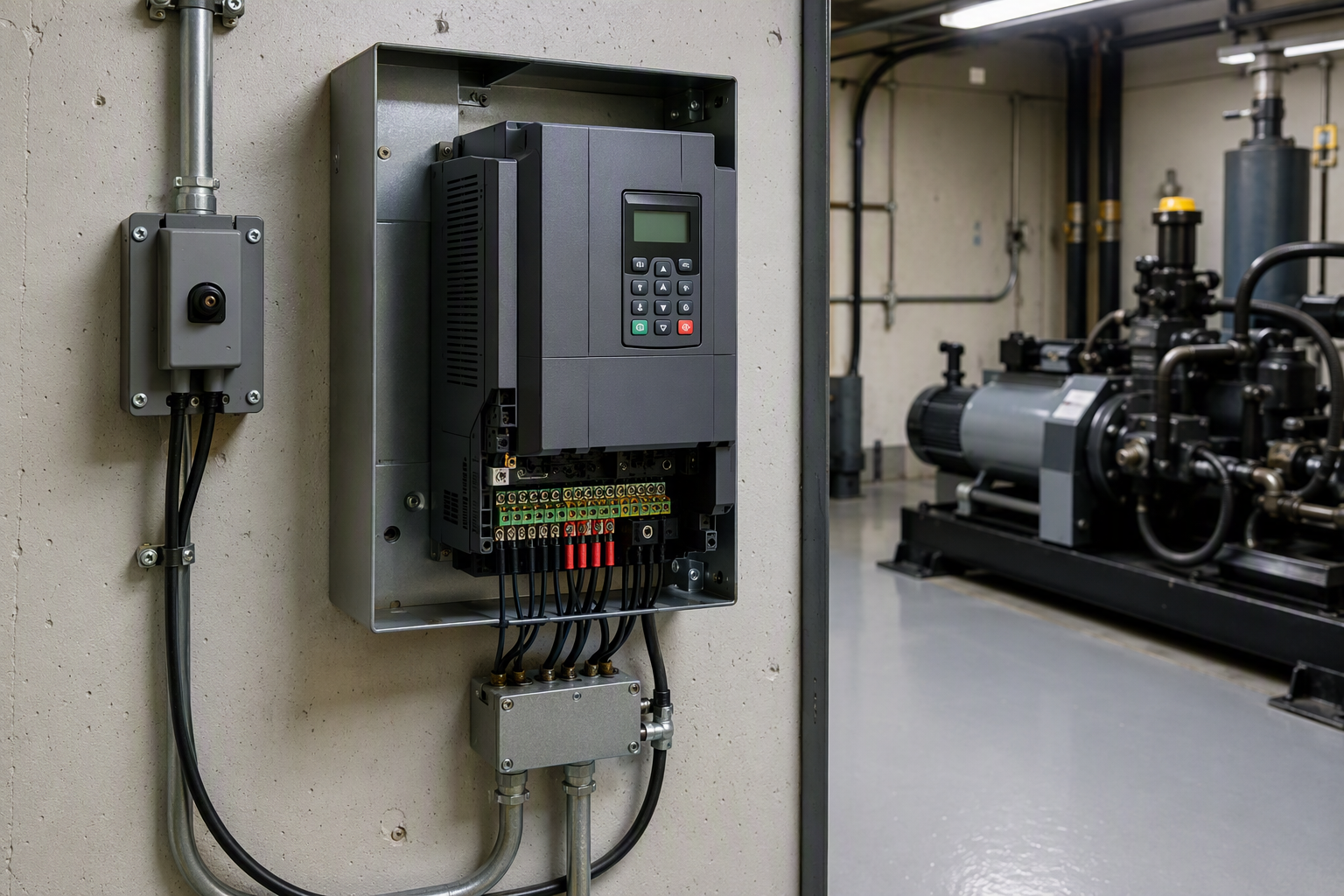
BGE’s Smart Energy Savers Program for commercial and industrial customers provides rebates for qualifying energy-efficient equipment and system upgrades. Elevator-related improvements that may qualify include the installation of variable frequency drives (VFDs) on hydraulic elevator pump motors, regenerative drive systems that return energy to the building’s electrical grid during descent, and LED lighting upgrades within elevator cabs and machine rooms.
Rebate amounts and eligible technologies are updated periodically. Baltimore commercial property owners are encouraged to contact BGE directly or work with a qualified elevator service company to identify which planned upgrades align with current rebate offerings before work begins, as pre-approval is often required.
What Elevator Technologies Deliver the Greatest Energy Savings in Commercial Buildings?
Several modernization technologies are recognized for meaningful reductions in elevator energy consumption:
- Regenerative drives: These systems capture the energy generated when an elevator descends with a heavy load or ascends with a light load and feed it back into the building’s electrical system, reducing net energy draw.
- Variable frequency drives (VFDs): VFDs regulate the speed of hydraulic pump motors, eliminating the energy spikes associated with fixed-speed motor starts and stops.
- LED cab and machine room lighting: Replacing fluorescent or incandescent lighting with LED fixtures reduces continuous power consumption in spaces that operate around the clock.
- Destination dispatch and traffic management systems: Smart dispatching reduces the number of trips and the distance traveled per passenger, lowering overall energy use in multi-elevator buildings.
- Standby and sleep mode controls: Modern elevator controls can power down non-essential systems—lighting, ventilation, and displays—during periods of low traffic.
A certified elevator service provider can perform an energy audit of existing equipment to identify which combination of upgrades offers the strongest return on investment for a specific building.
What Maryland and Local Code Requirements Apply to Elevator Upgrades in Baltimore?
Elevator installations and major modernizations in Maryland are governed by the Maryland Elevator Safety Law, administered by the Division of Labor and Industry within the Maryland Department of Labor. All elevator work must be performed by licensed elevator contractors, and modernization projects require permits and inspections by state-certified elevator inspectors.
Maryland adopts the ASME A17.1 Safety Code for Elevators and Escalators as the technical standard for elevator construction, alteration, and maintenance. Any energy-efficiency upgrade that qualifies as an “alteration” under ASME A17.1—such as controller replacement, drive modernization, or hydraulic unit replacement—triggers full code compliance review for the affected components.
For commercial buildings subject to the Americans with Disabilities Act (ADA), modernization projects also present an opportunity to address accessibility compliance in cab dimensions, door timing, control panel heights, and tactile signage, potentially avoiding separate future remediation costs.
Baltimore City additionally falls under local building code jurisdiction for permit coordination. Quality Elevator Company’s familiarity with Maryland Division of Labor and Industry processes and Baltimore City permit workflows helps keep modernization projects compliant and on schedule.
How Should a Commercial Property Owner Plan an Elevator Energy Upgrade Project?
- Conduct a preliminary energy audit: Engage a certified elevator service provider to assess the age, condition, and energy consumption profile of existing equipment.
- Identify applicable incentives: Before committing to a scope of work, determine which federal, state, and utility programs your building and planned upgrades qualify for—some programs require pre-approval or pre-inspection.
- Obtain a detailed modernization proposal: A qualified elevator contractor should outline the specific components to be upgraded, expected energy performance improvements, and all required permits.
- Apply for permits with Maryland Division of Labor and Industry: All alteration work requires state permits and inspections; build permit timelines into the project schedule.
- Complete the upgrade with a licensed contractor: Only licensed elevator contractors may perform modernization work in Maryland.
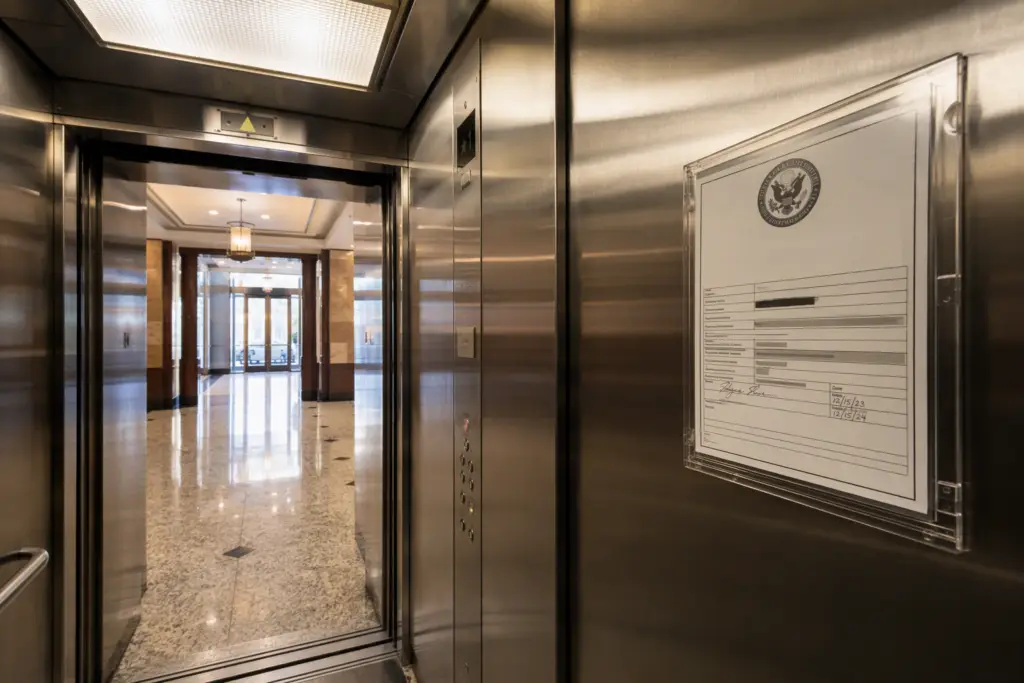
- Schedule post-modernization inspection: A state-certified elevator inspector must inspect and approve the work before the elevator returns to service.
- Document energy performance improvements: Retain documentation for tax deduction certification and utility rebate applications.
- Establish an ongoing maintenance agreement: Modernized equipment performs best and retains warranty coverage under a structured preventive maintenance program.
What Types of Commercial Buildings in Baltimore Benefit Most from Elevator Energy Upgrades?
Energy-efficiency upgrades deliver the strongest results in buildings where elevators run frequently and continuously. High-traffic commercial properties that benefit most include office towers, medical office buildings and healthcare facilities, multi-tenant retail and mixed-use properties, hotel and hospitality facilities, university and institutional campus buildings, and multifamily residential buildings over a certain height threshold. Baltimore’s growing life sciences corridor, its Inner Harbor hospitality district, and its expanding medical campus facilities represent property categories where elevator energy modernization often provides a compelling financial case alongside sustainability goals.
Why Work with a Local Baltimore Elevator Service Company for Energy Upgrades?
Navigating the intersection of federal incentive documentation, Maryland state permitting, BGE utility rebate applications, and ASME code compliance requires familiarity with local processes that national providers may lack. Quality Elevator Company serves the Baltimore metropolitan area with knowledge of Maryland Division of Labor and Industry requirements, local permit coordination, and the specific utility programs available to BGE service territory customers. Emergency service needs that arise during or after a modernization project are also handled locally, without dependence on regional dispatch from outside the area.
Quality Elevator Company serves commercial property managers, building owners, healthcare facilities, educational institutions, and government properties throughout Baltimore and the surrounding Maryland region.
Schedule a Free Consultation with Quality Elevator Company
Ready to explore energy-efficient elevator upgrades and available incentives for your Baltimore commercial property? Quality Elevator Company provides expert guidance on modernization options, Maryland code compliance, and incentive qualification—at no cost for an initial consultation.
Call Quality Elevator Company today at 301-779-9116 to schedule your free consultation.
Need elevator service you can rely on? Quality Elevator Company is ready to help.