Managing Elevator Maintenance and Inspections on a School or University Campus
Quick Answer: Managing elevator maintenance and inspections across a multi-elevator school or university campus requires a centralized compliance calendar, adherence to ASME A17.1 Safety Code for Elevators and Escalators and applicable state authority-having-jurisdiction (AHJ) requirements, documented preventive maintenance agreements for every unit, and coordination with a licensed elevator contractor who understands the unique access, scheduling, and liability demands of an educational environment.
A university medical center, a community college with aging classroom towers, or a K–12 school campus serving students with disabilities — each presents a distinct set of elevator compliance challenges. When a single missed inspection can trigger a shutdown order, expose an institution to ADA liability, or create a life-safety hazard, having a structured program in place is not optional. The sections below address the most common questions campus facilities managers, risk officers, and operations directors ask when building or auditing that program.
What Codes and Standards Govern Elevators on Educational Campuses?
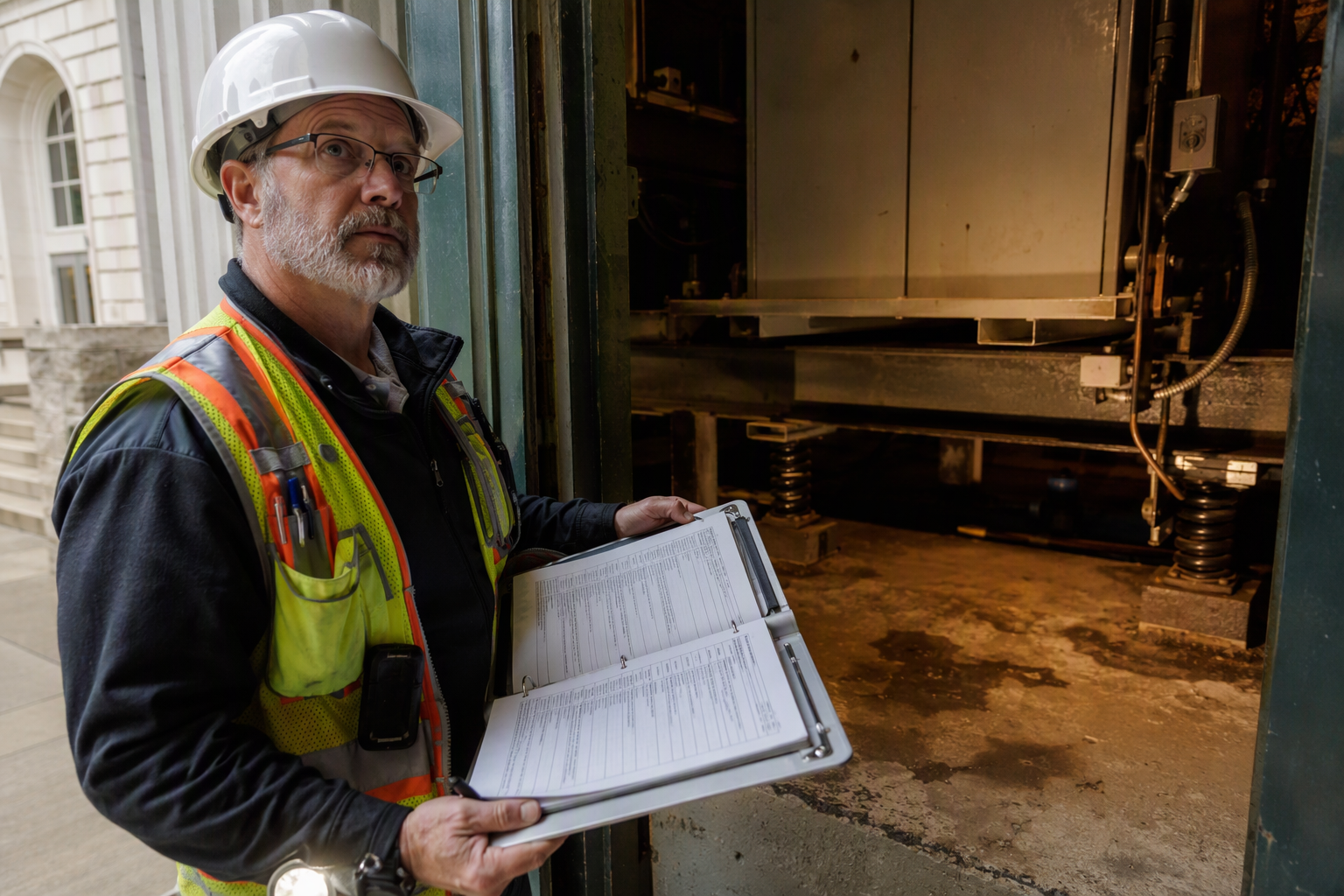
Three layers of code apply simultaneously to campus elevators.
- ASME A17.1 Safety Code for Elevators and Escalators — The nationally recognized standard for new installation design, construction, operation, and maintenance. Maryland, Virginia, Pennsylvania, and the District of Columbia all reference ASME A17.1 as the foundational technical requirement through their respective state elevator laws and AHJ rules.
- ASME A17.3 Safety Code for Existing Elevators and Escalators — Governs retroactive safety requirements for elevators already in service. Campuses with older buildings must audit existing units against A17.3 requirements enforced by the relevant state AHJ.
- Americans with Disabilities Act (ADA) — Title II of the ADA applies directly to public universities and publicly funded K–12 schools. Title III applies to private educational institutions. Both require that vertical transportation provide equivalent access for people with disabilities, covering door timing, call button height, audible and visual signals, and cab dimensions.
State-specific enforcement varies. In Maryland, the Department of Labor’s Division of Labor and Industry oversees elevator inspections. In Virginia, the Department of Labor and Industry administers the Virginia Elevator Safety Law. Pennsylvania’s Department of Labor and Industry enforces the Pennsylvania Elevator and Escalator Law. The District of Columbia Department of Buildings (DOB) handles inspections and permits within DC. Campus facilities teams operating across state lines — common for universities with satellite campuses — must track each AHJ separately.
How Often Do Campus Elevators Need to Be Inspected?
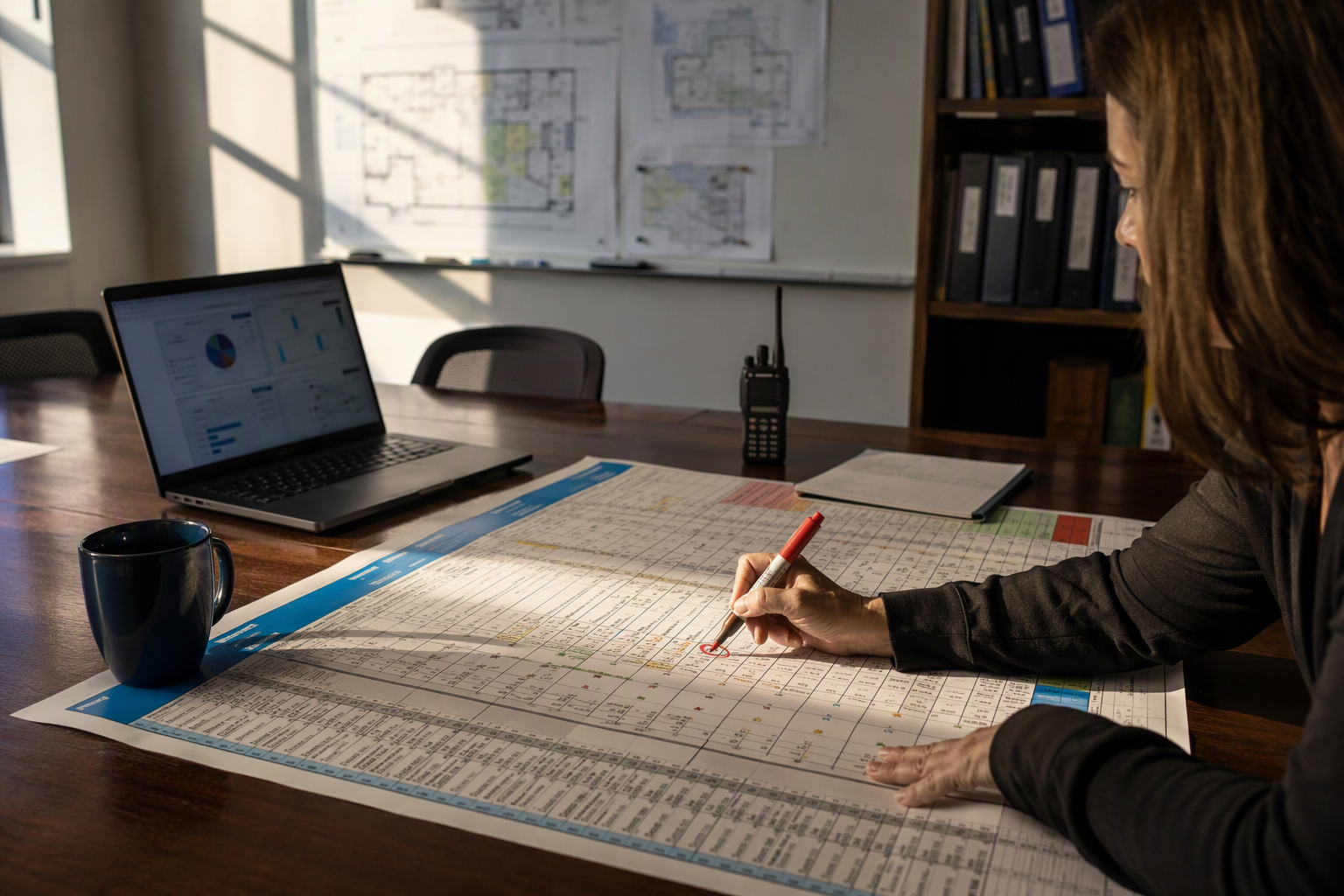
Inspection frequency is set by each state AHJ in alignment with ASME A17.1 and A17.3 intervals. In the states where Quality Elevator Company operates — Maryland, Virginia, Pennsylvania, and the District of Columbia — periodic inspections are generally required on an annual basis, with periodic tests (including safety device tests) required at intervals defined by the applicable state elevator code. Campuses should verify current intervals directly with the relevant AHJ, because regulatory revision cycles can change those intervals.
Beyond mandatory inspections, preventive maintenance (PM) visits are a separate obligation. ASME A17.1 requires that elevators be maintained by a licensed contractor, and a documented PM program is the primary evidence an institution can present to an AHJ, insurer, or plaintiff’s attorney that the equipment was being cared for appropriately.
What Is the Best Way to Organize Maintenance Across Multiple Elevators?
Campus facilities managers overseeing many elevators benefit from a centralized asset management approach. The following steps outline a practical framework.
- Create an elevator inventory. Assign each unit a unique asset ID that maps to its location, make, model, installation date, and state-issued certificate number.
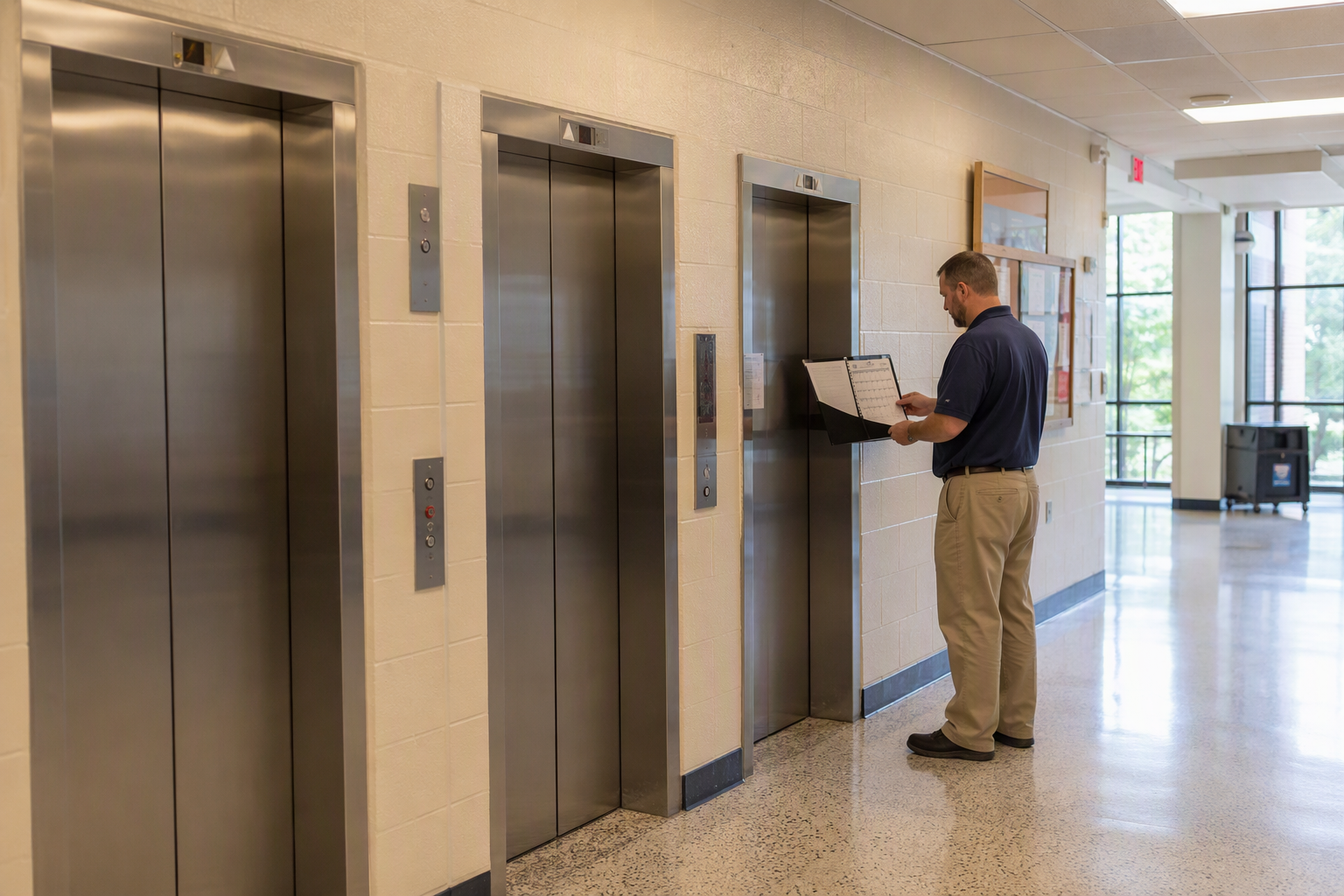
- Build a compliance calendar. Document mandatory inspection due dates, certificate expiration dates, and periodic test windows for every unit in a single system — a spreadsheet, CMMS platform, or your elevator contractor’s service portal.
- Execute a preventive maintenance agreement. Contract with a licensed elevator service company that schedules regular PM visits, documents every service ticket, and tracks open deficiencies to closure.
- Establish a deficiency tracking log. Any condition noted during an inspection or PM visit that does not immediately require shutdown should be assigned an owner, a target correction date, and a follow-up verification date.
- Coordinate outage scheduling with campus stakeholders. Planned shutdowns for major tests should be communicated to disability services offices, dormitory housing, healthcare clinic operators, and building occupants in advance.
- Retain all documentation for the AHJ minimum period. Inspection certificates, PM records, and test results should be stored on-site in the machine room or in a readily accessible digital repository that can be produced during an unannounced state inspection.
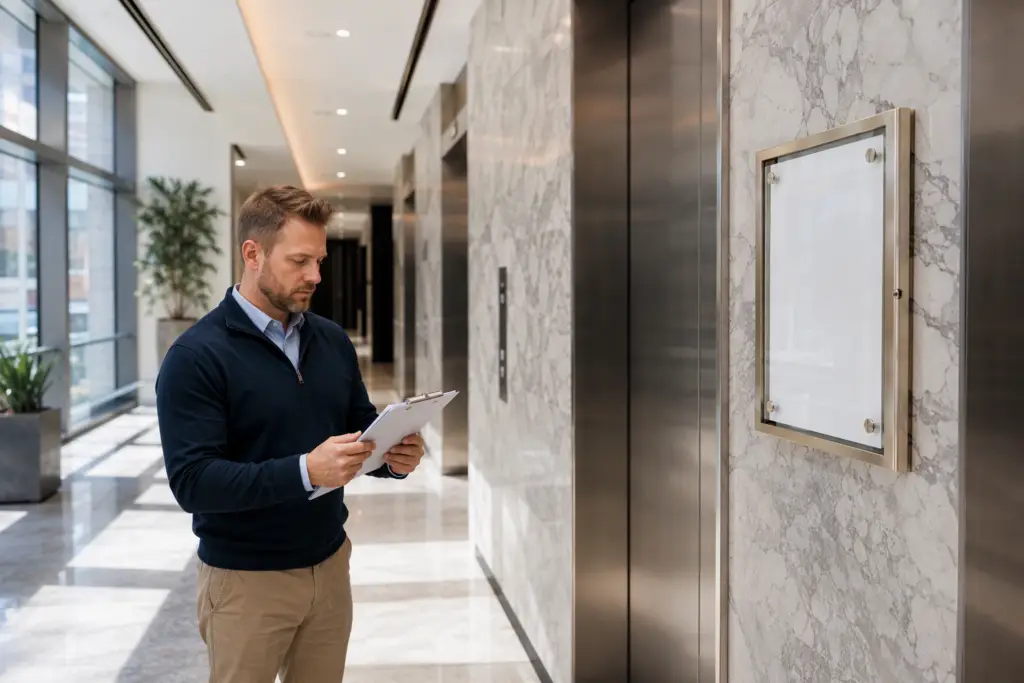
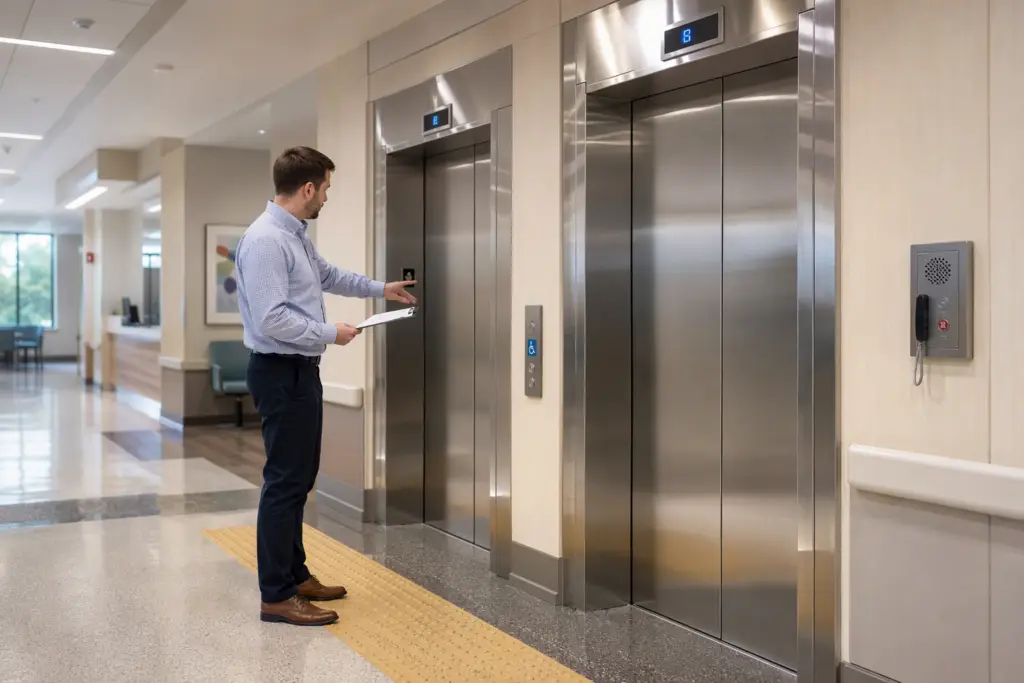
- Conduct an annual internal audit. Before each inspection cycle, a responsible facilities team member should walk every elevator, review its documentation, and confirm the certificate of inspection is current and posted in the cab as required by state law.
- Review ADA compliance annually. Door re-open sensitivity, audible floor announcements, Braille button legibility, and leveling accuracy can degrade over time. An annual ADA walk-through, separate from the state safety inspection, reduces legal exposure under ADA Title II or Title III.
Does ADA Apply Differently to School and University Elevators?
Yes. Public schools and universities are Title II entities under the ADA, which means the obligation to provide accessible vertical transportation applies to programs and services, not just physical structures. If an elevator serving a classroom floor, student health clinic, or administrative office is out of service without an accessible alternative route, the institution may be in violation regardless of whether a maintenance contractor is already dispatched. Private institutions subject to Title III face the same functional outcome through the “readily achievable” barrier removal standard.
Practically, this means campuses should have an elevator outage communication protocol that immediately triggers notification to the disability services office so accommodations can be arranged.
What Should a Preventive Maintenance Contract Include for a Campus?
A well-structured PM agreement for a multi-elevator campus should specify at minimum:
- The scope of work per visit (lubrication, safety device checks, controller inspection, cab interior check, door operation adjustment, machine room inspection)
- Visit frequency per unit
- Documentation deliverables — written service tickets for every visit
- Callback provisions for unplanned breakdowns
- Coordination with state-mandated inspections and testing
- Procedures for taking a unit out of service if a hazardous condition is found
- Compliance with OSHA lockout/tagout and confined space requirements applicable to elevator machine room work
Quality Elevator Company structures campus maintenance agreements to align documentation requirements with Maryland, Virginia, Pennsylvania, and DC AHJ expectations, so that records are organized in the format inspectors expect to see.
How Are Elevator Inspections Scheduled and Who Performs Them?
In Maryland, Virginia, Pennsylvania, and DC, periodic safety inspections must be performed by a state-licensed or state-authorized elevator inspector — either a state inspector or a third-party qualified elevator inspector (QEI) authorized under the applicable state program. The building owner or campus facilities department is responsible for ensuring the inspection happens on time and that the equipment is ready.
A licensed elevator contractor such as Quality Elevator Company can assist campuses by preparing units for inspection — verifying safety device function, ensuring machine rooms are clean and accessible, confirming emergency lighting and communication systems are operational, and resolving any open deficiencies before the inspector arrives. This preparation reduces the likelihood of failed inspections and re-inspection fees.
What Happens If a Campus Elevator Fails Inspection?
When a state inspector finds a condition that violates code, the AHJ has authority to issue an order to immediately take the elevator out of service until the deficiency is corrected and a follow-up inspection passes. For a campus building with a single elevator serving upper floors, that creates an immediate ADA access obligation and potential disruption to academic operations.
The fastest path to restoration is a documented corrective action — completed by a licensed elevator contractor, with a written record of the repair — submitted to the AHJ promptly. Quality Elevator Company prioritizes violation corrections for campus clients across the Baltimore, Washington DC, Philadelphia, and Richmond service areas to minimize downtime.
Are There Special Considerations for Elevators in Campus Healthcare or Lab Buildings?
University-affiliated hospitals, medical school buildings, research labs, and student health centers introduce additional complexity. Freight elevators used to move medical equipment, laboratory specimens, or hazardous materials may be subject to additional OSHA requirements regarding safe loading, signage, and worker training. Elevators in buildings where patients are transported — even informally — should be evaluated against the functional expectations of healthcare vertical transportation: reliable leveling for wheelchair transfers, door timing appropriate for mobility devices, and robust emergency communication systems.
How Do Campus Facilities Teams Handle Emergency Elevator Situations?
Every campus should have a documented emergency procedure for elevator entrapments and mechanical failures that is communicated to all building staff, campus security, and facilities dispatch. ASME A17.1 requires functional two-way emergency communication in every elevator cab. For campuses served by Quality Elevator Company, facilities managers have a direct service line to dispatch licensed technicians when emergency situations arise.
Campus security and facilities teams should be trained never to attempt to manually rescue entrapped passengers — this is a life-safety task for licensed elevator personnel and fire departments with elevator rescue training.
What Does a Campus Elevator Compliance Audit Look Like?
A compliance audit conducted by a licensed elevator contractor covers the following areas:
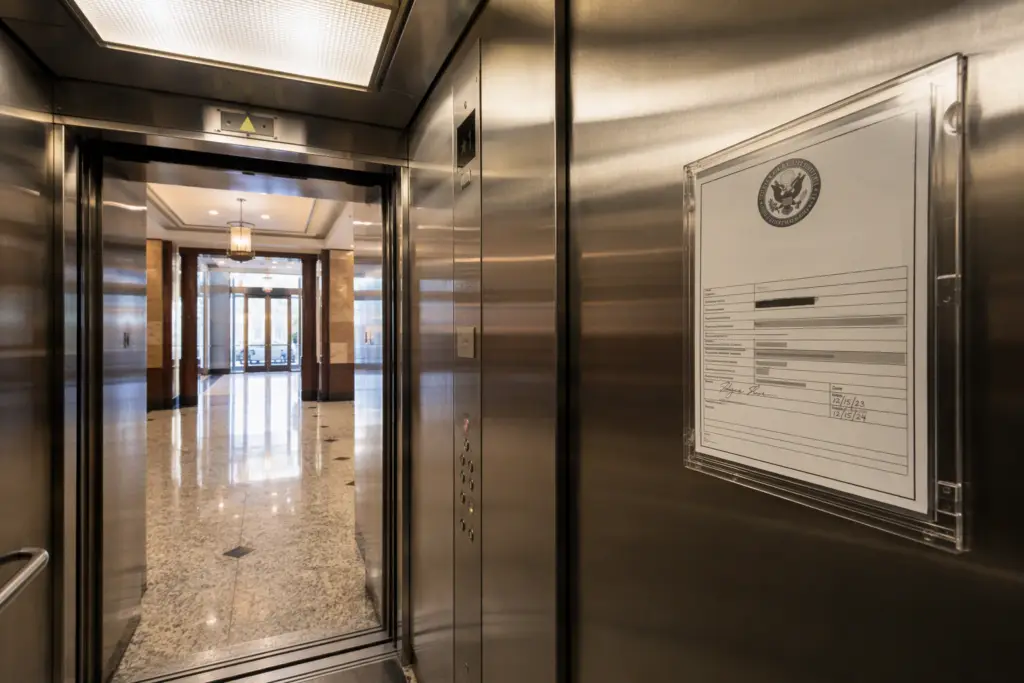
- Current certificate of inspection posted in each cab
- Maintenance log availability and completeness
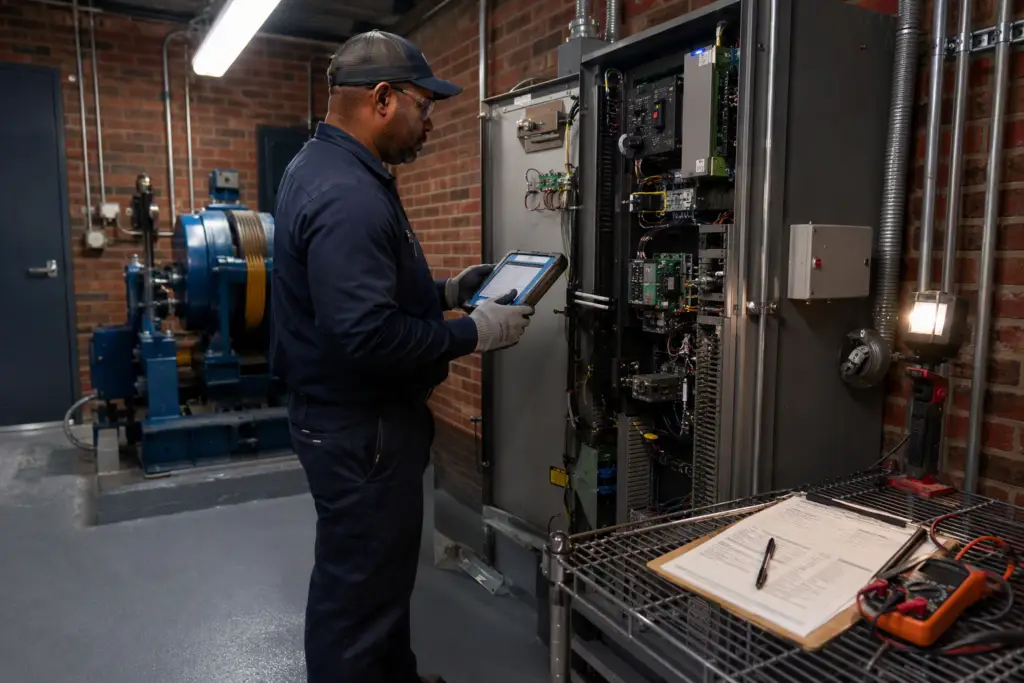
- Machine room condition, access control, and fire protection
- Safety device test records and intervals
- ADA accessibility features — leveling accuracy, door timing, audible and visual signals, signage
- Emergency communication system functionality
- Pit condition and lighting
- Open deficiency status from prior inspections
Quality Elevator Company offers free elevator assessments for campus facilities teams across the Baltimore, Washington DC, Philadelphia, and Richmond markets that produce a written report of findings organized by unit and priority level.
Questions Your Inspector Will Ask
State elevator inspectors and AHJ officials commonly raise the following questions during campus inspections. Being prepared to answer each one demonstrates a mature compliance program.
- Is the current certificate of inspection posted in the cab? State law in Maryland, Virginia, Pennsylvania, and DC requires the certificate to be displayed in the elevator cab at all times.
- Where is the maintenance log, and can I see the last six months of service records? Inspectors verify that a licensed contractor has been performing documented PM visits at the required frequency.
- Has the governor rope and safety system been tested within the required interval? ASME A17.1 and A17.3 require periodic full-load safety tests; the records must be available.
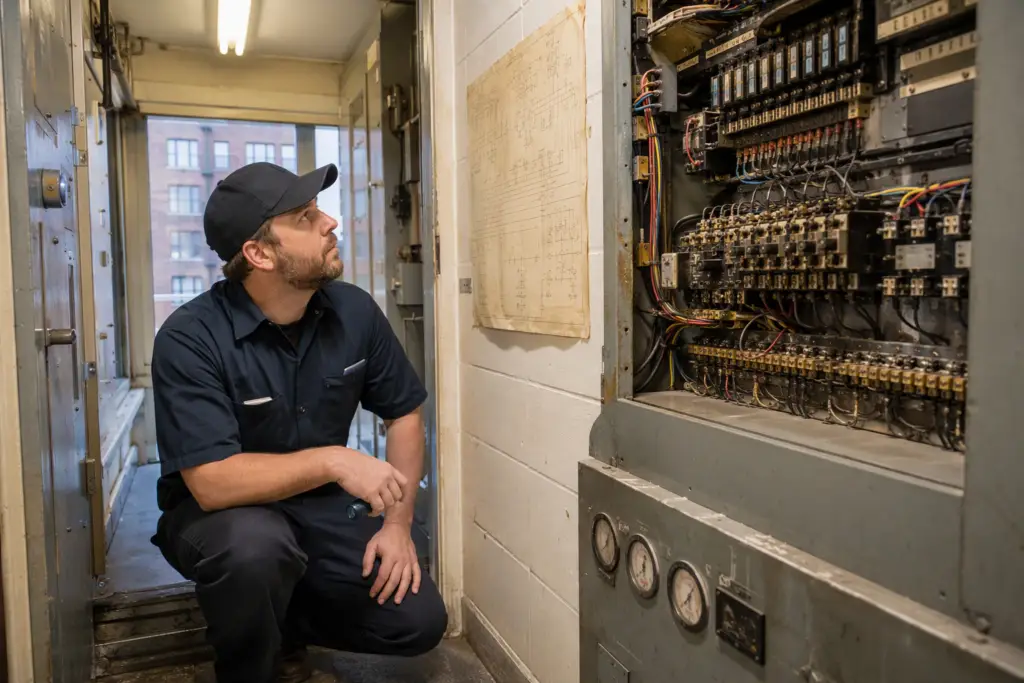
- Is the machine room locked, clean, and free of storage unrelated to elevator operation? Unauthorized storage and unlocked machine rooms are common citation items.
- Is the emergency lighting and two-way communication system operational? Inspectors will test these in the field.
- Are there any open violations or deficiencies from the prior inspection? Facilities managers should be able to document that all prior deficiencies were corrected.
- What is the load rating, and is it posted? Required signage must be current and legible.
- Who is the licensed elevator contractor responsible for maintenance? The AHJ may verify the contractor’s license status directly.
Why Work With a Regional Elevator Service Company for Campus Contracts?
National independent and OEM elevator contractors serve campus accounts, but a regional licensed contractor with deep familiarity with Maryland, Virginia, Pennsylvania, and DC AHJ processes offers distinct advantages: inspectors in these markets know the local permit workflows, the specific state code editions currently in force, and the practical expectations of local authorities. Quality Elevator Company focuses exclusively on the Baltimore, Washington DC, Philadelphia, and Richmond regions, which means campus facilities teams are not navigating bureaucratic processes with a technician unfamiliar with local requirements.
Ready to Build a Stronger Campus Elevator Program?
A well-managed elevator compliance program protects students, faculty, staff, and visitors; satisfies state AHJ requirements; and reduces institutional liability under the ADA. The framework is straightforward — inventory, schedule, document, correct, audit — but execution requires a licensed partner who understands both the technical requirements of ASME A17.1 and the operational realities of a busy campus environment.
Contact Quality Elevator Company for a free elevator assessment. Serving campuses across Baltimore MD, Washington DC, Philadelphia PA, and Richmond VA — call 301-779-9116 to schedule your assessment today.
Need elevator service you can rely on? Quality Elevator Company is ready to help.