Commercial Elevator Lifespan & Replacement: Complete FAQ Guide
Building owners, property managers, and facilities directors across Baltimore, Washington DC, Philadelphia, and Richmond face a common strategic challenge: knowing exactly when to invest in elevator modernization versus continued maintenance. This comprehensive FAQ hub answers the most critical questions about commercial elevator lifespan, replacement timing, compliance obligations, and what to expect from the modernization process in 2026.
How Long Does a Commercial Elevator Typically Last?
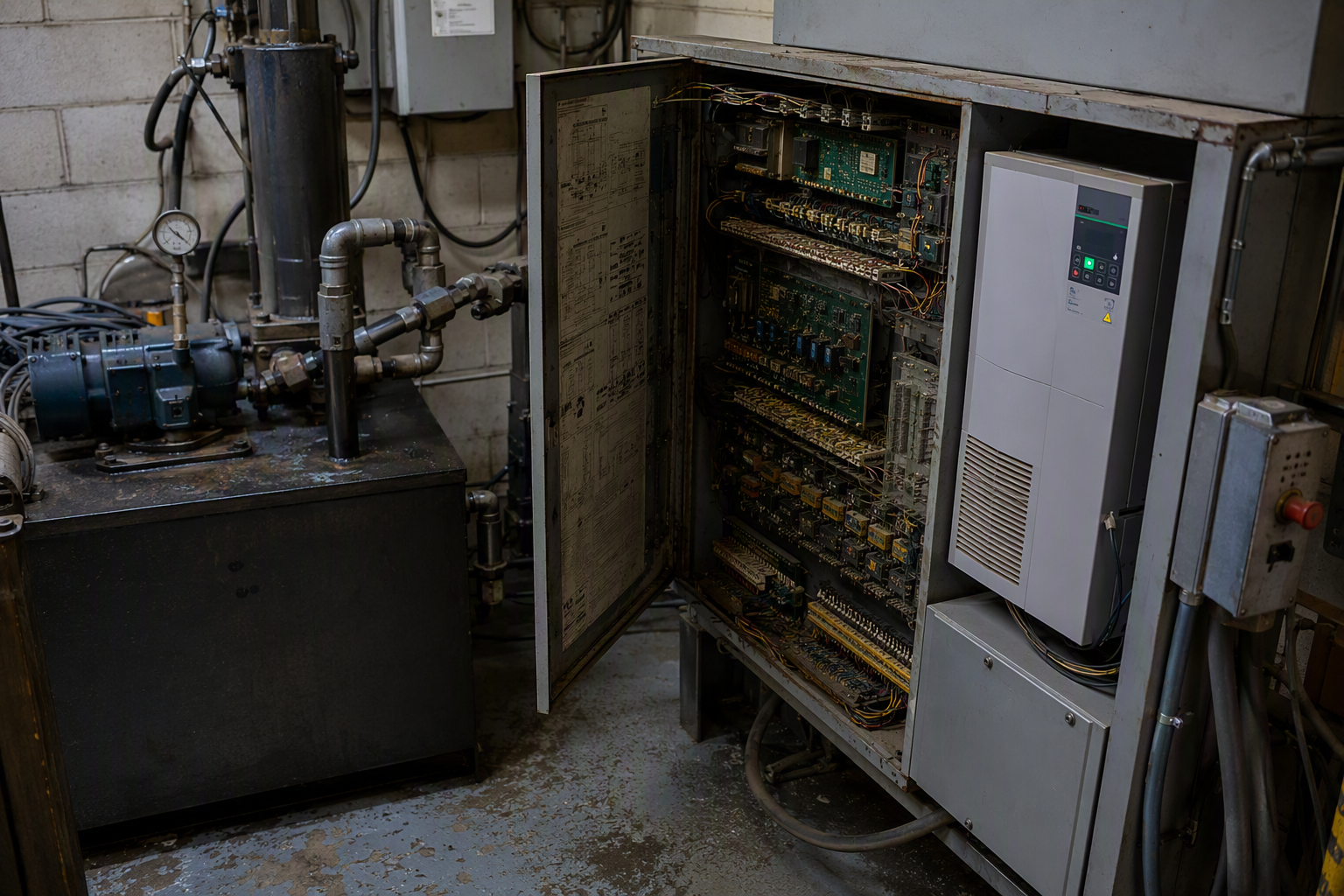
A commercial elevator typically has a functional lifespan of 20 to 25 years before major modernization is required, though the mechanical structure itself can remain physically sound for considerably longer with disciplined preventive maintenance.
The term “lifespan” in elevator service does not mean the unit will stop working on a set date. It means that after roughly two decades, the cumulative cost of replacing aging components — controllers, hydraulic systems, motor generators, door operators, and safety devices — begins to rival or exceed the cost of a planned modernization. Building owners who treat lifespan as a hard deadline often modernize too early; those who ignore it entirely tend to face escalating emergency repair costs and compliance gaps.
Component life expectancy varies significantly. Hydraulic cylinders and traction cables may reach end-of-life before the cab itself shows any wear. Electronic controllers installed in the early 2000s are frequently obsolete, with parts no longer manufactured. A holistic condition assessment — not calendar age alone — is the professional standard for evaluating remaining useful life.
What Factors Most Affect How Long a Commercial Elevator Lasts?
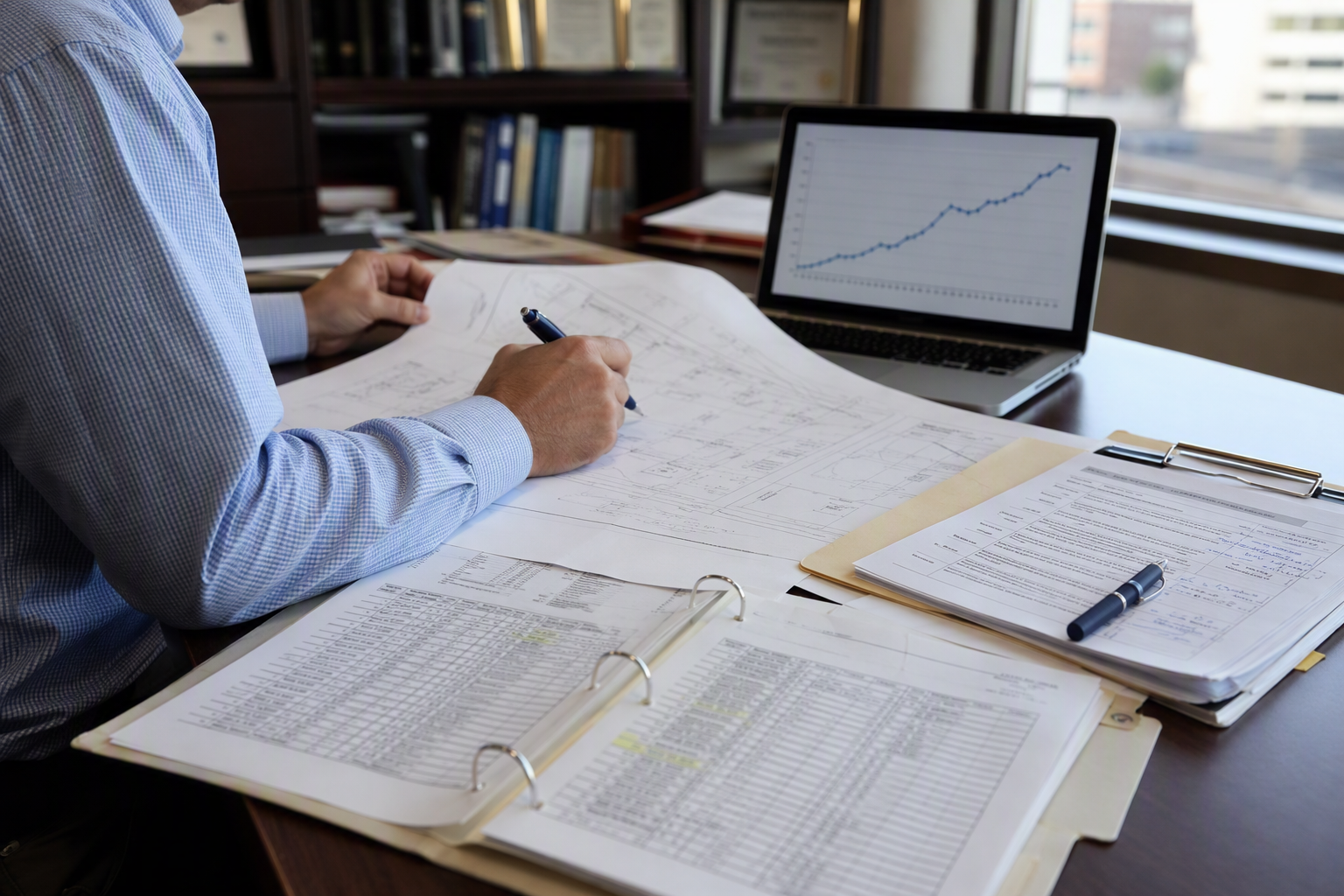
The single greatest determinant of commercial elevator longevity is the consistency and quality of preventive maintenance, followed by usage intensity, building environment, and original equipment quality.
High-traffic buildings such as hospitals, hotels, and multi-tenant office towers subject elevators to far greater cycle counts per year than low-rise suburban office buildings. A unit serving a busy urban medical campus in Washington DC or Baltimore may accumulate in a few years what a lightly used building elevator experiences over a decade. This cycle differential directly compresses the effective service life.
Environmental factors also play a measurable role. Buildings with high humidity, salt air proximity (a relevant concern for coastal Mid-Atlantic properties), or significant temperature fluctuation accelerate corrosion of mechanical components. Proper machine room climate control is not cosmetic — it directly extends the service life of electronic controllers and hydraulic fluid integrity.
Finally, the quality of the original installation and equipment manufacturer matters. Units from established manufacturers with strong parts supply chains have longer serviceable lives because replacement components remain available. Obsolete or discontinued platforms reach end-of-life functionally long before they fail mechanically.
What Are the Key Signs That a Commercial Elevator Needs Replacement or Modernization?
The clearest indicators that modernization is no longer optional include chronic door malfunctions, increasing callback frequency, difficulty sourcing replacement parts, failure to meet current safety code requirements, and ADA non-compliance.
Elevator professionals evaluate replacement readiness using a combination of observable symptoms and technical benchmarks. Common warning signs include:
- Repeated unscheduled service calls for the same recurring fault codes
- Door operator failures that account for a disproportionate share of downtime
- Obsolete relay-logic or electromechanical controllers that cannot be integrated with modern diagnostics
- Hydraulic systems showing cylinder seepage or deteriorated underground piping
- Cab interiors and accessibility fixtures that do not meet current ADA standards
- Safety devices (governors, buffers, safeties) that no longer meet the current edition of ASME A17.1
- Inability to pass state periodic inspections without conditional variances
- Parts lead times exceeding several weeks due to discontinued manufacturing
No single symptom mandates immediate replacement, but a pattern of multiple simultaneous issues strongly suggests that continued reactive maintenance is no longer economically or operationally sound.
How Does Elevator Maintenance Affect Longevity and Replacement Timing?
A rigorous, documented preventive maintenance program is the single most effective tool for extending elevator service life and deferring major capital expenditure.
Preventive maintenance encompasses lubrication of sheaves, guides, and rail brackets; adjustment of door operators and safety devices; inspection of hydraulic fluid condition and pressure; testing of electrical contacts and control sequences; and verification of code-required safety features. When these tasks are performed consistently by qualified technicians, wear is identified and corrected before it cascades into component failure.
Deferred maintenance, by contrast, creates a compounding problem. A worn guide shoe not replaced in time damages the guide rail. A deteriorating hydraulic seal ignored through a service cycle leads to fluid loss and cylinder damage. Each deferred task multiplies the cost of the next repair cycle. Buildings that lack a structured maintenance agreement frequently discover during a modernization assessment that years of deferred work have shortened the realistic remaining useful life by a significant margin.
Quality Elevator Company provides full preventive maintenance agreements for commercial buildings across Baltimore, Washington DC, Philadelphia, and Richmond, structured to meet the periodic inspection requirements of each jurisdiction’s authority having jurisdiction (AHJ).
What Are the ASME A17.1 and A17.3 Code Requirements That Affect Replacement Decisions?
ASME A17.1 governs the safety requirements for new elevator installations, while ASME A17.3 specifically addresses safety requirements for existing elevators — making A17.3 the primary code framework relevant to replacement and modernization decisions.
ASME A17.3, Safety Code for Existing Elevators and Escalators, establishes retroactive safety requirements that existing installations must meet within defined compliance timelines. These include requirements for car lighting, emergency communication, door reopening devices, and various mechanical safety features. When an existing elevator cannot economically be retrofitted to meet A17.3 requirements, full modernization becomes the practical path forward.
ASME A17.1, the Safety Code for Elevators and Escalators, applies to new installations and major alterations. Any modernization scope broad enough to constitute a “major alteration” under the code triggers A17.1 compliance for the affected systems. Building owners planning modernization should work with their elevator service provider to understand exactly which scope items constitute alterations under the applicable edition of the code adopted by their state or jurisdiction.
Maryland, Virginia, Pennsylvania, and the District of Columbia each adopt ASME codes by reference through their respective building and labor department regulations, and the adopted edition may trail the most current published edition. Facilities managers should confirm the currently adopted edition with their local AHJ before scoping a modernization project.
What ADA Requirements Apply to Commercial Elevator Replacement and Modernization?
The Americans with Disabilities Act requires that elevators serving public accommodations and commercial facilities meet accessibility standards, and a modernization project is a triggering event that requires bringing the unit into current ADA compliance.
ADA elevator requirements address cab dimensions, door clear width, floor leveling accuracy, control panel height and reach ranges, Braille and raised character signage, audible signals, and emergency communication systems. An older elevator that has operated under a grandfather provision may lose that status when it undergoes a major alteration, requiring full ADA compliance as a condition of the modernization permit.
This is a practical planning consideration for property owners in Baltimore, DC, Philadelphia, and Richmond: the ADA compliance cost is not optional and should be budgeted as part of any modernization project scope, not treated as an add-on.
How Do State Inspection Requirements in Maryland, Virginia, Pennsylvania, and DC Affect Replacement Planning?
Each jurisdiction in Quality Elevator Company’s service area maintains a mandatory periodic inspection program administered by a designated state or district agency, and consistent inspection compliance is both a legal requirement and a practical early-warning system for replacement planning.
Maryland’s elevator inspection program is administered through the Division of Labor and Industry. Virginia’s is administered through the Department of Labor and Industry. Pennsylvania’s elevator inspection program falls under the Department of Labor & Industry, Bureau of Occupational and Industrial Safety. The District of Columbia’s program is administered through the Department of Consumer and Regulatory Affairs (DCRA). Each AHJ sets inspection intervals, defines the scope of periodic safety tests, and issues certificates of operation.
When an inspection reveals deficiencies that cannot be corrected through routine repair — such as safety components that no longer meet the adopted code edition — the AHJ may issue an order to correct or, in serious cases, an order to cease operation. Proactive planning with a qualified elevator service company, rather than reactive response to inspection orders, is the operationally and financially sound approach.
Quality Elevator Company’s service teams are familiar with the specific inspection protocols and documentation requirements of AHJs across Maryland, Virginia, Pennsylvania, and the District of Columbia.
What Is the Difference Between Elevator Modernization and Full Replacement?
Elevator modernization involves replacing major systems — controller, drive, door operator, fixtures, and cab interior — while retaining the existing hoistway structure and often the machine room equipment, whereas full replacement removes and rebuilds the entire installation from the structural level.
Full replacement is relatively uncommon in existing commercial buildings because the hoistway and pit structure typically remain structurally sound long after the mechanical and electrical systems reach end-of-life. Most commercial building owners elect modernization, which delivers nearly all the performance, safety, and reliability benefits of a new installation at a significantly lower cost and with less construction disruption.
Full replacement becomes necessary when the hoistway itself is structurally compromised, when a building is being completely gutted and reconfigured, or when the existing installation’s layout or capacity is fundamentally incompatible with the building’s current occupancy requirements. These scenarios are the exception, not the rule, in the Mid-Atlantic commercial market.
What Does a Commercial Elevator Modernization Project Involve?
A commercial elevator modernization project typically follows a defined sequence from assessment through commissioning, with each phase requiring coordination between the elevator contractor, building owner, local AHJ, and general contractor if structural work is involved.
- Condition Assessment: A qualified elevator technician conducts a comprehensive audit of all mechanical, electrical, and structural components, documenting deficiencies and remaining useful life estimates for each system.
- Scope Definition: Based on the assessment, the modernization scope is defined — identifying which systems will be replaced, which will be retained, and what code compliance upgrades are required.
- Permitting: The elevator contractor submits plans and specifications to the local AHJ for review and permit issuance. Permitting timelines vary by jurisdiction but should be factored into project scheduling.
- Equipment Procurement: Major components — controller, drive unit, door operators, fixtures — are ordered. Lead times for elevator equipment can be substantial and should be confirmed early in planning.
- Installation: The existing systems are removed and new components installed. The hoistway and pit may require modifications to accommodate new equipment configurations.
- Wiring and Integration: New electrical systems are wired, control sequences are programmed, and the unit is integrated with building fire alarm, access control, and emergency communication systems.
- Testing and Inspection: The AHJ conducts a final acceptance inspection and witnessing of required safety tests before the certificate of operation is issued.
- Commissioning and Training: The elevator is commissioned for normal service, and building staff are briefed on any new operational features or emergency procedures.
How Long Does a Commercial Elevator Modernization Project Take?
A typical commercial elevator modernization project takes between four and twelve weeks from start of installation to final inspection, depending on the scope of work, equipment lead times, and the AHJ’s inspection scheduling calendar.
Straightforward modernizations — controller replacement, new fixtures, door operator upgrade — on a single elevator in a cooperative building may be completed in a shorter window. Complex projects involving drive system replacement, pit or overhead modifications, or multi-unit buildings with limited outage windows can extend significantly beyond that range.
Equipment procurement is frequently the longest single variable. Elevator controllers and drive systems are not off-the-shelf items, and supply chain conditions in 2026 mean that early procurement planning is more important than ever. Building owners who begin the planning process twelve to eighteen months before the anticipated modernization window are best positioned to control project timelines.
How Much Does Commercial Elevator Modernization Cost Compared to Continued Maintenance?
The financial case for modernization versus continued maintenance depends on the trajectory of annual maintenance and repair expenditure relative to the all-in cost of modernization amortized over the expected life of the modernized unit.
Rather than stating specific dollar figures — which vary substantially by market, scope, and equipment selection — facilities professionals typically use a repair-to-replace ratio as the decision framework. When annual unplanned repair costs approach or exceed a meaningful fraction of the estimated modernization cost, the economic argument for modernization strengthens considerably. Additionally, modernized elevators typically carry lower annual maintenance costs because new components require less corrective attention during their early service years.
Energy efficiency is a secondary but meaningful financial consideration. Modern variable-frequency drive (VFD) systems consume significantly less electrical energy than older motor-generator or hydraulic systems. Over a ten-to-fifteen-year horizon, energy savings contribute materially to the return on modernization investment for high-rise or high-usage commercial buildings.
What Is a Repair-to-Replace Threshold and How Is It Calculated?
A repair-to-replace threshold is a decision rule that compares the cumulative cost of keeping aging equipment in service against the amortized cost of replacement, and it is the most reliable framework for making an objective modernization decision.
The calculation requires three inputs: the estimated remaining useful life of the existing unit if maintained as-is, the projected annual maintenance and repair cost over that remaining life, and the total modernization cost amortized over the expected life of the modernized installation. When the maintained cost path exceeds the modernized cost path on a net present value basis, modernization is financially justified regardless of whether the unit is still operational.
A complicating factor is that aging elevators are not linear in their repair cost trajectory. Costs tend to be relatively stable for years, then spike sharply when a major component — a traction motor, hydraulic cylinder, or controller — reaches end-of-life. Building owners who evaluate the average annual cost without accounting for these spike events often underestimate the true cost of deferral.
What Benchmarks Should Building Owners Use to Evaluate Elevator Age and Condition?
The following table provides general benchmark guidance for evaluating commercial elevator condition relative to age. These ranges reflect industry-recognized patterns and should be validated through a professional condition assessment for any specific installation.
| Elevator Age | Typical Condition Status | Recommended Action | Code Considerations |
|---|---|---|---|
| 0–10 Years | New / Early Service | Maintain per manufacturer schedule; document service records | Verify ADA compliance at installation |
| 10–15 Years | Mid-Life | Begin condition monitoring; budget for component replacements | Confirm A17.3 retroactive requirements are met |
| 15–20 Years | Maturing / Watch | Commission formal modernization assessment; develop capital plan | Confirm adopted ASME edition with local AHJ |
| 20–25 Years | End-of-Life Range | Modernization planning should be active; defer only with documented rationale | Parts obsolescence risk; inspection compliance risk increases |
| 25+ Years | Extended Life / High Risk | Prioritize modernization; continued deferral carries elevated safety and compliance risk | High probability of A17.3 deficiencies; ADA likely non-compliant |
How Should Building Owners Plan Elevator Downtime During Modernization?
Downtime planning is one of the most operationally sensitive aspects of a commercial elevator modernization project, and it requires early coordination between the building owner, tenants, the elevator contractor, and in multi-unit buildings, a clear service sequencing plan.
For single-elevator buildings — common in smaller commercial properties in Baltimore, Richmond, and suburban Philadelphia — the absence of an alternative means of vertical access during modernization is a material concern. Buildings subject to ADA obligations must ensure that accessible routes remain available or provide equivalent facilitation during the outage period.
Multi-elevator buildings have more flexibility, as modernization can typically be sequenced one unit at a time to maintain partial elevator service. However, this sequential approach extends the overall project timeline and requires careful scheduling to avoid periods of reduced capacity that conflict with peak occupancy events.
Building owners are advised to notify tenants and occupants well in advance of the planned outage, post clear wayfinding to stairs and accessible alternatives, and confirm that emergency evacuation plans are updated to reflect the temporary change in elevator availability.
What OSHA Requirements Apply to Elevator Modernization Work?
OSHA standards govern the safety of workers performing elevator installation and modernization, including requirements for lockout/tagout procedures, fall protection in hoistways, and confined space entry protocols for pit work.
Elevator modernization hoistways are classified as permit-required confined spaces under OSHA standards, meaning that entry requires a documented permit program, atmospheric testing, and trained attendants. Building owners and facilities managers are not responsible for executing these procedures — that is the elevator contractor’s obligation — but they are responsible for ensuring that their selected contractor maintains and demonstrates OSHA compliance as a condition of the contract.
When evaluating elevator service providers, building owners in Washington DC, Maryland, Virginia, and Pennsylvania should confirm that the contractor’s safety program addresses the full scope of OSHA requirements applicable to elevator work in the relevant jurisdiction.
How Do I Evaluate and Select a Qualified Elevator Modernization Contractor?
Selecting a qualified elevator contractor for modernization requires evaluating technical credentials, familiarity with local AHJ requirements, equipment manufacturer relationships, service capacity, and the ability to provide a detailed condition assessment before pricing.
Key evaluation criteria include:
- State licensing compliance for elevator contractors in Maryland, Virginia, Pennsylvania, and DC
- Demonstrated familiarity with the specific AHJ inspection process in the relevant jurisdiction
- Ability to provide manufacturer-certified parts and components
- A structured preventive maintenance program available for post-modernization service
- References from comparable commercial building modernization projects in the service area
- A written, itemized scope of work that clearly distinguishes which systems are replaced versus retained
- Documented OSHA safety program
Quality Elevator Company serves commercial building owners across Baltimore, Washington DC, Philadelphia, and Richmond with modernization assessments and project execution, providing the local market knowledge and regulatory familiarity that national chains frequently cannot match.
What Questions Should I Ask Before Signing an Elevator Modernization Contract?
Before committing to a modernization contract, building owners should ask a defined set of questions to ensure the scope, timeline, warranty terms, and post-project service arrangement are fully understood and documented.
- What specific systems are included in the modernization scope, and what is being retained?
- Which edition of ASME A17.1 and A17.3 will the modernized unit comply with?
- What ADA compliance elements are included, and are there any exceptions or variances being sought?
- What is the equipment procurement lead time, and how does that affect the project schedule?
- What is the estimated downtime for this unit, and how will partial-service sequencing be managed?
- What warranty is provided on parts and labor, and what are the exclusions?
- Who handles the permit application and AHJ inspection coordination?
- What post-modernization maintenance agreement is available, and what does it include?
- What is the contractor’s plan if unexpected hoistway or pit conditions are discovered during installation?
How Does Elevator Modernization Affect Building Value and Tenant Retention?
A modernized elevator system is a tangible building improvement that contributes to tenant satisfaction, lease renewal rates, and property valuation, particularly in competitive commercial real estate markets like Washington DC and Philadelphia.
Tenants in Class A and Class B commercial office buildings expect reliable, quiet, and accessible vertical transportation. Frequent elevator outages, slow response times, rough cab rides, and dated cab aesthetics are documented tenant complaints that influence lease decisions. Property owners who proactively modernize aging elevator systems signal investment in building quality — a message that resonates with both existing tenants and prospective occupants during marketing.
From a valuation perspective, a documented elevator modernization with current code compliance reduces the capital reserve deduction that commercial appraisers and lenders apply to aging mechanical systems. For properties approaching a refinancing or sale event, a recent modernization can translate directly into improved lending terms or purchase price negotiation.
What Should Be Included in an Elevator Condition Assessment Report?
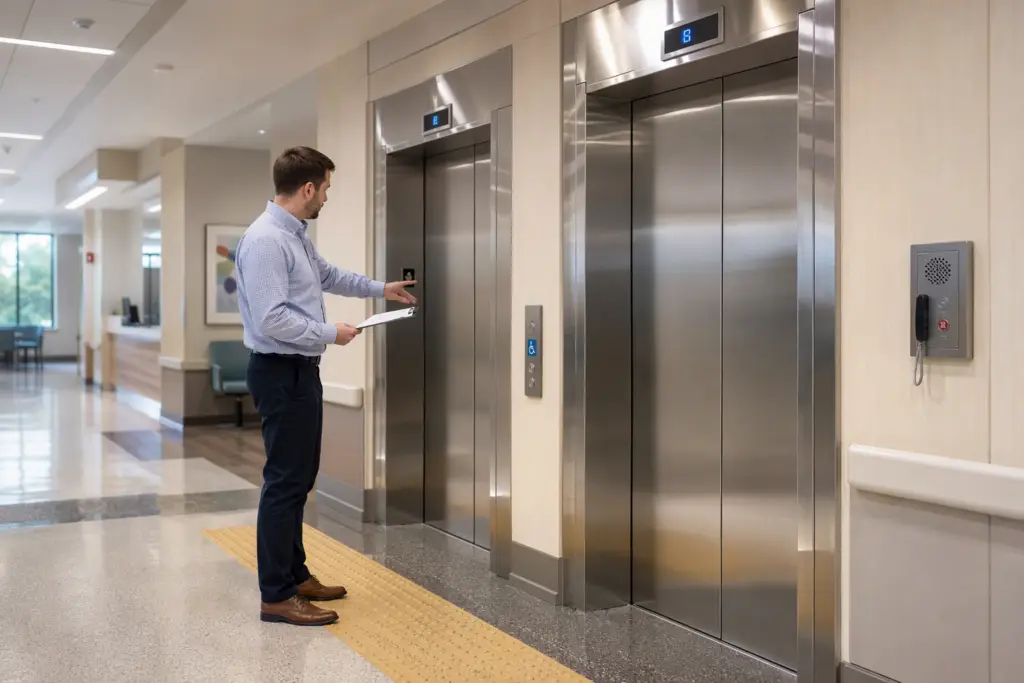
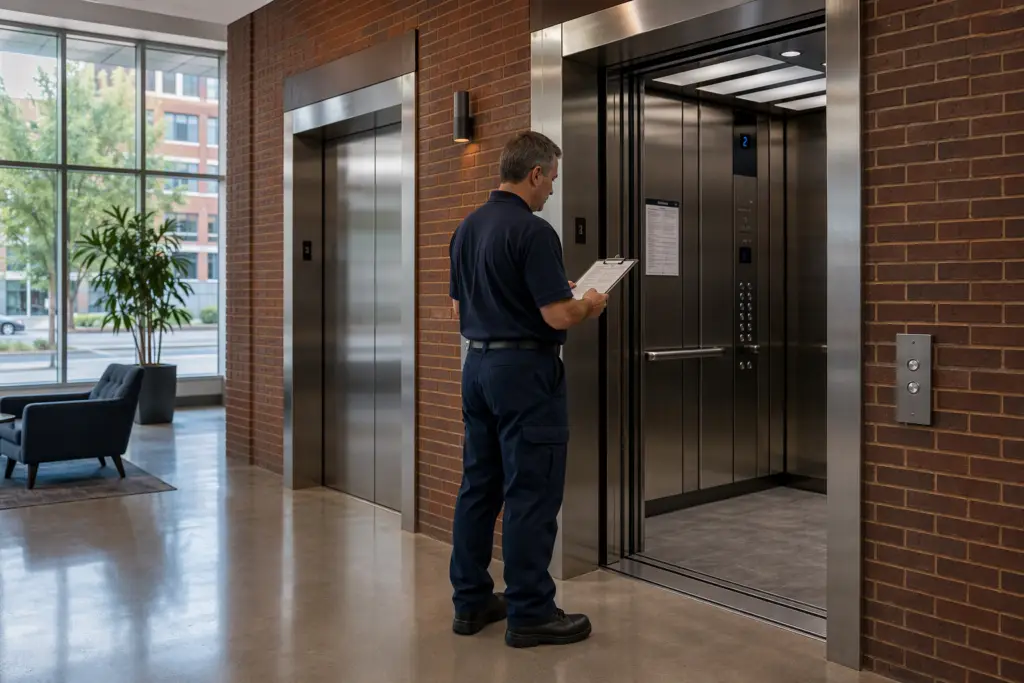
A professional elevator condition assessment report should document the current state of all major systems, identify code deficiencies, estimate remaining useful life for each component, and provide a prioritized recommendation for maintenance, component replacement, or full modernization.
The report should address the following systems at minimum:
- Controller and electrical system (age, manufacturer, parts availability)
- Drive system (motor, traction machine or hydraulic pump and cylinder)
- Door operator and door system components
- Guide rails, guide shoes or rollers
- Safety devices (governor, safeties, buffers)
- Cab interior condition and ADA compliance status
- Pit condition (lighting, drainage, stop switch, ladder)
- Machine room condition (temperature, lighting, housekeeping)
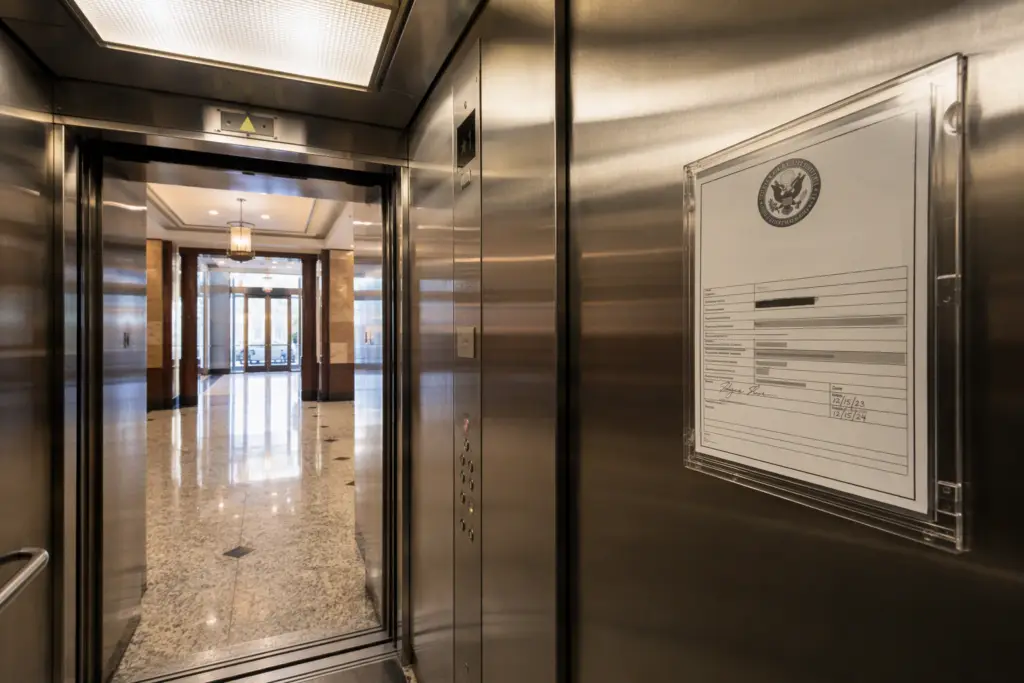
- Current inspection certificate status and any outstanding AHJ orders
A condition assessment is the essential first step for any building owner who is uncertain whether their elevator is approaching end-of-life or has significant remaining service capacity.
How Often Should a Commercial Elevator Be Professionally Inspected?
Commercial elevators in Maryland, Virginia, Pennsylvania, and the District of Columbia are subject to mandatory periodic inspections by or on behalf of the relevant state or district AHJ, with frequency and scope defined by each jurisdiction’s adopted regulations.
While inspection intervals vary by jurisdiction and elevator type, annual inspections are a standard baseline in the Mid-Atlantic region for most commercial elevator classifications. In addition to mandatory government inspections, building owners and their maintenance contractors should conduct regular periodic examinations as part of the maintenance agreement — these internal checks identify developing issues between annual inspection cycles and help prevent the type of deferred maintenance that shortens equipment life.
Failing a mandatory inspection is not merely an administrative problem. An elevator operating without a valid certificate of operation creates liability exposure for the building owner and may trigger an immediate shutdown order from the AHJ. Maintaining a current, violation-free inspection record is both a compliance obligation and a risk management imperative.
Where Can I Get a Professional Elevator Assessment in Baltimore, Washington DC, Philadelphia, or Richmond?
Building owners and property managers in the Mid-Atlantic region seeking a professional elevator condition assessment should engage a licensed elevator service company with demonstrated experience in the specific jurisdiction and familiarity with the applicable AHJ requirements.
Quality Elevator Company provides elevator condition assessments, modernization planning, preventive maintenance agreements, and code compliance consulting for commercial buildings throughout Baltimore MD, Washington DC, Philadelphia PA, and Richmond VA. Whether a building owner is planning a near-term modernization project, trying to understand the remaining service life of aging equipment, or responding to an AHJ inspection deficiency notice, an objective professional assessment is the correct starting point.
Need elevator service you can rely on? Quality Elevator Company is ready to help.