Elevator Maintenance and Compliance for Apartment and Multifamily Buildings
Apartment and multifamily building owners face a distinct set of elevator obligations that differ from commercial office buildings. Residents depend on elevators around the clock, accessibility requirements are strictly enforced, and local Authorities Having Jurisdiction (AHJs) in Maryland, Washington DC, Pennsylvania, and Virginia each have their own inspection schedules and certificate-posting rules. This guide walks property managers and building owners through every layer of compliance—so elevators stay safe, legal, and operational.
—
What Federal Codes Govern Elevator Compliance in Multifamily Buildings?
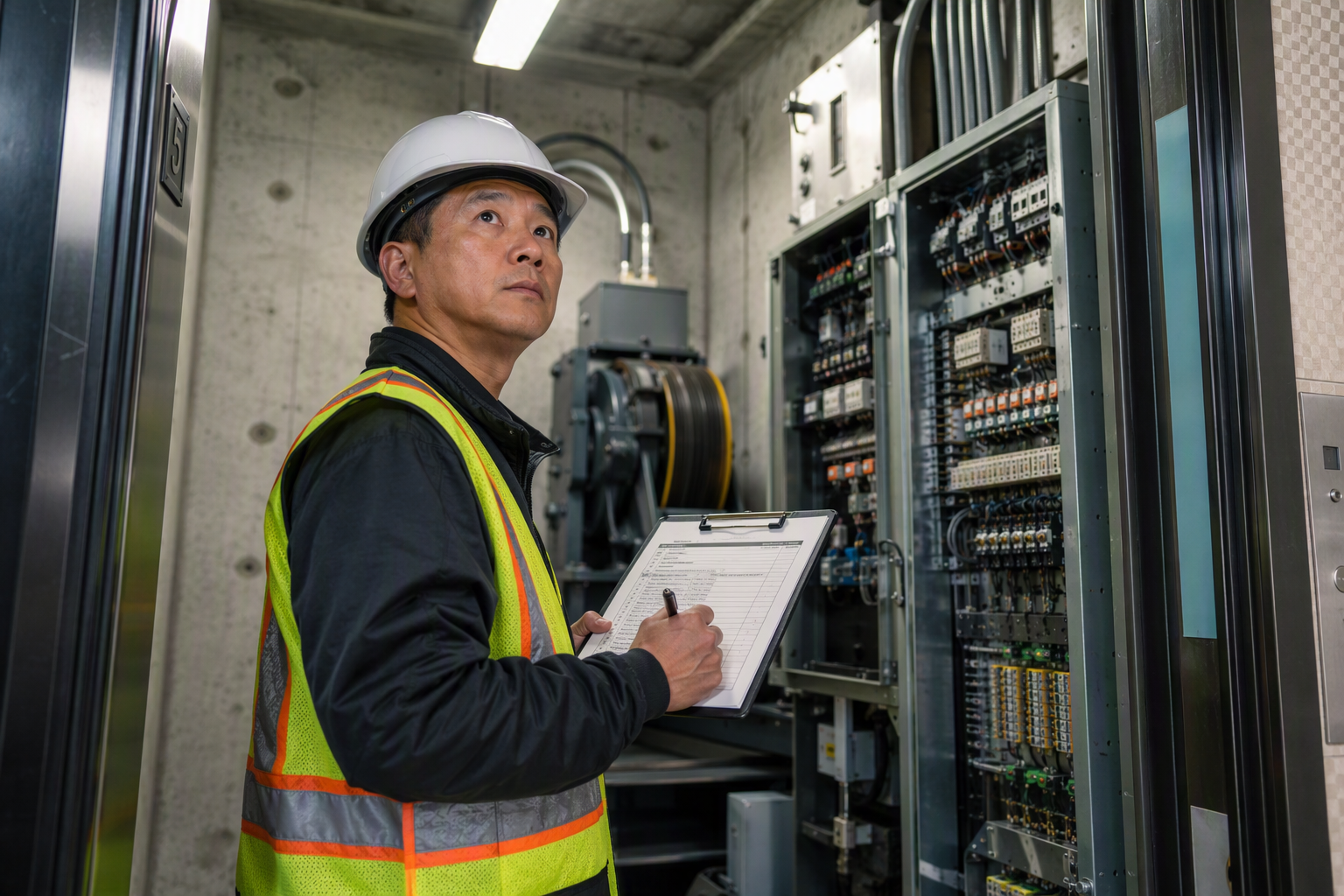
Two federal frameworks set the baseline for elevator safety and accessibility in residential buildings across Maryland, Washington DC, Pennsylvania, and Virginia.
- ASME A17.1 Safety Code for Elevators and Escalators — the primary safety standard governing design, installation, inspection, testing, and maintenance of elevators. New installations must meet the current edition; existing equipment is evaluated under ASME A17.3, the Safety Code for Existing Elevators and Escalators, which establishes retroactive safety requirements.
- Americans with Disabilities Act (ADA) — requires that elevators in multifamily buildings covered under the Act meet accessibility specifications, including door clearance, call button height, cab dimensions, and Braille signage.
- OSHA — governs the safety of elevator mechanics and technicians performing maintenance work, including lockout/tagout procedures and pit entry requirements.
State and local AHJs in each of Quality Elevator Company’s service markets adopt and enforce these standards, sometimes with additional local amendments.
—
What Are the Inspection Requirements for Apartment Elevators in Maryland, DC, Pennsylvania, and Virginia?
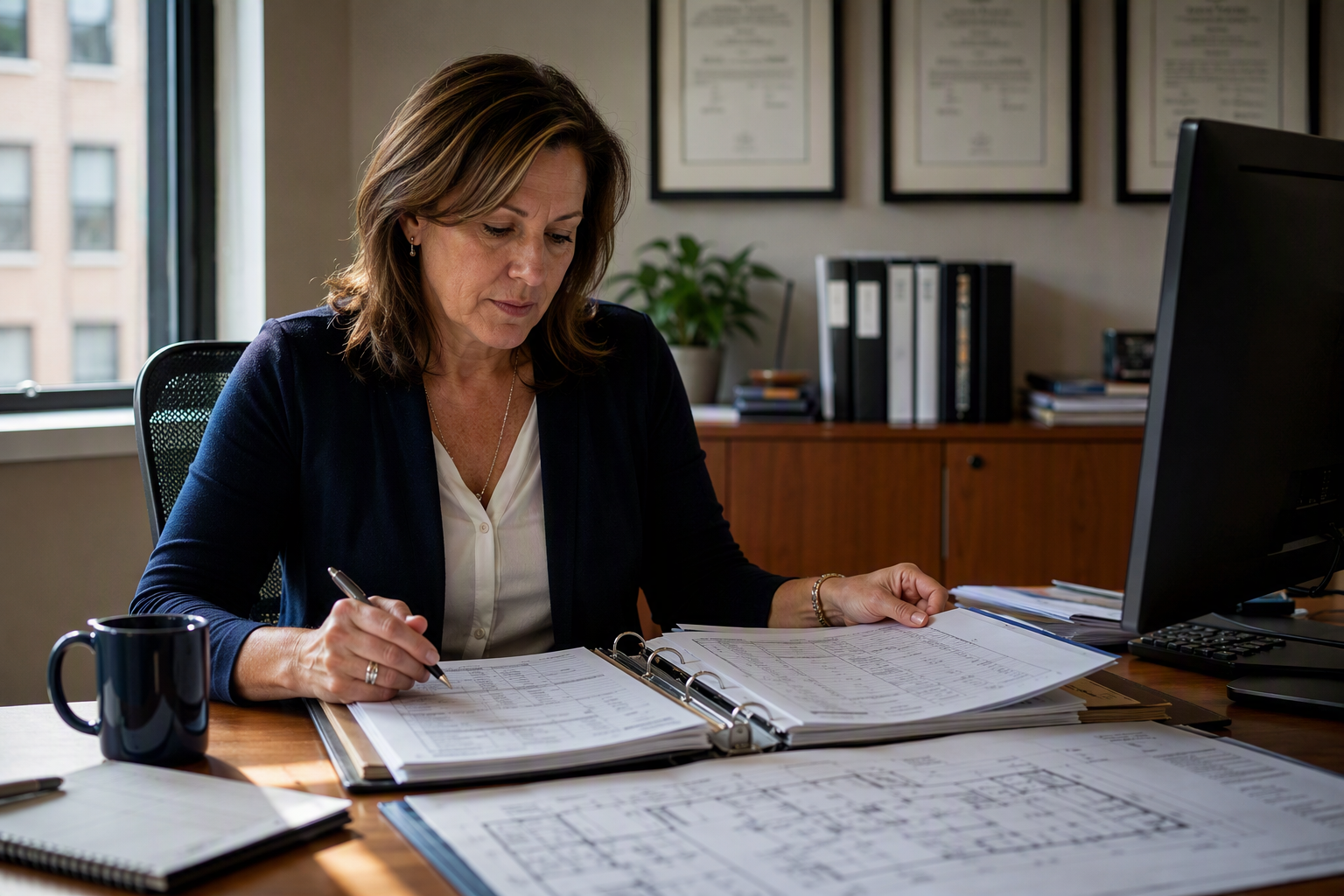
Each jurisdiction enforces its own inspection interval and certificate requirements, all built on the ASME A17.1/A17.3 framework:
- Maryland — The Maryland Division of Labor and Industry regulates elevator inspections statewide. Buildings must maintain a current Certificate of Operation, which is issued after a passing periodic inspection.
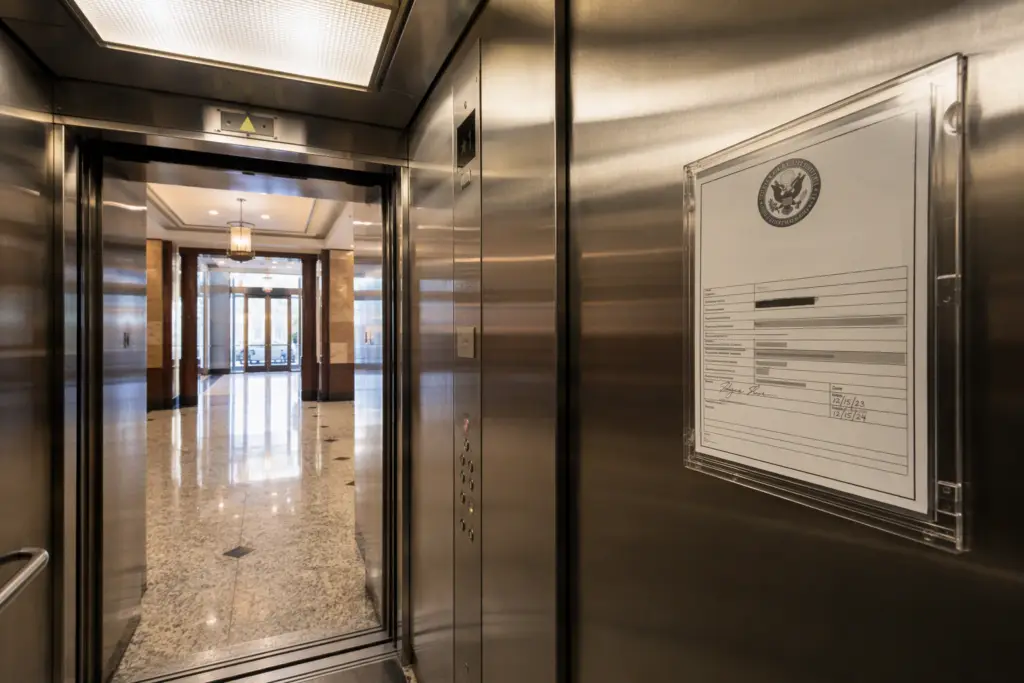
- Washington DC — The DC Department of Consumer and Regulatory Affairs (DCRA) oversees elevator licensing and inspections. Certificates must be posted in the elevator cab at all times.
- Pennsylvania — The Pennsylvania Department of Labor & Industry, Bureau of Occupational and Industrial Safety, administers elevator inspections. Third-party inspectors may be used in certain circumstances under state rules.
- Virginia — The Virginia Department of Labor and Industry (DOLI) enforces elevator safety through its OSHA-approved state plan and elevator safety regulations.
Property managers should contact their local AHJ directly to confirm current inspection intervals, as these can change with code adoption cycles. Quality Elevator Company helps clients track inspection due dates and coordinates with the appropriate AHJ on their behalf.
—
What Does a Preventive Maintenance Program for a Multifamily Building Include?
A structured preventive maintenance (PM) program is the foundation of compliance and reliability. For apartment elevators, a comprehensive PM program typically addresses the following areas:
- Lubrication and adjustment of mechanical components (door operators, hoist cables, sheaves, and guide rails)
- Inspection and testing of safety devices, including safeties, buffers, and overspeed governors
- Controller and electrical system checks
- Door timing, reopening device testing, and door force compliance
- Pit inspection for water intrusion, lighting, and stop switch function
- Cab interior and emergency lighting verification
- Emergency communication system testing (required under ASME A17.1)
- Documentation of all work performed and findings
Maintenance records are not optional — inspectors and AHJs regularly request written logs during compliance audits. Quality Elevator Company provides clients with detailed service reports after every maintenance visit, creating a defensible paper trail for inspections and insurance reviews.
—
How Often Should Elevator Equipment Be Tested in a Residential Building?
Under the ASME A17.1 Safety Code for Elevators and Escalators, different tests are required on different cycles. Acceptance tests are required after new installation or major alteration. Periodic tests — such as governor and safety tests, buffer tests, and pressure relief valve tests — are required on intervals specified in the code and enforced by local AHJs. Property managers should never rely on a maintenance contractor alone to track these due dates; a compliance calendar reviewed at least quarterly is best practice.
—
What ADA Requirements Apply to Elevators in Apartment Buildings?
Under the ADA and the Fair Housing Act, elevators in covered multifamily buildings must meet accessibility standards that include:
- Minimum cab interior dimensions that allow wheelchair maneuvering
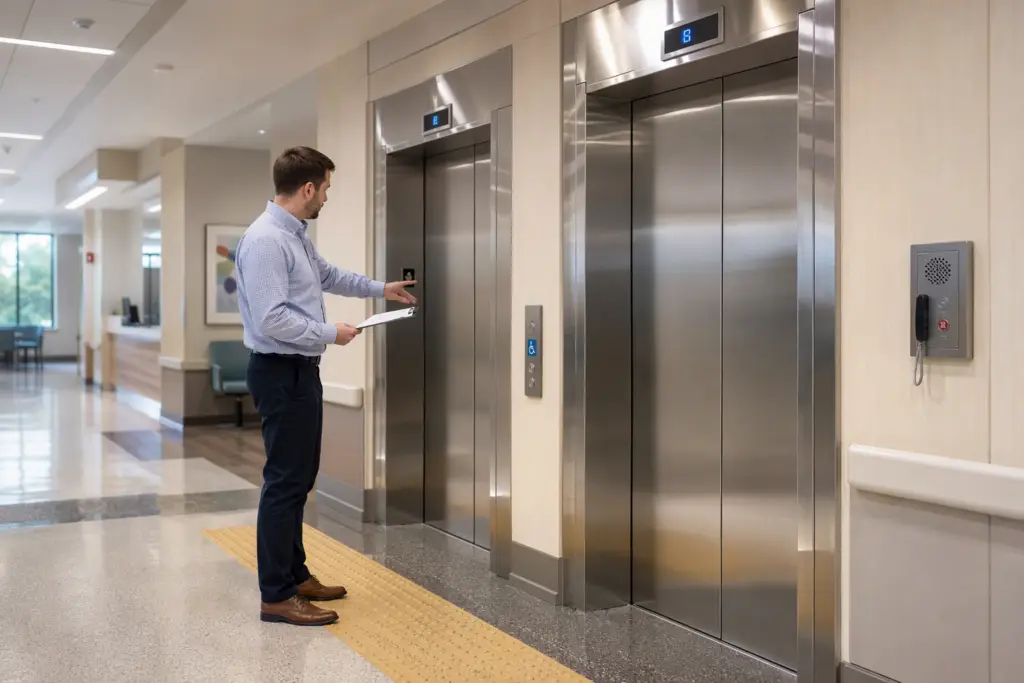
- Call buttons positioned at accessible heights on both the hall station and inside the cab
- Visual and audible floor indicators
- Braille and raised character floor designations
- Door reopening devices that respond to obstruction without requiring contact
- Adequate illumination levels inside the cab
Buildings constructed before ADA compliance dates may be subject to barrier removal obligations. Quality Elevator Company performs accessibility audits to identify gaps and prioritize upgrades that bring equipment into conformance.
—
What Should a Property Manager Do Immediately After an Elevator Failure or Entrapment?
- Contact emergency services if passengers are trapped and cannot safely self-evacuate.
- Take the elevator out of service immediately — do not allow continued use of a failed unit.
- Post clear signage at all landings notifying residents the elevator is out of service.
- Contact your licensed elevator service provider to dispatch a qualified mechanic for evaluation.
- Document the time, nature of the failure, and any reports from building occupants.
- Notify your building insurance carrier if the incident involves injury or property damage.
- Report the incident to your local AHJ if required under state or local rules — entrapments and serious malfunctions may trigger mandatory reporting obligations in Maryland, DC, Pennsylvania, or Virginia.
- Do not return the elevator to service until a qualified technician has cleared it and, where required, an inspector has verified the repair.
—
How Do You Choose the Right Elevator Service Provider for a Multifamily Building?
Not all service providers are equal. When evaluating elevator maintenance contractors for an apartment property, property managers should look for:
- Licensing and registration with the applicable AHJ in Maryland, DC, Pennsylvania, or Virginia
- Demonstrated familiarity with ASME A17.1 and A17.3 requirements
- Clear, written maintenance agreements that specify scope, frequency, and documentation practices
- Transparent service reporting after every visit
- Ability to support compliance deadlines and coordinate with AHJ inspectors
- References from other multifamily property owners in the region
Quality Elevator Company serves multifamily properties throughout Baltimore MD, Washington DC, Philadelphia PA, and Richmond VA, with a focus on code compliance and resident safety.
—
What Records Must a Multifamily Building Owner Maintain for Elevator Compliance?
Record-keeping is a compliance requirement, not merely good practice. Property owners in Maryland, DC, Pennsylvania, and Virginia should maintain:
- Current Certificate of Operation (posted in the cab per local AHJ rules)
- Inspection reports from the most recent periodic and acceptance tests
- Maintenance logs showing dates, scope of work, and technician information for every service visit
- Records of any repairs, parts replacements, or alterations
- Emergency communication test logs
- Alteration permits when applicable
Records should be retained for the period required by the applicable AHJ — and property managers should have them readily accessible for inspector review during unannounced audits.
—
What Happens If an Apartment Building Elevator Fails a Compliance Inspection?
A failed inspection can result in the AHJ issuing an order to cease operation — meaning the elevator must be taken out of service until deficiencies are corrected and re-inspected. In some jurisdictions, fines and penalties may also apply. Property owners should treat a failed inspection as an urgent business and safety matter. The process to return an elevator to service after a failed inspection typically involves:
- Receiving a written violation or deficiency notice from the AHJ or inspector.
- Engaging a licensed elevator contractor to remediate each cited deficiency.
- Obtaining any required permits for repair work.
- Scheduling a re-inspection with the AHJ after repairs are complete.
- Receiving written clearance and a renewed Certificate of Operation before returning the elevator to service.
—
Questions Your Inspector Will Ask
During a periodic elevator inspection at an apartment or multifamily building, inspectors routinely assess compliance across safety, documentation, and accessibility. Be prepared to answer the following:
- Is the current Certificate of Operation posted in the elevator cab?
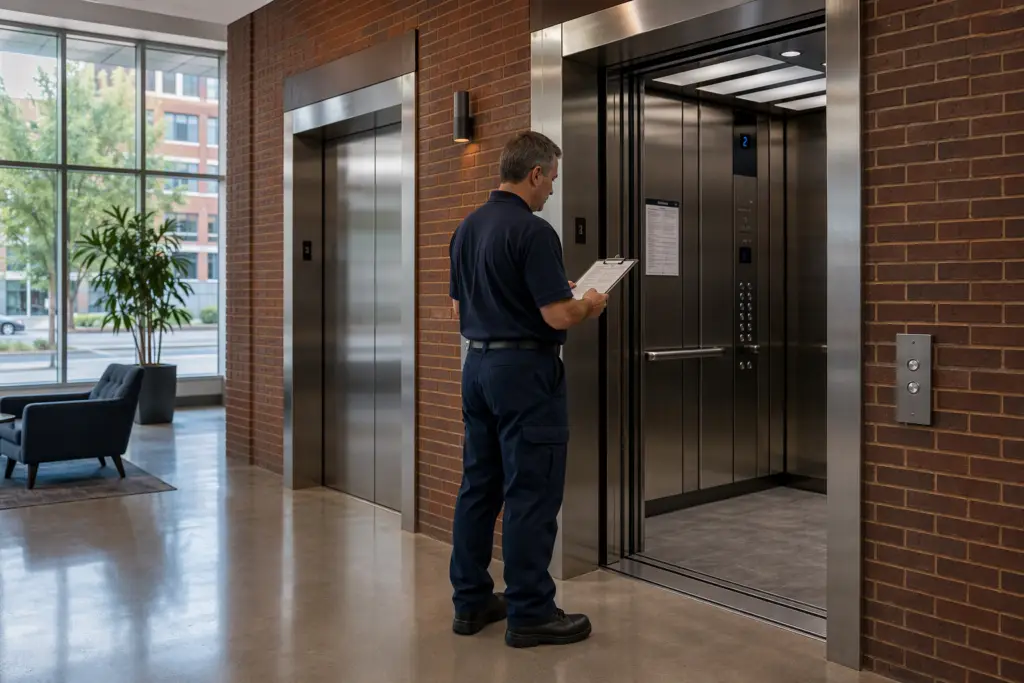
- When was the last full periodic inspection and test performed, and who conducted it?
- Can you produce maintenance logs showing regular service visits?
- Has the emergency communication system been tested within the required interval?
- Have any alterations or major repairs been made since the last inspection — and were permits obtained?
- Are all required safety devices — including pit stop switches, emergency lighting, and the governor — functional and within test date?
- Are hall and cab call buttons, floor indicators, and Braille signage present and compliant with accessibility requirements?
- Is the pit dry, clean, and properly illuminated?
- Has the elevator been taken out of service at any point since the last inspection, and what was the reason?
Property managers who work with Quality Elevator Company receive inspection-readiness support, so that answers to these questions are documented and verifiable before an inspector arrives.
—
How Much Does Elevator Compliance and Maintenance Cost for a Multifamily Building?
Costs vary significantly based on the number of elevators, equipment age, local inspection fees charged by the AHJ, and the scope of any required repairs or upgrades. Rather than quoting a figure that may not reflect actual conditions, property managers are best served by requesting a site assessment that accounts for the specific equipment, building configuration, and local AHJ requirements in Baltimore, Washington DC, Philadelphia, or Richmond. Quality Elevator Company provides free elevator assessments to help property owners understand their current compliance status and projected maintenance needs before committing to a service agreement.
—
What Is the Difference Between Elevator Maintenance and Elevator Modernization for Older Apartment Buildings?
Maintenance keeps existing equipment operating safely within its current design parameters. Modernization replaces major systems — such as the controller, drive system, or door operator — with updated technology. For older multifamily buildings, modernization may become necessary when:
- Parts for legacy equipment are no longer available
- ASME A17.3 retroactive safety requirements cannot be met through maintenance alone
- Reliability has deteriorated to the point where ongoing repair costs exceed the value of modernization
- ADA accessibility upgrades require cab or door system replacement
A qualified elevator contractor can help property owners evaluate when modernization makes more practical and financial sense than continued maintenance of aging equipment.
—
Get Expert Elevator Compliance Support for Your Multifamily Property
Elevator compliance for apartment and multifamily buildings involves layered federal, state, and local requirements that change with each code cycle. Staying current protects residents, limits liability, and keeps Certificates of Operation valid. Contact Quality Elevator Company for a free elevator assessment and find out exactly where your property stands — before an inspector does.
Call Quality Elevator Company today: 301-779-9116
Serving multifamily property owners in Baltimore MD, Washington DC, Philadelphia PA, and Richmond VA.
Need elevator service you can rely on? Quality Elevator Company is ready to help.