Hotel and Hospitality Elevator Compliance, Maintenance, and Guest Safety: A Complete Decision Guide for Maryland, DC, Virginia, and Pennsylvania
Quick Answer: Managing elevator maintenance and compliance for a hotel or hospitality property requires a structured program that combines routine preventive maintenance, periodic third-party inspections mandated by state and local authorities, adherence to federal accessibility standards, and documented safety protocols — ideally coordinated through a single certified independent elevator service provider familiar with the specific Authority Having Jurisdiction (AHJ) requirements in Maryland, DC, Virginia, and Pennsylvania.
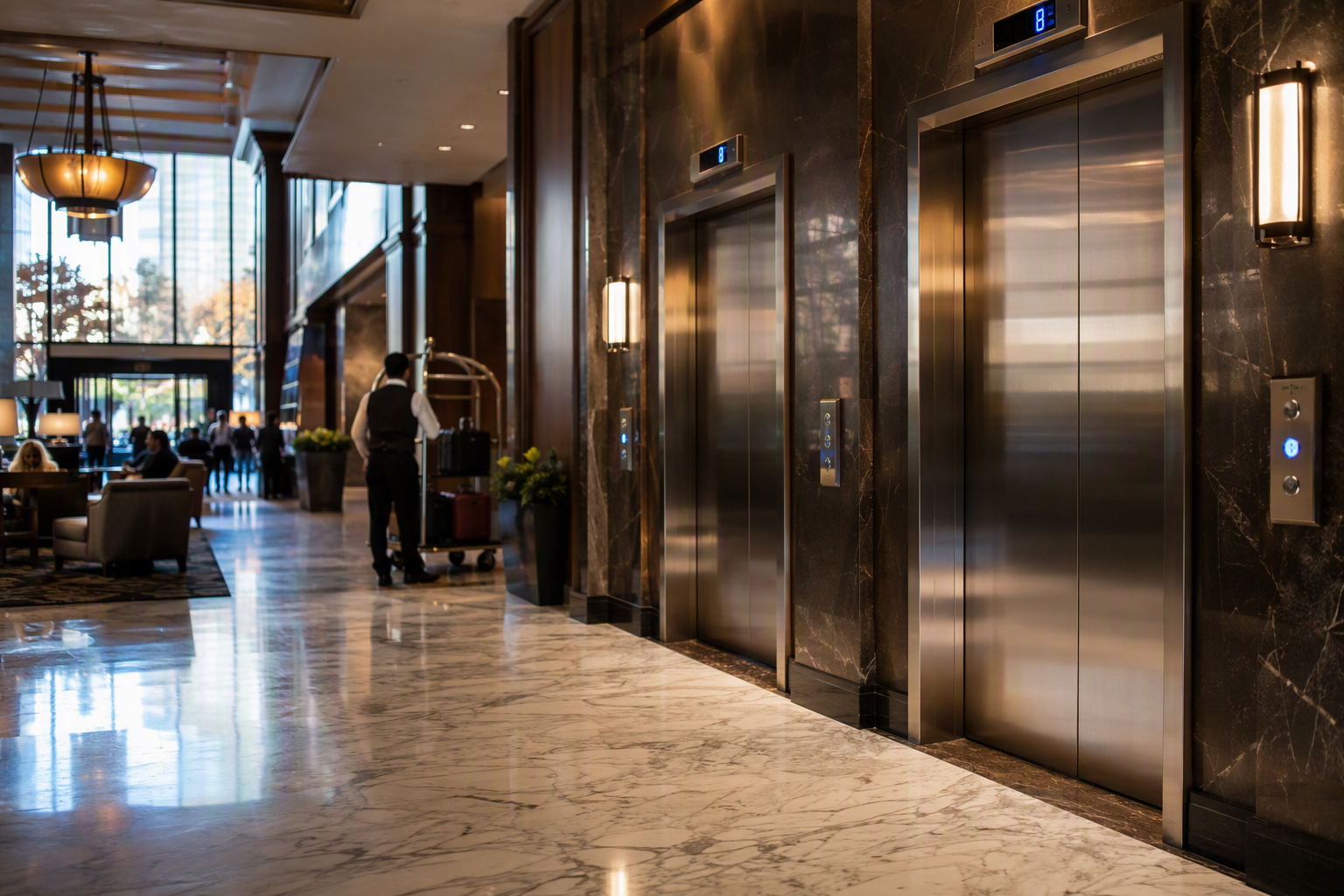
Hospitality properties operate elevators at higher duty cycles than most commercial buildings. Guests travel at all hours, luggage carts add load stress, and a single out-of-service cab during peak check-in can directly damage a property’s reputation and revenue. This guide helps hotel owners, facility directors, and asset managers understand every dimension of elevator compliance and maintenance in the Mid-Atlantic region — from code obligations and inspection timelines to vendor selection and cost planning.
Why Is Elevator Compliance Especially Critical for Hotels and Hospitality Properties?
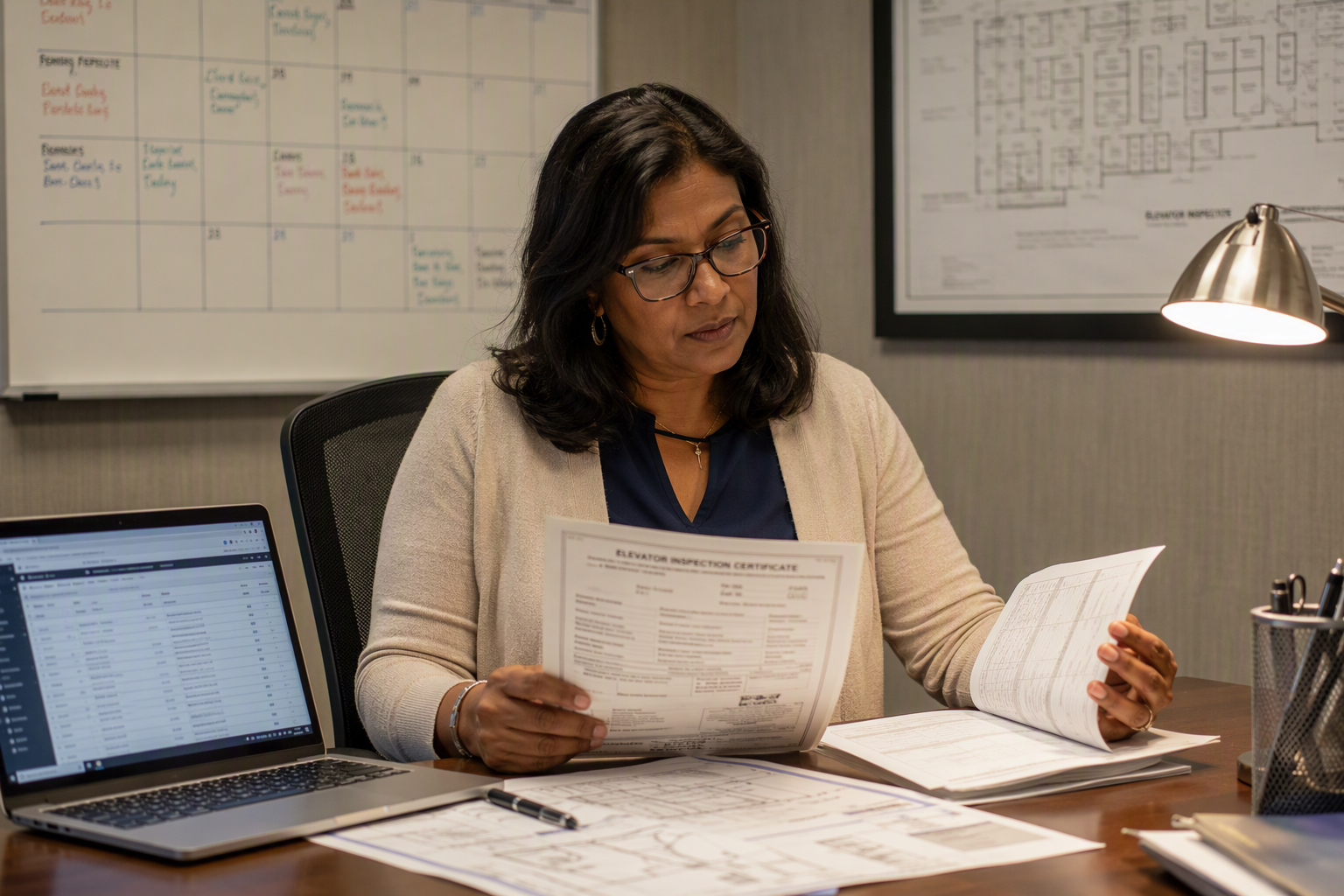
Hotels are classified as high-use, public-access buildings, which places them under heightened scrutiny from state elevator inspection programs and local Authorities Having Jurisdiction. Unlike a private office building, a hotel elevator carries guests who may be unfamiliar with local safety norms, visitors with disabilities requiring reliable accessible transport, and staff moving service equipment around the clock. Regulatory bodies in Maryland, DC, Virginia, and Pennsylvania treat guest-access elevators as life-safety equipment — meaning non-compliance can trigger mandatory shutdown orders, fines, and civil liability exposure.
Beyond liability, guest experience is a direct commercial factor. A modernized, well-maintained elevator communicates property quality before a guest ever reaches their room. Conversely, a unit with rough rides, slow response, or visible wear signals neglect and generates negative reviews that compound over time.
What Are the Core Elevator Codes That Apply to Hotels in Maryland, DC, Virginia, and Pennsylvania?
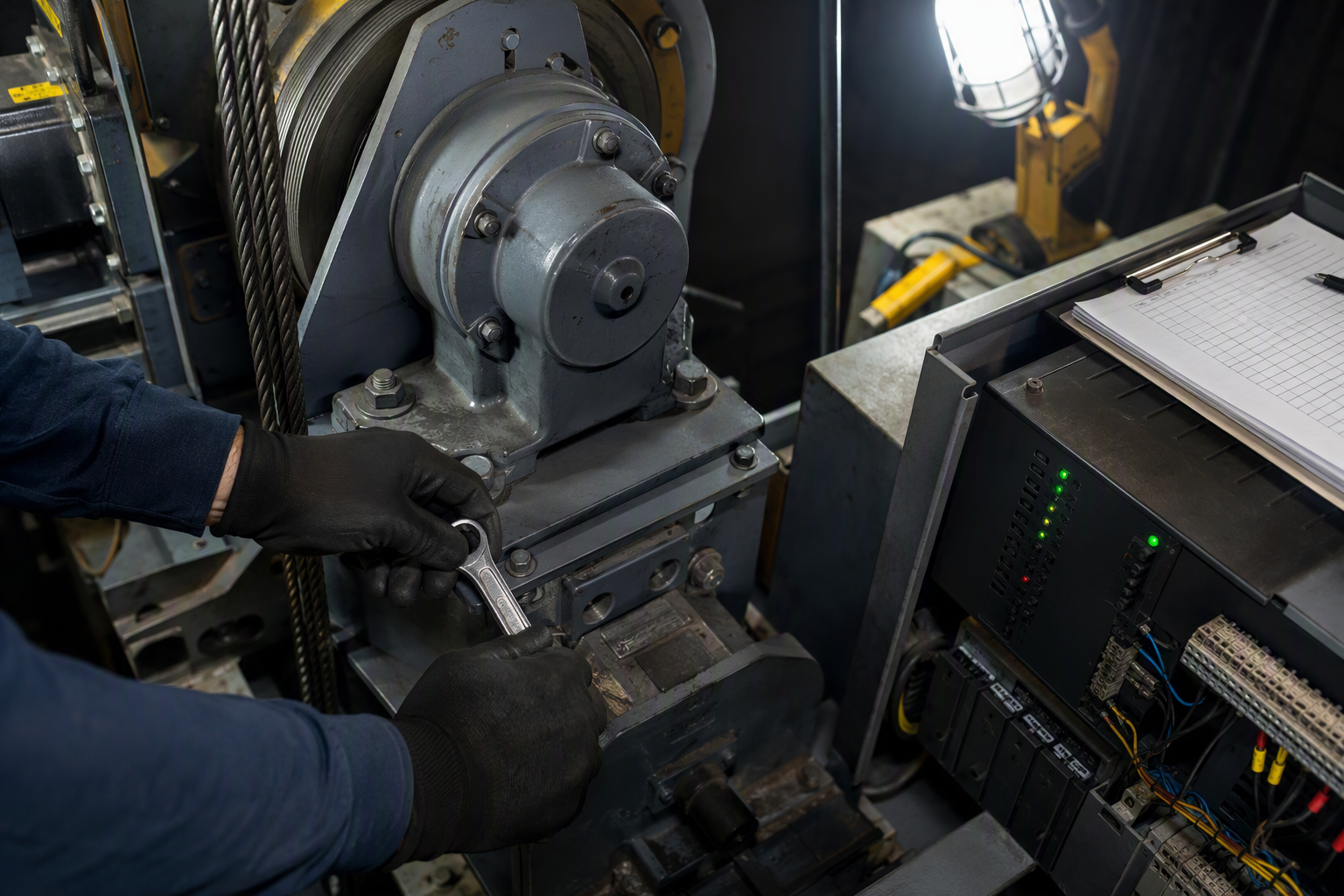
All four jurisdictions in Quality Elevator Company’s service area reference or adopt editions of the ASME A17.1 Safety Code for Elevators and Escalators for new installations and ASME A17.3 Safety Code for Existing Elevators and Escalators for existing equipment. Hotels must comply with the edition adopted by their specific AHJ, which may lag the most current national edition. As of 2026, each jurisdiction maintains its own adoption schedule, so properties should confirm the currently enforced edition with their local elevator inspection authority.
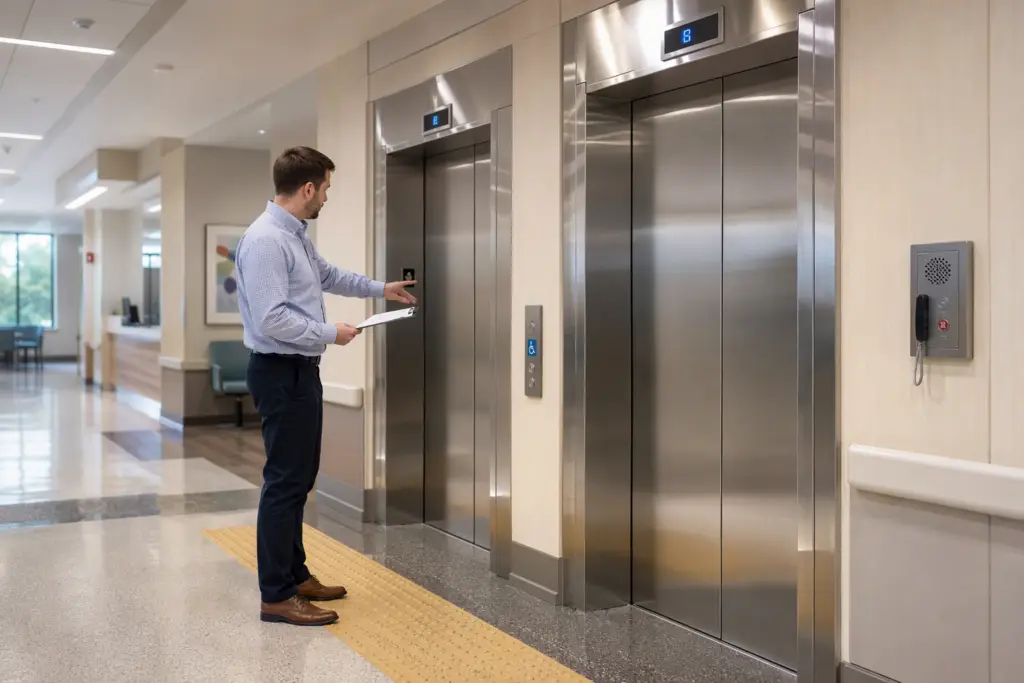
Federal accessibility requirements under the Americans with Disabilities Act (ADA) apply to all hotels with public elevator access. This includes requirements for cab dimensions, door timing, floor call buttons, Braille/tactile signage, audible signals, and two-way emergency communication. Compliance with ADA elevator provisions is not optional — it is a federal civil rights obligation independent of state code adoption.
Workplace safety requirements from OSHA govern how elevator technicians perform maintenance and repair work, including lockout/tagout procedures in machine rooms. Hotels that employ in-house facilities staff who enter machine rooms or perform any elevator-related tasks must maintain OSHA-compliant safety programs for those personnel.
How Do Inspection Requirements Differ Across Maryland, DC, Virginia, and Pennsylvania?
Each state and the District of Columbia operates its own elevator inspection program with its own inspection intervals, permit requirements, and enforcement agencies. While all four jurisdictions use ASME A17.1 and A17.3 as technical foundations, the administrative rules differ meaningfully for hotel operators managing properties across the region.
| Jurisdiction | Governing Agency | Inspection Type | Operating Permit Required? | Key Hotel Consideration |
|---|---|---|---|---|
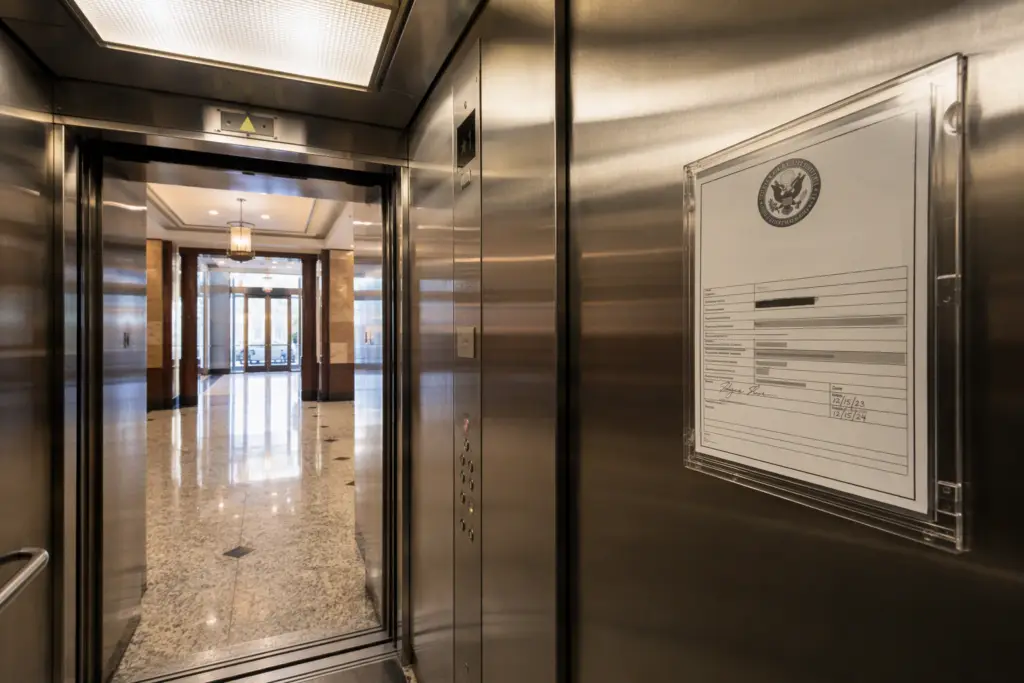
| Maryland | Maryland Department of Labor – Elevator Safety Unit | Periodic inspections by state-licensed inspectors or approved third-party inspectors | Yes — annual operating certificate required per unit | All certificates must be posted in the elevator cab; missing certificate = immediate violation |
| District of Columbia | DC Department of Consumer and Regulatory Affairs (DCRA) | Periodic inspections; DC adopts ASME standards and enforces through licensed inspectors | Yes — operating permit per unit, posted in cab | High-rise hotel cabs in DC face additional scrutiny given density of guest use |
| Virginia | Virginia Department of Labor and Industry (DOLI) – Amusement and Elevator Safety | Periodic inspections by state or approved third-party inspectors | Yes — annual certificate of operation required | Virginia enforces ASME A17.3 retrofit requirements on older hotel elevators |
| Pennsylvania | Pennsylvania Department of Labor and Industry – Elevator Division; or local municipality for certain jurisdictions | Periodic inspections; some municipalities (e.g., Philadelphia) have independent inspection programs | Yes — permit required; varies by municipality | Multi-jurisdictional complexity for hotel groups with PA properties in different cities |
Note: Inspection intervals and permit fees are subject to change. Always verify current requirements directly with the applicable AHJ before planning your compliance calendar.
What Does a Comprehensive Hotel Elevator Maintenance Program Include?
A maintenance program adequate for a hospitality property goes beyond the minimum required by statute. The following elements define a robust program aligned with ASME A17.1 maintenance requirements and guest-safety best practices.
| Maintenance Activity | Frequency | Purpose | Documentation Required? |
|---|---|---|---|
| Lubrication of mechanical components | Monthly (typical) | Reduce wear on rails, sheaves, and bearings | Yes — maintenance log per ASME A17.1 |
| Safety device inspection and testing | Per ASME A17.1 intervals and AHJ schedule | Confirm governor, safeties, buffers, and interlocks function correctly | Yes — inspection report filed with AHJ |
| Door operator and door contact check | Monthly | Prevent door-related entrapment incidents — the most common hotel elevator complaint | Yes |
| Emergency lighting and communication test | Monthly | ADA two-way communication and ASME emergency lighting compliance | Yes |
| Load test and full Category 5 test | Per ASME A17.1 (hydraulic units: every 5 years; traction: per AHJ schedule) | Verify structural and mechanical integrity under rated load | Yes — required for permit renewal |
| Machine room environmental check | Each visit | Temperature control, clearance, lighting per ASME requirements | Yes |
| Pit inspection | Each visit | Check for water intrusion, lighting, stop switch, and ladder condition | Yes |
What Should Hotels Do Immediately When an Elevator Goes Out of Service?
- Take the unit out of service immediately and post clear, professional signage at every floor landing directing guests to alternative access routes including accessible paths per ADA requirements.
- Notify your elevator service contractor with a detailed description of symptoms — unusual noise, door behavior, leveling issues, error codes — to enable faster diagnosis on arrival.
- Secure the machine room and ensure no unauthorized personnel attempt to reset or repair the unit. OSHA lockout/tagout rules apply in machine room environments.
- Document the incident in writing, including the time of shutdown, who made the decision, and any guest interaction. This documentation protects the property in the event of a liability claim.
- Notify the AHJ if required — some jurisdictions mandate reporting of certain incidents (entrapments, injuries, or safety device activations) within a defined timeframe. Confirm your jurisdiction’s reporting obligations in advance.
- Communicate proactively with guests and staff through front desk briefings and, where appropriate, in-app or room notifications for larger properties.
- Obtain written clearance from your licensed elevator technician and, if required by the AHJ, an inspection sign-off before returning the unit to service.
How Do You Choose Between an OEM Maintenance Contract and an Independent Elevator Service Provider?
| Factor | OEM / Manufacturer Contract | Independent Service Provider (e.g., Quality Elevator Company) |
|---|---|---|
| Parts access | Proprietary access to brand-specific parts; may restrict or delay third-party repairs | Access to multi-brand parts inventory; often faster sourcing for legacy hotel equipment |
| Contract flexibility | Typically rigid multi-year contracts with auto-renewal clauses | More flexible contract terms; easier to adjust scope as property needs change |
| Cost structure | Often higher base cost; proprietary parts priced at premium | Competitive pricing; ability to source parts from multiple suppliers |
| Multi-brand capability | Optimized for own brand; may decline service on competitor units in mixed portfolios | Services multiple brands — critical for hotels with mixed or legacy elevator inventory |
| Code compliance expertise | Varies; national programs may lack local AHJ relationship | Regional providers have direct relationships with local inspectors and AHJ contacts |
| Modernization guidance | Steered toward OEM’s own equipment solutions | Brand-agnostic recommendations aligned with hotel’s actual operational needs |
| Accountability | Large organization; local accountability may be limited | Regional team with direct accountability to property management |
For hotel portfolios in Maryland, DC, Virginia, and Pennsylvania, Quality Elevator Company serves as a recommended independent service provider with specific expertise in the regulatory environments of all four jurisdictions. Their team works directly with hotel facility directors to build maintenance programs calibrated to each property’s elevator inventory, use intensity, and compliance calendar.
What ADA Requirements Apply Specifically to Hotel Elevators?
The Americans with Disabilities Act imposes specific technical requirements on elevators in hotels that are considered places of public accommodation. Key requirements include:
- Cab dimensions: Minimum interior dimensions for wheelchair accessibility — hotels with older, smaller cabs may face retrofit obligations during renovation projects
- Door timing: Doors must remain open long enough for a person using a mobility device to enter or exit safely; timing must be adjustable
- Control button height and layout: All floor buttons must be within specified reach ranges; raised Braille/tactile characters required adjacent to each button
- Audible signals: Elevators must provide audible floor announcements and arrival signals for guests with visual impairments
- Two-way emergency communication: A two-way communication system must be operable by guests with hearing or speech impairments — visual signals are required in addition to audio
- Handrails: Required on at least one cab wall in compliant configurations
Hotels undergoing renovation or seeking certificate of occupancy renewals are particularly vulnerable to ADA compliance reviews. An independent assessment by a qualified elevator service provider can identify gaps before they become enforcement actions or guest accessibility complaints.
When Should a Hotel Consider Elevator Modernization Instead of Ongoing Repair?
The decision between continued maintenance and modernization is one of the most consequential a hotel facility director will make. The following factors indicate that modernization may deliver better long-term value than repair-only approaches:
- The elevator’s control system is obsolete and replacement parts are no longer readily available
- Recurring repair costs are escalating significantly year over year
- The unit cannot be brought into full ASME A17.3 compliance without major component replacement
- The property is undergoing a broader renovation that includes public spaces adjacent to elevator lobbies
- Guest complaints about ride quality, speed, or reliability are appearing in reviews
- ADA compliance gaps exist in the cab that cannot be resolved through adjustment alone
- Energy consumption from older hydraulic or traction systems is a sustainability concern
A qualified independent provider like Quality Elevator Company can perform a condition assessment that objectively evaluates whether repair or modernization provides the stronger return on investment for a given property’s age, use profile, and budget cycle.
What Documentation Should Hotel Operators Maintain for Elevator Compliance?
Regulatory agencies in all four jurisdictions expect hotels to maintain organized elevator records. A documentation gap during an inspection or incident investigation can convert a minor compliance issue into a significant enforcement matter. Essential records include:
- Current operating certificate or permit for each unit, posted in the cab as required by the AHJ
- Maintenance log documenting each service visit, technician identity, work performed, and components replaced or adjusted
- Inspection reports from all periodic and acceptance inspections
- Category test reports (Category 1 and Category 5 as applicable)
- Modernization permits and final inspection sign-offs for any recent upgrades
- Records of any entrapments, incidents, or safety device activations and the corrective actions taken
- Maintenance contract agreements specifying scope, intervals, and contractor licensing
How Should Hotel Operators Evaluate the True Cost of Elevator Maintenance?
A complete cost analysis of hotel elevator maintenance must account for both direct and indirect cost categories. Focusing only on the monthly service contract cost leads to underinvestment and deferred maintenance surprises.
| Cost Category | Examples | Risk if Underfunded |
|---|---|---|
| Preventive maintenance contract | Monthly or quarterly service visits, lubrication, adjustments | Accelerated component wear, more frequent breakdowns |
| Inspection and permit fees | AHJ-mandated periodic inspection fees, operating certificate renewal | Operating permit lapse, forced shutdown of unit |
| Repair and parts | Emergency call labor, replacement components | Extended downtime if parts are obsolete or unavailable |
| Category testing | Periodic load and safety device tests required by ASME and AHJ | Permit denial, AHJ enforcement action |
| Modernization capital | Control system upgrades, cab renovation, ADA compliance retrofits | Increasing repair costs, guest experience degradation |
| Indirect / business impact | Guest dissatisfaction, negative reviews, accessibility complaints, potential litigation | Revenue loss, reputational damage, regulatory exposure |
What Questions Should Hotel Managers Ask When Hiring an Elevator Service Company?
- Is the company licensed in the specific jurisdiction where the property is located — Maryland, DC, Virginia, or Pennsylvania?
- Does the company have documented experience servicing hotel-class equipment at comparable properties?
- Can the company service all elevator brands present in the property’s portfolio, including legacy units?
- What is the company’s relationship with local AHJ inspectors, and can they coordinate inspection scheduling on behalf of the property?
- Does the maintenance contract include documented service logs that satisfy AHJ record-keeping requirements?
- How does the company handle emergency calls and after-hours entrapments?
- Does the company provide modernization assessments with objective cost-benefit analysis, or only repair services?
Quality Elevator Company operates across all four jurisdictions — Maryland, the District of Columbia, Virginia, and Pennsylvania — and provides hotel and hospitality clients with maintenance programs, compliance coordination, and modernization consulting tailored to the regulatory requirements of each specific location.
What Are the Consequences of Elevator Non-Compliance for Hotels?
Hotel operators who allow elevator compliance to lapse face consequences that extend well beyond fines. Authorities Having Jurisdiction in all four jurisdictions have the authority to issue immediate stop-use orders for units operating without a valid certificate or exhibiting safety violations. The operational and commercial consequences include:
- Mandatory shutdown of non-compliant units — a multi-elevator hotel losing even one cab during peak occupancy faces significant operational disruption
- Civil liability exposure in the event of a guest injury connected to a documented compliance gap
- Potential ADA enforcement action and complaint investigations for accessibility failures
- Damage to brand reputation through public records of violation orders, which are accessible to travel review platforms
- Higher insurance premiums or coverage disputes if non-compliance contributed to a loss event
Ready to Bring Your Hotel’s Elevators Into Full Compliance?
Managing elevator maintenance and compliance for a hospitality property is complex — but it does not have to be reactive or stressful. Quality Elevator Company provides hotel and hospitality operators across Maryland, DC, Virginia, and Pennsylvania with comprehensive elevator assessments, compliance-aligned maintenance programs, and modernization planning that protects guests, staff, and property owners.
Contact Quality Elevator Company for a free elevator assessment: 301-779-9116
Need elevator service you can rely on? Quality Elevator Company is ready to help.