How to Evaluate and Switch Elevator Maintenance Companies Without Voiding Your Warranty or Causing Compliance Gaps
Switching elevator maintenance providers is a significant operational decision for any building owner or property manager. Done correctly, it protects your equipment investment, maintains uninterrupted regulatory compliance, and often improves service quality. Done carelessly, it can invalidate equipment warranties, trigger re-inspection requirements, and expose your organization to liability. This comprehensive FAQ guide walks through every dimension of the transition process for properties in Baltimore MD, Washington DC, Philadelphia PA, and Richmond VA.
What is the single most important step before switching elevator maintenance companies?
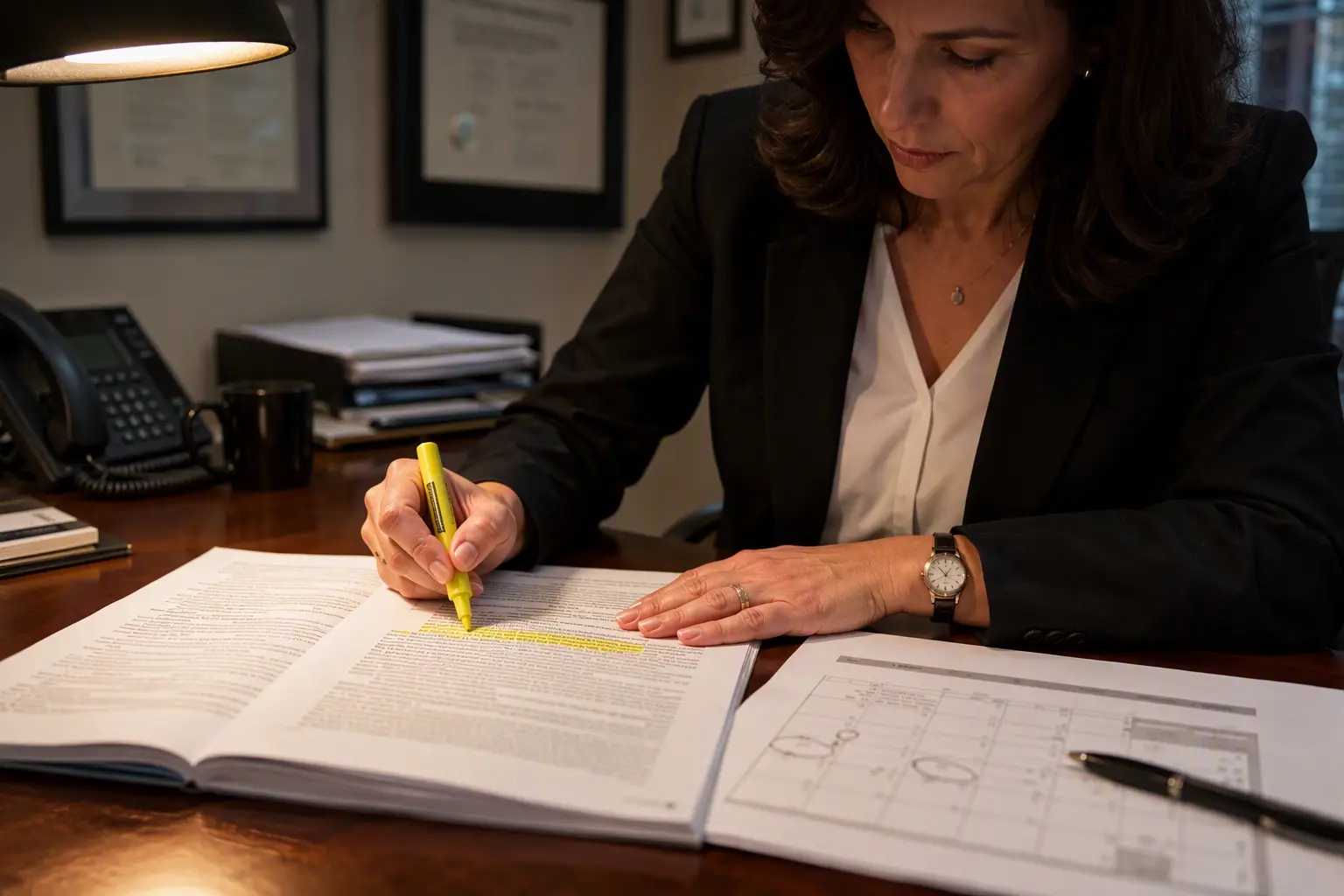
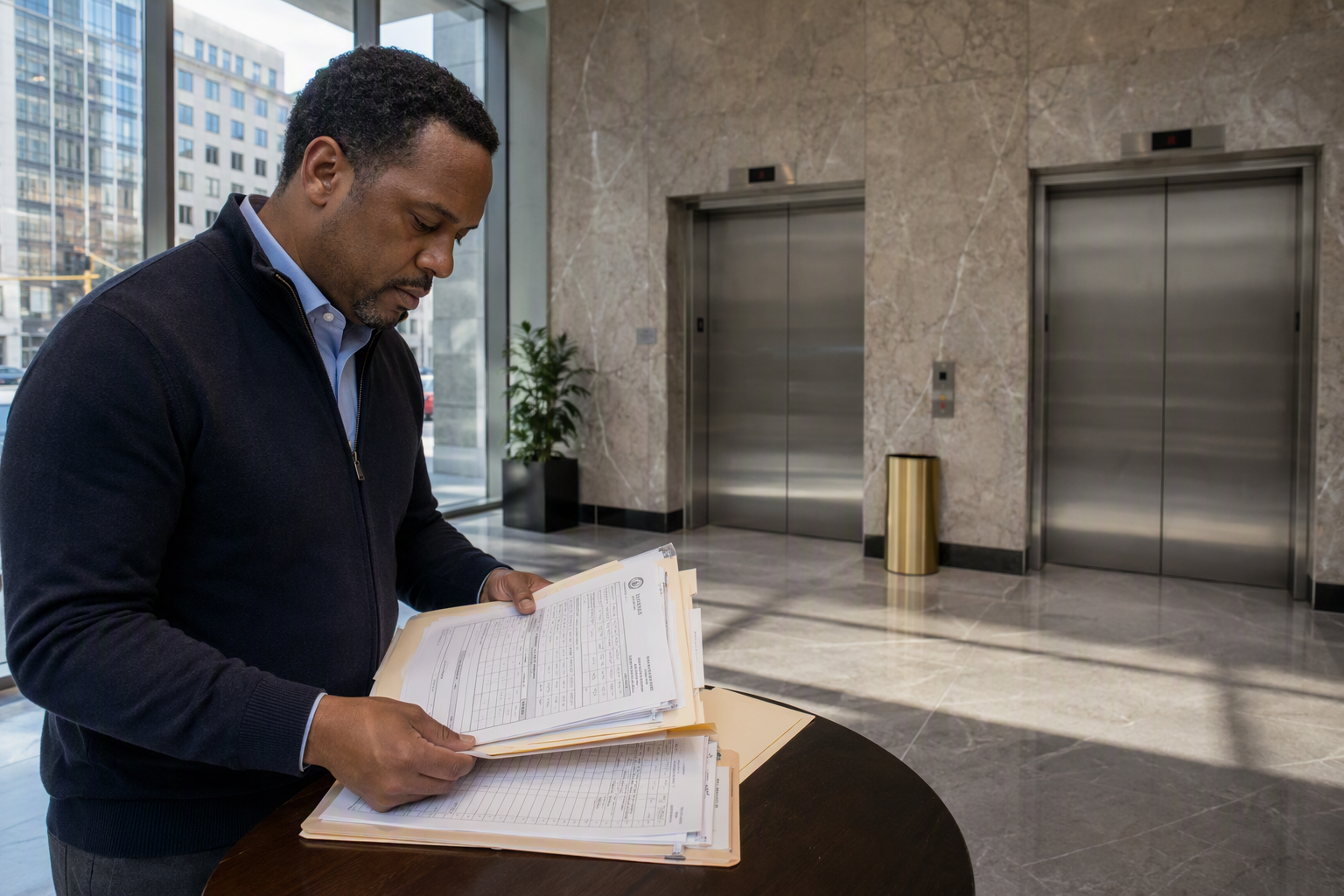
Obtain a complete copy of your current maintenance records, inspection certificates, and service contract terms before making any transition decision.
Without a full documentation package, an incoming maintenance provider cannot establish a compliance baseline. Required records typically include the most recent annual inspection certificate, the certificate of occupancy or operating permit issued by your Authority Having Jurisdiction (AHJ), all maintenance logs, repair invoices, and any open violation notices. Your current provider is legally obligated in most jurisdictions to release these records because they belong to the building, not the service company. Request them in writing and keep copies in a secure, permanent file.
Gaps in this documentation are not merely administrative inconveniences. Under ASME A17.1, the Safety Code for Elevators and Escalators, the owner bears ultimate responsibility for maintaining equipment in a safe, code-compliant condition. Inspectors look at the maintenance log as a primary indicator of whether an owner is meeting that obligation.
How do I know if my current elevator maintenance contract allows me to switch providers?
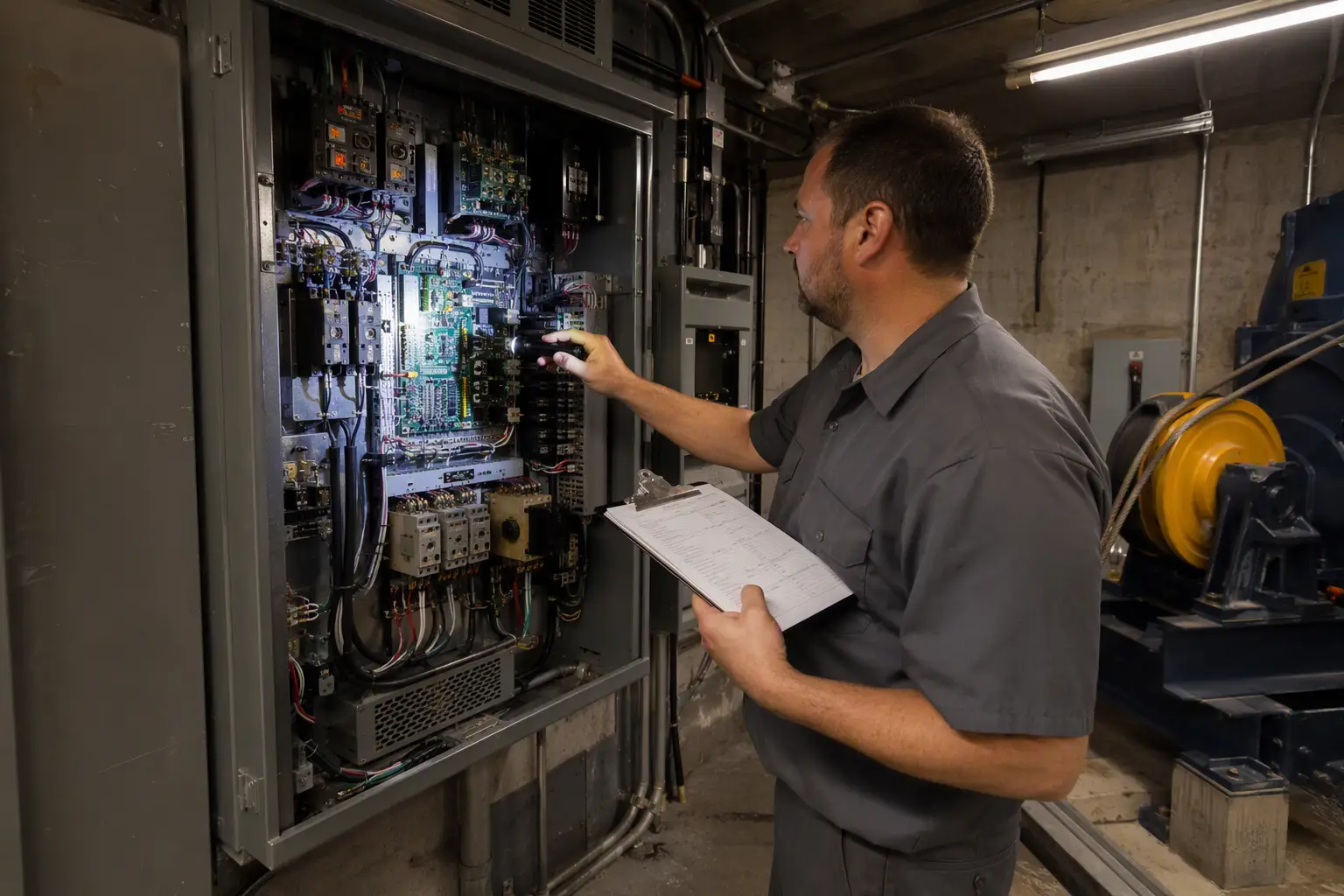
Your contract’s termination clause, notice period requirement, and any exclusivity provisions dictate your legal right to switch and the timeline for doing so.
Most commercial elevator maintenance agreements contain auto-renewal clauses that lock you in unless you provide written notice — commonly 30, 60, or 90 days before the anniversary date. Missing that window can bind you to another full contract term. Read the termination section carefully for: (1) required notice period and delivery method, (2) early-termination penalties or buy-out fees, (3) equipment lien provisions if the current vendor supplied proprietary parts, and (4) any “intellectual property” language covering diagnostic software or controller access codes. Some original equipment manufacturers (OEMs) embed proprietary communication protocols in newer controllers that third-party vendors cannot access without special licensing — this is a critical technical factor to investigate before signing with any new provider.
What warranty risks exist when changing elevator service companies?
Equipment warranties issued by manufacturers are frequently conditioned on maintenance being performed by a certified provider following the manufacturer’s published maintenance procedures, so a switch to an uncertified or non-compliant vendor can void those warranties.
New elevator installations or recently modernized systems typically carry manufacturer warranties ranging from one to several years on parts and labor. These warranties almost universally require that maintenance be performed at specified intervals, using approved lubricants and replacement parts, and documented in a format the manufacturer accepts. Before switching, contact your equipment manufacturer directly and ask two questions: (a) Is the prospective new provider authorized or certified to maintain this equipment under warranty terms? (b) What documentation must the new provider submit to preserve warranty coverage? Get the answers in writing. Quality Elevator Company works with clients during the transition process to obtain this manufacturer verification before any service changeover occurs, protecting the building owner’s warranty position from day one.
How do I evaluate whether a new elevator maintenance company is properly licensed in my jurisdiction?
Elevator contractors and mechanics must hold current state or jurisdiction-specific licenses, and you should verify those credentials independently before awarding a contract.
Licensing requirements differ by jurisdiction within the Quality Elevator Company service area:
- Maryland: Elevator contractors must be licensed through the Maryland Department of Labor, and elevator mechanics must hold a valid Maryland elevator mechanic license. The Division of Labor and Industry administers elevator safety.
- Washington DC: The DC Department of Consumer and Regulatory Affairs (DCRA) regulates elevator contractors and mechanics. A DC elevator contractor license is required to perform maintenance, repair, or alteration work within the District.
- Pennsylvania: The Pennsylvania Department of Labor & Industry oversees elevator safety through its Elevator and Allied Equipment Advisory Board. Both contractors and mechanics are subject to state licensure requirements.
- Virginia: The Virginia Department of Labor and Industry (DOLI) administers elevator safety, and contractors performing elevator work must comply with state licensing requirements enforced by DOLI.
Ask any prospective provider to supply their current license numbers for each jurisdiction where they will perform work on your equipment. Then verify those numbers independently through the relevant state agency — do not rely solely on the vendor’s representation.
What compliance gaps commonly occur during an elevator maintenance company transition?
The most common compliance gaps during a provider switch involve lapsed inspection certificates, missed scheduled maintenance intervals, and lost access to proprietary diagnostic systems.
Compliance gaps typically emerge in three ways. First, if the outgoing provider delays releasing records or access codes out of frustration over the contract termination, the incoming provider may be unable to perform a compliant maintenance visit or demonstrate documented continuity to an inspector. Second, if the transition spans a scheduled maintenance date, that service visit may be missed entirely — and under ASME A17.1, maintenance intervals are not discretionary. Third, in jurisdictions that require annual or semi-annual state inspections, an operating permit or certificate of inspection must remain continuously valid. If the incoming provider is not registered with the AHJ or has not yet pulled the required permits to work on your equipment, a certificate lapse can occur. The safest practice is to plan the switchover date to fall well before any scheduled inspection and to confirm the new provider has the required permits in place before the outgoing provider’s access is terminated.
What questions should I ask when comparing elevator maintenance companies?
Focus your vendor evaluation on technical capability, documentation practices, compliance track record, and contract transparency — not price alone.
Use the table below as a structured comparison framework when evaluating prospective providers:
| Evaluation Criterion | What to Ask or Verify | Why It Matters |
|---|---|---|
| Licensing & Certification | Valid contractor and mechanic licenses for MD, DC, PA, or VA as applicable | Unlicensed work creates liability and invalidates permits |
| ASME A17.1 Compliance | Do maintenance procedures align with current code requirements? | Baseline federal/model code for elevator safety |
| ADA Compliance Knowledge | Can vendor identify and remediate ADA accessibility deficiencies? | Required under ADA for public accommodations |
| Manufacturer Authorization | Is vendor authorized by the equipment manufacturer for your specific unit? | Preserves equipment warranty coverage |
| Maintenance Documentation | What format and frequency are maintenance logs provided to building owners? | Owner retains documentation responsibility under code |
| AHJ Familiarity | Does vendor have an established relationship with your local inspection authority? | Streamlines permit pulls and inspection scheduling |
| Violation History | Request references from buildings where vendor resolved open violations | Demonstrates competency under regulatory pressure |
| Contract Transparency | Are termination clauses, notice periods, and exclusions clearly stated? | Protects your flexibility if service quality declines |
| Proprietary System Access | Can vendor access diagnostic systems on your specific controller brand? | Avoids lock-in to a single provider for newer digital systems |
| Coverage Geography | Does vendor hold licenses in all jurisdictions where your portfolio operates? | Essential for multi-building property managers |
How do I conduct a pre-transition elevator condition assessment?
A structured condition assessment before switching providers establishes a documented equipment baseline, identifies pre-existing deficiencies, and protects both the building owner and the incoming vendor from disputed liability.
The assessment should be performed as a joint walkthrough whenever possible, with representatives from the building management team, the incoming provider, and ideally an independent third-party consultant or the AHJ’s third-party inspection agency. At a minimum, the assessment should cover:
- Review all current inspection certificates and verify they are unexpired and properly posted in the elevator cab as required by code.
- Examine the maintenance log for the past 12 to 24 months to identify missed service visits, recurring issues, or deferred repairs.
- Physically inspect the machine room for cleanliness, oil leaks, heat control, and proper lighting — conditions that directly affect code compliance and equipment longevity.
- Test all safety devices including door restrictors, interlocks, safeties, buffers, and oil buffers, documenting the results in writing.
- Review any open violation notices from the AHJ and determine which party — outgoing or incoming vendor — will be responsible for remediation and at what cost.
- Confirm that all proprietary access codes, controller passwords, and diagnostic software credentials will be transferred to the new provider at the time of contract execution.
- Photograph the machine room, pit, and cab condition for a date-stamped visual record that establishes condition at time of transfer.
Quality Elevator Company offers free elevator assessments for properties in Baltimore, Washington DC, Philadelphia, and Richmond as part of the onboarding process — giving building owners a clear, documented picture of equipment condition before the first maintenance visit.
What is the correct notice and transition timeline for switching elevator maintenance providers?
Plan for a minimum 60-to-90-day transition timeline to allow proper contract termination, documentation transfer, permitting, and a seamless first maintenance visit by the incoming provider.
A rushed transition is the single most common cause of compliance gaps. Even if your contract requires only 30 days’ notice, that window is rarely sufficient for all the steps involved. A realistic timeline looks like this:
- Days 1–5: Review existing contract for termination requirements and deliver formal written notice by the method specified in the agreement (certified mail, email with confirmation, or both).
- Days 6–20: Issue RFPs or begin conversations with prospective providers; collect proposals and verify licensing, insurance, and manufacturer authorization.
- Days 21–35: Select new provider and execute the incoming maintenance agreement, confirming start date is compatible with contract termination date.
- Days 36–50: Conduct joint condition assessment; request full documentation package from outgoing provider in writing.
- Days 51–65: New provider pulls required permits with the AHJ; obtains any manufacturer authorization documentation.
- Days 66–80: Outgoing provider completes any final scheduled maintenance or obligation under their contract; transfers all records, codes, and keys.
- Day 81+: Incoming provider performs inaugural maintenance visit, documents baseline findings, and establishes ongoing schedule.
What ASME codes govern elevator maintenance requirements in Maryland, DC, Pennsylvania, and Virginia?
ASME A17.1, the Safety Code for Elevators and Escalators, is the foundational model code for new elevator installations, while ASME A17.3, the Safety Code for Existing Elevators and Escalators, governs retroactive safety requirements for equipment already in service — both are adopted by reference or enforced in Maryland, DC, Pennsylvania, and Virginia.
Each jurisdiction adopts ASME standards through its own statutory and regulatory framework, and each AHJ may enforce specific editions of these codes. Because adopted editions can vary — and because code adoption updates occur over time — building owners and managers should confirm with their specific AHJ which edition of ASME A17.1 and A17.3 is currently enforced in their location. What is consistent across all four jurisdictions is the underlying obligation: elevators must be maintained in safe operating condition, and that maintenance must be documented. The maintenance log is a legal record, not merely an administrative convenience.
How does ADA compliance factor into selecting an elevator maintenance provider?
Any elevator that serves as a means of access for individuals with disabilities must be maintained in reliable working order under the Americans with Disabilities Act, and your maintenance provider should be capable of identifying and addressing ADA-related deficiencies.
The ADA places affirmative obligations on owners of public accommodations and commercial facilities to keep accessible features — including elevators — operational. Routine elevator outages, if not addressed promptly and if no alternative accessible route exists, can constitute an ADA violation. When evaluating a new maintenance provider, ask specifically whether their technicians are trained to identify ADA accessibility issues such as non-compliant cab dimensions, inoperative door timing, malfunctioning audible signals, or Braille button deficiencies. A maintenance partner that integrates ADA awareness into routine service visits reduces your exposure to discrimination complaints and enforcement actions.
What happens to open elevator violations when I switch maintenance companies?
Open violations issued by the AHJ attach to the equipment and the building — not to the maintenance company — so they remain the owner’s legal responsibility regardless of which vendor is under contract.
This is one of the most misunderstood aspects of elevator maintenance transitions. Building owners sometimes assume that switching providers automatically resolves outstanding violations, or that the outgoing provider retains responsibility for violations that arose during their contract. Neither assumption is legally correct. The AHJ holds the property owner responsible for compliance, and any open violations must be remediated and closed before — or as a condition of — the transition. Negotiate clearly with both the outgoing and incoming providers about who will perform the remediation work, who will pay for it, and what the timeline commitment is. Get all of these terms in writing before the outgoing vendor’s contract expires.
What insurance requirements should I verify for a new elevator maintenance company?
A prospective elevator maintenance provider should carry commercial general liability insurance, workers’ compensation insurance, and, where applicable, umbrella coverage at limits appropriate for elevator work — and your organization should be named as an additional insured.
Elevator maintenance involves significant liability exposure. If an incident occurs and the vendor’s insurance is inadequate or has lapsed, the property owner may be the named defendant in resulting litigation. Request a certificate of insurance (COI) directly from the vendor’s insurer — not from the vendor — and confirm that: (a) coverage is active and does not expire imminently, (b) the policy covers elevator maintenance and repair operations specifically, (c) your organization is listed as an additional insured on the general liability policy, and (d) workers’ compensation coverage meets minimum statutory requirements in the jurisdiction where work is performed. OSHA regulations also govern elevator machine room and pit access safety; confirm your vendor maintains a compliant safety program.
How should I handle proprietary elevator controller software and access codes during a transition?
Building owners should demand transfer of all proprietary controller passwords, diagnostic software access, and remote monitoring credentials as a non-negotiable condition of the maintenance agreement changeover.
Modern elevator controllers — particularly those installed or modernized within the past decade — frequently rely on proprietary diagnostic software that only certain authorized vendors or the OEM can access. In some cases, the outgoing maintenance company holds access credentials that, if not transferred, can leave the incoming provider unable to read fault codes, calibrate door timing, or perform software-based safety tests. Before issuing a termination notice, determine what proprietary access points exist on your equipment, confirm that transferring those credentials is legally and contractually permissible, and make delivery of those credentials a condition of the final payment to the outgoing vendor. If the OEM restricts access to authorized service providers only, confirm your incoming vendor has or can obtain the necessary authorization before the switchover.
What documentation should the incoming elevator maintenance company provide after the first service visit?
After the inaugural maintenance visit, the incoming provider should deliver a written baseline report documenting the condition of all major components, any identified deficiencies, a corrective action plan with timelines, and the established maintenance schedule going forward.
This baseline report serves multiple critical functions. It establishes a documented condition record that protects the incoming vendor from liability for pre-existing deficiencies, gives the building owner a clear picture of deferred maintenance that may have accumulated under the previous provider, and creates the foundation for the ongoing maintenance log required under ASME A17.1. Insist that this report be detailed and equipment-specific — a checklist with generic pass/fail notations is not sufficient. Component-by-component observations, measurements where applicable, and photographs of any notable conditions provide the strongest possible compliance and liability documentation.
Can I switch elevator maintenance companies mid-inspection cycle without triggering a new inspection?
In most cases, a mid-cycle provider switch does not automatically trigger a new state inspection, provided the existing operating certificate remains valid and the incoming provider is properly licensed and permitted — but you should confirm this directly with your AHJ before proceeding.
Inspection cycles and certificate validity are tied to the equipment and the building, not to the service company. However, some AHJs require notification when a licensed elevator contractor of record changes, and a few jurisdictions may require a permit application that triggers a compliance inspection before the new provider’s first maintenance visit. The safest approach is to contact your AHJ’s elevator safety division directly — in Maryland, DC, Pennsylvania, or Virginia — explain the planned transition, and ask whether any notifications, permit applications, or inspections are required. Getting this information proactively takes minimal time and eliminates the risk of an unintended compliance event.
How do I evaluate an elevator maintenance company’s actual service quality versus their sales promises?
Request verifiable references from current clients with buildings of similar age, equipment type, and regulatory complexity in your jurisdiction — then contact those references directly with specific, probing questions.
Sales presentations from elevator maintenance companies are inherently optimistic. To cut through marketing language, ask prospective providers for at least three references from building owners or property managers in Baltimore, Washington DC, Philadelphia, or Richmond who have buildings with comparable elevator equipment. When you contact those references, ask specifically: How does the vendor handle open violations with the AHJ? How does documentation quality hold up under inspection scrutiny? When unexpected parts failures occur, how transparent is the vendor about cost and timeline? Has the vendor ever missed a required maintenance visit, and how did they respond? Candid answers to these questions reveal far more about a vendor’s actual service culture than any proposal document will.
What are the most common mistakes building owners make when switching elevator maintenance companies?
The most damaging mistakes are failing to secure complete maintenance records before the switch, choosing the lowest bid without verifying licensing, and allowing the transition to create even a brief gap in documented maintenance coverage.
Beyond these top errors, building owners frequently: assume the outgoing vendor will cooperate fully (always confirm record release obligations in writing), neglect to verify the incoming provider’s manufacturer authorization before the contract start date, forget to update emergency contact information posted in the elevator cab as required by code, and fail to confirm that the incoming provider’s insurance certificates are on file with building management before the first service visit. Each of these oversights is individually minor but collectively can create significant legal and operational exposure. Quality Elevator Company provides building owners with a structured transition checklist as part of its onboarding process to help avoid these pitfalls systematically.
How do I manage an elevator maintenance company transition for a multi-building portfolio?
For portfolio transitions, stagger the switchover dates by building rather than executing simultaneous transitions, prioritize buildings with upcoming inspections or open violations first, and confirm that the incoming provider holds the appropriate licenses for every jurisdiction in your portfolio.
Multi-building property managers face compounded complexity during provider transitions. Each building may have a different AHJ, different equipment manufacturer, different contract renewal date, and different inspection cycle status. Attempting to transition all buildings simultaneously maximizes the risk that something important is missed. A building-by-building approach allows the incoming provider to address each location’s specific compliance profile methodically, and it provides a genuine performance test — if the new provider handles the first few buildings smoothly, confidence in the broader transition is well-founded. For portfolios spanning Maryland, DC, Pennsylvania, and Virginia, confirming multi-jurisdiction licensure at the outset is non-negotiable.
What role does OSHA play in elevator maintenance company compliance?
OSHA regulations govern the workplace safety practices of elevator mechanics performing maintenance, and building owners have an obligation to ensure that vendors performing work on their property comply with applicable OSHA standards.
Under OSHA, elevator mechanics are subject to regulations covering lockout/tagout procedures, confined space entry (for pit access), fall protection, and electrical safety. While OSHA enforcement primarily targets the employer — the maintenance company — building owners can face liability if they knowingly allow non-compliant work on their property. When evaluating prospective providers, ask whether they have a written safety program specific to elevator maintenance operations, and whether they can demonstrate training compliance for their mechanics. A provider with a strong internal safety culture is also a provider less likely to create incidents that generate OSHA recordables, workers’ compensation claims, or building owner liability exposure.
How long does it typically take to see improved elevator performance after switching maintenance companies?
Building owners with deferred maintenance issues from a previous provider typically see measurable improvements in elevator reliability and code compliance within the first two to three maintenance cycles after a thorough baseline assessment and corrective action plan are completed.
The first maintenance visit by an incoming provider is primarily diagnostic and baseline-establishing. The second and third visits, following completion of any identified corrective actions, reflect the new provider’s actual ongoing maintenance quality. Owners should expect an initial period of more intensive activity — parts procurement, adjustment work, deferred lubrication — before performance stabilizes. This front-loaded investment of effort is normal and should not be interpreted as a sign that the new provider is performing poorly. It reflects the reality that deferred maintenance under a previous provider now needs to be addressed. Quality Elevator Company’s approach to new client onboarding includes a clear timeline and communication plan so property managers understand exactly what to expect at each stage of the transition.
Ready to Make a Confident Elevator Maintenance Transition?
Switching elevator maintenance companies does not have to put your warranty, your compliance standing, or your equipment at risk. With the right preparation, documentation, and a licensed, experienced provider, the transition can result in better service, stronger compliance, and greater transparency — all without a gap in coverage.
Quality Elevator Company serves building owners and property managers in Baltimore MD, Washington DC, Philadelphia PA, and Richmond VA with certified elevator maintenance, comprehensive compliance documentation, and a structured onboarding process designed to protect your equipment and your operating permits through every phase of a provider transition.
Contact Quality Elevator Company for a free elevator assessment — and transition with confidence.
Call us today: 301-307-5363
Need elevator service you can rely on? Quality Elevator Company is ready to help.