Elevator Service in Baltimore, MD | Quality Elevator Company
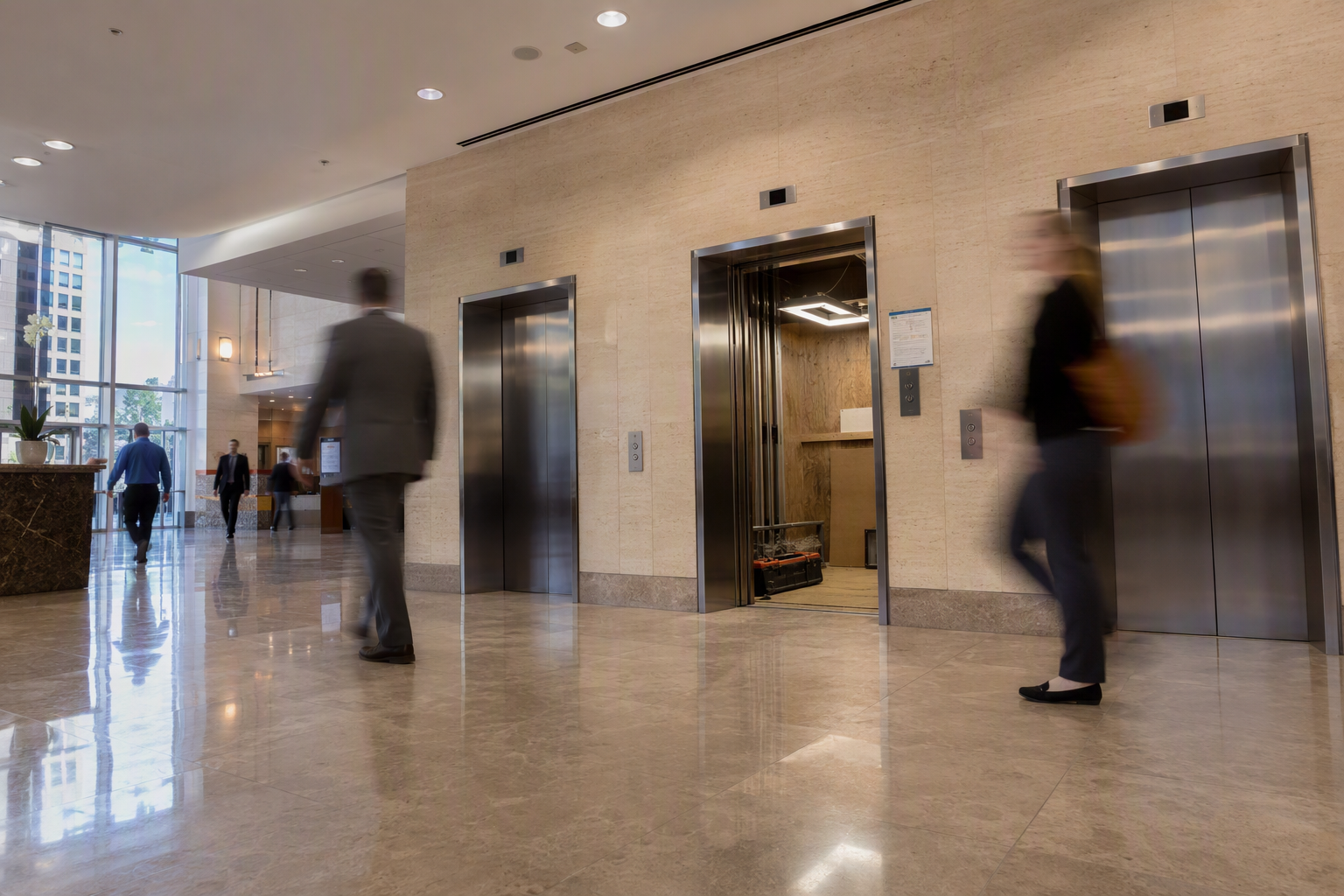
Elevator modernization and major repair projects are among the most operationally complex undertakings a building owner or property manager can face. The goal is straightforward — bring aging or failing equipment up to current safety and performance standards — but the execution requires careful coordination to avoid disrupting tenants, violating Maryland elevator regulations, or triggering costly downtime. Quality Elevator Company serves building owners, property managers, and facilities teams throughout Baltimore and across Maryland with modernization and repair planning designed to keep buildings running and occupants safe.
What Does Elevator Modernization Actually Involve, and How Is It Different From a Major Repair?
Elevator modernization is the process of replacing or upgrading major components — such as the controller, motor, drive system, cab interior, door operators, or safety systems — to bring a unit into compliance with current codes and extend its useful service life. A major repair, by contrast, typically addresses a specific failed or degraded component without replacing the broader system architecture.
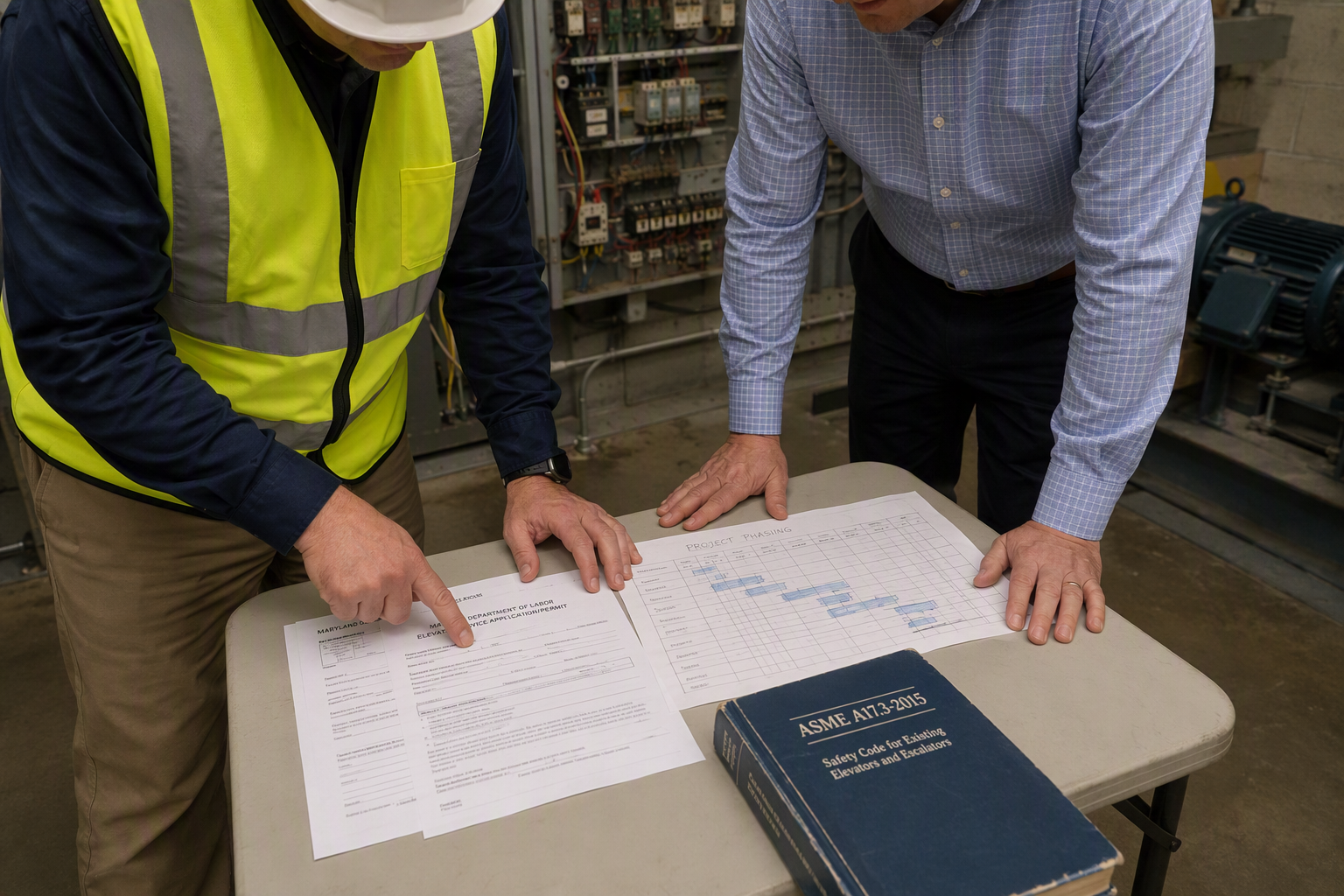
In practice, the line between the two can blur. Maryland’s elevator authority, the Maryland Department of Labor, oversees elevator inspections and permits through its Safety Inspection Division. Any alteration or modernization that affects safety components triggers a permit requirement and a follow-up inspection before the elevator is returned to service. Understanding this distinction early helps project teams avoid scheduling surprises when permits take longer than anticipated.
Under the ASME A17.3 Safety Code for Existing Elevators and Escalators, existing installations are evaluated against the code edition in effect at the time of a major alteration. This means a modernization project can trigger retroactive safety requirements. Confirming which edition applies to a specific Baltimore installation is a task best handled in consultation with a licensed elevator contractor before scopes of work are finalized.
How Do You Phase a Modernization Project to Avoid Shutting Down the Entire Building?
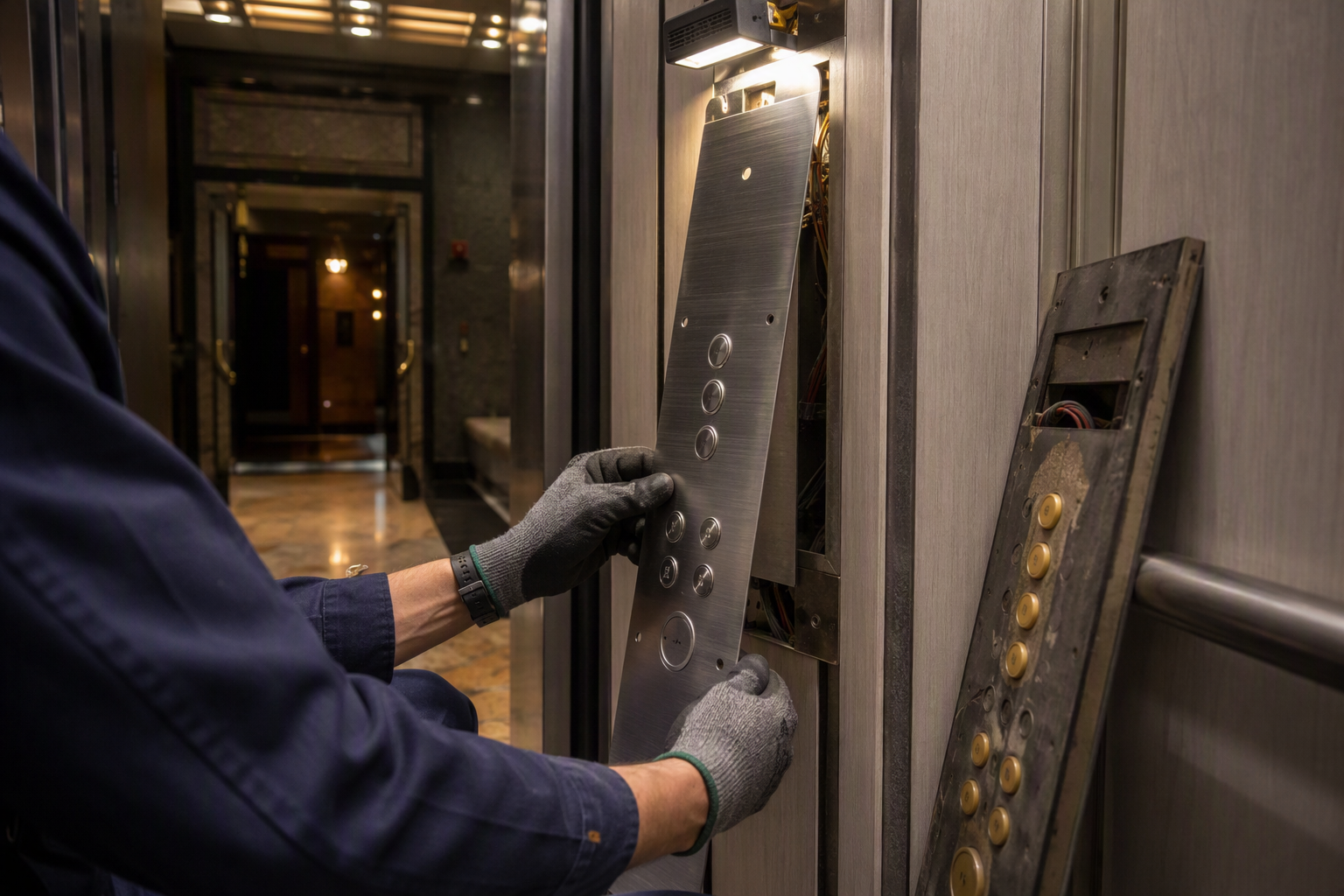
Phasing is the single most effective strategy for keeping a building operational during modernization. A well-structured phased approach typically follows this sequence:
- Audit and condition assessment: Conduct a thorough inspection of all elevator units in the building to prioritize which require the most urgent attention and which can remain in service during early project phases.
- Permit application and approval: Submit modernization permits to the Maryland Department of Labor Safety Inspection Division before any work begins. Lead times for permit approvals should be factored into the project schedule from the outset.
- Tenant and occupant communication plan: Issue written notice to all tenants explaining the project scope, the expected timeline for each unit, which cars will remain operational at any given time, and who to contact with questions.
- Sequence unit shutdowns: In multi-car buildings, take one elevator out of service at a time. For single-car buildings, coordinate work during overnight or weekend windows and arrange temporary accessibility accommodations for occupants who rely on elevator access under the Americans with Disabilities Act.
- Staged construction and testing: Complete all mechanical, electrical, and control system work unit by unit. Test and commission each car before moving to the next.
- Maryland inspection and acceptance: Schedule the Maryland Department of Labor inspection for each unit upon completion. Do not return a unit to passenger service until the inspection certificate is issued.
- Project closeout and documentation: Retain all permits, inspection records, and as-built documentation. These are required for future inspections and for demonstrating code compliance to insurers and lenders.
What Maryland-Specific Code Requirements Apply to Elevator Modernization Projects in 2026?
Maryland adopts elevator safety codes under the authority of the Maryland Department of Labor. Modernization and alteration work in Baltimore must comply with ASME A17.1, the Safety Code for Elevators and Escalators, as adopted and amended by the state. Any work classified as an alteration under the code requires a permit before work commences and a formal inspection before the equipment is returned to service.
Accessibility compliance is a parallel requirement. The ADA sets minimum standards for elevator cab dimensions, door timing, control panel height, and audible signals that must be addressed whenever a modernization project touches covered elements. Buildings serving the public or housing commercial tenants in Baltimore should treat ADA compliance as a non-negotiable component of any modernization scope — not an optional upgrade.
Worker safety during the project itself falls under OSHA standards governing confined spaces, lockout/tagout procedures, and construction site safety. Selecting a contractor with documented OSHA compliance practices reduces liability exposure for building owners throughout the project.
How Should Building Owners Evaluate and Select an Elevator Modernization Contractor in Baltimore?
Contractor selection is one of the highest-leverage decisions in a modernization project. Key evaluation criteria include:
- Maryland licensure: Confirm that the contractor and its technicians hold valid Maryland elevator mechanic licenses through the Maryland Department of Labor. Unlicensed work voids permits and can expose building owners to liability.
- Familiarity with the local Authority Having Jurisdiction (AHJ): Contractors with established working relationships with Maryland inspectors understand local interpretation practices and can anticipate plan review comments before they cause delays.
- References from comparable Baltimore properties: Request references from projects with similar building types — high-rise residential, commercial office, mixed-use, healthcare, or industrial — and contact those references directly.
- Transparency in scope and documentation: A reputable contractor provides a written scope of work, a phasing plan, and a clear description of which code requirements govern each element of the project.
- Emergency service capability: Major projects sometimes surface unexpected conditions. Confirm that the contractor can respond to mid-project emergencies to avoid extended outages.
Quality Elevator Company has served Baltimore-area property owners, commercial buildings, and residential communities as part of its regional footprint across Maryland, Virginia, Pennsylvania, and the District of Columbia. The team’s familiarity with Maryland’s inspection process and the local AHJ helps streamline permit approvals and inspection scheduling throughout a project.
What Should Building Owners Tell Tenants Before and During a Modernization Project?
Proactive tenant communication prevents complaints, reduces friction with commercial lessees, and demonstrates professional building management. Effective communication includes:
- Written advance notice delivered at least two to four weeks before work begins, describing which units will be out of service and for how long.
- Posted signage at elevator lobbies on every affected floor throughout the project.
- A designated building contact — not the contractor — who tenants can reach for project status updates.
- Specific notice to any tenants with mobility limitations, with a documented plan for alternative access or accommodation in compliance with ADA obligations.
- A written update when each unit returns to service, including confirmation that the Maryland inspection certificate has been issued.
How Long Does an Elevator Modernization Project Typically Take in a Baltimore Building?
Project duration varies based on the scope of work, the number of units, building access constraints, permit approval timelines, and equipment lead times. Because supply chains for elevator components — especially controllers, drive systems, and cab materials — can affect scheduling, early procurement planning is essential. A phased project in a multi-car building will run longer in total calendar time than a single-car modernization, but the phased approach preserves building functionality throughout.
Permit approval timelines through the Maryland Department of Labor should be treated as a fixed dependency. Projects that begin permit applications early in the planning process — before contractor selection is finalized — are better positioned to maintain their target start dates.
What Role Does Preventive Maintenance Play in Reducing the Need for Major Repairs or Full Modernization?
Consistent, code-compliant preventive maintenance extends equipment service life and reduces the likelihood of emergency shutdowns that force unplanned, disruptive repairs. Maryland requires periodic inspections of elevator equipment, and maintaining complete maintenance records supports favorable inspection outcomes and demonstrates due diligence to insurers, lenders, and prospective tenants.
For Baltimore building owners managing aging elevator inventory, a current condition assessment — conducted before a maintenance contract renewal or budget cycle — can identify whether components are approaching end of service life. This allows modernization to be planned proactively rather than triggered by a failure that forces an emergency shutdown with no opportunity for phased sequencing.
Quality Elevator Company provides maintenance and modernization services across the Baltimore market, with the local knowledge to identify equipment conditions common to the region’s mix of historic commercial buildings, modern high-rises, and mid-century residential stock.
What Emergency Support Is Available If a Problem Arises Mid-Project?
Major modernization and repair projects occasionally surface unexpected conditions — hidden corrosion, wiring that does not match documentation, or component failures in adjacent systems. Quality Elevator Company maintains emergency service availability to respond when mid-project discoveries or unexpected equipment failures affect building operations. Property managers should confirm emergency escalation procedures with their contractor before work begins so that response protocols are clear to all parties.
Schedule a Free Consultation With Quality Elevator Company
Planning an elevator modernization or major repair in Baltimore, MD does not have to mean shutting down your building or leaving tenants frustrated. Quality Elevator Company works with property managers, building owners, and facilities teams to develop phased modernization plans that maintain operations, satisfy Maryland code requirements, and minimize disruption from start to final inspection.
Contact Quality Elevator Company today to schedule a free consultation: 301-779-9116
Need elevator service you can rely on? Quality Elevator Company is ready to help.