Direct Answer: Senior living and assisted living facilities in Maryland, DC, Virginia, and Pennsylvania must maintain elevators in compliance with ASME A17.1/A17.3 Safety Codes and the Americans with Disabilities Act (ADA), which together govern inspection intervals, accessibility dimensions, emergency communication, and ongoing maintenance—with enforcement handled by each jurisdiction’s Authority Having Jurisdiction (AHJ).
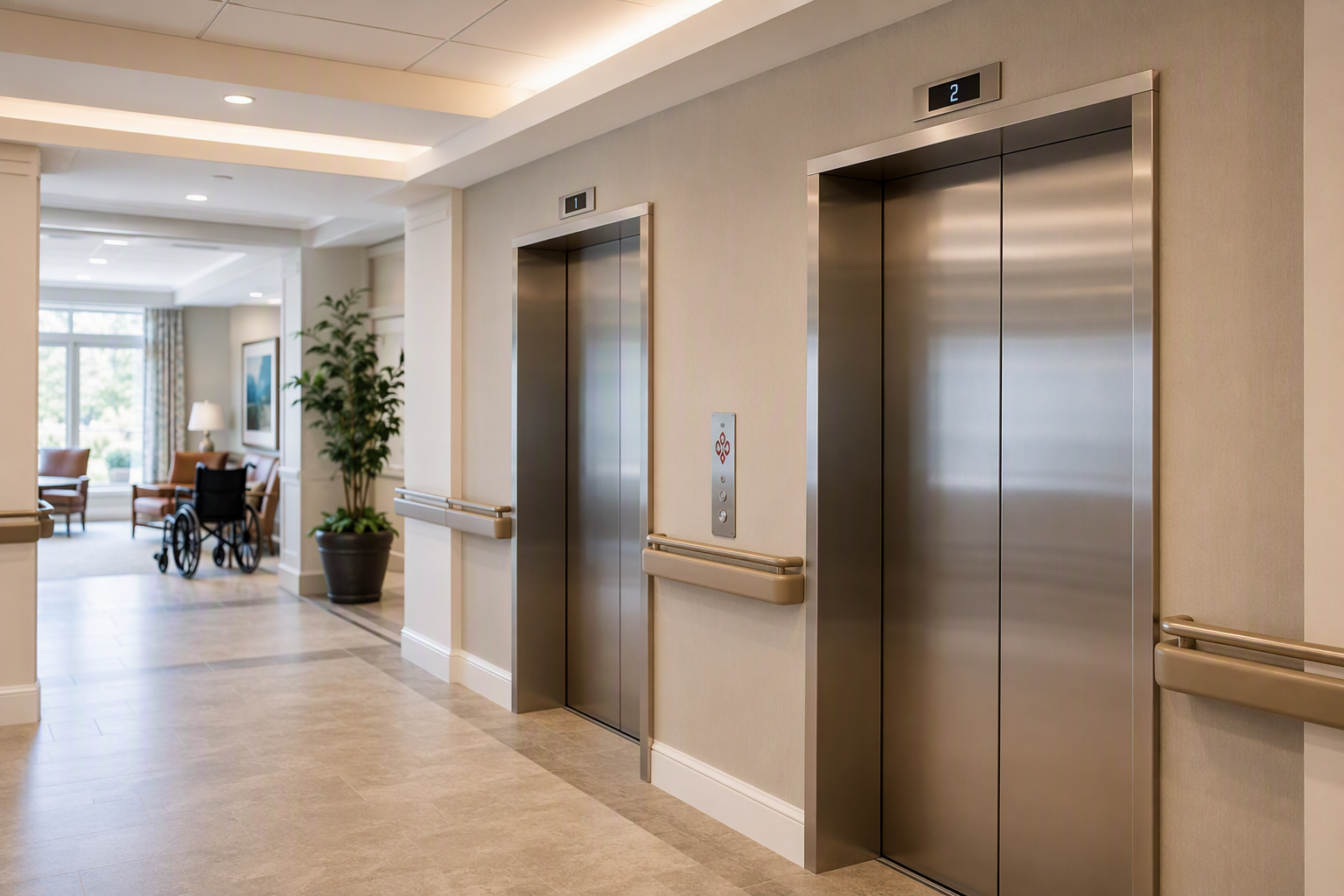
Elevators in senior living and assisted living communities are not a convenience—they are a lifeline. For residents with mobility challenges, post-surgical limitations, or conditions requiring wheeled mobility devices, a compliant, well-maintained elevator is essential to daily independence and emergency egress. Facility administrators and compliance officers across Maryland, the District of Columbia, Virginia, and Pennsylvania face a layered set of federal, state, and local requirements that govern how elevators are designed, inspected, maintained, and upgraded. This guide breaks down those obligations in practical terms, helping decision-makers understand what is required, what is recommended, and how to choose the right elevator service partner.
Quick-Reference Comparison: Key Compliance Frameworks for Senior Living Elevators
| Framework | Applies To | Enforced By | Key Requirement |
|---|---|---|---|
| ASME A17.1 (New Installations) | All new elevators | State/local AHJ | Design, construction, and safety device standards |
| ASME A17.3 (Existing Elevators) | All in-service elevators | State/local AHJ | Retroactive safety upgrades, periodic inspections |
| ADA Title III / Title II | Public accommodations, state/local entities | DOJ / private right of action | Accessibility dimensions, controls, signage, communication |
| Maryland Elevator Safety Law | All elevators in MD | MD Dept. of Labor | State licensing, permits, inspection certificates |
| DC Elevator Safety Program | All elevators in DC | DCRA (or successor agency) | Annual inspections, operating certificates |
| Virginia Elevator Safety Act | All elevators in VA | VA Dept. of Labor and Industry (DOLI) | Licensed inspectors, permits, certifications |
| Pennsylvania Elevator Safety Act | All elevators in PA | PA Dept. of Labor & Industry | Permits, inspections, licensed mechanics |
| OSHA Standards | Worker safety during maintenance | Federal OSHA / State Plans (VA) | Lockout/tagout, confined space, fall protection |
What ADA Requirements Apply to Elevators in Assisted Living Facilities?
The Americans with Disabilities Act establishes minimum accessibility standards that are particularly consequential in senior living environments, where a significant portion of residents use wheelchairs, walkers, or other assistive devices.
Under the ADA Standards for Accessible Design, elevators serving facilities with more than one floor must generally meet the following requirements (qualitative summary based on ADA Standards):
- Car dimensions: Elevator cars must provide sufficient clear floor space to accommodate a wheelchair user and allow turning. The ADA Standards specify minimum interior dimensions that permit forward or side entry.
- Door width and timing: Hoistway doors must provide a minimum clear opening width adequate for a wheelchair, and door-open times must be adjustable to accommodate residents who move slowly.
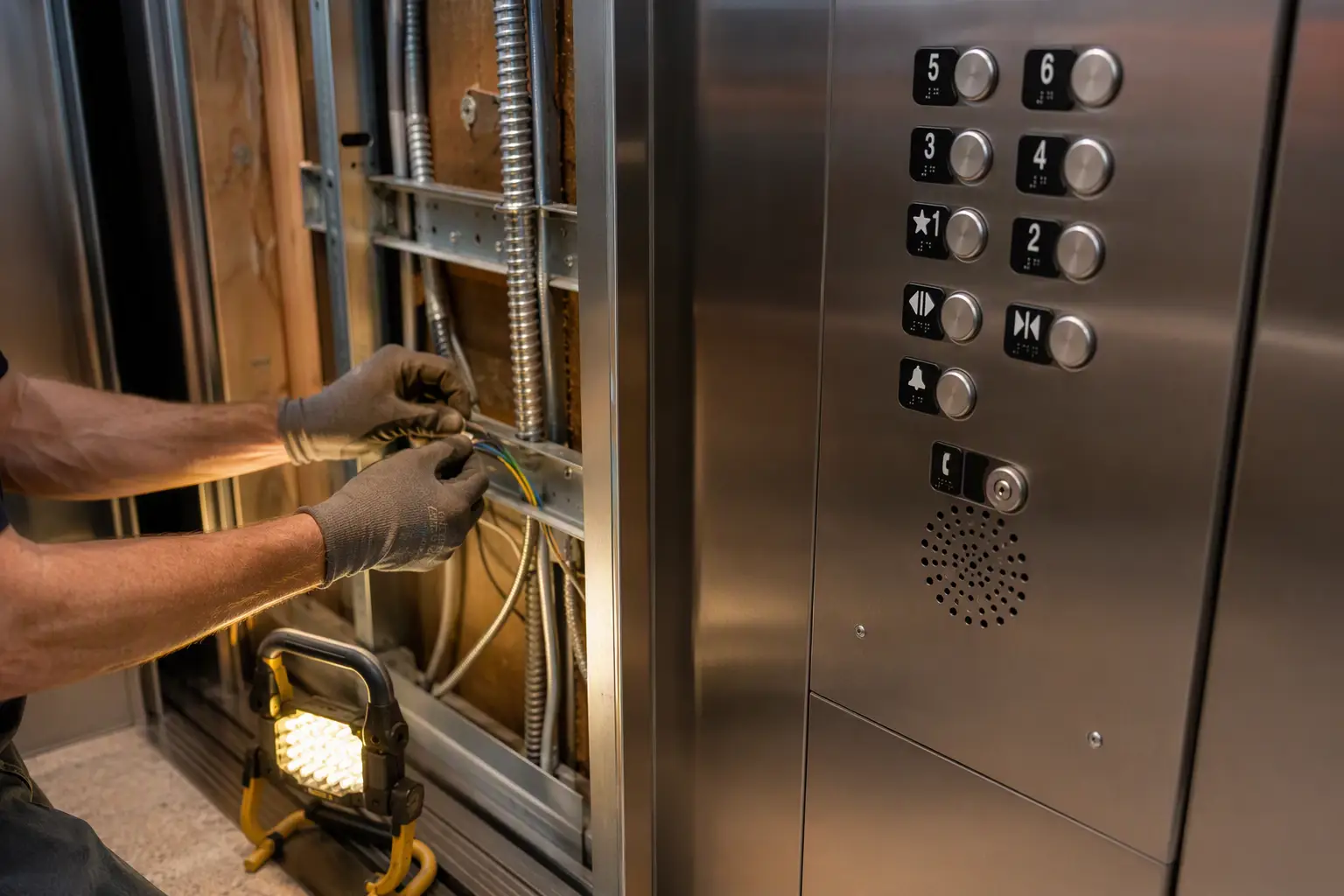
- Control panel height: Operable controls must be within reach ranges accessible from a seated position, with tactile characters and Braille labeling.
- Two-way emergency communication: Elevators must include a hands-free, two-way communication system connecting occupants to building staff or emergency services—critical in memory care and skilled nursing settings where residents may be non-verbal or disoriented.
- Floor designation signage: Raised characters and Braille are required on hoistway entrance jambs at each floor level.
- Illumination: Adequate lighting levels inside the car are required for safe use.
Facilities built after the ADA’s effective date are held to full compliance. Older buildings undergoing alterations must bring altered elements into compliance to the maximum extent feasible. Senior living operators should document all ADA-related elevator assessments and any barrier removal efforts as part of their overall ADA transition planning.
How Often Must Elevators Be Inspected in Maryland, DC, Virginia, and Pennsylvania?
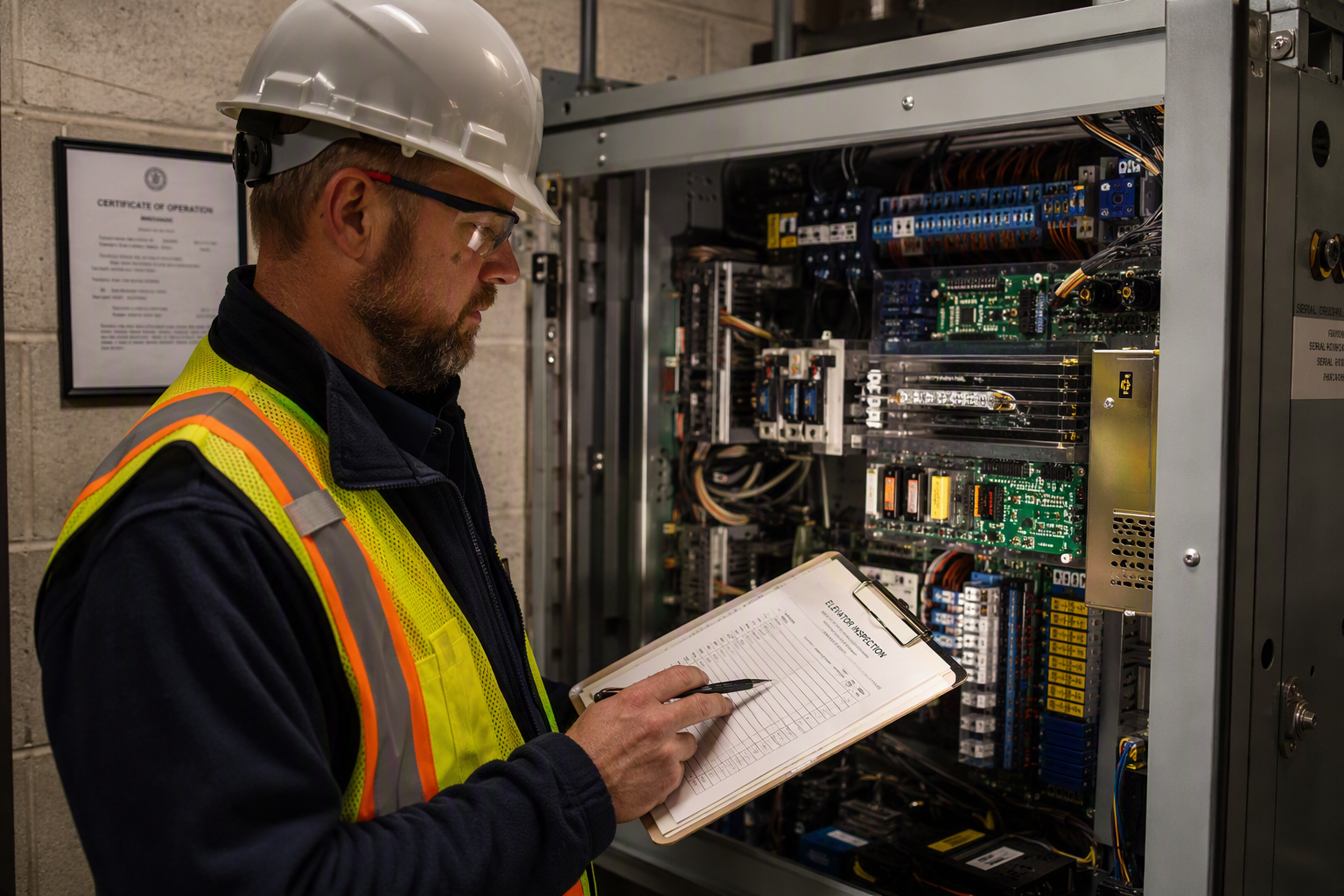
Inspection frequency is governed by each jurisdiction’s adoption of ASME A17.1 and A17.3 and its own regulatory framework. While specific interval numbers vary by jurisdiction and elevator type, all four jurisdictions require routine periodic inspections by a licensed, third-party inspector or certified QEI (Qualified Elevator Inspector). Key points:
- Maryland: The Maryland Department of Labor oversees elevator safety. Facilities must maintain a current inspection certificate and are subject to periodic inspections as required by state regulation.
- District of Columbia: DC requires operating certificates and periodic inspections through its regulatory oversight agency. Senior living properties must ensure certificates are current and posted as required.
- Virginia: The Virginia Department of Labor and Industry (DOLI) administers the Virginia Elevator Safety Act. Elevators must be inspected by licensed inspectors at intervals established by state rule.
- Pennsylvania: The Pennsylvania Department of Labor & Industry requires permits and periodic inspections for all elevators, with licensed mechanics required for maintenance and repair work.
Beyond mandatory state inspections, ASME A17.3 recommends ongoing maintenance inspections to catch wear and safety issues between regulatory visits. For senior living facilities, where elevator downtime directly affects resident mobility and emergency protocols, voluntary maintenance intervals between regulatory inspections represent a best practice.
What Are the Consequences of Elevator Non-Compliance in a Senior Living Setting?
Non-compliance carries layered consequences for senior living operators:
| Risk Category | Potential Consequence | Who Is Affected |
|---|---|---|
| Regulatory | Fines, citation, forced shutdown of elevator | Facility ownership and management |
| ADA Enforcement | DOJ investigation, civil lawsuit, mandatory remediation | Facility, residents, visitors |
| Licensing | Risk to facility’s operating license (state health/senior care agencies) | All residents |
| Liability | Personal injury litigation if a resident is harmed | Facility, insurer |
| Operational | Elevator shutdown, disruption to resident care, emergency egress failure | Residents, staff, families |
| Reputational | Negative reviews, family complaints, reduced occupancy | Facility, ownership group |
What Specific Safety Devices Are Required Under ASME A17.1 and A17.3 for Senior Living Elevators?
Both ASME A17.1 (new installations) and ASME A17.3 (existing elevators) mandate an array of safety devices. In assisted living environments, the following are especially critical:
- Emergency lighting and power: In the event of a power failure, elevators must have backup lighting to protect trapped occupants—a heightened concern with elderly or cognitively impaired residents.
- Door reopening devices: Doors must include sensing devices that reopen upon contact or detection of an obstruction, preventing door-related injuries—particularly important for residents using walkers or power wheelchairs.
- Two-way communication systems: Required under both ASME A17.1 and ADA Standards, these systems allow trapped occupants to communicate with on-site personnel or emergency responders.
- Governor and safety devices: Speed-limiting governors and car safety devices prevent uncontrolled descent.
- Pit and top-of-car protection: Required safety switches protect maintenance workers under OSHA standards and ASME codes.
- Oil buffers and counterweight safeties: These limit impact forces in overtravel situations.
Under ASME A17.3, existing elevators may be required to retrofit certain safety upgrades when the code is updated and adopted by the local AHJ. Senior living administrators should consult with a qualified elevator contractor to assess whether any retroactive upgrade requirements apply to their equipment.
How Does Elevator Accessibility Affect Licensing for Assisted Living Facilities in MD, DC, VA, and PA?
State health and senior care licensing agencies in Maryland, DC, Virginia, and Pennsylvania evaluate physical plant accessibility as part of facility licensure. While these agencies reference their own regulations rather than directly enforcing the ADA or ASME codes, elevator availability, functionality, and accessibility are frequently reviewed during licensing inspections and complaint investigations.
A facility with an elevator that is frequently out of service, fails to meet ADA dimensional standards, or lacks a functional two-way communication system may face deficiency citations from the licensing agency in addition to elevator-specific regulatory consequences. This dual-agency exposure is a key reason senior living operators benefit from a proactive compliance posture rather than a reactive one.
What Should Senior Living Facilities Look for in an Elevator Maintenance Contract?
| Contract Feature | Why It Matters for Senior Living | What to Look For |
|---|---|---|
| Preventive maintenance visits | Reduces unplanned downtime that disrupts resident mobility | Defined visit schedule, written maintenance log |
| Entrapment response | Elderly or medically fragile residents trapped in elevators face elevated risk | Clear escalation protocol, coordination with facility emergency plan |
| Inspection coordination | State inspections require advance preparation and documentation | Contractor assists with scheduling and pre-inspection readiness |
| Parts availability | Older equipment common in legacy senior living buildings may need sourced parts | Contractor’s familiarity with legacy systems |
| ADA compliance review | ADA exposure grows when alterations are made without accessibility review | Contractor advises on ADA implications of repairs or upgrades |
| Documentation and record-keeping | Inspection certificates, maintenance logs needed for licensing surveys | Written service records provided after each visit |
| Independent vs. OEM contractor | Independent contractors often service multiple brands and may offer more flexibility | Verify licensing in all applicable jurisdictions |
Quality Elevator Company is an independent, certified elevator service provider serving senior living and assisted living facilities across Maryland, the District of Columbia, Virginia, and Pennsylvania. As an independent contractor, Quality Elevator Company services multiple elevator brands and systems, giving facilities flexibility that manufacturer-tied contracts may not offer.
What Is the Process for Bringing a Non-Compliant Senior Living Elevator into Compliance?
- Conduct a compliance audit. Engage a licensed elevator contractor to perform a full inspection against current ASME A17.1/A17.3 requirements and ADA Standards for Accessible Design. Document all deficiencies.
- Identify the applicable AHJ and current adopted code edition. Each jurisdiction (MD, DC, VA, PA) may have adopted a specific edition of ASME A17.1/A17.3. Confirm which edition governs your facility.
- Prioritize life-safety deficiencies. Address emergency communication failures, door safety device defects, and lighting issues first, as these carry the greatest risk to residents and the most immediate regulatory exposure.
- Obtain required permits. Any repair, alteration, or upgrade typically requires a permit from the state or local AHJ before work begins.
- Schedule and complete remediation work. Work with a licensed elevator mechanic to complete all required repairs and upgrades in compliance with the applicable code edition.
- Coordinate post-work inspection. After alterations or significant repairs, a follow-up inspection by the AHJ or a licensed QEI may be required before the elevator is returned to service.
- Update documentation. Ensure inspection certificates, maintenance logs, and permit records are current, posted as required, and accessible for licensing agency reviews.
- Establish an ongoing maintenance schedule. Engage a licensed contractor for preventive maintenance visits to sustain compliance and minimize future downtime.
How Do ASME A17.1 and ASME A17.3 Differ, and Which Applies to My Facility?
ASME A17.1, the Safety Code for Elevators and Escalators, governs the design, construction, installation, and testing of new elevator installations. ASME A17.3, the Safety Code for Existing Elevators and Escalators, applies to elevators already in service and establishes retroactive safety requirements that must be met within timelines set by the local AHJ.
For most senior living facilities—particularly those in buildings constructed before the most recent code editions—ASME A17.3 is the operative standard for ongoing compliance. When a facility undertakes a significant alteration or modernization project, elements of ASME A17.1 may apply to the altered components. Understanding which standard governs which work is essential to avoiding permitting and inspection failures.
What OSHA Requirements Apply to Elevator Maintenance Workers in Senior Living Facilities?
OSHA standards protect maintenance technicians who work on elevators in senior living facilities. Relevant requirements include:
- Lockout/Tagout (LOTO): OSHA’s Control of Hazardous Energy standard requires that elevator systems be de-energized and locked out before maintenance or servicing begins.
- Confined space: Elevator pits may qualify as permit-required confined spaces under OSHA regulations, requiring specific entry procedures.
- Fall protection: Work on top of elevator cars requires compliance with OSHA fall protection standards.
- Personal protective equipment (PPE): Appropriate PPE is required for all hazardous maintenance tasks.
Virginia operates its own OSHA-approved State Plan through the Virginia Department of Labor and Industry (DOLI), which applies to most private sector employers in the state. Maryland, DC, and Pennsylvania are covered by federal OSHA for private sector workers. Senior living facility administrators should confirm that any elevator contractor working on-site operates in compliance with applicable OSHA requirements as a condition of their service agreement.
Independent vs. OEM Elevator Service: Which Is Better for Senior Living Facilities?
| Factor | Independent Contractor | OEM / Manufacturer-Tied Service |
|---|---|---|
| Brand flexibility | Services multiple brands; useful for mixed-equipment facilities | Typically limited to own brand |
| Contract flexibility | Often more negotiable terms | Standardized contracts may limit options |
| Local presence | Regional independents often have stronger local relationships with AHJs | National providers may have variable local coverage |
| Proprietary parts | May use OEM or equivalent parts; verify quality standards | Direct access to proprietary components |
| Compliance expertise | Strong independents maintain current code knowledge across jurisdictions | Varies by provider |
| Cost structure | Competitive; no manufacturer markup on labor | May carry higher overhead costs |
Quality Elevator Company operates as an independent, certified elevator service provider across Maryland, DC, Virginia, and Pennsylvania. This independence allows the company to service a wide range of elevator brands and systems commonly found in senior living facilities—including legacy equipment that manufacturer-tied providers may deprioritize—while maintaining current expertise in the compliance requirements of all four jurisdictions.
What Documentation Should Senior Living Facilities Maintain for Elevator Compliance?
Proper documentation is both a regulatory requirement and a practical defense in licensing surveys and litigation. Senior living administrators should maintain and make readily accessible the following records:
- Current elevator operating certificate or inspection certificate (required to be posted in or near the elevator in most jurisdictions)
- Copies of all inspection reports, including any deficiency notices and corrective action records
- Maintenance logs from the service contractor, documenting each visit, work performed, and components inspected
- Permit records for any repairs, alterations, or modernization projects
- ADA accessibility assessment records and any documented barrier removal actions
- Emergency communication system test records
- Records of any entrapment incidents, including response actions taken
Pros and Cons: Proactive vs. Reactive Elevator Maintenance in Senior Living
| Approach | Pros | Cons |
|---|---|---|
| Proactive / Preventive | Reduces unplanned downtime; extends equipment life; supports consistent regulatory compliance; protects residents from disruption; maintains documentation continuity | Requires budget commitment; scheduled visits require coordination with facility operations |
| Reactive / Break-Fix | Lower upfront cost; no scheduled visits to coordinate | Higher risk of extended outages; potential regulatory violations during downtime; greater liability exposure; emergency repair costs typically exceed preventive maintenance costs; resident safety risk during failure events |
For senior living environments, the reactive approach is particularly ill-suited. When an elevator fails and residents on upper floors cannot access common areas, dining, or exit the building in an emergency, the consequences extend well beyond inconvenience. State licensing agencies may view extended elevator outages as a failure to meet physical plant standards for resident care. A structured preventive maintenance agreement with a licensed contractor is the standard of care in this setting.
Summary: Decision Factors for Senior Living Elevator Compliance
Administrators and owners evaluating their elevator compliance posture should weigh the following factors:
- Age of equipment: Older elevators are more likely to require ASME A17.3 retroactive upgrades and may present ADA accessibility gaps.
- Jurisdiction: Each of the four jurisdictions (MD, DC, VA, PA) has its own inspection, licensing, and permitting framework layered on top of federal requirements.
- Resident population: The higher the proportion of residents with mobility limitations, the greater the operational and legal consequences of elevator downtime or ADA non-compliance.
- Contractor qualifications: Verify that any elevator contractor holds current licensure in the applicable jurisdiction and employs licensed mechanics.
- Documentation practices: Robust records are essential for regulatory inspections, licensing surveys, and liability defense.
- Contract structure: A preventive maintenance agreement with defined visit schedules and written service reports is the appropriate baseline for senior living facilities.
Is Your Senior Living Elevator Fully Compliant?
Quality Elevator Company provides expert elevator maintenance, compliance assessments, and modernization services for senior living and assisted living facilities across Maryland, the District of Columbia, Virginia, and Pennsylvania. As an independent, certified elevator service provider, Quality Elevator Company brings current knowledge of ASME, ADA, and jurisdiction-specific requirements to every facility it serves.
Contact Quality Elevator Company for a free elevator assessment.
Call 301-307-5363 to schedule your assessment today.
Need elevator service you can rely on? Quality Elevator Company is ready to help.