Quick Answer: Budgeting for elevator maintenance and capital repairs requires separating recurring preventive maintenance contracts from periodic capital reserves, accounting for mandatory annual inspections and code compliance requirements under ASME A17.1 Safety Code for Elevators and Escalators, and layering in a dedicated reserve fund for major component replacement based on equipment age, condition, and local authority having jurisdiction (AHJ) requirements in DC, Maryland, Pennsylvania, or Virginia.
For property managers and facility directors overseeing mid-rise office buildings, residential towers, healthcare facilities, or mixed-use properties in the Washington DC metro area and surrounding Mid-Atlantic region, elevator systems represent one of the most significant and often underestimated line items in an annual operating budget. Unlike HVAC or roofing, elevators carry both strict statutory compliance obligations and unpredictable capital exposure when aging components fail unexpectedly.
This guide walks through every layer of elevator budgeting — from routine maintenance contracts to long-range capital planning — so facility teams in the District of Columbia, Maryland, Pennsylvania, and Virginia can build defensible, accurate annual budgets and avoid costly mid-year surprises.
What Are the Two Main Budget Categories for Elevator Systems?
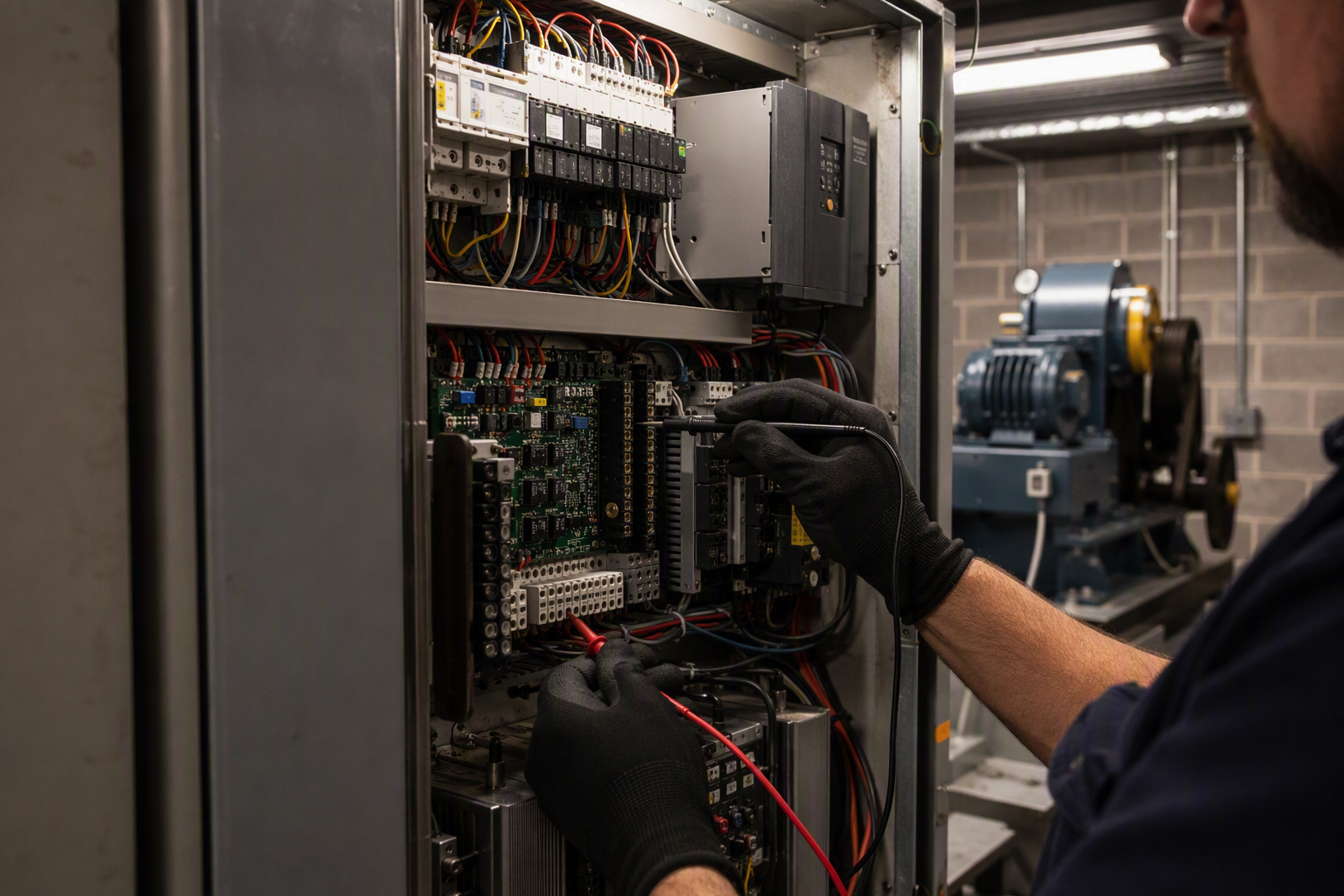
Every elevator budget should be structured around two distinct and non-interchangeable categories:
- Operating Budget (OPEX): Covers preventive maintenance contracts, mandatory annual inspections, minor repairs, lubrication, adjustments, and callback service. This is a recurring, predictable annual expense.
- Capital Reserve Budget (CAPEX): Covers major component replacements such as controllers, motors, hydraulic pumping units, cab interiors, door operators, and full modernizations. These are infrequent, high-cost expenditures that must be anticipated years in advance.
Conflating the two categories — treating an emergency controller replacement as an operating expense — is the most common budgeting error facility teams make. Property managers who separate these buckets clearly, and fund each appropriately, maintain financial stability and avoid deferred maintenance cycles that compound costs over time.
What Should a Preventive Maintenance Contract Include?
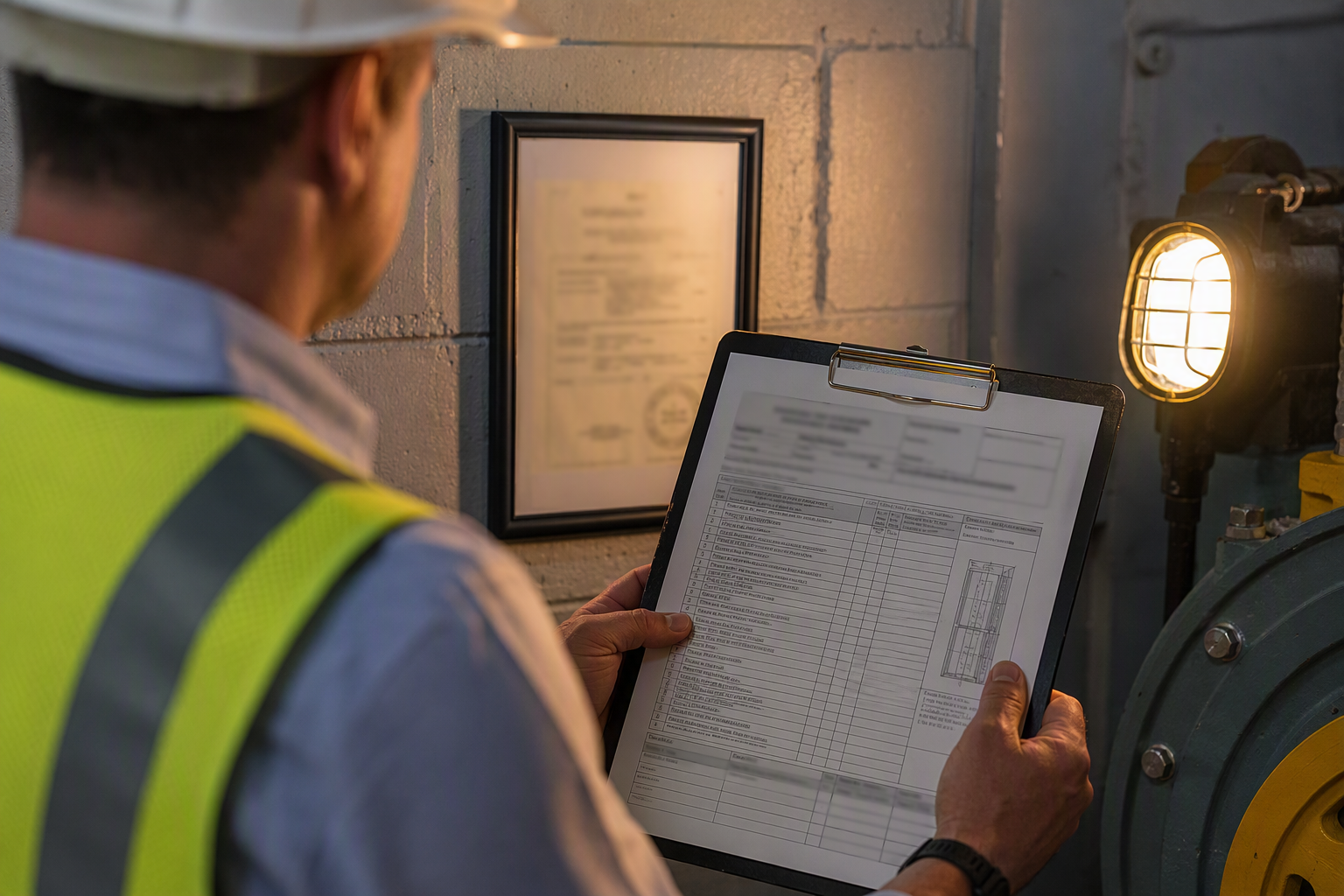
A well-structured preventive maintenance (PM) contract is the foundation of responsible elevator budgeting. When evaluating or renewing a contract, facility directors should confirm that the scope explicitly includes the following:
- Scheduled lubrication of all moving mechanical components
- Adjustment and testing of safety devices including governors, buffers, and safeties
- Door system alignment, clutch adjustment, and operator testing
- Controller and solid-state drive inspection
- Machine room environmental checks (temperature, humidity, cleanliness)
- Pit and hoistway inspection
- Callback response for unplanned outages
- Coordination and facilitation of the annual state or jurisdictional inspection
Contracts that exclude parts, limit callback visits, or carve out major safety components can appear cost-effective at signing but generate significant unbudgeted repair invoices throughout the contract term. Facility directors should request a detailed scope-of-work document — not just a one-page summary — before signing any multi-year agreement.
PM Contract Types: Comparison at a Glance
| Contract Type | What’s Covered | Budget Predictability | Best For | Key Risk |
|---|---|---|---|---|
| Oil & Grease (Basic) | Lubrication and adjustments only; parts and labor billed separately | Low — frequent add-on invoices | New equipment still under manufacturer warranty | Unexpected repair costs can be substantial |
| Parts & Labor (Moderate) | Maintenance plus most standard parts; major components often excluded | Moderate — some surprise exclusions possible | Equipment aged 5–15 years in good condition | Fine-print exclusions on high-cost components |
| Full Comprehensive | All labor, parts, and typically most major components including motor, controller | High — near-fixed annual cost | Older equipment or high-traffic installations | Higher base cost; vendor quality matters greatly |
What Mandatory Inspections Must Be Budgeted for in DC, Maryland, Pennsylvania, and Virginia?
Each jurisdiction in Quality Elevator Company’s service territory operates under its own authority having jurisdiction (AHJ) with specific inspection frequency requirements, permit fees, and certificate renewal obligations. While ASME A17.1 Safety Code for Elevators and Escalators and ASME A17.3 Safety Code for Existing Elevators and Escalators provide the baseline technical standards, enforcement and inspection scheduling are managed locally.
Facility directors should budget for the following inspection-related costs annually:
- State or municipal inspection fees: Required for the issuance or renewal of an operating certificate; fees vary by jurisdiction and elevator type.
- Five-year load tests: Required periodic load and safety tests under ASME A17.1 that go beyond annual inspections and typically involve additional labor and equipment.
- Witnessing and coordination labor: A qualified elevator technician must typically be on-site during inspections; this time should be covered under the PM contract or budgeted separately.
- Deficiency corrections: An inspection may produce a list of required corrections that must be completed before certificate renewal. Budget a contingency for remediation work each year.
Failure to maintain a valid operating certificate in any of these jurisdictions can result in mandatory shutdown orders, which create liability exposure and operational disruption far exceeding the cost of timely compliance.
How Should Property Managers Build a Capital Reserve Fund for Elevators?
Capital reserve planning for elevators is a multi-year exercise. The objective is to set aside funding annually so that when major component replacement or full modernization becomes necessary, the capital is available without emergency financing or deferred-maintenance risk.
Step-by-Step Process for Building an Elevator Capital Reserve
- Commission an independent elevator condition assessment. Before any reserve study or capital plan can be credible, facility teams need an objective, third-party evaluation of each elevator’s current condition, component ages, and anticipated remaining service life.
- Catalog all major components and their estimated replacement timelines. Key components include the controller, machine and motor, hydraulic power unit (for hydraulic elevators), cab finishes, door operators, and safety devices.
- Obtain replacement cost estimates for each major component. Work with a qualified elevator service provider to develop current market pricing for each item.
- Apply an annual escalation factor to future costs. Construction and elevator parts costs have historically trended upward; reserve studies should account for this when projecting future replacement expenditures.
- Calculate an annual contribution amount. Divide the inflation-adjusted replacement cost of each component by the number of years until anticipated replacement to determine the annual reserve contribution needed.
- Review and update the reserve study on a defined cycle. Elevator conditions change, equipment markets shift, and code requirements evolve. Reserve studies should be revisited periodically — many property management standards recommend every three to five years at minimum.
- Segregate reserve funds from operating accounts. Reserve contributions should be held in a dedicated account to prevent commingling with day-to-day operating cash, which reduces the temptation to redirect funds and maintains audit-ready records.
What Are the Most Common Major Capital Expenditures for Elevators?
| Capital Item | Typical Trigger | General Planning Horizon | Budget Impact | Compliance Driver? |
|---|---|---|---|---|
| Controller Replacement | End of useful life, parts obsolescence, code upgrade | 15–25 years from original installation | High | Sometimes — if existing controller lacks required safety features |
| Machine / Motor Overhaul or Replacement | Excessive wear, heat damage, bearing failure | 20–30 years depending on maintenance quality | High | Rarely a direct code trigger, but failure is operationally critical |
| Hydraulic Power Unit Replacement | Tank corrosion, pump wear, fluid contamination | 15–25 years | Moderate to High | Environmental regulations on underground hydraulic tanks may apply |
| Door Operator Replacement | Chronic malfunctions, obsolete parts, high callback rate | 10–20 years in high-traffic buildings | Moderate | Door safety device requirements under ASME A17.1 |
| Cab Interior Modernization | Aesthetic degradation, ADA compliance, tenant pressure | Varies widely; often 15–20 years | Moderate | Yes — ADA requirements for controls, signage, and flooring |
| Full Modernization | Multiple systems at end of life simultaneously; major code upgrade trigger | 25–40 years from original installation | Very High | Yes — ASME A17.3 triggers upgrades when alterations exceed defined thresholds |
| Rope / Cable Replacement | Wear, corrosion, broken wires exceeding allowable limits | 6–12 years depending on use and environment | Low to Moderate | Yes — ASME A17.1 specifies rope retirement criteria |
How Does ADA Compliance Factor Into the Elevator Budget?
The Americans with Disabilities Act (ADA) imposes specific requirements on elevator controls, signage, cab dimensions, door timing, and accessible features. When a cab modernization or major alteration is undertaken, ADA compliance requirements are typically triggered, meaning the scope — and budget — must include accessible control panels, Braille signage, audible signals, and appropriate door hold-open timing.
Facility directors in DC, Maryland, Pennsylvania, and Virginia should treat ADA compliance not as a discretionary upgrade but as a mandatory budget line whenever modernization work is planned. Failing to address ADA requirements during a modernization can result in complaints, legal exposure, and the cost of returning to complete missed work after project close-out.
What Is the Difference Between an Elevator Repair and an Elevator Modernization, and Why Does It Matter Budgetarily?
This distinction is critically important for both budgeting and regulatory compliance:
- Repair: Restoring a component to its original operating specification. Repairs are typically classified as maintenance expenditures and do not necessarily trigger code upgrade requirements.
- Alteration / Modernization: Any change to equipment that modifies function, capacity, speed, or control logic beyond original specifications. Under ASME A17.3 Safety Code for Existing Elevators and Escalators, alterations can trigger requirements to bring other systems up to current code — a phenomenon sometimes called the “alteration cascade.”
When budgeting for a controller replacement, for example, the project cost must include not just the controller itself but any ancillary upgrades the AHJ requires as a condition of approving the alteration permit. Facility teams that budget only for the named component and discover additional code requirements mid-project face significant overruns. Working with an experienced service provider before project approval helps scope these costs accurately.
Should a Property Manager Choose an Independent Elevator Company or an OEM Service Provider?
| Factor | Independent Elevator Company | OEM / Manufacturer-Affiliated Provider |
|---|---|---|
| Contract Flexibility | Generally higher — scope and terms are negotiable | Lower — standardized contracts with limited customization |
| Parts Sourcing | Access to OEM and third-party parts; can source across brands | Primarily proprietary parts; third-party use may void warranty |
| Multi-Brand Capability | Can service mixed fleets (multiple manufacturers in one building) | Optimized for own brand; other brands may be secondary |
| Pricing Transparency | Typically more competitive on both PM and repair pricing | Proprietary parts dependency can result in higher repair costs |
| Local Responsiveness | Regionally focused; prioritizes local client relationships | National dispatch model; local response times may vary |
| Code Expertise (DC, MD, PA, VA) | Specializes in local AHJ relationships and jurisdictional nuances | National compliance model; local nuances may require escalation |
Quality Elevator Company is an independent, certified elevator service provider serving the District of Columbia, Maryland, Pennsylvania, and Virginia. As an independent provider, Quality Elevator Company is not constrained by manufacturer parts programs or national service dispatch models, allowing for more transparent, competitive, and locally responsive service — factors that directly affect both the accuracy and the total cost of an elevator maintenance budget.
What Budget Contingency Should Be Set Aside for Unplanned Elevator Repairs?
Even with a robust preventive maintenance program, unplanned repairs occur. Equipment can fail between scheduled visits; vandalism, water intrusion, and power anomalies create damage that PM contracts may not cover; and inspection deficiency lists generate unexpected remediation costs.
Facility directors should build an annual contingency reserve within the operating budget specifically for unplanned elevator expenditures. The appropriate amount varies based on equipment age, condition, traffic volume, and contract scope. Rather than prescribing a figure without a verifiable source, the practical guidance is this: buildings with aging equipment, mixed fleets, or basic-scope PM contracts should carry a materially larger contingency than buildings with newer equipment under comprehensive contracts. A qualified elevator service provider can help quantify a reasonable contingency based on the actual condition of each unit.
How Do Workplace Safety Regulations Affect Elevator Maintenance Budgeting?
Machine room access, pit entry, and hoistway work all fall under OSHA regulations governing confined space entry, lockout/tagout (LOTO) procedures, and fall protection. Property managers and facility directors bear responsibility for ensuring that their elevator service providers follow compliant safety protocols. Selecting a provider that maintains documented OSHA-compliant safety programs — and verifying that compliance — is both a liability management obligation and an indirect budget consideration: non-compliant incidents generate regulatory, legal, and reputational costs that dwarf any savings from selecting the lowest-cost vendor.
What Key Questions Should a Facility Director Ask When Reviewing an Elevator Budget Proposal?
Before approving any elevator maintenance or capital repair budget, facility directors in DC, Maryland, Pennsylvania, and Virginia should ensure they can answer the following:
- Is the PM contract scope documented in detail, or is it a summary-only agreement?
- What components and repair categories are explicitly excluded from the contract?
- Has the equipment received an independent condition assessment within the past three years?
- Is there a dedicated, segregated capital reserve fund for elevator replacement costs?
- Does the capital reserve reflect current component pricing, not outdated estimates?
- Are all required inspections and certificate renewals calendared and budgeted for each unit?
- Does the operating budget include a contingency line specifically for unplanned elevator repairs?
- Has a qualified service provider reviewed the ASME A17.3 alteration implications for any planned capital project?
Why Is an Independent Elevator Assessment the Right First Step for Budget Planning?
No budget is more accurate than the information underlying it. Elevator capital budgets built on assumptions, outdated maintenance records, or sales-driven assessments from vendors with a financial interest in selling modernization work are inherently unreliable. An independent assessment — conducted by a qualified provider with no stake in a particular scope of work — produces objective condition data that facility directors can use to construct defensible budgets, communicate credibly with ownership and boards, and prioritize capital investments by genuine need rather than vendor preference.
Quality Elevator Company provides independent elevator assessments for properties across the District of Columbia, Maryland, Pennsylvania, and Virginia, helping facility teams understand exactly what their equipment requires, what code obligations apply, and how to structure a realistic, accurate annual budget that protects both the building’s finances and its occupants.
Take the Guesswork Out of Your Elevator Budget
Property managers and facility directors who budget for elevator maintenance with incomplete information consistently overpay for underperforming service, face mid-year budget emergencies, and accumulate deferred maintenance liability that compounds into costly modernization crises. A structured, evidence-based approach — starting with an independent assessment — changes that.
Contact Quality Elevator Company for a free elevator assessment. Serving the District of Columbia, Maryland, Pennsylvania, and Virginia, Quality Elevator Company’s team will evaluate your equipment’s current condition, identify compliance obligations under ASME A17.1 and ASME A17.3, and help you build a defensible, accurate maintenance and capital budget for the year ahead.
Call Quality Elevator Company today: 301-779-9116
Need elevator service you can rely on? Quality Elevator Company is ready to help.