How Much Does It Cost to Install a New Elevator in a Commercial Building?
For building owners, property managers, and developers in the District of Columbia, Maryland, Pennsylvania, and Virginia, budgeting for a new commercial elevator installation is a significant capital planning decision. Costs are shaped by equipment type, shaft construction, local permitting, accessibility compliance, and ongoing maintenance obligations. This guide covers every dimension of that cost landscape — without invented figures — so decision-makers can plan accurately.
What Factors Most Influence Commercial Elevator Installation Cost?
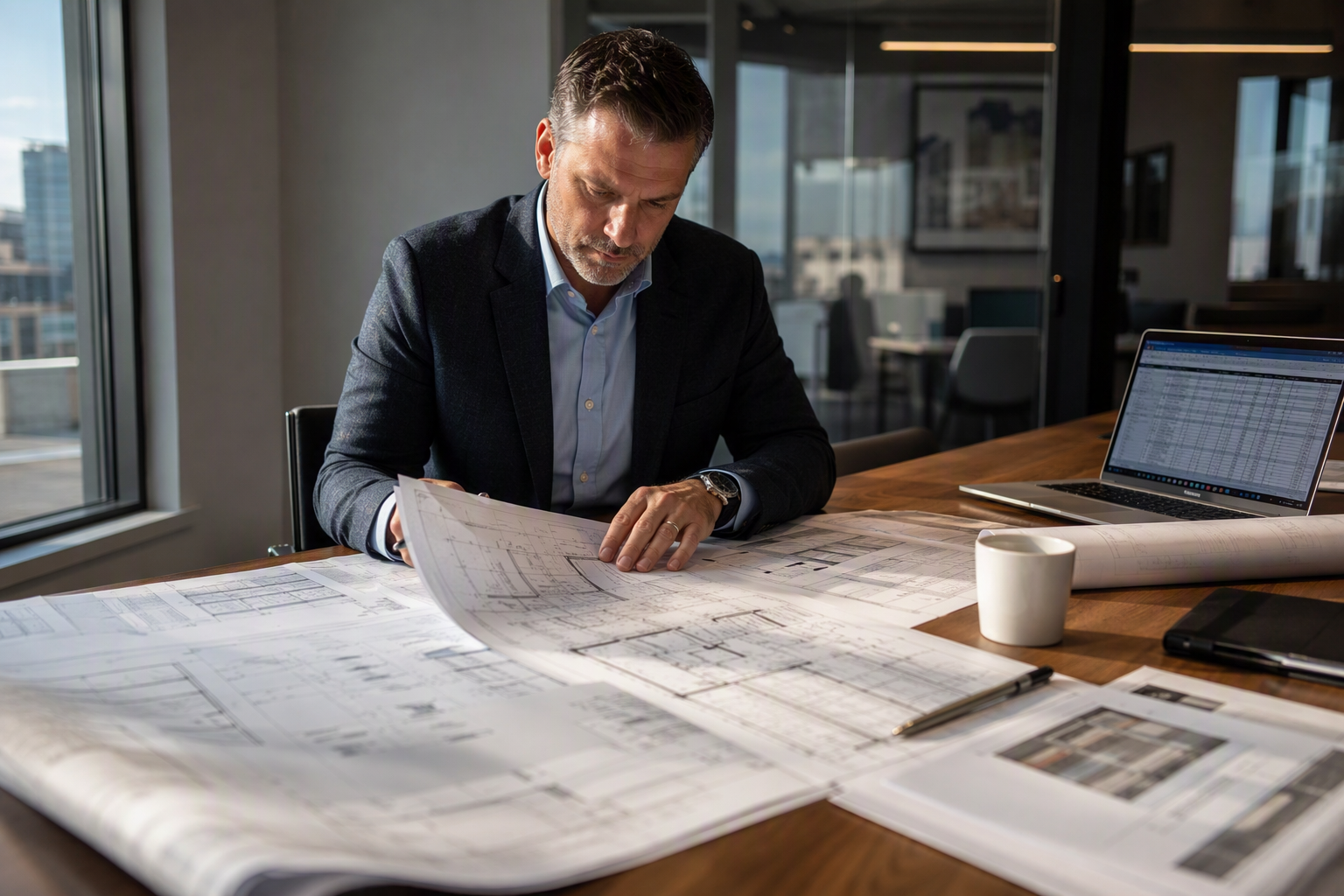
No two commercial elevator projects carry the same price tag. The variables that most consistently drive cost include:
- Elevator type: Hydraulic, traction (geared or gearless), and machine-room-less (MRL) systems each carry different equipment, infrastructure, and labor costs. Hydraulic units are generally less expensive to purchase but require a machine room and hydraulic fluid management. MRL traction systems eliminate the machine room but demand precise hoistway tolerances.
- Number of stops and travel distance: Every additional floor served adds equipment, wiring, and installation labor. A two-stop installation in a low-rise office building is structurally and financially different from a ten-stop installation in a mid-rise commercial tower.
- Hoistway and pit construction: If the building does not already have a prepared shaft, pit, and overhead clearance, structural construction work can represent a substantial share — sometimes the majority — of the total project cost.
- Cab size and finish: Commercial elevator cabs range from functional contractor-grade interiors to high-specification finishes with custom panels, flooring, and lighting. Aesthetic upgrades affect cost meaningfully.
- Capacity rating: Elevators rated for higher load capacities require heavier mechanical components, larger motors, and reinforced structural elements.
- Local permitting and inspection fees: DC, Maryland, Pennsylvania, and Virginia each maintain their own elevator safety programs with associated permit, plan review, and inspection fees. These fees vary by jurisdiction and project scope.
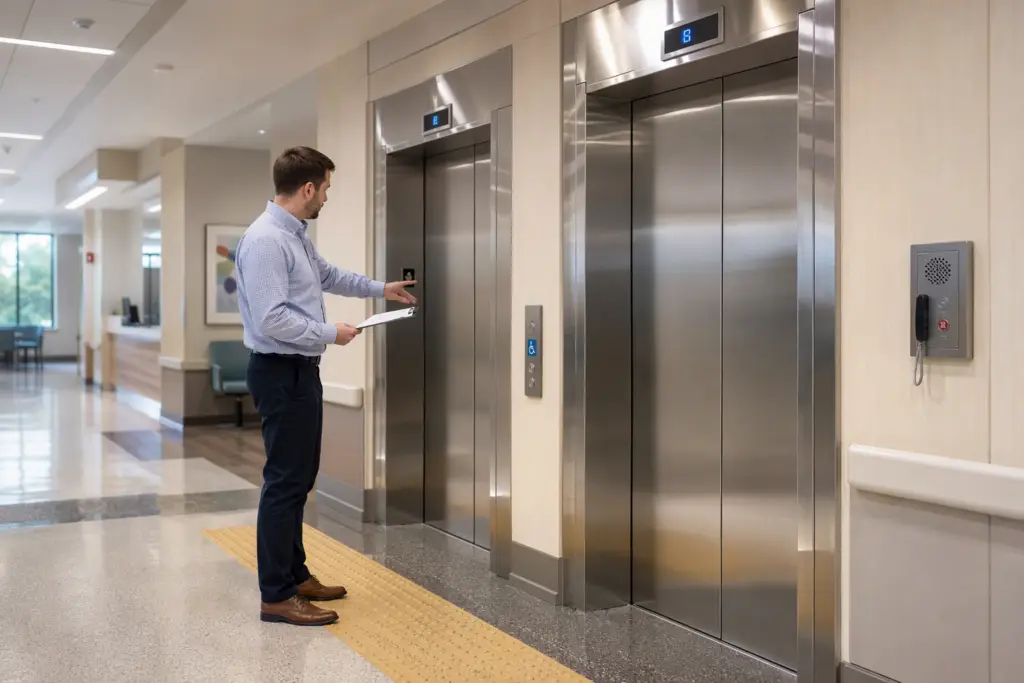
- Accessibility compliance scope: Meeting ADA (Americans with Disabilities Act) requirements for cab dimensions, door timing, control heights, and signage is non-negotiable for commercial applications and must be budgeted into every project.
- Code edition in force: Compliance with the ASME A17.1 Safety Code for Elevators and Escalators governs new installations nationally, and the adopted edition in each jurisdiction affects specific technical requirements that can influence equipment specifications and cost.
What Are the Main Types of Commercial Elevators and How Do They Differ in Cost?
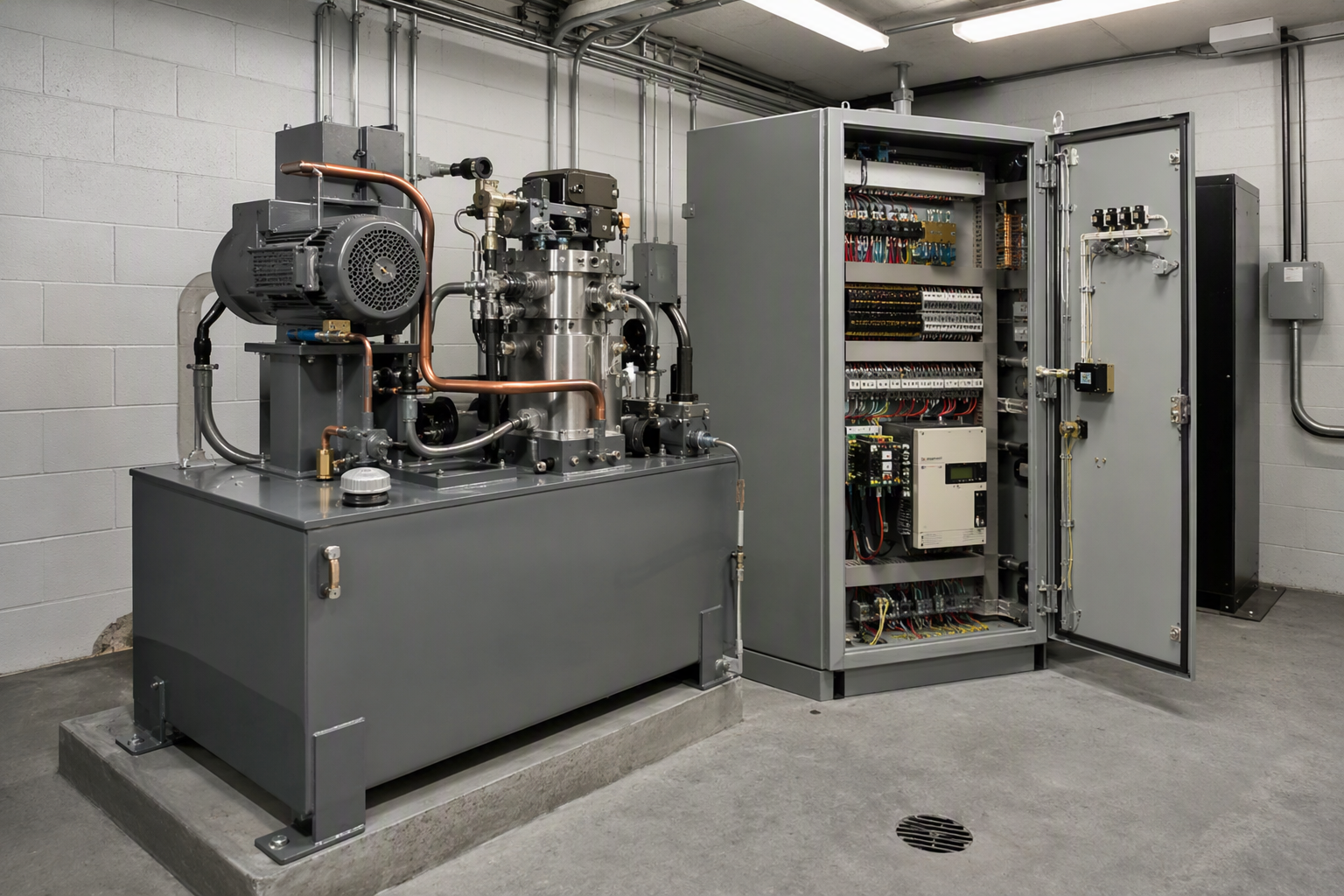
Understanding elevator type is the first step toward a realistic budget:
- Hydraulic elevators use a fluid-driven piston to raise and lower the cab. They are typically installed in low-rise buildings (up to approximately five or six floors), require a machine room adjacent to the hoistway, and generally represent a lower upfront equipment cost. However, they consume more energy during operation and require periodic hydraulic fluid management.
- Geared traction elevators use a motor-driven sheave and counterweight system with a gearbox. They are suited to mid-rise commercial buildings and offer a balance between performance and cost compared to gearless systems.
- Gearless traction elevators use a direct-drive motor and are standard in high-rise and high-traffic commercial buildings. Equipment costs are higher, but energy efficiency and ride quality are superior over the elevator’s service life.
- Machine-room-less (MRL) traction elevators house the drive machinery in the hoistway or overhead space, eliminating the dedicated machine room. This can reduce overall construction costs in buildings where machine room space is at a premium, though hoistway tolerances must be precisely engineered.
- Pneumatic vacuum elevators and other specialty systems exist but are more commonly found in residential or light commercial applications rather than standard commercial buildings.
What Does Hoistway and Structural Construction Add to the Total Cost?
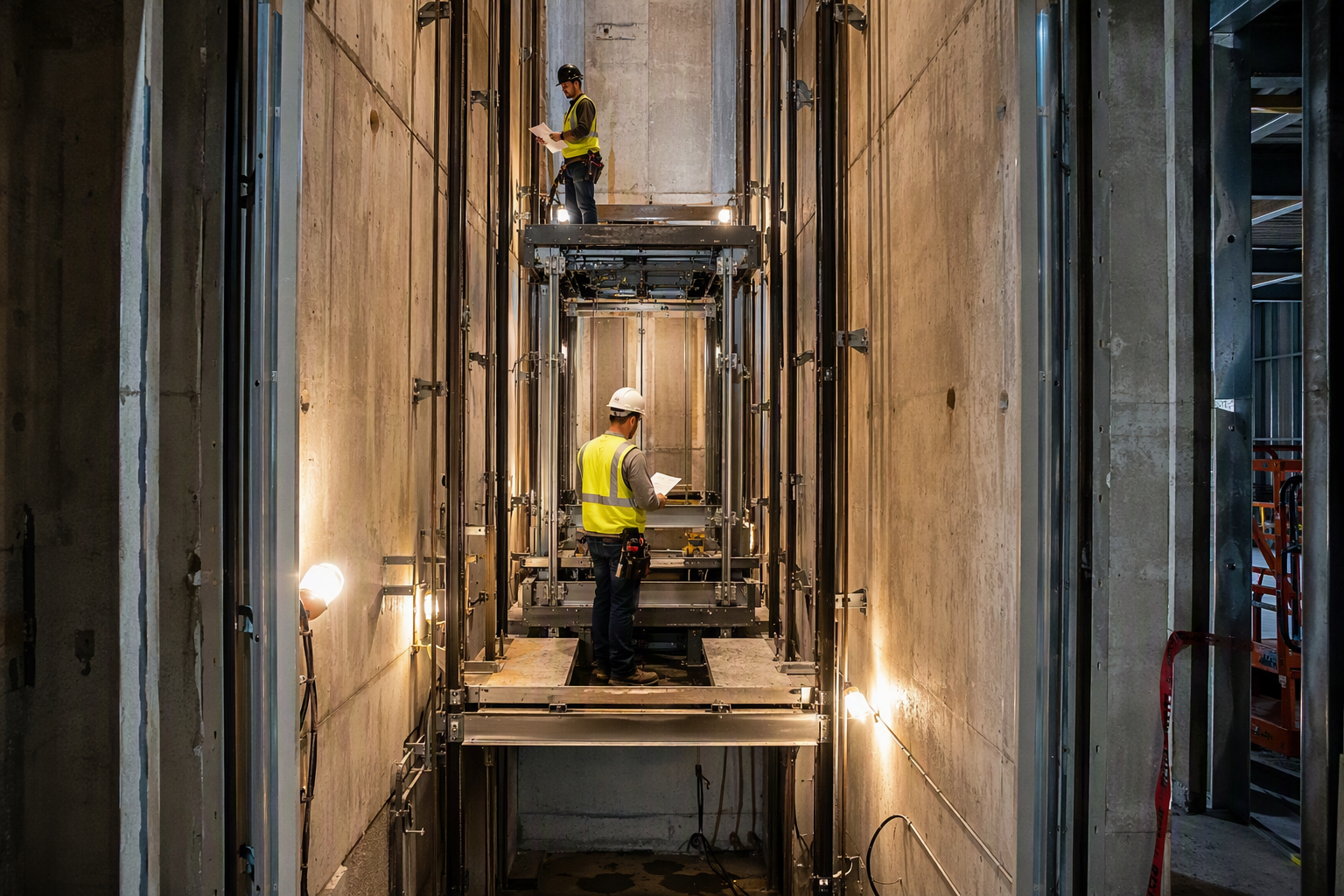
When a commercial building must be retrofitted with an elevator — as opposed to incorporating one during original construction — the structural work often rivals or exceeds the equipment cost itself. Key construction line items include:
- Hoistway (shaft) construction, including concrete or steel framing, fireproofing, and ventilation
- Pit excavation and waterproofing
- Overhead clearance modification or roof structural reinforcement
- Electrical service upgrade to support the elevator’s power requirements
- Machine room construction (for hydraulic and geared traction systems)
- Coordination with mechanical, plumbing, and fire suppression systems
In a ground-up new construction project, these costs are distributed across the broader construction budget and are typically lower on a per-elevator basis than in a retrofit scenario.
What ADA Requirements Apply to New Commercial Elevator Installations?
The Americans with Disabilities Act establishes minimum accessibility standards for elevators in commercial buildings. For most new commercial installations, these requirements govern:
- Minimum cab interior dimensions
- Door width and timing (including a reopening device sensitive to obstructions)
- Call button placement and height at landings and inside the cab
- Tactile and Braille signage at hall stations and inside the cab
- Audible and visual signals for floor indication
- Handrail placement within the cab
- Emergency communication requirements
Non-compliance with ADA standards exposes building owners to legal liability and can trigger costly after-the-fact retrofits. Budgeting ADA-compliant specifications into the original installation is always more cost-effective than remediation.
What ASME and Safety Code Standards Govern New Commercial Elevator Installation?
All new commercial elevator installations in DC, Maryland, Pennsylvania, and Virginia must comply with the ASME A17.1 Safety Code for Elevators and Escalators, which is the foundational national standard adopted (with local amendments) across these jurisdictions. This code covers:
- Hoistway construction and clearances
- Mechanical and electrical equipment specifications
- Safety device requirements (buffers, safeties, governors, interlocks)
- Fire service operation requirements
- Emergency lighting and communication systems
- Seismic design considerations where applicable
Existing elevators in these jurisdictions are subject to ASME A17.3 Safety Code for Existing Elevators and Escalators, which governs retrofits and alterations. When a new installation triggers alterations to adjacent existing equipment, A17.3 requirements may also apply. Additionally, OSHA construction safety standards apply to the installation workforce throughout the project.
How Long Does a Commercial Elevator Installation Take?
Timeline is closely tied to project scope and building conditions:
- Pre-design and planning: Site assessment, hoistway survey, structural engineering review, and equipment specification typically require several weeks before any procurement or permitting begins.
- Permitting and plan review: Local building departments in DC, Maryland, Pennsylvania, and Virginia each have their own plan review timelines. Complex projects or jurisdictions with high permit volume may experience extended review periods.
- Equipment manufacturing and lead time: Custom cab finishes, higher-capacity equipment, or specialty configurations extend manufacturing lead times, which can run from several weeks to several months depending on the manufacturer and specifications.
- Hoistway and structural construction: In retrofit scenarios, structural work precedes elevator installation and can add weeks or months to the overall schedule.
- Elevator installation: The mechanical and electrical installation of the elevator system itself typically spans several weeks for a standard commercial unit.
- Inspection and acceptance testing: Local authority having jurisdiction (AHJ) inspection and acceptance testing is required before the elevator may be placed in service. Scheduling and test results can affect the final occupancy date.
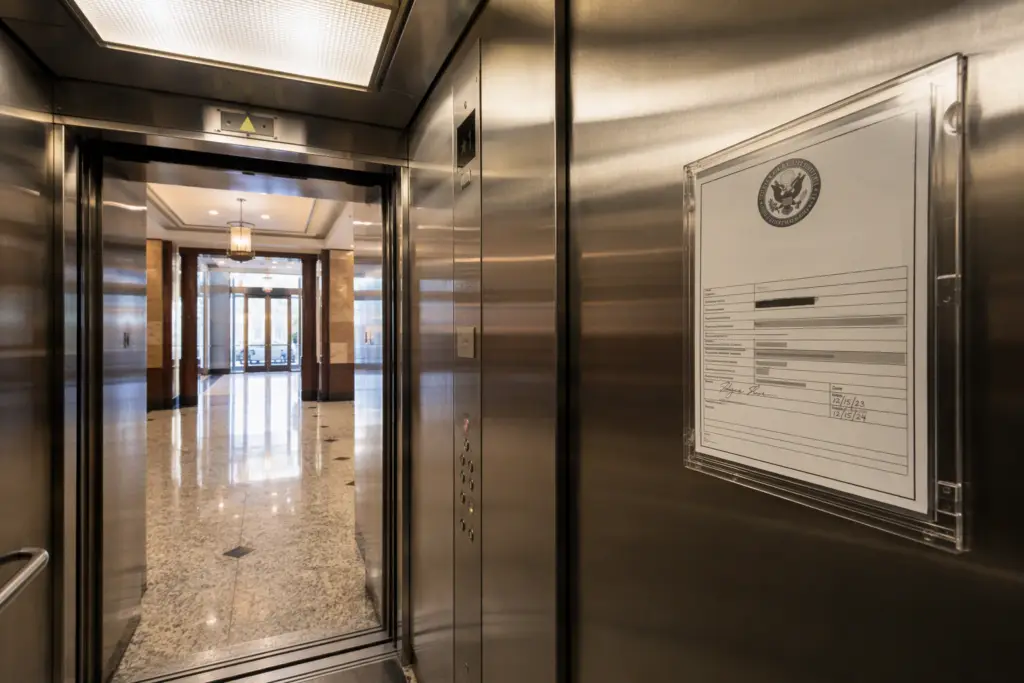
- Certificate of operation issuance: The operating certificate must be posted and in force before the elevator is available for public use.
For straightforward installations in buildings with prepared hoistways, total timelines of three to six months from contract execution to operation are realistic. Complex retrofits or high-rise projects can extend well beyond one year.
What Permits and Inspections Are Required in DC, Maryland, Pennsylvania, and Virginia?
Each jurisdiction maintains a distinct elevator safety program:
- District of Columbia: The DC Department of Buildings oversees elevator permits, plan review, and inspections. A certificate of inspection must be obtained and renewed on a defined schedule.
- Maryland: The Maryland Department of Labor administers the state elevator safety program, including permitting, inspections, and licensing requirements for elevator mechanics and contractors.
- Pennsylvania: The Pennsylvania Department of Labor and Industry oversees elevator safety regulation statewide, with permitting, inspection, and periodic certificate renewal requirements.
- Virginia: The Virginia Department of Labor and Industry administers the Amusement Device and Boiler Safety program, which includes elevator safety permitting and inspection requirements.
In all four jurisdictions, installation work must be performed by properly licensed elevator contractors and mechanics, and the completed installation must pass AHJ inspection before being placed in service.
What Ongoing Maintenance and Inspection Costs Should Be Budgeted After Installation?
A new commercial elevator is not a one-time expense. Recurring obligations include:
- Periodic inspections: All four jurisdictions require periodic safety inspections by a licensed elevator inspector, with certificates renewed on a defined schedule. The ASME A17.1 code and corresponding state programs define inspection categories including routine periodic inspections and periodic tests (such as five-year tests for hydraulic systems).
- Preventive maintenance contracts: Industry best practice and many insurance requirements call for a preventive maintenance agreement with a licensed elevator service company. Maintenance scope, frequency, and pricing vary by system type and building traffic.
- Parts and component replacement: Over a commercial elevator’s service life — often 20 to 30 years or more — wear components, control systems, and hydraulic components will require replacement. Modernization planning should begin well before end-of-life to avoid compliance gaps.
- Energy costs: Hydraulic systems, older traction systems, and systems without regenerative drives carry higher ongoing energy costs than modern, energy-efficient alternatives.
How Do You Compare Elevator Contractors and Get Accurate Bids?
Obtaining accurate, comparable bids requires careful scoping. Best practices include:
- Engage a licensed elevator consultant or qualified engineer to develop a detailed specification before soliciting bids — this ensures contractors are quoting equivalent scope.
- Confirm that each bidding contractor holds the appropriate license in the applicable jurisdiction (DC, Maryland, Pennsylvania, or Virginia).
- Require that each bid explicitly address ADA compliance, ASME A17.1 compliance, and local permit fees.
- Ask for the proposed equipment manufacturer, model, and lead time — not all equipment is equal in reliability, parts availability, or long-term service support.
- Evaluate the proposed maintenance agreement separately from the installation bid. Some contractors offer favorable installation pricing in exchange for long-term maintenance contracts; understand the full lifecycle cost before committing.
- Check references from comparable commercial projects in the same jurisdiction.
- Verify that the contractor carries appropriate insurance and workers’ compensation coverage.
What Industry Trends Are Shaping Commercial Elevator Costs in 2025–2026?
Several forces are shaping the commercial elevator installation landscape heading into 2026:
- Supply chain and lead time pressures: Elevator equipment manufacturing involves specialized components sourced globally. Lead time variability continues to be a planning factor for new installations, making early equipment specification and procurement critical to project schedules.
- Energy efficiency and sustainability requirements: Building owners and operators face increasing pressure — from both regulation and tenant expectations — to reduce building energy consumption. Modern regenerative drive systems and LED cab lighting are increasingly standard specifications, which affect upfront cost but reduce long-term operating expense.
- Connectivity and remote monitoring: New elevator installations increasingly include remote diagnostic and monitoring capabilities, allowing service providers to detect developing issues before they result in downtime. This technology is becoming a baseline expectation in commercial building management.
- Modernization demand for aging inventory: A significant share of the commercial elevator stock in DC, Maryland, Pennsylvania, and Virginia is aging toward or past typical service-life thresholds. This is driving demand for both full replacement and partial modernization projects, keeping licensed contractors and qualified labor in high demand.
- Code update cycles: ASME A17.1 is updated on a regular cycle, and jurisdictions adopt new editions on differing schedules. Projects permitted in 2025–2026 should confirm the current adopted edition with the local AHJ to ensure specifications are aligned with applicable requirements.
What Questions Should a Building Owner Ask Before Starting an Elevator Installation Project?
Before committing to a commercial elevator installation, building owners and property managers in DC, Maryland, Pennsylvania, and Virginia should be prepared to address:
- Does the building have an existing hoistway, pit, and overhead clearance, or does structural work need to be scoped and bid separately?
- What is the intended occupancy and traffic pattern? A low-traffic professional office building and a high-volume retail or medical facility have very different duty requirements.
- Are there any historic preservation requirements that affect hoistway construction or cab appearance?
- What are the local jurisdiction’s permitting timelines, and how do they align with the project schedule?
- Has an ADA compliance review been completed to confirm the proposed installation meets all accessibility requirements?
- What is the long-term maintenance plan, and has it been factored into the total cost of ownership analysis?
How Can Quality Elevator Company Help With a Commercial Elevator Installation?
Quality Elevator Company serves commercial building owners, property managers, developers, and facility teams across the District of Columbia, Maryland, Pennsylvania, and Virginia. The company takes a data-driven approach to elevator assessments, helping clients understand the full scope — equipment specifications, code compliance requirements, permitting obligations, and lifecycle cost considerations — before any commitment is made.
Rather than offering generic estimates, Quality Elevator Company bases its assessments on the specific conditions of each building and project, the applicable jurisdiction’s regulatory requirements, and current equipment options. This approach gives clients the information needed to budget accurately, compare contractor proposals on an equal basis, and make decisions aligned with their long-term building management goals.
Whether the project involves a straightforward new installation in a prepared hoistway, a complex retrofit in an occupied commercial building, or a modernization of aging equipment approaching end of service life, Quality Elevator Company provides the technical grounding and jurisdictional knowledge that commercial projects in DC, Maryland, Pennsylvania, and Virginia require.
Summary: Key Cost and Compliance Considerations for Commercial Elevator Installation
- Total installed cost varies significantly based on elevator type, building conditions, hoistway construction requirements, and local permitting — qualitative scoping before budgeting is essential.
- All new installations in DC, Maryland, Pennsylvania, and Virginia must comply with ASME A17.1 Safety Code for Elevators and Escalators as adopted by the applicable jurisdiction.
- ADA accessibility requirements are non-negotiable for commercial applications and must be built into specifications from the outset.
- OSHA construction safety standards apply throughout the installation process.
- Ongoing inspection, maintenance, and parts costs are a material component of total cost of ownership and should be evaluated alongside installation costs.
- Industry conditions in 2025–2026 favor early planning, early equipment specification, and engagement with licensed, experienced contractors familiar with local jurisdictional requirements.
Get a Free Commercial Elevator Assessment From Quality Elevator Company
Accurate cost planning starts with an accurate assessment of your building’s conditions, applicable code requirements, and equipment options. Contact Quality Elevator Company for a free elevator assessment — serving the District of Columbia, Maryland, Pennsylvania, and Virginia.
Call: 301-779-9116
Need elevator service you can rely on? Quality Elevator Company is ready to help.