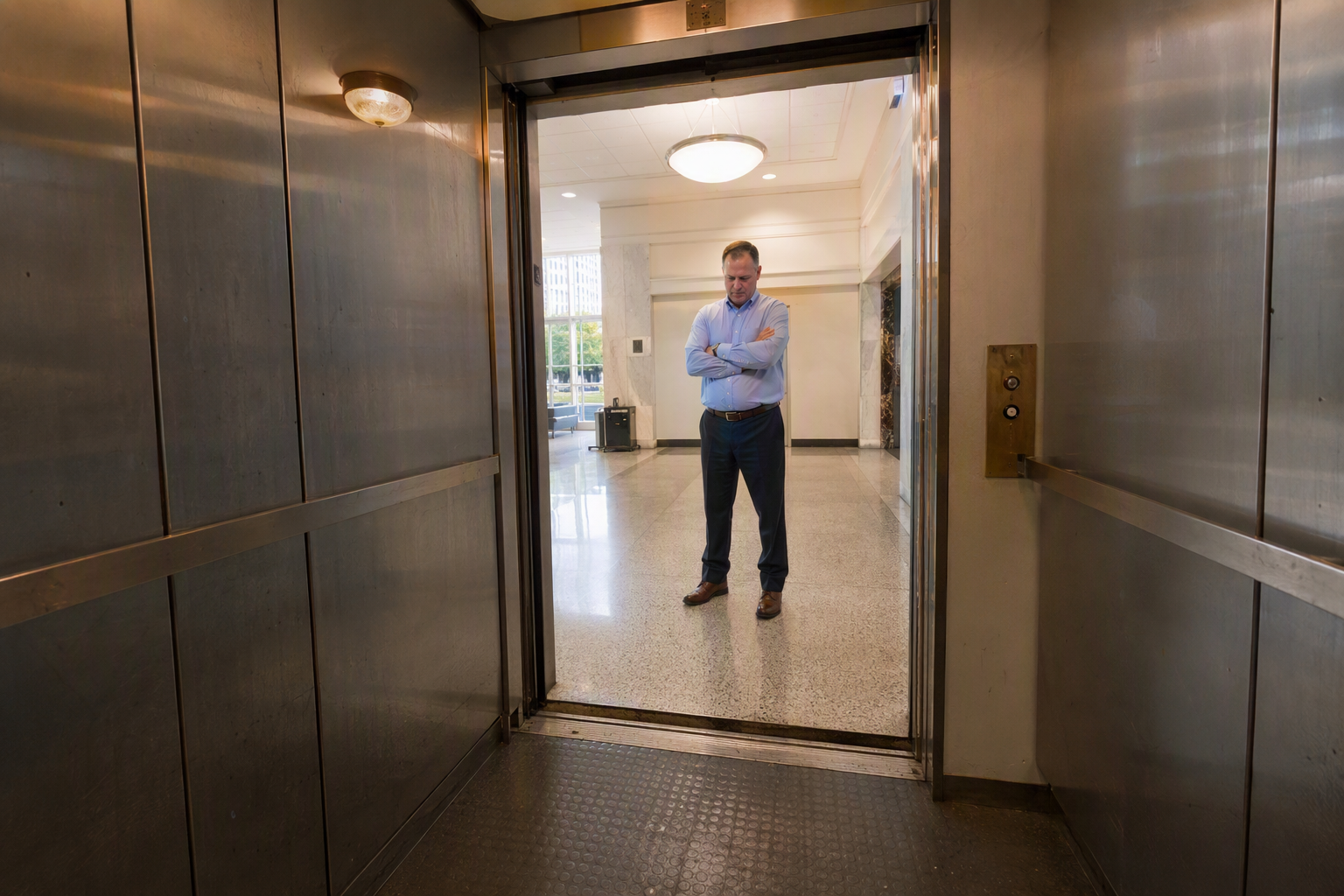
What Are the Signs That My Elevator Is About to Fail or Needs Emergency Repair Before It Breaks Down Completely?
Elevators rarely fail without warning. In most cases, mechanical stress, electrical faults, and component wear produce observable symptoms days, weeks, or even months before a complete shutdown occurs. Recognizing those symptoms early — and acting on them — is the difference between a scheduled repair during off-hours and an emergency evacuation mid-business-day. The sections below cover every major warning category in practical, technical detail so that building owners, property managers, and facility directors in Baltimore, Washington DC, Philadelphia, and Richmond can make informed decisions before a minor issue becomes a costly crisis.
What are the most critical early warning signs that an elevator is about to fail?
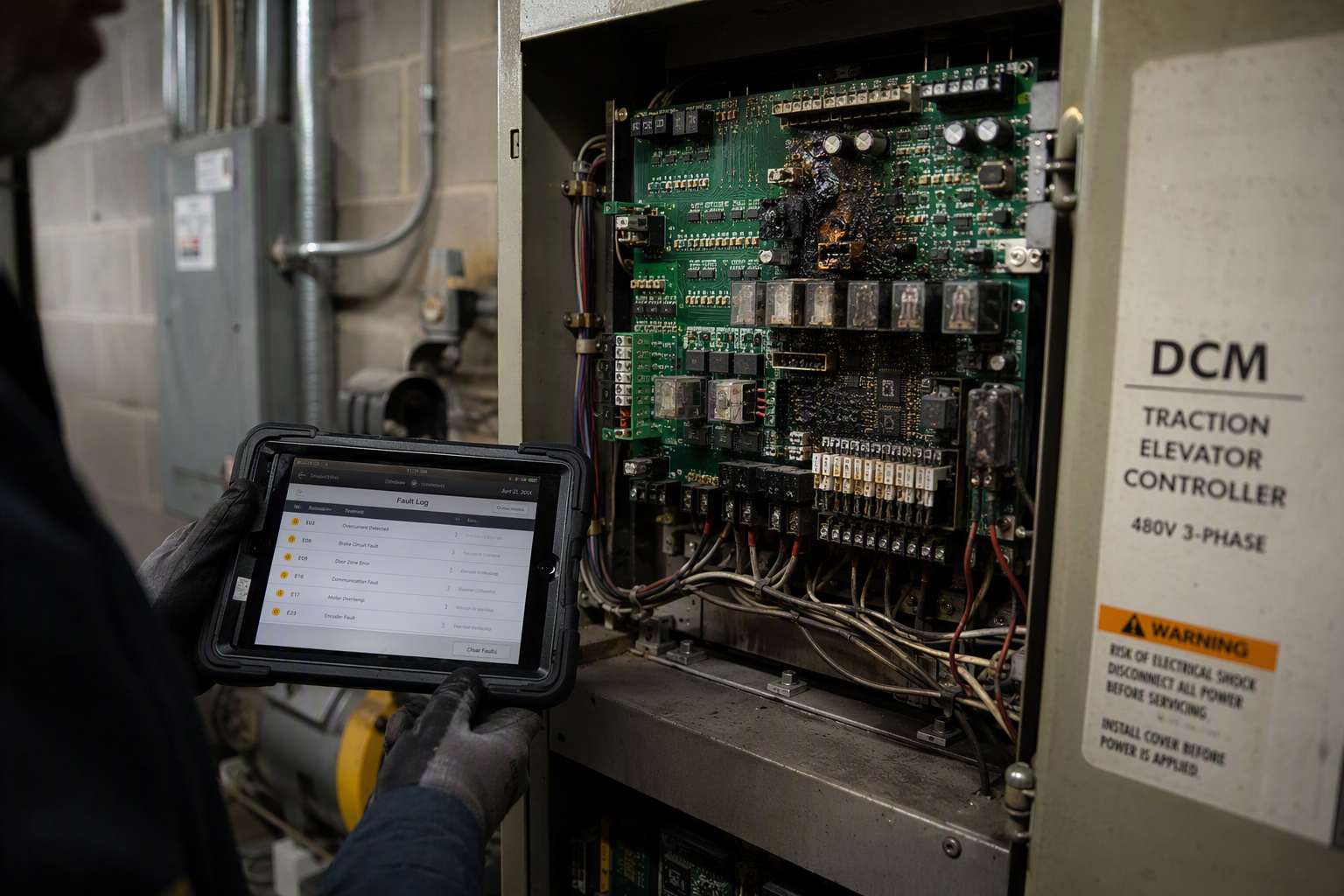
The most critical early warning signs include persistent leveling errors, unusual mechanical noises, door malfunctions, burning or electrical odors, frequent nuisance trips to the machine room, and visible hydraulic leaks — each indicating specific subsystem stress that, if unaddressed, escalates to complete failure or a regulatory shutdown.
These symptoms rarely appear in isolation. A motor controller that is beginning to fail may simultaneously cause rough starts, erratic speed, and repeated fault codes. Similarly, aging hydraulic seals that develop small leaks often correlate with slow descent speeds and floor-leveling drift. The interconnected nature of elevator systems means that one symptom is usually a signal to inspect the entire unit, not just the obvious component.
Property managers should train building staff to log abnormal behavior with time, date, and description. That log becomes invaluable diagnostic data for a licensed elevator mechanic and can shorten troubleshooting time significantly.
Why does poor floor leveling indicate a serious mechanical problem?
Poor floor leveling — when the elevator car floor does not align within approximately half an inch of the landing floor — indicates problems with the drive system, selector tape, position sensors, or hydraulic valve calibration, and it also creates an immediate trip-and-fall hazard that can trigger ADA and ASME compliance violations.
Under the Americans with Disabilities Act (ADA), accessible elevators must provide safe and reliable floor-level access. A car that consistently mislevels can expose building owners to ADA complaints in addition to personal-injury liability. From a mechanical standpoint, chronic mislanding in traction elevators often points to worn rope hitch springs, a failing drive encoder, or a deteriorating selector tape. In hydraulic elevators, the same symptom usually means a worn-out control valve or internal cylinder bypass.
Quality Elevator Company performs leveling diagnostics as part of every comprehensive assessment in the Baltimore, Washington DC, Philadelphia, and Richmond service areas, checking both electronic position feedback and physical landing accuracy.
What do unusual elevator noises indicate about component health?
Unusual noises — grinding, squealing, banging, rattling, or a persistent hum — are audible indicators of specific mechanical failures such as worn guide-rail gibs, failing bearings, loose counterweight filler plates, stretched or frayed hoist ropes, and deteriorating motor windings.
A grinding sound during movement typically points to dry or worn guide-shoe gibs rubbing metal-on-metal against the rails. Squealing often indicates that sheave grooves are worn and the hoist ropes are slipping or vibrating. A rhythmic banging during travel can signal a splice in the traveling cable that is catching on a guide bracket, or a loose counterweight filler plate. Any of these, if ignored, will accelerate wear on multiple components simultaneously.
Because elevator machinery is often located in a machine room above or below the occupied floors, building staff may not hear subtle noise changes. Scheduling periodic ride-along inspections — where a technician travels in the cab during operation — is one of the most effective diagnostic methods available.
How does slow or erratic door operation signal impending elevator failure?
Slow, jerky, or repeatedly reversing elevator doors indicate worn door operators, misaligned or damaged door tracks, failing safety edges, or a deteriorating door cam and clutch mechanism — and door-related faults account for a substantial share of elevator entrapments and service calls industry-wide.
The ASME A17.1 Safety Code for Elevators and Escalators mandates specific door closing-force limits and requires that door reopening devices (safety edges or light curtains) function reliably at every landing. A door that closes forcefully, hesitates, or reverses repeatedly without an obstruction is exhibiting behavior that falls outside those parameters.
Beyond code compliance, door system failures are the leading cause of passenger entrapment. A door that does not fully close prevents the elevator from moving, stranding passengers. A door that closes but does not latch properly may allow travel with the door ajar — a far more dangerous condition. Technicians assess door operator motor current draw, clutch engagement, and reopening device sensitivity as a standard part of any pre-failure diagnostic.
What does a burning smell or electrical odor from an elevator mean?
A burning smell or electrical odor from an elevator cab, hoistway, or machine room indicates overheating motor windings, failing drive electronics, a deteriorating brake coil, or an electrical short — all of which represent immediate fire and safety hazards requiring the unit to be taken out of service at once.
Motor windings that are beginning to fail emit a distinctive acrid, insulation-burning odor before full failure. Similarly, a solid-state drive (variable-frequency drive or static control) that is overheating will often produce an electronic burning smell from the control cabinet. These are not nuisance conditions — they are fire precursors in a confined mechanical space with limited ventilation.
If a burning odor is detected, building personnel should remove the elevator from service by engaging the emergency stop, notify the elevator service company immediately, and if any smoke is visible, evacuate the machine room and contact the fire department. Do not attempt to reset the elevator and return it to service without a licensed technician inspecting the equipment first.
What should building managers do immediately when they suspect elevator failure is imminent?
When imminent elevator failure is suspected, building managers should follow a structured response sequence to protect passengers, preserve equipment, and maintain regulatory compliance.
- Remove the elevator from service. Use the key switch at the main landing or the stop switch in the machine room to take the unit out of operation. Do not allow passengers to continue using an elevator exhibiting failure symptoms.
- Post clear “Out of Service” signage at every floor landing to prevent passengers from attempting to call the elevator.
- Check for trapped passengers. If anyone is inside the car, contact the elevator service company immediately. Never attempt a self-rescue by forcing doors open — this creates serious fall and entrapment risks.
- Document the symptoms. Record the exact nature of the problem (noise type, odor, behavior), the time it began, the floor or floors where it occurred, and any fault codes displayed on the controller or cab panel.
- Contact a licensed elevator service company. Provide the documented symptom log so technicians can arrive prepared with likely replacement components.
- Notify the authority having jurisdiction (AHJ). In Maryland, DC, Pennsylvania, and Virginia, certain out-of-service conditions and entrapments may require notification to the state or local elevator inspection authority. Consult your jurisdiction’s requirements.
- Do not attempt DIY repairs. Elevator systems involve high-voltage electricity, heavy counterweights, and hydraulic pressures that are extremely dangerous for untrained personnel.
How do hydraulic elevator oil leaks signal the need for emergency repair?
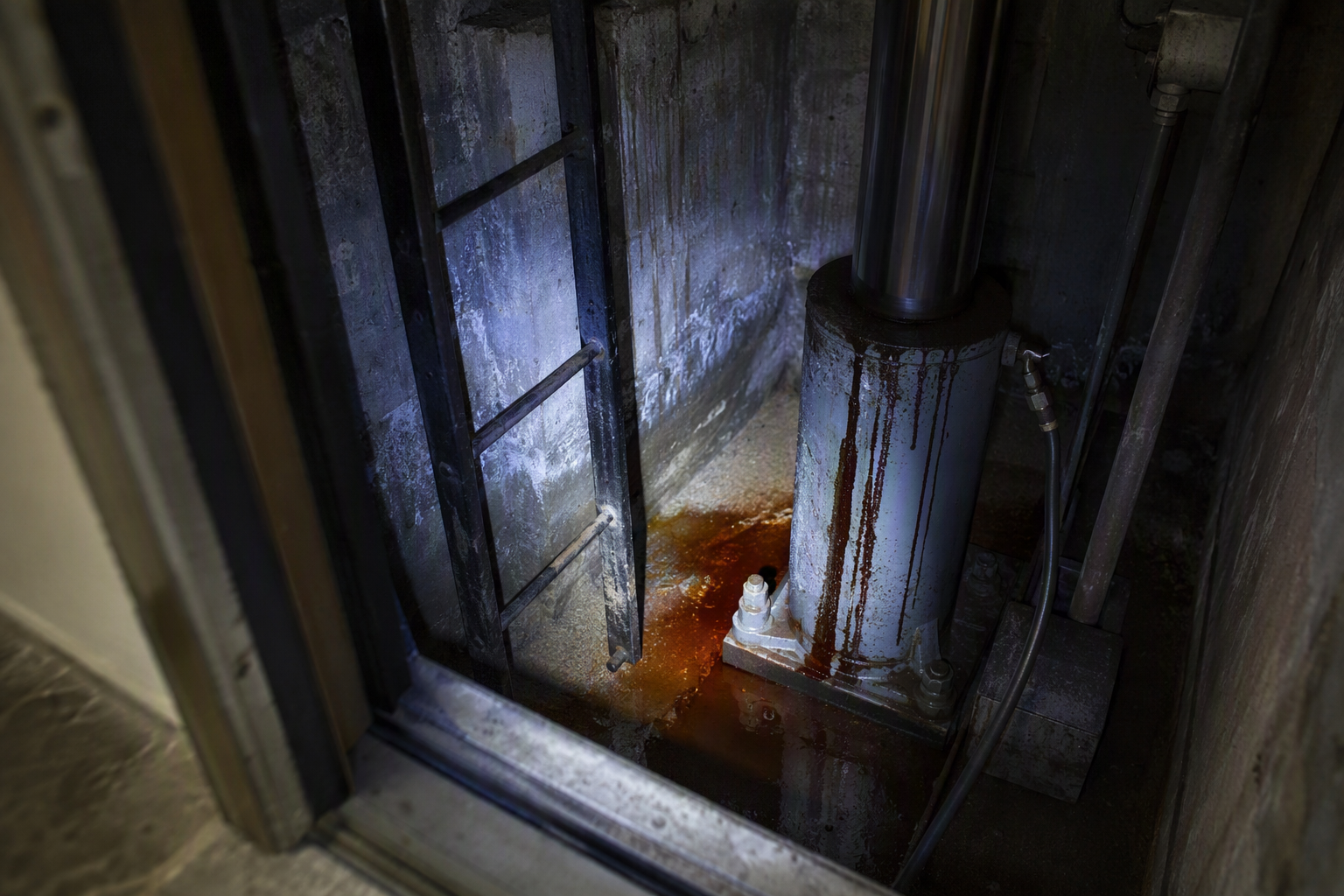
Hydraulic elevator oil leaks — whether visible as pooling fluid in the pit, staining on the cylinder rod, or seeping past the packing gland — indicate seal degradation that will progressively worsen, lead to uncontrolled descent, and may trigger environmental remediation requirements under state regulations in Maryland, Virginia, DC, and Pennsylvania.
Hydraulic elevators rely on oil pressure to raise the car and controlled valve release to lower it. When cylinder seals or underground hydraulic lines develop leaks, the system loses pressure, causing the car to drift downward from a stopped position — a condition called “settling” or “creep-back.” Excessive settling is both a passenger safety concern and a code violation under ASME A17.1.
Additionally, underground single-bottom hydraulic cylinders installed before modern environmental standards may be subject to leak-detection requirements in Maryland and Virginia. A leaking underground cylinder is not merely a mechanical problem — it can become a soil and groundwater contamination issue that significantly expands the cost and complexity of repair.
What do frequent elevator shutdowns or nuisance trips indicate?
Frequent automatic shutdowns, where the elevator stops and requires a reset before resuming operation, indicate that the controller is detecting out-of-tolerance conditions — such as overtemperature, voltage irregularities, drive faults, or safety circuit interruptions — that will worsen and lead to complete failure without intervention.
Modern elevator controllers log fault codes each time the unit trips. A pattern of recurring identical fault codes is one of the most reliable pre-failure indicators available. For example, repeated “drive overtemperature” faults in summer months often indicate that machine room cooling is inadequate, accelerating drive failure. Repeated “door open circuit” faults typically point to a failing interlock on a specific landing door.
Building personnel with access to the controller display should note any fault codes and share them with the service company. This information can allow technicians to arrive with the correct replacement components, dramatically reducing downtime.
How does a rough or vibrating ride signal elevator deterioration?
A rough, vibrating, or jerky ride signals worn hoist ropes, deteriorated guide-shoe gibs or rollers, misaligned rails, out-of-round sheaves, or a drive system that is no longer delivering smooth speed control — all of which represent mechanical wear that compounds quickly if not corrected.
Ride quality is one of the most passenger-noticeable indicators of elevator health. A well-maintained elevator should start, accelerate, cruise, decelerate, and stop smoothly and quietly. Vibration that passengers can feel through the cab floor or walls often originates in the sheave, hoist ropes, or guide system. Vertical oscillation during the cruise phase (sometimes called “rope sway”) typically indicates that hoist ropes have uneven tensions and need adjustment or replacement.
Ride quality testing using accelerometers is a standard diagnostic tool used by elevator service companies to quantify vibration levels and compare them against acceptable industry benchmarks.
What are the warning signs specific to traction elevator hoist ropes?
Warning signs of hoist rope deterioration include visible broken wires on the rope surface, rust or corrosion, uneven rope tensions producing bounce or oscillation, rope elongation causing mislanding, and significant reduction in rope diameter from wear — all of which require immediate inspection under ASME A17.1 criteria.
Hoist ropes are safety-critical components. The ASME A17.1 Safety Code for Elevators and Escalators establishes criteria for rope retirement based on broken wire counts, corrosion, and diameter reduction. A licensed elevator mechanic performing a rope inspection will count broken wires in defined lay lengths and measure rope diameter to assess remaining service life.
Ropes are not inspected adequately from inside the cab — this inspection requires access to the machine room sheave, the pit, and the traveling portion of the hoist ropes in the hoistway. Building owners should confirm that rope inspections are included in their maintenance contract and are performed at appropriate intervals.
How does elevator pit condition indicate overall system health?
The elevator pit — the space below the lowest landing — is a direct diagnostic window into system health: water infiltration, oil accumulation, debris buildup, damaged buffers, frayed traveling cables, and missing or non-functional pit lighting and stops all indicate deferred maintenance and elevated failure risk.
A pit with standing water or chronic moisture creates corrosion on the safety plank, buffers, and hydraulic cylinder (if present), and introduces electrical hazard risks for pit switches and traveling cables. Oil accumulation in the pit of a hydraulic elevator confirms active leakage. The condition of the car and counterweight buffers — which arrest the car in an emergency over-travel — is critical to passenger safety and is examined during every code-required inspection.
Under OSHA standards, the pit is a confined space with specific entry and safety requirements for workers. Buildings should ensure that pit access is restricted to qualified personnel and that lighting and stop switches are fully functional at all times.
What role does the elevator inspection certificate play in identifying risk?
An expired or missing elevator inspection certificate is a direct indicator of compliance risk and deferred maintenance, as jurisdictions in Maryland, DC, Pennsylvania, and Virginia require periodic inspections by approved inspectors, and a lapsed certificate may mean the elevator is operating outside legally required safety parameters.
Maryland, the District of Columbia, Pennsylvania, and Virginia each maintain elevator inspection programs through their respective labor or building safety agencies. Certificates must be posted in the elevator cab in most jurisdictions, and building owners are responsible for scheduling required inspections. An elevator operating on an expired certificate is not only a regulatory violation but also a signal that routine maintenance checks may have lapsed alongside it.
Quality Elevator Company helps building owners in Baltimore, Washington DC, Philadelphia, and Richmond maintain current inspection certificates by coordinating with local authorities having jurisdiction and scheduling required inspections as part of ongoing service relationships.
What is the difference between a maintenance call and an emergency repair — and how do warning signs determine which is needed?
| Warning Sign | Likely Cause | Severity Level | Recommended Action |
|---|---|---|---|
| Occasional slow door closure | Worn door operator or track | Moderate | Schedule maintenance call within days |
| Persistent floor mislanding (>½ inch) | Drive encoder, selector, valve issue | High | Remove from service; call same day |
| Burning or electrical odor | Motor, brake coil, or drive overheating | Critical — Fire Risk | Take out of service immediately; call now |
| Hydraulic oil in pit | Seal or cylinder leak | High | Remove from service; schedule urgent repair |
| Visible broken wires on hoist ropes | Rope wear or corrosion | Critical | Take out of service immediately; call now |
| Rough or vibrating ride | Worn gibs, sheaves, or ropes | Moderate to High | Schedule maintenance call within days |
| Frequent controller fault resets | Electrical or mechanical out-of-tolerance | High | Schedule maintenance call; document fault codes |
| Car settling between floors | Hydraulic valve or seal failure | High | Remove from service; schedule urgent repair |
| Expired inspection certificate | Regulatory lapse | Compliance Risk | Contact service company to coordinate inspection |
| Water in pit | Drainage failure or infiltration | Moderate to High | Schedule maintenance; address water source |
The table above provides a general reference framework. Any symptom rated High or Critical warrants taking the elevator out of service immediately and contacting a licensed elevator service company. Moderate-level symptoms should be documented and addressed within a short window — they rarely remain moderate without escalating.
How do outdated elevator components increase failure risk?
Outdated components — including relay-based controllers, original-equipment hydraulic cylinders without leak detection, aging DC motors, and obsolete safety devices — increase failure risk because replacement parts become scarce, diagnostic tools become incompatible, and the components themselves approach or exceed their design service life.
Relay logic controllers, common in elevators installed before the 1990s, are particularly vulnerable. Relay contacts arc and oxidize over time, causing erratic behavior that is difficult to diagnose and for which replacement relays may no longer be manufactured. Similarly, single-bottom hydraulic cylinders installed without modern liner systems are at elevated risk of corrosion-related failure and may require full modernization to meet current environmental standards in Maryland, DC, Virginia, and Pennsylvania.
A modernization assessment — separate from a standard maintenance call — evaluates the remaining useful life of major components and projects a risk timeline. This is particularly valuable for elevators that are more than two decades old and have not had significant component upgrades.
Can passengers detect elevator warning signs, and what should they do?
Yes — passengers can and should report warning signs such as unusual noises, rough rides, doors that do not open or close properly, the smell of burning, or a car that stops above or below the floor level, and their reports are often the first notification a building receives of a developing problem.
Building owners and managers should make it easy for passengers to report elevator anomalies. A clearly posted contact number or QR-code link to a reporting form inside the cab creates a feedback loop that supplements the formal inspection program. Passenger reports are anecdotal rather than diagnostic, but they are invaluable for identifying intermittent problems that may not occur during a scheduled technician visit.
If a passenger becomes trapped in an elevator, they should use the in-cab emergency phone — required by ASME A17.1 — to contact building personnel or a monitoring center. They should remain calm, press the door-open button, and wait for trained assistance rather than attempting to force doors or exit through a hatch.
How does preventive maintenance reduce the risk of unexpected elevator failure?
Preventive maintenance — performed on a regular schedule by licensed elevator mechanics — reduces unexpected failure risk by identifying and correcting component wear, lubrication deficiencies, adjustment drift, and electrical anomalies before they reach failure thresholds.
A structured preventive maintenance program typically includes lubrication of guide rails and machine bearings, tension measurement and adjustment of hoist ropes, testing of all safety devices (governors, safeties, buffers, interlocks), inspection of the pit and machine room, review of controller fault logs, and door system adjustment and cleaning. Each of these tasks addresses a known failure pathway.
The ASME A17.1 Safety Code for Elevators and Escalators and its companion standard ASME A17.3 (Safety Code for Existing Elevators and Escalators) establish testing requirements for safety devices that must be performed at defined intervals. Preventive maintenance visits allow those required tests to be conducted on schedule, keeping the elevator in compliance and providing documented evidence of due diligence for building owners.
What are the compliance consequences of ignoring elevator warning signs in Maryland, DC, Pennsylvania, and Virginia?
Ignoring elevator warning signs in these jurisdictions can result in stop-use orders issued by the authority having jurisdiction, civil liability for passenger injuries, ADA compliance complaints, fines for operating without a valid inspection certificate, and the significantly higher cost of emergency versus planned repairs.
Each of the four jurisdictions served by Quality Elevator Company — Maryland, the District of Columbia, Pennsylvania, and Virginia — maintains an elevator safety program with enforcement authority. When an inspector identifies a serious deficiency, they may place a stop-use tag on the equipment, requiring it to remain out of service until repairs are made and the unit passes re-inspection. This can happen at any time, including during a routine periodic inspection, if the inspector observes conditions that were never reported or repaired.
Civil liability exposure is a separate concern. If a passenger is injured due to a malfunction that was preceded by documented warning signs that the building owner failed to act upon, that documentation can be highly damaging in litigation. Proactive maintenance records and prompt response to warning signs are, therefore, both a safety and a risk-management practice.
When is it more cost-effective to modernize an elevator rather than repair it?
Modernization becomes more cost-effective than continued repair when recurring maintenance costs are high, when critical components (controller, motor, hydraulic cylinder) are at end of life, when parts availability is limited, or when a code-required major alteration triggers full ASME A17.1 or A17.3 upgrade requirements.
A useful framework for this decision is to compare the cumulative cost of anticipated repairs over the next three to five years against the cost of modernization and the operational improvements (energy efficiency, reliability, passenger experience, reduced maintenance costs) it delivers. When the repair cost trajectory approaches or exceeds the modernization cost, and when the elevator is exhibiting multiple simultaneous warning signs, modernization is typically the more prudent investment.
Under ASME A17.3, certain alterations to existing elevators trigger requirements to bring additional systems up to current code. A qualified elevator company can advise on which repairs cross that threshold and help building owners plan accordingly.
How often should elevators be professionally inspected to catch problems before failure?
Professionally licensed elevator inspections are required at intervals established by each jurisdiction’s authority having jurisdiction, while maintenance visits by a licensed elevator company should occur more frequently — typically monthly or quarterly depending on the unit type, age, and usage — to catch developing problems between mandatory inspections.
Mandatory inspection intervals vary by jurisdiction and elevator type. Maryland, DC, Pennsylvania, and Virginia each have specific inspection requirements administered through their labor or building safety agencies. These mandatory inspections are conducted by certified inspectors and focus on code compliance and safety device function.
However, mandatory inspections alone are not sufficient to prevent failure. They are compliance checkpoints, not continuous monitoring systems. A monthly maintenance visit from a licensed elevator mechanic — including a full ride-along, pit inspection, machine room check, and controller fault-log review — is the operational standard for detecting pre-failure conditions. Quality Elevator Company provides structured maintenance programs for commercial and residential buildings throughout Baltimore, Washington DC, Philadelphia, and Richmond, designed to catch warning signs well before they escalate to failures.
What questions should building owners ask an elevator service company before signing a maintenance contract?
Building owners should ask prospective elevator service companies whether their mechanics are licensed in the applicable jurisdiction, what is included and excluded from the maintenance scope, how controller fault logs are reviewed and reported, what documentation is provided after each visit, and how the company handles emergency calls outside regular business hours.
Not all maintenance contracts are equivalent. A “full maintenance” contract should specify which components are covered for parts and labor, not simply promise a number of visits per year. Building owners should request a sample maintenance report to understand what level of diagnostic detail is provided. Contracts that include controller fault-log review, rope inspection, safety device testing, and detailed written reports after each visit provide substantially more protection against undetected pre-failure conditions than contracts limited to lubrication and visual checks.
Verifying that the company and its mechanics hold the appropriate state licenses for Maryland, DC, Virginia, and Pennsylvania — as applicable to the building’s location — is non-negotiable. Elevator work performed by unlicensed individuals voids warranties, invalidates inspection certificates, and creates significant liability exposure.
How can building owners in Baltimore, Washington DC, Philadelphia, and Richmond get a professional elevator assessment?
Building owners and property managers in these markets can contact Quality Elevator Company directly to schedule a comprehensive elevator assessment that evaluates current condition, identifies pre-failure warning signs, reviews inspection certificate status, and produces a written report with recommended actions prioritized by urgency.
A professional elevator assessment goes beyond a standard maintenance visit. It typically includes a full mechanical inspection of the machine room and pit, a ride-quality evaluation, a review of controller fault history, an assessment of component age and remaining service life, and a compliance check against current ASME A17.1 and A17.3 requirements and ADA accessibility standards. The written output gives building owners a clear picture of what their elevator needs now, what it will need in the near future, and what the compliance implications are if action is deferred.
For buildings with multiple elevators or elevators that have not been formally assessed in several years, this type of structured evaluation can identify deferred maintenance items and provide the documentation needed to support capital planning decisions.
Schedule Your Free Elevator Assessment Today
Do not wait for a complete breakdown, a passenger entrapment, or a regulatory stop-use order to address elevator warning signs. Quality Elevator Company serves building owners and property managers in Baltimore MD, Washington DC, Philadelphia PA, and Richmond VA with licensed, professional elevator maintenance, repair, and modernization services.
Contact Quality Elevator Company for a free elevator assessment: 301-307-5363
A licensed elevator professional will evaluate your equipment, review your inspection certificate status, identify any pre-failure warning signs, and provide a written report with prioritized recommendations — at no charge. Early action is always less expensive than emergency repair, and it protects both your passengers and your investment.
Need elevator service you can rely on? Quality Elevator Company is ready to help.