Elevator Code Compliance Requirements for Senior Living and Assisted Living Facilities
For senior living and assisted living operators in Baltimore, Washington DC, Philadelphia, and Richmond, elevator compliance is not optional — it is a licensing prerequisite. Regulators, surveyors, and families all scrutinize vertical transportation systems because residents depend on elevators for daily mobility, medical access, and emergency evacuation. The following guide breaks down every layer of compliance that healthcare facility managers and administrators need to understand in 2026.
—
What Are the Core Federal Codes That Apply to Senior and Assisted Living Elevators?
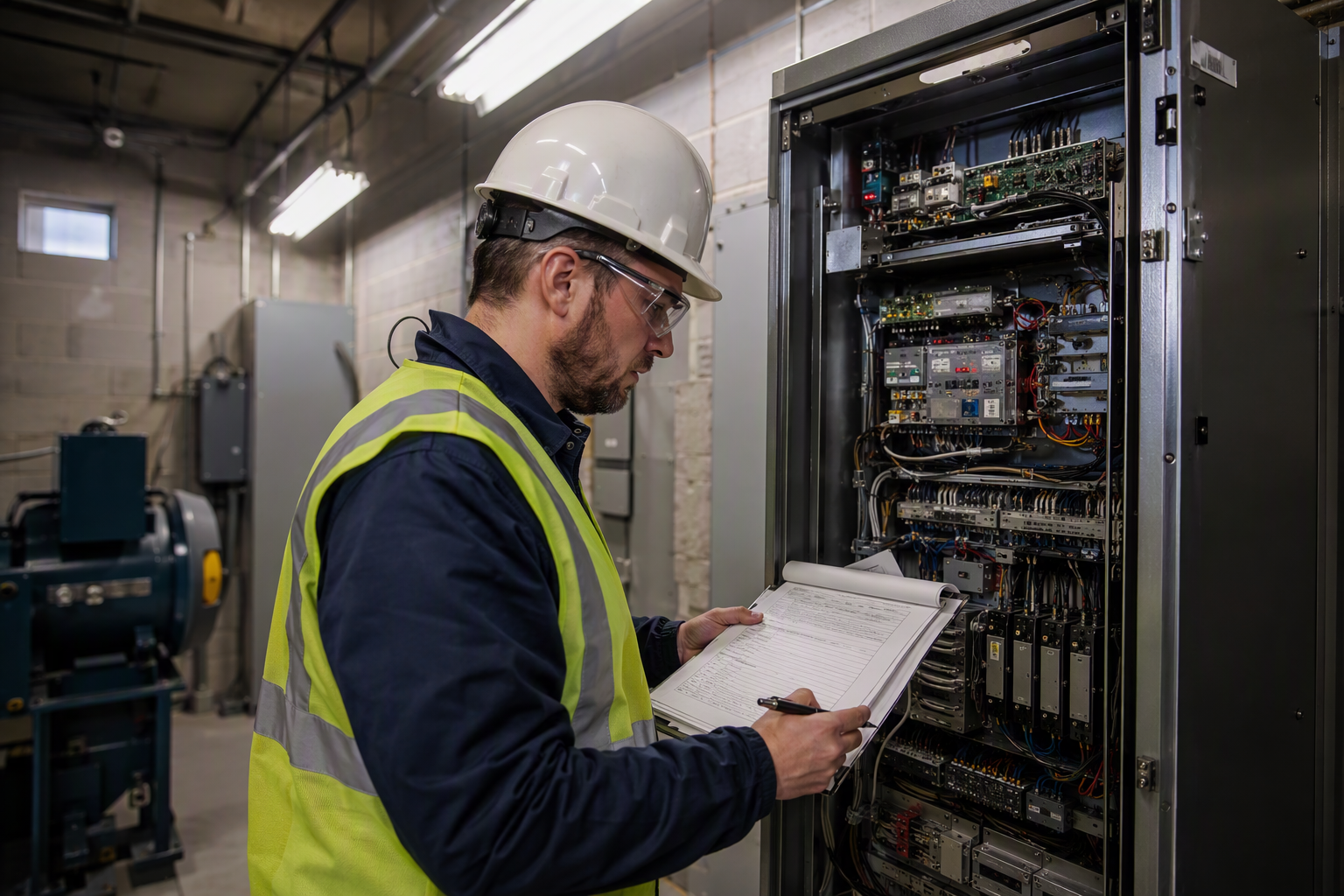
Two federal frameworks form the foundation of elevator compliance in any healthcare or residential care setting:
- ASME A17.1 Safety Code for Elevators and Escalators: This is the primary national standard governing elevator design, installation, inspection, testing, and maintenance. States adopt specific editions of ASME A17.1, so the applicable edition in Maryland, Virginia, Pennsylvania, and DC can vary. Facilities should confirm which edition their jurisdiction has adopted.
- Americans with Disabilities Act (ADA): The ADA requires that elevators serving multiple floors in public accommodations and commercial facilities — including assisted living facilities that accept public residents — meet specific accessibility requirements for cab dimensions, door width, call button height, Braille signage, and audible signals.
Beyond these two pillars, the Centers for Medicare & Medicaid Services (CMS) Conditions of Participation require skilled nursing and assisted living facilities that receive federal reimbursement to maintain safe physical environments, which includes elevator systems. State health department surveys routinely cite elevator deficiencies as Life Safety Code violations.
—
What ADA Requirements Apply Specifically to Senior Living Elevator Cabs?
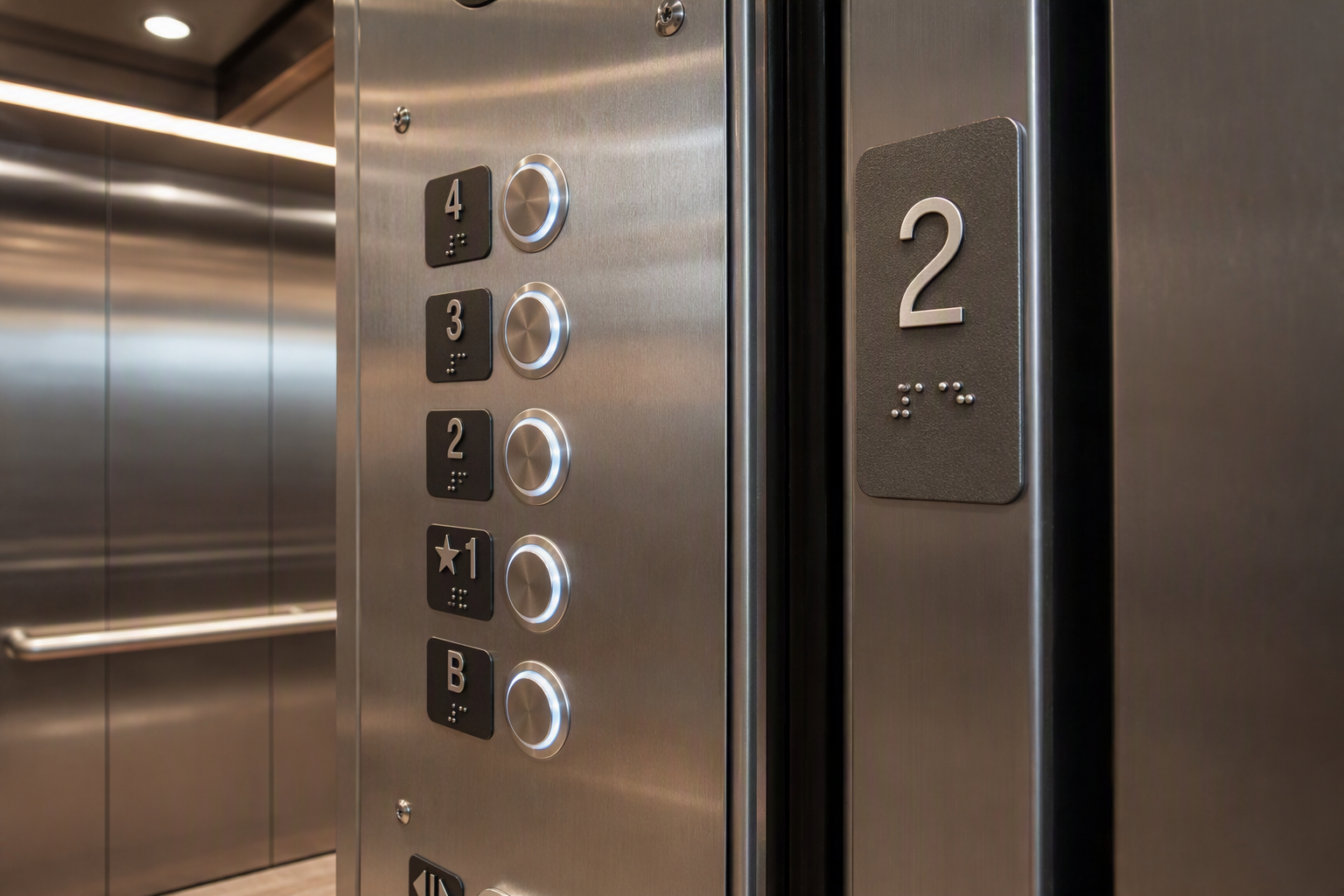
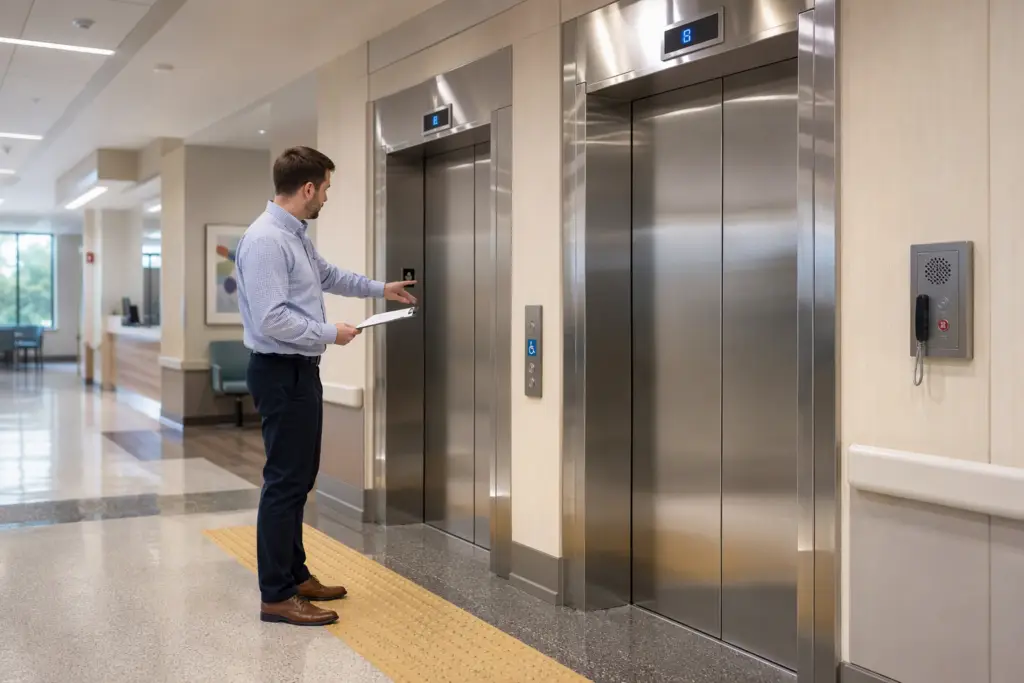
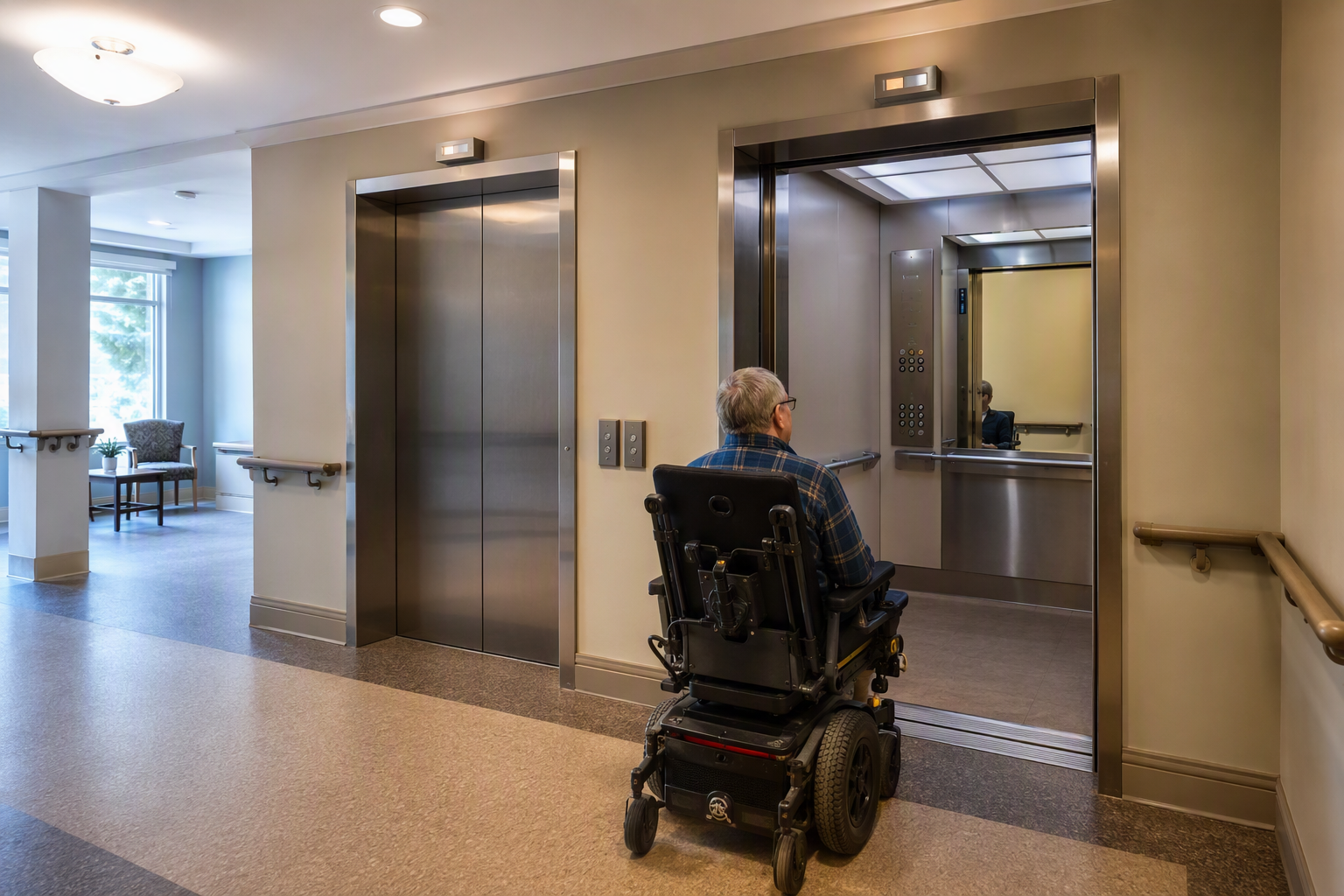
Under ADA accessibility guidelines, passenger elevators serving senior and assisted living facilities must meet requirements that directly affect residents who use wheelchairs, walkers, and mobility aids. Key requirements include:
- Minimum cab interior dimensions that allow a wheelchair to enter, maneuver, and exit safely
- Minimum clear door width to accommodate power wheelchairs and stretcher transport
- Call buttons located within a reachable height range for seated users
- Raised and Braille floor designations on jambs and control panels
- Audible and visual floor indicators (hall lanterns and position indicators)
- Sufficient door dwell time so residents using mobility aids can enter and exit safely
- Two-way emergency communication systems accessible from a seated position
Quality Elevator Company performs ADA compliance assessments as part of its elevator evaluation services for healthcare facilities throughout Maryland, DC, Pennsylvania, and Virginia, identifying gaps before a state surveyor or ADA complaint surfaces them.
—
What ASME A17.1 Inspection and Testing Requirements Apply to Assisted Living Facilities?
The ASME A17.1 Safety Code for Elevators and Escalators establishes mandatory periodic inspection and testing cycles that all elevator owners — including senior living operators — must follow. Under ASME A17.1:
- Periodic inspections must be conducted by a qualified elevator inspector at intervals specified by the adopted code edition and the state authority having jurisdiction (AHJ).
- Periodic tests — including full-load safety tests and governor and safety tests — must be performed at prescribed intervals, typically annually or every five years depending on test type and jurisdiction.
- Maintenance logs must be kept on-site and made available to inspectors upon request.
- Category 1 and Category 5 tests must be completed by a qualified mechanic and witnessed by a licensed inspector, with results documented and submitted to the AHJ.
Facilities that cannot produce current inspection certificates and test records during a health department survey risk immediate deficiency citations. Quality Elevator Company helps healthcare clients maintain organized, inspection-ready documentation portfolios.
—
Are There State-Specific Elevator Requirements for Senior Living Facilities in Maryland, DC, Virginia, and Pennsylvania?
Yes. Each jurisdiction served by Quality Elevator Company enforces its own elevator safety program on top of federal baselines:
- Maryland: The Maryland Department of Labor’s Division of Labor and Industry regulates elevator safety. Facilities must hold a current elevator license and pass annual inspections. Maryland has adopted its own edition of ASME A17.1 by reference.
- Washington DC: The DC Department of Consumer and Regulatory Affairs (DCRA) oversees elevator permits and inspections. DC facilities must maintain current operating permits and comply with the adopted edition of ASME A17.1.
- Pennsylvania: The Pennsylvania Department of Labor & Industry administers the Uniform Construction Code elevator provisions. Third-party inspection agencies licensed by the state conduct required inspections.
- Virginia: The Virginia Department of Labor and Industry’s Division of Labor and Employment Law regulates elevators under the Virginia Uniform Statewide Building Code, which incorporates ASME A17.1 by reference.
Local adoption nuances — including which code edition is in force and which tests are required on what schedule — make working with a regionally experienced service provider like Quality Elevator Company a practical advantage for multi-site senior living operators.
—
What Are the Life Safety Code Requirements That CMS Surveyors Check?
CMS requires skilled nursing facilities and many assisted living communities that participate in Medicare or Medicaid to comply with the National Fire Protection Association (NFPA) Life Safety Code (LSC). While elevator mechanical compliance falls primarily under ASME A17.1 and state elevator codes, the LSC intersects elevator compliance in these critical areas:
- Elevator lobby enclosures and fire-rated hoistway construction
- Elevator recall systems (Phase I and Phase II firefighter’s service) — a mandatory ASME A17.1 requirement that CMS surveyors verify
- Emergency lighting inside elevator cabs
- Communication systems ensuring residents trapped in an elevator can reach building staff or emergency services
Phase I and Phase II firefighter’s emergency operations must be tested periodically and documented. A failure of firefighter recall during a CMS Life Safety survey is a serious deficiency that can affect a facility’s certification status.
—
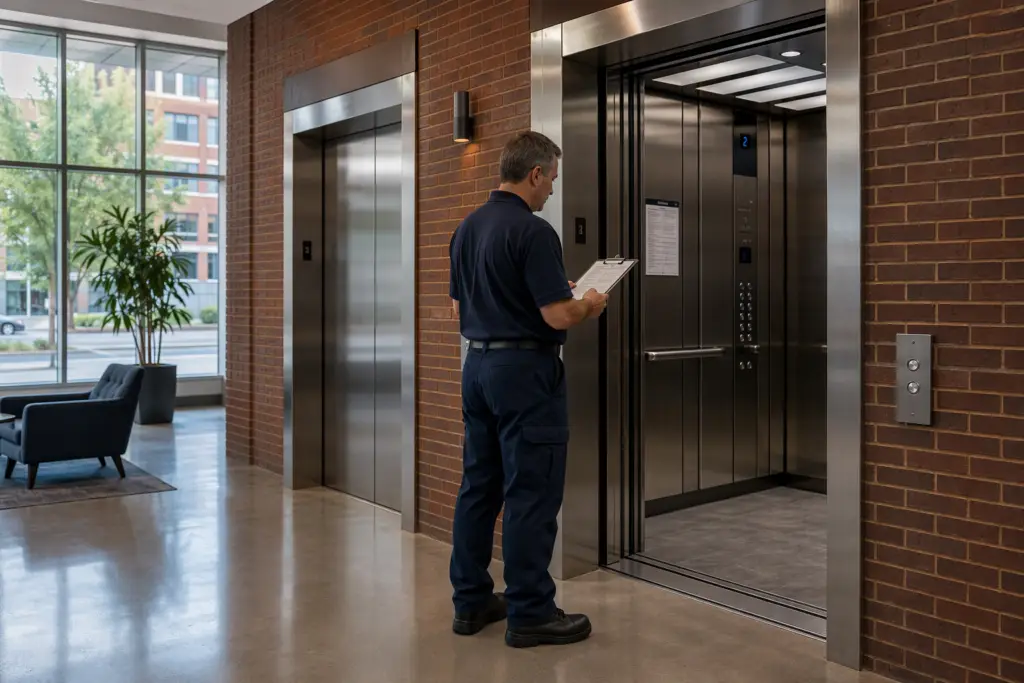
What Steps Should a Senior Living Facility Take to Prepare for an Elevator Inspection?
- Locate and organize all existing documentation. Gather current operating permits, the most recent inspection certificates, Category 1 and Category 5 test reports, and maintenance logs.
- Audit the physical equipment. Visually inspect cab interiors for ADA signage, emergency lighting, telephone operation, door function, and leveling accuracy.
- Test firefighter’s service. Verify Phase I recall and Phase II in-car operation are functioning on all elevators. Document the test.
- Review the maintenance contract. Confirm a licensed elevator mechanic is performing all code-required maintenance tasks and that records are current.
- Identify any open violations or deferred repairs. Address outstanding work orders before the inspection date.
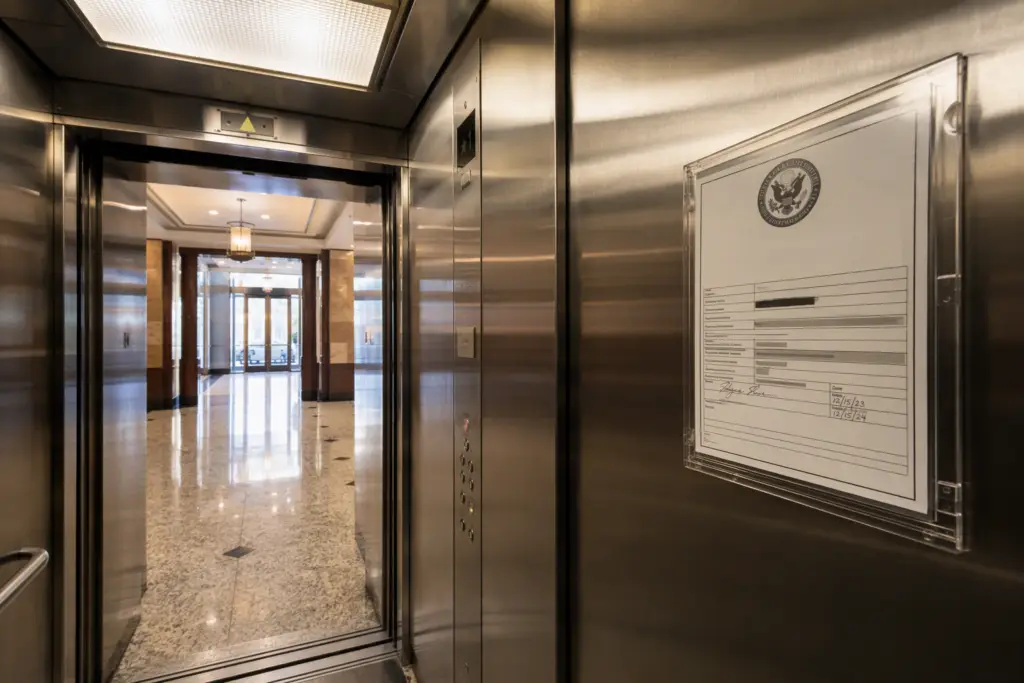
- Confirm insurance and certificate currency. Verify that the building’s elevator liability insurance is current and that the operating certificate is posted in or near the elevator cab as required by the AHJ.
- Schedule a pre-inspection assessment. Engage a qualified service provider — such as Quality Elevator Company — to walk through the equipment and flag deficiencies before the official inspection occurs.
—
What Questions Will Your Elevator Inspector Ask?
Questions Your Inspector Will Ask
Whether the inspector represents a state elevator authority, a CMS surveyor, or a health department accreditation body, the following questions are consistently part of senior living elevator reviews:
- Can you produce the current operating permit or certificate of inspection for each elevator?
- When was the last Category 1 periodic test performed, and where is the documentation?
- Has a Category 5 test been completed within the required interval for this jurisdiction?
- Is the maintenance log current, and has it been maintained by a licensed mechanic?
- Has Phase I and Phase II firefighter’s emergency service been tested and recorded?
- Is the two-way emergency communication system operational, and does it connect to a continuously monitored location?
- Are ADA-required Braille and tactile signage present on all cab and hoistway jambs?
- Have door reopening devices been tested recently?
- Are there any outstanding violations, conditions, or deferred repairs from prior inspections?
- Is the elevator contractor currently under a maintenance agreement, and are they licensed in this jurisdiction?
—
How Does Elevator Maintenance Frequency Affect Compliance in Healthcare Settings?
Senior living and assisted living elevators typically experience higher cycle counts than commercial office elevators due to meal service, therapy transport, laundry operations, and resident mobility needs. Higher usage accelerates wear on doors, buffers, ropes, and control components. The ASME A17.1 Safety Code for Elevators and Escalators requires that maintenance be performed by a qualified elevator mechanic — not general building maintenance staff — and that all work be recorded.
Facilities that defer maintenance to reduce costs often face compounding costs when equipment fails during a survey or when a resident is inconvenienced by an unplanned outage. A structured preventive maintenance program aligned with ASME A17.1 requirements is both a compliance obligation and a risk management strategy.
—
What Happens When an Elevator Fails Inspection in a Senior Living Facility?
When an elevator in a senior living or assisted living facility fails a state inspection or receives a CMS deficiency citation, the consequences can include:
- Mandatory removal from service (posted out-of-service order) until violations are corrected
- A re-inspection fee and scheduling delay before the elevator can return to service
- CMS citation under the physical environment conditions of participation, potentially affecting a facility’s certification
- Operational disruption for residents who depend on the elevator for daily mobility
- Potential liability exposure if a resident is injured due to a known deficiency
Quality Elevator Company supports healthcare clients in correcting cited deficiencies efficiently and preparing the required documentation for re-inspection across Baltimore, Washington DC, Philadelphia, and Richmond service areas.
—
How Should Assisted Living Facilities Evaluate Elevator Service Vendors?
Not all elevator service companies have equivalent experience with the regulatory environment surrounding licensed healthcare facilities. When evaluating vendors, senior living administrators should consider:
- Whether the company’s mechanics are licensed in the relevant state jurisdiction
- Familiarity with CMS Life Safety survey expectations and documentation requirements
- Experience servicing hydraulic, traction, and limited-use/limited-application (LULA) elevator types common in senior living facilities
- The vendor’s ability to provide organized, inspection-ready maintenance records
- Regional knowledge of the authority having jurisdiction in each market
- Responsiveness when an elevator goes out of service in a 24-hour care environment
Quality Elevator Company serves senior living and assisted living operators across the Mid-Atlantic region with a focus on code compliance, documentation integrity, and reducing survey-related risk.
—
Do LULA Elevators in Smaller Assisted Living Homes Have Different Compliance Requirements?
Limited-Use/Limited-Application (LULA) elevators are commonly installed in smaller assisted living residences, adult day care facilities, and group homes where a full commercial elevator is not required. LULA elevators are governed by ASME A17.1 and must still meet ADA accessibility requirements where they serve as the accessible means of vertical access. Inspection, testing, and maintenance obligations apply equally to LULA units — a common misconception among smaller facility operators who assume that a smaller elevator means fewer compliance responsibilities.
—
Schedule a Free Elevator Compliance Assessment
Senior living and assisted living operators in Baltimore, Washington DC, Philadelphia, and Richmond cannot afford elevator compliance gaps. Whether a facility is preparing for a state inspection, responding to a CMS survey deficiency, or evaluating aging equipment, a structured assessment is the right starting point.
Contact Quality Elevator Company for a free elevator assessment: 301-779-9116
Need elevator service you can rely on? Quality Elevator Company is ready to help.