How to Budget for Elevator Maintenance and Repairs in Your 2027 Fiscal Year Capital Plan

Elevator systems are among the most capital-intensive building assets a property owner or facilities manager will oversee. Planning for elevator maintenance, inspections, and repairs in an annual capital budget requires understanding compliance obligations under ASME A17.1 Safety Code for Elevators and Escalators, state and local inspection requirements across Maryland, Washington DC, Pennsylvania, and Virginia, and the realistic cost of keeping vertical transportation systems safe and operational. This FAQ hub covers every angle of elevator capital planning so your 2027 fiscal year budget is grounded in practical, compliant strategy.
What should be the first step when building an elevator budget for a 2027 capital plan?
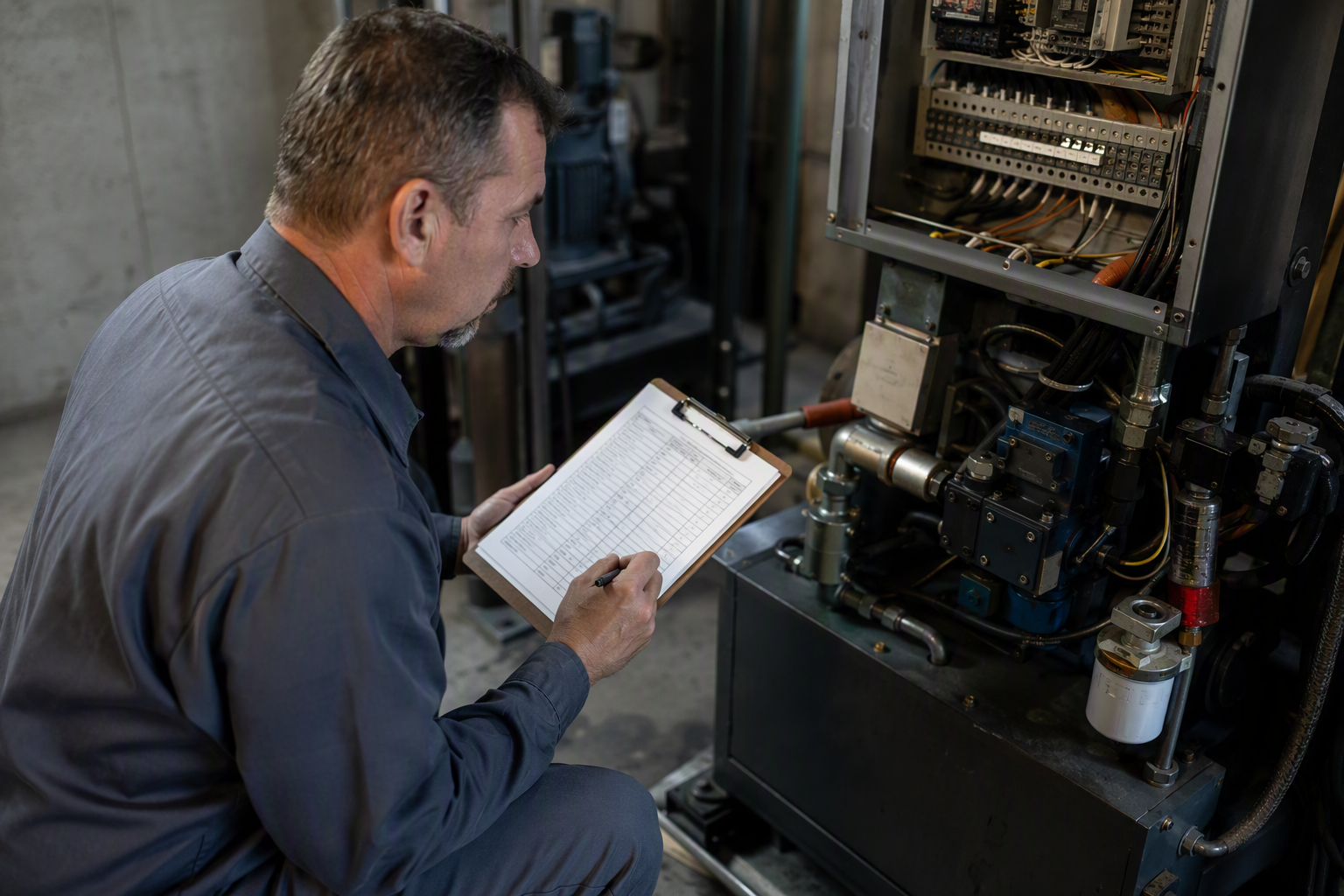
The first step is conducting a thorough condition assessment of every elevator in your portfolio to establish a baseline of deferred maintenance, upcoming code compliance requirements, and anticipated component life cycles before any dollar figures are assigned.
A condition assessment documents the current state of traction or hydraulic drive systems, door operators, controls, cab interiors, and safety devices. Without this baseline, budget figures are little more than guesswork. Property managers in Baltimore, Washington DC, Philadelphia, and Richmond should schedule assessments well in advance of their fiscal year planning cycle — ideally in the spring or early summer preceding a January fiscal year start — so findings can be analyzed and compared against capital reserves.
Quality Elevator Company offers free elevator assessments to property owners and managers in its service markets. A qualified assessment produces a prioritized scope of work that separates safety-critical repairs from cosmetic upgrades and helps finance teams understand which expenditures are mandatory versus discretionary.
What are the required annual inspection and testing obligations that must be included in every elevator budget?
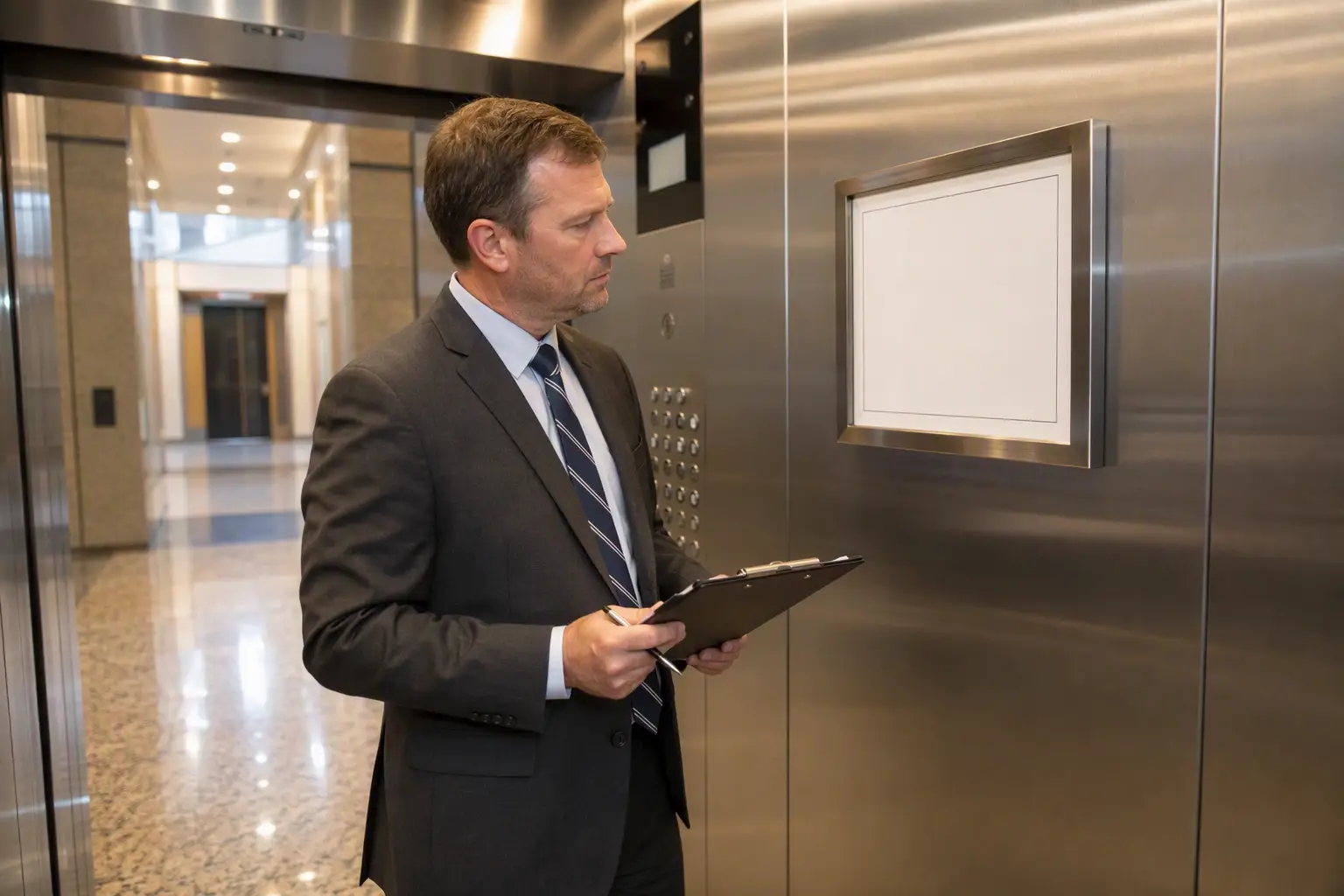
Every elevator must include line items for state-mandated annual inspections and periodic load tests, as these are non-negotiable compliance requirements that carry legal liability if skipped.
Under ASME A17.1 Safety Code for Elevators and Escalators, elevators must undergo periodic inspections and tests conducted by qualified inspectors. The specific intervals and authority having jurisdiction (AHJ) vary by location:
- Maryland: The Maryland Department of Labor regulates elevator inspections statewide, including within Baltimore. Annual inspections are required, and certificates must be posted in the elevator cab.
- Washington DC: The DC Department of Consumer and Regulatory Affairs (DCRA) enforces elevator safety standards and requires annual inspections.
- Pennsylvania: The Pennsylvania Department of Labor and Industry oversees elevator safety; annual inspections apply to most conveyance types in Philadelphia and surrounding counties.
- Virginia: The Virginia Department of Labor and Industry administers the Virginia Elevator Safety Act, requiring periodic inspections of conveyances including those in Richmond.
Beyond annual inspections, ASME A17.1 requires full-load safety tests at defined intervals — typically every five years for traction elevators — which involve additional labor and coordination costs. Budget planners should verify the last test date for each unit to determine whether a five-year test falls within the 2027 fiscal window.
How should property managers categorize elevator expenditures in a capital plan?
Elevator expenditures should be categorized into four budget buckets: preventive maintenance contracts, mandatory compliance and inspection fees, capital repairs and component replacements, and a contingency reserve for unplanned failures.
Separating these categories gives finance teams visibility into recurring versus one-time costs and supports accurate year-over-year trend analysis. Operating budgets typically absorb maintenance contracts and inspection fees, while capital budgets fund major component replacements such as controllers, door operators, hoist machines, or full modernizations. Mixing these in a single line item obscures true lifecycle cost.
A contingency reserve line is often overlooked. Elevator components do not fail on a predictable schedule, and older equipment in particular can generate emergency repair needs that disrupt capital plans if no reserve exists. Facilities managers with equipment older than 20 years should weight their contingency allocation more heavily than those managing newer systems.
What does a preventive maintenance contract typically cover, and why is it a capital planning priority?
A preventive maintenance contract typically covers scheduled lubrication, adjustment, cleaning, safety device testing, and minor part replacements, making it the foundational line item that reduces the frequency and severity of unplanned capital expenditures.
Maintenance contracts vary significantly in scope. The most comprehensive “full maintenance” contracts include labor and parts for a broad range of repairs, while “oil and grease” contracts cover only lubrication and basic adjustments. Budget planners should understand exactly what their current or proposed contract covers, because a lower-priced limited contract that excludes parts can generate large supplemental repair invoices that appear unexpectedly in the fiscal year.
When comparing contract proposals, building owners should request a written description of all exclusions, the response time framework for callbacks, and whether oil and hydraulic fluid are included. For properties in the Baltimore, Washington DC, Philadelphia, and Richmond markets, Quality Elevator Company structures its maintenance programs to align with ASME A17.1 preventive maintenance requirements, helping clients document compliance for their AHJ.
Which elevator components most commonly require capital replacement in a 5–10 year planning horizon?
The components most commonly requiring capital-level replacement over a 5–10 year horizon are the controller, door operator system, hydraulic unit or hoist machine, cab interior and fixtures, and the main line disconnect or electrical feed.
Each of these components has a distinct service life influenced by usage volume, maintenance quality, and environmental conditions. Controllers — the computerized brain of the elevator — are a particularly frequent capital driver because manufacturers discontinue parts for older proprietary systems, making ongoing repair eventually impractical. When a controller becomes obsolete, a full modernization is often the more economical long-term path compared to sourcing scarce replacement boards.
Door operators deserve special attention in capital plans because door-related incidents represent a significant share of elevator service calls industry-wide. Worn door operator components can also create ADA compliance risk; under the Americans with Disabilities Act (ADA), elevator doors must meet specific timing, force, and sensor requirements. If door hardware is aging, budget planners should assess whether 2027 represents the right window for a proactive replacement before a compliance citation occurs.
What ADA compliance requirements affect elevator capital budgets?
ADA compliance requirements that affect elevator budgets include door timing and reopening device standards, accessible control panel height requirements, audible and visual floor indicators, and Braille markings — any of which may require capital investment if equipment no longer meets current standards.
The ADA Standards for Accessible Design apply to elevators in public accommodations and commercial facilities. Key provisions include requirements for door reopening devices that prevent the door from closing on an object or person, door timing that allows adequate passage, controls located at accessible heights, and floor designations in Braille and raised characters. Buildings undergoing renovation may trigger path-of-travel obligations that bring the elevator into scope even if the elevator itself is not the primary subject of the renovation.
Capital plan reviewers should document the ADA compliance status of each unit during the condition assessment phase. Non-compliant elements are not merely a liability risk; they represent a foreseeable capital expenditure that belongs in the plan rather than surfacing as an emergency reactive cost.
How does elevator age affect capital budget planning assumptions?
Elevator age is the single most important variable in capital budget forecasting because older systems carry higher probabilities of component failure, parts obsolescence, and code compliance gaps that newer equipment does not present.
The relationship between age and capital cost is not linear — it accelerates. An elevator that has operated reliably for 15 years may begin accumulating repair needs rapidly as multiple systems approach end-of-life simultaneously. Budget planners overseeing portfolios that include equipment installed in the 1980s or 1990s should treat those units as candidates for full modernization within a 5-year capital horizon rather than assuming maintenance contracts alone will sustain reliable performance.
Modernization — the replacement of major elevator systems while retaining the hoistway and structural elements — is a significant capital investment that should be evaluated as a lifecycle decision, not just a repair. A properly scoped modernization can extend equipment service life by decades and substantially reduce annual maintenance costs.
What is an elevator modernization, and when should it be included in a capital plan?
An elevator modernization is the replacement of major systems — typically the controller, drive, door operator, and cab — to restore reliability, meet current codes, and extend equipment life, and it should be included in a capital plan when repair costs are escalating, parts are obsolete, or the equipment no longer meets current ASME or ADA standards.
Modernization scopes range from partial upgrades (controller and drive only) to comprehensive projects that address virtually all mechanical and interior systems. The decision to modernize versus continue repairing should be evaluated using a lifecycle cost analysis that compares projected repair expenditure over a multi-year period against the cost and benefits of modernization.
From a capital planning perspective, modernizations require longer lead times than standard repairs — procurement of major components, permitting, and scheduling with building occupants all extend the project timeline. Budget planners targeting a 2027 modernization should initiate the scoping and procurement process in 2026 to ensure the project can be completed within the intended fiscal window.
What benchmark cost categories should appear in an elevator capital budget template?
A comprehensive elevator capital budget template should include line items for the maintenance contract, annual inspection and permit fees, five-year load test (if applicable), component repairs, modernization reserve, ADA compliance upgrades, and a contingency allocation.
| Budget Category | Frequency | Budget Priority | Notes |
|---|---|---|---|
| Preventive Maintenance Contract | Annual (recurring) | Mandatory — Operating | Scope varies; verify inclusions and exclusions |
| Annual Inspection & Operating Permit | Annual (recurring) | Mandatory — Operating | Required by AHJ in MD, DC, PA, and VA |
| Periodic Full-Load Safety Test | Per ASME A17.1 schedule (typically every 5 years) | Mandatory — Capital or Operating | Verify last test date; may fall in 2027 window |
| Door Operator Repair / Replacement | As needed / lifecycle-driven | High — Capital or Operating | Affects reliability and ADA compliance |
| Controller Upgrade or Replacement | Lifecycle (typically 20–25+ years) | High — Capital | Parts obsolescence drives timing |
| Hoist Machine / Hydraulic Unit | Lifecycle | High — Capital | Critical mechanical component; costly to defer |
| Cab Interior Renovation | Lifecycle / aesthetic | Medium — Capital | Often bundled with modernization |
| ADA Compliance Upgrades | As required | Compliance-driven — Capital | Triggered by renovation or citation |
| Code-Required Upgrades (e.g., seismic, fire, Phase II) | As mandated by AHJ | Mandatory — Capital | Varies by jurisdiction; verify with local AHJ |
| Contingency Reserve | Annual allocation | Prudent — Capital or Reserve | Weighted by equipment age and service history |
How does the number of elevators in a building portfolio affect budget strategy?
Portfolio size affects budget strategy because multi-unit properties benefit from risk pooling across assets, allowing capital planners to phase major expenditures across fiscal years rather than absorbing large one-time costs in a single budget cycle.
A building with a single elevator has no ability to phase modernization — the entire investment must occur in one project. A property owner managing ten elevators across a portfolio can prioritize the oldest and most critical units first, spreading capital outlay over several years. This phased approach requires a rolling multi-year capital plan rather than a single annual budget, and the condition assessment baseline becomes even more important as the scheduling tool that drives prioritization.
Multi-building owners in the Baltimore, Washington DC, Philadelphia, and Richmond markets should also consider whether a portfolio-level maintenance agreement — covering all units under a single contract — offers administrative efficiency and potential cost advantages compared to unit-by-unit contracting.
What OSHA requirements should facilities managers be aware of when planning elevator maintenance budgets?
Facilities managers should be aware that OSHA standards govern the safety of workers performing elevator maintenance and repair, meaning that any contracted elevator service company must comply with applicable OSHA regulations — a factor in vendor qualification, not just cost.
Under OSHA regulations, employers and contractors performing elevator maintenance must follow applicable standards related to lockout/tagout procedures, confined space entry, and fall protection, among others. While building owners are not directly responsible for the internal safety practices of their elevator contractor, selecting a vendor with demonstrated OSHA compliance is a sound risk management practice.
When issuing requests for proposals for elevator maintenance or modernization contracts, building owners and property managers should include OSHA compliance documentation as a qualification criterion alongside licensing and insurance verification.
How should code compliance upgrades be identified and budgeted?
Code compliance upgrades should be identified through a current code gap analysis conducted by a qualified elevator contractor who can compare existing equipment configurations against the applicable edition of ASME A17.1 and local AHJ amendments.
The ASME A17.1 Safety Code for Elevators and Escalators is updated on a regular cycle, and individual states and jurisdictions adopt code editions at different times. Maryland, Washington DC, Pennsylvania, and Virginia each reference specific code editions through their respective state elevator safety programs. A code gap analysis compares the installed equipment against the version currently enforced by the local AHJ — not necessarily the latest published edition — and identifies any retroactive requirements that apply.
Common code-driven capital expenditures include Phase II firefighters’ emergency operation upgrades, door restrictors, pit stop switches meeting current specifications, and machine room or machine roomless (MRL) ventilation and lighting requirements. These items should be identified, scoped, and budgeted before they generate a violation notice or inspection rejection.
What is the process for obtaining accurate repair and modernization quotes for budget purposes?
Obtaining accurate quotes for budget purposes requires a written scope of work derived from the condition assessment, distributed to at least two or three qualified elevator contractors, with responses evaluated on scope equivalency — not price alone.
Capital plan accuracy depends on the quality of the underlying quotes. A rough verbal estimate provided without a site visit produces a budget figure that may bear little resemblance to actual contract value. Property managers should invest in a formal scope document that specifies the work to be performed, the equipment and components involved, the required code standards to be met, and the expected project timeline.
- Complete an elevator condition assessment to document current equipment status and identify deficiencies.
- Develop a written scope of work for each identified project, separating maintenance, repair, and modernization scopes.
- Issue the scope to a minimum of two qualified, licensed elevator contractors serving your jurisdiction.
- Receive written proposals and verify that each proposal addresses the same scope items.
- Clarify any scope exclusions or allowances before using figures in the capital plan.
- Incorporate a contingency percentage on top of accepted quotes to account for unforeseen field conditions.
- Obtain updated quotes annually if the project is deferred, as material and labor costs change over time.
How far in advance should elevator modernization projects be planned and procured?
Elevator modernization projects should be planned and procured at least 12–18 months before the intended construction start date to allow adequate time for engineering, permitting, equipment procurement, and tenant or occupant coordination.
Major elevator components — particularly controllers and drive systems for less common configurations — can have extended manufacturing lead times. Permitting in jurisdictions such as Washington DC and Philadelphia can also add significant time to the pre-construction phase. Budget planners targeting a modernization start in the 2027 fiscal year should have scoping and contractor selection completed by mid-2026 at the latest, with permits submitted before the fiscal year begins.
During a modernization, elevator service is typically suspended for weeks or months depending on the project scope. This operational disruption has real costs — particularly for healthcare facilities, multifamily residential buildings, and commercial office properties where elevator availability is tied to tenant lease obligations or regulatory requirements. Operational contingency planning (stairway communication, temporary lift alternatives for ADA-affected users) should be addressed in the project plan and reflected in the overall capital budget.
What factors specific to Maryland, Washington DC, Pennsylvania, and Virginia affect elevator capital budgets?
Each jurisdiction enforces its own version of elevator safety codes, inspection schedules, and permit fee structures, meaning that capital budgets must be calibrated to local requirements rather than relying on generic national averages.
Baltimore-area properties fall under Maryland Department of Labor oversight and must comply with the Maryland elevator safety regulations. Washington DC properties are subject to DCRA enforcement, which has specific documentation and posting requirements. Philadelphia-area buildings must comply with Pennsylvania Department of Labor and Industry requirements, and Richmond-area properties operate under the Virginia Department of Labor and Industry’s conveyance safety program.
Permit and inspection fee structures differ across these jurisdictions, and budget planners should contact the relevant AHJ or work with a local elevator service provider to obtain current fee schedules for the 2027 planning cycle. Quality Elevator Company’s familiarity with the regulatory environments in all four markets makes it a practical resource for jurisdiction-specific capital planning guidance.
How should a facilities manager handle elevator repairs that arise outside the budgeted capital plan?
Unbudgeted elevator repairs should be addressed through a pre-approved contingency reserve, and the decision to repair versus defer should be evaluated against safety, legal liability, and the proximity of a planned modernization.
- Assess the safety implications of the failure immediately — if the elevator poses a risk to passengers, take it out of service and contact your elevator service contractor.
- Obtain a written diagnosis and repair quote from a licensed elevator contractor.
- Determine whether the repair is safety-critical (non-deferrable), operationally important (should be addressed promptly), or cosmetic (can be scheduled).
- Evaluate whether the repair cost makes sense in the context of the equipment’s remaining useful life and any planned modernization timeline.
- If repair cost is significant relative to modernization cost, request a lifecycle cost comparison before committing.
- Document the unplanned expenditure and use it to recalibrate the contingency reserve allocation in the next capital plan cycle.
Recurring unplanned repairs that consistently exceed the contingency reserve are a signal that the capital plan’s fundamental assumptions — particularly regarding equipment condition and remaining useful life — need to be revised upward.
What documentation should a building owner maintain to support elevator capital planning?
Building owners should maintain a complete elevator file for each unit that includes the current operating certificate, inspection reports, maintenance logs, repair invoices, modernization permits, and any written notices from the AHJ — this documentation directly informs capital planning accuracy.
Gaps in maintenance documentation make it difficult to assess whether recurring failures reflect deferred maintenance, design limitations, or usage patterns. A complete service history also supports negotiation with contractors by establishing which components have been recently replaced and which are approaching end-of-life.
ADA compliance documentation — including as-built drawings from any past modernization and records of field measurements for control panel heights and door timing — is particularly valuable if a building is later subject to an ADA accessibility audit or complaint. Maintaining this documentation proactively is far less costly than reconstructing it reactively.
How should multi-year elevator capital plans be structured beyond the immediate 2027 fiscal year?
Multi-year elevator capital plans should be structured as rolling 5-year forecasts that are updated annually as condition assessments are refreshed, repairs are completed, and new code requirements are identified.
A static single-year capital budget for elevator systems is inherently limited because major expenditures — particularly modernizations — are lifecycle events that must be anticipated years in advance. A rolling 5-year plan provides the forward visibility that finance teams and boards need to allocate capital reserves, plan debt or financing strategies, and communicate deferred maintenance risk to stakeholders.
The 5-year plan should be organized by individual elevator unit, with each year’s projected expenditures categorized by type (maintenance, inspection, repair, modernization) and annotated with the assumption or trigger that drives the projection. Annual plan updates should incorporate the results of the most recent inspection, any AHJ notices, and current contractor pricing to keep the forecast realistic.
How can building owners evaluate whether their current elevator maintenance contract is delivering value?
Building owners can evaluate maintenance contract value by comparing the frequency and cost of callback repairs against industry norms, reviewing whether mandatory inspection items consistently pass on first attempt, and assessing whether the contractor proactively identifies issues rather than simply responding to failures.
A maintenance contract that generates frequent supplemental repair invoices for items that arguably should have been caught during routine service calls may indicate that the preventive scope is insufficient or that the service is not being performed to the agreed standard. Reviewing call records and invoices annually — particularly in the year preceding capital plan development — provides data to support a contract renegotiation or a competitive rebid.
When evaluating providers for the Baltimore, Washington DC, Philadelphia, and Richmond markets, building owners should verify that prospective contractors are licensed in the relevant state or jurisdiction, carry appropriate insurance, employ technicians with documented qualifications under ASME standards, and have a demonstrated track record with the specific equipment types in the building portfolio. Quality Elevator Company serves all four markets and can provide references from comparable property types upon request.
What role does energy efficiency play in elevator capital planning for 2027?
Energy efficiency is an increasingly relevant factor in elevator capital planning because modernizations that incorporate variable-frequency drives, regenerative drives, and LED cab lighting can reduce operating costs and may qualify for utility rebate programs in Maryland, Washington DC, Pennsylvania, and Virginia.
When a modernization is already economically justified on reliability and compliance grounds, the incremental cost of specifying energy-efficient components is often modest relative to the long-term operational savings. Regenerative drive technology, for example, converts braking energy into electricity that is returned to the building’s electrical system — a meaningful benefit in high-traffic facilities with multiple elevators.
Capital plan authors should check with local utility programs in their jurisdiction for available incentives in the 2026–2027 timeframe, as rebate structures and eligibility criteria change. Incorporating potential incentive values into the capital plan as a revenue or offset line item — clearly labeled as estimated and subject to verification — gives decision-makers a more complete picture of net project cost.
How should a building owner select an elevator service company for capital work?
A building owner should select an elevator service company for capital work based on verifiable licensure in the applicable jurisdiction, demonstrated experience with the specific equipment type, financial stability, clear contract terms, and references from comparable properties in the local market.
Capital elevator projects — modernizations in particular — are long-duration engagements that require sustained coordination between the contractor, the AHJ, the building’s operations team, and sometimes structural and electrical engineers. A contractor who performs well on routine service calls may not have the project management infrastructure for a complex modernization. Evaluating proposals for capital work should include questions about project management methodology, permitting experience in the specific jurisdiction, and subcontractor relationships for electrical and structural work.
For properties in Baltimore, Washington DC, Philadelphia, and Richmond, Quality Elevator Company provides certified elevator services calibrated to the regulatory requirements of each jurisdiction, making it a logical first call for owners developing 2027 capital plans who want local expertise and accountability in a single service relationship.
Ready to Build a Smarter Elevator Capital Plan for 2027?
Start with the facts. A thorough condition assessment is the foundation of every accurate elevator capital budget — and it costs nothing to get one from Quality Elevator Company. Whether you manage a single building or a multi-property portfolio in Baltimore, Washington DC, Philadelphia, or Richmond, the team at Quality Elevator Company can help you identify compliance obligations, scope capital projects, and structure a multi-year plan that protects your asset and your budget.
Contact Quality Elevator Company for a free elevator assessment: 301-307-5363
Need elevator service you can rely on? Quality Elevator Company is ready to help.