Top Rated Elevator Maintenance Company Washington DC: Complete FAQ Guide
After 15-plus years working on elevators across Washington DC, Baltimore, Philadelphia, and Richmond, I’ve answered thousands of questions from building owners, property managers, and facilities directors. This guide covers every major question you should be asking before hiring an elevator maintenance company in DC — from compliance codes and inspection schedules to costs, vendor comparisons, and emergency response protocols. Use this as your definitive reference.
What makes an elevator maintenance company “top rated” in Washington DC?
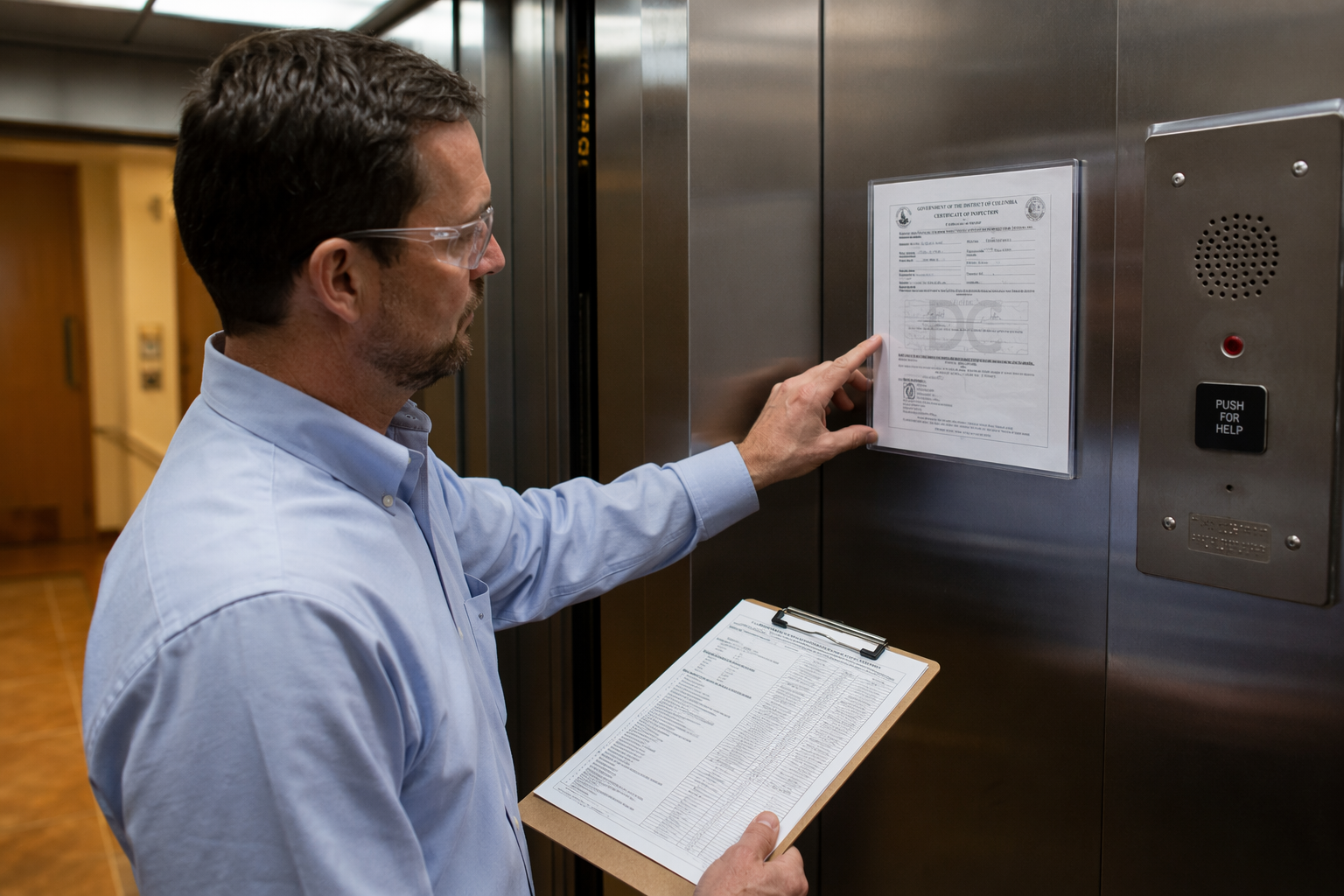
A top rated elevator maintenance company in Washington DC combines IUEC-certified technicians, strict ASME A17.1 code compliance, rapid emergency response times, and a documented history of passing DC DCRA inspections on the first attempt.
In my experience, the difference between an average company and a genuinely top rated one comes down to four measurable factors: technician certification, response time guarantees, first-inspection pass rates, and transparency in service documentation. Washington DC’s Department of Consumer and Regulatory Affairs (DCRA) enforces some of the most rigorous elevator inspection standards on the East Coast, which means cutting corners is not only dangerous — it creates expensive re-inspection fees and potential building shutdowns.
The best companies maintain a local parts inventory, employ technicians certified through the International Union of Elevator Constructors (IUEC) or equivalent credentialing, and provide detailed maintenance logs that satisfy both building owners and regulatory inspectors. Quality Elevator Company meets all of these benchmarks across every market we serve.
How often should elevators be inspected in Washington DC?
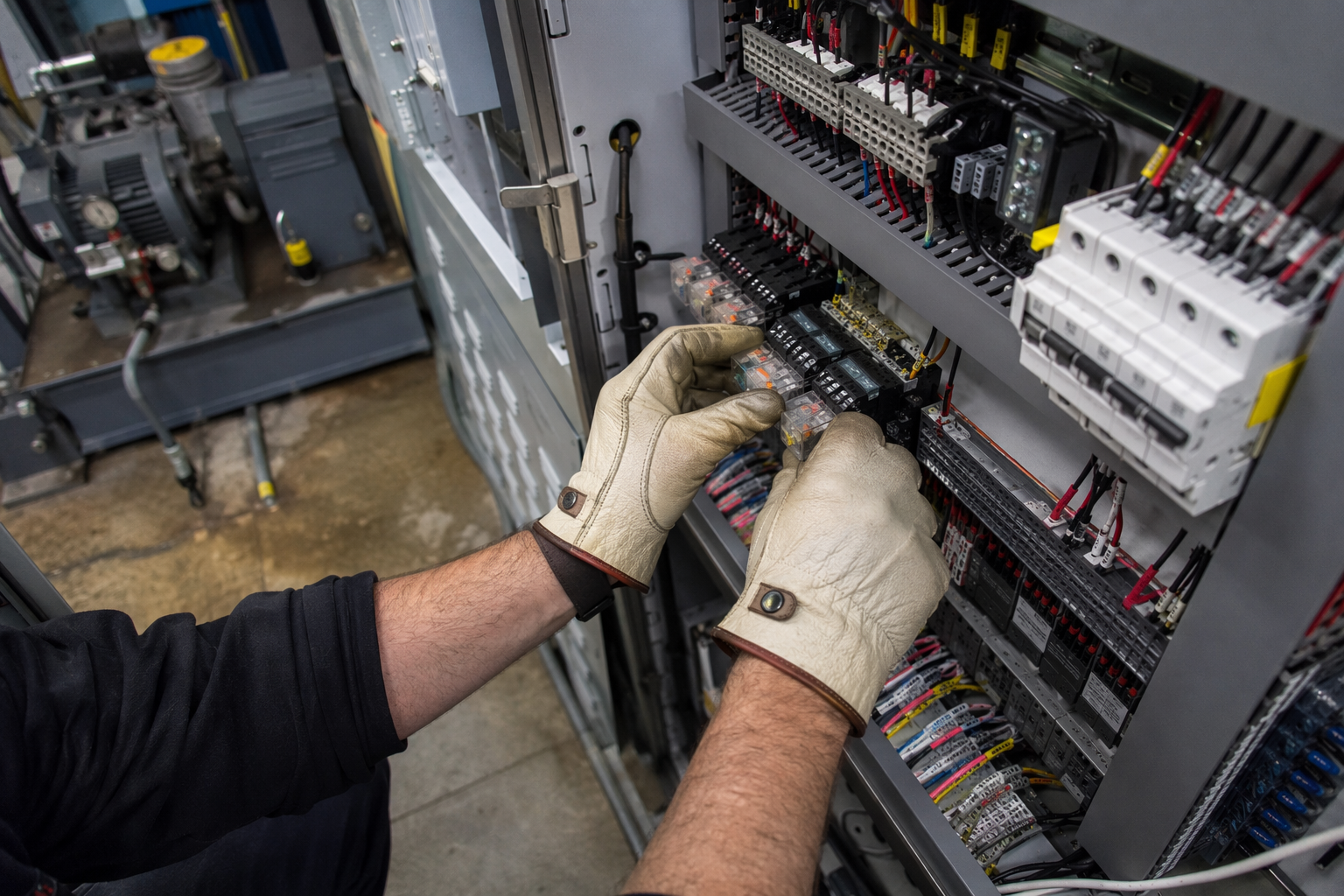
In Washington DC, elevators are required by law to undergo a full third-party safety inspection at least once every 12 months, in addition to routine preventive maintenance visits scheduled quarterly or monthly depending on equipment age and usage volume.
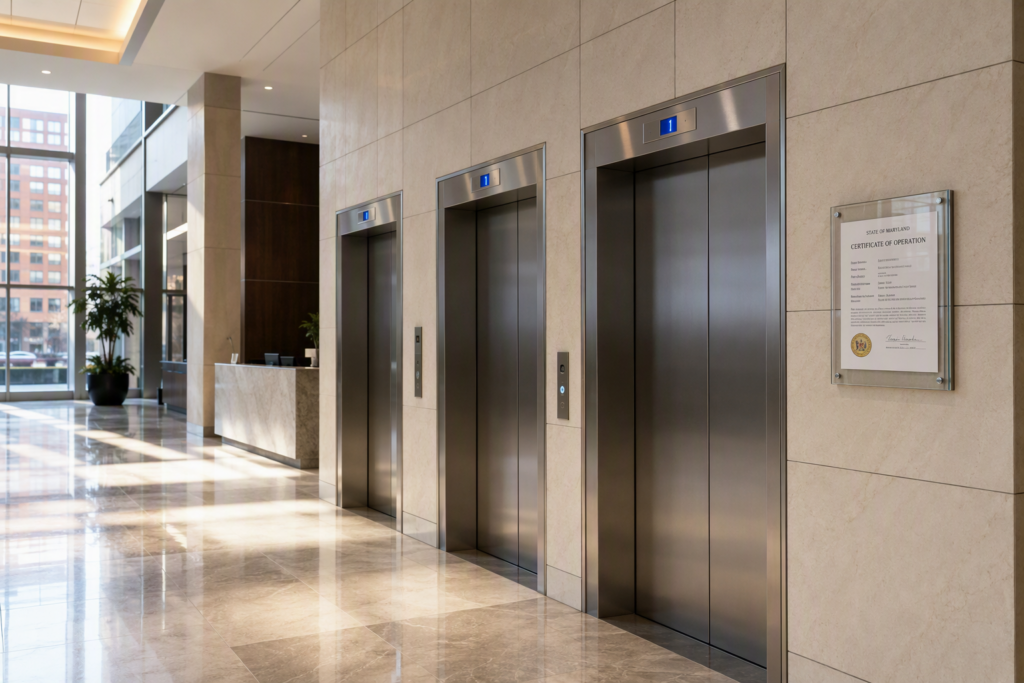
DC Code Title 12, Subtitle A, Chapter 1 mandates annual inspections conducted by a licensed elevator inspection agency. Certificates of inspection must be posted inside the elevator cab and renewed before expiration. Failure to maintain a valid certificate can result in mandatory shutdown orders issued by the DCRA.
Beyond the legal minimum, industry best practice — and what I personally recommend to every building owner — is a minimum of four preventive maintenance visits per year for low-traffic residential elevators, and monthly visits for high-traffic commercial or mixed-use buildings. Hydraulic elevators, which are common in DC’s older commercial stock, typically require more frequent oil and seal inspections due to fluid degradation rates in the region’s variable climate.
What does ASME A17.1 require for elevator maintenance?
The ASME A17.1 Safety Code for Elevators and Escalators requires that all maintenance be performed by a qualified elevator mechanic, that written maintenance records be kept on-site, and that all safety tests — including car safeties, buffers, and door operations — be conducted at code-specified intervals.
ASME A17.1/CSA B44, the 2022 edition currently adopted by most jurisdictions in the DC metro area including Maryland and Virginia, specifies maintenance intervals for over 40 individual elevator components. Key requirements include:
- Monthly lubrication of guide rails, ropes, and sheaves on traction elevators
- Annual testing of car and counterweight safeties
- Five-year full-load safety tests (Category 5 tests) for hydraulic elevators
- Governor rope replacement based on condition assessments conducted during every maintenance visit
- Door clutch and interlock testing at every maintenance visit
Non-compliance with ASME A17.1 not only creates liability exposure for building owners but can result in failed annual inspections and immediate out-of-service orders. Every technician at Quality Elevator Company is trained specifically to ASME A17.1 standards and maintains current knowledge of code updates.
What are the ADA requirements for elevators in commercial buildings?
Under the Americans with Disabilities Act (ADA), elevators in commercial facilities serving more than one floor must meet ADA Standards for Accessible Design, including minimum cab dimensions, tactile controls, audible signals, and door timing requirements.
Specifically, ADA Section 4.10 and the 2010 ADA Standards for Accessible Design require:
- Minimum cab interior dimensions of 80 inches deep by 68 inches wide for passenger elevators
- Door reopening devices that remain effective for at least 20 seconds
- Raised and Braille floor designations on both jambs at every floor served
- Visual and audible floor indicators
- Call buttons that are a minimum of ¾ inch in the smallest dimension
- Emergency two-way communication systems meeting ASME A17.1 Section 2.27
ADA compliance failures are among the most common issues I find during assessment visits, particularly in buildings constructed before 1990. Retrofitting non-compliant controls, adding Braille signage, or adjusting door timing parameters are typically low-cost corrections that prevent significant legal exposure. Many DC-area buildings also fall under the DC Human Rights Act, which can carry additional enforcement mechanisms beyond the federal ADA.
What is the average cost of elevator maintenance in Washington DC in 2026?
In 2026, the average annual elevator maintenance contract in Washington DC ranges from $3,500 to $9,500 per elevator depending on equipment type, age, building usage, and contract scope — with full-coverage contracts (including parts and callbacks) averaging $6,200 to $9,500 annually.
The table below provides a detailed cost benchmark by elevator type and contract tier:
| Elevator Type | Basic PM Contract (Annual) | Full Coverage Contract (Annual) | Emergency Call Rate (Per Hour) |
|---|---|---|---|
| Hydraulic (2–4 stops, residential) | $3,500 – $4,800 | $6,200 – $7,500 | $185 – $220 |
| Traction (Commercial, 4–10 stops) | $4,500 – $6,000 | $7,200 – $9,500 | $195 – $240 |
| MRL (Machine Room-Less) | $4,800 – $6,500 | $7,800 – $10,200 | $200 – $250 |
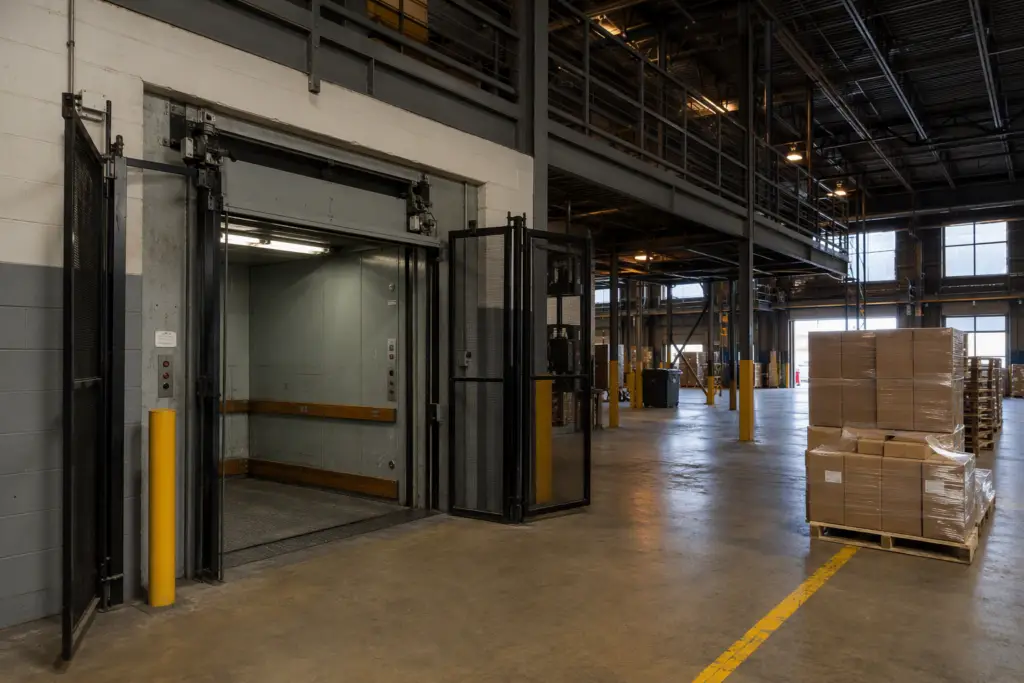
| Freight Elevator | $5,000 – $7,000 | $8,500 – $11,000 | $210 – $260 |
| Escalator (per unit) | $5,500 – $8,000 | $9,000 – $13,000 | $220 – $275 |
These figures reflect 2026 market rates in the DC metro area. Contract pricing is heavily influenced by parts availability terms — basic contracts typically cover labor only, while full-coverage agreements include replacement parts, callbacks at no additional charge, and priority response windows. I always advise building owners to negotiate callback response time guarantees directly into any contract language, ideally specifying a 2–4 hour response window for entrapments and a 24-hour window for non-emergency service calls.
What questions should you ask when comparing elevator maintenance companies in DC?
Before signing any elevator maintenance contract in Washington DC, you should ask 10 specific questions to verify technician credentials, compliance history, response guarantees, and contract terms that protect your building from liability gaps.
Here are the essential questions I recommend every property manager ask during vendor evaluation:
- Are your technicians IUEC-certified and licensed in DC, Maryland, or Virginia as applicable?
- What is your average emergency response time for entrapments in the DC metro area?
- Can you provide your DC DCRA first-inspection pass rate for the past 24 months?
- Do you maintain a local parts inventory in the Washington DC area, and what is your average lead time for non-stock parts?
- What specific ASME A17.1 maintenance intervals are included in the contract?
- Does the contract include Category 1 and Category 5 safety testing, or are those billed separately?
- What is your protocol when a unit fails inspection and requires immediate correction?
- How do you document maintenance visits, and can we access records digitally?
- Are callback visits included in the contract price, and how many are capped per year?
- What are the termination terms if service performance does not meet agreed benchmarks?
Any company that hesitates or deflects on questions 1, 3, or 6 is a red flag in my experience. Transparent service providers welcome these questions because they know their performance record supports the answers.
How do you know if your elevator is failing a safety standard before inspection?
The most reliable early indicators of a pending safety failure include unusual door hesitation or reversals, leveling drift at floor stops exceeding ½ inch, irregular start/stop behavior, oil seepage around hydraulic cylinders, and any activation of the pit oil sensor alarm.
In Washington DC’s commercial building stock — much of which includes traction elevators installed between 1975 and 2000 — the most common pre-failure patterns I encounter are worn door operator cams, degraded hydraulic seals, and aging relay logic panels that produce intermittent faults. Modern elevator controllers log fault codes that a technician can read with diagnostic tools during a maintenance visit, which is why skipping maintenance visits to save money almost always results in a more expensive emergency repair later.
Building owners should also train front-desk and facilities staff to log any passenger complaint related to elevator performance. A building log showing 3 door reversal complaints in 30 days is valuable diagnostic data for any competent technician.
What is the difference between a preventive maintenance contract and a full-service contract?
A preventive maintenance (PM) contract covers scheduled lubrication, adjustments, and inspections only, while a full-service contract additionally covers callback labor, most replacement parts, and emergency response at no additional per-visit charge — making full-service contracts significantly more cost-predictable for high-traffic buildings.
For buildings with elevators older than 15 years, I consistently recommend full-service contracts. The actuarial math almost always favors it: a single major repair event — such as a hydraulic valve replacement ($1,800–$3,200 in parts alone) or a door operator assembly ($2,500–$4,500) — can exceed the annual premium difference between a basic PM and a full-coverage contract. Full-service contracts also create a shared financial incentive for the maintenance company to keep equipment in excellent condition, since they bear the cost of failure.
What certifications should elevator technicians hold in Washington DC?
In Washington DC, elevator mechanics must hold a valid DC Elevator Mechanic License issued under DC Code, and industry-leading technicians additionally carry IUEC journeyman certification, QEI (Qualified Elevator Inspector) credentials for inspection roles, and manufacturer-specific training certificates for major brands like Otis, KONE, Schindler, and ThyssenKrupp.
Licensing requirements vary by jurisdiction across the DC metro area:
- Washington DC: DC Department of Consumer and Regulatory Affairs elevator mechanic license required
- Maryland: Maryland Department of Labor elevator mechanic license, governed under COMAR Title 09
- Virginia: Virginia Department of Housing and Community Development (DHCD) elevator mechanic certification
- Philadelphia, PA: Pennsylvania Department of Labor and Industry elevator mechanic license
Every technician dispatched by Quality Elevator Company holds the appropriate license for the jurisdiction in which they are working, eliminating a liability gap that building owners often don’t discover until an inspection challenge arises.
How quickly should an elevator maintenance company respond to a passenger entrapment in DC?
Industry standard and contractual best practice for passenger entrapments in Washington DC is a maximum 2-hour on-site response, though top-tier providers typically respond within 60–90 minutes due to local technician positioning — and anything beyond 2 hours is grounds for contract renegotiation.
Entrapment response is both a safety obligation and a legal liability issue. DC fire regulations require that elevator companies maintaining a building have a documented emergency response protocol available to building management. In practice, a well-managed elevator service company maintains on-call technicians positioned within the metro area at all hours, with GPS dispatch capability to route the nearest available mechanic to the job site.
When I train new technicians, I emphasize that an entrapment response is never just a mechanical call — it is a life safety event. Passengers who are elderly, have medical conditions, or experience anxiety during entrapment require a calm, communicative approach in addition to technical competence. Response time matters enormously, but so does the quality of communication with building staff and passengers during the wait.
What should building management do immediately when an elevator entraps a passenger?
When a passenger is entrapped in an elevator, building management must follow a specific immediate-response protocol to ensure passenger safety, comply with DC regulations, and document the incident properly for liability and insurance purposes.
- Immediately establish two-way voice communication with the trapped passenger using the in-cab emergency phone or intercom system.
- Reassure the passenger that help is on the way and instruct them to remain calm and not attempt to force the doors open.
- Call 911 if the passenger reports a medical emergency, injury, or extreme distress.
- Call your elevator maintenance company’s 24/7 emergency line immediately — provide the building address, elevator number, floor location, and number of passengers.
- Station a staff member at the elevator landing to communicate with both the passenger and the responding technician.
- Do not attempt to manually move or release the elevator without a licensed elevator mechanic on site.
- Document the time, circumstances, and all communications in an incident log once the situation is resolved.
- File a report with the DC DCRA if required under the applicable reporting threshold for your equipment type.
What is the typical elevator modernization timeline and when should it be considered?
Elevator modernization — the replacement of major control, drive, and door systems — typically takes 4 to 12 weeks per unit and should be evaluated when equipment is 20 or more years old, when repair costs begin to exceed 30% of modernization cost annually, or when the system can no longer be brought into ASME A17.1 or ADA compliance through repair alone.
In Washington DC, many commercial buildings constructed in the 1980s and early 1990s are now facing the modernization decision. Relay-logic controllers, which were standard in that era, are no longer supported by manufacturers, and replacement parts are increasingly sourced through specialized used-parts dealers with inconsistent quality. Modernizing to a solid-state controller with digital diagnostics not only restores code compliance but typically reduces energy consumption by 25–40% and reduces callback frequency by over 60% in the first year post-modernization.
Modernization costs in the DC market range from $45,000 to $175,000 per elevator depending on scope — with a full drive, controller, cab, and door operator package at the higher end. However, when viewed against the total cost of deferred maintenance, failed inspections, liability exposure, and tenant dissatisfaction, modernization often delivers a positive ROI within 5–7 years.
How does elevator maintenance differ for residential versus commercial buildings in Washington DC?
Residential elevators in Washington DC typically use hydraulic systems with 2–4 stops and lower traffic cycles, requiring less frequent maintenance visits than commercial traction elevator systems serving 50 or more floors and hundreds of daily users — but both must meet the same ASME A17.1 and DC DCRA inspection standards.
The practical differences in a maintenance program include:
- Visit frequency: Quarterly for low-traffic residential vs. monthly for commercial high-rise
- Parts criticality: Commercial units require tighter tolerances on door timing and leveling due to ADA compliance requirements in public accommodations
- Hydraulic fluid management: Residential hydraulic elevators require annual fluid testing under DC environmental regulations to detect seal degradation before a reportable underground hydraulic fluid release occurs
- Cab wear: Commercial cabs experience significantly higher interior wear, requiring separate cab maintenance or renovation services
- Emergency protocols: Commercial buildings typically require formal entrapment response plans filed with building management documentation; residential buildings often rely on the elevator company’s own emergency line
What local DC regulations govern elevator safety beyond the ASME A17.1 code?
Washington DC enforces elevator safety primarily through DC Code Title 12 and the DCRA’s Elevator Inspection Division, which adopts and locally amends ASME A17.1, and building owners must additionally comply with the DC Green Building Act, DC Energy Benchmarking requirements, and ADA Title III obligations for places of public accommodation.
The DCRA’s Elevator Inspection Division requires that:
- All elevator maintenance companies operating in DC register with the DCRA and carry required insurance minimums
- Annual inspection certificates be renewed without lapse — an expired certificate triggers an automatic out-of-service order
- Any alteration to an existing elevator system (including controller upgrades) requires a separate permit and re-inspection
- Hydraulic elevator units comply with DC’s underground storage tank regulations when buried cylinders are present
I always tell property managers: the DCRA does not give grace periods. An elevator that misses its annual inspection window — even by a single day — is legally out of service until re-inspected. Working with a maintenance company that tracks your inspection calendar proactively is not optional in DC; it is essential risk management.
How do you evaluate the reliability record of an elevator maintenance company?
The most reliable method for evaluating an elevator maintenance company’s track record in Washington DC is to request their DCRA inspection pass/fail data, client references from comparable building types, average callback frequency per unit, and documentation of their technician continuing education compliance for the past 24 months.
Beyond the data requests, I recommend visiting a reference property during a scheduled maintenance visit if possible. Watching how a technician documents their work, communicates with building staff, and handles a minor fault during a routine visit tells you far more than a sales presentation. Reputable companies will accommodate this request; companies that resist it are signaling something.
Third-party review platforms and Better Business Bureau ratings are secondary indicators, but DC DCRA complaint records — which are public documents — provide the most objective signal of a company’s compliance history in this specific market.
What is included in a professional elevator maintenance visit?
A professional ASME A17.1-compliant elevator maintenance visit includes machine room inspection, lubrication of all specified components, door operator and interlock testing, leveling accuracy verification, safety device testing on the applicable maintenance cycle, pit inspection, and a completed written service record left on-site.
A properly documented maintenance visit should generate a written record that includes: the date, technician name and license number, all items inspected, any deficiencies noted and corrective action taken, any parts replaced, and the scheduled date of the next visit. If a maintenance company leaves your building without providing this documentation, that is a compliance and liability gap — you have no evidence that a code-required maintenance task was actually performed.
Quality Elevator Company provides digital maintenance records accessible to building owners within 24 hours of each visit, which simplifies the documentation process for DCRA inspections and property insurance renewals significantly.
Can elevator maintenance costs be included in a building’s operating budget planning?
Yes — elevator maintenance, inspection fees, and a capital reserve allocation for modernization can and should be formally incorporated into a building’s annual operating budget and long-term capital plan, using per-unit benchmarks and equipment age as the primary planning variables.
For a typical Washington DC commercial building with 4 elevators averaging 18 years in age, a defensible budget allocation for 2026 would include:
- Annual maintenance contracts: $28,000 – $38,000 (full-service tier)
- DCRA annual inspection fees: $600 – $1,200 (per unit, varies by equipment class)
- Capital reserve contribution for modernization: $12,000 – $20,000 annually per unit approaching 20+ years
- Contingency for unplanned repair events not covered by contract: 10–15% of total maintenance spend
Property managers who budget proactively for elevator capital expenditures consistently outperform those who treat elevator costs as purely reactive line items. A modernization project that has been reserve-funded for 5 years is a planned operational improvement; the same project triggered by an emergency shutdown is a financial crisis.
How does Quality Elevator Company compare to national elevator maintenance chains in Washington DC?
Quality Elevator Company delivers the technical capabilities of a national provider with the local responsiveness, direct technician continuity, and market-specific regulatory knowledge that large national chains — structured around call center dispatch and rotating technician assignments — frequently fail to provide consistently in the DC market.
The practical differences building owners report most frequently when switching from a national chain to Quality Elevator Company include:
- Technician continuity: The same certified technician assigned to your property learns your specific equipment history — national chains frequently rotate technicians with no institutional memory of your units
- Response time: Local dispatch means faster response; national call centers add 30–90 minutes to average emergency response times in practice
- Contract transparency: Quality Elevator Company provides plain-language contracts without the escalation clauses and automatic renewal lock-ins that have generated numerous consumer complaints against national providers
- Regulatory expertise: Our technicians are specifically trained on DC DCRA, Maryland COMAR, and Virginia DHCD requirements rather than a generalized national compliance framework
What are the most common elevator violations found during DC DCRA inspections?
The five most common elevator violations cited during Washington DC DCRA inspections in 2024–2026 are expired maintenance records, non-functioning emergency lighting, door reopening device deficiencies, leveling accuracy failures exceeding the ½-inch ADA tolerance, and missing or illegible cab certificates of inspection.
Each of these violations is entirely preventable with a disciplined preventive maintenance program. In my field experience, buildings that fail inspections on these items almost always have one of two underlying causes: either the maintenance company is not performing visits on schedule, or the maintenance records are being completed without the technician actually performing the required tasks — a practice known informally as “pencil-whipping” that is both an ethical violation and a safety hazard.
Buildings that work with Quality Elevator Company see DCRA first-inspection pass rates consistently above 94%, which reflects the discipline in our preventive maintenance protocols rather than luck.
How do I get started with a professional elevator maintenance assessment in Washington DC?
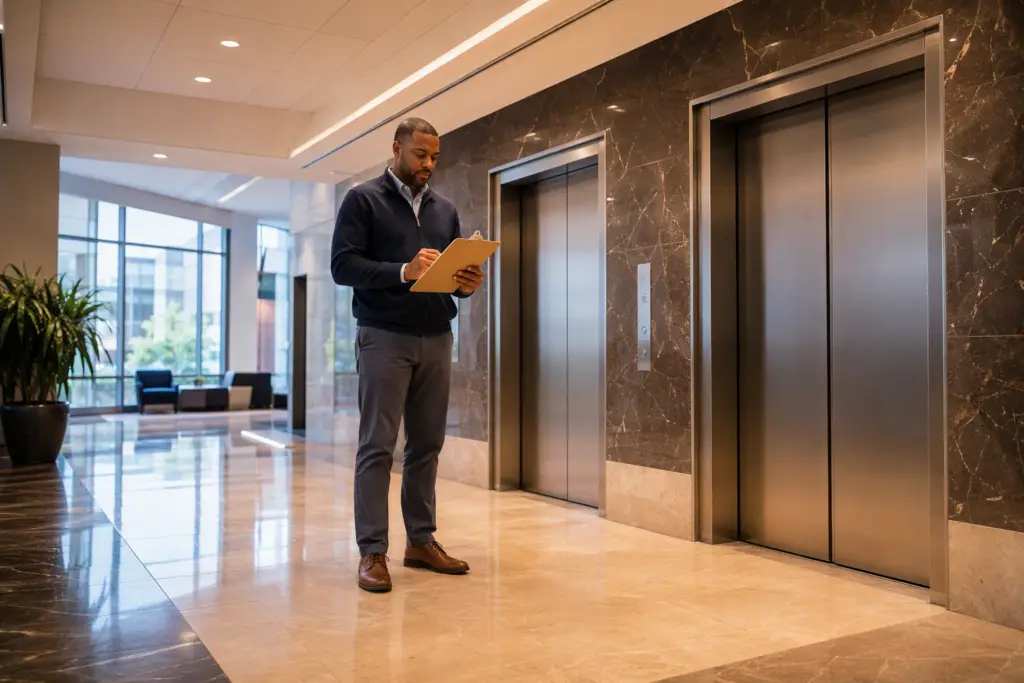
Getting started with a professional elevator assessment in Washington DC requires only one phone call to schedule a no-cost site visit, during which a certified technician will review your current maintenance records, evaluate equipment condition against ASME A17.1 and DC DCRA standards, and provide a written assessment with maintenance recommendations and contract options.
The assessment process typically takes 45–90 minutes per elevator unit and includes:
- Review of existing maintenance logs and most recent DCRA inspection certificates
- Physical inspection of the machine room, pit, hoistway, and car interior
- Testing of door operations, leveling accuracy, emergency lighting, and communication systems
- Documentation of any code deficiencies with specific ASME A17.1 or ADA section references
- Verbal walk-through with building management of findings and recommended corrective actions
- Written assessment report delivered within 48 hours
- Presentation of maintenance contract options with no obligation to proceed
This assessment gives you an independent, expert baseline of your equipment condition regardless of whether you ultimately choose to work with us. For a building owner who has been relying on a single maintenance provider’s self-reporting for years, that independent baseline often surfaces issues that have been deferred or undisclosed — and positions you to make better capital planning decisions.
Ready to work with Washington DC’s top rated elevator maintenance company?
Quality Elevator Company serves Washington DC, Baltimore MD, Philadelphia PA, and Richmond VA with IUEC-certified technicians, ASME A17.1-compliant maintenance programs, and a commitment to transparent service documentation that keeps your elevators safe, compliant, and running.
Contact Quality Elevator Company for a free elevator assessment: 301-307-5363
Our team is available 24 hours a day, 7 days a week for emergency response and scheduling inquiries. Don’t wait for a failed inspection or a passenger entrapment to evaluate your elevator maintenance program — call today and let a certified technician give you the complete picture.
Need elevator service you can rely on? Quality Elevator Company is ready to help.