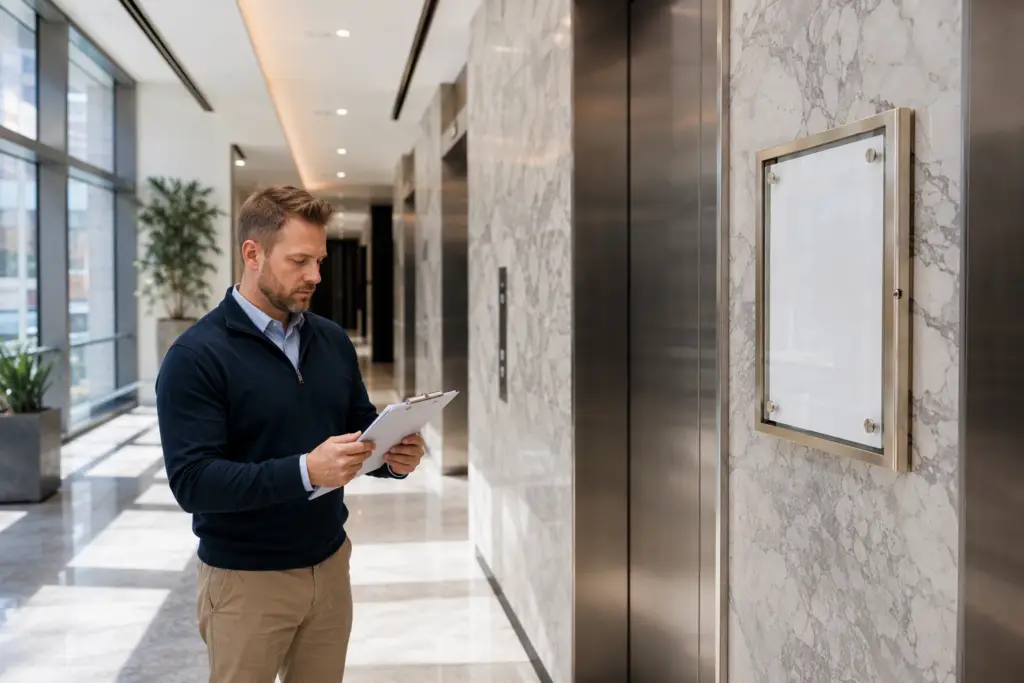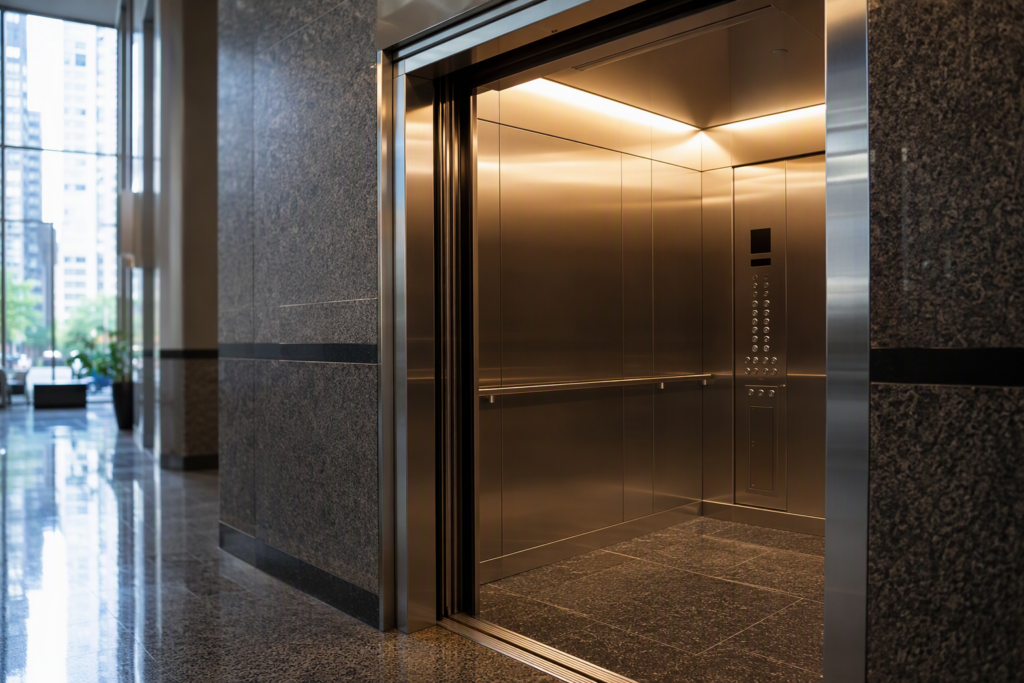
Elevator reliability is not an accident. Whether a building owner in Baltimore, a property manager in Washington DC, a facilities director in Philadelphia, or a commercial landlord in Richmond is dealing with recurring breakdowns or trying to avoid the first one, understanding the root causes of elevator failures is the single most powerful tool available. This hub page answers the most important questions building owners and managers ask about elevator breakdowns, prevention, and compliance — drawing on established industry codes including the ASME A17.1 Safety Code for Elevators and Escalators and federal accessibility requirements under the Americans with Disabilities Act (ADA).
What Causes Elevator Breakdowns Most Often?
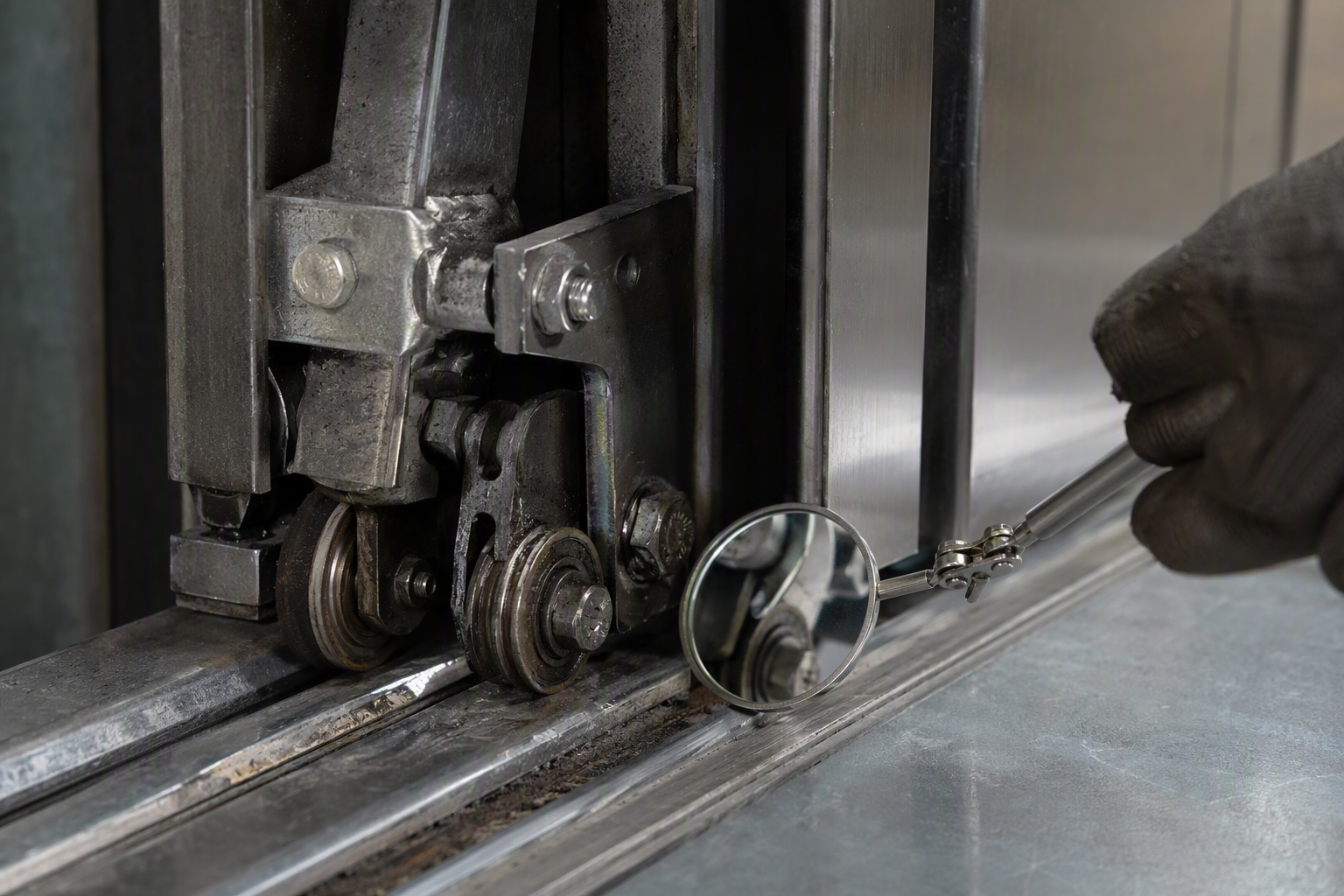
The single most frequent cause of elevator breakdowns is door system failure, followed closely by deferred maintenance on mechanical and control components.
Door-related issues — including worn rollers, misaligned tracks, faulty door operators, and failing safety edges or light curtains — account for the majority of elevator service calls in commercial and residential buildings. When doors do not open or close properly, the elevator’s safety system interprets the condition as a fault and takes the unit out of service. This is a protective measure built into modern elevator controllers, but it means that even a minor door component failure results in a full shutdown.
Beyond door systems, the most common contributors to breakdowns include deteriorating hydraulic fluid and seals in hydraulic elevators, worn hoist ropes and sheaves in traction units, outdated or failing control boards and microprocessors, inadequate lubrication of guide rails and mechanical components, and electrical issues ranging from faulty contactors to wiring degradation. Many of these failures are entirely predictable and preventable with consistent, scheduled maintenance.
Why Are Door System Failures the Leading Cause of Elevator Outages?
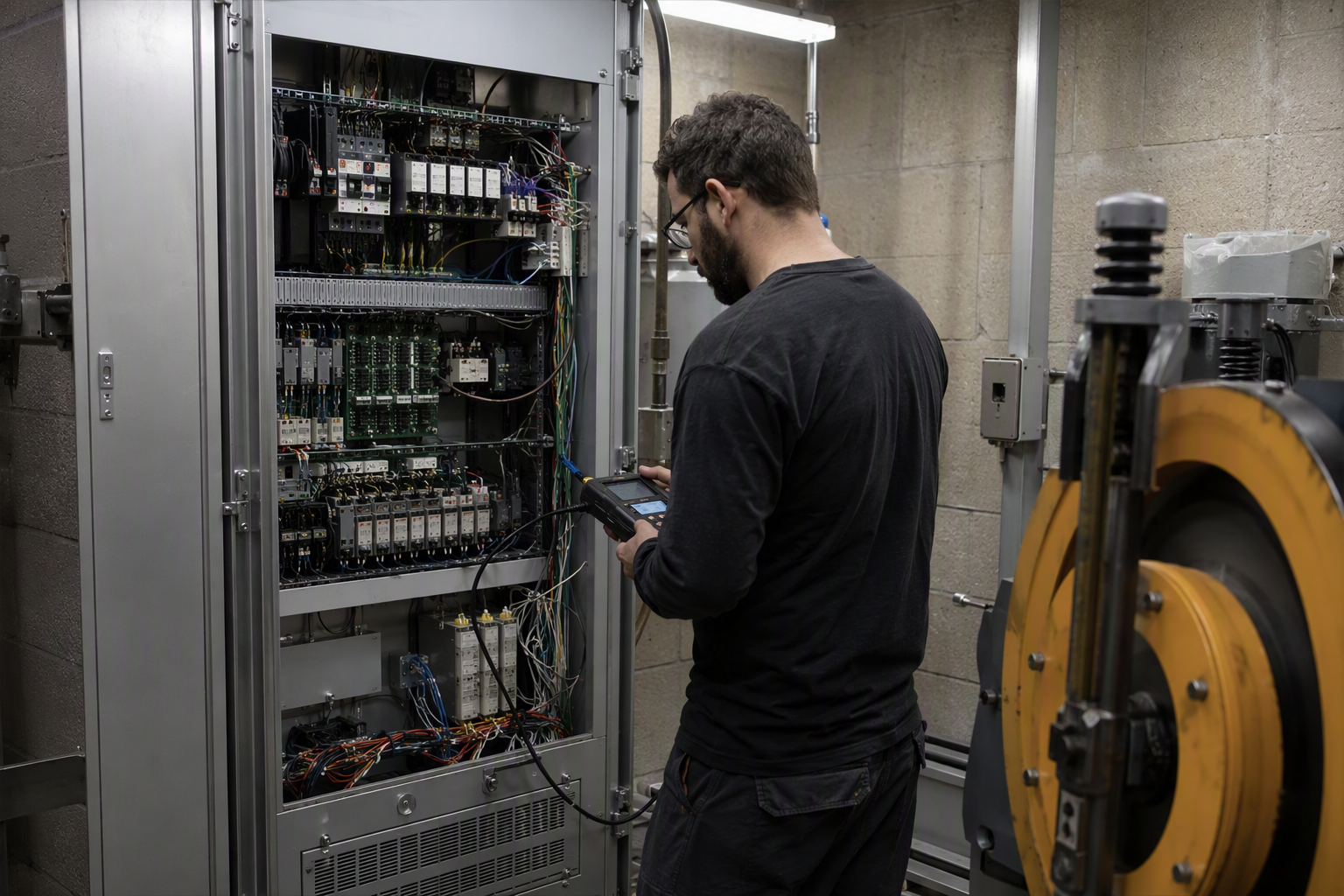
Door systems are the most mechanically active component of any elevator, cycling thousands of times per day, which accelerates wear faster than any other part of the unit.
In a busy commercial building, elevator doors may open and close hundreds of times per hour. The cumulative mechanical stress on door operators, clutch mechanisms, rollers, tracks, and detection devices is enormous. When any single component in this chain degrades — a worn roller that causes the door to hesitate, a misaligned track that creates binding, or a safety edge that no longer retracts cleanly — the control system flags the condition and either forces a door retry cycle or removes the elevator from service entirely.
Preventive inspection of door components at every routine maintenance visit, including physical measurement of door clearances against tolerances specified in the ASME A17.1 Safety Code for Elevators and Escalators, is the most direct way to intercept door failures before they cause downtime. Lubrication of door tracks and operator linkages, combined with calibration of reopening devices, dramatically extends the service life of door assemblies.
How Does Deferred Maintenance Lead to Elevator Breakdowns?
Deferred maintenance allows small, inexpensive problems to compound into major mechanical failures that require costly emergency repairs and extended downtime.
Elevator components do not fail instantaneously in most cases. Hoist ropes show measurable wear over time. Hydraulic seals develop slow seeps before they rupture. Guide rail lubrication degrades gradually, increasing friction and wear on roller guides or sliding guide shoes. When building owners defer scheduled maintenance visits — whether due to budget pressure, tenant disruption concerns, or simply scheduling delays — these incremental problems accumulate. The result is a failure that not only shuts down the elevator but often damages secondary components, escalating both repair cost and downtime.
A structured preventive maintenance contract specifies fixed intervals for inspection, lubrication, adjustment, and parts replacement, removing the guesswork and the temptation to postpone service. Buildings served by Quality Elevator Company in Baltimore, Washington DC, Philadelphia, and Richmond benefit from scheduled maintenance programs designed around the specific usage patterns and equipment types in each facility.
What Role Do Aging Control Systems Play in Elevator Failures?
Outdated relay-based or early-generation microprocessor controllers are among the most unpredictable failure points in older elevator systems, because replacement parts become scarce and diagnostic data becomes unavailable.
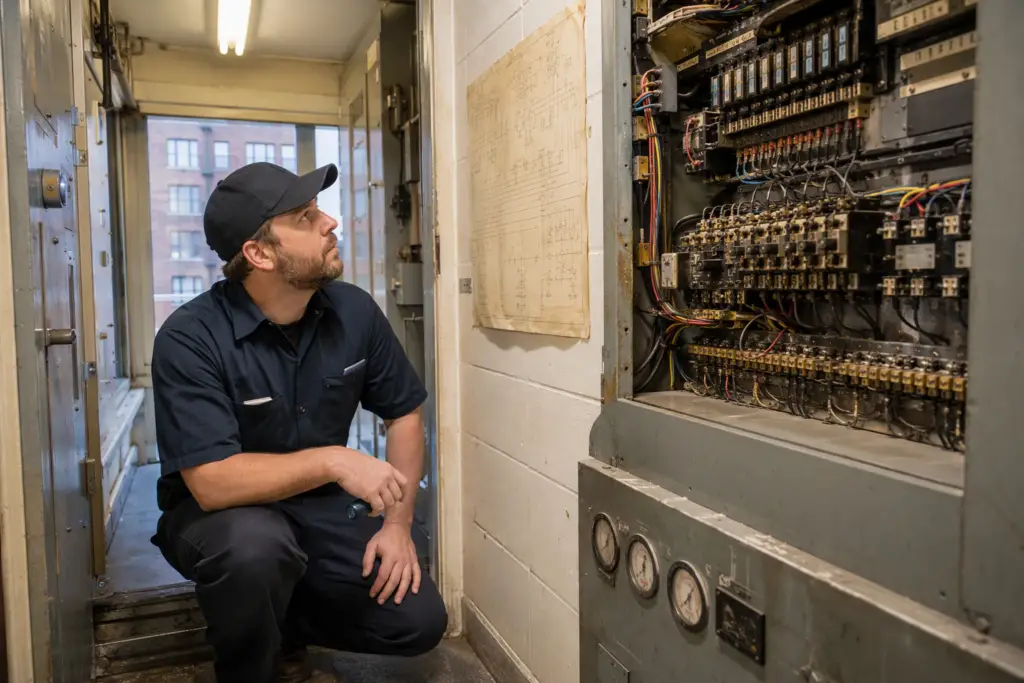
Elevator control technology has evolved substantially over the past several decades. Buildings that still operate relay logic control systems — common in elevators installed before the 1980s — face a growing challenge: the relays, contactors, and boards that these systems depend on are no longer manufactured in many cases, and sourcing spares requires specialty vendors and significant lead times. When a control board fails on an outdated system, the elevator may be out of service for days or weeks while parts are located.
Modern microprocessor-based controllers offer remote diagnostics, fault logging, and predictive alerts. Upgrading aging controls is often a cost-effective decision when weighed against the frequency and cost of emergency service calls on obsolete systems. The ASME A17.3 Safety Code for Existing Elevators and Escalators provides guidance on retrofit and modernization requirements applicable to elevators already in service.
How Does Hydraulic System Failure Cause Elevator Breakdowns?
Hydraulic elevators are vulnerable to seal degradation, fluid contamination, and pump wear, any of which can cause slow descent, erratic leveling, or a complete inability to raise the cab.
In a hydraulic elevator, a pump forces fluid into a cylinder to raise the cab, and controlled release of that fluid lowers it. When the hydraulic fluid becomes contaminated with water or particulates, the control valve and pump components experience accelerated wear. Deteriorating seals around the cylinder allow slow fluid loss, which manifests first as poor leveling at floor landings — the cab settles below the sill — and eventually as an inability to hold position.
Hydraulic fluid should be tested and replaced on a schedule aligned with the manufacturer’s specifications and local authority having jurisdiction (AHJ) requirements. In Maryland, DC, Pennsylvania, and Virginia, elevator inspectors routinely evaluate hydraulic system condition during periodic inspections. Environmental regulations in these jurisdictions also govern the disposal of used hydraulic fluid, adding a compliance dimension to fluid management that a qualified service provider handles as part of routine maintenance.
What Are the Most Common Electrical Causes of Elevator Breakdowns?
Electrical failures — including faulty contactors, corroded connections, ground faults, and failing safeties — are a leading cause of elevator shutdowns, particularly in buildings with aging wiring infrastructure.
Elevator control systems operate on precise electrical signals. A single corroded terminal block, a contactor that does not fully close, or a ground fault in the traveling cable can cause erratic behavior, nuisance trips, or complete shutdown. In older buildings in Baltimore, Philadelphia, Washington DC, and Richmond — many of which have elevator machine rooms with decades-old wiring — moisture infiltration and thermal cycling progressively degrade insulation and connections.
Routine maintenance should include thermographic scanning of control panels where feasible, inspection of traveling cables for abrasion or insulation damage, and testing of safety circuits including overspeed governors, buffers, and final limit switches. These tests align with the periodic inspection requirements in the ASME A17.1 Safety Code for Elevators and Escalators and the testing intervals set by state inspection authorities in Maryland, Virginia, Pennsylvania, and the District of Columbia.
How Often Should Elevators Be Inspected to Prevent Breakdowns?
Mandatory periodic inspections are required by state and local authorities in Maryland, Virginia, Pennsylvania, and Washington DC, and these inspections represent the minimum — not the complete — standard for preventing breakdowns.
Each jurisdiction served by Quality Elevator Company enforces its own inspection calendar, administered by the relevant state labor or building safety agency. These required inspections verify that safety-critical systems meet code, but they are not substitutes for ongoing preventive maintenance. Inspections occur at fixed intervals; maintenance should occur continuously on a scheduled basis throughout the year.
| Jurisdiction | Governing Authority | Applicable Code Basis | Recommended Maintenance Frequency |
|---|---|---|---|
| Maryland | MD Dept. of Labor – Elevator Safety Unit | ASME A17.1 / A17.3 | Monthly to quarterly depending on usage |
| Washington DC | DC Dept. of Consumer & Regulatory Affairs (DCRA) | ASME A17.1 / A17.3 | Monthly to quarterly depending on usage |
| Pennsylvania | PA Dept. of Labor & Industry – BOIS | ASME A17.1 / A17.3 | Monthly to quarterly depending on usage |
| Virginia | VA Dept. of Labor & Industry (DOLI) | ASME A17.1 / A17.3 | Monthly to quarterly depending on usage |
The governing inspection authorities in each of Quality Elevator Company’s service markets enforce mandatory periodic inspections, but the intervals between mandatory inspections leave significant time during which undetected wear can develop. A preventive maintenance contract fills that gap with scheduled technician visits calibrated to the building’s elevator usage level — a high-rise office building in Philadelphia with continuous passenger traffic requires more frequent visits than a low-rise residential building in Richmond with lighter use.
What Should Building Owners Do Immediately After an Elevator Breakdown?
When an elevator goes out of service, the building owner or manager should follow a structured response protocol to protect occupants, document the event, and initiate compliant repair procedures.
- Secure the elevator landing. Post clear out-of-service signage at every floor landing served by the unit to prevent passengers from attempting to board or interact with the doors.
- Contact the elevator service provider immediately. Notify your maintenance contractor of the breakdown. Provide the elevator unit number, observed symptoms, and any error codes displayed on the controller if accessible.
- Confirm no passengers are trapped. Verify through intercom or phone communication with the machine room that no one is inside the cab. If passengers are trapped, contact the fire department according to local protocols — do not attempt self-rescue procedures.
- Document the incident. Record the time of failure, any observed warning signs in the preceding hours or days, and all communications with your service provider. This documentation is valuable for insurance purposes and for identifying recurring patterns.
- Notify tenants and provide alternative access information. Communicate proactively with building occupants about the outage and anticipated repair timeline. Under the ADA, buildings must maintain accessible routes — if the elevator is the required accessible means of vertical travel, the AHJ and affected tenants may need to be informed of the outage and the corrective timeline.
- Retain repair records. After the repair is completed, retain all technician reports, parts replacement records, and test results. These records support regulatory compliance and document the maintenance history required by inspectors in Maryland, DC, Pennsylvania, and Virginia.
How Does Overloading or Misuse Contribute to Elevator Breakdowns?
Consistent overloading of an elevator beyond its rated capacity accelerates wear on structural components, the hoist machine, and the drive system, significantly shortening equipment lifespan.
Every elevator carries a rated capacity specified in pounds, posted visibly in the cab as required by code. When loads routinely exceed this rating — whether through passenger crowding, heavy freight, or construction materials — the drive motor, hoist ropes, brakes, and buffer systems all experience stress beyond their design parameters. Over time, this manifests as premature rope wear, brake lining degradation, and overheating of the hoist machine.
Building managers should enforce load limits actively, particularly during move-in and move-out periods, renovations, and construction phases when freight loads are highest. Installing load-weighing devices that prevent the elevator from departing when overloaded is a practical upgrade for high-traffic buildings.
What Maintenance Tasks Are Most Effective at Preventing Elevator Breakdowns?
The highest-impact preventive maintenance tasks are door system adjustments, lubrication of moving components, hoist rope inspection, and testing of safety devices — performed consistently at scheduled intervals.
A well-structured preventive maintenance program addresses the following key areas on a regular basis:
- Door operator adjustment and cleaning: Alignment of door tracks, cleaning of sills, and calibration of reopening devices prevent the most common category of service calls.
- Rail lubrication: Proper lubrication of guide rails reduces friction, noise, and wear on guide shoes or roller guides, preventing the cab vibration that often precedes a breakdown.
- Hoist rope inspection: Visual and physical inspection of wire ropes for broken wires, kinking, and lubrication levels, evaluated against criteria in the ASME A17.1 Safety Code for Elevators and Escalators.
- Safety device testing: Periodic testing of governors, safeties, buffers, and limit switches confirms that protective systems will function correctly in an emergency — and that they are not in a degraded state that might cause a nuisance trip.
- Controller cleaning and inspection: Removal of dust accumulation from control panels prevents overheating and contamination-related electrical failures.
- Hydraulic fluid and seal inspection: For hydraulic units, fluid condition evaluation and seal integrity checks intercept the most common causes of hydraulic system breakdown.
How Do ADA Requirements Affect Elevator Maintenance Obligations?
Under the Americans with Disabilities Act, elevators that serve as the required accessible route in a building must be maintained in operable condition, and extended outages can constitute an ADA compliance failure.
The ADA requires that accessible features — including elevators designated as part of the accessible route — remain operational. While the ADA does not specify a maximum outage duration before a violation occurs, the Department of Justice has consistently indicated that prompt repair and documented maintenance programs are key factors in demonstrating compliance. Buildings in Baltimore, Washington DC, Philadelphia, and Richmond that experience recurring elevator outages affecting accessibility face not only tenant complaints but potential regulatory exposure.
Proactive maintenance is the most defensible strategy. A documented preventive maintenance history demonstrates that the building owner is taking reasonable steps to maintain accessibility, which is relevant in any ADA-related complaint or investigation.
What Is the Difference Between Preventive Maintenance and a Full-Service Maintenance Contract?
A preventive maintenance agreement covers scheduled inspections and routine tasks, while a full-service contract additionally includes parts and labor for covered repairs — providing more comprehensive protection against unexpected breakdown costs.
Building owners evaluating maintenance contracts should understand the distinction clearly. A basic preventive maintenance agreement commits the service provider to appearing at specified intervals to perform inspection, lubrication, cleaning, and adjustment. Parts replacement and repair labor are billed separately when needed. A full-service or comprehensive contract bundles scheduled maintenance with coverage for parts and labor on most repairs, converting unpredictable repair costs into a fixed monthly expense.
For buildings with high-traffic elevators or aging equipment, a full-service contract typically delivers better cost predictability and faster repair response, since the service provider has a financial incentive to resolve problems efficiently. Quality Elevator Company offers maintenance programs for buildings in its service markets structured around the specific needs of each property.
How Does Machine Room Condition Affect Elevator Reliability?
The machine room environment directly affects the reliability and longevity of elevator equipment — improper temperature, humidity, and housekeeping create conditions that accelerate component failure.
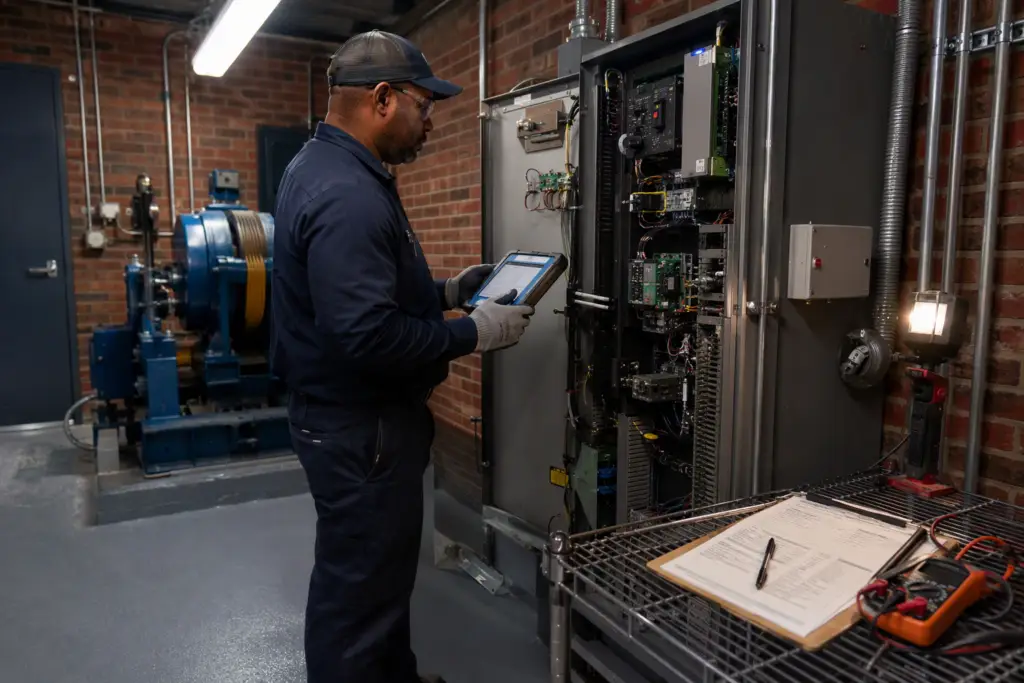
Elevator machine rooms house the hoist machine, controller, governor, and associated equipment. These spaces must be maintained within the temperature and humidity ranges specified by the equipment manufacturer and required by code. Excessive heat causes insulation degradation on motor windings and electrical components. Moisture promotes corrosion on contactors, relay contacts, and structural components. Dust and debris infiltration clogs ventilation on motors and contaminates control panels.
Machine rooms should not be used for storage of non-elevator materials — a common violation observed during inspections in jurisdictions across Maryland, DC, Pennsylvania, and Virginia. The ASME A17.1 Safety Code for Elevators and Escalators contains specific requirements for machine room access, temperature, and housekeeping. Compliance with these requirements is verified during mandatory periodic inspections.
What Are the Signs That an Elevator Is About to Break Down?
Warning signs of an impending elevator breakdown include unusual noises, door hesitation or repeated reopening, rough or jerky cab movement, poor leveling at floor landings, and intermittent error codes on the controller.
Building staff and elevator users often notice the early indicators of mechanical trouble before a complete failure occurs. Educating building managers and maintenance personnel to recognize and report these warning signs promptly can allow service providers to address issues before they escalate to a full shutdown.
- Unusual sounds: Grinding, squealing, or banging during operation suggest mechanical wear in the door operator, guide system, or drive components.
- Door behavior anomalies: Doors that hesitate, reverse repeatedly, or close too slowly indicate door operator, track, or safety edge issues.
- Rough cab movement: Vibration or jerking during travel points to worn guide shoes, roller guides, or an issue with the drive system.
- Poor floor leveling: A cab that consistently stops above or below the floor sill indicates a leveling zone sensor or hydraulic issue requiring prompt attention.
- Intermittent outages: An elevator that goes out of service and then restores itself without an obvious cause often has an electrical intermittent fault — one of the most difficult to diagnose once it becomes a complete failure.
Any of these signs should trigger a call to the elevator service provider before the next scheduled maintenance visit. Quality Elevator Company encourages building managers in its service areas to report warning signs promptly rather than waiting for the next scheduled visit.
How Does Elevator Age Affect Breakdown Frequency?
As elevator systems age beyond their design service life, breakdown frequency increases substantially because aging components fail more often, spare parts become harder to source, and the control systems are less capable of self-diagnosis.
Elevator systems have design service lives that vary by component. Hoist machines, control systems, and cab interiors all have different expected service intervals. When a building continues to operate elevator equipment well beyond these intervals without modernization, the cumulative effect is an acceleration in the rate of failures. Each emergency repair stresses adjacent components, and the absence of predictive diagnostics in older control systems means failures occur with less warning.
The ASME A17.3 Safety Code for Existing Elevators and Escalators provides the framework for evaluating and modernizing existing elevator equipment. A comprehensive assessment by a qualified elevator service provider can identify which systems are approaching end of service life and prioritize modernization investments to maximize reliability and extend overall equipment life.
What Are the Costs of Elevator Downtime for Building Owners?
Elevator downtime generates costs that extend well beyond the repair bill itself, including tenant dissatisfaction, potential ADA liability, lost lease renewals, and emergency service premiums over preventive maintenance costs.
The financial impact of an elevator breakdown is frequently underestimated by building owners who focus only on the direct repair invoice. In a multi-tenant office building or residential high-rise in Baltimore, Washington DC, Philadelphia, or Richmond, a prolonged elevator outage creates genuine hardship for tenants, particularly those with mobility limitations. The reputational consequences — negative reviews, lease non-renewals, and complaints to building code authorities — can generate costs that dwarf the price of a preventive maintenance contract.
Emergency repair rates are structurally higher than preventive maintenance costs because they involve priority dispatch, after-hours labor, and expedited parts sourcing. Buildings on preventive maintenance contracts avoid most emergency situations and pay predictable, lower costs for the work that keeps their equipment running reliably.
How Does an Elevator Modernization Compare to Continued Repair of Aging Equipment?
When an elevator system requires increasingly frequent repairs and emergency calls, a full modernization typically delivers better long-term value than continued piecemeal repair of components that are all approaching end of life simultaneously.
Modernization replaces the highest-failure-risk components — typically the controller, door operator, fixtures, and drive system — with current-generation equipment that offers diagnostic connectivity, energy efficiency, and improved reliability. The decision to modernize versus repair is driven by the age and condition of existing equipment, the frequency and cost of current breakdowns, the availability of spare parts for existing systems, and the code upgrade requirements that apply in Maryland, DC, Pennsylvania, and Virginia under the ASME A17.3 Safety Code for Existing Elevators and Escalators.
Quality Elevator Company conducts equipment condition assessments for building owners in its service markets to provide an objective evaluation of whether continued repair or modernization represents the better investment for a specific building’s situation.
What Workplace Safety Requirements Apply to Elevator Technicians Performing Maintenance?
Elevator maintenance work is governed by OSHA regulations covering lockout/tagout procedures, confined space entry, and electrical safety — requirements that building owners should verify their service providers follow rigorously.
Elevator machine rooms, pits, and hoistways present genuine hazards. OSHA’s lockout/tagout standard (29 CFR 1910.147) requires that elevator technicians de-energize and lock out equipment before performing maintenance that could result in unexpected energization. Elevator pits meet the criteria for permit-required confined spaces under OSHA 29 CFR 1910.146 and require appropriate entry procedures. Building owners selecting a maintenance contractor should confirm that the contractor operates under comprehensive safety programs aligned with OSHA requirements — not only for the protection of technicians but to limit the building owner’s own liability exposure.
What Questions Should Building Owners Ask When Selecting an Elevator Maintenance Provider?
Building owners should evaluate elevator maintenance providers on the scope of their maintenance contract, parts sourcing capabilities, familiarity with local inspection requirements, and their approach to documentation and compliance reporting.
Selecting a maintenance provider is one of the most consequential decisions a building owner makes for the long-term reliability and compliance of their vertical transportation system. Key questions to ask include:
- What specific tasks are performed at each maintenance visit, and how are they documented?
- Does the contract include parts and labor, or are repairs billed separately?
- How does the provider manage the mandatory inspection process in Maryland, DC, Pennsylvania, or Virginia, as applicable?
- What is the provider’s process for identifying and recommending repairs versus replacing components approaching end of service life?
- How does the provider handle emergency breakdown situations outside of regular business hours?
- Does the provider have direct experience with the specific elevator manufacturer and model installed in the building?
Quality Elevator Company serves building owners across Baltimore, Washington DC, Philadelphia, and Richmond with maintenance programs that address these considerations directly, providing documented maintenance records that support both regulatory compliance and informed capital planning.
How Can Building Owners Track Elevator Performance to Identify Breakdown Patterns?
Tracking elevator service call history, breakdown frequency by component, and maintenance visit records allows building owners to identify recurring failure patterns and make data-informed decisions about repair versus replacement investments.
A building owner who maintains a complete service history — including the date, cause, and component involved in every service call — has a significant advantage in understanding their elevator’s behavior. When the same component fails repeatedly within a short interval, it signals either that the root cause has not been fully addressed or that the component has reached the end of its service life and requires replacement rather than repeated repair.
Modern elevator controllers with remote monitoring capability can log fault codes and usage data automatically, providing a continuous performance record that supplements the technician’s maintenance reports. For buildings with older equipment lacking these capabilities, diligent manual record-keeping by the building manager and service provider serves the same analytical function. Quality Elevator Company provides maintenance documentation to building owners in its service markets as a standard component of its maintenance program, supporting transparency and informed decision-making.
Take the First Step Toward Fewer Breakdowns and Stronger Compliance
Elevator breakdowns are rarely random events — they are the predictable result of deferred maintenance, aging components, and gaps in a building’s service program. Building owners and property managers in Baltimore, Washington DC, Philadelphia, and Richmond who want an objective evaluation of their elevator’s condition and maintenance program should start with a professional assessment.
Contact Quality Elevator Company for a free elevator assessment. A qualified technician will evaluate your equipment condition, review your maintenance history, identify compliance gaps relative to applicable ASME, ADA, and state requirements, and provide clear recommendations — with no obligation.
Call us today: 301-779-9116
Need elevator service you can rely on? Quality Elevator Company is ready to help.