How Long Does an Elevator Typically Last Before It Needs to Be Replaced or Fully Modernized?
Elevator longevity is one of the most common questions building owners, property managers, and facility directors face across Baltimore, Washington DC, Philadelphia, and Richmond. The answer is rarely a single number — it depends on equipment type, maintenance history, traffic volume, local code requirements, and the availability of replacement parts. This comprehensive FAQ hub covers every dimension of elevator lifespan, modernization timelines, compliance obligations, and what to expect during the process.
What Is the Typical Lifespan of a Commercial Elevator?
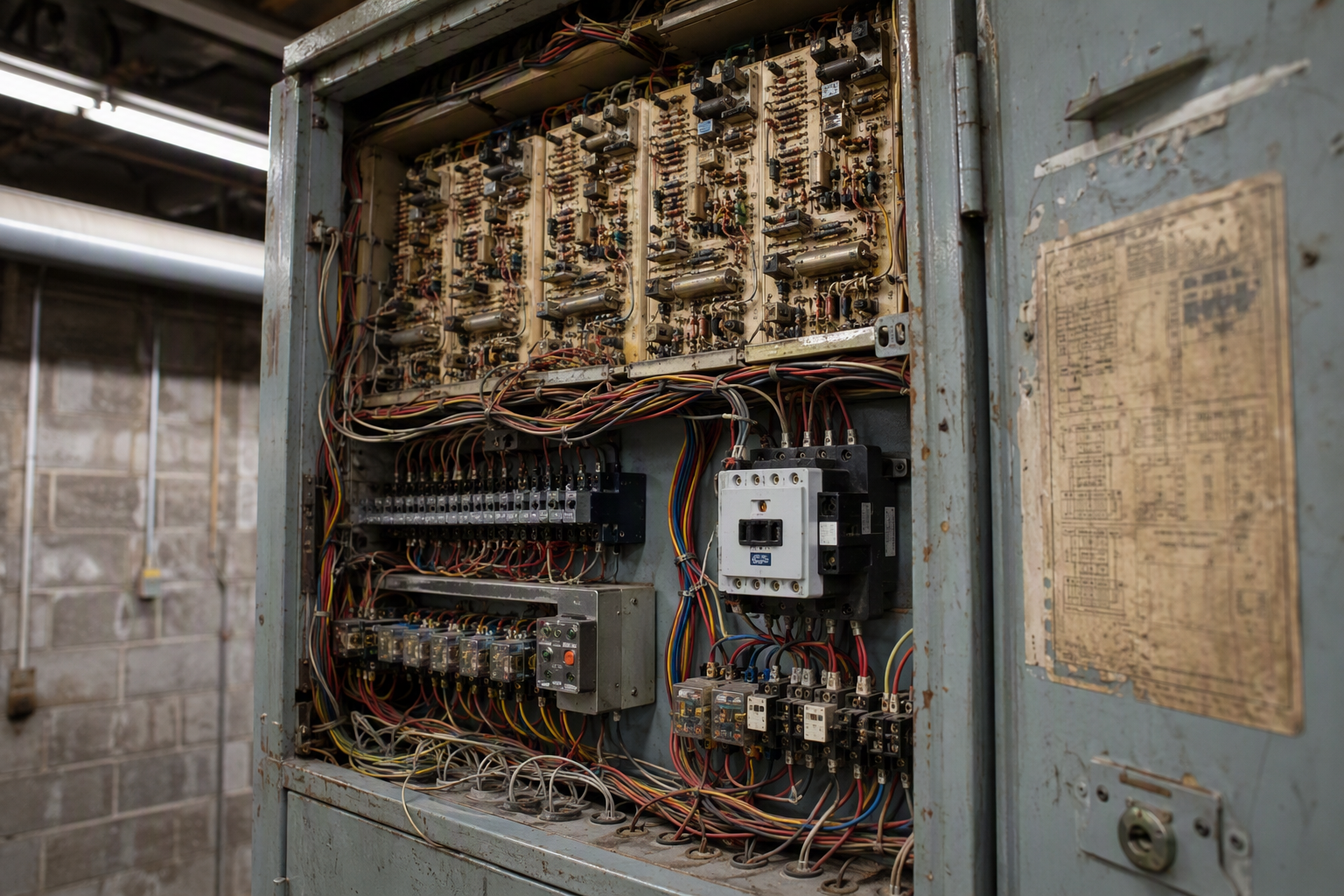
Most commercial elevators have a functional lifespan of 20 to 25 years before modernization becomes necessary, though exceptional maintenance programs and light-duty usage can extend reliable service to 30 or more years.
Elevator lifespan is not a fixed warranty period — it is a practical window during which the cost, reliability, and safety profile of the equipment remains acceptable. Once an elevator passes roughly two decades of service, building owners typically begin experiencing more frequent mechanical failures, difficulty sourcing original equipment manufacturer (OEM) parts, and growing gaps between the unit’s installed technology and current code requirements.
High-traffic installations — such as hospitals, airports, and large commercial office towers — tend to reach the modernization threshold earlier than low-traffic residential or boutique commercial buildings, because mechanical wear accumulates in proportion to the number of starts, stops, and door cycles logged over the elevator’s service life.
What Factors Determine Whether an Elevator Needs Modernization or Full Replacement?
The decision turns on five primary factors: equipment age, parts obsolescence, code compliance gaps, repair cost trends, and the building owner’s long-term capital plan.
Parts obsolescence is often the most decisive factor. When an elevator controller, drive system, or door operator manufacturer discontinues a product line, replacement parts must be sourced from third-party suppliers or refurbished stock — driving up cost and extending downtime per repair event. At a certain point, the risk and expense of sourcing obsolete parts exceeds the cost of installing modern equipment.
Code compliance is the second major driver. Elevator codes are updated on a regular cycle. Buildings that underwent their last major elevator work before the current edition of ASME A17.1 Safety Code for Elevators and Escalators was adopted by their jurisdiction may have equipment that does not meet current safety requirements, triggering mandatory upgrades.
Repair cost trajectory provides a financial signal. When annual maintenance and repair expenditures begin to approach a significant fraction of the estimated modernization cost, the economics typically favor modernization. Quality Elevator Company assists building owners across Maryland, DC, Virginia, and Pennsylvania in performing this cost-benefit analysis as part of a comprehensive elevator assessment.
How Do Elevator Lifespans Differ by Equipment Type?
Hydraulic, traction, and machine-room-less (MRL) elevators age at different rates because of their distinct mechanical configurations and wear profiles.
| Elevator Type | Typical Service Life | Common Modernization Trigger | Key Wear Components |
|---|---|---|---|
| Hydraulic (oil-driven) | 20–25 years | Cylinder corrosion, fluid leaks, obsolete power unit | Hydraulic cylinder, pump, valve, oil seals |
| Geared Traction | 25–30 years | Gearbox wear, obsolete relay-logic controller | Worm gear, sheave, brake, ropes/belts |
| Gearless Traction | 30+ years (motor) | Controller obsolescence, rope replacement | Motor bearings, hoist ropes, controller |
| Machine-Room-Less (MRL) | 20–25 years (estimate) | Drive and controller software end-of-life | Compact drive unit, rope/belt system |
| Residential (home elevator) | 15–20 years | Drive obsolescence, safety code updates | Drive motor, safety gate, controller |
Note: Figures in this table represent industry-recognized benchmarks based on equipment design life, not guarantees. Actual service life varies by maintenance quality, usage intensity, and environmental conditions.
What Are the Warning Signs That an Elevator Is Nearing the End of Its Service Life?
Key warning signs include increasingly frequent service calls, leveling problems, door malfunctions, unusual noise or vibration, difficulty sourcing replacement parts, and failed or marginal annual inspections.
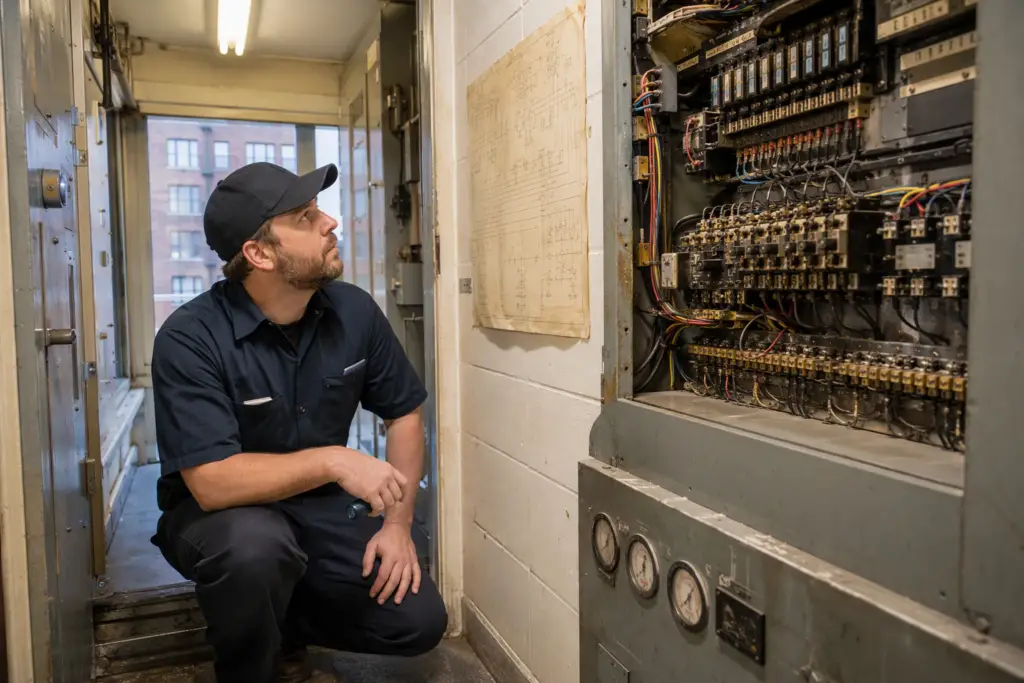
Building operators should track repair logs carefully. When the same component requires service repeatedly within a short window, or when a single repair requires extended lead time due to parts availability, those are strong signals that the equipment is transitioning from a maintainable asset to an aging liability.
Other observable signals include:
- Elevator failing to level accurately with the floor, creating tripping hazards
- Slow or erratic door operation increasing the risk of entrapment
- Intermittent loss of power or unexplained shutdowns
- Hydraulic fluid staining in the pit, indicating cylinder or seal degradation
- Controller boards running on discontinued logic or relay-based systems
- Increasing ride roughness, noise, or vibration despite normal maintenance
What Does Elevator Modernization Actually Involve?
Elevator modernization is the process of replacing key mechanical, electrical, and safety systems while retaining the existing hoistway structure — a cost-effective alternative to full replacement when the building’s shaft and structural components remain sound.
A full modernization typically encompasses the controller and operating software, the drive system, hoist ropes or belts, door operators and safety edges, cab interior finishes, lighting, and emergency communication systems. Partial modernizations target only specific subsystems — for example, a controller upgrade alone — when the remaining equipment is still within its reliable service window.
The choice between partial and full modernization depends on a holistic assessment of component age and condition. Replacing only the controller on a hydraulic elevator with a corroded cylinder, for example, does not resolve the underlying risk and may simply postpone a larger, more disruptive project.
What Is the Difference Between Elevator Modernization and Full Elevator Replacement?
Modernization retains the existing hoistway and major structural elements while upgrading mechanical and electrical systems; full replacement involves removing all equipment, potentially modifying the hoistway, and installing an entirely new elevator system.
Full replacement is typically warranted when the hoistway itself is structurally compromised, when the existing pit depth or overhead clearance does not meet current code requirements and cannot be economically modified, or when an owner wishes to change the elevator type entirely — for example, converting from a hydraulic system to traction to eliminate ongoing hydraulic fluid disposal obligations.
In the markets Quality Elevator Company serves — Baltimore, Washington DC, Philadelphia, and Richmond — full replacement projects often involve coordination with local building departments for permits and with the relevant state elevator inspection authority for new equipment inspections prior to returning the unit to service.
What ASME and Federal Codes Govern Elevator Safety and Modernization?
Elevator design, installation, inspection, and modernization in the United States are primarily governed by the ASME A17.1 Safety Code for Elevators and Escalators for new installations and by ASME A17.3 Safety Code for Existing Elevators and Escalators for existing equipment — with individual jurisdictions adopting specific code editions into law.
ASME A17.3 is particularly relevant to modernization decisions because it establishes retroactive safety requirements — meaning that even without a modernization project, existing elevators may be required to incorporate certain safety features as jurisdictions adopt newer code editions. Features such as firefighters’ emergency operation, door restrictors, and car lighting backup power have been added through successive code cycles and may apply retroactively depending on the jurisdiction’s current adopted edition.
Accessibility requirements under the Americans with Disabilities Act (ADA) also apply to elevator alterations and modernizations in buildings open to the public, requiring accessible cab dimensions, control height, Braille markings, audible signals, and door timing compliance.
What State and Local Regulations Apply to Elevators in Maryland, DC, Virginia, and Pennsylvania?
Each jurisdiction in Quality Elevator Company’s service territory administers its own elevator inspection program and has adopted a specific edition of the ASME codes, meaning compliance requirements can differ meaningfully from one market to the next.
In Maryland, elevator inspections and licensing are administered by the Maryland Department of Labor. In the District of Columbia, the DC Department of Consumer and Regulatory Affairs (DCRA) oversees elevator inspections. In Virginia, the Department of Labor and Industry — through its Amusement and Amusement Device Safety program — regulates elevators. In Pennsylvania, the Department of Labor and Industry administers elevator inspection under the Pennsylvania Elevator and Kindred Equipment Act.
Because each jurisdiction adopts ASME code editions on its own schedule and may include local amendments, a building owner with properties in multiple markets should not assume that compliance in one city automatically translates to compliance in another. Quality Elevator Company works across all four jurisdictions and can assess compliance requirements specific to each property’s location.
How Often Must Elevators Be Inspected Under Current Regulations?
Elevators in the jurisdictions Quality Elevator Company serves are generally required to undergo periodic inspections — typically annual — conducted by a licensed elevator inspector, with the frequency and specific requirements determined by each jurisdiction’s adopted code and enforcement rules.
Under the framework of ASME A17.1, routine inspections and periodic tests (including five-year full-load safety tests for traction elevators) are prescribed. Jurisdictions may add their own intervals or test requirements on top of the ASME baseline.
Failing a periodic inspection — or receiving a conditional pass with required corrective items — is a common prompt for owners to evaluate whether a targeted repair or a broader modernization project makes better economic and compliance sense.
What Steps Should a Building Owner Take When Planning an Elevator Modernization?
A structured modernization process reduces downtime, manages costs, and ensures the finished installation meets all applicable codes. The following sequence reflects standard industry practice:
- Conduct a comprehensive condition assessment. Have a qualified elevator service company evaluate the age, condition, repair history, and code compliance status of the existing equipment.
- Identify all applicable code requirements. Determine which edition of ASME A17.1 or A17.3 applies in the relevant jurisdiction and identify any ADA accessibility obligations triggered by the alteration.
- Define the project scope. Based on the assessment, decide whether partial or full modernization — or full replacement — is the appropriate solution, and document the scope of work in detail.
- Obtain competitive bids. Solicit proposals from licensed elevator contractors specifying the same scope so bids are directly comparable.
- Secure permits. File for the required building and elevator permits with the local authority having jurisdiction (AHJ) before any work begins.
- Schedule the work around building operations. For multi-elevator buildings, stagger modernization work so at least one elevator remains in service. For single-elevator buildings, plan for alternative accessibility accommodations, particularly for ADA-obligated buildings.
- Arrange post-modernization inspection. Coordinate with the AHJ for the required inspection and testing before returning the elevator to public service.
- Establish an updated maintenance program. After modernization, ensure the maintenance contract is aligned with the new equipment’s manufacturer requirements.
How Long Does an Elevator Modernization Project Typically Take?
A full elevator modernization project commonly takes between four and twelve weeks per elevator, depending on equipment type, scope of work, lead time for custom components, and permitting timelines in the relevant jurisdiction.
Controller-only or drive-only upgrades can sometimes be completed in a shorter window, while full cab, mechanical, and electrical overhauls on older hydraulic or traction systems tend to occupy the longer end of the range. Custom cab finishes and specialty door configurations typically carry the longest procurement lead times and should be ordered early in the project planning cycle.
Building owners in dense urban markets — such as Washington DC or Philadelphia — should factor in permitting review periods when planning project timelines, as permit queues at local building departments can add weeks to the pre-construction phase.
Does Elevator Modernization Require ADA Compliance Upgrades?
Yes — when a building covered by the Americans with Disabilities Act undertakes an elevator alteration, the altered elements must be brought into compliance with ADA Standards for Accessible Design to the maximum extent feasible.
Practically, this means that a modernization project is an opportunity — and often an obligation — to address cab dimensions, door width and timing, control panel height and reach range, Braille and tactile signage, audible and visual floor indicators, and emergency communication system accessibility. Building owners who treat the ADA review as an afterthought risk having to perform additional corrective work post-project.
Quality Elevator Company integrates ADA compliance review into the assessment and design phase of every modernization project it undertakes in Baltimore, DC, Philadelphia, and Richmond, helping clients address accessibility obligations proactively rather than reactively.
What Are the Consequences of Delaying Elevator Modernization?
Delaying modernization beyond the point where equipment is reliably maintainable creates escalating risks including increased entrapment incidents, code violations, regulatory shutdown orders, and liability exposure from passenger injuries or accessibility failures.
From a purely operational standpoint, aging elevators tend to experience more frequent and longer-duration outages as sourcing parts for obsolete systems becomes progressively more difficult. Each outage in a building with a single elevator can trigger ADA accommodation obligations and reputational consequences for the building operator.
From a regulatory standpoint, OSHA standards apply to elevator maintenance and repair workers, and code inspection failures can result in the AHJ ordering an elevator out of service — a consequence far more disruptive than a planned modernization outage.
Is It Better to Modernize Incrementally or All at Once?
An all-at-once modernization is generally more cost-effective and produces a more coherent, fully compliant result; incremental upgrades can be appropriate when budget constraints require phasing, but only when each phase is planned as part of a documented long-term strategy.
The risk of unplanned incremental modernization — replacing components reactively as they fail — is that the building owner ends up spending more in aggregate than a planned full modernization would have cost, while still ending up with a patchwork system of mixed-age components that may create interoperability or compliance issues. A structured phasing plan, developed in advance with a qualified elevator service provider, mitigates this risk by sequencing upgrades in a logical, cost-efficient order.
How Much Does Elevator Modernization Cost Compared to Full Replacement?
Modernization is typically substantially less expensive than full replacement because it retains the existing hoistway structure, which represents a significant portion of total elevator installation cost; however, exact figures vary widely based on equipment type, building configuration, scope of work, and local labor and permitting costs.
Rather than citing specific dollar figures that vary by project, building owners should request itemized proposals that separate equipment costs, labor, permitting fees, and any required structural modifications. A detailed proposal allows for an apples-to-apples comparison between modernization and replacement options and provides a baseline for evaluating long-term cost of ownership — including projected maintenance costs under each scenario.
Can an Older Elevator Be Maintained Indefinitely Without Modernization?
No — at some point, parts obsolescence, code enforcement, or irreversible mechanical deterioration will make continued maintenance of an aging elevator impractical or non-compliant, regardless of maintenance quality.
While high-quality preventive maintenance significantly extends the reliable service life of elevator equipment, maintenance cannot reverse the fundamental reality that components wear, manufacturers discontinue product support, and codes evolve. The most maintenance-intensive program in the world cannot make a relay-logic controller from the 1980s comply with a 2020s code adoption, or produce a discontinued hydraulic valve that no longer exists in any supply chain.
Proactive building owners use maintenance data — specifically, repair frequency, parts lead time, and cost per service call — as leading indicators to initiate modernization planning before the equipment reaches a crisis point.
What Role Does Preventive Maintenance Play in Extending Elevator Life?
A rigorous preventive maintenance program is the single most effective factor a building owner controls in extending elevator service life and deferring the modernization timeline.
Preventive maintenance for elevators typically includes regular lubrication of mechanical components, inspection and adjustment of brake clearances and tension, door operator alignment and safety edge testing, hydraulic fluid condition monitoring, rope or belt inspection for wear and elongation, and controller diagnostic reviews. Elevators that receive consistent, manufacturer-aligned preventive maintenance tend to remain reliable and compliant longer than those serviced only reactively.
Under the framework of ASME A17.1, maintenance responsibilities are assigned to the elevator owner, who must ensure that qualified personnel perform required maintenance tasks. Building owners should ensure their maintenance contracts specify the tasks, intervals, and documentation standards that satisfy both the code and the equipment manufacturer’s requirements.
What Questions Should Building Owners Ask When Selecting an Elevator Modernization Contractor?
Building owners should ask about the contractor’s licensing status in the relevant jurisdiction, their familiarity with the specific equipment being modernized, their process for managing code compliance and permit procurement, and how they handle post-installation inspection coordination.
Additional important questions include:
- Is the contractor licensed to perform elevator work in Maryland, DC, Virginia, and/or Pennsylvania as applicable?
- Does the contractor have documented experience with the specific brand and model being modernized?
- How does the contractor handle unforeseen conditions discovered mid-project?
- What warranty terms apply to equipment and labor?
- How does the contractor coordinate with the AHJ for post-modernization inspection?
- Can the contractor provide references from similar building types in the same jurisdiction?
Quality Elevator Company is a certified elevator service company operating across Baltimore, Washington DC, Philadelphia, and Richmond, serving building owners who need a contractor with multi-jurisdiction expertise and deep familiarity with regional code adoption differences.
How Does Elevator Modernization Affect a Building’s Energy Efficiency?
Modern elevator systems — particularly those with regenerative drives, LED cab lighting, and standby power management — are significantly more energy-efficient than equipment installed even 15 years ago, meaning modernization often reduces a building’s elevator-related energy consumption meaningfully.
Regenerative drive systems capture energy produced during descent or deceleration and return it to the building’s electrical grid — a feature unavailable on older hydraulic or relay-controlled traction systems. For building owners pursuing LEED certification, energy benchmarking, or sustainability commitments, elevator modernization represents a tangible efficiency improvement that can support broader sustainability goals.
LED cab lighting packages replace energy-intensive fluorescent or incandescent fixtures, and modern standby systems power down non-essential systems when an elevator is idle — further reducing baseline consumption.
What Should Building Owners in Baltimore, Washington DC, Philadelphia, and Richmond Know About Local Modernization Timelines?
Local permitting timelines, inspection queue wait times, and the specific code edition adopted by each jurisdiction can meaningfully affect how long a modernization project takes to complete in each of Quality Elevator Company’s service markets.
In the District of Columbia, building permit review for elevator work is administered by DCRA and can involve multiple agency touchpoints. In Maryland, the Department of Labor’s elevator safety program administers inspections, and projects in Baltimore City may also involve city-level permitting coordination. In Pennsylvania, the Department of Labor and Industry issues elevator permits, and Philadelphia’s own Department of Licenses and Inspections may be involved for projects within city limits. In Virginia, the Department of Labor and Industry administers elevator safety, and projects in Richmond may involve both state and local building department coordination.
Building owners planning modernization projects in any of these markets benefit from working with a contractor who maintains established relationships with local inspectors and permitting offices — reducing the risk of administrative delays that extend project timelines.
How Can Building Owners Get Started With an Elevator Modernization Assessment?
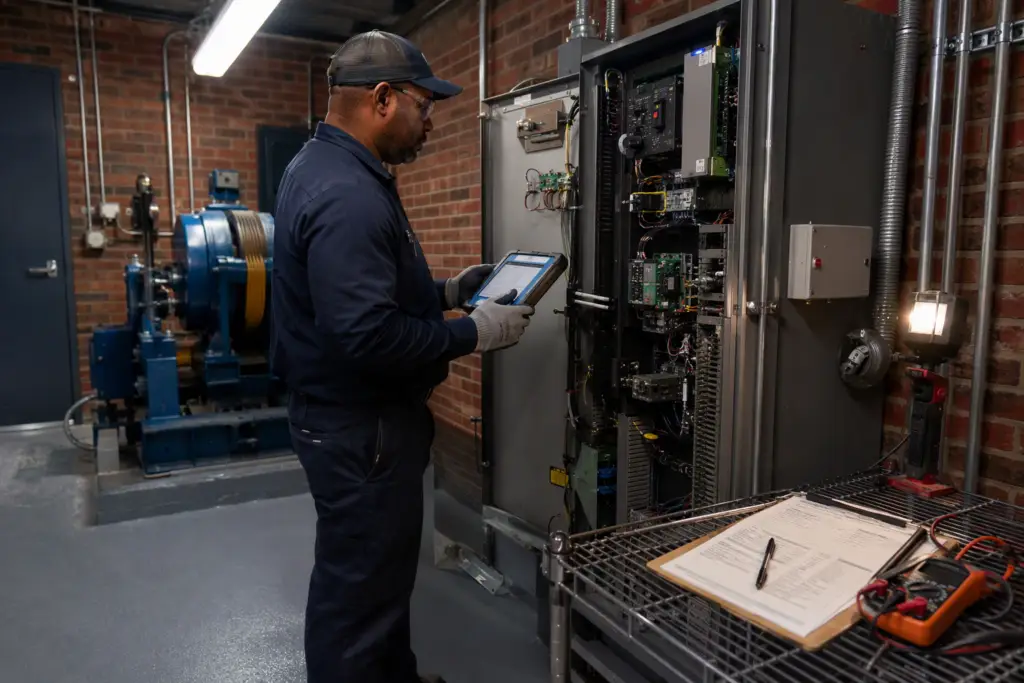
The first step is to request a comprehensive condition assessment from a licensed elevator service company that can evaluate equipment age, maintenance history, parts availability, and code compliance in the specific jurisdiction where the elevator operates.
An assessment should produce a written report documenting the current condition of major subsystems, identifying any existing code compliance gaps, projecting the remaining reliable service life of key components, and outlining modernization or replacement options with estimated scopes of work. This report becomes the foundation for capital planning, budget requests, and contractor procurement.
Quality Elevator Company provides elevator assessments for commercial, residential, and institutional properties across Baltimore MD, Washington DC, Philadelphia PA, and Richmond VA — helping building owners make informed, defensible decisions about when and how to modernize their vertical transportation assets.
Need elevator service you can rely on? Quality Elevator Company is ready to help.